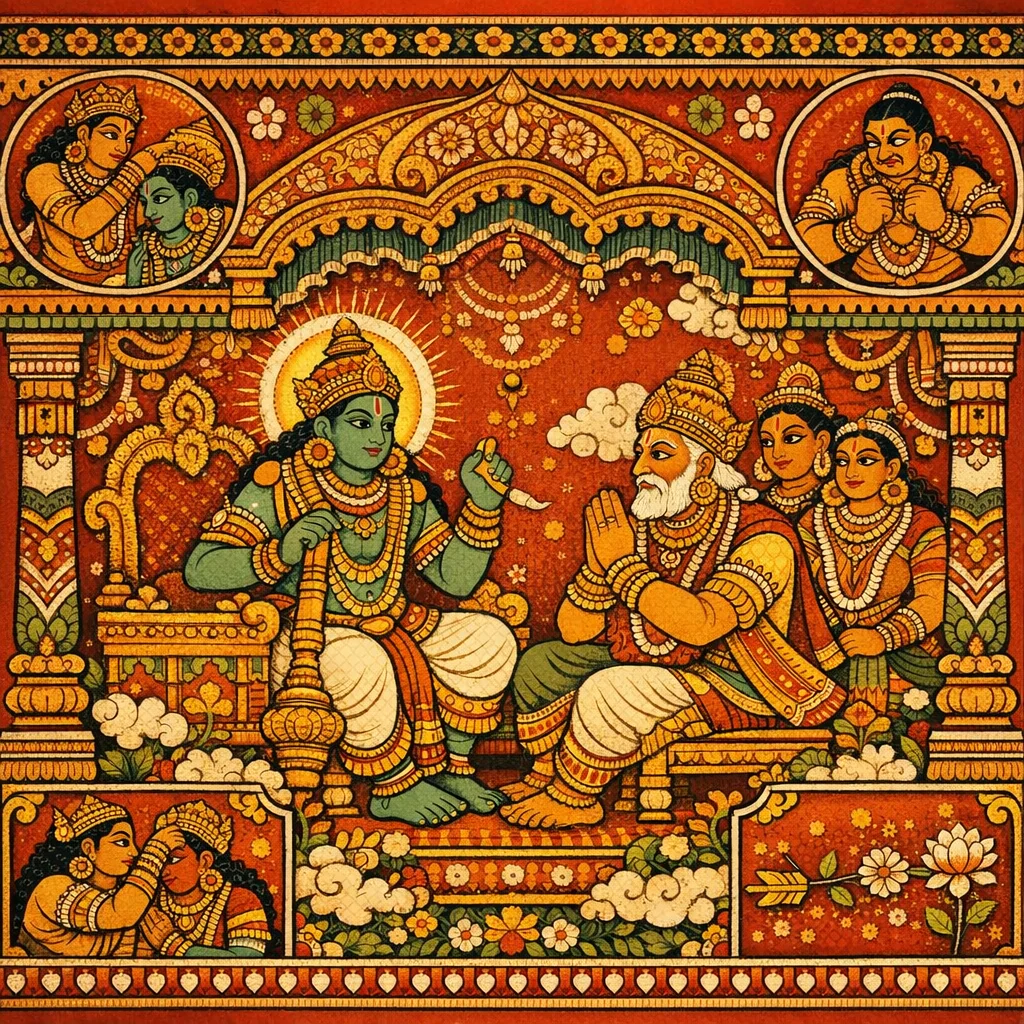
Adhyaya 36: Yayati and Indra: Counsel on Forbearance and Right Speech
ययाति-इन्द्रसंवादः — क्षमा, मधुरवाक्य, दान-मैत्री-नीतिः
Speaker: Śaunaka, Śakra (Indra), King Yayāti
Śaunaka recounts Yayāti’s honor after leaving the earth: he is revered in Svarga and dwells in Brahmaloka. Later Yayāti visits Indra, who asks what Yayāti told Pūru when Pūru took Yayāti’s form, accepted old age, and received the kingdom. Yayāti says he enthroned Pūru with the ministers’ consent, granted him the central land between the Gaṅgā and Yamunā, and appointed Pūru’s brothers as subordinate frontier rulers. The dialogue then turns to dharmic counsel: the angerless and forbearing are supreme; when abused, do not retaliate; avoid cruel, thorn-like words, for harsh speech brings inauspiciousness; the good honor and protect the righteous; words are like arrows and should not be hurled. Friendship, gifts, and sweet speech win hearts—therefore speak to reconcile, honor the worthy, give generously, and never curse.
Key Concepts
Shlokas in Adhyaya 36
Verse 1
*शौनक उवाच स्वर्गतस्तु स राजेन्द्रो न्यवसद्देवसद्मनि पूजितस्त्रिदशैः साध्यैर् मरुद्भिर्वसुभिस्तथा //
Śaunaka said: Having gone to heaven, that lord of kings dwelt in the celestial abode, honored by the Thirty gods, by the Sādhyas, the Maruts, and likewise by the Vasus.
Verse 2
देवलोकाद् ब्रह्मलोकं संचरन्पुण्यकृद्वशी अवसत्पृथिवीपालो दीर्घकालमिति श्रुतिः //
Journeying from the world of the gods to the world of Brahmā, that self-controlled king, doer of merit, dwelt there for a long time; thus is it heard in sacred tradition.
Verse 3
स कदाचिन्नृपश्रेष्ठो ययातिः शक्रमागतः कथान्ते तत्र शक्रेण पृष्टः स पृथिवीपतिः //
Once, that best of kings—Yayāti—went to Śakra (Indra). At the close of their discourse there, Śakra questioned the lord of the earth.
Verse 4
*शक्र उवाच यदा स पूरुस्तव रूपेण राजञ् जरां गृहीत्वा प्रचचार लोके तदा राज्यं सम्प्रदायैव तस्मै त्वया किमुक्तः कथयेह सत्यम् //
Śakra said: “When Pūru, assuming your form, O King, took upon himself old age and moved about in the world, and when you then handed over the kingdom to him—what did you say to him? Tell the truth here.”
Verse 5
*ययातिरुवाच प्रकृत्यनुमते पूरुं राज्ये कृत्वेदमब्रुवम् गङ्गायमुनयोर्मध्ये कृत्स्नो ऽयं विषयस्तव मध्ये पृथिव्यास्त्वं राजा भ्रातरो ऽन्ते ऽधिपास्तव //
Yayāti said: “With the consent of my ministers and counselors, I installed Pūru in sovereignty and declared this: ‘The entire realm lying between the Gaṅgā and the Yamunā is yours. You shall be king in the central region of the earth; your brothers shall rule as subordinate lords on the frontiers.’”}]}}
Verse 6
अक्रोधनः क्रोधनेभ्यो विशिष्टस् तथा तितिक्षुर् अतितिक्षोर् विशिष्टः अमानुषेभ्यो मानुषश्च प्रधानो विद्वांस्तथैवाविदुषः प्रधानः //
One who is free from anger is superior to the angry; likewise, the forbearing is superior to the unforbearing. Among the inhuman, the truly humane is foremost; and in the same way, the wise is foremost among the unwise.
Verse 7
आक्रुश्यमानो नाक्रोशेन् मन्युमेव तितिक्षति आक्रोष्टारं निर्दहति सुकृतं चास्य विन्दति //
When abused, one should not abuse in return; one should endure, restraining anger alone. By such forbearance he burns up the abuser (the offender’s merit is consumed), and he himself attains merit.
Verse 8
नारुन्तुदः स्यान्न नृशंसवादी न हीनतः परम् अभ्याददीत ययास्य वाचा पर उद्विजेत न तां वदेद्रुशतीं पापलौल्याम् //
Let one not be a stinger with words, nor a speaker of cruel speech. Let him not seize what belongs to another, especially from one who is weak. A person should not utter any speech by which another is distressed—nor speak harsh, cutting words born of sinful eagerness.
Verse 9
अरुन्तुदं पुरुषं तीव्रवाचं वाक्कण्टकैर् वितुदन्तं मनुष्यान् विद्याद् अलक्ष्मीकतमं जनानां मुखे निबद्धं निरृतिं वहन्तम् //
Know that man—who is harsh of speech, who pierces people with thorn-like words—as the most inauspicious among men, bearing ruin (Nirṛti) bound upon his very mouth.
Verse 10
सद्भिः पुरस्तादभिपूजितः स्यात् सद्भिस्तथा पृष्ठतो रक्षितः स्यात् सदा सताम् अतिवादांस्तितिक्षेत् सतां वृत्तं पालयन्साधुवृतः //
A man of saintly conduct is honored by the good in front, and likewise protected by the good from behind. He should always endure the harsh words of the virtuous, and—upholding the discipline of the righteous—remain firmly established in noble conduct.
Verse 11
वाक्सायका वदनान्निष्पतन्ति यैर् आहतः शोचति वा त्र्यहानि परस्य नो मर्मसु ते पतन्ति तान्पण्डितो नावसृजेत्परेषु //
Speech is an arrow shot forth from the mouth; struck by it, a person may grieve for three days. Yet those arrows do not pierce the vital points of another—therefore a wise man should not hurl such words at others.
Verse 12
नास्तीदृशं संवननं त्रिषु लोकेषु किंचन यथा मैत्री च लोकेषु दानं च मधुरा च वाक् //
In the three worlds there is no means of winning hearts like these: friendship among people, the giving of gifts, and speech that is sweet.
Verse 13
तस्मात्सान्त्वं सदा वाच्यं न वाच्यं परुषं क्वचित् पूज्यान्सम्पूजयेद् दद्यान् नाभिशापं कदाचन //
Therefore, one should always speak words of conciliation, and never speak harshly at any time. One should duly honor those who are worthy of honor, give charitably, and never utter a curse—ever.
Frequently Asked Questions
The chapter teaches vāk-nīti and kṣamā as central dharma: do not retaliate when abused, restrain anger, avoid cruel and piercing speech, and practice conciliatory words. It also highlights that friendship, charity, and sweet speech are the most effective means to win hearts in the three worlds, alongside the injunction to honor the worthy and never utter curses.
This adhyaya is primarily Rajadharma and ethical dharma (nīti) within a genealogical/itihāsa frame. It references the Yayāti–Pūru succession episode (genealogy and kingship transfer) and develops dharma teachings on anger-control, forbearance, non-retaliation, and the proper use of speech. No Vastu or architectural prescriptions appear in these verses.