Adhyaya 2
भीमस्य बल्लव-प्रतिज्ञा तथा अर्जुनस्य बृहन्नडा-रूप-निर्णयः (Bhīma’s Ballava Vow and Arjuna’s Decision to Become Bṛhannadā)
Upa-parva: Ajñātavāsa-praveśa (Entry into Concealment at Virāṭa’s Court)
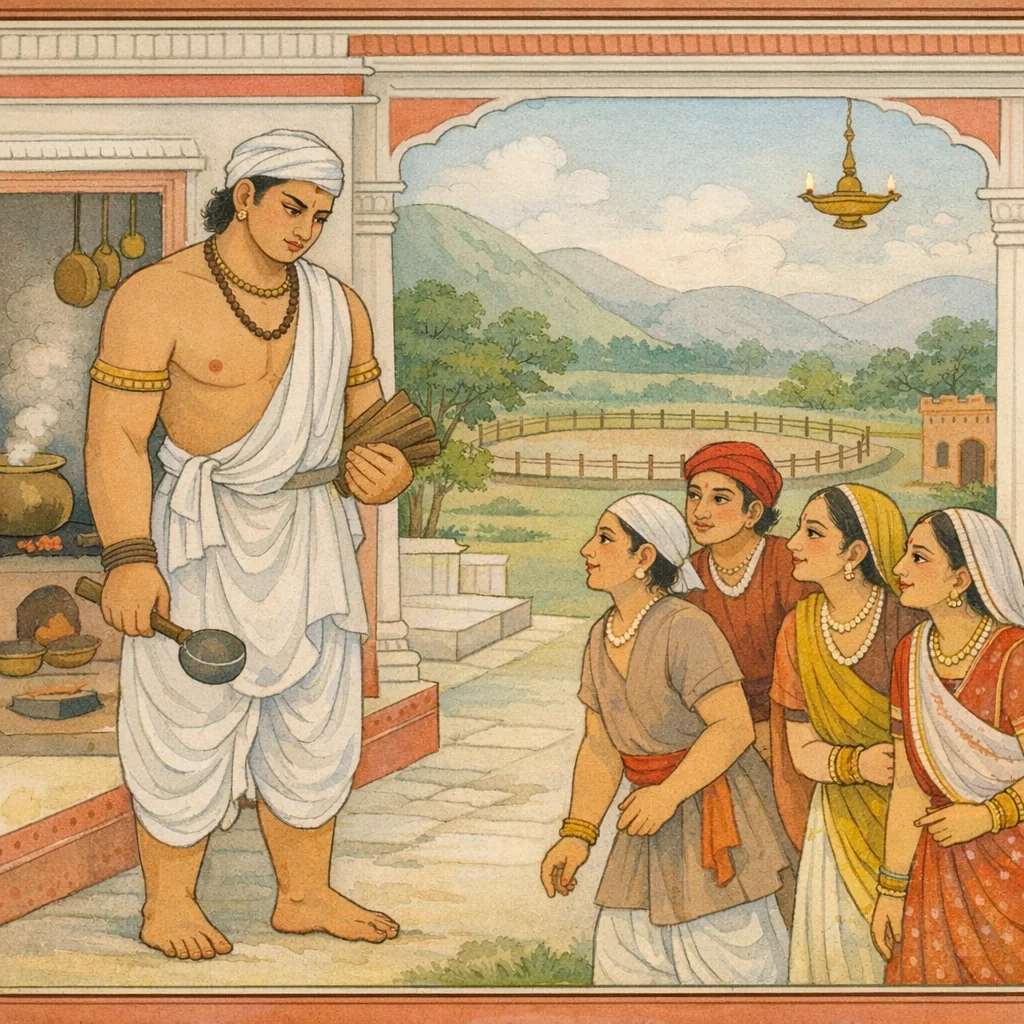
The chapter is a planning dialogue during the Pandavas’ transition into Virāṭa’s realm. Bhīma proposes a concealment-identity as “Ballava,” presenting himself as a skilled kitchen specialist (sūpakāra/mahānasa) who can win royal favor through competent service, provisioning, and controlled demonstrations of strength. He outlines a protocol for public contests: if compelled to engage powerful animals or challengers, he will subdue without lethal harm, preserving order while avoiding attention that could compromise secrecy. Yudhiṣṭhira then frames Arjuna’s exceptional martial stature through a series of comparative superlatives, stressing the problem of masking such visible excellence. Arjuna responds with a concrete concealment strategy: he will take a vow to present as a eunuch/third-gender performer-teacher (ṣaṇḍhaka), adopt the name Bṛhannadā, and work within the women’s quarters as an instructor of music, dance, and instrumental arts. He emphasizes practical constraints (notably the difficulty of hiding calluses and marks from archery practice) and commits to sustained role-performance as a disciplined method of self-protection and vow-compliance during ajñātavāsa.
Chapter Arc: पहले अध्याय की गुप्त मन्त्रणा के बाद भीमसेन आगे बढ़कर अपना वेश और सेवा-कार्य स्वयं चुनता है—रसोईघर में, जहाँ शक्ति को साधारण श्रम का मुखौटा पहनना होगा। → भीम अपने कौशल का दावा करता है—महानसे में व्यंजन बनाना, भारी लकड़ियों के गट्ठर उठाना, और सभा-समाज में मल्लों को चुनौती देकर राजा विराट का मनोरंजन बढ़ाना। पर हर वाक्य के साथ खतरा भी बढ़ता है: यदि उसकी असाधारण क्षमता प्रकट हो गई तो पहचान खुल सकती है; यदि अपमान सहना पड़ा तो क्रोध फूट सकता है। → भीम अपने छद्म-जीवन की रणनीति को चरम पर ले जाता है—वह कहता है कि वह ऐसा प्रभाव जमाएगा कि विराट के अन्य सेवक उसे राजा-सा मानेंगे, और जो भी दंगल में उतरेगा उसे वह परास्त करेगा; इसी के समानान्तर अध्याय में ‘छन्न’ रहने की नीति (राख में छिपी अग्नि) और अर्जुन के ‘षण्ढक’ रूप की कठोर प्रतिज्ञा का संकेत (वलयों से भुजाएँ ढँकना) छद्म-धर्म की तीक्ष्णता को उभार देता है। → पाण्डवों की योजना एक ठोस सामाजिक ढाँचे में बैठती है—हर भाई/सखा अपने-अपने कार्य-क्षेत्र में ऐसा स्थान लेता है जहाँ वे उपयोगी भी रहें और छिपे भी; विराट-भवन उनके लिए ‘सुख’ का नहीं, ‘सावधानी’ का निवास बनता है। → असाधारण बल और कौशल के प्रदर्शन से भीम (और आगे चलकर अर्जुन) की पहचान कब और किसके सामने फिसलेगी—यह आशंका अध्याय के अंत में धड़कती रहती है।
Shlokas
Verse 1
इस प्रकार श्रीमह्या भारत विराटपर्वके अन्तर्गत पाण्डवप्रवेशपर्वमें गुधिछ्ठिर आदिकी परस्पर मन्त्रणासे सम्बन्ध रखनेवाला पहला अध्याय पूरा हुआ,भीमसेनने कहा--भरतवंशशिरोमणे! मैं पौरोगवः. (पाकशालाका अध्यक्ष) बनकर और बलल्लवः नामसे अपना परिचय देकर राजा विराटके दरबारमें उपस्थित होऊँगा। मेरा यही विचार है
Thus ends the first chapter of the Pāṇḍava-Entrance section within the Virāṭa Parva of the Śrī Mahābhārata, dealing with the mutual counsel of Yudhiṣṭhira and the others. Then Bhīmasena said: “O crest-jewel of the Bharata line! I shall present myself in King Virāṭa’s court as the superintendent of the royal kitchen, introducing myself by the name Ballava. This is my settled plan.”
Verse 2
सूपानस्य करिष्यामि कुशलो5स्मि महानसे । कृतपूर्वाणि यान्यस्य व्यज्जनानि सुशिक्षितै:,इति श्रीमहा भारते विराटपर्वणि पाण्डवप्रवेशपर्वणि युधिष्ठिरादिमन्त्रणे द्वितीयो5ध्याय:
Bhīmasena said: “I will take up the work of a cook. I am skilled in the royal kitchen; I have previously prepared the various dishes that are made by well-trained cooks.” In this way, as the Pāṇḍavas deliberate on their concealed entry into Virāṭa’s realm, Bhīma proposes an honest, service-based disguise—choosing competence and restraint over pride, so that their dharma of keeping the vow of incognito may be protected.
Verse 3
आहरिष्यामि दारूणां निचयान् महतो5पि च,इतना ही नहीं, मैं रसोईके लिये लकड़ियोंके बड़े-से-बड़े गट्टोंकी भी उठा लाऊँगा, जिस महान् कर्मको देखकर राजा विराट मुझे अवश्य रसोइयेके कामपर नियुक्त कर लेंगे। भारत! मैं वहाँ ऐसे-ऐसे अद्भुत कार्य करता रहूँगा, जो साधारण मनुष्योंकी शक्तिके बाहर है
Bhīmasena declares that he will bring in great heaps of firewood—even the largest bundles—for the royal kitchen. By performing such formidable labor, beyond the capacity of ordinary men, he intends to make his strength unmistakable so that King Virāṭa will appoint him to kitchen service. The ethical undertone is strategic self-restraint: he will reveal usefulness without revealing identity, sustaining the vow of concealment while serving the household.
Verse 4
यत् प्रेक्ष्य विपुलं कर्म राजा संयोक्ष्यते स माम् । अमानुषाणि कुर्वाणस्तानि कर्माणि भारत,इतना ही नहीं, मैं रसोईके लिये लकड़ियोंके बड़े-से-बड़े गट्टोंकी भी उठा लाऊँगा, जिस महान् कर्मको देखकर राजा विराट मुझे अवश्य रसोइयेके कामपर नियुक्त कर लेंगे। भारत! मैं वहाँ ऐसे-ऐसे अद्भुत कार्य करता रहूँगा, जो साधारण मनुष्योंकी शक्तिके बाहर है
Bhīmasena said: “Seeing the magnitude of my work, King Virāṭa will surely appoint me to that post. O Bhārata, I shall keep performing such extraordinary deeds—beyond the power of ordinary men—so that my worth becomes unmistakable.”
Verse 5
राज्ञस्तस्य परे प्रेष्या मंस्यन्ते मां यथा नृूपम् । भनक्ष्यान्नरसपानानां भविष्यामि तथेश्वर:,इससे राजा विराटके दूसरे सेवक राजाके ही समान मेरा सम्मान करेंगे और मैं भक्ष्य, भोज्य, रस तथा पेय पदार्थोंका इच्छानुसार उपयोग करनेमें समर्थ होऊँगा
Bhīmasena said: “The other attendants of that king will regard me as they would the king himself; and I shall have full authority to partake, as I wish, of foods to be eaten and chewed, prepared dishes, juices, and drinks.”
Verse 6
द्विपा वा बलिनो राजन् वृषभा वा महाबला: | विनिग्राह्मा यदि मया निग्रहीष्यामि तानपि,राजन्! बलवान् हाथी अथवा महाबली बैल भी यदि काबूमें करनेके लिये मुझे सौंपे जायँगे तो मैं उन्हें भी बाँधकर अपने वशमें कर लूँगा
Bhīmasena said: “O King, whether they be powerful elephants or mighty bulls—if they are entrusted to me to be restrained, I shall subdue even them and bring them under control.”
Verse 7
ये च केचिन्नियोत्स्यन्ति समाजेषु नियोधका: । तानहं हि नियोत्स्यामि रतिं तस्य विवर्धयन्,तथा जो कोई भी मल्लयुद्ध करनेवाले पहलवान जनसमाजमें दंगल करना चाहेंगे, राजाका प्रेम बढ़ानेके, लिये मैं उनसे भी भिड़ जाऊँगा
Bhīmasena said: “And if any wrestlers in the public assemblies wish to engage in bouts, I will indeed take them on as well—thereby increasing that king’s delight.”
Verse 8
न त्वेतान् युद्धयमानान् वै हनिष्यामि कथजठ्चन । तथैतान् पातयिष्यामि यथा यास्यन्ति न क्षयम्,परंतु कुश्ती करनेवाले इन पहलवानोंको मैं किसी प्रकार जानसे नहीं मारूँगा; अपितु इस प्रकार नीचे गिराऊँगा, जिससे उनकी मृत्यु न हो
Bhīmasena said: “I will not, in any way, kill these wrestlers while they are fighting. Rather, I shall throw them down in such a manner that they do not meet destruction (death).”
Verse 9
आरालिको गोविकर्ता सूपकर्ता नियोधक: । आसं युधिष्ठटिरस्याहमिति वक्ष्यामि पृच्छत:,महाराजके पूछनेपर मैं यह कहूँगा कि मैं राजा युधिष्ठिरके यहाँ आरालिक (मतवाले हाथियोंको भी काबूमें करनेवाला गजशिक्षक), गोविकर्ता (महाबली वृषभोंको भी पछाड़कर उन्हें नाथनेवाला), सूपकर्ता (दाल-साग आदि भाँति-भाँतिके व्यंजन बनानेवाला) तथा नियोधक (दंगली पहलवान) रहा हूँ
Bhīmasena said: “If questioned, O king, I shall declare that I have served Yudhiṣṭhira as an ārālika, a tamer of cattle, a cook, and a wrestler.”
Verse 10
आत्मानमात्मना रक्षंक्षरिष्यामि विशाम्पते । इत्येतत् प्रतिजानामि विहरिष्याम्यहं यथा,राजन्! अपने-आप अपनी रक्षा करते हुए मैं विराटके नगरमें विचरूँगा। मुझे विश्वास है कि इस प्रकार मैं वहाँ सुखपूर्वक रह सकूँगा
Bhīmasena said: “O lord of the people, I pledge this: relying on my own strength and vigilance, I shall protect myself and move about within Virāṭa’s city in such a way, O king, that I can live there safely and without hindrance.”
Verse 11
युधिछ्िर उवाच यमन्निब्रद्यिणो भूत्वा समागच्छन्नणां वरम् । दिधक्षु: खाण्डवं दावं दाशार्हसहितं पुरा,युधिष्ठिर बोले--जो मनुष्योंमें श्रेष्ठ महाबली और महाबाहु है, पहले भगवान् श्रीकृष्णके साथ बैठे हुए जिस अर्जुनके पास खाण्डववनको जलानेकी इच्छासे ब्राह्मणका रूप धारण करके साक्षात् अग्निदेव पधारे थे, जो कुरुकुलको आनन्द देनेवाला तथा किसीसे भी परास्त न होनेवाला है, वह कुन्तीनन्दन धनंजय विराटनगरमें कौन-सा कार्य करेगा?
Yudhiṣṭhira said: “Formerly, when Agni—the foremost among the gods—came to Arjuna in the guise of a brāhmaṇa, desiring to burn the Khāṇḍava forest, while Arjuna sat together with Śrī Kṛṣṇa of the Dāśārha line: that unconquerable Dhanañjaya, the delight of the Kuru race—what task will he undertake in the city of Virāṭa?”
Verse 12
महाबलं महाबाहुमजितं कुरुनन्दनम् । सो<यं कि कर्म कौन्तेय: करिष्यति धनंजय:,युधिष्ठिर बोले--जो मनुष्योंमें श्रेष्ठ महाबली और महाबाहु है, पहले भगवान् श्रीकृष्णके साथ बैठे हुए जिस अर्जुनके पास खाण्डववनको जलानेकी इच्छासे ब्राह्मणका रूप धारण करके साक्षात् अग्निदेव पधारे थे, जो कुरुकुलको आनन्द देनेवाला तथा किसीसे भी परास्त न होनेवाला है, वह कुन्तीनन्दन धनंजय विराटनगरमें कौन-सा कार्य करेगा?
Yudhiṣṭhira said: “What task will this Kuntī’s son, Dhanaṃjaya, undertake in Virāṭa’s city—he who is supremely mighty and long-armed, unconquered, a delight to the Kuru line?”
Verse 13
योडयमासाद्य तं दावं तर्पपामास पावकम् । विजित्यैकरथेनेन्द्रं हत्वा पन्नगराक्षसान्,जिसने खाण्डवदाहके समय वहाँ पहुँचकर एकमात्र रथका आश्रय ले इन्द्रको पराजित कर तथा नागों एवं राक्षसोंको मारकर अग्निदेवको तृप्त किया और अपने अप्रतिम सौन्दर्यसे नागराज वासुकिकी बहिन उलूपीका चित्त चुरा लिया एवं जो सम्मुख युद्ध करनेवाले वीरोंमें सबसे श्रेष्ठ है, वह अर्जुन वहाँ क्या काम करेगा?
Yudhiṣṭhira said: “He who, arriving at that forest-conflagration, satisfied Agni; who, standing upon a single chariot, overcame Indra and slew the serpents and the rākṣasas—such an Arjuna, the foremost among heroes who fight face to face, what task would he have to do there?”
Verse 14
वासुके: सर्पराजस्य स्वसारं हतवांश्व यः । श्रेष्ठो य: प्रतियोधानां सो<र्जुन: कि करिष्यति,जिसने खाण्डवदाहके समय वहाँ पहुँचकर एकमात्र रथका आश्रय ले इन्द्रको पराजित कर तथा नागों एवं राक्षसोंको मारकर अग्निदेवको तृप्त किया और अपने अप्रतिम सौन्दर्यसे नागराज वासुकिकी बहिन उलूपीका चित्त चुरा लिया एवं जो सम्मुख युद्ध करनेवाले वीरोंमें सबसे श्रेष्ठ है, वह अर्जुन वहाँ क्या काम करेगा?
Yudhiṣṭhira said: “He who won the heart of Ulūpī, sister of Vāsuki the king of serpents, and who is the foremost among warriors that meet an enemy face to face—what, then, will that Arjuna do there (in this situation)?”
Verse 15
सूर्य: प्रतपतां श्रेष्ठो द्विपदां ब्राह्मणो वर: । आशीविषश्ष सर्पाणामग्निस्तेजस्विनां वर:,जैसे तपनेवाले तेजस्वी पदार्थोमें सूर्य श्रेष्ठ हैं, मनुष्योंमें ब्राह्मणका स्थान ऊँचा है, जैसे सर्पोमें आशीविष जातिवाले सर्प महान् हैं, तेजस्वियोंमें अन्न श्रेष्ठ हैं, अस्त्र-शस्त्रोंमें वज्ञका स्थान ऊँचा है, गौओंमें ऊँचे कंधेवाला साँड़ बड़ा माना गया है, जलाशयोंमें समुद्र सबसे महान है, वर्षा करनेवाले मेघोंमें पर्जन्य श्रेष्ठ हैं, नागोंमें धृतराष्ट्र तथा हाथियोंमें ऐरावत बड़ा है, जैसे प्रिय सम्बन्धियोंमें पुत्र सबसे अधिक प्रिय है और अकारण हित चाहनेवाले सुहदोंमें धर्मपत्नी सबसे बढ़कर है, जैसे पर्वतोंमें मेरु श्रेष्ठ है, देवताओंमें मधुसूदन भगवान् विष्णु श्रेष्ठ हैं, ग्रहोंमें चन्द्रमा श्रेष्ठ हैं और सरोवरोंमें मानसरोवर श्रेष्ठ है। भीमसेन! अपनी-अपनी जातिमें जिस प्रकार ये पूर्वोक्त वस्तुएँ विशिष्ट मानी गयी हैं, वैसे ही सम्पूर्ण धनुर्धारियोंमें युवावस्थासे सम्पन्न यह गुडाकेश (निद्राविजयी) अर्जुन श्रेष्ठ है
Yudhiṣṭhira said: “Among all that blaze with heat, the Sun is supreme; among two-footed beings, the Brāhmaṇa is foremost. Among serpents, the deadly āśīviṣa is pre-eminent; and among the radiant and powerful, Fire is the best.” By such comparisons, he sets forth a hierarchy of excellence—each class has its acknowledged pinnacle—preparing Bhīma to accept that, in the same way, Arjuna stands foremost among bowmen.
Verse 16
आयुधानां वरं वज्र॑ ककुझी च गवां वर: । हृदानामुदधि: श्रेष्ठ: पर्जन्यो वर्षतां वर:,जैसे तपनेवाले तेजस्वी पदार्थोमें सूर्य श्रेष्ठ हैं, मनुष्योंमें ब्राह्मणका स्थान ऊँचा है, जैसे सर्पोमें आशीविष जातिवाले सर्प महान् हैं, तेजस्वियोंमें अन्न श्रेष्ठ हैं, अस्त्र-शस्त्रोंमें वज्ञका स्थान ऊँचा है, गौओंमें ऊँचे कंधेवाला साँड़ बड़ा माना गया है, जलाशयोंमें समुद्र सबसे महान है, वर्षा करनेवाले मेघोंमें पर्जन्य श्रेष्ठ हैं, नागोंमें धृतराष्ट्र तथा हाथियोंमें ऐरावत बड़ा है, जैसे प्रिय सम्बन्धियोंमें पुत्र सबसे अधिक प्रिय है और अकारण हित चाहनेवाले सुहदोंमें धर्मपत्नी सबसे बढ़कर है, जैसे पर्वतोंमें मेरु श्रेष्ठ है, देवताओंमें मधुसूदन भगवान् विष्णु श्रेष्ठ हैं, ग्रहोंमें चन्द्रमा श्रेष्ठ हैं और सरोवरोंमें मानसरोवर श्रेष्ठ है। भीमसेन! अपनी-अपनी जातिमें जिस प्रकार ये पूर्वोक्त वस्तुएँ विशिष्ट मानी गयी हैं, वैसे ही सम्पूर्ण धनुर्धारियोंमें युवावस्थासे सम्पन्न यह गुडाकेश (निद्राविजयी) अर्जुन श्रेष्ठ है
Yudhiṣṭhira said: “Among weapons, the thunderbolt (Vajra) is supreme; among cattle, the bull with lofty shoulders is best. Among lakes and pools, the ocean is the greatest; among those that pour down rain, Parjanya is foremost.” By such comparisons he makes his meaning plain: as each kind has its acknowledged excellence, so among all bowmen Arjuna—Guḍākeśa, the conqueror of sleep—stands pre-eminent, and should be held the chief support in a time of trial.
Verse 17
धृतराष्ट्रश्न नागानां हस्तिष्वैरावणो वर: । पुत्र: प्रियाणामधिको भार्या च सुह्ृदां वरा,जैसे तपनेवाले तेजस्वी पदार्थोमें सूर्य श्रेष्ठ हैं, मनुष्योंमें ब्राह्मणका स्थान ऊँचा है, जैसे सर्पोमें आशीविष जातिवाले सर्प महान् हैं, तेजस्वियोंमें अन्न श्रेष्ठ हैं, अस्त्र-शस्त्रोंमें वज्ञका स्थान ऊँचा है, गौओंमें ऊँचे कंधेवाला साँड़ बड़ा माना गया है, जलाशयोंमें समुद्र सबसे महान है, वर्षा करनेवाले मेघोंमें पर्जन्य श्रेष्ठ हैं, नागोंमें धृतराष्ट्र तथा हाथियोंमें ऐरावत बड़ा है, जैसे प्रिय सम्बन्धियोंमें पुत्र सबसे अधिक प्रिय है और अकारण हित चाहनेवाले सुहदोंमें धर्मपत्नी सबसे बढ़कर है, जैसे पर्वतोंमें मेरु श्रेष्ठ है, देवताओंमें मधुसूदन भगवान् विष्णु श्रेष्ठ हैं, ग्रहोंमें चन्द्रमा श्रेष्ठ हैं और सरोवरोंमें मानसरोवर श्रेष्ठ है। भीमसेन! अपनी-अपनी जातिमें जिस प्रकार ये पूर्वोक्त वस्तुएँ विशिष्ट मानी गयी हैं, वैसे ही सम्पूर्ण धनुर्धारियोंमें युवावस्थासे सम्पन्न यह गुडाकेश (निद्राविजयी) अर्जुन श्रेष्ठ है
Yudhiṣṭhira said: “Among the Nāgas, Dhṛtarāṣṭra is foremost; among elephants, Airāvaṇa is the best. Among all that is dear, a son is dearest; and among well-wishers who seek one’s good without ulterior motive, a wife is the foremost. In the same way—O Bhīmasena—as each class has its acknowledged excellence, so among all bowmen Arjuna, the sleep-conqueror (Guḍākeśa), stands supreme.”
Verse 18
(गिरीणां प्रवरो मेरुदेवानां मधुसूदन: । ग्रहाणां प्रवरश्नन्द्र: सरसां मानसं वरम् ।।) यथैतानि विशिष्टानि जात्यां जात्यां वृकोदर । एवं युवा गुडाकेश: श्रेष्ठ: सर्वधनुष्मताम्,जैसे तपनेवाले तेजस्वी पदार्थोमें सूर्य श्रेष्ठ हैं, मनुष्योंमें ब्राह्मणका स्थान ऊँचा है, जैसे सर्पोमें आशीविष जातिवाले सर्प महान् हैं, तेजस्वियोंमें अन्न श्रेष्ठ हैं, अस्त्र-शस्त्रोंमें वज्ञका स्थान ऊँचा है, गौओंमें ऊँचे कंधेवाला साँड़ बड़ा माना गया है, जलाशयोंमें समुद्र सबसे महान है, वर्षा करनेवाले मेघोंमें पर्जन्य श्रेष्ठ हैं, नागोंमें धृतराष्ट्र तथा हाथियोंमें ऐरावत बड़ा है, जैसे प्रिय सम्बन्धियोंमें पुत्र सबसे अधिक प्रिय है और अकारण हित चाहनेवाले सुहदोंमें धर्मपत्नी सबसे बढ़कर है, जैसे पर्वतोंमें मेरु श्रेष्ठ है, देवताओंमें मधुसूदन भगवान् विष्णु श्रेष्ठ हैं, ग्रहोंमें चन्द्रमा श्रेष्ठ हैं और सरोवरोंमें मानसरोवर श्रेष्ठ है। भीमसेन! अपनी-अपनी जातिमें जिस प्रकार ये पूर्वोक्त वस्तुएँ विशिष्ट मानी गयी हैं, वैसे ही सम्पूर्ण धनुर्धारियोंमें युवावस्थासे सम्पन्न यह गुडाकेश (निद्राविजयी) अर्जुन श्रेष्ठ है
Yudhiṣṭhira said: “Among mountains, Meru is foremost; among the gods, Madhusūdana (Viṣṇu) is supreme; among the heavenly bodies, the Moon is pre-eminent; and among lakes, Mānasa (Mānasa-sarovara) is the best. Just as these are regarded as outstanding, each within its own kind—O Vṛkodara—so too this youthful Guḍākeśa (Arjuna) is the finest of all bowmen.”
Verse 19
सो<यमिन्द्रादनवरो वासुदेवान्महाद्युति: । गाण्डीवधन्वा बीभत्सु: श्वेताश्वः कि करिष्यति,यह देवराज इन्द्र और भगवान् श्रीकृष्णसे किसी बातमें कम नहीं है। श्वेत घोड़ोंवाले रथपर चलनेवाला यह महातेजस्वी गाण्डीवधारी बीभत्सु (अर्जुन) वहाँ कौन-सा कार्य करेगा?
Yudhiṣṭhira said: “This very one—radiant and mighty—falls short of neither Indra, lord of the gods, nor Vāsudeva (Kṛṣṇa). Bearing the Gāṇḍīva bow, the dread-inspiring Bībhatsu (Arjuna), riding a chariot drawn by white horses—what task will he not accomplish there?”
Verse 20
उषित्वा पञ्ज वर्षाणि सहस्राक्षस्य वेश्मनि । अस्त्रयोगं समासाद्य स्ववीर्यान्मानुषाद्भुतम् । दिव्यान्यस्त्राणि चाप्तानि देवरूपेण भास्वता,इसने पाँच वर्षोतक देवराज इन्द्रके भवनमें रहकर ऐसे दिव्यास्त्र प्राप्त किये हैं, जिनका मनुष्योंमें होना एक अद्भुत-सी बात है। अपने देवोपम स्वरूपसे प्रकाशित होनेवाले अर्जुनने अनेक दिव्यास्त्र पाये हैं
Yudhiṣṭhira said: “Having dwelt for five years in the palace of Sahasrākṣa (Indra), he mastered the discipline of celestial weapons and attained a prowess wondrous for a human. Shining with godlike radiance, Arjuna obtained many divine missiles.” In context, the words declare that Arjuna’s strength is not mere aggression, but a disciplined power sanctioned by the gods—won through austerity, training, and rightful patronage, to be wielded in the service of dharma, not personal pride.
Verse 21
य॑ मन्ये द्वादशं रुद्रमादित्यानां त्रयोदशम् । वसूनां नवमं मन्ये ग्रहाणां दशमं तथा,जिस अर्जुनको मैं बारहवाँ रुद्र और तेरहवाँ आदित्य मानता हूँ, नवम वसु तथा दसवाँ ग्रह स्वीकार करता हूँ
Yudhiṣṭhira said: “I regard him as the twelfth among the Rudras and the thirteenth among the Ādityas; I also deem him the ninth among the Vasus and likewise the tenth among the Grahas.”
Verse 22
यस्य बाहू समौ दीर्घौ ज्याघातकठिनत्वचौ । दक्षिणे चैव सव्ये च गवामिव वह: कृत:,जिसकी दोनों भुजाएँ एक-सी विशाल हैं; प्रत्यंचाके आधातसे उनकी त्वचा कठोर हो गयी है। जैसे बैलोंके कंधोंपर जुआठेकी रगड़से चिह्न बन जाता है, उसी प्रकार जिसकी दाहिनी और बायीं भुजाओंपर प्रत्यंचाकी रगड़से चिह्न बन गये हैं
Yudhiṣṭhira said: “He whose two arms are equally long and mighty, whose skin has grown hard from the repeated удар of the bowstring—on whose right and left arms there are marks, like the yoke-marks that form on the shoulders of oxen—such a one bears the unmistakable signs of a practiced archer.”
Verse 23
हिमवानिव शैलानां समुद्र: सरितामिव । त्रिदशानां यथा शक्रो वसूनामिव हव्यवाट्,जैसे पर्वतोंमें हिमालय, सरिताओंमें समुद्र, देवताओं में इन्द्र, वसुओंमें हव्यवाहक अग्नि, मृगोंमें सिंह तथा पक्षियोंमें गरुड़ श्रेष्ठ हैं, उसी प्रकार कवचधारी वीरोंमें जिसका स्थान सबसे ऊँचा है, वह अर्जुन विराटनगरमें जाकर कया काम करेगा?
Yudhiṣṭhira said: “Just as Himavān (the Himalaya) is foremost among mountains, the ocean among rivers, Śakra (Indra) among the gods, and Havyavāha (Agni) among the Vasus—so too Arjuna stands highest among armour-clad heroes. What task could such a peerless warrior possibly have by going to the city of Virāṭa?”
Verse 24
मृगाणामिव शार्दूलो गरुड: पततामिव । वर: संनहामानानां सो्र्जुन: कि करिष्यति,जैसे पर्वतोंमें हिमालय, सरिताओंमें समुद्र, देवताओं में इन्द्र, वसुओंमें हव्यवाहक अग्नि, मृगोंमें सिंह तथा पक्षियोंमें गरुड़ श्रेष्ठ हैं, उसी प्रकार कवचधारी वीरोंमें जिसका स्थान सबसे ऊँचा है, वह अर्जुन विराटनगरमें जाकर कया काम करेगा?
Yudhiṣṭhira said: “As the tiger is foremost among beasts and Garuḍa among birds, so Arjuna stands supreme among warriors who are armed and arrayed for battle. What task, then, will that Arjuna accomplish by going to the city of Virāṭa?”
Verse 25
अजुन उवाच प्रतिज्ञां पण्ढको5स्मीति करिष्यामि महीपते । ज्याघातौ हि महान्तौ मे संवर्तु नृप दुष्करी
Arjuna said: “O lord of the earth, I shall make the vow that I am a eunuch. Yet, O king, it will be difficult for me to maintain it, for the twang of my bowstring and the force of my bow are great.”
Verse 26
तान्यप्यभिभविष्यामि प्रीति संजनयन्नहम् । मैं रसोई बनानेके काममें चतुर हूँ। अपने ऊपर राजाके मनमें अत्यन्त प्रेम उत्पन्न करनेके उद्देश्यसे उनके लिये सूप (दाल, कढ़ी एवं साग आदि) तैयार करूँगा और पाककलामें भलीभाँति शिक्षा पाये हुए चतुर रसोइयोंने राजाके लिये पहले जो-जो व्यंजन बनाये होंगे, उन्हें भी अपने बनाये हुए व्यंजनोंसे तुच्छ सिद्ध कर दूँगा,कर्णयो: प्रतिमुच्याहं कुण्डले ज्वलनप्रभे मैं दोनों कानोंमें अग्निके समान कान्तिमान् कुण्डल पहनकर हाथोंमें शंखकी चूड़ियाँ धारण कर लूँगा। इस प्रकार तीसरी प्रकृति (नपुंसकभाव)-को अपनाकर सिरपर चोटी गूँथ लूँगा और अपनेको बृहन्नला नामसे घोषित करूँगा
Bhīmasena said: “I shall surpass even those skilled cooks, while winning the king’s affection. To kindle deep goodwill in his heart, I will prepare soups and other dishes for him, and I will make seem insignificant whatever delicacies the well-trained, clever cooks have previously made for the king.”
Verse 27
पिनद्धकम्बु: पाणिभ्यां तृतीयां प्रकृतिं गत: । वेणीकृतशिरा राजन् नाम्ना चैव बृहन्नला,मैं दोनों कानोंमें अग्निके समान कान्तिमान् कुण्डल पहनकर हाथोंमें शंखकी चूड़ियाँ धारण कर लूँगा। इस प्रकार तीसरी प्रकृति (नपुंसकभाव)-को अपनाकर सिरपर चोटी गूँथ लूँगा और अपनेको बृहन्नला नामसे घोषित करूँगा
Arjuna said: “O King, I shall wear conch-shell bangles upon my hands and, adopting the third state of nature (the condition of a eunuch), I shall braid my hair into a plait. Thus I will be known by the name ‘Bṛhannalā.’”
Verse 28
पठन्नाख्यायिकाश्वैव स्त्री भावेन पुन: पुन: । रमयिष्ये महीपालमन्यांश्चान्त:पुरे जनान्
Arjuna said: “By repeatedly adopting a woman’s role, I shall read aloud tales and narratives, and thus entertain the king and the other people within the inner apartments.”
Verse 29
सत्रीभावसे अपने स्वरूपको छिपाकर बारंबार पूर्ववर्ती राजाओंके चरित्रोंका गान करके महाराज विराट तथा अन्तःपुरकी अन्यान्य स्त्रियोंका मनोरंजन करूँगा ।। गीत॑ नृत्यं विचित्र च वादित्रं विविध॑ तथा । शिक्षयिष्याम्यहं राजन् विराटस्य पुरस्त्रिय:,राजन! मैं विराटनगरकी स्त्रियोंको गीत गाने, विचित्र ढंगसे नृत्य करने तथा भाँति- भाँतिके बाजे बजानेकी शिक्षा दूँगा
Arjuna said: “O King, I shall teach the women of Virāṭa’s city to sing, to dance in varied and graceful styles, and to play diverse musical instruments. Thus, while concealing my true identity, I will live by an honorable craft and serve the royal household without compromising dharma.”
Verse 30
प्रजानां समुदाचारं बहु कर्म कृतं वदन् छादयिष्यामि कौन्तेय मायया55त्मानमात्मना,कुन्तीनन्दन! प्रजाजनोंके उत्तम आचार-विचार और उनके किये हुए अनेक प्रकारके सत्कर्मोंका वर्णन करता हुआ मैं मायामय नपुंसकवेशसे बुद्धिद्वारा अपने यथार्थ स्वरूपको छिपाये रखूँगा
O son of Kuntī, while speaking of the people’s noble conduct and the many worthy deeds they have done, I will, by my own intelligence, keep my true self concealed beneath a eunuch’s disguise wrought by māyā.
Verse 31
(दाक्षिणात्य अधिक पाठके ६६ श्लोक मिलाकर कुल ३४३ “लोक हैं।) हः. “5 (9) ४६७६३ - विश्वकोषके अनुसार “कंक' शब्द यमराजका वाचक है। यमराजका ही दूसरा नाम धर्म है और वे ही युधिष्ठिररूपमें अवतीर्ण हुए थे। “आत्मा वै जायते पुत्र:” इस उक्तिके अनुसार भी धर्म एवं धर्मपुत्र युधिष्ठिरमें कोई अन्तर नहीं है। यह समझकर ही अपनी सत्यवादिताकी रक्षा करते हुए युधिष्ठिरने 'कंक' नामसे अपना परिचय दिया। इसके सिवा उन्होंने जो अपनेको युधिष्ठिरका प्राणोंके समान प्रिय सखा बताया, वह भी असत्य नहीं है। युधिष्ठिर नामक शरीरको ही यहाँ युधिष्ठिर समझना चाहिये। आत्माकी सत्तासे ही शरीरका संचालन होता है। अत: आत्मा उसके साथ रहनेके कारण उसका सखा है। आत्मा सबसे बढ़कर प्रिय है ही; अत: यहाँ युधिष्ठिरका आत्मा युधिष्ठिर-शरीरका प्रिय सखा कहा गया है। द्वितीयो&्ध्याय: भीमसेन और अर्जुनद्वारा विराटनगरमें किये जानेवाले अपने अनुकूल कारयोंका निर्देश भीमसेन उवाच पौरोगवो ब्रुवाणो5हं बल्लवो नाम भारत । उपस्थास्यामि राजानं विराटमिति मे मति:,युधिष्ठिरस्य गेहे वै द्रौपद्या: परिचारिका । उषितास्मीति वक्ष्यामि पृष्टो राज्ञा च पाण्डव पाण्डुनन्दन! यदि राजा विराटने मेरा परिचय पूछा, तो मैं कह दूँगा कि मैं महाराज युधिष्ठिरके घरमें महारानी द्रौपदीकी परिचारिकाः रह चुकी हूँ
Bhīmasena said: “O Bhārata, presenting myself as Paurogava, named Ballava, I intend to enter the service of King Virāṭa. And if the king questions me, O Pāṇḍava, I shall say: ‘Indeed, I once lived in Yudhiṣṭhira’s household as an attendant of Draupadī.’”
Verse 32
एतेन विधिना छन्न: कृतकेन यथानल: । विहरिष्यामि राजेन्द्र विराटभवने सुखम्,राजेन्द्र! इस प्रकार कृत्रिम वेशभूषासे राखमें छिपी हुई अग्निके समान अपनेको छिपाकर मैं विराटके महलमें सुखपूर्वक निवास करूँगा
Arjuna said: “By this method, concealed in an assumed guise—like fire hidden beneath ashes—I shall remain undiscovered and live at ease within King Virāṭa’s palace.”
Verse 253
वलयैश्छादयिष्यामि बाहू किणकृताविमौ | अर्जुनने कहा--महाराज! मैं राजाकी सभामें यह दृढ़तापूर्वक कहूँगा कि मैं षण्ढक (नपुंसक) हूँ। राजन! यद्यपि मेरी दायीं-बायीं भुजाओंमें धनुषकी डोरीकी रगड़से जो महान् चिह्न बन गये हैं, उन्हें छिपाना बहुत कठिन है तथापि कंगन आदि आशभूषणोंसे मैं इन ज्याघातचिहल्लित भुजाओंको ढक-लूँगा
Arjuna said: “I shall cover these two arms, which bear the calluses and marks made by the bowstring’s friction, with bangles. In the king’s assembly I will firmly declare myself to be a eunuch—so that my true identity remains concealed and our dharma of keeping the vow of incognito is not broken.”
Frequently Asked Questions
The dilemma is how to remain effective and protective while bound to concealment: Bhīma must reconcile strength with non-lethal restraint, and Arjuna must reconcile warrior identity with a socially inconspicuous role that preserves the vow and host-kingdom stability.
Ethical agency can be expressed through appropriate roles and timing: disciplined self-control, service competence, and calibrated force allow one to uphold vows and public order even when direct self-assertion is temporarily suspended.
No explicit phalaśruti is stated here; the chapter’s meta-function is pragmatic and structural—establishing concealment protocols that preserve dharma and enable later narrative disclosure without violating the ajñātavāsa condition.