Adhyaya 73
Adhyāya 73: Damayantī’s Investigation of Bāhuka (Keśinī’s Observations)
Upa-parva: Nalopākhyāna (The Tale of Nala and Damayantī)
Bṛhadaśva narrates Damayantī’s escalating inquiry after hearing suggestive reports about Bāhuka. Grief-stricken yet methodical, she instructs her attendant Keśinī to return and scrutinize Bāhuka’s conduct at close range, specifying controlled tests: observe his actions when he performs tasks; do not obstruct him; provide fire without delay; and do not offer water unless requested—so that spontaneous behaviors may be reliably noted. Keśinī reports extraordinary, non-ordinary indicators: unusual movement and posture, remarkable handling of provisions, a vessel becoming full upon his glance, fire kindling instantaneously from a simple grass bundle, and an apparent immunity to burning. She also observes water responding swiftly to his intention and flowers becoming more fragrant when touched and gently crushed in his hands. Damayantī interprets these signs as consistent with Nala’s distinctive competencies and auspicious conduct. Still cautious, she sends Keśinī again to obtain meat prepared by Bāhuka; tasting it, Damayantī recognizes the unique culinary skill associated with Nala and cries out in intense distress. A further development occurs when Bāhuka encounters the twins (Indrasenā and her brother with her), embraces them emotionally, weeps, and then instructs Keśinī to depart to avoid public suspicion, identifying the children as resembling his own—thereby reinforcing recognition through involuntary affect and relational memory.
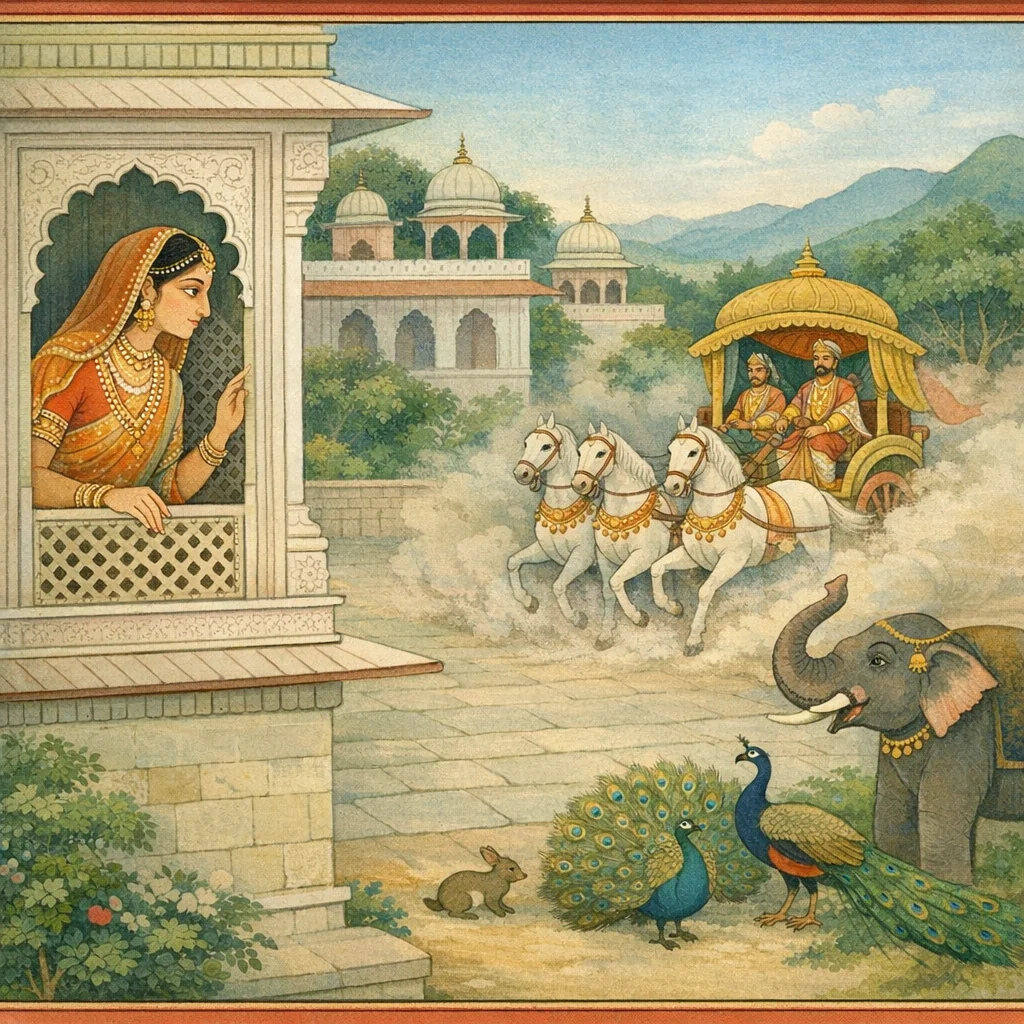
Chapter Arc: Brihadashva narrates how, at Bhima’s urging, King Ritupurna rides into the charming city of Kundina with a thunderous chariot-roar that turns every direction to listen. → The chariot’s rumble reaches even Nal’s horses; hearing it, they thrill as if Nal himself were near again—an omen-like stirring that hints the past is about to collide with the present. In the city, peacocks on palace roofs, elephants in their stalls, and horses in their sheds all react to the royal arrival, amplifying the sense that something fated has entered the gates. → From the inner chambers, Damayanti sees Ritupurna seated on the chariot with Varshneya and Bahuka—her gaze fixing on the mysterious charioteer whose presence feels charged with recognition and concealed truth. → Varshneya and Bahuka dismount, unyoke and settle the horses, and Ritupurna is received with due honor and lodged. Bhima, however, does not yet know that Ritupurna’s auspicious coming is bound to his daughter’s secret purpose; Ritupurna too finds no clear ‘women’s counsel’ or obvious sign like a svayamvara, despite repeated observation. → Damayanti’s silent scrutiny of Bahuka deepens: is this charioteer truly Nal, and how will she draw the truth from him without exposing her design?
Shlokas
Verse 1
अऑरड..2 #23. | हि 7 मु त्रिसप्ततितमो< ध्याय: ऋतुपर्णका कुण्डिनपुरमें प्रवेश, दमयन्तीका विचार तथा भीमके द्वारा ऋतुपर्णका स्वागत बृहदश्चव उवाच ततो विदर्भान् सम्प्राप्तं सायाह्ले सत्यविक्रमम् । ऋतुपर्ण जना राज्ञे भीमाय प्रत्यवेदयन्,बृहदश्व मुनि कहते हैं--युधिष्ठिर! तदनन्तर शाम होते-होते सत्यपराक्रमी राजा ऋतुपर्ण विदर्भराज्यमें जा पहुँचे। लोगोंने राजा भीमको इस बातकी सूचना दी
Bṛhadaśva said: Then, as evening approached, the truly valiant king Ṛtuparṇa arrived in the land of Vidarbha. The people reported this news to King Bhīma.
Verse 2
स भीमवचनाद्ू राजा कुण्डिनं प्राविशत् पुरम् । नादयन् रथघोषेण सर्वा: स विदिशों दिश:,भीमके अनुरोधसे राजा ऋतुपर्णने अपने रथकी घर्घराहटद्वारा सम्पूर्ण दिशा- विदिशाओंको प्रतिध्वनित करते हुए कुण्डिनपुरमें प्रवेश किया
Bṛhadaśva said: At Bhīma’s request, King Ṛtupārṇa entered the city of Kuṇḍina, making all the directions and intermediate quarters resound with the thunder of his chariot—an image of royal power harnessed in service to another’s urgent need.
Verse 3
ततस्तं रथनिर्घोष॑ नलाश्चास्तत्र शुश्रुव॒ुः श्रुत्वा तु समहृष्यन्त पुरेव नलसंनिधौ,नलके घोड़े वहीं रहते थे, उन्होंने रथका वह घोष सुना। सुनकर वे उतने ही प्रसन्न और उत्साहित हुए, जितने कि पहले नलके समीप रहा करते थे
Then they heard there the rumbling sound of that chariot. Hearing it, they were filled with joy and excitement—just as they used to be formerly when they were in King Nala’s presence.
Verse 4
दमयन्ती तु शुश्राव रथघोष॑ नलस्य तम् | यथा मेघस्य नदतो गम्भीरं जलदागमे,दमयन्तीने भी नलके रथकी वह घर्घराहट सुनी, मानो वर्षाकालमें गरजते हुए मेघोंका गम्भीर घोष सुनायी देता हो
Damayantī heard the rumbling sound of Nala’s chariot—deep and resonant, like the thunder of a roaring cloud at the coming of the rainy season.
Verse 5
परं विस्मयमापन्ना श्रुत्वा नादं महास्वनम् | नलेन संगृहीतेषु पुरेव नलवाजिषु । सदृशं रथनिर्घोषं मेने भौमी तथा हया:,वह महाभयंकर रथनाद सुनकर उसे बड़ा विस्मय हुआ। पूर्वकालमें राजा नल जब घोड़ोंकी बाग सँभालते थे, उन दिनों उनके रथसे जैसी गम्भीर ध्वनि प्रकट होती थी, वैसी ही उस समयके रथकी घर्घराहट भी दमयन्ती और उसके घोड़ोंकोी जान पड़ी
Bṛhadaśva said: Hearing that mighty, thunderous sound, Damayantī was struck with the greatest astonishment. She thought the rumbling of the chariot to be just like the deep resonance heard in former days when King Nala himself held the reins of his Nala-bred horses; and the horses too seemed to recognize the same familiar chariot-sound.
Verse 6
प्रासादस्थाश्ष शिखिन: शालास्थाश्रैव वारणा: । हयाश्व शुश्रुवुस्तस्य रथघोष॑ महीपते:,महलपर बैठे हुए मयूरों, गजशालामें बँधे हुए गजराजों और अश्वशालाके अअश्रोंने राजाके रथका वह अद्भुत घोष सुना
Bṛhadaśva said: Even the peacocks perched upon the palace terraces, the great elephants tethered in their stalls, and the horses in their stables heard that wondrous rumbling sound of the king’s chariot.
Verse 7
तच्छुत्वा रथनिर्घोषं वारणा: शिखिनस्तथा । प्रणेदुरुन्मुखा राजन् मेघनाद इवोत्सुका:,राजन्! रथकी उस आवाजको सुनकर हाथी और मयूर अपना मुँह ऊपर उठाकर उसी प्रकार उत्कण्ठापूर्वक अपनी बोली बोलने लगे, जैसे वे मेघोंकी गर्जना होनेपर बोला करते हैं
Bṛhadaśva said: Hearing that thunderous rumble of the chariot, the elephants and the peacocks, O King, lifted their faces upward and cried out eagerly—just as they do when the clouds roar.
Verse 8
दमयन्त्युवाच यथासौ रथनिर्घोष: पूरयज्निव मेदिनीम् । ममाह्नवादयते चेतो नल एष महीपति:,(उस समय) दमयन्तीने (मन-ही-मन) कहा--अहो! रथकी वह घर्घराहट इस पृथ्वीको गुँजाती हुई जिस प्रकार मेरे मनको आह्वाद प्रदान कर रही है, उससे जान पड़ता है, ये महाराज नल ही पधारे हैं
Damayantī said (to herself): “As that rumbling sound of the chariot seems to fill the whole earth, so it delights and summons my heart. It must be King Nala himself who has arrived.”
Verse 9
अद्य चन्द्राभवक्त्र तं न पश्यामि नलं यदि । असंख्येयगुणं वीरं॑ विनड्क्षयामि न संशय:,आज यदि असंख्य गुणोंसे विभूषित तथा चन्द्रमाके समान मुखवाले वीरवर नलको न देखूँगी तो अपने इस जीवनका अन्त कर दूँगी, इसमें संशय नहीं है
“If today I do not see Nala—hero of countless virtues, whose face is like the moon—then I shall end my life. Of this there is no doubt.”
Verse 10
यदि वै तस्य वीरस्य बाह्दोनच्याहमन्तरम् । प्रविशामि सुखस्पर्श न भविष्याम्यसंशयम्,आज यदि मैं उन वीरशिरोमणि नलकी दोनों भुजाओंके मध्यभागमें, जिसका स्पर्श अत्यन्त सुखद है, प्रवेश न कर सकी तो अवश्य जीवित न रह सकूँगी
“If today I cannot enter the space between the two arms of that heroic Nala—whose touch is exceedingly delightful—then, without doubt, I shall not remain alive.”
Verse 11
यदि मां मेघनिर्घोषो नोपगच्छति नैषध: । अद्य चामीकरप्रख्य॑ प्रवेक्ष्यामि हुताशनम्,यदि रथद्वारा मेघके समान गम्भीर गर्जना करनेवाले निषधदेशके स्वामी महाराज नल आज मेरे पास नहीं पधारेंगे तो मैं सुवर्णके समान देदीप्यमान दहकती हुई आगमें प्रवेश कर जाऊँगी
“If Nala, the lord of Niṣadha—whose voice is deep like the rumbling of thunderclouds—does not come to me today, then this very day I shall enter the blazing fire, shining like gold.”
Verse 12
यदि मां सिंहविक्रान्तो मत्तवारणविक्रम: । नाभिगच्छति राजेन्द्रो विनड्क्ष्यामि न संशय:,यदि सिंहके समान पराक्रमी और मतवाले हाथीके समान मस्तानी चालसे चलनेवाले राजराजेश्वर नल मेरे पास नहीं आयेंगे तो आज अपने जीवनको नष्ट कर दूँगी, इसमें संशय नहीं है
“If King Nala—lion-like in his stride and mighty as an intoxicated elephant—does not come to me, then I shall end my life today; of this there is no doubt.”
Verse 13
न स्मराम्यनृतं किंचिन्न स्मराम्यपकारताम् | न च पर्युषितं वाक्यं स्वैरेष्वपि कदाचन,मुझे याद नहीं कि स्वेच्छापूर्वक अर्थात् हँसी-मजाकमें भी मैं कभी झूठ बोली हूँ, स्मरण नहीं कि कभी किसीका मेरेद्वारा अपकार हुआ हो तथा यह भी स्मरण नहीं कि मैंने प्रतिज्ञा की हुई बातका उल्लंघन किया हो
Bṛhadaśva said: “I do not recall ever speaking any falsehood at all; I do not recall ever having harmed anyone; and I do not recall ever going back on my word—never, not even in moments of carefree jest.”
Verse 14
प्रभु: क्षमावान् वीरश्न दाता चाप्यधिको नृपैः । रहो<नीचानुवर्ती च क्लीबवन्मम नैषध:
Bṛhadaśva said: “My Naiṣadha (Nala) is a true master—patient and forbearing, heroic, and generous, indeed surpassing other kings. Yet he now moves about in secret, following after the lowly, living like an impotent man.”
Verse 15
मेरे निषधराज नल शक्तिशाली, क्षमाशील, वीर, दाता, सब राजाओंसे श्रेष्ठ, एकान्तमें भी नीच कर्मसे दूर रहनेवाले तथा परायी स्त्रीके लिये नपुंसकतुल्य हैं ।। गुणांस्तस्य स्मरन्त्या मे तत्पराया दिवानिशम् | ह्ृदयं दीर्यत इदं शोकात् प्रियविनाकृतम्,मैं (सदा) उन्हींके गुणोंका स्मरण करती और दिन-रात उन्हींके परायण रहती हूँ। प्रियतम नलके बिना मेरा यह हृदय उनके विरहशोकसे विदीर्ण-सा होता रहता है
Bṛhadaśva said: “My lord Nala, king of Niṣadha, is mighty, patient, heroic, and generous—the best among kings. Even in solitude he keeps far from base deeds, and toward another man’s wife he is as one without desire. As I remember his virtues and remain devoted to him day and night, this heart of mine, bereft of my beloved, feels as though it is being torn apart by the sorrow of separation.”
Verse 16
एवं विलपमाना सा नष्ट्संज्ञेव भारत | आरुरोह महद् वेश्म पुण्यश्लोकदिदृक्षया,भारत! इस प्रकार विलाप करती हुई दमयन्ती अचेत-सी हो गयी। वह पुण्यश्लोक नलके दर्शनकी इच्छासे ऊँचे महलकी छतपर जा चढ़ी
Thus lamenting, O Bhārata, she became as if bereft of consciousness. Longing to behold Puṇyaśloka Nala, she climbed up to the roof of a lofty mansion.
Verse 17
ततो मध्यमकक्षायां ददर्श रथमास्थितम् । ऋतुपर्ण महीपालं सहवाष्णेयबाहुकम्,वहाँसे उसने देखा, वार्ष्णेय और बाहुकके साथ रथपर बैठे हुए महाराज ऋतुपर्ण मध्यम कक्षा (परकोटे)-में पहुँच गये हैं
Then he saw King Ṛtuparṇa, the ruler of the land, seated upon his chariot, arriving within the middle enclosure of the fortifications, accompanied by Vārṣṇeya and Bāhuka.
Verse 18
ततो<वतीर्य वार्ष्णेयो बाहुकश्व रथोत्तमात् । हयांस्तानवमुच्याथ स्थापयामास वै रथम्,तदनन्तर वार्ष्णेय और बाहुकने उस उत्तम रथसे उतरकर घोड़े खोल दिये और रथको एक जगह खड़ा कर दिया
Then Vārṣṇeya and Bāhuka descended from that excellent chariot. Unyoking the horses, they set the chariot firmly in one place—careful, disciplined preparation amid a tense journey.
Verse 19
सो<वतीर्य रथोपस्थादृतुपर्णो नराधिप: । उपतस्थे महाराजं भीम॑ भीमपराक्रमम्,इसके बाद राजा ऋतुपर्ण रथके पिछले भागसे उतरकर भयानक पराक्रमी महाराज भीमसे मिले
Then King Ṛtuparṇa, lord of men, alighted from the rear of his chariot and went to pay his respects to Mahārāja Bhīma, whose prowess was fearsome—showing that even mighty rulers must observe courtly propriety.
Verse 20
त॑ भीम: प्रतिजग्राह पूजया परया ततः । स तेन पूजितो राज्ञा ऋतुपर्णो नराधिप:,तदनन्तर भीमने बड़े आदर-सत्कारके साथ उन्हें अपनाया और राजा ऋतुपर्णका भलीभाँति आदर-सत्कार किया
Then Bhīma received him with the highest honor and hospitality. Thus honored by the king, Ṛtuparṇa, ruler of men, was duly respected and welcomed, upholding the proper ethic of receiving a guest and a sovereign.
Verse 21
स तत्र कुण्डिने रम्ये वसमानो महीपतिः: । न च किंचित् तदापश्यत् प्रेक्षमाणो मुहुर्मुहुः । स तु राज्ञा समागम्य विदर्भपतिना तदा
Dwelling there in the lovely city of Kuṇḍina, the king kept looking again and again, yet at that time he could see nothing at all. Then, having met with the king of Vidarbha, he proceeded as was fitting, amid anxious searching and a timely turn of events.
Verse 22
कि कार्य स्वागत ते<स्तु राज्ञा पृष्ट: स भारत,भरतनन्दन युधिष्ठिर! विदर्भराजने स्वागत-पूर्वक ऋतुपर्णसे पूछा--“आपके यहाँ पधारनेका क्या कारण है?”
Then the king, after offering due welcome, asked him his purpose. O Bhārata, O Yudhiṣṭhira, delight of the Bharatas—thus the king of Vidarbha courteously questioned Ṛtuparṇa: “What is the reason for your coming here?”
Verse 23
नाभिजज्ञे स नृपतिर्दुहित्रर्थे समागतम् । ऋतुपर्णोडपि राजा स धीमान् सत्यपराक्रम:,राजा भीम यह नहीं जानते थे कि दमयन्तीके लिये ही इनका शुभागमन हुआ है। राजा ऋतुपर्ण भी बड़े बुद्धिमान् और सत्यपराक्रमी थे
Bṛhadaśva said: The king did not recognize that the visitor had come for the sake of his daughter. And King Ṛtuparṇa too was a man of keen intelligence, whose valor was grounded in truth—one whose strength expressed itself through integrity as much as through power.
Verse 24
राजानं राजपुत्रं वा न सम पश्यति कंचन । नैव स्वयंवरकथां न च विप्रसमागमम्,उन्होंने वहाँ किसी भी राजा या राजकुमारको नहीं देखा। ब्राह्मणोंका भी वहाँ समागम नहीं हो रहा था। स्वयंवरकी तो कोई चर्चातक नहीं थी। तब कोशलनरेशने मन-ही-मन कुछ विचार किया और विदर्भराजसे कहा--'राजन्! मैं आपका अभिवादन करनेके लिये आया हूँ"
Bṛhadaśva said: He saw there no king or prince at all—nor any talk of a svayaṃvara, nor any gathering of Brahmins. Observing these signs, the king of Kośala reflected inwardly and then addressed the ruler of Vidarbha: “O King, I have come to pay you my respects.”
Verse 25
ततो व्यगणयद् राजा मनसा कोसलाधिप: । आगतोडस्मीत्युवाचैनं भवन्तमभिवादक:,उन्होंने वहाँ किसी भी राजा या राजकुमारको नहीं देखा। ब्राह्मणोंका भी वहाँ समागम नहीं हो रहा था। स्वयंवरकी तो कोई चर्चातक नहीं थी। तब कोशलनरेशने मन-ही-मन कुछ विचार किया और विदर्भराजसे कहा--'राजन्! मैं आपका अभिवादन करनेके लिये आया हूँ"
Then the king of Kosala reflected within himself. Approaching the ruler of Vidarbha, he addressed him with due courtesy: “O King, I have come to pay you my respects.”
Verse 26
राजापि च स्मयन् भीमो मनसा समचिन्तयन् । अधिकं योजनशतं तस्यागमनकारणम्,यह सुनकर राजा भीम भी मुसकरा दिये और मन-ही-मन सोचने लगे--'ये बहुत-से गाँवोंको लाँधकर सौ योजनसे भी अधिक दूर चले आये हैं, किंतु कार्य इन्होंने बहुत साधारण बतलाया है। फिर इनके आगमनका क्या कारण है, इसे मैं ठीक-ठीक न जान सका
Bṛhadaśva said: The king Bhīma too, smiling, reflected within himself: “They have come from more than a hundred yojanas away, crossing many villages; yet they describe their purpose as something quite ordinary. What, then, is the real reason for their coming? I have not been able to discern it clearly.”
Verse 27
ग्रामान् बहूनतिक्रम्य नाध्यगच्छद् यथातथम् | अल्पकार्य विनिर्दिष्टं तस्यागमनकारणम्,यह सुनकर राजा भीम भी मुसकरा दिये और मन-ही-मन सोचने लगे--'ये बहुत-से गाँवोंको लाँधकर सौ योजनसे भी अधिक दूर चले आये हैं, किंतु कार्य इन्होंने बहुत साधारण बतलाया है। फिर इनके आगमनका क्या कारण है, इसे मैं ठीक-ठीक न जान सका
Bṛhadaśva said: “Having passed by many villages, he could not ascertain the matter clearly as it truly was. Though the task he stated was described as a small and ordinary one, the real reason for his coming could not be known with certainty.”
Verse 28
पश्चादुदर्के ज्ञास्यामि कारणं यद् भविष्यति । नैतदेवं स नृपतिस्तं सत्कृत्य व्यसर्जयत्,“अच्छा, जो भी कारण होगा पीछे मालूम कर लूँगा। ये जो कारण बता रहे हैं, इतना ही इनके आगमनका हेतु नहीं है।' ऐसा विचारकर राजाने उन्हें सत्कारपूर्वक विश्रामके लिये विदा किया
“Later I shall learn the cause of what is to come.” Thinking, “The reason they state is not the sole purpose of their arrival,” the king honored them with due hospitality and dismissed them to rest.
Verse 29
विश्राम्यतामित्युवाच क्लान्तोडसीति पुन: पुनः । स सत्कृतः प्रह्ृष्टात्मा प्रीतः प्रीतेन पार्थिव:,और कहा--“आप बहुत थक गये होंगे, अतः विश्राम कीजिये।” विदर्भनरेशके द्वारा प्रसन्नतापूर्वक आदर-सत्कार पाकर राजा ऋतुपर्णको बड़ी प्रसन्नता हुई
Bṛhadaśva said: “Please rest,” he said again and again, “you are weary.” Thus, when the delighted ruler of Vidarbha honored the king with glad hospitality, King Ṛtupārṇa became greatly pleased in his heart.
Verse 30
राजप्रेष्यैरनुगतो दिष्टं वेश्म समाविशत् । ऋतुपर्णे गते राजन् वाष्णेयसहिते नृपे,स्वयं चैतान् समाश्वास्य रथोपस्थ उपाविशत् | फिर वे राजसेवकोंके साथ गये और बताये हुए भवनमें विश्रामके लिये प्रवेश किया। राजन! वार्ष्णेयसहित ऋतुपर्णके चले जानेपर बाहुक रथ लेकर रथशालामें गया। उसने उन घोड़ोंको खोल दिया और अश्वशास्त्रकी विधिके अनुसार उनकी परिचर्या करनेके बाद घोड़ोंको पुचकारकर उन्हें धीरज देनेके पश्चात् वह स्वयं भी रथके पिछले भागमें जा बैठा
Accompanied by the king’s attendants, he entered the lodging that had been assigned. O king, when Ṛtuparṇa—together with Vārṣṇeya—had departed, Bāhuka himself went to the chariot-shed. After unharnessing and tending the horses according to the rules of horsemanship, and reassuring them with gentle words, he sat down on the rear part of the chariot.
Verse 31
बाहुको रथमादाय रथशालामुपागमत् । स मोचयित्वा तानश्चानुपचर्य च शास्त्रत:
Bāhuka took charge of the chariot and went to the chariot-house. There he unharnessed the horses and then attended to them in accordance with proper rules.
Verse 32
दमयन्त्यपि शोकार्ता दृष्टवा भाज़ासुरिं नृपम्,दमयन्ती भी शोकसे आतुर हो राजा ऋतुपर्ण, सूतपुत्र वार्ष्णेय तथा पूर्वोक्त बाहुकको देखकर सोचने लगी--“यह किसके रथकी घर्घराहट सुनायी पड़ती थी
Damayantī too, overwhelmed by grief, saw King Ṛtupārṇa—along with Vārṣṇeya, the charioteer’s son, and the previously mentioned Bāhuka—and she thought to herself: “Whose chariot is this, whose rumbling sound is being heard?”
Verse 33
सूतपुत्रं च वाष्णेयं बाहुकं च तथाविधम् । चिन्तयामास वैदर्भी कस्यैष रथनि:स्वन:,दमयन्ती भी शोकसे आतुर हो राजा ऋतुपर्ण, सूतपुत्र वार्ष्णेय तथा पूर्वोक्त बाहुकको देखकर सोचने लगी--“यह किसके रथकी घर्घराहट सुनायी पड़ती थी
Bṛhadaśva said: Seeing the charioteer’s son, the Vṛṣṇi prince Vārṣṇeya, and Bāhuka in that same guise, Damayantī, princess of Vidarbha, began to ponder: “Whose is this rumbling sound of the chariot?”
Verse 34
नलस्येव महानासीज्ञ च पश्यामि नैषधम् । वार्ष्णेयेन भवेन्नूनं विद्या सैवोपशिक्षिता,“वह गम्भीर घोष तो महाराज नलके रथ-जैसा था; परंतु इन आगन्तुकोंमें मुझे निषधराज नल नहीं दिखायी देते। वार्ष्पेयने भी नलके समान ही अश्वविद्या सीख ली हो, निश्चय ही यह सम्भावना की जा सकती है। तभी आज रथकी आवाज बड़े जोरसे सुनायी दे रही थी, जैसे नलके रथ हाँकते समय हुआ करती है। कहीं ऐसा तो नहीं है कि राजा ऋतुपर्ण भी वैसे ही अश्वविद्यामें निपुण हों, जैसे राजा नल हैं; क्योंकि नलके ही समान इनके रथका भी गम्भीर घोष लक्षित होता है”
Bṛhadaśva said: “That deep, thunderous sound was like King Nala’s chariot; yet among these arrivals I do not see Nala, the lord of Niṣadha. Surely Vārṣṇeya must have been taught that very same science of horsemanship—for only then could such a powerful chariot-roar be heard today, like the sound that used to arise when Nala drove. Or perhaps King Ṛtupārṇa too has become as skilled in the knowledge of horses as Nala, for his chariot also bears the same grave resonance.”
Verse 35
तेनाद्य रथनिर्घोषो नलस्येव महानभूत् । आहोस्विदृतुपर्णोडपि यथा राजा नलस्तथा । यथायं रथनिर्घोषो नैषधस्येव लक्ष्यते,“वह गम्भीर घोष तो महाराज नलके रथ-जैसा था; परंतु इन आगन्तुकोंमें मुझे निषधराज नल नहीं दिखायी देते। वार्ष्पेयने भी नलके समान ही अश्वविद्या सीख ली हो, निश्चय ही यह सम्भावना की जा सकती है। तभी आज रथकी आवाज बड़े जोरसे सुनायी दे रही थी, जैसे नलके रथ हाँकते समय हुआ करती है। कहीं ऐसा तो नहीं है कि राजा ऋतुपर्ण भी वैसे ही अश्वविद्यामें निपुण हों, जैसे राजा नल हैं; क्योंकि नलके ही समान इनके रथका भी गम्भीर घोष लक्षित होता है”
Bṛhadaśva said: “Therefore, today the rumble of the chariot has been as mighty as Nala’s. Yet among these arrivals I do not see Nala, the king of Niṣadha. Could it be that King Ṛtupārṇa too has become like King Nala? For this deep, resonant chariot-sound is recognized as though it were the very sound of the Naiṣadha king.”
Verse 36
एवं सा तर्कयित्वा तु दमयन्ती विशाम्पते । दूतीं प्रस्थापयामास नैषधान्वेषणे शुभा,युधिष्ठिर! इस प्रकार विचार करके शुभलक्षणा दमयन्तीने नलका पता लगानेके लिये अपनी दूतीको भेजा
Having thus reflected, O lord of the people, the auspicious Damayantī dispatched her female messenger to search for Nala of Niṣadha.
Verse 73
इति श्रीमहाभारते वनपर्वणि नलोपाख्यानपर्वणि ऋतुपर्णस्य भीमपुरप्रवेशे त्रिसप्ततितमो5ध्याय:
Thus, in the Śrī Mahābhārata, within the Vana Parva, in the section known as the Nala-episode (Nala-upākhyāna), ends the seventy-third chapter, describing King Ṛtūparṇa’s entry into Bhīmapura.
Verse 216
अकस्मात् सहसा प्राप्तं स्त्रीमन्त्रं न सम विन्दति । भूपाल ऋतुपर्ण रमणीय कुण्डिनपुरमें ठहर गये। उन्हें बार-बार देखनेपर भी वहाँ (स्वयंवर-जैसी) कोई चीज नहीं दिखायी दी। वे विदर्भनरेशसे मिलकर सहसा इस बातको न जान सके कि यह स्त्रियोंकी अकस्मात् गुप्त मन्त्रणामात्र थी
Bṛhadaśva said: “A women’s confidential counsel, when it comes suddenly and in haste, is not easily understood in its true import. King Ṛtuparṇa stayed in the delightful city of Kuṇḍina. Though he looked again and again, he saw nothing there resembling a svayaṃvara or any such public occasion. Even after meeting the king of Vidarbha, he could not at once grasp the matter—this was only the women’s sudden, secret consultation.”
Verse 316
स्वयं चैतान् समाश्वास्य रथोपस्थ उपाविशत् | फिर वे राजसेवकोंके साथ गये और बताये हुए भवनमें विश्रामके लिये प्रवेश किया। राजन! वार्ष्णेयसहित ऋतुपर्णके चले जानेपर बाहुक रथ लेकर रथशालामें गया। उसने उन घोड़ोंको खोल दिया और अश्वशास्त्रकी विधिके अनुसार उनकी परिचर्या करनेके बाद घोड़ोंको पुचकारकर उन्हें धीरज देनेके पश्चात् वह स्वयं भी रथके पिछले भागमें जा बैठा
Having personally reassured those horses, he sat down upon the rear platform of the chariot. After King Ṛtuparṇa and his attendants had gone to the appointed house to rest, Bāhuka took the chariot to the stable, unharnessed the horses, and tended them according to the discipline of the aśvaśāstra. When he had stroked them and steadied their hearts, he too sat down at the back of the chariot.
Frequently Asked Questions
Damayantī must balance urgency and emotional suffering with restraint and accuracy, avoiding public scandal while seeking truthful identification through careful, minimally intrusive tests.
Reliable knowledge arises from structured observation of conduct and competence; identity is treated as demonstrable through consistent action (ceṣṭā) rather than asserted by appearance or hearsay.
No explicit phalaśruti is presented in this unit; its meta-function is implicit, using recognition-through-evidence as a didactic model within the broader Nalopākhyāna.