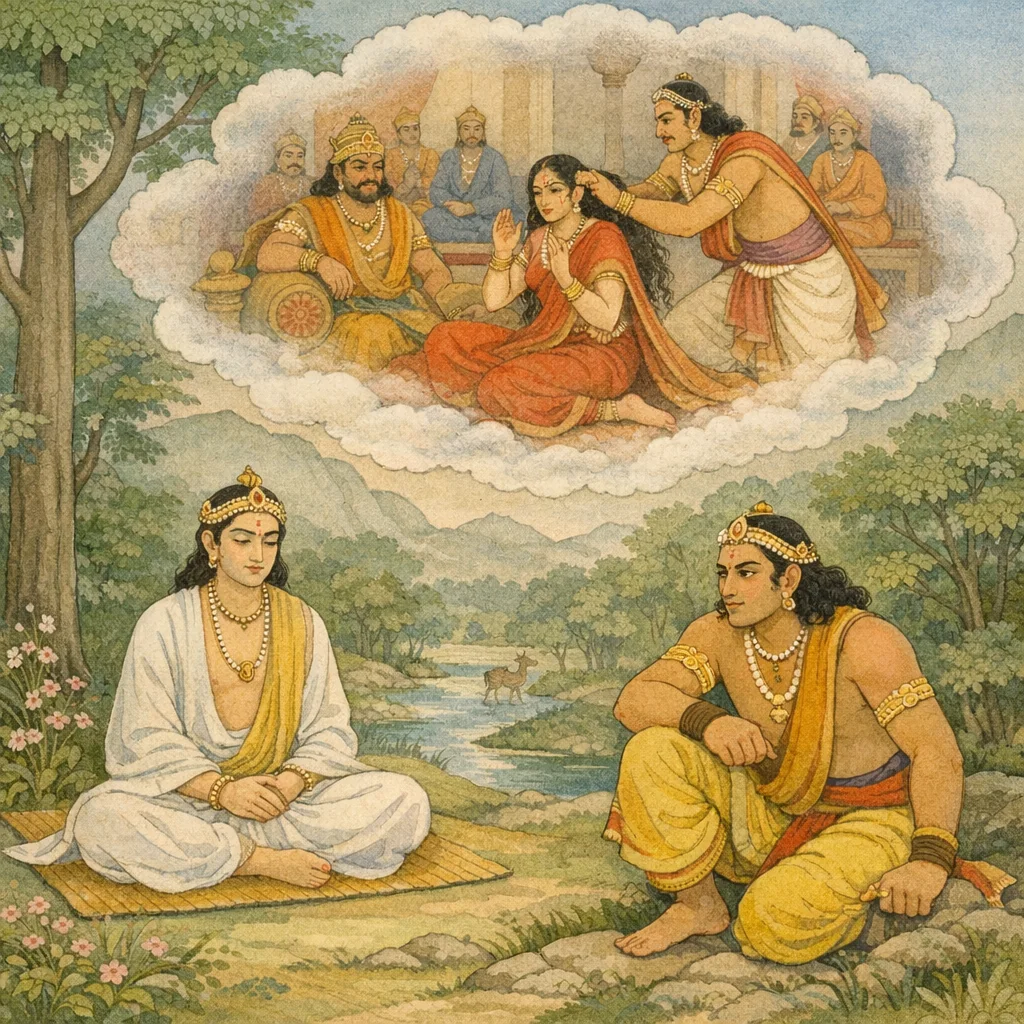
Adhyaya 34
Bhīmasena’s Admonition to Yudhiṣṭhira on Rājya and the Ordering of Dharma–Artha–Kāma (Book 3, Chapter 34)
Upa-parva: Draupadī–Bhīmasena Saṃvāda (Exile Counsel on Rājya, Dharma, Artha, Kāma)
Vaiśaṃpāyana reports that, after hearing Draupadī, Bhīmasena approaches Yudhiṣṭhira in anger and argues that the Pāṇḍavas’ kingdom was taken not by dharma or valor but by deceit (dice stratagem), and that continued forest hardship is an avoidable injury to allies and a benefit to adversaries. He frames excessive forbearance as politically misconstrued weakness and asserts that honorable conflict, when forced by dispossession, is preferable to reputational and material erosion. The chapter then pivots into a didactic taxonomy of the puruṣārthas: dharma, artha, and kāma are distinct yet mutually conditioning; dharma without artha becomes impracticable for a ruler, while artha or kāma pursued in isolation becomes socially destructive. Bhīma outlines time-sensitive prioritization (dharma first, then artha, then kāma; with age-based variation) and emphasizes that kṣatriya duty disallows certain livelihoods (begging, servile dependence). He concludes with strategic confidence in the Pāṇḍavas’ martial capacity and urges organized action to reclaim sovereignty, presenting kingship itself as a disciplined practice of protection and governance rather than mere possession.
Chapter Arc: Vaishampayana frames the thirty-fourth chapter as a discourse on dharma and niti, where Yudhishthira—wounded by words yet steady in vow—declares his resolve to uphold his own pledge as the highest law for himself. → Yudhishthira answers the sharp goading of Bhima: he admits the sting of reproach, recalls the deceit of Shakuni and Duryodhana in the dice-hall, and reopens the humiliation of Draupadi as a poison that still burns. The pressure mounts as the question becomes unavoidable—should a king cling to a vow born of a rigged game, or break it to avenge injustice? → Yudhishthira proclaims his unshakable choice: he embraces truth and dharma above life, kingdom, sons, fame, and wealth—asserting that nothing equals even a fraction of satya, and that his pratijna must stand. → He reframes endurance as strength: by keeping the exile terms—twelve years in the forest and the hidden year—he protects the Pandavas’ moral authority and future legitimacy, even while acknowledging the personal torment it causes him and his brothers. → The moral victory is uneasy: Bhima’s fury and the memory of Draupadi’s suffering remain unresolved, leaving the household’s inner war smoldering beneath the outward discipline.
Shlokas
Verse 1
#:2:8 #23:.:7 () हि २ 7 चतुस्त्रिंशो 5 ध्याय: धर्म और नीतिकी बात कहते के युधिष्ठिरकी अपनी प्रतिज्ञाके पालनरूप धर्मपर ही डटे रहनेकी घोषणा वैशग्पायन उवाच स एवमुक्तस्तु महानुभाव: सत्यव्रतो भीमसेनेन राजा । अजातशगत्रुस्तदनन्तरं वै धैर्यान्वितो वाक्यमिदं बभाषे,वैशम्पायनजी कहते हैं--जनमेजय! भीमसेन जब इस प्रकार अपनी बात पूरी कर चुके, तब महानुभाव, सत्यप्रतिज्ञ एवं अजातशत्रु राजा युधिष्ठिरने धैर्यपूर्वक उनसे यह बात कही--
Vaiśampāyana said: When Bhīmasena had thus finished speaking, the high-souled king Yudhiṣṭhira—true to his vow and famed as Ajātaśatru—steadfast in patience, spoke these words in reply, holding firmly to the path of dharma and the discipline of self-restraint.
Verse 2
युधिछिर उवाच असंशयं भारत सत्यमेतद् यन्मां तुदन् वाक्यशल्यै: क्षिणोषि । न त्वां विगहें प्रतिकूलमेव ममानयाद्धि व्यसनं व आगात्,युधिष्ठिर बोले--भरतकुलनन्दन! तुम मुझे पीड़ा देते हुए अपने वागूबाणोंद्वारा मेरे हृदयको जो विदीर्ण कर रहे हो, यह निःसंदेह ठीक ही है। मेरे प्रतिकूल होनेपर भी इन बातोंके लिये मैं तुम्हारी निन्दा नहीं करता; क्योंकि मेरे ही अन्यायसे तुमलोगोंपर यह विपत्ति आयी है
Yudhiṣṭhira said: “O Bhārata, without doubt this is true and right—that by piercing me with the barbs of your words you are wearing me down. Even if you speak against me, I do not quarrel with you or condemn you for it; for it is through my own wrongdoing that this calamity has come upon you all.”
Verse 3
अहं हाक्षानन्वपद्यं जिहीर्षन् राज्यं सराष्ट्र धृतराष्ट्रस्य पुत्रात् । तन्मां शठ: कितव: प्रत्यदेवीत् सुयोधनार्थ सुबलस्य पुत्र:,उन दिनों धृतराष्ट्रपुत्र दुर्योधनके हाथसे उसके राष्ट्र तथा राजपदका अपहरण करनेकी इच्छा रखकर ही मैं द्यूतक्रीड़ामें प्रवृत्त हुआ था; किंतु उस समय धूर्त जुआरी सुबलपुत्र शकुनि दुर्योधनके लिये उसकी ओरसे मेरे विपक्षमें आकर जूआ खेलने लगा
Yudhiṣṭhira said: “It was with the intention of reclaiming the kingdom together with its realm from Dhṛtarāṣṭra’s son that I entered into the game of dice. But then that deceitful gambler—the son of Subala—stood against me and played on behalf of Suyodhana.”
Verse 4
महामाय: शकुनि: पर्वतीय: सभामध्ये प्रवपन्नक्षपूगान् । अमायिन॑ मायया प्रत्यजैषीत् ततो<पश्यं वृजिनं भीमसेन,भीमसेन! पर्वतीय प्रदेशका निवासी शकुनि बड़ा मायावी है। उसने द्यूतसभामें पासे फेंककर अपनी मायाद्वारा मुझे जीत लिया; क्योंकि मैं माया नहीं जानता था; इसीलिये मुझे यह संकट देखना पड़ा है
Yudhiṣṭhira said: “Śakuni, a mountain-born man of great deceit, cast heaps of dice in the assembly and, by his trickery, defeated me—who was not versed in such guile. Therefore, O Bhīmasena, I came to behold this calamity.”
Verse 5
अक्षांश्व दृष्टवा शकुनेर्यथावत् कामानुकूलानयुजो युजश्न । शक्यो नियन्तुमभविष्यदात्मा मन्युस्तु हन्यात् पुरुषस्य धैर्यम्,शकुनिके सम और विषम सभी पासोंको उसकी इच्छाके अनुसार ही ठीक-ठीक पड़ते देखकर यदि अपने मनको जूएकी ओरसे रोका जा सकता तो यह अनर्थ न होता, परंतु क्रोधावेश मनुष्यके धैर्यको नष्ट कर देता है (इसीलिये मैं जूएसे अलग न हो सका)
Yudhiṣṭhira said: “Seeing the dice of Śakuni fall exactly as he wished—whether the throws were fair or unfair—if the self could have been restrained from the lure of gambling, this calamity would not have occurred. But anger and agitation destroy a man’s steadiness of mind; therefore I could not tear myself away from the game.”
Verse 6
यन्तुं नात्मा शक््यते पौरुषेण मानेन वीर्येण च तात नद्धः । न ते वाचो भीमसेनाभ्यसूये मन्ये तथा तद् भवितव्यमासीत्,तात भीमसेन! किसी विषयमें आसक्त हुए चित्तको पुरुषार्थ, अभिमान अथवा पराक्रमसे नहीं रोका जा सकता (अर्थात्र उसे रोकना बहुत ही कठिन है), अतः मैं तुम्हारी बातोंके लिये बुरा नहीं मानता। मैं समझता हूँ, वैसी ही भवितव्यता थी
Yudhiṣṭhira said: “Dear brother, when the mind is bound by attachment, it cannot be driven back merely by human effort—nor by pride, nor even by valor. Therefore, Bhīmasena, I do not take offense at your words. I believe that events were destined to unfold just so.”
Verse 7
स नो राजा धृतराष्ट्रस्य पुत्रो न्यपातयद् व्यसने राज्यमिच्छन् । दास््यं च नोडगमयद् भीमसेन यत्राभवच्छरणं द्रौपदी नः,भीमसेन! धृतराष्ट्रके पुत्र राजा दुर्योधनने राज्य पानेकी इच्छासे हमलोगोंको विपत्तिमें डाल दिया। हमें दासतक बना लिया था, किंतु उस समय द्रौपदी हमलोगोंकी रक्षक हुई
Yudhiṣṭhira said: “Seeking the kingdom, the son of Dhṛtarāṣṭra—our king—cast us into calamity. He even drove us into slavery; yet in that hour, Draupadī became our refuge and protector, O Bhīmasena.”
Verse 8
त्वं चापि तद् वेत्थ धनंजयश्न पुनर्यूतायागतानां सभां नः । यन्मा<ब्रवीद् धृतराष्ट्रस्य पुत्र एकग्लहार्थ भरतानां समक्षम्,तुम और अर्जुन दोनों इस बातको जानते हो कि जब हम पुनः द्यूतके लिये बुलाये जानेपर उस सभामें आये तो उस समय समस्त भरतवंशियोंके समक्ष धृतराष्ट्रपुत्र दुर्योधनने मुझसे एक ही दाँव लगानेके लिये इस प्रकार कहा--
Yudhiṣṭhira said: “You too, and Dhanañjaya (Arjuna) as well, know this—when we came to the assembly again, having been summoned for another game of dice, then in the presence of all the Bharatas the son of Dhṛtarāṣṭra addressed me, proposing a single decisive stake.”
Verse 9
वने समा द्वादश राजपुत्र यथाकामं विदितमजातशत्रो | अथापरं चाविदितं चरेथा: सर्वे: सह भ्रातृभिश्छझगूढ:,“राजकुमार अजातशत्रो! (यदि आप हार जायेँ तो) आपको बारह वर्षोतक इच्छानुसार सबकी जानकारीमें और पुनः एक वर्षतक गुप्त वेषमें छिपे रहकर अपने भाइयोंके साथ वनमें निवास करना पड़ेगा
Yudhiṣṭhira said: “O prince Ajātaśatru, you must dwell in the forest for twelve full years, moving about as you please yet in a manner known to all; and thereafter, for one additional year, you must live unknown—concealed and hidden—wandering together with all your brothers.”
Verse 10
त्वां चेच्छुत्वा तात तथा चरन्त- मवभोत्स्यन्ते भरतानां चराशक्ष । अन्यांक्षरेथास्तावतो<ब्दांस्त था त्व॑ निश्चित्य तत् प्रतिजानीहि पार्थ,“कुन्तीकुमार! यदि भरतवंशियोंके गुप्तचर आपके गुप्त निवासका समाचार सुनकर पता लगाने लगें और उन्हें यह मालूम हो जाय कि आपलोग अमुक जगह अमुक रूपमें रह रहे हैं, तब आपको पुनः उतने (बारह) ही वर्षोतक वनमें रहना पड़ेगा। इस बातको निश्चय करके इसके विषयमें प्रतिज्ञा कीजिये
Yudhiṣṭhira said: “Dear brother, if the Bharata spies, on hearing of you living in this manner, should succeed in discovering you, then you must again live out the same number of years (as before) in the forest. Having firmly determined this, make your pledge regarding it, O Pārtha.”
Verse 11
चरेश्षेत्रो5विदित: कालमेतं युक्तो राजन् मोहयित्वा मदीयान् । ब्रवीमि सत्यं कुरुसंसदीह तवैव ता भारत पज्च नद्यः,“भरतवंशी नरेश! यदि आप सावधान रहकर इतने समयतक मेरे गुप्तचरोंको मोहित करके अज्ञात-भावसे ही विचरते रहें तो मैं यहाँ कौरवोंकी सभामें यह सत्य प्रतिज्ञा करता हूँ कि उस सारे पंचनदप्रदेशपर फिर तुम्हारा ही अधिकार होगा
Yudhiṣṭhira said: “O king, if you remain disciplined and move about for this span of time in an unknown guise, successfully confounding my spies, then I declare here in the Kuru assembly a truthful pledge: those five rivers—indeed the whole Pañcanada region—shall be yours alone, O Bhārata.”
Verse 12
वयं चैतद् भारत सर्व एव त्वया जिता: कालमपास्य भोगान् | वसेम इत्याह पुरा स राजा मध्ये कुरूणां स मयोक्तस्तथेति,“भारत! यदि आपने ही हम सब लोगोंको जीत लिया तो हम भी उतने ही समयतक सारे भोगोंका परित्याग करके उसी प्रकार वास करेंगे।” राजा दुर्योधनने जब समस्त कौरवोंके बीच इस प्रकार कहा, तब मैंने भी “तथास्तु/ कहकर उसकी बात मान ली
Yudhiṣṭhira said: “O Bhārata, if you have indeed conquered all of us, then we too will, for an equal span of time, set aside pleasures and live in the same manner. Thus, long ago, that king (Duryodhana) spoke in the midst of the Kurus; and I replied, ‘So be it,’ accepting his word.”
Verse 13
तत्र द्यूतमभवजन्नो जघन्यं तस्मिज्जिता: प्रव्रजिताश्च सर्वे । इत्थं तु देशाननुसंचरामो वनानि कृच्छाणि च कृच्छुरूपा:,फिर वहाँ हमलोगोंका अन्तिम बार निन्दनीय जूआ हुआ। उसमें हम सब लोग हार गये और घर छोड़कर वनमें निकल आये। इस प्रकार हम कष्टप्रद वेष धारण करके कष्टदायक वनों और विभिन्न प्रदेशोंमें घूम रहे हैं
There, the most disgraceful game of dice took place for us for the last time. In that match we were all defeated, and so we left our home and set out for the forest. Thus we now wander through many regions, wearing a guise of hardship, moving amid forests that are themselves harsh and full of suffering—enduring the consequences of that fall with restraint.
Verse 14
सुयोधनश्वापि न शान्तिमिच्छन् भूय: स मन्योर्वशमन्वगच्छत् । उद्योजयामास कुरूंश्व॒ सर्वान् ये चास्य केचिद् वशमन्वगच्छन्,उधर दुर्योधन भी शान्तिकी इच्छा न रखकर और भी क्रोधके वशीभूत हो गया है। उसने हमें तो कष्टमें डाल दिया और दूसरे समस्त कौरवोंको जो उसके वशमें होकर उसीका अनुसरण करते रहे हैं, (देशशासक और दुर्गरक्षक आदि) ऊँचे पदोंपर प्रतिष्ठित कर दिया है
Yudhiṣṭhira said: “Suyodhana too, refusing to seek peace, fell even more under the sway of wrath. He roused all the Kurus, and those who in any way submitted to his control and followed his lead.”
Verse 15
त॑ संधिमास्थाय सतां सकाशे को नाम जह्यादिह राज्यहेतो: । आर्यस्य मन्ये मरणाद् गरीयो यद्धमर्ममुत्क्रम्य महीं प्रशासेत्,कौरव-सभामें साधु पुरुषोंके समीप वैसी सन्धिका आश्रय लेकर यानी प्रतिज्ञा करके अब यहाँ राज्यके लिये उसे कौन तोड़े? धर्मका उल्लंघन करके पृथ्वीका शासन करना तो किसी श्रेष्ठ पुरुषके लिये मृत्युसे भी बढ़कर दुःखदायक है--ऐसा मेरा मत है
“Having entered into that pact in the presence of the virtuous, who here would abandon it for the sake of kingship? In my view, for a noble man it is heavier than death to rule the earth by overstepping dharma.”
Verse 16
तदैव चेद् वीर कर्माकरिष्यो यदा द्ूते परिघं पर्यमृक्ष: । बाहू दिधक्षन् वारित: फाल्गुनेन किं दुष्कृतं भीम तदाभविष्यत्,वीर भीमसेन! द्यूतके समय जब तुमने मेरी दोनों बाँहोंको जला देनेकी इच्छा प्रकट की और अर्जुनने तुम्हें रोका, उस समय तुम शत्रुओंपर आघात करनेके लिये अपनी गदापर हाथ फेरने लगे थे। यदि उसी समय तुमने शत्रुओंपर आघात कर दिया होता तो कितना अनर्थ हो जाता। तुम अपना पुरुषार्थ तो जानते ही थे। जब मैं पूर्वोक्त प्रकारकी प्रतिज्ञा करने लगा उससे पहले ही तुमने ऐसी बात क्यों नहीं कही? जब प्रतिज्ञाके अनुसार वनवासका समय स्वीकार कर लिया, तब पीछे चलकर इस समय क्यों मुझसे अत्यन्त कठोर बातें कहते हो?
Yudhiṣṭhira said: “If, O hero, you had acted at that very time—when, in the dice-hall, you were rubbing your iron club in readiness, and when you, wishing to burn my arms, were restrained by Arjuna—what calamity would not have arisen then, O Bhīma, O valiant Bhīmasena? You knew your own strength. Why did you not speak so before I made that pledge? After accepting the term of exile according to the vow, why do you now, later on, address me with such exceedingly harsh words?”
Verse 17
प्रागेव चैवं समयक्रियाया: कि नाब्रवी: पौरुषमाविदान: । प्राप्त तु काल॑ त्वभिपद्य पश्चात् कि मामिदानीमतिवेलमात्थ,वीर भीमसेन! द्यूतके समय जब तुमने मेरी दोनों बाँहोंको जला देनेकी इच्छा प्रकट की और अर्जुनने तुम्हें रोका, उस समय तुम शत्रुओंपर आघात करनेके लिये अपनी गदापर हाथ फेरने लगे थे। यदि उसी समय तुमने शत्रुओंपर आघात कर दिया होता तो कितना अनर्थ हो जाता। तुम अपना पुरुषार्थ तो जानते ही थे। जब मैं पूर्वोक्त प्रकारकी प्रतिज्ञा करने लगा उससे पहले ही तुमने ऐसी बात क्यों नहीं कही? जब प्रतिज्ञाके अनुसार वनवासका समय स्वीकार कर लिया, तब पीछे चलकर इस समय क्यों मुझसे अत्यन्त कठोर बातें कहते हो?
Yudhiṣṭhira said: “If you truly knew your own strength and manly prowess, why did you not speak like this earlier—before the agreement was carried out? But after the time has come and we have accepted it, why do you now address me with such harsh words, O hero Bhīmasena, when it is already too late?”
Verse 18
भूयो5पि दु:ःखं मम भीमसेन दूये विषस्येव रसं हि पीत्वा । यद् याज्ञसेनीं परिक्लिश्यमानां संदृश्य तत् क्षान्तमिति सम भीम,भीमसेन! मुझे इस बातका भी बड़ा दुःख है कि द्रौपदीको शत्रुओंद्वारा क्लेश दिया जा रहा था और हमने अपनी आँखों देखकर भी उसे चुपचाप सह लिया। जैसे कोई विष घोलकर पी ले और उसकी पीड़ासे कराहने लगे, वैसी ही वेदना इस समय मुझे हो रही है
Again, O Bhīmasena, a fresh sorrow burns within me. It is as though I had drunk the very essence of poison. For when we saw Yājñasenī being tormented, we endured it in silence—thinking, ‘Let it be borne.’ That forbearance, in the face of her suffering, now torments me with bitter remorse.
Verse 19
न त्वद्य शक््यं भरतप्रवीर कृत्वा यदुक्तं कुरुवीरमध्ये । काल प्रतीक्षस्व सुखोदयस्य पक्ति फलानामिव बीजवाप:,भरतवंशके प्रमुख वीर! कौरव वीरोंके बीच मैंने जो प्रतिज्ञा की है, उसे स्वीकार कर लेनेके बाद अब इस समय आक्रमण नहीं किया जा सकता। जैसे बीज बोनेवाला किसान अपनी खेतीके फलोंके पकनेकी बाट जोहता रहता है, उसी प्रकार तुम भी उस समयकी प्रतीक्षा करो, जो हमारे लिये सुखकी प्राप्ति करानेवाला है
O foremost hero of the Bharata line, it is not possible to launch an attack today, after having accepted what I declared in the midst of the Kuru warriors. Wait for the proper time that will bring about our welfare and happiness—just as a sower of seeds waits for the ripening of the crop’s fruits.
Verse 20
यदा हि पूर्व निकृतो निकृन्तेद् वैरं सपुष्पं सफल॑ विदित्वा । महागुणं हरति हि पौरुषेण तदा वीरो जीवति जीवलोके,जब पहले शत्रुके द्वारा धोखा खाया हुआ वीर पुरुष उसे फ़ूलता-फलता जानकर अपने पुरुषार्थके द्वारा उसका मूलोच्छेद कर डालता है, तभी उस शत्रुके महान् गुणोंका अपहरण कर लेता है और इस जगत्में सुखपूर्वक जीवित रहता है
Yudhiṣṭhira said: When a hero, once deceived, recognizes that the enemy’s enmity is already blossoming and bearing fruit, and then—by his own manly effort—cuts that hostility down at its root, he thereby seizes the enemy’s very advantage and excellence; thus does the valiant man live well in this world.
Verse 21
श्रियं च लोके लभते समग्रां मन्ये चास्मै शत्रव: संनमन्ते | मित्राणि चैनमचिराद् भजन्ते देवा इवेन्द्रमुपजीवन्ति चैनम्,वह वीर पुरुष लोकमें सम्पूर्ण लक्ष्मीको प्राप्त कर लेता है। मैं यह भी मानता हूँ कि सभी शत्रु उसके सामने नतमस्तक हो जाते हैं। फिर थोड़े ही दिनोंमें उसके बहुत-से मित्र बन जाते हैं और जैसे देवता इन्द्रके सहारे जीवन धारण करते हैं, उसी प्रकार वे मित्रगण उस वीरकी छत्रछायामें रहकर जीवन-निर्वाह करते हैं
Yudhiṣṭhira said: “Such a heroic man attains complete prosperity in this world. I believe even his enemies bow down before him. Before long, many become his friends; and just as the gods sustain their lives by relying on Indra, so do those friends live and thrive under that hero’s protection and patronage.”
Verse 22
मम प्रतिज्ञां च निबोध सत्यां वृणे धर्मममृताज्जीविताच्च । राज्यं च पुत्राश्न यशो धनं च सर्व न सत्यस्य कलामुपैति,किंतु भीमसेन! मेरी यह सच्ची प्रतिज्ञा सुनो। मैं जीवन और अमरत्वकी अपेक्षा भी धर्मको ही बढ़कर समझता हूँ। राज्य, पुत्र, यश और धन--ये सब-के-सब सत्यधर्मकी सोलहवीं कलाको भी नहीं पा सकते
Yudhiṣṭhira said: “Understand my true vow. I choose dharma even above life and even above immortality. Kingdom, sons, fame, and wealth—none of these can attain even a sixteenth part of the worth of truth.”
Verse 34
इति श्रीमहाभारते वनपर्वणि अर्जुनाभिगमनपर्वणि युधिष्ठिरवाक्ये चतुस्त्रिंशो 5 ध्याय:,इस प्रकार श्रीमह्माभारत वनपर्वके अन्तर्गत अर्जुनाभिगमनपर्वमें युधिष्ठिरवाक्यविषयक चौंतीसवाँ अध्याय पूरा हुआ
Thus ends the thirty-fourth chapter of the Vana Parva of the Śrī Mahābhārata, within the section called the ‘Arjuna’s Approach/Meeting’ episode, in the portion centered on Yudhiṣṭhira’s words. (This is a colophon marking the close of the chapter rather than a spoken verse.)
Frequently Asked Questions
Whether continued endurance in exile remains righteous restraint or becomes a failure of kṣatriya responsibility: Bhīma contends that tolerating deceit-based dispossession harms dependents and emboldens adversaries, making restitution a defensible dharmic necessity.
The chapter teaches a functional integration: dharma is the normative root, artha is the enabling instrument for governance and virtue, and kāma is a regulated outcome; privileging any single aim absolutely produces ethical and political distortion.
No explicit phalaśruti is stated; the meta-function is instructional—positioning the puruṣārtha framework and kṣatriya role-ethics as interpretive tools for evaluating action, legitimacy, and the timing of strategic engagement within the epic’s broader soteriological horizon.