Adhyaya 306
Chapter Arc: Janamejaya, stirred by Karna’s divine origin, presses Vaishampayana: from where did Karna’s kavacha and kundala arise, and what was their secret nature? → Vaishampayana turns the tale back to Kunti’s youth in Kuntibhoja’s house: a radiant, austere brahmarshi arrives seeking alms and residence. The king accepts; the burden of service falls upon the young Pritha, whose conduct must be flawless lest the sage’s anger scorch the whole lineage. → Kuntibhoja warns Pritha with grave urgency: serve the brahmana perfectly—because if the best of twice-born is provoked, his wrath can burn down the entire kula. The stakes of a single lapse become cosmic. → Pritha is formally entrusted with the sage’s hospitality and discipline of service; the household’s promise is sealed, setting the conditions for the boon-mantra that will later summon the gods and lead to Karna’s birth with his natural armor and earrings. → The narrative pauses on the precipice: how Pritha’s service will win (or risk) the sage’s favor, and how that favor will open the door to Surya and the mystery of Karna’s kavacha-kundala.
Shlokas
Verse 1
(दाक्षिणात्य अधिक पाठके ४ श्लोक मिलाकर कुल २५ श्लोक हैं) #::73:.8 #::3:..7 (0) हि २ 7 ग्रयाधिकत्रिशततमो< ध्याय: कुन्तिभोजके यहाँ ब्रद्म॒र्षि दुर्वीसाका आगमन तथा राजाका उनकी सेवाके लिये पृथाको आवश्यक उपदेश देना जनमेजय उवाच कि तद् गुहां न चाख्यातं कर्णायेहोष्णरश्मिना । कीदृशे कुण्डले ते च कवचं चैव कीदृशम्,जनमेजयने पूछा--सज्जनशिरोमणे! कौन-सी ऐसी गोपनीय बात थी, जिसे भगवान् सूर्यने कर्णपर प्रकट नहीं किया। उसके वे दोनों कुण्डल और कवच कैसे थे? तपोधन! कर्णको कुण्डल और कवच कहाँसे प्राप्त हुए थे? मैं यह सुनना चाहता हूँ, आप कृपापूर्वक मुझे बताइये
Janamejaya said: “What was that secret which the Sun—he of the burning rays—did not disclose to Karṇa? And what were those earrings like, and what was his armor like?”
Verse 2
कुतश्च॒ कवचं तस्य कुण्डले चैव सत्तम । एतदिच्छाम्यहं श्रोतुं तन्मे ब्रूहि तपोधन,जनमेजयने पूछा--सज्जनशिरोमणे! कौन-सी ऐसी गोपनीय बात थी, जिसे भगवान् सूर्यने कर्णपर प्रकट नहीं किया। उसके वे दोनों कुण्डल और कवच कैसे थे? तपोधन! कर्णको कुण्डल और कवच कहाँसे प्राप्त हुए थे? मैं यह सुनना चाहता हूँ, आप कृपापूर्वक मुझे बताइये
Janamejaya said: “O best of men, from where did he obtain that armor and those earrings? I wish to hear this. Therefore, O ascetic rich in austerity, tell me.”
Verse 3
वैशम्पायन उवाच अयं राजन ब्रवीम्येतत् तस्य गुहां विभावसो: । यादृशे कुण्डले ते च कवचं चैव यादृशम्,वैशम्पायनजीने कहा--राजन्! सूर्यदेवकी दृष्टिमें जो गोपनीय रहस्य था, उसे बताता हूँ। इसके साथ कर्णके कुण्डल और कवच कैसे थे? यह भी बता रहा हूँ
Vaiśampāyana said: “O King, I shall tell you this—the secret known to Vibhāvasu (the Sun). And I will also describe what Karṇa’s earrings were like, and what his armor was like.”
Verse 4
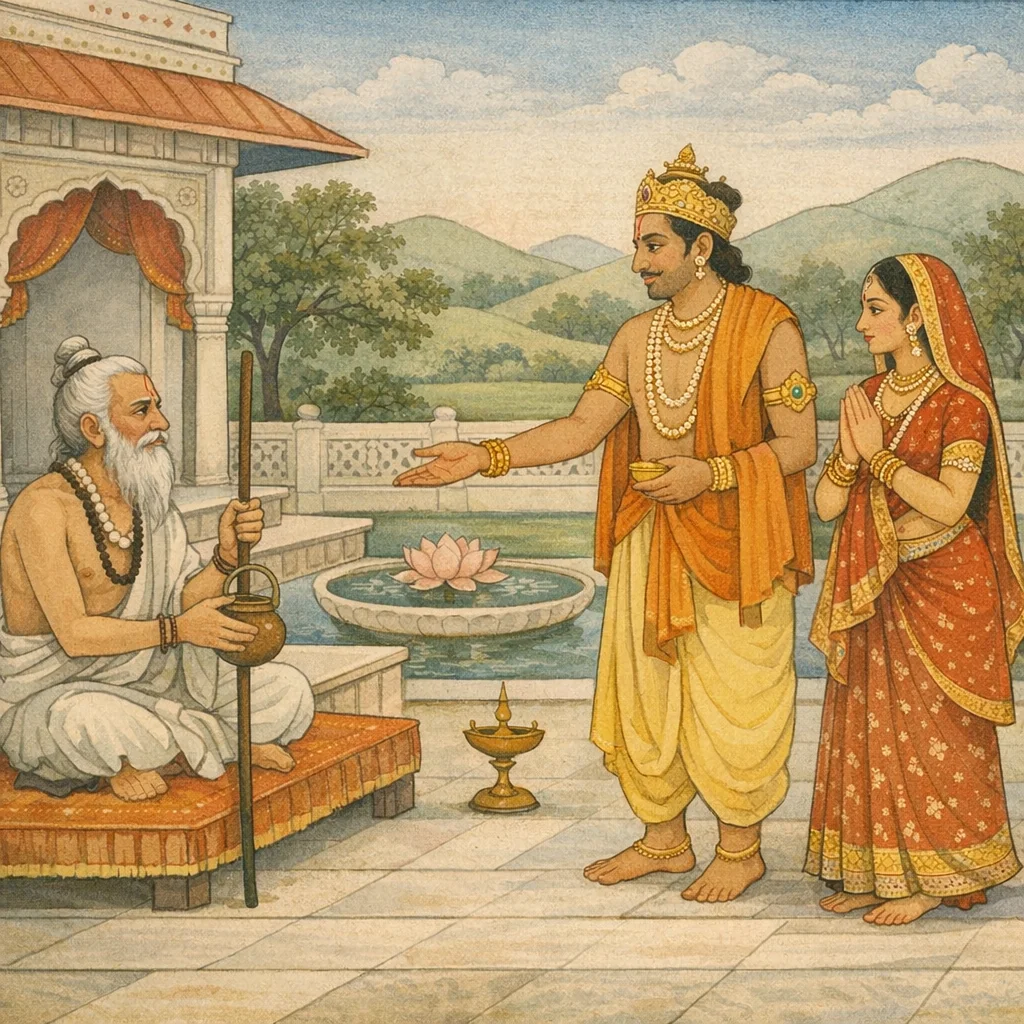
कुन्तिभोजं पुरा राजन ब्राह्मण: पर्युपस्थित: । तिग्मतेजा महाप्रांशु: श्मश्रुदण्डजटाधर:,राजन! प्राचीनकालकी बात है, राजा कुन्तिभोजके दरबारमें अत्यन्त ऊँचे कदके एक प्रचण्ड तेजस्वी ब्राह्मण उपस्थित हुए। उन्होंने दाढ़ी, मूँछ, दण्ड और जटा धारण कर रखी थी
Vaiśampāyana said: “O King, long ago a brāhmaṇa came to the court of King Kuntibhoja. He was tall, blazing with fierce splendor, of great stature; he wore beard and mustache, carried a daṇḍa (staff), and bore matted locks (jaṭā).”
Verse 5
शा शीला ॥ 2-०५ दर्शनीयो5नवद्याड्रस्तेजसा प्रज्वलन्निव । मधुपिड्री मधुरवाक् तपःस्वाध्यायभूषण:,उनका स्वरूप देखने ही योग्य था। उनके सभी अंग निर्दोष थे। वे तेजसे प्रज्वलित होते-से जान पड़ते थे। उनके शरीरकी कान्ति मधुके समान पिंगलवर्णकी थी। वे मधुर वचन बोलनेवाले तथा तपस्या और स्वाध्यायरूप सदगुणोंसे विभूषित थे
Vaiśampāyana said: “He was a sight worthy to behold, with limbs flawless in every respect. He seemed as though blazing with inner radiance. His complexion shone with a honey-like tawny-golden hue. Sweet of speech, he was adorned with the virtues of austerity and sacred study.”
Verse 6
स राजानं कुन्तिभोजमब्रवीत् सुमहातपा: । भिक्षामिच्छामि वै भोक्तुं तव गेहे विमत्सर,उन महातपस्वीने राजा कुन्तिभोजसे कहा--“'किसीसे ईर्ष्या न करनेवाले नरेश! मैं तुम्हारे घरमें भिक्षात्न भोजन करना चाहता हूँ
Then the great ascetic addressed King Kuntibhoja: “O king free from envy, I wish to partake of alms-food in your house.”
Verse 7
न मे व्यलीकं कर्तव्यं त्वया वा तव चानुगै: । एवं वत्स्यामि ते गेहे यदि ते रोचतेडनघ,'परंतु एक शर्त है, तुम या तुम्हारे सेवक कभी मेरे मनके प्रतिकूल आचरण न करें। अनघ! यदि तुम्हें मेरी यह शर्त ठीक जान पड़े तो उस दशामें मैं तुम्हारे घरमें निवास करूँगा
“Neither you nor your attendants should ever act in a way that goes against my will or causes me displeasure. If this condition seems acceptable to you, O blameless one, then I shall reside in your house.”
Verse 8
यथाकामं च गच्छेयमागच्छेयं तथैव च । शय्यासने च मे राजन् नापराध्येत कश्नन,“मैं अपनी इच्छाके अनुसार जब चाहूँगा चला जाऊँगा और जब जीमें आयेगा चला आऊँगा। राजन! मेरी शय्या और आसनपर बैठना अपराध होगा। अत: यह अपराध कोई न करे”
Vaiśaṃpāyana said: “I shall depart whenever I wish and return in the same manner. And, O king, no one should commit an offence regarding my bed and seat—let none presume to sit upon them.”
Verse 9
तमब्रवीत् कुन्तिभोज: प्रीतियुक्तमिदं वच: । एवमस्तु परं चेति पुनश्चैनमथाब्रवीत्,तब राजा कुन्तिभोजने बड़ी प्रसन्नताके साथ उत्तर दिया--“विप्रवर! “एवमस्तु'--जैसा आप चाहते हैं, वैसा ही होगा“, इतना कहकर वे फिर बोले--
Vaiśampāyana said: Then Kuntibhoja, filled with affection, spoke these words to him: “So be it; let it be exactly as you wish, O best of brahmins.” Having said this, he addressed him again—
Verse 10
मम कन्या महाप्राज्ञ पृथा नाम यशस्विनी । शीलवृत्तान्विता साध्वी नियता चैव भाविनी,“महाप्राज्ञ! मेरे पृथा नामकी एक यशस्विनी कन्या है, जो शील और सदाचारसे सम्पन्न, साध्वी, संयम-नियमसे रहनेवाली और विचारशील है
Vaiśampāyana said: “O greatly wise one, I have a renowned daughter named Pṛthā. She is endowed with good character and right conduct—virtuous, disciplined in vows and restraints, and thoughtful in her disposition.”
Verse 11
उपस्थास्यति सा त्वां वै पूजयानवमन्य च । तस्याश्न शीलवृत्तेन तुष्टिं समुपयास्यसि
Vaiśampāyana said: “She will surely attend upon you, honoring you without contempt. And by your own conduct—marked by good character and right living—you will attain her full satisfaction and goodwill.”
Verse 12
“वह सदा आपकी सेवा-पूजाके लिये उपस्थित रहेगी। उसके द्वारा आपका अपमान कभी न होगा। मेरा विश्वास है कि उसके शील और सदाचारसे आप संतुष्ट होंगे” ।। एवमुक्त्वा तु तं विप्रमभिपूज्य यथाविधि । उवाच कन्यामभ्येत्य पृथां पूुथुललोचनाम्,ऐसा कहकर उन ब्राह्मणदेवताकी विधिपूर्वक पूजा करके राजाने अपनी विशाल नेत्रोंवाली कन्या पृथाके पास जाकर कहा--
“She will always be at hand to serve and honor you. Through her you will never suffer disrespect. I am confident you will be pleased by her character and good conduct.” Having spoken thus, the king duly honored that brahmin with proper rites; then he went to his wide-eyed daughter Pṛthā and addressed her.
Verse 13
अयं वत्से महाभागो ब्राह्मणो वस्तुमिच्छति । मम गेहे मया चास्य तथेत्येवं प्रतिश्रुतम्,“वत्से! ये महाभाग ब्राह्मण मेरे घरमें निवास करना चाहते हैं। मैंने “तथास्तुट कहकर इन्हें अपने यहाँ ठहरानेकी प्रतिज्ञा कर ली है
Vaiśampāyana said: “My child, this fortunate Brahmin wishes to reside here. In my own house I have already given him my word—saying, ‘So be it’—and thus I have pledged to host him.”
Verse 14
त्वयि वत्से पराश्चवस्य ब्राह्मणस्याभिराधनम् | तन्मे वाक्यममि थ्या त्वं कर्तुमहसि कहिचित्,“बेटी! तुमपर भरोसा करके ही मैंने इन तेजस्वी ब्राह्मणकी आराधना स्वीकार की है; अतः तुम मेरी बात कभी मिथ्या न होने दोगी, ऐसी आशा है
“My child, relying on you I accepted the duty of honoring and serving this radiant brāhmaṇa. Therefore, see to it that my word does not ever become false.”
Verse 15
अयं तपस्वी भगवान् स्वाध्यायनियतो द्विज: । यद् यद् ब्रूयान्महातेजास्तत्तद् देयममत्सरात्,'ये विप्रवर महातेजस्वी, तपस्वी, ऐश्वर्यशशाली तथा नियमपूर्वक वेदोंके स्वाध्यायमें संलग्न रहनेवाले हैं। ये जिस-जिस वस्तुके लिये कहें, वह सब इन्हें ईर्ष्यारहित हो श्रद्धाके साथ देना
Vaiśampāyana said: “This venerable brahmin is an ascetic, steadfast in the disciplined study of the Veda. Whatever this great-splendoured one may ask for, that very thing should be given—without jealousy, and with a pure, non-grudging heart.”
Verse 16
ब्राह्मणो हि परं तेजो ब्राह्मणो हि परं तपः । ब्राह्मणानां नमस्कारै: सूर्यो दिवि विराजते,क्योंकि ब्राह्मण ही उत्कृष्ट तेज है, ब्राह्मण ही परम तप है, ब्राह्मणोंके नमस्कारसे ही सूर्यदेव आकाशमें प्रकाशित हो रहे हैं
Vaiśaṃpāyana said: “The brāhmaṇa is indeed the highest radiance; the brāhmaṇa is indeed the supreme austerity. By the reverent salutations offered to brāhmaṇas, the Sun himself shines resplendent in the heavens.”
Verse 17
अमानयन् हि मानारहन् वातापिश्न महासुर: । निहतो ब्रह्म॒दण्डेन तालजड्घस्तथैव च,“माननीय ब्राह्मणोंका सम्मान न करनेके कारण ही महान् असुर वातापि और उसी प्रकार तालजंघ ब्रह्मदण्डसे मारे गये
Vaiśampāyana said: Because they failed to honor those worthy of honor—venerable brāhmaṇas—the great asura Vātāpi was slain by the ‘rod of Brahman’ (the spiritual power and curse of a brāhmaṇa); and in the same way Tālajaṅgha too met his death.
Verse 18
सो<यं वत्से महाभार आहितस्त्वयि साम्प्रतम् । त्वं सदा नियता कुर्या ब्राह्मणस्थाभिराधनम्,“अतः बेटी! इस समय सेवाका यह महान भार मैंने तुम्हारे ऊपर रखा है। तुम सदा नियमपूर्वक इन ब्राह्मणदेवताकी आराधना करती रहो
Vaiśaṃpāyana said: “My child, this great burden of service has now been placed upon you. Therefore, remain ever disciplined and continue, as a rule of life, the reverent honoring and worshipful service of the Brahmins—those to be regarded as divine.”
Verse 19
जानामि प्रणिधानं ते बाल्यात् प्रभृति नन्दिनी | ब्राह्मणेष्विह सर्वेषु गुरुबन्धुषु चैव ह,“माता-पिताका आनन्द बढ़ानेवाली पुत्री! मैं जानता हूँ, बचपनसे ही तुम्हारा चित्त एकाग्र है। समस्त ब्राह्मणों, गुरुजनों, बन्धु-बान्धवों, सेवकों, मित्रों, सम्बन्धियों तथा माताओंके प्रति और मेरे प्रति भी तुम सदा यथोचित बर्ताव करती आयी हो। तुमने अपने सद्भावसे सबको प्रभावित कर लिया है
Vaiśampāyana said: “O Nandinī, I know your steadfast dedication from your very childhood. Here among all the brāhmaṇas, and toward your elders and kinsmen as well, you have consistently conducted yourself with due propriety.”
Verse 20
तथा प्रेष्येषु सर्वेषु मित्रसम्बन्धिमातृषु । मयि चैव यथावत् त्वं सर्वमावृत्य वर्तसे,“माता-पिताका आनन्द बढ़ानेवाली पुत्री! मैं जानता हूँ, बचपनसे ही तुम्हारा चित्त एकाग्र है। समस्त ब्राह्मणों, गुरुजनों, बन्धु-बान्धवों, सेवकों, मित्रों, सम्बन्धियों तथा माताओंके प्रति और मेरे प्रति भी तुम सदा यथोचित बर्ताव करती आयी हो। तुमने अपने सद्भावसे सबको प्रभावित कर लिया है
“In the same way, toward all attendants and servants, toward friends, kinsmen, and the women who are as mothers, and toward me as well, you conduct yourself exactly as is proper—winning over everyone and covering every bond with goodwill and propriety.”
Verse 21
न ह्वातुष्टो जनो<स्तीह पुरे चान्त:पुरे च ते । सम्यग्वृत्त्यानवद्याड्रि तव भृत्यजनेष्वपि,“निर्दोष अंगोंवाली पुत्री! नगरमें या अन्तःपुरमें, सेवकोंमें भी कोई ऐसा मनुष्य नहीं है, जो तुम्हारे उत्तम बर्तावसे संतुष्ट न हो
Vaiśampāyana said: “Here, in your city and even within your inner apartments, there is no person who is not pleased. O blameless-limbed maiden, even among your attendants and servants, everyone is satisfied because of your impeccable conduct.”
Verse 22
संदेष्टव्यां तु मन्ये त्वां द्विजातिं कोपन प्रति । पृथे बालेति कृत्वा वै सुता चासि ममेति च,“तथापि पृथे! तुम अभी बालिका और मेरी पुत्री हो, इसलिये इन क्रोधी ब्राह्मणके प्रति बर्ताव करनेके विषयमें तुम्हें कुछ उपदेश देनेकी आवश्यकताका अनुभव मैं करता हूँ
Vaiśampāyana said: “I think you must be instructed about how to deal with this irascible Brahmin. For, O Pṛthā, you are still a young girl, and moreover you are my daughter.”
Verse 23
वृष्णीनां च कुले जाता शूरस्य दयिता सुता । दत्ता प्रीतिमता महां पित्रा बाला पुरा स्वयम्,वृष्णिवंशमें तुम्हारा जन्म हुआ है। तुम शूरसेनकी प्यारी पुत्री हो। पूर्वकालमें स्वयं तुम्हारे पिताने बाल्यावस्थामें ही बड़ी प्रसन्नताके साथ तुम्हें मेरे हाथों सौंपा था
“You were born in the lineage of the Vṛṣṇis; you are the beloved daughter of Śūra. Long ago, when you were still a child, your father himself, with great joy, placed you into my hands.”
Verse 24
वसुदेवस्य भगिनी सुतानां प्रवरा मम । अग्रयमग्रे प्रतिज्ञाय तेनासि दुहिता मम,तुम वसुदेवकी बहिन तथा मेरी संतानोंमें सबसे बड़ी हो। पहले उन्होंने यह प्रतिज्ञा कर रखी थी कि मैं अपनी पहली संतान तुम्हें दे दूँगा। उसीके अनुसार उन्होंने तुम्हें मेरी गोदमें अर्पित किया है, इस कारण तुम मेरी दत्तक पुत्री हो
Vaiśampāyana said: “You are the sister of Vasudeva, and among my children you are the foremost. Having earlier made a pledge to give me his firstborn, he placed you into my lap in accordance with that promise; therefore you are my adopted daughter.”
Verse 25
तादृशे हि कुले जाता कुले चैव विवर्धिता । सुखात् सुखमनुप्राप्ता हृदाद् हृदमिवागता,वैसे उत्तम कुलमें तुम्हारा जन्म हुआ तथा मेरे श्रेष्ठ कुलमें तुम पालित और पोषित होकर बड़ी हुई। जैसे जलकी धारा एक सरोवरसे निकलकर दूसरे सरोवरमें गिरती है, उसी प्रकार तुम एक सुखमय स्थानसे दूसरे सुखमय स्थानमें आयी हो
Vaiśampāyana said: “Born indeed in such a noble lineage, and likewise reared and brought to maturity in another eminent house, you have passed from one sphere of comfort to another—like a stream of water leaving one lake and entering the next. Thus your life has moved from happiness to happiness, without a break in dignity or care.”
Verse 26
दौष्कुलेया विशेषेण कथंचित् प्रग्रह॑ गता: । बालभावाद् विकुर्वन्ति प्रायश: प्रमदा: शुभे,'शुभे! जो दूषित कुलमें उत्पन्न होनेवाली स्त्रियाँ हैं, वे किसी तरह विशेष आग्रहमें पड़कर अपने अविवेकके कारण प्राय: बिगड़ जाती हैं (परंतु तुमसे ऐसी आशंका नहीं है)
Vaiśampāyana said: “Women born in tainted lineages, O auspicious lady, when they somehow fall—especially—into a state of obstinate attachment, are, through childish lack of discernment, for the most part led into moral distortion. Yet in your case, no such fear is implied.”
Verse 27
पृथे राजकुले जन्म रूप॑ं चापि तवाद्भुतम् | तेन तेनासि सम्पन्ना समुपेता च भाविनी,'पृथे! तुम्हारा जन्म राजकुलमें हुआ है। तुम्हारा रूप भी अदभुत है। कुल और स्वरूपके अनुसार ही तुम उत्तम शील, सदाचार और सदगुणोंसे संयुक्त एवं सम्पन्न हो। साथ ही विचारशील भी हो
Vaiśampāyana said: “O Pṛthā, you were born in a royal lineage, and your beauty too is extraordinary. In keeping with that noble birth and form, you are endowed with excellence—possessing good character and right conduct, rich in virtues, and also thoughtful and discerning.”
Verse 28
सा त्वं दर्प परित्यज्य दम्भं मानं च भाविनि । आराध्य वरदं विप्र॑ श्रेयसा योक्ष्यसे पृथे,“सुन्दर भाववाली पृथे! तुम दर्प, दम्भ और मानको त्यागकर यदि इन वरदायक ब्राह्मणकी आराधना करोगी तो परम कल्याणकी भागिनी होओगी
Vaiśampāyana said: “O Pṛthā, endowed with a noble disposition—abandon pride, hypocrisy, and self-importance. If you worship and serve this boon-bestowing brāhmaṇa, you will be joined to the highest good.”
Verse 29
एवं प्राप्स्यसि कल्याणि कल्याणमनचघे ध्रुवम् कोपिते च द्विजश्रेष्ठे कृत्स्नं दहोत मे कुलम्,“कल्याणि! तुम पापरहित हो। यदि इस प्रकार इनकी सेवा करनेमें सफल हो गयी तो तुम्हें निश्चय ही कल्याणकी प्राप्ति होगी, और यदि तुमने अपने अनुचित बर्तावसे इन श्रेष्ठ ब्राह्मणको कुपित कर दिया तो मेरा सम्पूर्ण कुल जलकर भस्म हो जायगा”
Vaiśampāyana said: “O auspicious lady, O sinless one—if you succeed in serving him in this manner, you will surely attain well-being. But if, through improper conduct, you anger that foremost of Brahmins, my entire lineage will be consumed and reduced to ashes.”
Verse 302
इस प्रकार श्रीमह्याभारत वनपर्वके अन्तर्गत कुण्डलाहरणपर्वमें सूर्य-कर्ण-संवादविषयक तीन सौ दोवाँ अध्याय पूरा हुआ
Thus ends the three-hundred-and-second chapter of the Vana Parva of the Śrī Mahābhārata, within the section called “The Taking of the Earrings,” concerning the dialogue between Sūrya and Karṇa. This closing marks the end of the episode, revealing the moral strain between divine counsel and human resolve, and setting the ethical frame for Karṇa’s choices of generosity, honor, and fate.
Verse 303
इति श्रीमहा भारते वनपर्वणि कुण्डलाहरणपर्वणि पृथोपदेशे त्रयधिकत्रिशततमो<ध्याय:
Thus, in the revered Mahābhārata, within the Vana Parva, in the section concerning the taking of the earrings, in the episode of Pṛthā’s counsel, ends the three-hundred-and-third chapter. This closing colophon signals the completion of a narrative unit that frames events as moral instruction and as the consequences of action, especially as conveyed through Pṛthā’s guidance.