Adhyaya 239
दुर्योधनस्य प्रायोपवेशः — शकुनिसान्त्वनम् तथा कृत्याह्वानम् (Duryodhana’s Fast: Śakuni’s Consolation and the Summoning of a Kṛtyā)
Upa-parva: Duryodhana-prāyopaveśa–Daiteya-āhvāna Episode (within Āraṇyaka-parva)
Vaiśaṃpāyana narrates Duryodhana seated in prāyopaveśa. Śakuni addresses him with pacific counsel: he recalls Karṇa’s prior reasoning, criticizes the abandonment of prosperity through delusion, and warns that a ruler who cannot restrain surging joy or despondency loses fortune. He outlines leadership defects that repel royal success—fearfulness, inertia, negligence, and addiction to sense-objects—and argues that Duryodhana’s grief is misplaced where honor and reconciliation are possible. Śakuni urges composure, remembrance of meritorious action, and the ethical-political option of granting the Pāṇḍavas their paternal kingdom to gain fame and dharma. Duryodhana, shamed yet adamant, rejects wealth, pleasure, authority, and policy, commanding others to return to the city while he persists. His companions declare shared fate and attempt persuasion; he remains unmoved. He prepares ritual austerity on darbha, purifies with water, dons kuśa and bark garments, and adopts silence and strict observance aiming at a heavenly end. Daiteya-Dānava beings in Rasātala, learning of his resolve and their own strategic interest, perform Vaitāna rites with Bṛhaspati/Uśanas mantras, Atharvavedic formulas, and upaniṣadic procedures; a kṛtyā arises, is instructed to bring Duryodhana, and swiftly transports him to Rasātala, where the assembled Dānavas address him with confident intent.
Chapter Arc: Hastinapura’s inner chambers hum with a dangerous sweetness: Duryodhana confides to Karna that the very thought in his own heart has been spoken aloud—yet permission from the elders to go where the Pandavas dwell will not come easily. → Duryodhana recalls Vidura’s earlier warnings at the time of the dice—how the wise minister spoke to him, to Karna, and to Shakuni—implying that the present scheme is only the old sin returning in a new costume. Dhritarashtra’s constant lament for the Pandavas, and his belief in their ascetic power, becomes an obstacle: the blind king’s grief and fear of their tapas stand against Duryodhana’s desire to provoke and humiliate them. → The conspiratorial triangle tightens: Duryodhana weighs whether he should go at once or delay, resolves to approach the king at dawn, and—while he and Karna speak of the ‘cattle-expedition’ decision—Shakuni answers with a laugh, sealing the plan as a calculated pretext to enter the Pandavas’ vicinity and test their restraint. → All present, delighted at the plan’s apparent inevitability, exchange approving gestures and finalize the decision to proceed with the ghosha-yatra as a political-psychological weapon—an expedition outwardly about cattle and display, inwardly about insult and entrapment. → With the scheme fixed, the next step looms: Duryodhana must face the court and obtain sanction—will Dhritarashtra and the elders restrain him, or will the expedition be unleashed toward the forest exile?
Shlokas
Verse 1
(दाक्षिणात्य अधिक पाठके १६ श्लोक मिलाकर कुल २४३ “लोक हैं।) 3 “+( 9) #2:.# ४257 अष्टात्रिशर्दाधिकद्विशततमो< ध्याय: दुर्योधनके द्वारा कर्ण और शकुनिकी मन्त्रणा स्वीकार करना तथा कर्ण आदिका घोषयात्राको निमित्त बनाकर द्वैतवनमें जानेके लिये धृतराष्ट्रसे आज्ञा लेने जाना वैशम्पायन उवाच कर्णस्य वचन श्रुत्वा राजा दुर्योधनस्तत: । हृष्टो भूत्वा पुनर्दीन इदं वचनमत्रवीत्,वैशम्पायनजी कहते हैं--जनमेजय! कर्णकी बात सुनकर राजा दुर्योधनको पहले तो बड़ी प्रसन्नता हुई; फिर वह दीन होकर इस प्रकार बोला--
Vaiśampāyana said: Hearing Karṇa’s words, King Duryodhana at first was delighted; but then, sinking into despondency, he spoke these words.
Verse 2
ब्रवीषि यदिदं कर्ण सर्व मनसि मे स्थितम् | न त्वभ्यनुज्ञां लप्स्यामि गमने यत्र पाण्डवा:,“कर्ण! तुम जो कुछ कह रहे हो, वह सब मेरे मनमें भी है। परंतु जहाँ पाण्डव रहते हैं, वहाँ जानेके लिये मैं पिताजीकी आज्ञा नहीं पा सकूँगा
“Karṇa, what you say is wholly what I too hold in my heart. Yet I will not obtain my father’s permission to go to the place where the Pāṇḍavas are staying.”
Verse 3
परिदेवति तान् वीरान् धृतराष्ट्रो महीपति: । मन्यते< भ्यधिकांश्वापि तपोयोगेन पाण्डवान्,“महाराज धृतराष्ट्र उन वीर पाण्डवोंके लिये सदा विलाप करते रहते हैं। वे तपःशक्तिके संयोगसे पाण्डवोंको हमसे अधिक बलशाली भी मानते हैं
“King Dhṛtarāṣṭra, lord of the earth, continually laments for those heroic Pāṇḍavas. He even deems the Pāṇḍavas superior to our side, believing their strength is augmented by the power born of austerity and yoga.”
Verse 4
अथवाप्यनुबुध्येत नूपो5स्माकं चिकीर्षितम् | एवमप्यायतिं रक्षन् नाभ्यनुज्ञातुमरहति,“अथवा यदि उन्हें इस बातका पता लग जाय कि हमलोग वहाँ जाकर कया करना चाहते हैं, तब वे भावी संकटसे हमारी रक्षाके लिये ही हमें वहाँ जानेकी अनुमति नहीं देंगे
“Or else, if he were to learn what we intend to do, then—even to safeguard us from future danger—he would not deem it right to grant us permission (to go).”
Verse 5
न हि द्वैतवने किंचिद् विद्यतेडन्यत् प्रयोजनम् । उत्सादनमृते तेषां वनस्थानां महाद्युते,“महातेजस्वी कर्ण। (पिताजीको यह समझते देर नहीं लगेगी कि) वनमें रहनेवाले पाण्डवोंको उखाड़ फेंकनेके अतिरिक्त हमलोगोंके द्वैतवनमें जानेका दूसरा कोई प्रयोजन नहीं है
“O Karṇa of great splendor! In the Dvaitavana forest there is no other purpose at all—save the destruction of those Pāṇḍavas who dwell in the woods.”
Verse 6
जानासि हि यथा क्षत्ता द्यूतकाल उपस्थिते । अब्रवीद् यच्च मां त्वां च सौबलं वचनं तदा,“जुएका अवसर उपस्थित होनेपर विदुरजीने मुझसे, तुमसे तथा (मामा) शकुनिसे जैसी बातें कही थीं, उन्हें तो तुम जानते ही हो
Vaiśampāyana said: You already know how, when the time for the dice-game had arrived, the chamberlain Vidura spoke then—addressing me, you, and Śakuni of the Saubala line.
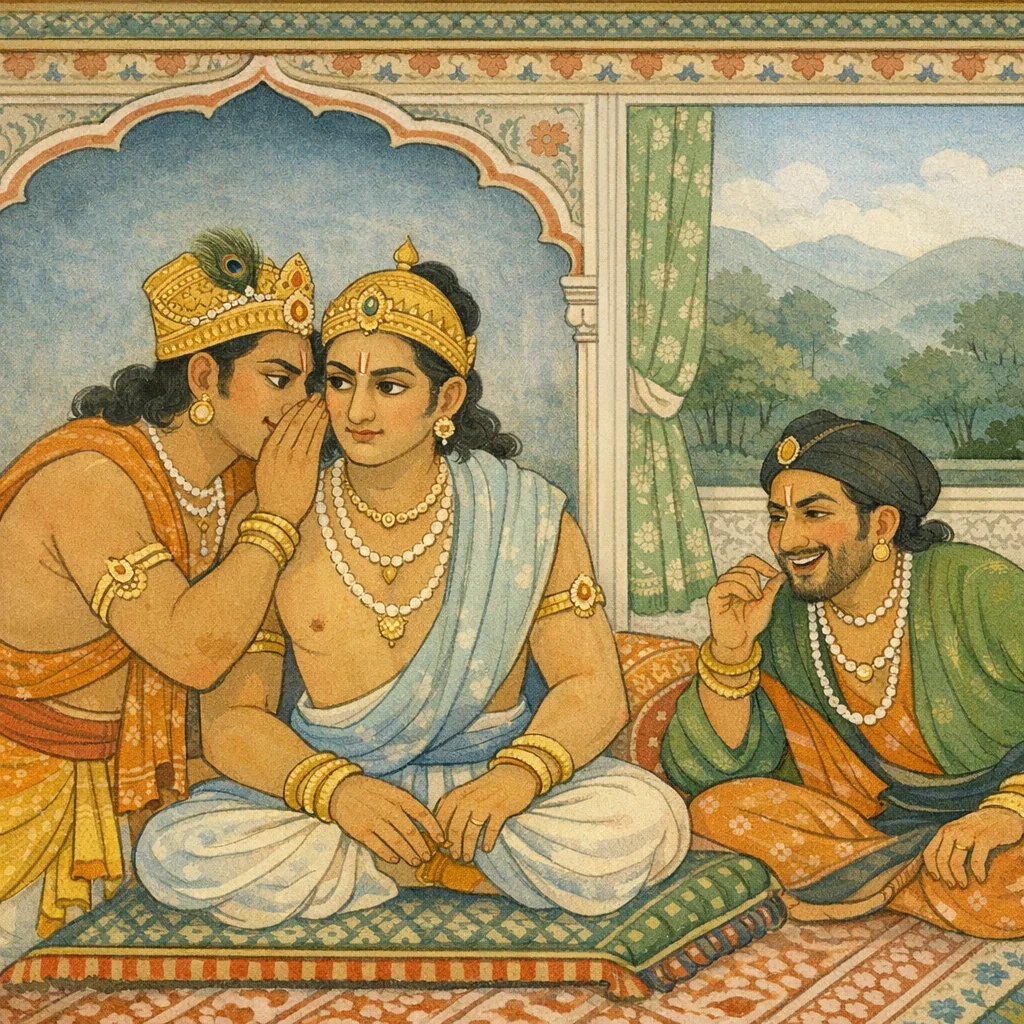
Verse 7
तानि सर्वाणि वाक्यानि यच्चान्यत् परिदेवितम् । विचिन्त्य नाधिगच्छामि गमनायेतराय वा
Vaiśampāyana said: Reflecting on all those words, and on whatever other lamentation was uttered, I still cannot arrive at a clear decision—whether it is better to depart, or to do otherwise.
Verse 8
“उन सब बातोंपर तथा और भी पाण्डवोंके लिये जो विलाप किया गया है, उसपर विचार करके मैं किसी निश्चयपर नहीं पहुँच पाता कि द्वैतवनमें चलूँ या न चलूँ ।। ममापि हि महान् हर्षो यदहं भीमफाल्गुनौ । क्लिष्टावरण्ये पश्येयं कृष्णया सहिताविति,“यदि मैं भीमसेन तथा अर्जुनको द्रौपदीके साथ वनमें क्लेश उठाते देख सकूँ, तो मुझे भी बड़ी प्रसन्नता होगी
Vaiśampāyana said: Reflecting on all those reports—and on the further lamentation made on behalf of the Pāṇḍavas—I cannot arrive at a firm decision whether I should go to the Dvaita forest or not. Yet I too would feel great joy if I could behold Bhīma and Phālguna (Arjuna), together with Kṛṣṇā (Draupadī), enduring the hardships of the wilderness.
Verse 9
न तथा ह्ाप्रुयां प्रीतिमवाप्प वसुधामिमाम् । दृष्टवा यथा पाण्डुसुतान् वल्कलाजिनवासस:,'पाण्डवोंको वल्कल वस्त्र पहने और मृगचर्म ओढ़े देखकर मुझे जितनी खुशी होगी, उतनी इस समूची पृथ्वीका राज्य पाकर भी नहीं होगी”
Vaiśampāyana said: “Even if I were to obtain this entire earth, I would not feel the joy that I shall feel upon seeing the sons of Pāṇḍu—clad in bark garments and wearing deer-skins.”
Verse 10
कि नु स्यादधिकं तस्माद् यदहं द्रुपदात्मजाम् | द्रौपदी कर्ण पश्येयं काषायवसनां वने,“कर्ण! मैं ट्रपदकुमारी कृष्णाको वनमें गेरुए कपड़े पहने देखूँ, इससे बढ़कर प्रसन्नताकी बात मेरे लिये और क्या हो सकती है?
Vaiśampāyana said: “What could be a greater delight than this—that I might see Draupadī, the daughter of Drupada, in the forest, clad in ochre garments? O Karṇa!”
Verse 11
यदि मां धर्मराजश्न भीमसेनश्न् पाण्डव: । युक्त परमया लक्ष्म्या पश्येतां जीवितं भवेत्,“यदि धर्मराज युधिष्ठिर तथा पाण्डुनन्दन भीमसेन मुझे परमोत्कृष्ट राजलक्ष्मीसे सम्पन्न देख लें तो मेरा जीवन सफल हो जाय
Vaiśaṃpāyana said: “If King Dharma (Yudhiṣṭhira) and Bhīmasena, the Pāṇḍava, were to see me endowed with the highest royal fortune and splendor, then my life would be fulfilled.”
Verse 12
उपायं न तु पश्यामि येन गच्छेम तद् वनम् | यथा चाभ्यनुजानीयाद् गच्छन्तं मां महीपति:,'परन्तु मुझे कोई ऐसा उपाय नहीं दिखायी देता, जिससे हमलोग द्वैतवनमें जा सकें; अथवा महाराज मुझे वहाँ जानेकी आज्ञा दे दें!
Vaiśampāyana said: “I see no means by which we might go to that forest; nor do I see how the king of the land would grant me permission to depart for it.”
Verse 13
स सौबलेन सहितस्तथा दुःशासनेन च । उपायं पश्य निपुणं येन गच्छेम तद् वनम्,“अतः तुम मामा शकुनि तथा भाई दुःशासनके साथ सलाह करके कोई अच्छा-सा उपाय ढूँढ़ निकालो, जिससे हमलोग द्वैतवनमें चल सकें
Vaiśampāyana said: Accompanied by Śakuni of the Saubala line and by Duḥśāsana, he sought a clever stratagem—some well-judged means by which they might proceed to that forest.
Verse 14
अहमप्यद्य निश्चित्य गमनायेतराय च । कल्यमेव गमिष्यामि समीपं॑ पार्थिवस्यथ ह
Vaiśampāyana said: “I too, having resolved today both to depart and to do what remains to be done, shall set out tomorrow and go into the presence of the king.”
Verse 15
“मैं भी आज ही जाने या न जानेके विषयमें कोई निश्चय करके कल सबेरा होते ही महाराजके पास जाऊँगा ।। मयि तत्रोपविष्टे तु भीष्मे च कुरुसत्तमे । उपायो यो भवेद् दृष्टस्तं ब्रूया: सहसौबल:,“जब मैं वहाँ बैठ जाऊँ और कुरुश्रेष्ठ भीष्मजी भी उपस्थित रहें, उस समय जो उपाय दिखायी दे, उसे तुम और शकुनि--दोनों बतलाना
Vaiśaṃpāyana said: “When I am seated there, and Bhīṣma—the best of the Kurus—is also present, then whatever course of action appears feasible at that moment, you should propose it together with Saubala (Śakuni).”
Verse 16
वचो भीष्मस्य राज्ञक्ष निशम्य गमन प्रति । व्यवसायं करिष्येडहमनुनीय पितामहम्,“पितामह भीष्मजीकी तथा महाराजकी वहाँ जानेके विषयमें क्या सम्मति है; यह सुन लेनेपर पितामहको अनुनय-विनयसे राजी करके (उनकी आज्ञा लेकर ही) द्वैतवनमें चलनेका निश्चय करूँगा'
Vaiśampāyana said: Having heard the words of Bhīṣma and of the king concerning the proposed journey, I shall resolve to go only after respectfully persuading Grandfather Bhīṣma and obtaining his assent. The passage underscores a deliberate, ethically mindful decision: action is to be taken not in haste, but with deference to elders and rightful counsel.
Verse 17
तथेत्युक्त्वा तु ते सर्वे जग्मुरावसथान् प्रति । व्युषितायां रजन्यां तु कर्णो राजानमभ्ययात्,“बहुत अच्छा, ऐसा ही हो” यह कहकर सब अपने-अपने विश्रामगृहमें चले गये। जब रात बीती और सबेरा हुआ, तब कर्ण राजा दुर्योधनके पास गया
“So be it,” they all replied, and each departed to his own lodging. When the night had passed and morning came, Karṇa went to the king—Duryodhana—approaching him to confer further.
Verse 18
ततो दुर्योधन कर्ण: प्रहसन्निदमब्रवीत् । उपाय: परिदृष्टोडयं तं निबोध जनेश्वर,वहाँ कर्णने हँसकर दुर्योधनसे कहा--'जनेश्वर! मुझे जो उपाय सूझा है, उसे बताता हूँ, सुनो
Then Karṇa, smiling, spoke these words to Duryodhana: “O lord of men, I have discerned a plan; listen and understand it.”
Verse 19
घोषा द्वैतवने सर्वे त्वत्प्रतीक्षा नराधिप । घोषयात्रापदेशेन गमिष्यामो न संशय:,“नरेश्वर! गौओंके रहनेके सभी स्थान इस समय द्वैतवनमें ही हैं और वहाँ आपके पधारनेकी सदा प्रतीक्षा की जाती है, अत: घोषयात्रा (उन स्थानोंको देखने)-के बहाने हम वहाँ नि:सन्देह चल सकेंगे
“O king, all the cowherd-settlements are now in the forest of Dvaitavana, and there they ever await your coming. Therefore, under the pretext of a ghoṣayātrā—a journey to visit and inspect the herds—we can go there without doubt.”
Verse 20
उचितं हि सदा गन्तुं घोषयात्रां विशाम्पते | एवं च त्वां पिता राजन् समनुज्ञातुमहति,“राजन्! अपनी गौओंको देखनेके लिये यात्रा करना सदा उचित ही है; ऐसा बहाना लेनेपर पिताजी तुम्हें अवश्य वहाँ जानेकी आज्ञा दे सकते हैं!
Vaiśampāyana said: “O lord of the people, it is always proper to go on a journey to the cowherd-settlement to inspect the herds. And on this pretext, O king, your father can rightly grant you permission to go there.”
Verse 21
तथा कथयमानौ तौ घोषयात्राविनिश्चयम् । गान्धारराज: शकुनि: प्रत्युवाच हसन्निव,घोषयात्राका निश्चय करनेके लिये इस प्रकारकी बातें करते हुए उन दोनों सुहृदोंसे गान्धारराज शकुनिने हँसते हुए-से कहा--
Vaiśampāyana said: While those two friends were thus discussing and settling upon the decision to undertake the cattle-raid expedition, Śakuni, the king of Gandhāra, replied to them with a laugh—as if in mockery—hinting at the sly, self-serving counsel that would soon steer their resolve.
Verse 22
उपायो<यं मया दृष्टो गमनाय निरामय: । अनुज्ञास्यति नो राजा बोधयिष्यति चाप्युत,'द्वैतवनमें जानेका यह उपाय मुझे सर्वथा निर्दोष दिखायी दिया है। इसके लिये राजा धृतराष्ट्र हमें अवश्य आज्ञा दे देंगे और वहाँ जाकर हमें क्या-क्या करना चाहिये--इसके विषयमें कुछ समझायेंगे भी
Śakuni said: “I have perceived a means for us to go—safe and beyond reproach. King Dhṛtarāṣṭra will surely grant us leave, and he will also instruct us as to what should be done once we are there.”
Verse 23
घोषा द्वैतवने सर्वे त्वत्प्रतीक्षा नराधिप । घोषयात्रापदेशेन गमिष्यामो न संशय:,“नरेश्वरर गौओंके रहनेके सभी स्थान इस समय द्वैतवनमें ही हैं और वहाँ तुम्हारे पधारनेकी सदा प्रतीक्षा की जाती है; अतः घोषयात्राके बहाने हम वहाँ निःसंदेह चल सकेंगे”
Vaiśampāyana said: “O king, all the cattle-stations are now gathered in Dvaitavana, and there your arrival is continually awaited. Therefore, under the pretext of a cattle-camp tour, we shall certainly be able to go there—there is no doubt.”
Verse 24
ततः प्रहसिता: सर्वे तेडन्योन्यस्य तलान् ददुः । तदेव च विनिश्चित्य ददृशु: कुरुसत्तमम्,तदनन्तर वे सब-के-सब अपनी योजनाको सफल होती देख हँसने और एक-दूसरेके हाथपर प्रसन्नतासे ताली देने लगे। फिर यही निश्चय करके वे तीनों कुरुश्रेष्ठ राजा धृतराष्ट्रसे मिले
Then all of them burst into laughter, seeing their plan succeed, and in delight they clapped one another’s hands. Having thus settled on that very course of action, they went to meet the best of the Kurus (King Dhṛtarāṣṭra).
Verse 237
इस प्रकार श्रीमह्याभारत वनपर्वके अन्तर्गत घोषयात्रापर्वमें कर्ण और शकुनिके वचनविषयक दो सौ सैंतीसवाँ अध्याय पूरा हुआ
Thus ends the two-hundred-and-thirty-seventh chapter of the Ghoṣayātrā section within the Vana Parva of the sacred Mahābhārata, dealing with the words and counsel of Karṇa and Śakuni.
Verse 238
इति श्रीमहाभारते वनपर्वणि घोषयात्रापर्वणि घोषयात्रामन्त्रणे अष्टात्रिंशदधिकद्विशततमो<ध्याय:
Thus ends the two-hundred-and-thirty-eighth chapter of the Vana Parva of the Śrī Mahābhārata, within the section called “Ghoṣa-yātrā” (the cattle-expedition), specifically the episode concerning the deliberation and planning of that expedition—so declared by Vaiśaṃpāyana.
Frequently Asked Questions
The dilemma is whether a ruler, overwhelmed by humiliation and loss, may choose self-termination through prāyopaveśa, or must instead uphold responsibility through restraint, reparative governance, and continued accountability to kin and polity.
The passage teaches that sovereignty depends on mastery of internal states: unchecked elation or despair destabilizes judgment, and fortune abandons leadership marked by fear, procrastination, negligence, and compulsive indulgence.
No explicit phalaśruti is stated here; the chapter functions as narrative-ethical exemplification, positioning prāyopaveśa, counsel, and ritual intervention as interpretive nodes for understanding duty, agency, and the epic’s causality.