Adhyaya 172
Divyāstrāṇāṃ Pradarśana-nivāraṇa (Display of Divine Weapons and Its Prohibition)
Upa-parva: Divyāstra-pradarśana (Exhibition and Restraint of Divine Weapons) Episode
Vaiśaṃpāyana reports that, at dawn after the night’s passing, Yudhiṣṭhira completes necessary duties with his brothers and then urges Arjuna to show the weapons by which he had previously subdued hostile beings. Arjuna, described as maintaining strict purity and proper procedure, mounts a chariot, dons radiant armor, takes up the Gāṇḍīva bow and the conch Devadatta, and begins to arrange the divine weapons in sequence for demonstration. As he prepares to employ them, the environment exhibits systemic disruption: the earth trembles with trees, rivers and the ocean are agitated, mountains fracture, wind ceases, the sun’s radiance and fire’s blaze are diminished, and Vedic recitation loses clarity for the twice-born. Subterranean beings rise in distress, surrounding Arjuna with folded hands and petitions, indicating collateral impact even prior to full deployment. Brahmarṣis, siddhas, celestial sages, and diverse classes of beings assemble; Brahmā, the lokapālas, and Mahādeva arrive, while Vāyu circulates divine garlands and gandharvas and apsarases perform. In this heightened scene, Nārada addresses Arjuna, instructing him not to use divine weapons without proper occasion and warning of grave fault and broad destructive consequence if unguarded. He counsels preservation according to instruction so the weapons remain effective for legitimate future need. After Arjuna is restrained, the gods depart, and the Pāṇḍavas remain content in the same forest with Draupadī.
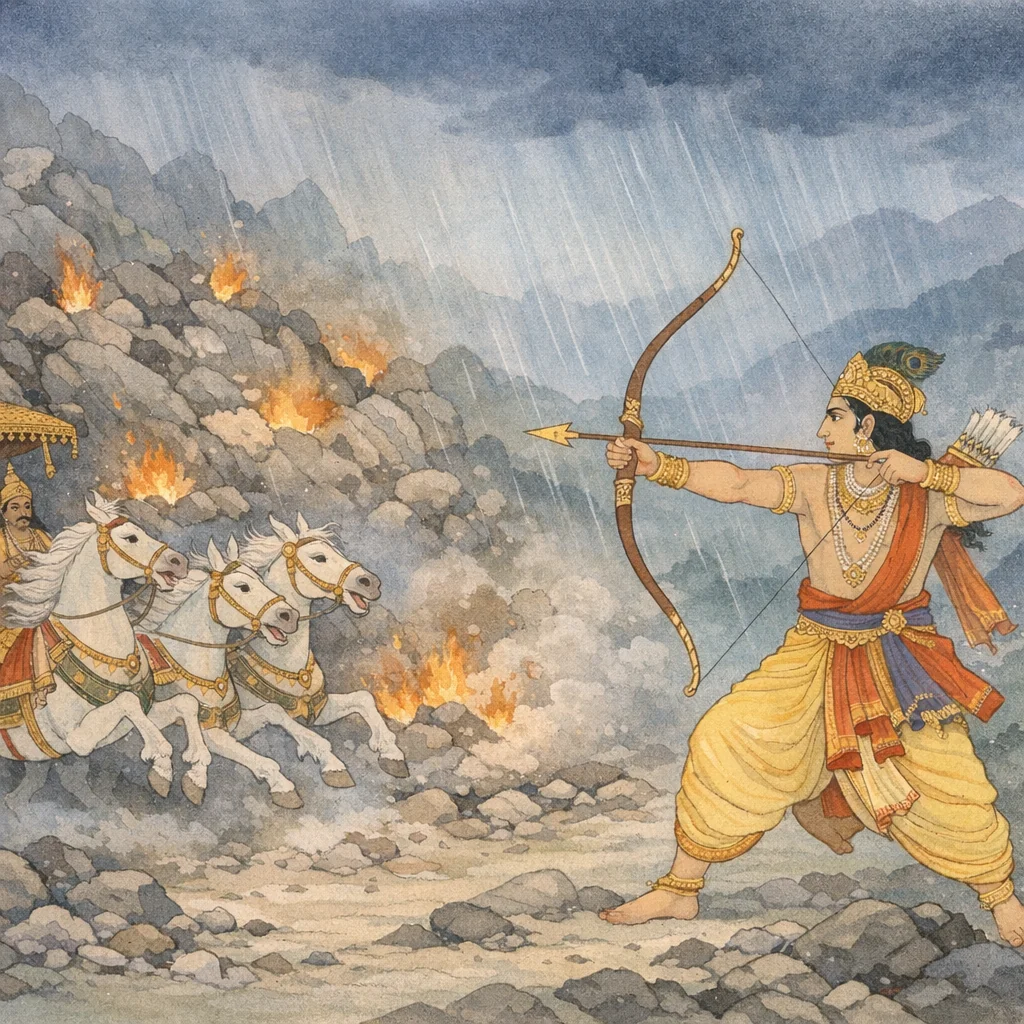
Chapter Arc: Arjuna recounts how, in the midst of the Nivātakavaca conflict, the very sky turns hostile—an immense rain of rocks erupts from all directions, as if the battlefield itself has been conjured into a weapon. → The daityas’ māyā escalates in layered terrors: Arjuna shatters the boulder-storm with Indra-charged, thunderbolt-like arrows; from the pulverized stones fire suddenly blossoms; then a continuous, sky-to-earth sheet of water descends, bewildering him and choking visibility, until a brutal darkness covers the worlds and even Mātali’s horses falter. → Facing a crescendo of ghastly astras—fire, wind, stone, and blinding tamas—Arjuna answers māyā with māyā: he releases a delusive, weapon-born illusion for the welfare of the gods, seizing the one opening that appears when the Nivātakavacas surge in, and strikes them down toward Yama’s abode. → The assault becomes ruinous for the Nivātakavacas; yet at the height of slaughter the daityas vanish from sight, hidden by their own illusion, and the battle’s certainty dissolves into a fog of unseen enemies. → Arjuna, mid-victory, suddenly cannot see the daityas at all—māyā veils them, and the next moment of the war must be fought against what cannot be perceived.
Shlokas
Verse 1
अपना स२ (0 अवज असल एकसप्तत्याधिकशततमो< ध्याय: दानवोंके मायामय युद्धका वर्णन अजुन उवाच ततो<श्मवर्ष सुमहत् प्रादुरासीत् समन्ततः । नगमात्रै: शिलाखण्डैस्तन्मां दृढ्मपीडयत्,अर्जुन बोले--महाराज! तदनन्तर चारों ओरसे पत्थरोंकी बड़ी भारी वर्षा आरम्भ हो गयी। वृक्षोंक बराबर ऊँचे शिलाखण्ड रणभूमिमें गिरने लगे, इससे मुझे बड़ी पीड़ा हुई
Arjuna said: “Then, all around, a tremendous rain of stones suddenly arose. Great rock-fragments, as large as trees, fell upon the battlefield and pressed upon me with crushing force, causing me intense pain.”
Verse 2
तदहं वज्ञसंकाशैमे॑हिन्द्रास्त्रप्रचोदितै: । अचूर्णयं वेगवद्धि: शरजालैर्महाहवे,तब मैंने महेन्द्रासत्रसे अभिमन्त्रित वज्रतुल्य वेगवान् बाणोंद्वारा उस महासमरमें गिरनेवाले समस्त शिला-खण्डोंको चूर-चूर कर दिया
Arjuna said: “Then, in that great battle, I shattered to dust all the falling masses of rock by means of swift, thunderbolt-like arrows, impelled by the great Indra’s weapon. Thus I used divine force with disciplined aim to neutralize the threat without faltering in my warrior-duty.”
Verse 3
चूर्ण्यमाने5श्मवर्षे तु पावक: समजायत । तत्राश्मचूर्णान्यपतन् पावकप्रकरा इव,पत्थरोंकी वर्षके चूर्ण होते ही सब ओर आग प्रकट हो गयी। फिर तो वहाँ आगकी चिनगारियोंके समूहकी भाँति पत्थरका चूर्ण पड़ने लगा
As the shower of stones was ground to powder, fire suddenly sprang up on all sides. Then, in that place, the powdered stone began to fall like clusters of fiery sparks—an ominous, violent marvel that showed how destructive forces multiply when aggression meets resistance.
Verse 4
ततो<श्मवर्षे विहते जलवर्ष महत्तरम् । धाराभिरक्षमात्राभि: प्रादुरासीन््ममान्तिके,तदनन्तर मेरे बाणोंसे वह पत्थरोंकी वर्षा शान्त होनेपर महत्तर जल-वृष्टि आरम्भ हो गयी। मेरे पासही सर्पोके- समान मोटी जलधाराएँ गिरने लगीं
Then, when the shower of stones had been checked, a far greater downpour of water arose. Near me, torrents as thick as an axle suddenly poured down, as though the very elements had been unleashed to obstruct my course.
Verse 5
नभस: प्रच्युता धारास्तिग्मवीर्या: सहस्रश: | आवृण्वन् सर्वतो व्योम दिशश्वोपदिशस्तथा,आकाशसे प्रचण्ड शक्तिशालिनी सहस्रों धाराएँ बरसने लगीं, जिन्होंने न केवल आकाशको ही, अपितु सम्पूर्ण दिशाओं और उपदिशाओंको भी सब ओरसे ढक लिया
Arjuna said: “From the sky there fell, in their thousands, streams of fierce and piercing power. They spread everywhere, veiling not only the open firmament but also all the directions and intermediate quarters on every side.”
Verse 6
धाराणां च निपातेन वायोर्विस्फूर्जितेन च । गर्जितिन च दैत्यानां न प्राज्ञायत किंचन,धाराओंकी वर्षा, हवाके झकोरों और दैत्योंकी गर्जनासे कुछ भी जान नहीं पड़ता था
Arjuna said: “With the sheets of rain pouring down, the wind roaring and bursting forth, and the Daityas thundering in their cries, nothing could be clearly made out at all.”
Verse 7
धारा दिवि च सम्बद्धा वसुधायां च सर्वश: । व्यामोहयन्त मां तत्र निपतन्त्योडनिशं भुवि,स्वर्गसे लेकर पृथ्वीतक एक सूत्रमें आबद्ध-सी होकर पृथ्वीपर सब ओर जलकी धाराएँ लगातार गिर रही थीं, जिन्होंने वहाँ मुझे मोहमें डाल दिया था
Arjuna said: “From the heavens down to the earth, as though bound together by a single thread, streams of water were falling everywhere upon the ground without pause. In that place, their ceaseless descent bewildered my mind.”
Verse 8
तत्रोपदिष्टमिन्द्रेण दिव्यमस्त्र विशोषणम् । दीप्तं॑ प्राहिणवं घोरमशुष्यत् तेन तज्जलम्,तब मैंने वहाँ देवराज इन्द्रके द्वारा प्राप्त हुए दिव्य विशोषणास्त्रका प्रयोग किया, जो अत्यन्त तेजस्वी और भयंकर था। उससे वर्षाका वह सारा जल सूख गया
Then I employed the divine drying-weapon that Indra had taught me—blazing and terrible in its power. By it, the rainwater there was made to dry up, and the downpour was rendered ineffective.
Verse 9
हते5श्मवर्षे च मया जलवर्षे च शोषिते । मुमुचुर्दानवा मायामग्निं वायुं च भारत,भारत! जब मैंने पत्थरोंकी वर्षा शान्न्त कर दी और पानीकी वर्षाको भी सोख लिया, तब दानवलोग मुझपर मायामय अग्नि और वायुका प्रयोग करने लगे
Arjuna said: “When I had checked the shower of stones and had also dried up the downpour of water, the Dānavas unleashed further illusion—conjuring fire and wind against me, O Bhārata.”
Verse 10
ततो5हमग्निं व्यधमं सलिलास्त्रेण सर्वश: । शैलेन च महास्त्रेण वायोरवेगमधारयम्,फिर तो मैंने वारुणास्त्रसे वह सारी आग बुझा दी और महान् शैलास्त्रका प्रयोग करके मायामय वायुका वेग कुण्ठित कर दिया
Then I completely quenched the fire by deploying the water-weapon (Varuṇa’s missile). And by employing the mighty Mountain-weapon, I checked and restrained the furious force of the wind.
Verse 11
तस्यां प्रतिहतायां ते दानवा युद्धदुर्मदा: । प्राकुर्वन् विविधां मायां यौगपद्येन भारत,भारत! उस मायाका निवारण हो जानेपर वे रणोन्मत्त दानव एक ही समय अनेक प्रकारकी मायाका प्रयोग करने लगे
Arjuna said: When that (single) illusion had been checked, those Dānava warriors—intoxicated by the frenzy of battle—at once began to deploy many different kinds of deceptive powers, O Bhārata.
Verse 12
ततो वर्ष प्रादुरभूत् सुमहल्लोमहर्षणम् । अस्त्राणां घोररूपाणामन्नेर्वायोस्तथाश्मनाम्,फिर तो भयानक अस्त्रोंकी तथा अग्नि, वायु और पत्थरोंकी बड़ी भारी वर्षा होने लगी जो रोंगटे खड़े कर देनेवाली थी
Then there appeared a tremendous downpour—so terrifying that it made one’s hair stand on end: a rain of dreadful weapons, and likewise of fire, wind, and stones.
Verse 13
सा तु मायामयी वृष्टि: पीडयामास मां युधि । अथ घोर तमस्तीव्रं प्रादुरासीत् समन््ततः,उस मायामयी वष्नि युद्धमें मुझे बड़ी पीड़ा दी। तदनन्तर चारों ओर महाभयानक अन्धकार छा गया
Arjuna said: “That illusory downpour tormented me in the midst of battle. Then, all around, a dense and dreadful darkness suddenly manifested.”
Verse 14
तमसा संवृते लोके घोरेण परुषेण च । हरयो विमुखाश्चासन् प्रास्खलच्चापि मातलि:,घोर एवं दुःसह तिमिरराशिसे सम्पूर्ण लोकोंके आच्छादित हो जानेपर मेरे रथके घोड़े युद्धसे विमुख हो गये और मातलि भी लड़खड़ाने लगे
Arjuna said: “When the world was enveloped in darkness—terrible and harsh—my chariot-horses turned away from the fight, and even Mātali began to stumble.”
Verse 15
हस्ताद्धि रश्मयश्चास्य प्रतोद: प्रापतद् भुवि । असकृच्चाह मां भीत: क्यासीति भरतर्षभ,उनके हाथसे घोड़ोंके लगाम और चाबुक पृथ्वीपर गिर पड़े और वे भयभीत होकर बार-बार मुझसे पूछने लगे--“भरतश्रेष्ठ अर्जुन! तुम कहाँ हो?”
Arjuna said: “From his hand the reins slipped, and his whip fell to the ground. Terrified, he kept calling out to me again and again, ‘O bull among the Bharatas—Arjuna—where are you?’”
Verse 16
मां च भीराविशत् तीव्रा तस्मिन् विगतचेतसि । सच मां विगतज्ञान: संत्रस्तमिदमब्रवीत्,मातलिके बेसुध होनेपर मेरे मनमें भी अत्यन्त भय समा गया। तब सुध-बुध खोये हुए मातलिने मुझ भयभीत योद्धासे इस प्रकार कहा--
Arjuna said: “And an intense fear seized me as well, when he had lost his composure. Then Mātali—his awareness gone—addressed me, who stood alarmed, and spoke these words.”
Verse 17
सुराणामसुराणां च संग्राम: सुमहानभूत् । अमृतार्थ पुरा पार्थ स च दृष्टो मयानघ,“निष्पाप कुन्तीकुमार! प्राचीन कालमें अमृतकी प्राप्तिके लिये देवताओं और दैत्योंमें अत्यन्त घोर संग्राम हुआ था, जिसे मैंने अपनी आँखों देखा है
Arjuna said: “O Pārtha, in ancient times there arose a truly immense war between the gods and the asuras for the sake of obtaining amṛta (the nectar of immortality). O sinless one, I myself witnessed that battle with my own eyes.”
Verse 18
शम्बरस्य वधे घोर: संग्राम: सुमहानभूत् । सारथ्यं देवराजस्य तत्रापि कृतवानहम्,“शम्बरासुरके वधके समय भी अत्यन्त भयानक युद्ध हुआ था। उसमें भी मैंने देवराज इन्द्रके सारथिका कार्य सँभाला था
Arjuna said: “At the time of Śambara’s slaying, a dreadful and exceedingly great battle took place. Even there, I served as the charioteer of the king of the gods, Indra.”
Verse 19
तथैव वृत्रस्य वधे संगृहीता हया मया । वैरोचनेमहायुद्धं दृष्ट चापि सुदारुणम्,“इसी प्रकार वृत्रासुरके वधके समय भी मैंने ही घोड़ोंकी बागडोर हाथमें ली थी। विरोचनकुमार बलिका अत्यन्त भयंकर महासंग्राम भी मेरा देखा हुआ है
“In the same way, at the time of Vṛtra’s slaying, it was I who held the reins of the horses. And I have also witnessed the exceedingly dreadful great battle involving Vairocana’s son (Bali).”
Verse 20
एते मया महाघोरा: संग्रामा: पर्युपासिता: । न चापि विगततज्ञानो<भूतपूर्वो5स्मि पाण्डव,'ये बड़े-बड़े भयानक युद्ध मैंने देखे हैं, उनमें भाग लिया है, परंतु पाण्डुनन्दन! आजसे पहले कभी भी मैं इस प्रकार अचेत नहीं हुआ था
I have witnessed and taken part in many exceedingly dreadful battles; yet, O son of Pāṇḍu, never before have I fallen into such a loss of awareness—this bewilderment is unprecedented for me.
Verse 21
पितामहेन संहार: प्रजानां विहितो ध्रुवम् । न हि युद्धमिदं युक्तमन्यत्र जगत: क्षयात्,“जान पड़ता है, विधाताने आज समस्त प्रजाका संहार निश्चित किया है, अवश्य ऐसी ही बात है। जगत्के संहारके अतिरिक्त अन्य समयमें ऐसे भयानक युद्धका होना सम्भव नहीं है”
Arjuna said: “It seems certain that the Creator has ordained the destruction of all beings today. Such a dreadful war cannot be fitting at any time—except at the very dissolution of the world itself.”
Verse 22
तस्य तद् वचन श्रुत्वा संस्तभ्यात्मानमात्मना | मोहयिष्यन् दानवानामहं मायाबलं महत्,मातलिका यह वचन सुनकर मैंने स्वयं ही अपने-आपको सँभाला और दानवोंके उस महान् मायाबलका निवारण करते हुए भयभीत मातलिसे कहा--'सूत! आप डरें मत। स्थिरतापूर्वक रथपर बैठे रहें और देखें, मेरी इन भुजाओंमें कितना बल है? मेरे गाण्डीव धनुष तथा अस्त्रोंका कैसा प्रभाव है? आज मैं अपने अस्त्रोंकी मायासे इन दानवोंकी इस भयंकर माया तथा घोर अन्धकारका विनाश किये देता हूँ
Hearing those words, Arjuna steadied himself by his own resolve. Intending to confound the Dānavas’ great power of illusion, he spoke to the frightened Mātali: “Charioteer, do not fear. Sit firmly upon the chariot and watch—how much strength is in these arms of mine, and what force lies in the Gāṇḍīva bow and my weapons. Today, by the very magic of my divine missiles, I shall destroy this dreadful illusion of the Dānavas and the terrible darkness they have raised.”
Verse 23
अब्र॒ुवं मातलिं भीत॑ं पश्य मे भुजयोर्बलम् | अस्त्राणां च प्रभावं वै धनुषो गाण्डिवस्थ च,मातलिका यह वचन सुनकर मैंने स्वयं ही अपने-आपको सँभाला और दानवोंके उस महान् मायाबलका निवारण करते हुए भयभीत मातलिसे कहा--'सूत! आप डरें मत। स्थिरतापूर्वक रथपर बैठे रहें और देखें, मेरी इन भुजाओंमें कितना बल है? मेरे गाण्डीव धनुष तथा अस्त्रोंका कैसा प्रभाव है? आज मैं अपने अस्त्रोंकी मायासे इन दानवोंकी इस भयंकर माया तथा घोर अन्धकारका विनाश किये देता हूँ
Arjuna said: “O frightened Mātali, look upon the strength of my two arms, and indeed the power of my weapons and of the Gāṇḍīva bow. Do not be afraid; remain steady upon the chariot. By the might of my divine missiles I shall dispel this terrible demonic illusion and the dense darkness it has cast.”
Verse 24
अद्यास्त्रमाययैतेषां मायामेतां सुदारुणाम् । विनिहन्मि तमश्नोग्रं मा भै: सूत स्थिरो भव,मातलिका यह वचन सुनकर मैंने स्वयं ही अपने-आपको सँभाला और दानवोंके उस महान् मायाबलका निवारण करते हुए भयभीत मातलिसे कहा--'सूत! आप डरें मत। स्थिरतापूर्वक रथपर बैठे रहें और देखें, मेरी इन भुजाओंमें कितना बल है? मेरे गाण्डीव धनुष तथा अस्त्रोंका कैसा प्रभाव है? आज मैं अपने अस्त्रोंकी मायासे इन दानवोंकी इस भयंकर माया तथा घोर अन्धकारका विनाश किये देता हूँ
Arjuna said: “Today, by the power of my weapons, I will destroy this exceedingly dreadful illusion of these demons, and I will also dispel this fierce darkness. Do not be afraid, charioteer—remain steady.”
Verse 25
एवमुक्त्वाहमसृजमस्त्रमायां नराधिप । मोहनीं सर्वभूतानां हिताय त्रिदिवौकसाम्,नरेश्वर! ऐसा कहकर मैंने देवताओंके हितके लिये अस्त्रसम्बन्धिनी मायाकी सृष्टि की, जो समस्त प्राणियोंको मोहमें डालनेवाली थी
Having spoken thus, O king, I brought forth an illusory power connected with a weapon—an enchantment that deludes all beings—doing so for the welfare of the dwellers of heaven.
Verse 26
पीड्यमानासु मायासु तासु तास्वसुरोत्तमा: । पुनर्बहुविधा माया: प्राकुर्वन्नमितौजस:,उससे असुरोंकी वे सारी मायाएँ नष्ट हो गयीं। तब उन अमित तेजस्वी दानवराजाओंने पुनः नाना प्रकारकी मायाएँ प्रकट की
When those various illusory stratagems were being countered and broken, the foremost of the Asuras found all their tricks undone. Then, endowed with immeasurable might, those lords among the Dānavas again manifested many new kinds of māyā.
Verse 27
पुन: प्रकाशम भवत् तमसा ग्रस्यते पुन: । भवत्यदर्शनो लोक: पुनरप्सु निमज्जति,इससे कभी तो प्रकाश छा जाता था और कभी सब कुछ अन्धकारमें विलीन हो जाता था। कभी सम्पूर्ण जगत् अदृश्य हो जाता और कभी जलमें डूब जाता था
Arjuna said: “Again there would be brightness, and again it would be swallowed up by darkness. At times the whole world became invisible, and at times it seemed to sink back into the waters.”
Verse 28
सुसंगृहीतैहरिभि: प्रकाशे सति मातलि: । व्यचरत् स्वन्दनाग्रयेण संग्रामे लोमहर्षणो,तदनन्तर प्रकाश होनेपर मातलिने घोड़ोंको काबूमें करके अपने श्रेष्ठ रथके द्वारा उस रोमांचकारी संग्राममें विचरना प्रारम्भ किया
When daylight had fully appeared, Mātali—having firmly restrained the horses—began to range about the awe-inspiring battlefield with his excellent chariot, moving with controlled speed and skill amid the terror of war.
Verse 29
ततः पर्यपतन्नुग्रा निवातकवचा मयि । तानहं विवरं दृष्टवा प्राहिण्यं यमसादनम्,तब भयानक निवातकवच चारों ओरसे मेरे ऊपर टूट पड़े। उस समय मैंने अवसर देख- देखकर उन सबको यमलोक भेज दिया
Then the fierce Nivātakavaca warriors rushed at me from all sides. Seeing the opening at the right moment, I struck them down and sent them to Yama’s abode—acting with alert judgment amid battle, where timely discernment determines the fate of aggressors.
Verse 30
वर्तमाने तथा युद्धे निवातकवचान्तके । नापश्यं सहसा सर्वान् दानवान् मायया5डवृतान्,वह युद्ध निवातकवचोंके लिये विनाशकारी था। अभी युद्ध हो ही रहा था कि सहसा सारे दानव अन्तर्धानी मायासे छिप गये। अतः मैं किसीको भी देख न सका
Arjuna said: “While that battle was still in progress—deadly to the Nivātakavacas—suddenly all the Dānavas became concealed by their magic. Covered by illusion, they vanished from sight, and I could not see any of them.”
Verse 171
इति श्रीमहाभारते वनपर्वणि निवातकवचयुद्धपर्वणि मायायुद्धे एकसप्तत्यधिकशततमो<ध्याय:
Thus, in the Śrī Mahābhārata, within the Vana Parva—specifically in the sub-section on the battle with the Nivātakavacas, in the episode of the ‘war of illusions’—this concludes the one-hundred-and-seventy-first chapter.
Frequently Asked Questions
The dilemma is whether possessing extraordinary means justifies demonstrative use; the text frames unsanctioned deployment as ethically defective due to predictable, wide-ranging harm to uninvolved beings.
Power is legitimate only when contextually grounded: divine weapons are to be used solely with proper occasion and governance; disciplined preservation and restraint are integral to kṣātra responsibility.
No formal phalaśruti is stated here; the meta-commentary is functional—cosmic disruption and Nārada’s injunction operate as an implicit interpretive frame emphasizing regulated use and the karmic risk of misuse.