Adhyaya 128
Somaka–Jantu Ākhyāna: Desire-Driven Sacrifice and Shared Karmic Consequence
Upa-parva: Tīrtha-yātrā / Lomāśa-ākhyāna Cycle (Pilgrimage Discourses and Exempla)
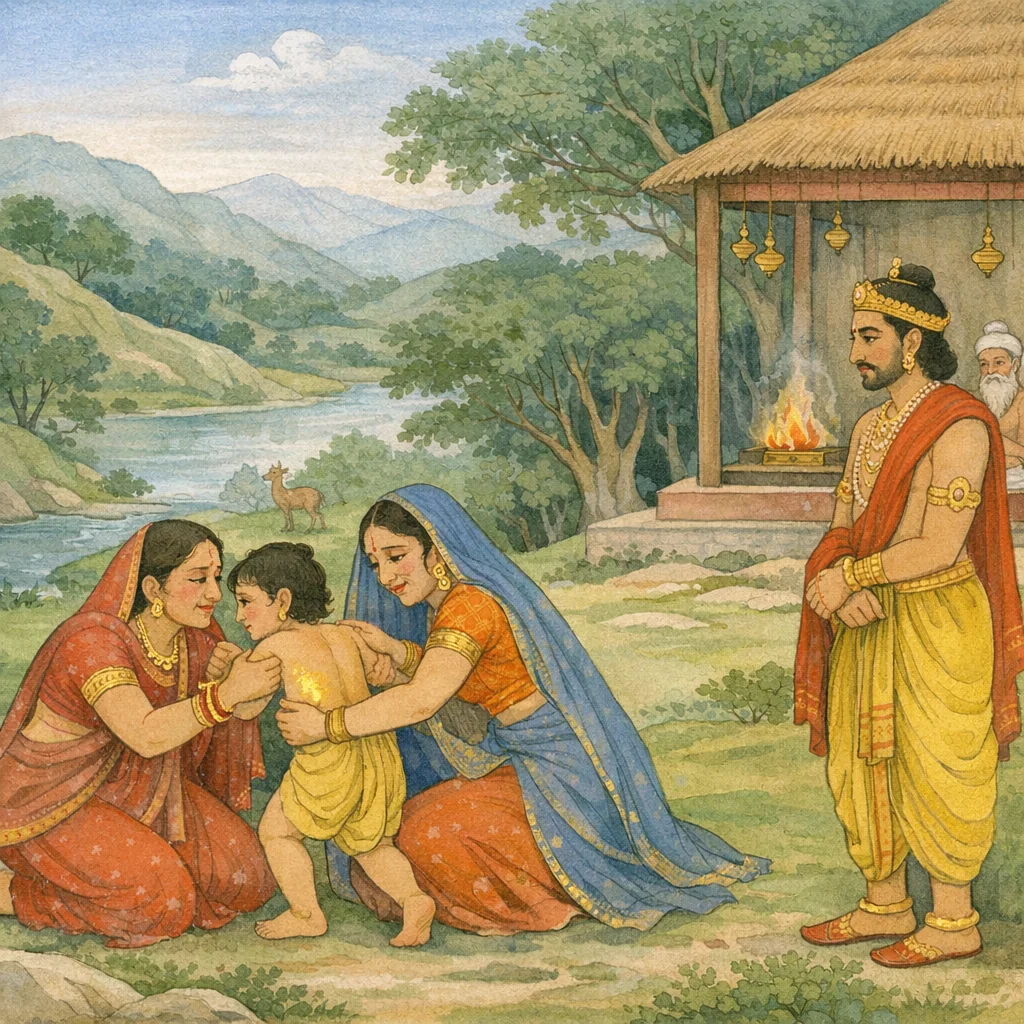
Lomāśa narrates an exemplum introduced by Somaka’s pledge to follow a brahmin’s directive to obtain offspring. A sacrificial procedure is performed involving the figure Jantu; the mothers resist in grief, yet the rite proceeds, and the offering is completed. After ten months, Somaka gains a full hundred sons; Jantu is born eldest and is uniquely cherished, marked by a golden sign on his northern side. After the deaths of Somaka and his guru, Somaka perceives the guru suffering in a severe infernal condition and inquires into the cause. The guru attributes the suffering to the karmic outcome of having officiated Somaka’s rite. Somaka appeals to Dharma (as adjudicator) to enter and share the consequence so that the officiant may be released. Dharma states the principle that no one else consumes another’s fruit of action; nevertheless, Somaka insists he seeks no heavenly reward without the brahmavādin and requests equal sharing of merit and demerit. Dharma permits Somaka to undergo the consequence alongside the guru for an equal duration, after which both attain an auspicious state. Lomāśa concludes by indicating a nearby sacred āśrama whose disciplined residence (six nights) is said to conduce to a favorable destiny, and the party resolves to stay with regulated conduct.
Chapter Arc: Lomasha resumes the Jantu-upakhyana: King Somaka, desperate for a hundred sons, submits to a grim rite begun by his purohita—an offering that will wrench a child from his mothers’ arms. → As the sacrifice proceeds, the mothers—moved by helpless compassion—try to pull the boy away by force; their cries of “We are slain!” and their bitter weeping turn the ritual ground into a theatre of grief, pitting royal desire and priestly injunction against maternal dharma. → The child is born/recognized among the hundred with a distinct golden mark on his right side, and the moral cost of the boon stands naked: the ‘success’ of the rite is inseparable from the mothers’ devastation and the stain of violence done in the name of progeny. → Hearing the tale, the rajarshi Somaka later accepts the consequence of his deed: he and his officiating priest pass through the same post-mortem destinies—sharing hellish suffering and then meritorious worlds—showing that patron and performer are bound together by the karma of the sacrifice. → Lomasha points out Somaka’s sacred ashrama as a living tirtha: six nights of patient, forgiving residence here grants an excellent end—inviting Yudhishthira to choose how to respond to a place born of both piety and cruelty.
Shlokas
Verse 1
हि >> आन () है ० 7-2 अष्टाविशर्त्याधेकशततमो< ध्याय: सोमकको सौ पुत्रोंकी प्राप्ति तथा सोमक और पुरोहितका समानरूपसे नरक और पुण्यलोकोंका उपभोग करना सोमक उवाच ब्रह्मन् यद् यद् यथा कार्य तत् कुरुष्व तथा तथा । पुत्रकामतया सर्व करिष्यामि वचस्तव,सोमकने कहा--ब्रह्मन! जो-जो कार्य जैसे-जैसे करना हो, वह उसी प्रकार कीजिये। मैं पुत्रकी कामनासे आपकी समस्त आज्ञाओंका पालन करूँगा
Somaka said: “O Brahmin, whatever needs to be done, and in whatever manner it should be done—do it exactly so. Driven by the desire for a son, I will carry out all your instructions.”
Verse 2
लोगमश उवाच तत: स याजयामास सोमकं तेन जन्तुना | मातरस्तु बलात् पुत्रमपाकर्षु: कृपान्विता:
Lomaśa said: Thereupon he caused Somaka to perform the rite with that living being. But the mothers, moved by compassion, forcibly pulled the son away.
Verse 3
हा हता: स्मेति वाशन्त्यस्तीव्रशोकसमाहता: । रुदन्त्य: करुणं वापि गृहीत्वा दक्षिणे करे
Lomaśa said: Struck down by piercing grief, they cried out, “Alas, we are slain!” Weeping piteously, they clutched (him/it) in their right hand.
Verse 4
सव्ये पाणौ गृहीत्वा तु याजको5पि सम कर्षति । कुररीणामिवार्तानां समाकृष्य तु त॑ं सुतम्
Having seized him by the left hand, the priest too drags him along; and, pulling that son toward himself, he cries out like a distressed kurarī-bird—an image of helpless anguish that underscores how attachment and fear can drive even the ritually learned into harsh, coercive action.
Verse 5
विशस्य चैनं विधिवद् वपामस्य जुहाव सः । वपायां हूयमानायां गन्धमाप्राय मातर:
Lomaśa said: Having slain him, he duly offered that man’s caul (omentum) into the sacred fire. As the caul was being consumed in the oblation, the mothers, catching the smell of it, were drawn toward it—an unsettling moment that underscores how ritual acts, when yoked to violence, can expose the fragile boundary between prescribed rite and moral transgression.
Verse 6
आर्ता निपेतु: सहसा पृथिव्यां कुरुनन्दन | सर्वाश्ष गर्भानलभंस्ततस्ता: परमाड़्ना:
Overwhelmed with distress, O joy of the Kurus, they suddenly fell upon the ground. Thereafter, those women—utterly afflicted—lost their pregnancies, their bodies and minds shaken by extreme suffering.
Verse 7
लोमशजी कहते हैं--युधिष्ठिर! तब पुरोहितने राजा सोमकसे जन्तुकी बलि देकर किये जानेवाले यज्ञको प्रारम्भ करवाया। उस समय करुणामयी माताएँ अत्यन्त शोकसे व्याकुल हो “हाय! हम मारी गयीं” ऐसा कहकर रोती हुई अपने पुत्र जन्तुको बलपूर्वक अपनी ओर खींच रही थीं। वे करुण स्वरमें रोती हुई बालकके दाहिने हाथको पकड़कर खींचती थीं और पुरोहितजी उसके बायें हाथको पकड़कर अपनी ओर खींच रहे थे। सब रानियाँ शोकसे आतुर हो कुररी पक्षीकी भाँति विलाप कर रही थीं और पुरोहितने उस बालकको छीनकर उसके टुकड़े-टुकड़े कर डाले तथा विधिपूर्वक उसकी चर्बियोंकी आहुति दी। कुरुनन्दन! चर्बीकी आहुतिके समय बालककी माताएँ धूमकी गन्ध सूँघकर सहसा शोकपीडित हो पृथ्वीपर गिर पड़ीं। तदनन्तर वे सब सुन्दरी रानियाँ गर्भवती हो गयीं ।। २ -५ || ततो दशसु मासेषु सोमकस्य विशाम्पते । जज्ञे पुत्रशतं पूर्ण तासु सर्वासु भारत,युधिष्ठि!! तदनन्तर दस मास बीतनेपर उन सबके गर्भसे राजा सोमकके सौ पुत्र हुए
Lomaśa said: “Yudhiṣṭhira, then the royal priest had King Somaka’s sacrifice begun—an offering that required the boy Jantu as the victim. At that moment the compassionate mothers, overwhelmed with grief, cried, ‘Alas, we are slain!’ and, weeping, tried by force to pull the child back toward themselves. Sobbing in piteous tones, they tugged at the boy’s right hand, while the priest seized his left and pulled him away. All the queens, stricken with sorrow, wailed like kurarī birds; yet the priest tore the child from them, cut him into pieces, and duly offered his fat into the fire according to rite. O descendant of Kuru, when the fat was being poured as oblation, the mothers, smelling the smoke, were suddenly crushed by grief and fell to the ground. Thereafter all those beautiful queens conceived. And when ten months had passed, O lord of the people, Somaka had a full hundred sons born from them all.”
Verse 8
जन्तुर्ज्येष्ठ: समभवज्जनित्र्यामेव पार्थिव । स तासामिष्ट एवासीन्न तथा ते निजा: सुता:,राजन्! सोमकका उज्येष्ठ पुत्र जन्तु अपनी माताके ही गर्भसे प्रकट हुआ, वही उन सब रानियोंको विशेष प्रिय था। उन्हें अपने पुत्र उतने प्यारे नहीं लगते थे
Lomasha said: “O king, Jantu was born as the eldest, emerging from his own mother’s womb. Among all those queens he alone became especially dear; their affection for their own sons was not the same as the fondness they felt for him.”
Verse 9
तच्च लक्षणमस्यासीत् सौवर्ण पार्श्व उत्तरे । तस्मिन् पुत्रशते चाग्रय: स बभूव गुणैरपि,उसकी दाहिनी पसलीमें पूर्वोक्त सुनहरा चिह्न स्पष्ट दिखायी देता था। राजाके सौ पुत्रोमें अवस्था और गुणोंकी दृष्टिसे भी वही श्रेष्ठ था
Lomasha said: “That distinctive mark was visible on his upper right side, shining like gold. And among the king’s hundred sons, he proved to be the foremost—not only by age and precedence, but also by excellence of character and qualities.”
Verse 10
ततः स लोकमगमत् सोमकस्य गुरु: परम् । अथ काले व्यतीते तु सोमको5प्यगमत् परम्
Then that teacher of Somaka departed to the highest world. And when some time had passed, Somaka too departed to the supreme state.
Verse 11
अथ तं नरके घोरे पच्यमानं ददर्श सः । तमपृच्छत् किमर्थ त्वं नरके पच्यसे द्विज
Then he saw that brāhmaṇa being tormented—burning—in a dreadful hell. He asked him: “For what reason are you being cooked in hell, O twice-born?”
Verse 12
तदनन्तर कुछ कालके पश्चात् सोमकके पुरोहित परलोकवासी हो गये। थोड़े दिनोंके बाद राजा सोमक भी परलोकवासी हो गये। यमलोकमें जानेपर सोमकने देखा, पुरोहितजी घोर नरककी आगमें पकाये जा रहे हैं। उन्हें उस अवस्थामें देखकर सोमकने पूछा --“ब्रह्मनन]! आप नरककी आगमें कैसे पकाये जा रहे हैं?” ।। तमब्रवीद् गुरु: सोडथ पच्यमानो5ग्निना भूशम् | त्वं मया याजितो राजंस्तस्येदं कर्मण: फलम्
Then the priest, his guru, said: “O king, today I am being terribly scorched in the fire. You were the one for whom I performed sacrifices; this is the fruit of that very act.”
Verse 13
एतच्छुत्वा स राजर्षिध्धर्मराजमथाब्रवीत् । अठमत्र प्रवेक्ष्यामि मुच्यतां मम याजक:
Hearing this, the royal sage addressed Dharmarāja: “Now I shall enter here; let my sacrificial priest be released.”
Verse 14
मत्कृते हि महाभाग: पच्यते नरकाग्निना । (सो5हमात्मानमाधास्ये नरकान्मुच्यतां गुरु: ।) तब नरकाग्निसे अधिक संतप्त होते हुए पुरोहितने कहा--“राजन! मैंने तुम्हें जो (तुम्हारे पुत्रकी आहुति देकर) यज्ञ करवाया था, उसी कर्मका यह फल है' यह सुनकर राजर्षि सोमकने धर्मराजसे कहा--“भगवन्! मैं इस नरकमें प्रवेश करूँगा। आप मेरे पुरोहितको छोड़ दीजिये। वे महाभाग मेरे ही कारण नरकाग्निमें पक रहे हैं। अतः मैं अपने- आपको नरकमें रखूँगा, परंतु मेरे गुरुजीको उससे छुटकारा मिल जाना चाहिये” ।। १२-१३ न ! धर्म उवाच नान्य: कर्तु: फलं राजन्नुपभुड्धक्ते कदाचन । इमानि तव दृश्यन्ते फलानि वदतां वर,धर्मने कहा--राजन्! कताके सिवा दूसरा कोई उसके किये हुए कर्मोका फल कभी नहीं भोगता है। वक्ताओंमें श्रेष्ठ महाराज! तुम्हें अपने पुण्यकर्मोंके फलस्वरूप जो ये पुण्य लोक प्राप्त हुए हैं, प्रत्यक्ष दिखायी देते हैं
Somaka said to Dharma: “Because of me, this noble priest is being scorched in the fire of hell. Therefore I will place myself in hell—only let my guru be released from it.” But Dharma replied: “O king, none but the doer ever experiences the fruit of his own deeds.”
Verse 15
सोमक उवाच पुण्यान्न कामये लोकानृते<हं ब्रह्मवादिनम् । इच्छाम्यहमनेनैव सह वस्तुं सुरालये,सोमक बोले--धर्मराज! मैं अपने वेदवेत्ता पुरोहितके बिना पुण्यलोकोंमें जानेकी इच्छा नहीं रखता। स्वर्गलोक हो या नरक--मैं कहीं भी इन्हींके साथ रहना चाहता हूँ। देव! मेरे पुण्यकर्मोंपर इनका मेरे समान ही अधिकार है। हम दोनोंको यह पुण्य और पापका फल समानरूपसे मिलना चाहिये
Somaka said: “I do not desire meritorious worlds if I must go there without my Brahmin teacher, knower of the Veda and speaker of sacred truth. I wish to dwell together with him alone—even in the abode of the gods. For whatever merit I have earned, he has an equal claim to it; therefore the fruits of both virtue and sin should come to us alike.”
Verse 16
नरके वा धर्मराज कर्मणास्य समो हाहम् । पुण्यापुण्यफलं देव सममस्त्वावयोरिदम्,सोमक बोले--धर्मराज! मैं अपने वेदवेत्ता पुरोहितके बिना पुण्यलोकोंमें जानेकी इच्छा नहीं रखता। स्वर्गलोक हो या नरक--मैं कहीं भी इन्हींके साथ रहना चाहता हूँ। देव! मेरे पुण्यकर्मोंपर इनका मेरे समान ही अधिकार है। हम दोनोंको यह पुण्य और पापका फल समानरूपसे मिलना चाहिये
Somaka said: “O Dharmarāja, even if it be hell, by my own deed I am equal to him—alas! O divine one, let the fruit of merit and demerit be the same for the two of us. I do not wish to go to the worlds of merit without my Veda-knowing priest; whether heaven or hell, I choose to remain together with him. Let him have an equal share in whatever my actions have earned.”
Verse 17
धर्मराज उवाच यद्येवमीप्सितं राजन् भुड्क्ष्वास्य सहित: फलम् | तुल्यकालं सहानेन पश्चात् प्राप्स्यसि सदगतिम्,धर्मराज बोले--राजन्! यदि तुम्हारी ऐसी इच्छा है तो इनके साथ रहकर उतने ही समयतक तुम भी पापकर्मोंका फल भोगो, इसके बाद तुम्हें उत्तम गति प्राप्त होगी
Dharmarāja said: “O King, if this is indeed your wish, then remain with him and endure the fruit of sinful deeds for an equal span of time; thereafter you shall attain an excellent destiny.”
Verse 18
लोगश उवाच स चकार तथा सर्व राजा राजीवलोचन: । क्षीणपापश्च तस्मात् स विमुक्तो गुरुणा सह,लोमशजी कहते हैं--युधिष्ठटि! तब कमलनयन राजा सोमकने धर्मराजके कथनानुसार सब कार्य किया और भोगद्वारा पाप नष्ट हो जानेपर वे पुरोहितके साथ ही नरकसे छूट गये
Lomaśa said: “That lotus-eyed king carried out everything exactly so, in accordance with the instruction given. And when his sins had been exhausted through the experience of their consequences, he was released from that state (of hell), together with his priest.”
Verse 19
लेभे कामाउ्शुभान् राजन् कर्मणा निर्जितान् स्वयम् । सह तेनैव विप्रेण गुरुणा स गुरुप्रिय:,तत्पश्चात् उन गुरुप्रेमी नरेशने अपने गुरुके साथ ही पुण्यकर्मोद्वारा स्वयं प्राप्त किये हुए पुण्य-लोकके शुभ भोगोंका उपभोग किया
Lomaśa said: “O King, he himself won auspicious enjoyments through his meritorious deeds. And together with that very brāhmaṇa—his guru—being devoted to his teacher, he partook of the blessed fruits of the virtuous world.”
Verse 20
एष तस्याश्रम: पुण्यो य एषो25ग्रे विराजते । क्षान्त उष्यात्र षड्ात्र॑ प्राप्नोति सुगतिं नर:
“Here before us shines that sacred hermitage of hers. Any man who, with self-restraint and forbearance, dwells here for six nights attains a blessed course (a good destiny).”
Verse 21
यह उन्हीं राजा सोमकका पवित्र आश्रम है जो सामने ही सुशोभित हो रहा है। यहाँ क्षमाशील होकर छ: रात निवास करनेसे मनुष्य उत्तम गति प्राप्त कर लेता है ।। एतस्मिन्नपि राजेन्द्र वत्स्यामो विगतज्वरा: । षड्जात्रं नियतात्मान: सज्जीभव कुरूद्धह,कुरुश्रेष्ठ हम सब लोग इस आश्रममें छ: राततक मन और इन्द्रियोंपर संयम रखते हुए निश्चिन्त होकर निवास करेंगे। तुम इसके लिये तैयार हो जाओ
“O king, we too shall stay here, free from distress. For six nights, with disciplined minds and senses, we will dwell in this sacred hermitage. O best of the Kurus, make yourself ready.”
Verse 127
इस प्रकार श्रीमहाभारत वनपर्वके अन्तर्गत तीर्थयात्रापर्वमें लोमशती र्थयात्राके प्रसंगमें जन्तूपाख्यानविषयक एक सौ सत्ताईसवाँ अध्याय पूरा हुआ
Thus ends the one hundred and twenty-seventh chapter of the Jantūpākhyāna, occurring within the Tīrthayātrāparvan of the Vana Parva of the Śrī Mahābhārata, in the context of Lomāśa’s pilgrimage narrative.
Verse 128
इति श्रीमहाभारते वनपर्वणि तीर्थयात्रापर्वणि लोमशतीर्थयात्रायां जन्तूपाख्याने अष्टाविंशत्यधिकशततमो<ध्याय:
Thus, in the revered Mahābhārata, within the Vana Parva—specifically the section on pilgrimage (Tīrtha-yātrā Parva), in the account of Lomāśa’s pilgrimage, in the episode known as the ‘Tale of Jantu’—here ends the one hundred and twenty-eighth chapter.
Frequently Asked Questions
Whether the pursuit of a legitimate aim (progeny) can justify extreme ritual means, and how responsibility is distributed between patron (king) and officiant (guru) when harm is embedded in the procedure.
Karmic consequence adheres to agency and intention; expertise or delegated performance does not erase accountability. Compassionate solidarity is ethically praiseworthy, but it does not negate the causal structure of action.
Yes. The closing notice identifies a ‘puṇya āśrama’ and states that disciplined residence there for six nights is associated with attaining a favorable destiny, functioning as a localized phalaśruti-style benefit statement.