Adhyaya 106
सगरोपाख्यानम् — कपिलकोपः, अंशुमतः विनयः, तथा भगीरथपरम्परा (Sagara Upākhyāna: Kapila’s Wrath, Aṃśumān’s Reverence, and the Bhāgīratha Line)
Upa-parva: Tīrtha-yātrā / Purāṇic Exempla Cycle (Sagara–Kapila–Bhagīratha Episode)
Lomaśa narrates how Sagara’s sixty-thousand sons, driven by the desire to recover the Aśvamedha horse, rush toward the sage Kapila and disregard his sanctity; Kapila, angered, emits fiery energy through his opened gaze and reduces them to ash. Nārada reports the event to Sagara, who grieves, reflects on prior counsel, and summons his grandson Aṃśumān (son of the exiled Asamañjā), explaining both the sons’ demise and the political necessity that led to Asamañjā’s banishment for harming citizens’ children. Aṃśumān travels by the same route to the sea-region, finds Kapila and the horse, and approaches with prostration and formal petition. Pleased, Kapila offers boons: the horse for completing the sacrifice and the promise of eventual purification for the fallen through the future descent of the Tripathagā (Gaṅgā), achieved by Aṃśumān’s descendant after propitiating Maheśvara. Aṃśumān returns the horse; Sagara completes the rite, later entrusts the kingdom to his grandson, and the genealogy proceeds through Dilīpa—who strives but fails to bring down Gaṅgā—to Bhāgīratha, whose role is forecast as the effective agent of ancestral deliverance.
Chapter Arc: लोमश ऋषि तीर्थयात्रा के प्रसंग में सगर-वंश की कथा उठाते हैं—कैसे एक राजा की संतान-लालसा और वंश-धर्म की चिंता कैलास तक तपस्या का मार्ग बनती है, और देववाणी भविष्य की एक महाधारा का संकेत देती है। → युधिष्ठिर जिज्ञासा करते हैं—भगीरथ के ‘ज्ञाति’ कौन थे, ‘कारण’ क्या था, और भगीरथ के प्रतिश्रय से समुद्र कैसे पूर्ण हुआ? प्रश्न कथा को सगर से भगीरथ तक जोड़ता है: सगर का राज्य-विस्तार, शत्रु-क्षत्रियों का दमन, फिर पुत्र-प्राप्ति हेतु कठोर तप; और देवताओं का ‘कालयोग’ की प्रतीक्षा में लौट जाना—मानो नियति स्वयं समय चुन रही हो। → कैलास पर सगर का पत्नी-द्वय सहित महातप और शंकर का प्रकट होकर वर-प्रदान—यहीं वंश-भाग्य का बीज पड़ता है: संतान की प्राप्ति का आश्वासन और आगे चलकर भगीरथ-प्रयत्न से समुद्र/प्रकृति के पुनः ‘स्वाभाविक अवस्था’ में लौटने का संकेत, जो एक दीर्घकालिक ब्रह्मांडीय परिवर्तन की ओर इशारा करता है। → शिव अंतर्धान होते हैं; सगर प्रसन्नचित्त होकर तपस्या-फल की प्रतीक्षा में लौटते/स्थिर होते हैं। कथा-धारा स्पष्ट करती है कि यह सब ‘महता कालयोगेन’ घटेगा—समय, तप और प्रतिज्ञा मिलकर वंश-उद्धार का मार्ग बनाएँगे। → भगीरथ के प्रतिश्रय से समुद्र के ‘पूर्ण’ होने और ‘ज्ञाति-कारण’ के वास्तविक प्रसंग का विस्तार आगे की कड़ी में खुलने को छोड़ दिया जाता है।
Shlokas
Verse 1
(दाक्षिणात्य अधिक पाठका १ श्लोक मिलाकर कुल २१ श्लोक हैं) #::73:.8 #::3:..7 () हि २ 7 षर्डाधिकशततमोब< ध्याय: राजा सगरका संतानके लिये तपस्या करना और शिवजीके द्वारा वरदान पाना लोगश उवाच तानुवाच समेतांस्तु ब्रह्मा लोकपितामह: । गच्छथ्वं विबुधा: सर्वे यथाकामं यथेप्सितम्,लोमशजी कहते हैं--राजन्! तब लोकपितामह ब्रह्माजीने अपने पास आये हुए सब देवताओंसे कहा--“देवगण! इस समय तुम सब लोग इच्छानुसार अभीष्ट स्थानको चले जाओ
Lomaśa said: Then Brahmā, the Grandfather of the worlds, addressed all the gods who had assembled before him: “O divine ones, go now—each of you—according to your own wish, to whatever place you desire.”
Verse 2
महता कालयोगेन प्रकृतिं यास्यतेडर्णव: । ज्ञातींश्र कारणं कृत्वा महाराजो भगीरथ:
Through the working of great time, the ocean will return to its natural state. Then King Bhagīratha, making his departed kinsmen the cause for the śrāddha rites, will undertake the act that secures their welfare—showing how royal power is to be guided by duty to ancestors and the moral obligation to repay one’s lineage.
Verse 3
पितामहवच: श्रुत्वा सर्वे विबुधसत्तमा: । कालयोगें प्रतीक्षन्तो जग्मुश्नापि यथागतम्,ब्रह्माजीकी यह बात सुनकर सम्पूर्ण श्रेष्ठ देवता अवसरकी प्रतीक्षा करते हुए जैसे आये थे, वैसे ही चले गये
Having heard the words of the Grandsire (Brahmā), all the foremost among the gods, waiting for the proper conjunction of time and circumstance, departed—returning just as they had come.
Verse 4
युधिछिर उवाच कथं वै ज्ञातयो ब्रह्मन् कारणं चात्र कि मुने । कथं समुद्र: पूर्णश्ष भगीरथप्रतिश्रयात्,युधिष्ठिरने पूछा--“ब्रह्मन्! भगीरथके कुटुम्बीजन समुद्रकी पूर्तिमें निमित्त क्योंकर बने? मुने! उनके निमित्त बननेका कारण क्या है? और भगीरथके आश्रयसे किस प्रकार समुद्रकी पूर्ति हुई?
Yudhiṣṭhira said: “O Brahmin, how did the kinsmen become the cause in this matter, and for what reason, O sage? And how was the ocean made full through Bhagiratha’s support?”
Verse 5
एतदिच्छाम्यहं श्रोतुं विस्तरेण तपोधन । कथ्यमानं त्वया विप्र राज्ञां चरितमुत्तमम्,तपोधन! विप्रवर! मैं यह प्रसंग, जिसमें राजाओंके उत्तम चरित्रका वर्णन है, आपके मुखसे विस्तारपूर्वक सुनना चाहता हूँ
Yudhiṣṭhira said: “This I wish to hear in full detail, O treasure of austerity. O brāhmaṇa, as you relate it, tell me the excellent deeds and noble conduct of kings.”
Verse 6
वैशम्पायन उवाच एवमुक्तस्तु विप्रेन्द्रो धर्मराज्ञा महात्मना । कथयामास माहात्म्यं सगरस्य महात्मन:,वैशम्पायनजी कहते हैं--जनमेजय! महात्मा धर्मराजके इस प्रकार पूछनेपर विप्रवर लोमशने महात्मा राजा सगरका माहात्म्य बतलाया
Vaiśampāyana said: Thus addressed by the great-souled Dharmarāja, the foremost of brāhmaṇas began to recount the sacred greatness of the noble King Sagara.
Verse 7
लोगश उवाच इक्ष्वाकूणां कुले जात: सगरो नाम पार्थिव: । रूपसत्त्वबलोपेत: स चापुत्र: प्रतापवान्,लोमशजी कहते हैं--राजन्! इक्ष्वाकुवंशमें सगर नामसे प्रसिद्ध एक राजा हो गये हैं। वे रूप, धैर्य और बलसे सम्पन्न तथा बड़े प्रतापी थे, परंतु उनके कोई पुत्र न था
Lomaśa said: “O King, in the lineage of the Ikṣvākus there was a sovereign named Sagara. Endowed with beauty, steadfast courage, and strength, he was a mighty ruler; yet, for all his splendor, he had no son.”
Verse 8
स हैहयान् समुत्साद्य तालजड्घांश्व भारत | वशे च कृत्वा राजन्यान् स्वराज्यमन्वशासत,भारत! उन्होंने हैहय तथा तालजंघ नामक क्षत्रियोंका संहार करके सब राजाओंको अपने वशमें कर लिया और अपने राज्यका शासन करने लगे
O Bhārata, after annihilating the Haihayas and the Kṣatriyas known as the Tālajaṅghas, he brought the royal houses under his control and then ruled his own kingdom—establishing sovereignty through conquest and subjugation.
Verse 9
तस्य भार्ये त्वभवतां रूपयौवनदर्पिति । वैदर्भी भरतश्रेष्ठ शैब्या च भरतर्षभ,भरतश्रेष्ठ) राजा सगरके दो पत्नियाँ थीं, वैदर्भी और शैब्या। उन दोनोंको ही अपने रूप और यौवनका बड़ा अभिमान था
O best of the Bharatas, King Sagara had two wives—Vaidarbhī and Śaibyā. Both were proud of their beauty and youth.
Verse 10
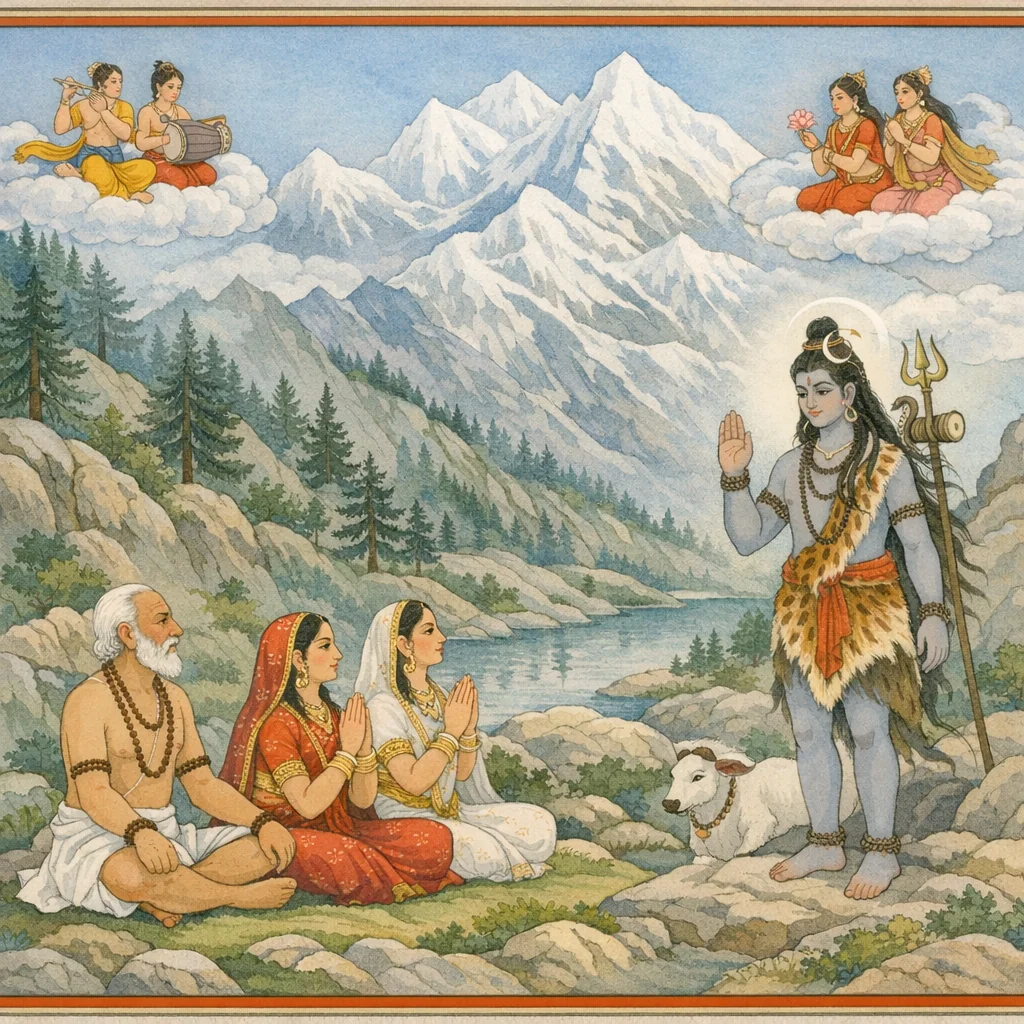
स पुत्रकामो नृपतिस्तप्यते सम महत्तपः । पत्नीभ्यां सह राजेन्द्र कैलासं गिरिमाश्रित:
O king, that ruler—longing for a son—undertook severe austerities. Accompanied by his two queens, he took refuge on Mount Kailāsa.
Verse 11
स तप्यमान: सुमहत् तपो योगसमन्वित: । आससाद महात्मानं त्र्यक्षं त्रिपुरमर्दनम्
Enduring intense austerities and disciplined in yogic practice, he approached the great-souled Three-eyed Lord—Śiva, the destroyer of Tripura.
Verse 12
शंकरं भवमीशानं शूलपारणिं पिनाकिनम् । त्रयम्बकं शिवमुग्रेशं बहुरूपमुमापतिम्
Lomaśa said: “(I praise) Śaṅkara—Bhava, Īśāna—he who bears the trident, the wielder of Pināka; the three-eyed one, auspicious yet terrible in power; the many-formed Lord, the husband of Umā.”
Verse 13
राजेन्द्र! राजा सगर अपनी दोनों पत्नियोंके साथ कैलास पर्वतपर जाकर पुत्रकी इच्छासे बड़ी भारी तपस्या करने लगे। योगयुक्त होकर महान् तपमें लगे हुए महाराज सगरको त्रिपुरनाशक, त्रिनेत्रधारी, शंकर, भव, ईशान, शूलपाणि, पिनाकी, >यम्बक, उग्रेश, बहुरूप और उमापति आदि नामोंसे प्रसिद्ध महात्मा भगवान् शिवका दर्शन हुआ ।। १०-- १२ || सतं दृष्टवैव वरदं पत्नीभ्यां सहितो नृप: । प्रणिपत्य महाबाहु: पुत्रार्थे समयाचत,वरदायक भगवान् शिवको देखते ही महाबाहु राजा सगरने दोनों पत्नियोंसहित प्रणाम किया और पुत्रके लिये याचना की। तब भगवान् शिवने प्रसन्न होकर पत्नीसहित नृपश्रेष्ठ सगरसे कहा--'राजन्! तुमने यहाँ जिस मुहूर्तमें वर माँगा है, उसका परिणाम यह होगा
O best of kings, King Sagara—accompanied by his two queens—went to Mount Kailāsa and undertook severe austerities, longing for a son. Absorbed in yoga and steadfast in great penance, he beheld the great-souled Lord Śiva, famed by many names: the Destroyer of Tripura, the Three-eyed, Śaṅkara, Bhava, Īśāna, the wielder of the trident, the bearer of the Pināka bow, Tryambaka, the fierce Lord, the many-formed, and Umāpati. The moment he saw the boon-giving deity, the mighty-armed king bowed down with his wives and begged for offspring. Pleased, Lord Śiva addressed Sagara, the foremost of kings, saying: “O king, the boon you have sought at this very auspicious moment will bear a definite consequence.”
Verse 14
तं॑ प्रीतिमान् हर: प्राह सभार्य नृपसत्तमम् | यस्मिन् वृतो मुहूर्तेडहं त्वयेह नूपते वरम्,वरदायक भगवान् शिवको देखते ही महाबाहु राजा सगरने दोनों पत्नियोंसहित प्रणाम किया और पुत्रके लिये याचना की। तब भगवान् शिवने प्रसन्न होकर पत्नीसहित नृपश्रेष्ठ सगरसे कहा--'राजन्! तुमने यहाँ जिस मुहूर्तमें वर माँगा है, उसका परिणाम यह होगा
Pleased at heart, Hara (Śiva) spoke to the best of kings, who stood there with his wives: “O king, the boon you have asked of me at this very moment will bear a corresponding result.”
Verse 15
्ीीि । ाातिा,...... 22222 ््््े ॥॥॥॥॥॥,, 22222 . के २९५) ॥॥ 22222 5 ५३४४ /4८;22 ग 22 ५ 6/% # 222: उह 4, ££ जे दि 2 222 >> ६... 5 बद्प -+<_ 32. पट के. कद. जह न ८: बल डइ्ड छः षष्टि: पुत्रसहस्राणि शूरा: परमदर्पिता: । एकस्यां सम्भविष्यन्ति पत्न्यां नरवरोत्तम,“नरश्रेष्ठ! तुम्हारी एक पत्नीके गर्भसे अत्यन्त अभिमानी साठ हजार शूरवीर पुत्र होंगे, परंतु वे सब-के-सब एक ही साथ नष्ट हो जायँगे। भूपाल! तुम्हारी जो दूसरी पत्नी है, उसके गर्भसे एक ही शूरवीर वंशधर पुत्र उत्पन्न होगा”
“O best of men among kings, from one of your wives will be born sixty thousand sons—heroes, exceedingly proud. Yet they will all perish together. But from your other wife will be born a single heroic son who will continue the lineage.”
Verse 16
ते चैव सर्वे सहिता: क्षयं यास्यन्ति पार्थिव | एको वंशधर: शूर एकस्यां सम्भविष्यति,“नरश्रेष्ठ! तुम्हारी एक पत्नीके गर्भसे अत्यन्त अभिमानी साठ हजार शूरवीर पुत्र होंगे, परंतु वे सब-के-सब एक ही साथ नष्ट हो जायँगे। भूपाल! तुम्हारी जो दूसरी पत्नी है, उसके गर्भसे एक ही शूरवीर वंशधर पुत्र उत्पन्न होगा”
Logaś said: “O king, all those sons together will meet destruction. Yet from one of your queens a single heroic son will be born—one who will carry forward your lineage.”
Verse 17
एवमुक्त्वा तु त॑ रुद्रस्तत्रैवान्तरथधीयत । स चापि सगरो राजा जगाम स्वं निवेशनम्,ऐसा कहकर भगवान् शंकर वहीं अन्तर्धान हो गये। राजा सगर भी अत्यन्त प्रसन्नचित्त हो पत्नियोंसहित अपने निवासस्थानको चले गये। नरश्रेष्ठ! तदनन्तर उनकी वे दोनों कमलनयनी पत्नियाँ वैदर्भी और शैब्या गर्भवती हुईं। फिर समय आनेपर वैदर्भीने अपने गर्भसे एक तूँबी उत्पन्न की और शैब्याने देवताके समान सुन्दर रूपवाले एक पुत्रको जन्म दिया। राजा सगरने उस तूंबीको फेंक देनेका विचार किया
Having spoken thus, Rudra (Śiva) vanished from that very place. King Sagara too, his heart filled with joy, returned to his own residence with his wives. Thereafter, his two lotus-eyed queens—Vaidhabhī and Śaibyā—conceived. When the time came, Vaidhabhī brought forth from her womb a gourd-like mass, while Śaibyā gave birth to a son of godlike beauty. Seeing the gourd-like birth, King Sagara considered casting it away.
Verse 18
पत्नीभ्यां सहितस्तत्र सो5तिदहृष्टमनास्तदा | तस्य ते मनुजश्रेष्ठ भार्ये कमललोचने,ऐसा कहकर भगवान् शंकर वहीं अन्तर्धान हो गये। राजा सगर भी अत्यन्त प्रसन्नचित्त हो पत्नियोंसहित अपने निवासस्थानको चले गये। नरश्रेष्ठ! तदनन्तर उनकी वे दोनों कमलनयनी पत्नियाँ वैदर्भी और शैब्या गर्भवती हुईं। फिर समय आनेपर वैदर्भीने अपने गर्भसे एक तूँबी उत्पन्न की और शैब्याने देवताके समान सुन्दर रूपवाले एक पुत्रको जन्म दिया। राजा सगरने उस तूंबीको फेंक देनेका विचार किया
Then he remained there with his two wives, his mind exceedingly delighted. O best of men, his two lotus-eyed queens thereafter became pregnant—Vaidebhī and Śaibyā. In due time, Vaidebhī brought forth from her womb a gourd-like vessel, while Śaibyā gave birth to a son of godlike beauty. King Sagara then considered casting away that gourd.
Verse 19
वैदर्भी चैव शैब्या च गर्भिण्यौ सम्बभूवतु: । ततः कालेन वैदर्भी गर्भालाबुं व्यजायत,ऐसा कहकर भगवान् शंकर वहीं अन्तर्धान हो गये। राजा सगर भी अत्यन्त प्रसन्नचित्त हो पत्नियोंसहित अपने निवासस्थानको चले गये। नरश्रेष्ठ! तदनन्तर उनकी वे दोनों कमलनयनी पत्नियाँ वैदर्भी और शैब्या गर्भवती हुईं। फिर समय आनेपर वैदर्भीने अपने गर्भसे एक तूँबी उत्पन्न की और शैब्याने देवताके समान सुन्दर रूपवाले एक पुत्रको जन्म दिया। राजा सगरने उस तूंबीको फेंक देनेका विचार किया
Lomaśa said: “Both Vaidarbhī and Śaibyā became pregnant. Then, in due course of time, Vaidarbhī brought forth from her womb a gourd-like mass.” The episode shows how destiny may unfold in unexpected forms, testing a ruler’s patience and discernment before any rash act.
Verse 20
शैब्या च सुषुवे पुत्र कुमारं देवरूपिणम् । तदालाबुं समुत्स्रष्ठ मनश्नक्रे स पार्थिव:,ऐसा कहकर भगवान् शंकर वहीं अन्तर्धान हो गये। राजा सगर भी अत्यन्त प्रसन्नचित्त हो पत्नियोंसहित अपने निवासस्थानको चले गये। नरश्रेष्ठ! तदनन्तर उनकी वे दोनों कमलनयनी पत्नियाँ वैदर्भी और शैब्या गर्भवती हुईं। फिर समय आनेपर वैदर्भीने अपने गर्भसे एक तूँबी उत्पन्न की और शैब्याने देवताके समान सुन्दर रूपवाले एक पुत्रको जन्म दिया। राजा सगरने उस तूंबीको फेंक देनेका विचार किया
Lomaśa said: “Śaibyā gave birth to a son, a youthful prince of godlike beauty. Seeing that the other queen had produced only a gourd-like mass, King Sagara resolved in his mind to cast that gourd away.” The episode warns against judging by appearances and calls for patience and restraint when faced with what seems inauspicious.
Verse 21
अथान्तरिक्षाच्छुश्राव वाचं गम्भीरनि:स्वनाम् । राजन् मा साहसं कार्षी: पुत्रान् न त्यक्तुमहसि,इसी समय आकाशसे एक गम्भीर वाणी सुनायी दी--'“राजन्! ऐसा दुःसाहस न करो। अपने इन पुत्रोंका त्याग करना तुम्हारे लिये उचित नहीं है। इस तूँबीमें से एक-एक बीजको निकालकर घीसे भरे हुए गरम घड़ोंमें अलग-अलग रक््खो और यत्नपूर्वक इन सबकी रक्षा करो
Then, from the sky, a deep, resonant voice was heard: “O King, do not commit this rash deed. It is not right for you to abandon your sons.” The utterance restrains despair-driven action, urging the king to uphold his duty of protection rather than yield to fear or impulsive renunciation.
Verse 22
अलाबुमध्यान्निष्कृष्य बीजं यत्नेन गोप्यताम् । सोपस्वेदेषु पात्रेषु घृतपूर्णेषु भागश:,इसी समय आकाशसे एक गम्भीर वाणी सुनायी दी--'“राजन्! ऐसा दुःसाहस न करो। अपने इन पुत्रोंका त्याग करना तुम्हारे लिये उचित नहीं है। इस तूँबीमें से एक-एक बीजको निकालकर घीसे भरे हुए गरम घड़ोंमें अलग-अलग रक््खो और यत्नपूर्वक इन सबकी रक्षा करो
“Having extracted the seed from the middle of the gourd, let it be carefully protected. Place it, portion by portion, into separate vessels filled with ghee and warmed with gentle heat, and guard each one with diligence.” The instruction urges restraint and frames preservation of life and responsibility toward one’s offspring as right conduct.
Verse 23
ततः पुत्रसहस््राणि षष्टिं प्राप्स्यसि पार्थिव । महादेवेन दिट्टं ते पुत्रजन्म नराधिप । अनेन क्रमयोगेन मा ते बुद्धिरतोडन्यथा,'पृथ्वीपते! ऐसा करनेसे तुम्हें साठ हजार पुत्र प्राप्त होंगे। नरश्रेष्ठ! महादेवजीने तुम्हारे लिये इसी क्रमसे पुत्रजन्म होनेका निर्देश किया है; अतः तुम्हें कोई अन्यथा विचार नहीं होना चाहिये
Then, O king, you will obtain sixty thousand sons. O ruler of men, Mahādeva has ordained for you the begetting of sons in precisely this sequence; therefore, let your mind not turn to any other course. The counsel urges obedience to a divinely sanctioned order and steadiness of resolve.
Verse 26
पूरयिष्यति तोयौघधै: समुद्र निधिमम्भसाम् | “अब दीर्घकालके पश्चात् समुद्र फिर अपनी स्वाभाविक अवस्थामें आ जायगा। महाराज भगीरथ अपने कुट॒म्बी जनों (प्रपितामहों)-के उद्धारका उद्देश्य लेकर जलनिधि समुद्रको पुन: अगाध जलराशिसे भर देंगे”
In time, the ocean will return to its natural state; and King Bhagīratha, intent on rescuing his forefathers, will again fill the ocean—the great repository of waters—with a vast flood.
Verse 105
इस प्रकार श्रीमहाभारत वनपवके अन्तर्गत तीर्थयात्रापर्वमें लोगशतीर्थयात्राके प्रसंगमें अगस्त्योपाख्यानविषयक एक सौ पाँचवाँ अध्याय पूरा हुआ
Thus ends the one hundred and fifth chapter of the Agastya episode, occurring in the context of Lośa’s pilgrimage, within the Tīrthayātrā section of the Vana Parva of the Śrī Mahābhārata.
Verse 106
इति श्रीमहाभारते वनपर्वणि तीर्थयात्रापर्वणि लोमशतीर्थयात्रायां सगरसंततिक थने षडधिकशततमो<ध्याय:
Thus ends the one-hundred-and-sixth chapter in the Vana Parva of the Śrī Mahābhārata, within the section on pilgrimage (Tīrthayātrā Parva), in the narrative of Lomāśa’s pilgrimage—at the point where the account concerning the descendants of King Sagara is being told.
Frequently Asked Questions
The chapter contrasts coercive royal urgency (recovering the sacrificial horse) with the obligation to honor ascetic sanctity; the moral failure lies in acting without inquiry and respect, producing irreversible collective harm.
Effective power is mediated by humility and truthfulness: disciplined reverence (vinaya) enables restoration where aggression causes collapse, indicating that dharma is enacted through procedure, speech, and posture as much as through intent.
Rather than an explicit phalaśruti formula, the text embeds a result-logic: righteous approach yields boons and continuity (yajña completion, lineage stability), while disrespect yields immediate destruction; purification is framed as achievable through sustained tapas and divine sanction (Gaṅgā via Maheśvara).