Adhyaya 102
विन्ध्यवृद्धिनिवारणम् — The Restraint of the Vindhya (Agastya’s Injunction)
Upa-parva: Lomāśa–Yudhiṣṭhira Saṃvāda: Vindhya-Agastya Upākhyāna (Etiology of the Vindhya’s restraint)
Yudhiṣṭhira asks Lomāśa why the Vindhya mountain abruptly became enraged and attempted to grow. Lomāśa explains that the Sun follows a prescribed route, circumambulating Meru; Vindhya, observing this, demands similar circumambulation. The Sun replies that his course is not personal preference but an assigned path by which the world’s order is maintained. Enraged, Vindhya attempts to obstruct the routes of the Sun, Moon, and stars. The gods assemble and attempt to dissuade Vindhya, but he does not comply. They then approach the ascetic Agastya (Maitrāvaruṇi), stating that only he can restrain the mountain. Agastya goes to Vindhya and requests passage southward, asking Vindhya to remain as he is until Agastya returns; Vindhya agrees to this condition. Lomāśa notes that Agastya has not returned even now, and thus Vindhya remains restrained—demonstrating the efficacy of ascetic authority and binding agreement in preserving cosmic regularity. The chapter then transitions toward the related narrative of the Kāleyas and the gods’ request that Agastya drink the ocean, setting up the subsequent episode.
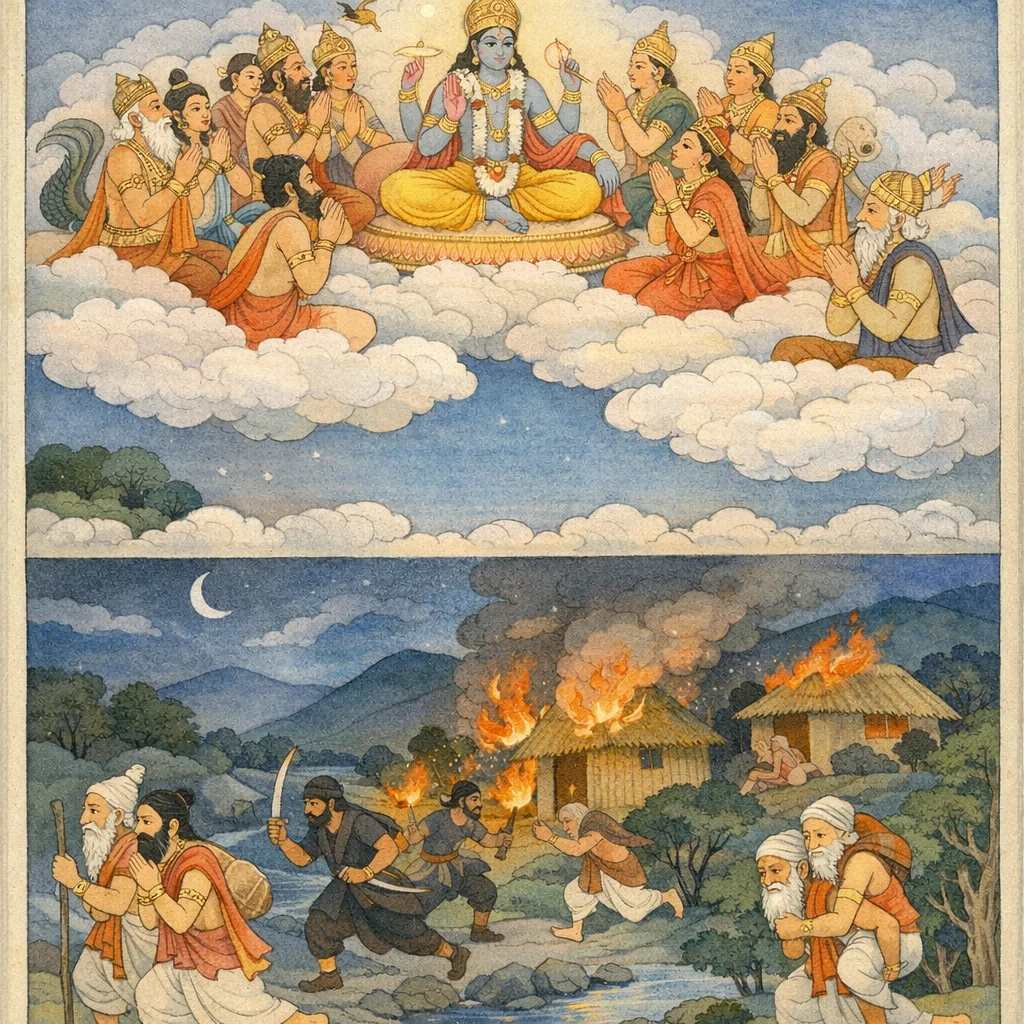
Chapter Arc: रात्रि के अंधकार में दानव-स्वभाव वाले कालेय (कालेयगण) आश्रमों और पुण्य-स्थानों पर टूट पड़ते हैं—जहाँ तप, ब्रह्मचर्य और शांति का निवास है, वहीं रक्तपात का तांडव आरम्भ होता है। → वे प्रतिदिन रात में क्रुद्ध होकर मुनियों को भक्षण करते हैं; वसिष्ठ के आश्रम तक में ब्राह्मण-तपस्वियों का संहार होता है। पृथ्वी पर धर्म-रक्षा के लिए कुछ महाधनुर्धर शूर वीर भी दानवों की खोज में प्रयत्न करते हैं, पर भय और अराजकता फैलती जाती है। → देवगण भय से व्याकुल होकर ‘देवदेवेश’ विष्णु की स्तुति करते हैं—उन्हें सृष्टा, पालक और संहारकर्ता कहकर स्मरण कराते हैं कि उन्होंने नृसिंह रूप से हिरण्यकशिपु का वध किया था; अब लोक-हित में देवों, लोकों और इन्द्र की रक्षा का निवेदन करते हैं। → स्तुति के माध्यम से संकट का भार देवताओं से उठकर विष्णु की शरण में स्थापित होता है—धर्म-रक्षा का उपाय ‘दैवी हस्तक्षेप’ और ‘शरणागति’ के रूप में निश्चित होता है, यद्यपि तत्काल दानव-वध का दृश्य अभी आगे के लिए छोड़ा जाता है। → विष्णु से की गई प्रार्थना के बाद प्रश्न हवा में लटकता है—भगवान किस रूप में, किस माध्यम से, और कितनी शीघ्रता से कालेयों के आतंक का अंत करेंगे?
Shlokas
Verse 1
अऑरड..2' ९23: () हि २ 7 द्र्याधेकशततमो< ध्याय: कालेयोंद्वारा तपस्वियों, मुनियों और ब्रह्म॒चारियों आदिका संहार तथा देवताओंद्वारा भगवान् विष्णुकी स्तुति लोगश उवाच समुद्र ते समाश्रित्य वारुणं निधिमम्भस: । कालेया: सम्प्रवर्तन्त त्रैलोक्यस्य विनाशने,लोमशजी कहते हैं--राजन्! वरुणके निवासस्थान जलनिधि समुद्रका आश्रय लेकर कालेय नामक दैत्य तीनों लोकोंके विनाश-कार्यमें लग गये
Lomāśa said: O King, taking refuge in the ocean—the watery treasure that is Varuṇa’s abode—the demons called the Kāleyas set themselves in motion to destroy the three worlds.
Verse 2
ते रात्रौ समभिक्रुद्धा भक्षयन्ति सदा मुनीन् । आश्रमेषु च ये सन्ति पुण्येष्वायतनेषु च,वे सदा रातमें कुपित होकर आते और आश्रमों तथा पुण्य-स्थानोंमें जो निवास करते थे उन मुनियोंकोी खा जाते थे
They would come at night, ever inflamed with rage, and devour the sages—those who dwelt in hermitages and in sanctified holy places.
Verse 3
वसिष्ठस्याश्रमे विप्रा भक्षितास्तैर्दुरात्मभि: । अशीति: शतमष्टौ च नव चान्ये तपस्विन:,उन दुरात्माओंने वसिष्ठके आश्रममें निवास करनेवाले एक सौ अट्ठासी ब्राह्मणों तथा नौ दूसरे तपस्वियोंको अपना आहार बना लिया
Lomāśa said: In the hermitage of Vasiṣṭha, those wicked-souled beings devoured the brāhmaṇas who lived there—one hundred and eighty-eight in number—and also nine other ascetics.
Verse 4
च्यवनस्याश्रमं गत्वा पुण्यं द्विजनिषेवितम् । फलमूलाशनानां हि मुनीनां भक्षितं शतम्,च्यवन मुनिके पवित्र आश्रममें, जहाँ बहुत-से द्विज निवास करते थे, जाकर उन दैत्योंने फल-मूलका आहार करनेवाले सौ मुनियोंका भक्षण कर लिया
Having gone to the sacred hermitage of Cyavana—frequented and served by learned twice-born men—those demons devoured a hundred sages who lived on fruits and roots.
Verse 5
एवं रात्रौ सम कुर्वन्ति विविशुश्वार्णवं दिवा । भरद्वाजाश्रमे चैव नियता ब्रह्मचारिण:,इस प्रकार वे रातमें तपस्वी मुनियोंका संहार करते और दिनमें समुद्रके जलमें प्रवेश कर जाते थे। भरद्वाज मुनिके आश्रममें वायु और जल पीकर संयम-नियमके साथ रहनेवाले बीस ब्रह्मचारियोंको कालेयोंने कालके गालमें डाल दिया। इस तरह क्रमशः सभी आश्रमोंमें जाकर अपने बाहुबलके भरोसे उन्मत्त रहनेवाले दानव रातमें वहाँके निवासियोंको सर्वथा कष्ट पहुँचाया करते थे। नरश्रेष्ठ. कालेय दानव कालके अधीन हो रहे थे; इसीलिये वे असंख्य ब्राह्मणोंकी हत्या करते चले जा रहे थे। मनुष्योंको उनके इस षड्यन्त्रका पता नहीं लगता था। इस प्रकार वे तपस्याके धनी तापसोंके संहारमें प्रवृत्त हो रहे थे
Thus, by night they carried out their slaughter, and by day they would enter the ocean’s waters to hide themselves. And at Bharadvāja’s hermitage as well, disciplined brahmacārins—living under vows—were destroyed. The passage underscores a grave ethical inversion: those who should protect the sanctity of āśramas instead exploit darkness and concealment to violate dharma through the killing of ascetics and students.
Verse 6
वाय्वाहाराम्बुभक्षाश्ष विंशति: संनिषूदिता: । एवं क्रमेण सर्वास्तानाश्रमान् दानवास्तदा,इस प्रकार वे रातमें तपस्वी मुनियोंका संहार करते और दिनमें समुद्रके जलमें प्रवेश कर जाते थे। भरद्वाज मुनिके आश्रममें वायु और जल पीकर संयम-नियमके साथ रहनेवाले बीस ब्रह्मचारियोंको कालेयोंने कालके गालमें डाल दिया। इस तरह क्रमशः सभी आश्रमोंमें जाकर अपने बाहुबलके भरोसे उन्मत्त रहनेवाले दानव रातमें वहाँके निवासियोंको सर्वथा कष्ट पहुँचाया करते थे। नरश्रेष्ठ. कालेय दानव कालके अधीन हो रहे थे; इसीलिये वे असंख्य ब्राह्मणोंकी हत्या करते चले जा रहे थे। मनुष्योंको उनके इस षड्यन्त्रका पता नहीं लगता था। इस प्रकार वे तपस्याके धनी तापसोंके संहारमें प्रवृत्त हो रहे थे
“Twenty (brahmacārins) who lived by strict discipline—subsisting on air and water—were slaughtered. Thus, in due sequence, those Dānavas went from one hermitage to another, bringing ruin upon the ascetic communities. The passage underscores a grave ethical inversion: beings driven by destructive impulse violate the sanctity of āśramas and the protection owed to tapasvins, turning places of restraint and learning into sites of violence.”
Verse 7
निशायां परिबाधन्ते मत्ता भुजबलाश्रयात् । कालोपसृष्टा: कालेया घ्नन्तो द्विजगणान् बहून्,इस प्रकार वे रातमें तपस्वी मुनियोंका संहार करते और दिनमें समुद्रके जलमें प्रवेश कर जाते थे। भरद्वाज मुनिके आश्रममें वायु और जल पीकर संयम-नियमके साथ रहनेवाले बीस ब्रह्मचारियोंको कालेयोंने कालके गालमें डाल दिया। इस तरह क्रमशः सभी आश्रमोंमें जाकर अपने बाहुबलके भरोसे उन्मत्त रहनेवाले दानव रातमें वहाँके निवासियोंको सर्वथा कष्ट पहुँचाया करते थे। नरश्रेष्ठ. कालेय दानव कालके अधीन हो रहे थे; इसीलिये वे असंख्य ब्राह्मणोंकी हत्या करते चले जा रहे थे। मनुष्योंको उनके इस षड्यन्त्रका पता नहीं लगता था। इस प्रकार वे तपस्याके धनी तापसोंके संहारमें प्रवृत्त हो रहे थे
At night, intoxicated with reliance on the strength of their own arms, the Kāleya demons harass and oppress (the forest-dwellers). Driven on by Time’s destructive force, they keep slaughtering great numbers of twice-born Brahmins—thus advancing in a cruel, covert campaign against ascetics and the dharmic order.
Verse 8
न चैनानन्वबुध्यन्त मनुजा मनुजोत्तम । एवं प्रवृत्तान् दैत्यांस्तांस्तापसेषु तपस्विषु,इस प्रकार वे रातमें तपस्वी मुनियोंका संहार करते और दिनमें समुद्रके जलमें प्रवेश कर जाते थे। भरद्वाज मुनिके आश्रममें वायु और जल पीकर संयम-नियमके साथ रहनेवाले बीस ब्रह्मचारियोंको कालेयोंने कालके गालमें डाल दिया। इस तरह क्रमशः सभी आश्रमोंमें जाकर अपने बाहुबलके भरोसे उन्मत्त रहनेवाले दानव रातमें वहाँके निवासियोंको सर्वथा कष्ट पहुँचाया करते थे। नरश्रेष्ठ. कालेय दानव कालके अधीन हो रहे थे; इसीलिये वे असंख्य ब्राह्मणोंकी हत्या करते चले जा रहे थे। मनुष्योंको उनके इस षड्यन्त्रका पता नहीं लगता था। इस प्रकार वे तपस्याके धनी तापसोंके संहारमें प्रवृत्त हो रहे थे
O best of men, the people did not realize what was happening. Thus those Daityas, bent on this course of action, kept attacking and slaughtering ascetics and men of austerity. The verse underscores a grim ethical inversion: beings driven by fate and delusion prey upon the innocent and disciplined, while ordinary people remain unaware of the hidden conspiracy behind the violence.
Verse 9
प्रभाते समदृश्यन्त नियताहारकर्शिता: । महीतलस्था मुनय: शरीरैर्गतजीवितै:,प्रातः:काल आनेपर नियमित आहारसे दुर्बल मुनिगण अपने अस्थिमात्रावशिष्ट निष्प्राण शरीरोंसे पृथ्वीपर पड़े दिखायी देते थे
At daybreak they were seen—those sages, emaciated by their strict and measured diet—lying upon the surface of the earth, their bodies bereft of life. The scene underscores the severe consequences of extreme austerity when it culminates in self-destruction, raising an implicit ethical question about the proper limits of tapas and restraint.
Verse 10
क्षीणमांसैरविरुधिरैविंमज्जान्त्रैविसंधिभि: । आकीर्णराबभौ भूमि: शड्खानामिव राशिभि:,राक्षसोंके द्वारा भक्षण करनेके कारण उनके शरीरोंका मांस तथा रक्त क्षीण हो चुका था। वे मज्जा, आँतें और संधिस्थानों (घुटने आदि)-से रहित हो गये थे। इस तरह सब ओर फैली हुई सफेद हड्डियोंके कारण वहाँकी भूमि शंखराशिसे आच्छादित-सी प्रतीत होती थी
Lomaśa said: Their flesh had wasted away and their blood was gone, for they had been devoured by rākṣasas; they were left without marrow, without entrails, and with their joints torn apart. With white bones scattered everywhere, the ground appeared as though it were covered with heaps of conch-shells—an image that underscores the horror of lawless violence and the moral disorder that follows when beings prey upon the helpless.
Verse 11
कलशैविंप्रविद्धै श्व खुवैर्भग्नैस्तथैव च | विकीर्णरन्निहोत्रैश्व भूर्बभूव समावृता,उलटे-पुलटे पड़े हुए कलशों, टूटे-फ़ूटे खुदों तथा बिखरी पड़ी हुई अग्निहोत्रकी सामग्रियोंसे उन आश्रमोंकी भूमि आच्छादित हो रही थी
The ground of the hermitages was covered over—strewn with overturned water-pots, broken vessels, and the scattered implements and offerings of the agnihotra. The scene signals a rupture of sacred order: where daily rites should sustain harmony, neglect and violence have left the very space of dharma in disarray.
Verse 12
निःस्वाध्यायवषट्कारं नष्टयज्ञोत्सवक्रियम् । जगदासीकत्निरुत्साहं कालेयभयपीडितम्
Logaśa said: “The world had become bereft of Vedic study and the sacred vaṣaṭ-calls; the rites of sacrifices and festive observances had fallen into ruin. All beings seemed sunk in inertia and without zeal, oppressed by fear of the Kāleyas.”
Verse 13
स्वाध्याय और वषट्त्कार बंद हो गये। यज्ञोत्सव आदि कार्य नष्ट हो गये। कालेयोंके भयसे पीड़ित हुए सम्पूर्ण जगतमें कहीं कोई उत्साह नहीं रह गया था ।। एवं संक्षीयमाणाश्न मानवा मनुजेश्वर । आत्मत्राणपराभीता: प्राद्रवन्त दिशो भयात्,नरेश्वर! इस प्रकार दिन-दिन नष्ट होनेवाले मनुष्य भयभीत हो अपनी रक्षाके लिये चारों दिशाओंमें भाग गये
Study of sacred lore and the ritual cry of ‘vaṣaṭ’ fell silent; sacrificial festivals and allied rites were ruined. With the whole world oppressed by fear of the Kāleyas, no spark of courage remained anywhere. Thus, O lord of men, as people dwindled day by day, terrified and intent only on saving their own lives, they fled in fear to all the directions. The passage underscores how adharma and terror do not merely kill bodies—they extinguish learning, worship, and the communal order that sustains dharma.
Verse 14
केचिद् गुहा: प्रविविशुर्निर्सिरांश्चापरे तथा । अपरे मरणोद्विग्ना भयात् प्राणान् समुत्सूजन्,कुछ लोग गुफाओंमें जा छिपे। कितने ही मानव झरनोंके आस-पास रहने लगे और कितने ही मनुष्य मृत्युसे इतने घबरा गये कि भयसे ही उनके प्राण निकल गये
Some people fled into caves and hid themselves; others stayed near springs and water-sources. Still others, shaken by the very thought of death, became so overwhelmed by fear that they gave up their lives then and there. The passage underscores how panic and loss of inner steadiness can destroy a person even before any external danger strikes.
Verse 15
केचिदत्र महेष्वासा: शूरा: परमहर्षिता: । मार्गमाणा: परं यत्नं दानवानां प्रचक्रिरे,इस भूतलपर कुछ महान् धनुर्धर शूरवीर भी थे, जो अत्यन्त हर्ष और उत्साहसे युक्त हो दानवोंके स्थानका पता लगाते हुए उनके दमनके लिये भारी प्रयत्न करने लगे
Here, too, there were some great bowmen—valiant heroes, filled with the highest exhilaration and zeal—who, while searching out the whereabouts of the Dānavas, set in motion strenuous efforts to subdue them.
Verse 16
न चैतानधिजग्मुस्ते समुद्र समुपाश्रितान् । श्रमं जग्मुश्न परममाजग्मु: क्षयमेव च,परंतु समुद्रमें छिपे हुए दानवोंको वे पकड़ नहीं पाते। उन्होंने बहुत परिश्रम किया और अन्तमें थककर वे पुनः अपने घरको ही लौट आये
But they could not find those demons who had taken refuge in the ocean. They exerted themselves to the utmost; yet in the end they only met with exhaustion, and, worn out, returned again to their own homes.
Verse 17
जगत्युपशमं याते नष्टयज्ञोत्सवक्रिये | आज म्मु: परमामार्ति त्रिदशा मनुजेश्वर,मनुजेश्वर! यज्ञोत्सव आदि कार्योके नष्ट हो जानेपर जब जगत्का विनाश होने लगा, तब देवताओंको बड़ी पीड़ा हुई
When the world was sinking into quiescence and decline, and the rites of sacrifice and festive religious observances had disappeared, the gods were seized by extreme anguish, O lord of men.
Verse 18
समेत्य समहेन्द्रा श्ष भयान्मन्त्र प्रचक्रिरे शरण्यं शरणं देव॑ नारायणमजं विभुम्
Gathering together, and even Indra and the other gods—alarmed by fear—devised a sacred plan. They took refuge in Nārāyaṇa, the divine protector, the unborn and all-pervading Lord, as their ultimate shelter.
Verse 19
तेडभिगम्य नमस्कृत्य वैकुण्ठमपराजितम् । ततो देवा: समस्तास्ते तदोचुर्मधुसूदनम्
Having approached and paid homage to Vaikuṇṭha, the Unconquered Lord, all those gods together then addressed Madhusūdana.
Verse 20
इन्द्र आदि सब देवताओंने मिलकर भयसे मुक्त होनेके लिये मन्त्रणा की। फिर वे समस्त देवता सबको शरण देनेवाले, शरणागतवत्सल, अजन्मा एवं सर्वव्यापी, अपराजित वैकुण्ठनाथ भगवान् नारायणदेवकी शरणमें गये और नमस्कार करके उन मधुसूदनसे बोले -- || त्वं नः स्रष्टा च भर्ता च हर्ता च जगत: प्रभो । त्वया सृष्टमिदं विश्वं यच्चेड़ं यच्च नेड़ति
The gods, seeking release from fear, took counsel together. Then all the deities went for refuge to Nārāyaṇa—the protector of all, tender to those who seek shelter, unborn, all-pervading, unconquered Lord of Vaikuṇṭha. Bowing in reverence, they addressed Madhusūdana: “O Lord, You are our creator, our sustainer, and also the withdrawer of the world. This entire universe has been brought forth by You—both what moves and what does not move.”
Verse 21
'प्रभो! आप ही हमारे स्रष्टा और पालक हैं। आप ही सम्पूर्ण जगत्का संहार करनेवाले हैं। इस स्थावर और जंगम सम्पूर्ण जगत्की सृष्टि आपने ही की है ।। त्वया भूमि: पुरा नष्टा समुद्रात् पुष्करेक्षण । वाराहं वपुराश्रित्य जगदर्थ समुद्धृता,“कमलनयन! पूर्वकालमें आपने वाराहरूप धारण करके सम्पूर्ण जगत्के हितके लिये समुद्रके जलसे इस खोयी हुई पृथ्वीका उद्धार किया था
“O Lord! You alone are our creator and protector; you alone bring the entire universe to dissolution. This whole world—both the immovable and the moving—has been created by you. O lotus-eyed One, in ancient times, when the earth was lost beneath the ocean, you assumed the form of Varāha, the Boar, and for the welfare of the world raised up the earth from the waters.”
Verse 22
आदिदैत्यो महावीर्यो हिरण्यकशिपु: पुरा । नारसिंहं वपु: कृत्वा सूदितः पुरुषोत्तम,“पुरुषोत्तम! प्राचीनकालमें आपने ही नृसिंह-शरीर धारण करके महापराक्रमी आदिदैत्य हिरण्यकशिपुका वध किया था
Lomaśa said: “In ancient times, O Puruṣottama, you assumed the body of Narasiṁha and slew the primordial, mighty Daitya Hiraṇyakaśipu.”
Verse 23
अवध्य: सर्वभूतानां बलिश्चापि महासुर: । वामन वपुराश्रित्य त्रैलोक्याद् भ्रंशितस्त्वया,“सम्पूर्ण प्राणियोंके लिये अवध्य महादैत्य बलिको भी आपने ही वामनरूप धारण करके त्रिलोकीके राज्यसे वंचित किया
Lomaśa said: “Even Bali, the mighty asura who was deemed invulnerable to all beings, was deprived by you of sovereignty over the three worlds—when you assumed the form of the dwarf Vāmana.”
Verse 24
असुरश्न महेष्वासो जम्भ इत्यभिविश्रुत: । यज्ञक्षोभकर: क्रूरस्त्वयैव विनिपातित:,'यज्ञोंका नाश करनेवाले क्रूरकर्मा महाधनुर्धर जम्भ नामसे विख्यात असुरको भी आपने ही मार गिराया था
“And that mighty archer, the Asura famed by the name Jambha—cruel by nature and a disturber of sacrificial rites—was indeed struck down by you alone.”
Verse 25
एवमादीनि कर्माणि येषां संख्या न विद्यते । अस्माकं भयभीतानां त्वं गतिर्मधुसूदन,'ऐसे-ऐसे आपके अनेक कर्म हैं, जिनकी कोई संख्या नहीं है। मधुसूदन! हम भयभीत देवताओंके एकमात्र आश्रय आप ही हैं
Such deeds of yours are countless, beyond all reckoning. O Madhusūdana, for us gods who are terrified, you alone are the refuge and the way to safety.
Verse 26
तस्मात् त्वां देवदेवेश लोकार्थ ज्ञापयामहे । रक्ष लोकांश्व देवांश्ष शक्रं च महतो भयात्,*देवदेवेश्वर! इसीलिये लोकहितके उद्देश्यसे हम यह निवेदन कर रहे हैं कि आप सम्पूर्ण जगतके प्राणियों, देवताओं और इन्द्रकी भी महान् भयसे रक्षा कीजिये”
Therefore, O Lord of the gods, for the welfare of the worlds we make this earnest appeal to you: protect all beings in the world, the gods as well, and Indra too, from this great terror.
Verse 101
इस प्रकार श्रीमहाभारत वनपर्वके अन्तर्गत तीर्थयात्रापर्वमें लोमशती र्थयात्राके प्रसंगमें वृत्रवधोपाख्यानविषयक एक सौ एकवाँ अध्याय पूरा हुआ
Thus ends the one-hundred-and-first chapter of the Mahābhārata’s Vana Parva, within the Tīrthayātrā Parva, in the context of Lomasha’s pilgrimage narrative, dealing with the episode concerning the slaying of Vṛtra.
Verse 102
इति श्रीमहाभारते वनपर्वणि तीर्थयात्रापर्वणि लोमशतीर्थयात्रायां विष्णुस्तवे दयधिकशततमो<्थध्याय:
Thus ends the one-hundred-and-second chapter (with two added), in the Vana Parva of the Śrī Mahābhārata—within the section on pilgrimage (Tīrtha-yātrā Parva), in the episode of Lomāśa’s pilgrimage—concerning the hymn of praise to Viṣṇu.
Frequently Asked Questions
The tension lies between personal recognition-seeking (Vindhya’s demand for equal honor) and adherence to an impersonal, world-sustaining order (the Sun’s fixed path), illustrating how grievance can become destabilizing when elevated above systemic duty.
Stability is preserved when authority is exercised through disciplined restraint and truthful commitments: Agastya’s tapas-backed speech secures compliance without escalation, prioritizing collective order over reactive pride.
No explicit phalaśruti is stated in these verses; the meta-significance is implicit—understanding the episode frames dharma as alignment with cosmic regularity and highlights the narrative function of sages as custodians of order through vow-binding speech.