Adhyaya 101
देव–विष्णु–संवादः । कालेयगणस्य समुद्राश्रयः । अगस्त्योपसर्पणम् (Devas and Viṣṇu on the Kāleyas; Approach to Agastya)
Upa-parva: Tīrtha-yātrā / Ṛṣi–Deva Saṃvāda Episode (Agastya-focused arc)
Chapter 101.0 opens with the devas articulating a doctrine of reciprocity: from giving and offering, the fourfold communities continue, and offerings (havis and kavya) sustain the divinities who in turn sustain the worlds. They report an acute destabilization—brāhmaṇas are being killed at night by unknown agents—arguing that depletion of brāhmaṇas leads to the decline of the earth and, by extension, the heavenly worlds. Viṣṇu responds with diagnostic clarity, identifying the cause as the Kāleya host, described as exceedingly formidable, who—after witnessing Vṛtra’s defeat by the wise Sahasrākṣa (Indra)—entered Varuṇa’s domain and took refuge in the dangerous ocean. From this maritime sanctuary they conduct nocturnal killings of munis to erode the worlds. Viṣṇu notes the operational constraint: they cannot be eliminated while ocean-sheltered, and proposes that the devas consider the ‘drying’ (śoṣaṇa) of the sea, a feat no one can accomplish except Agastya. Consequently, the devas, after consulting Parameṣṭhin (Brahmā), proceed to Agastya’s āśrama, where they behold the radiant Maitrāvaruṇi honored by ṛṣis. The devas then begin their petition, recalling Agastya’s prior interventions in cosmic crises (including restraining the Vindhya and relieving world-distress), and request a boon as their refuge in fear.
Chapter Arc: लोमश ऋषि तीर्थयात्रा के प्रसंग में देवासुर-संग्राम का वृत्तान्त उठाते हैं—इन्द्र वज्रधारी होकर वृत्रासुर की ओर बढ़ता है, पर वृत्र के चारों ओर कालकेय दैत्य पर्वत-से अडिग पहरा देते हैं। → कालकेयों की घेराबंदी में देवगण फँसते हैं; उठे हुए खड्गों और परिघों की टकराहट से रण-ध्वनि गूँजती है। स्वर्ण-कवचधारी, परिघायुध कालकेय ‘दावाग्नि से जले पर्वतों’ की तरह त्रिदशों पर टूट पड़ते हैं, और युद्ध का पलड़ा असुरों की ओर झुकता दिखता है। → इन्द्र का वज्र निर्णायक बनता है—वज्राघात से सुवर्णमालाधारी महान् असुर धराशायी होता है, जैसे विष्णु के हाथ से छूटा मन्दर पर्वत गिर पड़े; इस प्रहार से असुर-बल की रीढ़ टूटती है और वृत्र-पक्ष में भय की लहर दौड़ती है। → असुर पीछे हटकर दीर्घकाल तक उपाय-चिन्तन करते हैं और एक घोर नीति पर पहुँचते हैं—तपस्वियों और धर्मज्ञों का पहले विनाश किया जाए, क्योंकि लोक तप से ही प्रिय और सुरक्षित रहते हैं; इस प्रकार युद्धभूमि से षड्यन्त्र-भूमि की ओर कथा मुड़ती है। → असुरों की मन्त्रणा स्पष्ट लक्ष्य तय करती है—धरती पर जो भी तपस्वी, विद्वान, धर्मवेत्ता हैं, उन्हें खोजकर नष्ट करना; आगे यह अधर्म-योजना किस पर और कैसे टूटेगी, इसका संकट छाया रहता है।
Shlokas
Verse 1
/ अपना स२ (0 अवज असल एकाधिकशततमो< ध्याय: वृत्रासुरका वध और असुरोंकी भयंकर मन्त्रणा लोगश उवाच ततः स वज्री बलिभिवदैंवतैरभिरक्षित: । आससाद ततो वृत्रं स्थितमावृत्य रोदसी,लोमशजी कहते हैं--राजन्! तदनन्तर वज्रधारी इन्द्र बलवान् देवताओंसे सुरक्षित हो वृत्रासुरके पास गये। वह असुर भूलोक और आकाशको घेरकर खड़ा था
Lomaśa said: “Then Indra, the wielder of the vajra, guarded by the mighty gods, advanced toward Vṛtra. That asura stood there, so vast it seemed to envelop both earth and sky.”
Verse 2
कालकेयैर्महाकायै: समन्तादभिरक्षितम् । समुद्यतप्रहरणै: सशृज्जैरिव पर्वतैः
He was guarded on every side by the Kālakeya demons—huge of body—standing with weapons raised, like horned mountains poised to strike.
Verse 3
कालकेय नामवाले विशालकाय दैत्य, जो हाथोंमें हथियार लिये होनेके कारण शुंगयुक्त पर्वतोंके समान जान पड़ते थे, चारों ओरसे उसकी रक्षा कर रहे थे ।। ततो युद्ध समभवद् देवानां दानवैः सह । मुहूर्त भरतश्रेष्ठ लोकत्रासकरं महत्,भरतश्रेष्ठ! इन्द्रके आते ही देवताओंका दानवोंके साथ दो घड़ीतक बड़ा भीषण युद्ध हुआ जो तीनों लोकोंको त्रसा करनेवाला था
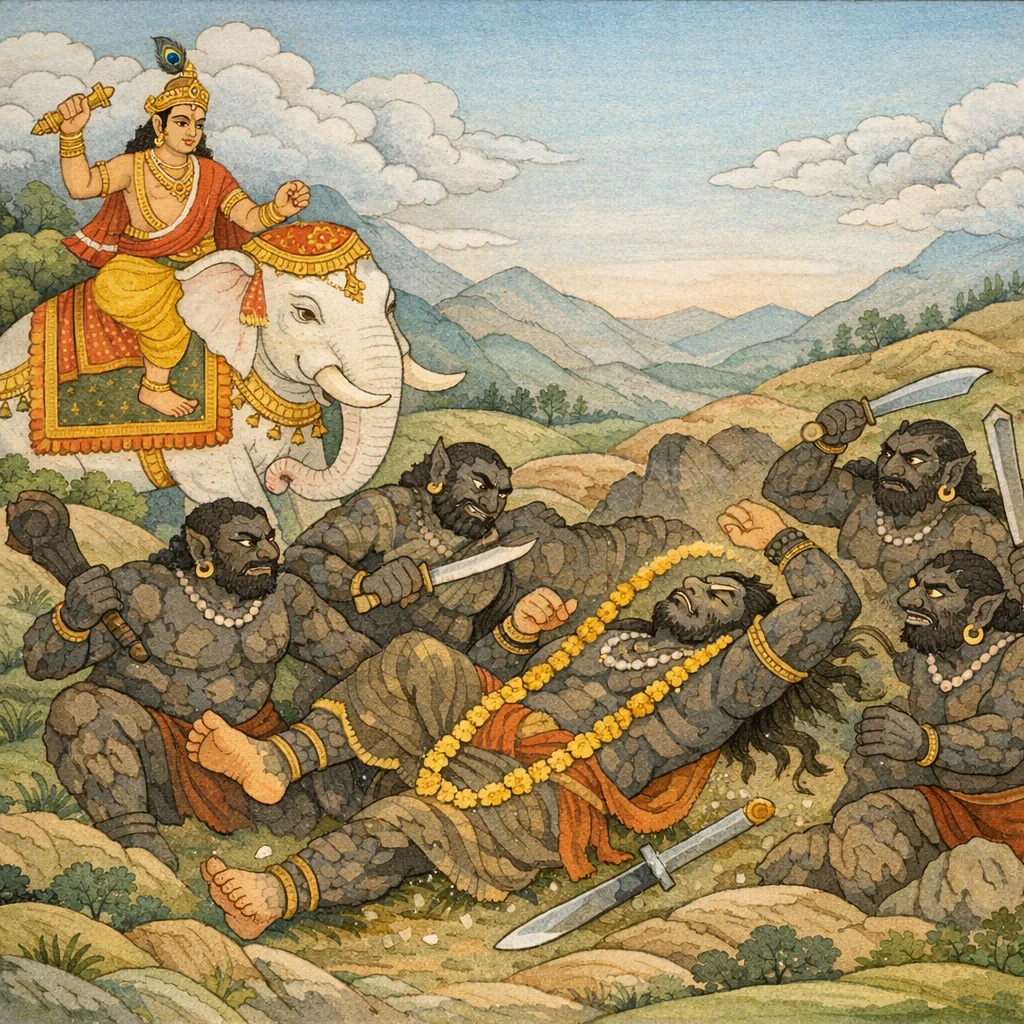
The huge-bodied Daityas known as the Kālakeyas—armed in their hands and appearing like mountains crowned with peaks—stood on every side to guard him. Then, O best of the Bharatas, a great battle broke out between the gods and the Dānavas, terrifying to the worlds, lasting for a muhūrta. And when Indra arrived, O best of the Bharatas, the gods fought the Dānavas in a fierce engagement for about two ghaṭikās, a conflict so dreadful that it struck fear through all the three worlds.
Verse 4
उद्यतप्रतिपिष्टानां खड्गानां वीरबाहुभि: । आसीत् सुतुमुल: शब्द: शरीरेष्वभिपात्यताम्,वीरोंकी भुजाओंके साथ उठे हुए खड्ग शत्रुके शरीरोंपर पड़ते और विपक्षी योद्धओंके घातक प्रहारोंसे टूटकर चूर-चूर हो जाते थे, उस समय उनका अत्यन्त भयंकर शब्द सुन पड़ता था
As the heroes’ mighty arms raised their swords and brought them crashing down upon their foes’ bodies, a fiercely tumultuous sound arose—the dreadful clang and crunch of weapons striking and being shattered in the deadly exchange of blows.
Verse 5
शिरोश्रि: प्रपतद्धिश्चाप्यन्तरिक्षान्महीतलम् | तालैरिव महाराज व॒न्ताद् भ्रष्टरदृश्यत,महाराज! अपने मूल स्थानसे टूटकर गिरे हुए ताल-फलोंके समान आकाशसे गिरते हुए योद्धाओंके मस्तकों-द्वारा वहाँकी भूमि आच्छादित दिखायी देती थी
Lomaśa said: “O great king, the ground seemed covered with the heads of warriors falling from the sky—like palm-fruits broken from their stalks. The sight laid bare the dreadful cost of violence: bodies reduced to mere objects, and the earth made to bear the fruits of wrath and conflict.”
Verse 6
ते हेमकवचा भूत्वा कालेया: परिघायुधा: । त्रिदशानभ्यवर्तन्त दावदग्धा इवाद्रय:
Clad in golden armor and wielding iron clubs, the Kāleyas surged against the gods. They advanced like mountains scorched by a forest-fire—dark, fierce, and irresistible—embodying the reckless force that rises when power is severed from restraint and right conduct.
Verse 7
कालकेयोंने सोनेके कवच धारण करके हाथोंमें परिघ लिये देवताओंपर धावा किया। उस समय वे दानव दावानलसे दग्ध हुए पर्वतोंकी भाँति दिखायी देते थे ।। तेषां वेगवतां वेगं साभिमानं प्रधावताम् | न शेकुस्त्रिदशा: सोढुं ते भग्ना: प्राद्रवनू भयात्,अभिमानपूर्वक आक्रमण करनेवाले उन वेगशाली दैत्योंका वेग देवताओंके लिये असहा हो गया। वे अपने दलसे बिछुड़कर भयसे भागने लगे
The Kālakeya demons, clad in golden cuirasses and gripping iron clubs, charged straight at the gods. In that moment they looked like mountains scorched by a raging forest-fire—terrible, blazing, and unyielding. The gods could not endure the onrush of those swift assailants who advanced with proud arrogance; their ranks broke, and in fear they scattered and fled.
Verse 8
तान् दृष्टवा द्रवतो भीतान् सहस्राक्ष: पुरंदर: । वृत्रे विवर्धभाने च कश्मलं महदाविशत्,देवताओंको डरकर भागते देख वृत्रासुरकी प्रगतिका अनुमान करके सहस्र नेत्रोंवाले इन्द्रपर महान् मोह छा गया
Seeing the gods flee in frightened disorder, Indra—thousand-eyed Purandara, breaker of fortresses—was seized by a great collapse of mind and resolve, for he perceived Vṛtra’s power and advance steadily increasing.
Verse 9
कालेयभयसंत्रस्तो देव: साक्षात् पुरंदर: | जगाम शरणं शीघ्र तं तु नारायणं प्रभुम्
Terrified by the danger posed by the Kāleyas, Purandara (Indra) himself hastened to seek refuge in Lord Nārāyaṇa, the supreme master.
Verse 10
कालेयोंके भयसे त्रस्त हुए साक्षात् इन्द्रदेवने सर्व-शक्तिमान् भगवान् नारायणकी शीघ्रतापूर्वक शरण ली ।। तं शक्रं कश्मलाविष्टं दृष्टवा विष्णु: सनातन: । स्वतेजो व्यदधाच्छक्रे बलमस्य विवर्धयन्,इन्द्रको इस प्रकार मोहाच्छन्न होते देख सनातन भगवान् विष्णुने उनका बल बढ़ाते हुए उनमें अपना तेज स्थापित कर दिया
Stricken with fear of the Kāleyas, Indra himself swiftly sought refuge in the all-powerful Lord Nārāyaṇa. Seeing Śakra overwhelmed by confusion and distress, the eternal Viṣṇu infused him with His own divine radiance, thereby strengthening Indra’s power.
Verse 11
विष्णुना गोपितं शक्रं दृष्टवा देवगणास्तत: । सर्वे तेज: समादध्युस्तथा ब्रह्म॒र्षयोडमला:,देवताओंने देखा इन्द्र भगवान् विष्णुके द्वारा सुरक्षित हो गये हैं, तब उन सबने तथा शुद्ध अन्तःकरणवाले ब्रह्मर्षियोंने भी देवराज इन्द्रमें अपना-अपना तेज भर दिया
Logaśa said: When the hosts of gods saw Indra (Śakra) protected by Viṣṇu, they all—along with the stainless-hearted brahmarṣis—concentrated and infused their own spiritual radiance into the lord of the gods.
Verse 12
स समाप्यायित: शक्रो विष्णुना दैवतै: सह । ऋषिभिश्न महाभागैर्बलवान् समपद्यत,देवताओंसहित श्रीविष्णु तथा महाभाग महर्षियोंके तेजसे परिपूर्ण हो देवराज इन्द्र अत्यन्त बलशाली हो गये। देवेश्वर इन्द्रको बलसे सम्पन्न जान वृत्रासुरने बड़ी विकट गर्जना की। उसके सिंहनादसे भूलोक, सम्पूर्ण दिशाएँ, आकाश, स्वर्गलोक तथा पर्वत सब-के-सब काँप उठे
Having been replenished and strengthened by Viṣṇu together with the gods, and by the spiritual power of the blessed great seers, Śakra (Indra) became exceedingly mighty. Seeing Indra endowed with renewed strength, Vṛtrāsura let out a terrifying roar; by that lion-like cry the earth, all the directions, the sky, heaven, and even the mountains trembled.
Verse 13
ज्ञात्वा बलस्थं त्रिदशाधिपं तु ननाद वृत्रो महतो निनादान् | तस्य प्रणादेन धरा दिशश्व खं द्यौर्नगाश्नापि चचाल सर्वम्,देवताओंसहित श्रीविष्णु तथा महाभाग महर्षियोंके तेजसे परिपूर्ण हो देवराज इन्द्र अत्यन्त बलशाली हो गये। देवेश्वर इन्द्रको बलसे सम्पन्न जान वृत्रासुरने बड़ी विकट गर्जना की। उसके सिंहनादसे भूलोक, सम्पूर्ण दिशाएँ, आकाश, स्वर्गलोक तथा पर्वत सब-के-सब काँप उठे
Seeing that the lord of the Thirty Gods—Indra—had become firmly established in strength, Vṛtra let out a tremendous, terrifying roar. By the force of that lion-like cry, the earth, the directions, the sky, the heavenly realm, and even the mountains all shook.
Verse 14
ततो महेन्द्र: परमाभितप्त: श्रुत्वा रव॑ घोररूपं महान्तम् । भये निमग्नस्त्वरितो मुमोच वज्ज॑ महत् तस्य वधाय राजन,राजन्! उस समय उस अत्यन्त भयानक गर्जनाको सुनकर देवराज इन्द्र बहुत संतप्त हो उठे और भयभीत होकर उन्होंने बड़ी उतावलीके साथ वृत्रासुरके वधके लिये अपने महान् वज्रका प्रहार किया
Then Mahendra (Indra), deeply distressed on hearing that immense, terrifying roar, sank into fear. In haste, O King, he hurled his mighty thunderbolt to slay him.
Verse 15
स शक्रवज्जाभिहत: पपात महासुर: काउ्चनमाल्यधारी । यथा महाशैलवर: पुरस्तात् स मन्दरो विष्णुकराद विमुक्त:,इन्द्रके वज़से आहत होकर सुवर्णमालाधारी वह महान् असुर पूर्वकालमें भगवान् विष्णुके हाथसे छूटे हुए महान् पर्वत मन्दरकी भाँति पृथ्वीपर गिर पड़ा
Struck down as though by Śakra (Indra) himself, the great asura—wearing a golden garland—fell to the earth. He crashed down like the mighty Mandara mountain of old, released from the hand of Lord Viṣṇu. Thus is shown the irresistible force of divine power and the inevitable collapse of arrogant might when it meets a higher, righteous strength.
Verse 16
तस्मिन् हते दैत्यवरे भयार्त: शक्र: प्रदुद्राव सर: प्रवेष्टम् । वज्ं स मेने न कराद् विमुक्तं वृत्रं भयाच्चापि हतं न मेने,महादैत्य वृत्रके मारे जानेपर भी इन्द्र भयसे पीड़ित हो (छिपनेकी इच्छासे) तालाबमें प्रवेश करने दौड़े। उन्हें भयके कारण यह विश्वास नहीं होता था कि वज्र मेरे हाथसे छूट चुका है और वृत्रासुर भी अवश्य मारा गया है
When that foremost of the Dānavas had been slain, Śakra (Indra), shaken by fear, ran to enter a lake in order to hide. In his panic he could not believe that the vajra had truly left his hand, nor—out of fear—could he accept with certainty that Vṛtra had indeed been killed. Thus is shown how even victory may be clouded by inner turmoil, and how fear can warp one’s grasp of reality and moral confidence.
Verse 17
सर्वे च देवा मुदिता: प्रह्ृष्टा महर्षयश्रेन्द्रमभिष्टवन्त: । सर्वाश्ष दैत्यांस्त्वरिता: समेत्य जघ्नु: सुरा वृत्रवधाभितप्तान्,उस समय सब देवता बड़े प्रसन्न हुए। महर्षिगण भी हर्षोल्लासमें भरकर इन्द्रदेवकी स्तुति करने लगे। तत्पश्चात् सब देवताओंने मिलकर वृत्रासुरके वधसे संतप्त हुए समस्त दैत्योंको तुरंत मार भगाया
All the gods, delighted and exultant, rejoiced; and the great seers, filled with gladness, began to praise Indra. Then the gods, swiftly assembling together, struck down and drove away all the Daityas who were burning with anguish over Vṛtra’s slaying—showing how divine order is defended when hostile forces rise in resentment against a righteous victory.
Verse 18
तैस्त्रास्यमानास्त्रिदशै: समेतैः समुद्रमेवाविविशुर्भयार्ता: । प्रविश्य चैवोदधिमप्रमेयं झषाकुलं नक्रसमाकुलं च,संगठित देवताओंद्वारा त्रास दिये जानेपर वे सब दैत्य भयसे आतुर हो समुद्रमें ही प्रवेश कर गये। मत्स्यों और मगरोंसे भरे हुए उस अपार महासागरमें प्रविष्ट हो वे सम्पूर्ण दानव तीनों लोकोंका नाश करनेके लिये बड़े गर्वसे एक साथ मन्त्रणा करने लगे। उनमेंसे कुछ दैत्य जो अपनी बुद्धिके निश्चयको स्पष्टरूपसे जाननेवाले थे; (जगत्के विनाशके लिये) उपयोगी विभिन्न उपायोंका वर्णन करने लगे
Harried by the assembled gods, the daityas—stricken with fear—fled and entered the ocean itself. Having plunged into that immeasurable sea, teeming with fish and crowded with crocodiles, they gathered together and began to deliberate with arrogant resolve on means to bring ruin upon the three worlds; some among them, clear in their own judgment, proposed various stratagems they deemed fit for the destruction of the cosmos.
Verse 19
तदा सम मन्त्र सहिता:ः प्रचक्रु- स्त्रैलोक्यनाशार्थमभिस्मयन्त: । तत्र सम केचिन्मतिनिश्षयज्ञा- स्तांस्तानुपायानुपवर्णयन्ति,संगठित देवताओंद्वारा त्रास दिये जानेपर वे सब दैत्य भयसे आतुर हो समुद्रमें ही प्रवेश कर गये। मत्स्यों और मगरोंसे भरे हुए उस अपार महासागरमें प्रविष्ट हो वे सम्पूर्ण दानव तीनों लोकोंका नाश करनेके लिये बड़े गर्वसे एक साथ मन्त्रणा करने लगे। उनमेंसे कुछ दैत्य जो अपनी बुद्धिके निश्चयको स्पष्टरूपसे जाननेवाले थे; (जगत्के विनाशके लिये) उपयोगी विभिन्न उपायोंका वर्णन करने लगे
Then, having gathered together in common counsel, they began to deliberate—marvelling at their own design for the destruction of the three worlds. There, some among them, clear and resolute in their judgment, proceeded to set forth various stratagems suited to bringing about the ruin of the cosmos. The passage frames their collective pride and destructive intent as an ethical inversion: intelligence and unity are turned toward adharma and universal harm.
Verse 20
तेषां तु तत्र क्रमकालयोगाद् घोरा मतिकश्रिन्तयतां बभूव । ये सन्ति विद्यातपसोपपतन्ना- स्तेषां विनाश: प्रथम तु कार्य:,वहाँ क्रमश: दीर्घकालतक उपायचिन्तनमें लगे हुए उन असुरोंने यह घोर निश्चय किया कि जो लोग विद्वान् और तपस्वी हों, सबसे पहले उन्हींका विनाश करना चाहिये। सम्पूर्ण लोग तपसे ही टिके हुए हैं। अतः तुम सब लोग तपस्याके विनाशके लिये शीघ्रतापूर्वक कार्य करो। भूमण्डलमें जो कोई भी तपस्वी, धर्मज्ञ एवं उन्हें जानने-माननेवाले लोग हों, उन सबका तुरंत वध कर डालो। उनके नष्ट होनेपर सारा जगत् नष्ट हो जायगा। इस प्रकार बुद्धि और विचारसे हीन वे समस्त दैत्य संसारके विनाशकी बात सोचकर अत्यन्त हर्षका अनुभव करने लगे। उत्ताल तरंगोंसे भरे हुए वरुणके निवासस्थान रत्नाकर समुद्ररूप दुर्गका आश्रय लेकर वे उसमें निर्भय होकर रहने लगे
In that place, as time passed and their plotting continued step by step, a dreadful resolve arose in those who were brooding over schemes: “Those who possess learning and ascetic power must be destroyed first.” The ethical inversion is stark—rather than honoring wisdom and tapas as supports of the world, they identify them as obstacles to their domination and therefore make the ruin of the virtuous their first objective.
Verse 21
वहाँ क्रमश: दीर्घकालतक उपायचिन्तनमें लगे हुए उन असुरोंने यह घोर निश्चय किया कि जो लोग विद्वान् और तपस्वी हों, सबसे पहले उन्हींका विनाश करना चाहिये। सम्पूर्ण लोग तपसे ही टिके हुए हैं। अतः तुम सब लोग तपस्याके विनाशके लिये शीघ्रतापूर्वक कार्य करो। भूमण्डलमें जो कोई भी तपस्वी, धर्मज्ञ एवं उन्हें जानने-माननेवाले लोग हों, उन सबका तुरंत वध कर डालो। उनके नष्ट होनेपर सारा जगत् नष्ट हो जायगा। इस प्रकार बुद्धि और विचारसे हीन वे समस्त दैत्य संसारके विनाशकी बात सोचकर अत्यन्त हर्षका अनुभव करने लगे। उत्ताल तरंगोंसे भरे हुए वरुणके निवासस्थान रत्नाकर समुद्ररूप दुर्गका आश्रय लेकर वे उसमें निर्भय होकर रहने लगे
After long deliberation on stratagems, those Asuras arrived at a dreadful resolve: “First, the learned and the ascetics must be destroyed. The whole world stands supported by austerity; therefore act swiftly to ruin tapas. On the earth, whoever is an ascetic, a knower of dharma, and even those who recognize and honor such people—kill them all at once. When they are destroyed, the entire world will collapse.” Thus, bereft of sound judgment and reflection, all those Daityas, imagining the destruction of the world, felt intense delight. Taking refuge in the ocean-fortress—the jewel-bearing sea, Varuṇa’s abode, filled with towering waves—they dwelt there fearlessly.
Verse 22
तेषां वध: क्रियतां क्षिप्रमेव तेषु प्रणष्टेषु जगत् प्रणष्टम् । एवं हि सर्वे गतबुद्धिभावा जगद्धिनाशे परमप्रहृष्टा:,वहाँ क्रमश: दीर्घकालतक उपायचिन्तनमें लगे हुए उन असुरोंने यह घोर निश्चय किया कि जो लोग विद्वान् और तपस्वी हों, सबसे पहले उन्हींका विनाश करना चाहिये। सम्पूर्ण लोग तपसे ही टिके हुए हैं। अतः तुम सब लोग तपस्याके विनाशके लिये शीघ्रतापूर्वक कार्य करो। भूमण्डलमें जो कोई भी तपस्वी, धर्मज्ञ एवं उन्हें जानने-माननेवाले लोग हों, उन सबका तुरंत वध कर डालो। उनके नष्ट होनेपर सारा जगत् नष्ट हो जायगा। इस प्रकार बुद्धि और विचारसे हीन वे समस्त दैत्य संसारके विनाशकी बात सोचकर अत्यन्त हर्षका अनुभव करने लगे। उत्ताल तरंगोंसे भरे हुए वरुणके निवासस्थान रत्नाकर समुद्ररूप दुर्गका आश्रय लेकर वे उसमें निर्भय होकर रहने लगे
‘Let their slaughter be carried out at once; when they are destroyed, the world itself will be destroyed. For thus, all those whose minds have fallen into delusion become supremely delighted at the ruin of the world.’ In context, the speaker reports the asuras’ grim resolve: to strike first at the learned and ascetic—those who uphold dharma through tapas—believing that by eliminating such spiritual supports they can collapse the moral and cosmic order, and they rejoice in that destructive aim.
Verse 23
लोका हि सर्वे तपसा प्रियन्ते तस्मात् त्वरध्वं तपस: क्षयाय । ये सन्ति केचिच्च वसुंधरायां तपस्विनो धर्मविदश्ल तज्ज्ञा:,दुर्ग समाश्रित्य महोर्मिमन्तं रत्नाकरं वरुणस्यालयं सम वहाँ क्रमश: दीर्घकालतक उपायचिन्तनमें लगे हुए उन असुरोंने यह घोर निश्चय किया कि जो लोग विद्वान् और तपस्वी हों, सबसे पहले उन्हींका विनाश करना चाहिये। सम्पूर्ण लोग तपसे ही टिके हुए हैं। अतः तुम सब लोग तपस्याके विनाशके लिये शीघ्रतापूर्वक कार्य करो। भूमण्डलमें जो कोई भी तपस्वी, धर्मज्ञ एवं उन्हें जानने-माननेवाले लोग हों, उन सबका तुरंत वध कर डालो। उनके नष्ट होनेपर सारा जगत् नष्ट हो जायगा। इस प्रकार बुद्धि और विचारसे हीन वे समस्त दैत्य संसारके विनाशकी बात सोचकर अत्यन्त हर्षका अनुभव करने लगे। उत्ताल तरंगोंसे भरे हुए वरुणके निवासस्थान रत्नाकर समुद्ररूप दुर्गका आश्रय लेकर वे उसमें निर्भय होकर रहने लगे
Logaśa said: “All worlds are sustained and made secure by ascetic power; therefore hurry to bring about the destruction of tapas. Whatever ascetics, knowers of dharma, and those devoted to such knowledge exist upon the earth—kill them at once. When they are destroyed, the whole world will collapse.” Having taken refuge in a fortress-like place—the jewel-bearing ocean, Varuṇa’s abode, heaving with great waves—those asuras remained there without fear, intent on plotting the ruin of the world by undermining its moral and spiritual foundations.
Verse 100
इस प्रकार श्रीमह्याभारत वनपर्वके अन्तर्गत तीर्थयात्रापर्वमें लोगशती र्थयात्राके प्रसंगमें वज्ननिर्माणमकथनविषयक सौवाँ अध्याय पूरा हुआ
Thus ends the hundredth chapter of the Mahābhārata’s Vana Parva, within the Tīrtha-yātrā section: in the context of Lomāśa’s pilgrimage narrative, the chapter dealing with the account of the making of the thunderbolt (vajra) is concluded. The colophon signals a transition, framing the preceding material as sacred travel-instruction and moral exemplum tied to the power of austerity and righteous purpose.
Verse 10131
इति श्रीमहाभारते वनपर्वणि तीर्थयात्रापर्वणि लोमशतीर्थयात्रायां वृत्रवधोपाख्याने एकाधिकशततमो<ध्याय:
Thus ends the one-hundred-and-first chapter of the Vana Parva of the Śrī Mahābhārata, within the Pilgrimage section (Tīrtha-yātrā Parva), in the account of Lomāśa’s journey—specifically in the episode concerning the slaying of Vṛtra. This colophon marks the close of the chapter and sets the teaching within the frame of sacred travel, where exemplary deeds and their moral consequences are recalled at holy fords.
Frequently Asked Questions
The dilemma is how to respond to targeted violence against brāhmaṇas/munis—portrayed as essential to ritual and societal continuity—when the perpetrators are shielded by an environment (the ocean) that makes ordinary retaliation ineffective.
The chapter teaches a systems-based ethic: worlds are maintained through reciprocal duties (giving, offerings, protection), and safeguarding knowledge-and-ritual institutions is framed as a prerequisite for broader security and prosperity.
No explicit phalaśruti appears in the provided passage; the chapter’s meta-logic instead functions implicitly by linking comprehension of reciprocity and protection (rakṣā) to the preservation of loka-dharma within the epic’s cosmological framework.