Adhyaya 62
Udyoga Parva Adhyaya 62 — Duryodhana’s Claim of Victory and Vidura’s Allegories on Discord and Risk
Upa-parva: Vidura-nīti / Vidura’s Counsel to Dhritarashtra (contextual unit within Udyoga Parva)
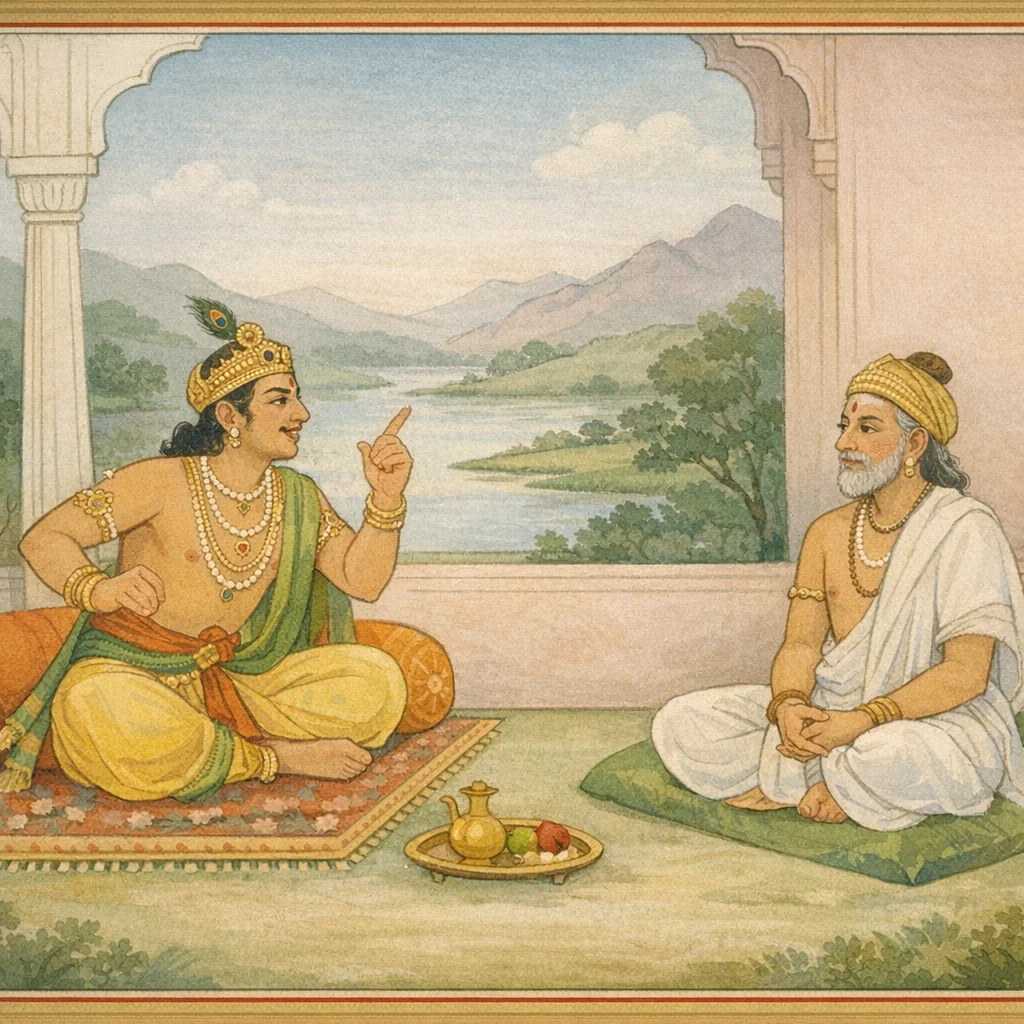
The chapter opens with Duryodhana challenging the premise that the Pāṇḍavas can be assured victory despite comparable birth and human status among Kuru elites. He asserts his own martial readiness, naming allies (notably Karṇa and Duḥśāsana) and projecting a post-victory ritual program of grand sacrifices and lavish gifts. Vidura replies with a didactic narrative: a hunter’s snare is carried off by two birds who, when they quarrel mid-flight, fall and are captured—an exemplum that interprets kin-discord as the mechanism by which opponents gain control. Vidura then articulates positive duties among relatives: shared meals, dialogue, inquiry, and regular meetings, explicitly rejecting hostility as a kin-duty. He adds a second field-observation allegory from Gandhamādana: intoxicating honey situated on a perilous cliff, guarded by serpents, where seekers perish by focusing on reward and ignoring the precipice. Vidura applies this to Duryodhana’s desire for sole sovereignty—perceiving “honey” (power) while neglecting the “cliff” (strategic peril and moral consequence). The chapter concludes with pragmatic counsel to Dhṛtarāṣṭra: draw Yudhiṣṭhira close (seek settlement), because in a duel of contending forces victory is not guaranteed, and overconfidence is strategically unsound.
Chapter Arc: हस्तिनापुर के राजसभा-परिसर में दुर्योधन अपने पक्ष की ‘अपराजेयता’ का घोष करता है—पाण्डवों के साथ समान बल, पराक्रम, आयु, प्रतिभा और शास्त्र-ज्ञान का दावा करते हुए वह युद्ध को ही न्यायोचित परिणाम बताने लगता है। → दुर्योधन आत्मविश्वास को अहंकार में बदल देता है: वह अस्त्र-कौशल, शीघ्रता और रण-योग्यता में अपनी ओर के योद्धाओं की गणना कर पाण्डवों को तुच्छ ठहराता है। इसी उग्र वाणी के बीच विदुर का प्रतिवचन उठता है—राजधर्म का स्मरण कराते हुए वे भय और हिंसा के स्वभाव पर दृष्टान्त देते हैं कि जैसे क्रव्याद पशुओं से प्राणी सदा भयभीत रहते हैं, वैसे ही दमनकारी से प्रजा काँपती है। → विदुर ‘दम’ (इन्द्रिय-निग्रह/संयम) की महिमा को चरम पर ले जाते हैं: जो सब प्राणियों को अभय देता है, जो सर्वभूतहितैषी और मैत्रीभावी है, जो समुद्र-सा गम्भीर और ज्ञान-तृप्त है—वही मनुजोत्तम है; और जो नैष्कर्म्य/वैराग्य में स्थित, जितेन्द्रिय होकर लोक में चलता है, वह ब्रह्मभाव की ओर उन्नत होता है। इस नैतिक-दार्शनिक शिखर के सामने दुर्योधन का रण-घोष और भी कठोर होकर उभरता है। → दुर्योधन अंततः खुला युद्ध-निश्चय प्रकट करता है—अपने, कर्ण और दुःशासन के बल पर पाँचों पाण्डवों को मार देने की डींग (रण-उन्माद) तक पहुँचता है। विदुर का उपदेश सभा में धर्म का दीपक तो जलाता है, पर दुर्योधन की जिद को मोड़ नहीं पाता। → धर्म-वाणी और युद्ध-हठ आमने-सामने खड़े हैं—अब प्रश्न यह रह जाता है कि क्या कोई शान्ति-प्रयास दुर्योधन के भीतर प्रवेश कर पाएगा, या विनाश का रथ आगे ही बढ़ेगा?
Shlokas
Verse 1
/ ऑऔपन---मा छा | अ-क्राछ त्रेषष्टितमोड्ध्याय: दुर्योधनद्वारा अपने पक्षकी प्रबलताका वर्णन करना और विदुरका दमकी महिमा बताना दुर्योधन उवाच सदृशानां मनुष्येषु सर्वेषां तुल्यजन्मनाम् । कथमेकान्ततस्तेषां पार्थानां मन्यसे जयम्,दुर्योधन बोला--पितामह! मनुष्योंमें हम और पाण्डव शिक्षाकी दृष्टिसे समान हैं, हमारा जन्म भी एक ही कुलमें हुआ है; फिर आप यह कैसे मानते हैं कि युद्धमें एकमात्र कुन्तीकुमारोंकी ही विजय होगी
Duryodhana said: “O Grandsire! Among men we are all alike, of equal birth. How then do you hold, with such certainty, that victory will belong only to those Pārthas—the sons of Pṛthā?”
Verse 2
वयं च तेडपि तुल्या वै वीर्येण च पराक्रमै: । समेन वयसा चैव प्रातिभेन श्रुतेन च
Duryodhana declares: “We and they are equal in strength and martial prowess, and alike as well in age, native ability, and learning.”
Verse 3
बल, पराक्रम, समवयस्कता, प्रतिभा और शास्त्रज्ञान--इन सभी दृष्टियोंसे हमलोग और पाण्डव समान ही हैं ।। अस्त्रेण योधयुग्या च शीघ्रत्वे कौशले तथा । सर्वे सम समजातीया: सर्वे मानुषयोनय:,अस्त्र-बल, योद्धाओंके संग्रह, हाथोंकी फुर्ती तथा युद्धकौशलमें भी हम और वे एक-से ही हैं, सभी समान जातिके हैं और सब-के-सब मनुष्ययोनिमें ही उत्पन्न हुए हैं
“In strength, prowess, equality of age, talent, and knowledge of the sacred treatises, we and the Pāṇḍavas are the same. In the use of weapons, in mustering and arraying warriors, in quickness of hand, and in skill of battle, we are alike. All are of comparable birth; all are born as human beings.”
Verse 4
0 | ॥॥ पितामह विजानीषे पार्थेषु विजयं कथम् । नाहं भवति न द्रोणे न कृपे न च बाह्वलिके
Duryodhana said: “Grandfather, you surely know how victory could come to the sons of Pāṇḍu. Yet for me it will not be so—neither through Droṇa, nor through Kṛpa, nor even through Bāhvalīka.”
Verse 5
अहं वैकर्तन: कर्णो भ्राता दुःशासनश्न मे
“Karna Vaikartana—the son of the charioteer—is on my side, and so is my brother Duḥśāsana.”
Verse 6
ततो राजन् महायज्जैविविधैर्भूरिदक्षिणै:
Then, O King, I shall proceed with great sacrifices of many kinds, accompanied by abundant sacrificial gifts—an outward display of power and legitimacy meant to secure prestige and support, even as the deeper question of rightful conduct remains unresolved.
Verse 7
यदा परिकरिष्यन्ति ऐणेयानिव तन््तुना । अतरित्रानिव जले बाहुभिमामका रणे,जैसे व्याध हरिणके बच्चोंको जाल या फंदेमें फँसाकर खींचते हैं और जैसे जलका प्रवाह कर्णधाररहित नौकारोहियोंको भँवरमें डुबो देता है, उसी प्रकार जब मेरे सैनिक अपने बाहुबलसे पाण्डवोंको पीड़ित करेंगे, उस समय रथ और हाथीसवारोंसे भरी हुई मेरी विशाल वाहिनीकी ओर देखते हुए वे पाण्डव और वह श्रीकृष्ण सब अपना अहंकार त्याग देंगे
Duryodhana said: “When my warriors, by the strength of their arms in battle, will seize and drag the Pāṇḍavas as hunters pull in young deer caught in a net, and when they will overwhelm them like a current that drowns boatmen in the water when there is no helmsman—then, seeing my vast host packed with chariots and elephant-riders, those Pāṇḍavas and even Kṛṣṇa will abandon their pride.”
Verse 8
पश्यन्तस्ते परांस्तत्र रथनागसमाकुलान् । तदा दर्प विमोक्ष्यन्ति पाण्डवा: स च केशव:,जैसे व्याध हरिणके बच्चोंको जाल या फंदेमें फँसाकर खींचते हैं और जैसे जलका प्रवाह कर्णधाररहित नौकारोहियोंको भँवरमें डुबो देता है, उसी प्रकार जब मेरे सैनिक अपने बाहुबलसे पाण्डवोंको पीड़ित करेंगे, उस समय रथ और हाथीसवारोंसे भरी हुई मेरी विशाल वाहिनीकी ओर देखते हुए वे पाण्डव और वह श्रीकृष्ण सब अपना अहंकार त्याग देंगे
Duryodhana said: “When they behold there my vast forces, crowded with chariots and war-elephants, then the Pāṇḍavas—and Keśava as well—will cast off their pride.” In the ethical frame of the epic, the line exposes Duryodhana’s confidence in sheer military might and his desire to break the opponents’ spirit, contrasting external power with the inner discipline that dharma ultimately demands.
Verse 9
विदुर उवाच इह निःश्रेयसं प्राहुर्वद्धा निश्चितदर्शिन: । ब्राह्मणस्य विशेषेण दमो धर्म: सनातन:,विदुरने कहा--सिद्धान्तके जाननेवाले वृद्ध पुरुष कहते हैं कि इस संसारमें दम ही कल्याणका परम साधन है। ब्राह्मणके लिये तो विशेषरूपसे है। वही सनातनधर्म है
Vidura said: In this world, the aged—those of settled and discerning vision—declare that self-restraint is the highest means to true welfare. For a brāhmaṇa in particular, self-control is the eternal form of dharma.
Verse 10
तस्य दान क्षमा सिद्धिर्यथावदुपपद्यते । दमो दानं तपो ज्ञानमधीतं चानुवर्तते
For such a person, the perfections of generosity and forbearance arise in due and proper measure. Self-restraint, charity, austerity, and true knowledge—and even what has been studied—follow after him as natural attendants, shaping his conduct in accordance with dharma.
Verse 11
जो दमरूपी गुणसे युक्त है, उसीको दान, क्षमा और सिद्धिका यथार्थ लाभ प्राप्त होता है; क्योंकि दम ही दान, तपस्या, ज्ञान और स्वाध्यायका सम्पादन करता है ।। दमस्तेजो वर्धयति पवित्र दम उत्तमम् | विपाप्मा वृद्धतेजास्तु पुरुषो विन्दते महत्,दम तेजकी वृद्धि करता है। दम पवित्र एवं उत्तम साधन है। दमसे निष्पाप एवं बढ़े हुए तेजसे सम्पन्न पुरुष परब्रह्म परमात्माको प्राप्त कर लेता है
Vidura said: Only the person endowed with the virtue called self-restraint truly gains the real fruits of generosity, forgiveness, and spiritual accomplishment; for self-restraint is what brings to completion charity, austerity, knowledge, and sacred study. Self-restraint increases inner radiance; it is pure and the highest means. A person who becomes free from sin and whose spiritual brilliance has grown through self-restraint attains the Supreme—what is truly great.
Verse 12
क्रव्याद्धय इव भूतानामदान्ते भ्य: सदा भयम् । येषां च प्रतिषेधार्थ क्षत्रं सृष्टं स््वयम्भुवा,जैसे मांसभोजी हिंसक पशुओंसे सब जीव डरते रहते हैं, उसी प्रकार अदान्त (असंयमी) पुरुषोंसे सभी प्राणियोंको सदा भय बना रहता है, जिनको हिंसा आदि दुष्कर्मोंसे रोकनेके लिये ब्रह्माजीने क्षत्रिय-जातिकी सृष्टि की है
Vidura said: “Just as all creatures live in constant fear of flesh-eating predators, so too do all beings remain ever afraid of the unrestrained and undisciplined. It is precisely to check such people—by restraining violence and other wrongdoing—that Svayambhū (Brahmā) created the Kṣatra (the royal/warrior power).”
Verse 13
आश्रमेषु चतुर्ष्वाहुर्दममेवोत्तमं व्रतम् । तस्य लिड़ूं प्रवक्ष्यामि येषां समुदयो दम:,चारों आश्रमोंमें दमको ही उत्तम व्रत बताया गया है। यह दम जिन पुरुषोंके अभ्यासमें आकर उनके अभ्युदयका कारण बन जाता है, उनमें प्रकट होनेवाले चिह्लोंका मैं वर्णन करता हूँ
It is declared that in all four āśramas, self-restraint alone is the highest vow (vrata). Now I shall describe the signs that appear in those for whom self-restraint, through steady practice, becomes the cause of their rise and well-being.
Verse 14
क्षमा धृतिरहिंसा च समता सत्यमार्जवम् | इन्द्रियाभिजयो धैर्य मार्दवं हवीरचापलम्,राजेन्द्र! जिस पुरुषमें क्षमा, धैर्य, अहिंसा, सम-दर्शिता, सत्य, सरलता, इन्द्रियसंयम, धीरता, मृदुता, लज्जा, स्थिरता, उदारता, अक्रोध, संतोष और श्रद्धा--ये गुण विद्यमान हैं, वह पुरुष दान्त (इन्द्रियविजयी) माना गया है
Vidura said: “O best of kings, the man in whom these virtues are firmly present—forbearance, steadfastness, non-violence, even-mindedness, truthfulness, straightforwardness, mastery over the senses, courage, gentleness, modesty, and freedom from fickleness—is regarded as truly dānta, a conqueror of the senses.”
Verse 15
अकार्पण्यमसंरम्भ: संतोष: श्रद्दधानता । एतानि यस्य राजेन्द्र स दान्त: पुरुष: स्मृत:,राजेन्द्र! जिस पुरुषमें क्षमा, धैर्य, अहिंसा, सम-दर्शिता, सत्य, सरलता, इन्द्रियसंयम, धीरता, मृदुता, लज्जा, स्थिरता, उदारता, अक्रोध, संतोष और श्रद्धा--ये गुण विद्यमान हैं, वह पुरुष दान्त (इन्द्रियविजयी) माना गया है
Vidura said: “O king, the man in whom there is no meanness or self-pity, who is free from rash agitation, who is content, and who is steadfast in faith—such a person is remembered as dānta, one who has mastered himself.”
Verse 16
कामो लोभश्व दर्पश्न मन्युर्निद्रा विकत्थनम् । मान ईर्ष्या च शोकश्न नैतद् दान्तो निषेवते । अजिदट्दममशठं शुद्धमेतद् दान्तस्य लक्षणम्,दमनशील पुरुष काम, लोभ, अभिमान, क्रोध, निद्रा, आत्मप्रशंसा, मान, ईर्ष्या तथा शोक--इन दुर्गुणोंको अपने पास नहीं फटकने देता। कुटिलता और शठताका अभाव तथा आत्मशुद्धि यह दमयुक्त पुरुषका लक्षण है
Vidura said: Desire, greed, arrogance, anger, excessive sleep, and boastfulness—along with craving for honor, envy, and grief—these a self-controlled person does not indulge. Straightforwardness, disciplined restraint, freedom from deceit, and inner purity—these are the marks of one who is truly self-governed.
Verse 17
अलोलुपस्तथाल्पेप्सु: कामानामविचिन्तिता । समुद्रकल्प: पुरुष: स दान्त: परिकीर्तित:,जो निर्लोभ, कम-से-कम चाहनेवाला, भोगोंके चिन्तनसे दूर रहनेवाला तथा समुद्रके समान गम्भीर है, उस पुरुषको दान्त (इन्द्रियसंयमी) कहा गया है
Vidura says: A person who is free from greed, who desires little, who does not dwell in thought upon sense-pleasures, and who is deep and steady like the ocean—such a person is praised as ‘dānta’, one who has mastered the senses.
Verse 18
सुवृत्त: शीलसम्पन्न: प्रसन्नात्मा55त्मविद् बुध: । प्राप्पेह लोके सम्मान सुगतिं प्रेत्य गच्छति,जो सदाचारी, शीलवान, प्रसन्नचित्त तथा आत्मज्ञानी विद्वान् है वह इस जगतमें सम्मान पाकर मृत्युके पश्चात् उत्तम गतिका भागी होता है
Vidura teaches that a person of good conduct and refined character—calm in mind, self-knowing, and truly wise—wins honor in this world; and after death, such a one attains a blessed course of existence.
Verse 19
अभयं यस्य भूतेभ्य: सर्वेषामभयं यत: । स वै परिणतप्रज्ञ: प्रख्यातो मनुजोत्तम:,जिसे समस्त प्राणियोंसे निर्भयता प्राप्त हो गयी हो तथा जिससे सभी प्राणियोंका भय दूर हो गया हो, वह परिपक्व बुद्धिवाला पुरुष मनुष्योंमें श्रेष्ठ कहा गया है
He is called a mature-minded and renowned best among men in whom all beings find fearlessness, and from whom all beings receive freedom from fear.
Verse 20
सर्वभूतहितो मैत्रस्तस्मान्नोद्विजते जन: । समुद्र इव गम्भीर: प्रज्ञातृप्त: प्रशाम्यति,जो सम्पूर्ण भूतोंका हित चाहनेवाला और सबके प्रति मैत्रीभाव रखनेवाला है, उससे किसी भी पुरुषको उद्वेग नहीं प्राप्त होता है। जो समुद्रके समान गम्भीर एवं उत्कृष्ट ज्ञानरूपी अमृतसे तृप्त है, वही परम शान्तिका भागी होता है
One who seeks the welfare of all beings and bears friendship toward all—no person is disturbed by him. Deep as the ocean, and satisfied with the nectar of excellent wisdom—such a one attains the highest peace.
Verse 21
कर्मणा5<चरितं पूर्व सद्धिराचरितं च यत् । तदेवास्थाय मोदन्ते दान्ता: शमपरायणा:,जो कर्तव्य कर्मोंद्वारा आचरित है तथा पहलेके साधुपुरुषोंके द्वारा जिसका आचरण किया गया है, उसे अपनाकर शम-दमसे सम्पन्न पुरुष सदा आनन्दमग्न रहते हैं
Vidura says: Those who are self-restrained and devoted to inner calm rejoice by taking their stand on that very course of action which is to be performed as one’s duty, and which has also been practiced from earlier times by the righteous. Happiness follows disciplined adherence to time-tested dharma, not impulsive or self-serving conduct.
Verse 22
नैष्कर्म्य वा समास्थाय ज्ञानतृप्तो जितेन्द्रिय: । कालाकाडुक्षी चरँंल्लोके ब्रह्म॒ुभूयाय कल्पते,अथवा जो ज्ञानसे तृप्त जितेन्द्रिय पुरुष नैष्कर्म्यका आश्रय लेकर कालकी प्रतीक्षा करता हुआ अनासक्तभावसे लोकमें विचरता रहता है, वह ब्रह्मभावको प्राप्त होनेमें समर्थ होता है
Vidura said: “Or else, established in the discipline of desireless action, satisfied through true knowledge and having mastered the senses, a man waits calmly for his appointed time and moves through the world without attachment; such a one is fit to attain the state of Brahman.”
Verse 23
शकुनीनामिवाकाशे पदं नैवोपलभ्यते । एवं प्रज्ञानतृप्तस्य मुनेर्वर्त्म न दृश्यते,जैसे आकाशमें पक्षियोंके चरणचिह्न नहीं दिखायी देते हैं, वैसे ही ज्ञानानन्दसे तृप्त मुनिका मार्ग दृष्टिगोचर नहीं होता है अर्थात् समझमें नहीं आता है
Vidura says: Just as the track of birds cannot be found in the open sky, so too the course of a sage who is satisfied and fulfilled by wisdom cannot be discerned. The truly wise move without leaving the usual marks of ambition, attachment, or self-display; their conduct is guided inwardly by insight rather than outwardly by predictable worldly motives.
Verse 24
उत्सृज्यैव गृहान् यस्तु मोक्षमेवाभिमन्यते । लोकास्तेजोमयास्तस्य कल्पन्ते शाश्वता दिवि,जो गृहस्थाश्रमको त्यागकर मोक्षको ही आदर देता है, उसके लिये द्युलोकमें तेजोमय सनातन स्थानकी प्राप्ति होती है
Vidura says: Whoever truly leaves behind household life and fixes his aim solely on liberation—regarding mokṣa as the highest goal—for him there are prepared in heaven everlasting realms made of radiance. The verse commends renunciation oriented to spiritual freedom, presenting it as a path that yields an exalted, luminous destiny.
Verse 46
अन्येषु च नरेन््द्रेषु पराक्रम्य समारभे । दादाजी! ऐसी दशामें भी आप कैसे जानते हैं कि विजय कुन्तीपुत्रोंकी ही होगी। मैं, आप, द्रोणाचार्य, कृपाचार्य, बाह्निक तथा अन्य राजाओंके पराक्रमका भरोसा करके युद्धका आरम्भ नहीं कर रहा हूँ
Duryodhana says: “Nor am I beginning this war relying on the prowess of other kings. Even so, revered sir, how can you be certain that victory will belong only to Kuntī’s sons? I am not setting this conflict in motion merely on the strength of my own might, nor on that of Droṇa, Kṛpa, Bāhlīka, or the many other rulers.”
Verse 56
पाण्डवान् समरे पञ्च हनिष्याम: शितै: शरै: । मैं, विकर्तनपुत्र कर्ण तथा मेरा भाई दुःशासन--हम तीन ही मिलकर युद्धभूमिमें पाँचों पाण्डवोंको तीक्ष्ण बाणोंसे मार डालेंगे
Duryodhana declares with arrogant certainty: “In battle we shall slay the five Pāṇḍavas with keen, sharp arrows. I—Karna, son of Vikartana—and my brother Duḥśāsana: we three alone, joined upon the field of war, will strike down all five Pāṇḍavas with piercing shafts.”
Verse 63
इति श्रीमहा भारते उद्योगपर्वणि यानसंधिपर्वणि विदुरवाक्ये त्रिषष्टितमो5ध्याय: ।। ६३ ।। इस प्रकार श्रीमह्याभारत उद्योगपर्वके अन्तर्गत यानसंधिपर्वमें विदुरवाक्यसम्बन्धी तिरसठवाँ अध्याय पूरा हुआ
Thus, in the Śrī Mahābhārata, within the Udyoga Parva, in the section called the Yāna–Saṃdhi Parva, the sixty-third chapter entitled “Vidura’s Discourse” comes to an end.
Verse 66
ब्राह्मणांस्तर्पयिष्यामि गोभिरश्रैर्धनेन च । राजन! तदनन्तर पर्याप्त दक्षिणावाले विविध महायज्ञोंका अनुष्ठान करके गायें, घोड़े और धन दानमें देकर ब्राह्मणोंको तृप्त करूँगा
Duryodhana said to the king: “I shall satisfy the Brahmins with gifts—cows, horses, and wealth. Thereafter I will perform various great sacrifices, furnished with ample dakṣiṇā; and by distributing cows, horses, and riches in charity, I shall make the Brahmins fully content.”
Frequently Asked Questions
The pressure point is whether a ruler should pursue exclusive sovereignty through escalation despite uncertain outcomes, or prioritize kin-preserving settlement and prudent governance when counsel indicates high strategic and moral risk.
The instruction is that internal quarrel converts strength into vulnerability (the birds), and that fixation on reward can obscure lethal constraints (the honey on the cliff), urging disciplined judgment, unity, and restraint.
No explicit phalaśruti is stated here; the chapter’s meta-function is instructional nīti—positioning ethical-political discernment as the practical prerequisite for stability and as a narrative rationale for subsequent events.