Adhyaya 46
अध्याय ४६ — सभाप्रवेशः तथा सञ्जयस्य दूतवृत्तान्तः (Entry into the Royal Assembly and Sañjaya’s Envoy Report)
Upa-parva: Sañjaya-dūta (Messenger) Episode — Kuru Sabhā Proceedings
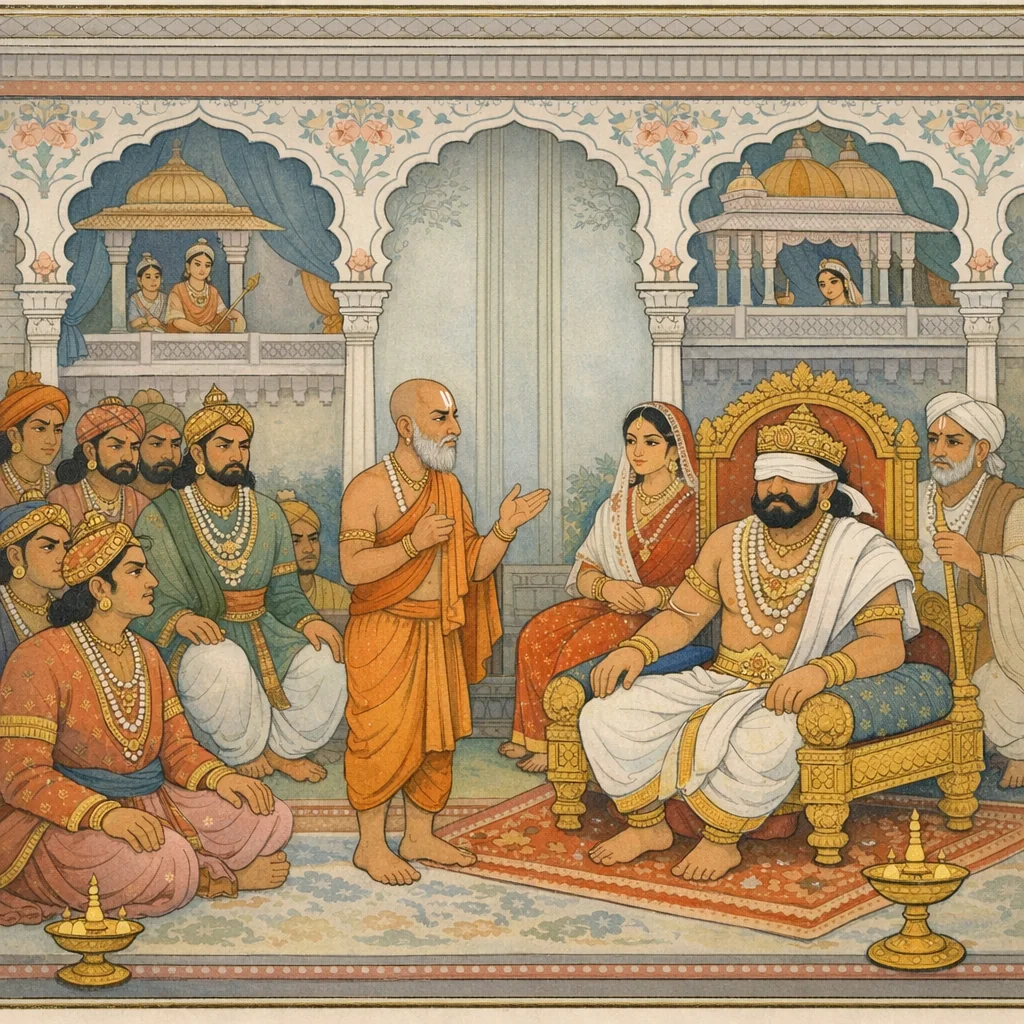
Vaiśaṃpāyana narrates that the night passes while the king converses with Sanatsujāta and the wise Vidura. At dawn, the assembled kings and eminent warriors enter the auspicious royal hall, described in architectural and material detail (bright plastered expanse, gold-inlaid features, refined seating and coverings). Prominent elders and allies—Bhīṣma, Droṇa, Kṛpa, Śalya, Kṛtavarmā, Jayadratha, Aśvatthāmā, Vikarna, Somadatta, Bāhlika—enter with Vidura and Yuyutsu, led by Dhṛtarāṣṭra. Duryodhana and his circle also enter, and the hall is likened to a cavern adorned by lions, indicating concentrated power. Once seated, the doorkeeper announces the arrival of the sūta-putra Sañjaya. Sañjaya enters swiftly and reports his return from the Pāṇḍavas, stating that they received the Kurus with due honor: elders were greeted respectfully, peers treated as peers, and younger persons addressed appropriately; he further notes he conveyed Dhṛtarāṣṭra’s message exactly as instructed, preparing the court for the next phase of deliberation.
Chapter Arc: रात्रि के बीतते ही प्रभात में कौरव-सभा जाग उठती है—पाण्डवों के शिविर से लौटे सूतपुत्र संजय को सुनने हेतु धृतराष्ट्र-प्रमुख समस्त राजागण सभा में उमड़ पड़ते हैं। → सभा देव-सभा-सी भरती जाती है; दुर्योधन-पक्ष के उग्र योद्धा (दुःशासन, कर्ण, शकुनि, उलूक आदि) अमर्ष से भरे उपस्थित होते हैं, जबकि विदुर और युयुत्सु जैसे विवेकशील भी वहीं हैं—एक ही कक्ष में नीति और हठ का टकराव सघन होता जाता है। → संजय स्पष्ट घोषणा करता है कि वह पाण्डवों से मिलकर लौटा है और बताता है कि पाण्डव कुरुओं का यथोचित सम्मान करते हैं; फिर वह धृतराष्ट्र के आदेशानुसार जो संदेश लेकर गया था, उसके प्रत्युत्तर का वृत्तांत सुनाने को उद्यत होता है—सभा का समस्त ध्यान उसी वाणी पर टिक जाता है। → अध्याय का समापन सभा-प्रवेश, आसन-ग्रहण और संजय के प्रतिवेदन की भूमिका पर होता है—कौरव-सभा एकत्रित होकर ‘अब क्या कहा गया?’ के प्रश्न पर स्थिर हो जाती है। → संजय के मुख से पाण्डवों (विशेषतः वासुदेव और धनंजय) की धर्मयुक्त वाणी का वास्तविक विवरण अगले अध्यायों में खुलने वाला है।
Shlokas
Verse 1
३) (यानसंधिपर्व) सप्तचत्वारिशो< ध्याय: पाण्डवोंके यहाँसे लौटे हुए संजयका कौरवसभामें आगमन वैशम्पायन उवाच एवं सनत्सुजातेन विदुरेण च धीमता । सार्थ कथयतो राज्ञ: सा व्यतीयाय शर्वरी,वैशम्पायनजी कहते हैं--जनमेजय! इस प्रकार महर्षि सनत्सुजात और बुद्धिमान् विदुरजीके साथ बातचीत करते हुए राजा धृतराष्ट्रकी सारी रात बीत गयी
Vaiśampāyana said: O Janamejaya, as King Dhṛtarāṣṭra continued his conversation through the night together with the sage Sanatsujāta and the wise Vidura, the entire night passed.
Verse 2
तस्यां रजन्यां व्युष्टायां राजान: सर्व एव ते । सभामाविविशुर्द्वश: सूतस्योपदिदृक्षया,वह रात बीतनेपर जब प्रभातकाल आया, तब सब राजालोग सूतपुत्र संजयको देखनेके लिये बड़े हर्षके साथ सभामें आये
When that night had passed and dawn arrived, all those kings entered the assembly hall in eager haste, wishing to see Sañjaya, the son of the charioteer.
Verse 3
शुश्रूषमाणा: पार्थानां वाचो धर्मार्थसंहिता: । धृतराष्ट्रमुखा: सर्वे ययू राजसभां शुभाम्,धृतराष्ट्र आदि समस्त कौरवोंने भी पाण्डवोंकी धर्मार्थयुक्त बातें सुननेकी इच्छासे उस सुन्दर एवं विशाल राजसभामें प्रवेश किया, जो चूनेसे पुती होनेके कारण अत्यन्त उज्ज्वल दिखायी देती थी। सुवर्णमय प्रांगण उसकी शोभा बढ़ा रहे थे। वह सभा चन्द्रमाकी श्वेत रश्मियोंके समान प्रकाशित हो रही थी। वह देखनेमें अत्यन्त मनोहर थी और उसके भीतर चन्दनमिश्रित जलसे छिड़काव किया गया था
Vaiśaṃpāyana said: Wishing to listen to the Pāṇḍavas’ words—utterances aligned with dharma and practical good—all of them, led by Dhṛtarāṣṭra, proceeded to the auspicious royal assembly hall.
Verse 4
सुधावदातां विस्तीर्णा कनकाजिरभूषिताम् । चन्द्रप्रभां सुरुचिरां सिक्तां चन्दनवारिणा,धृतराष्ट्र आदि समस्त कौरवोंने भी पाण्डवोंकी धर्मार्थयुक्त बातें सुननेकी इच्छासे उस सुन्दर एवं विशाल राजसभामें प्रवेश किया, जो चूनेसे पुती होनेके कारण अत्यन्त उज्ज्वल दिखायी देती थी। सुवर्णमय प्रांगण उसकी शोभा बढ़ा रहे थे। वह सभा चन्द्रमाकी श्वेत रश्मियोंके समान प्रकाशित हो रही थी। वह देखनेमें अत्यन्त मनोहर थी और उसके भीतर चन्दनमिश्रित जलसे छिड़काव किया गया था
Vaiśampāyana said: The royal assembly hall was broad and gleaming white as if freshly plastered with lime, adorned with golden courtyards. Shining like the moon’s radiance and exceedingly beautiful, it had been sprinkled with water scented with sandalwood. Into that splendid hall, Dhṛtarāṣṭra and the other Kauravas entered, wishing to hear the Pāṇḍavas’ words—words aligned with dharma and aimed at what is right and beneficial.
Verse 5
रुचिरैरासनैस्तीर्णा काञ्चनैर्दारवैरपि । अश्मसारमयैदन्ति: स्वास्तीर्णै: सोत्तरच्छदै:,उस राजसभामें सुवर्ण, काष्ठ, मणि तथा हाथीदाँतके बने हुए सुन्दर-सुन्दर आसन सुरुचिपूर्ण ढंगसे बिछे हुए थे और उनके ऊपर चादरें फैला दी गयी थीं
Vaiśampāyana said: The royal assembly hall was elegantly furnished—spread with beautiful seats made of gold and wood, as well as of hard stone-like material and ivory; and over those well-laid seats, coverings and upper cloths had been carefully draped, displaying the court’s splendor and order.
Verse 6
भीष्मो द्रोण: कृप: शल्य: कृतवर्मा जयद्रथ: । अश्रृत्थामा विकर्णश्ष॒ सोमदत्तश्न बाह्विक:
Vaiśampāyana said: Bhīṣma, Droṇa, Kṛpa, Śalya, Kṛtavarmā, Jayadratha, Aśvatthāmā, Vikarṇa, Somadatta, and Bāhlika—these eminent warriors were named.
Verse 7
विदुरश्न महाप्राज्ञो युयुत्सुश्न महारथ: । सर्वे च सहिता: शूरा: पार्थिवा भरतर्षभ
Vaiśampāyana said: Vidura, greatly wise, and Yuyutsu, the mighty chariot-warrior—together with all the assembled heroic kings—stood united, O bull among the Bharatas.
Verse 8
धृतराष्ट्रं पुरस्कृत्य विविशुस्तां सभां शुभाम् | भरतश्रेष्ठ! भीष्म, द्रोण, कृपाचार्य, शल्य, कृतवर्मा, जयद्रथ, अश्वत्थामा, विकर्ण, सोमदत्त, बाह्लिक, परम बुद्धिमान् विदुर, महारथी युयुत्सु तथा अन्य सभी शूरवीर नरेश धृतराष्ट्रको आगे करके उस सुन्दर सभामें एक साथ प्रविष्ट हुए ।। ६-७ ह ।। दुःशासनश्रित्रसेन: शकुनिश्चापि सौबल:
Vaiśampāyana said: Placing Dhṛtarāṣṭra at their head, they all entered that auspicious royal assembly. O best of the Bharatas—Bhīṣma, Droṇa, Kṛpa, Śalya, Kṛtavarmā, Jayadratha, Aśvatthāmā, Vikarṇa, Somadatta, Bāhlika, the supremely wise Vidura, the great chariot-warrior Yuyutsu, and many other heroic kings—making Dhṛtarāṣṭra go before them, entered together into that splendid hall. (Also present were) Duḥśāsana, Citrasena, and Śakuni, the son of Subala.
Verse 9
न््जॉिमान- (9) निजशिशन्य $. प्रस्तुत रूपकका कठोपनिषदके प्रथम अध्यायकी तीसरी वल्लीके तीसरेसे लेकर नवें श"्लोकतक विस्तृत विवरण मिलता है। २. इससे प्राय: मिलता-जुलता एक श्लोक कठोपनिषद्में मिलता है-- न संदृशे तिष्ठति रूपमस्य न चक्षुषा पश्यति कश्चनैनम् । ह॒दा मनीषा मनसाभिक्लूप्तो य एतद् विदुरमृतास्ते भवन्ति ।। (२,दुर्मुखो दुःसह: कर्ण उलूको5थ विविंशति: । कुरुराजं पुरस्कृत्य दुर्योधनममर्षणम्
Durmukha, Duḥsaha, Karṇa, Ulūka, and Viviṁśati—placing the Kuru king (Dhṛtarāṣṭra) at the forefront—approached the implacable Duryodhana.
Verse 10
विविशुस्तां सभां राजन् सुरा: शक्रसदो यथा । राजन! दुःशासन, चित्रसेन, सुबलपुत्र शकुनि, दुर्मुख, दुःसह, कर्ण, उलूक और विविंशति--इन सबने अमर्षमें भरे हुए कुरुराज दुर्योधनको आगे करके उस राजसभामें ठीक वैसे ही प्रवेश किया, जैसे देवतालोग इन्द्रकी सभामें प्रवेश करते हैं ।। ८-९ ह ।। आविशद्धिस्तदा राजज्शूरै: परिघबाहुभि:
Vaiśampāyana said: O King, they entered that royal assembly just as the gods enter Indra’s hall. Duḥśāsana, Citrasena, Śakuni the son of Subala, Durmukha, Duḥsaha, Karṇa, Ulūka, and Viviṁśati—these all, filled with resentful anger, placed the Kuru king Duryodhana at their head and proceeded into the court.
Verse 11
ते प्रविश्य महेष्वासा: सभा सर्वे महौजस:
Then those mighty archers, all of great vigor, entered the assembly hall.
Verse 12
आसनस्थेषु सर्वेषु तेषु राजसु भारत
O Bhārata, when all those kings were seated in their respective places.
Verse 13
द्वाःस्थो निवेदयामास सूतपुत्रमुपस्थितम् | अयं स रथ आयाति यो<यासीत् पाण्डवान् प्रति
Vaiśampāyana said: The palace doorkeeper announced that the charioteer’s son had arrived and was waiting. “That very chariot is coming—the one that had earlier gone toward the Pāṇḍavas.”
Verse 14
दूतो नस्तूर्णमायातः सैन्धवै: साधुवाहिभि: । भारत! जब वे सब राजा आकर यथायोग्य आसनोंपर बैठ गये, तब द्वारपालने सूचना दी कि संजय राजसभाके द्वारपर उपस्थित हैं। यह वही रथ आ रहा है, जो पाण्डवोंके पास भेजा गया था। रथको अच्छी तरह वहन करनेवाले सिन्धुदेशीय घोड़ोंसे जुते हुए इस रथपर हमारे दूत संजय शीघ्र आ पहुँचे हैं ।। १२-१३ ह ।। उपेयाय स तु क्षिप्रं रथात् प्रस्कन्द्य कुण्डली । प्रविवेश सभां पूर्णा महीपालैर्महात्मभि:,द्वारपालके इतना कहते ही कानोंमें कुण्डल धारण किये संजय रथसे नीचे उतरकर राजसभाके निकट आया और महामना महीपालोंसे भरी हुई उस सभाके भीतर प्रविष्ट हुआ
Vaiśampāyana said: “Our envoy has arrived swiftly, borne by excellent Sindhu-country horses. Sanjaya, wearing earrings, quickly descended from his chariot and entered the royal assembly, which was filled with great-souled kings.”
Verse 15
संजय उवाच प्राप्तोडस्मि पाण्डवान् गत्वा तं विजानीत कौरवा: । यथावय: कुरून् सर्वान् प्रतिनन्दन्ति पाण्डवा:,संजयने कहा--कौरवो! आपको विदित होना चाहिये कि मैं पाण्डवोंके यहाँ जाकर लौटा हूँ। पाण्डवलोग अवस्थाक्रमके अनुसार सभी कौरवोंका अभिनन्दन करते हैं
Sañjaya said: “O Kauravas, know that I have gone to the Pāṇḍavas and returned. The Pāṇḍavas send their greetings to all the Kurus, each in accordance with his age.”
Verse 16
अभिवादयन्ति वृद्धांश्व॒ वयस्यांश्व वयस्यवत् । यूनश्वाभ्यवदन् पार्था: प्रतिपूज्य यथावय:,उन्होंने बड़े-बूढ़ोंको प्रणाम कहलाया है। जो समवयस्क हैं, उनके साथ मित्रोचित बर्तावका संदेश दिया है तथा नवयुवकोंको भी उनकी अवस्थाके अनुसार सम्मान देकर उनसे प्रेमालापकी इच्छा प्रकट की है
“The Pārthas convey salutations to the elders; to those of equal age they send greetings in the manner of friends; and to the younger ones too, they offer respectful words—honouring each according to his age.”
Verse 17
यथाहं धृतराष्ट्रेण शिष्ट: पूर्वमितो गतः । अब्र॒ुवं पाण्डवान् गत्वा तन्निबोधत पार्थिवा:,(अब्रूतां तत्र धर्मेण वासुदेवधनंजयौ ।) पहले यहाँसे जाते समय महाराज धूृतराष्ट्रने मुझे जैसा उपदेश दिया था, पाण्डवोंके पास जाकर मैंने वैसी ही बातें कही हैं। राजाओ! अब भगवान् श्रीकृष्ण और अर्जुनने जो धर्मके अनुकूल उत्तर दिया है, उसे आपलोग ध्यान देकर सुनें
Sanjaya said: “Just as King Dhritarashtra instructed me earlier when I departed from here, so did I speak after going to the Pandavas. O kings, now listen attentively to the reply that Vasudeva (Krishna) and Dhananjaya (Arjuna) have given there, in accordance with dharma.”
Verse 47
इति श्रीमहाभारते उद्योगपर्वणि यानसंधिपर्वणि संजयप्रत्यागमने सप्तचत्वारिंशो5ध्याय:
Thus ends the forty-seventh chapter in the Udyoga Parva of the Śrī Mahābhārata, within the section on negotiation and diplomacy, describing Sañjaya’s return.
Verse 106
शुशुभे सा सभा राजन् सिंहैरिव गिरेगुहा । जनमेजय! उस समय परिघके समान सुदृढ़ भुजाओंवाले उन शूरवीर नरेशोंके प्रवेश करनेसे वह सभा उसी प्रकार शोभा पाने लगी, जैसे सिंहोंके प्रवेश करनेसे पर्वतकी कन्दरा सुशोभित होती है
Vaiśampāyana said: O King, that royal assembly shone forth—like a mountain cave made splendid by the entry of lions. O Janamejaya, when those heroic kings, their arms firm as iron clubs, entered, the hall gained a heightened majesty.
Verse 116
आसनानि विचित्राणि भेजिरे सूर्यवर्चस: । महान् धनुष धारण करनेवाले तथा सूर्यके समान कान्तिमान् उन समस्त महातेजस्वी नरेशोंने सभामें प्रवेश करके वहाँ बिछे हुए विचित्र आसनोंको सुशोभित किया
Vaiśampāyana said: The mighty kings, radiant like the sun, entered the assembly hall and took their places, adorning the various splendid seats that had been arranged there.
Frequently Asked Questions
The court must interpret diplomatic signals under institutional pressure: whether to treat respectful protocol and formal reporting as grounds for reconciliation or as mere procedure preceding escalation—testing judgment, restraint, and responsibility in governance.
Legitimacy in interstate conduct is demonstrated through disciplined etiquette and accurate transmission of messages; respectful reception of envoys and elders functions as a political ethic that stabilizes negotiation even amid rivalry.
No explicit phalaśruti appears in these verses; the chapter’s significance is contextual, establishing procedural credibility and the formal conditions for subsequent counsel and decision-making.