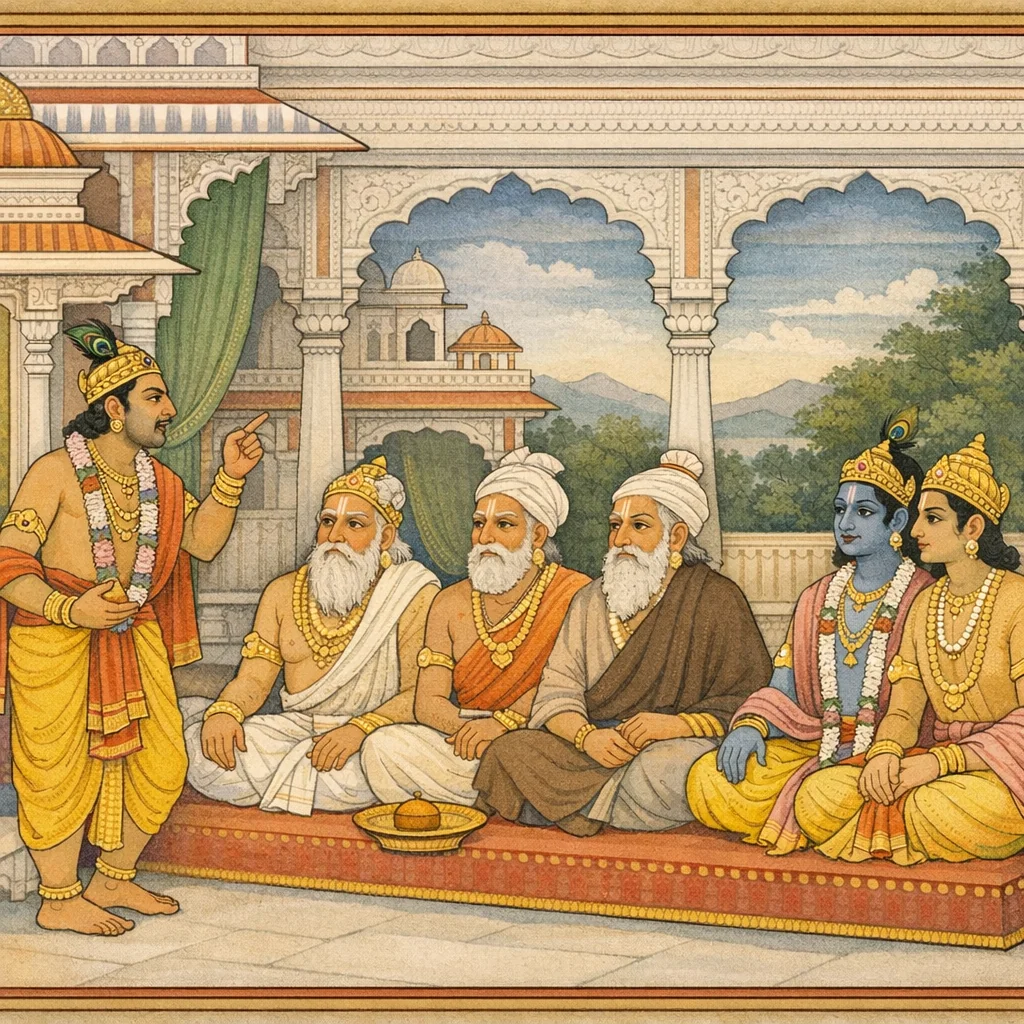
Adhyaya 3
Udyoga-parva Adhyāya 3 — Sātyaki on Inner Disposition, Legitimacy, and Coercive Readiness
Upa-parva: Udyoga Parva — Early Court Debates (Sātyaki’s Ethical-Strategic Discourse)
This chapter is a sustained speech attributed to Sātyaki that links moral psychology to political speech: a person speaks in accordance with the nature of the inner self (ātman/antarātman). He contrasts courageous and ignoble dispositions, using a lineage metaphor to note that the same family can produce both excellence and deficiency, as one tree bears fruitful and fruitless branches. He rejects fault-finding in the addressee’s words but criticizes those who accept or propagate blame against Dharmarāja (Yudhiṣṭhira) in public assembly. The argument then turns to legitimacy: victory in the dice match is framed as secured by expertise and manipulation against an opponent lacking comparable competence, and therefore not a dharma-grounded conquest. He asserts that if the Pāṇḍava had been defeated in a fair contest, the result would be morally defensible; since deceit (nikṛti) is alleged, the moral standing of the outcome collapses. The speech escalates into a strategic posture: if restitution is refused despite counsel from elders (Bhīṣma, Droṇa), coercion is presented as an enforceable remedy, with Sātyaki invoking the combined martial capacity of allies (Arjuna, Kṛṣṇa, Bhīma, the twins, Dhṛṣṭadyumna, Draupadī’s sons, Abhimanyu, and others). The chapter concludes by reframing the ethical calculus: harming declared aggressors is not treated as adharma, while petitioning enemies is depicted as disgraceful; the desired end-state is restoration of the kingdom to the Pāṇḍava, or mutual destruction in battle as the terminal alternative.
Chapter Arc: सात्यकि सभा में वाणी का धनुष चढ़ाते हैं—मनुष्य जैसा भीतर से होता है, वैसा ही बोलता है; और कौरवों की बातों में भीतर का भय व कपट झलकता है। → वे शूर और कापुरुष—दोनों प्रकार के पुरुषों का भेद रखकर कौरव-पक्ष की नीति पर चोट करते हैं: वनवास-काल पूर्ण कर लौटे पाण्डव न्याय से पैतृक राज्य के अधिकारी हैं, फिर भी भीष्म-द्रोण-विदुर के समझाने पर भी कौरव देने को तैयार नहीं। याचना को अपयश बताकर वे युद्ध की अनिवार्यता की ओर सभा को धकेलते हैं। → सात्यकि का गर्जन: यदि युधिष्ठिर के चरणों में गिरकर संधि न की गई तो कौरव अपने मंत्रियों सहित यमलोक को जाएंगे; और कौरव-सेना में कौन है जो जीवित रहने की इच्छा रखते हुए अर्जुन-गाण्डीव, चक्रधारी श्रीकृष्ण, धृष्टद्युम्न आदि का सामना कर सके? → वे निष्कर्ष रखते हैं कि आततायी शत्रुओं के सामने याचना अधर्म और अपयश है; अतः शत्रु-वध में पाप नहीं। लक्ष्य स्पष्ट: शकुनि सहित दुर्योधन और कर्ण का वध कर युधिष्ठिर का राज्याभिषेक। → सभा के भीतर संधि की अंतिम संभावना सिकुड़ती है—अब प्रश्न यह रह जाता है कि कौरव झुकेंगे या युद्ध का शंख अनिवार्य रूप से बजेगा।
Shlokas
Verse 1
अपन बछ। है २ >> तृतीयो<ध्याय: सात्यकिके वीरोचित उद्गार सात्यकिर॒ुवाच यादृश: पुरुषस्यात्मा तादृशं सम्प्रभाषते । यथारूपो<न्तरात्मा ते तथारूप॑ प्रभाषसे,सात्यकिने कहा--बलरामजी! मनुष्यका जैसा हृदय होता है, वैसी ही बात उसके मुखसे निकलती है। आपका भी जैसा अन्तःकरण है, वैसा ही आप भाषण दे रहे हैं
Sātyaki said: “As a man’s inner self is, so does he speak. Whatever the form of one’s inward mind, speech follows that form. So too, your words reflect exactly the nature of your own inner disposition.”
Verse 2
सन्ति वै पुरुषा: शूरा: सन्ति कापुरुषास्तथा । उभावेतौ दृढौ पक्षौ दृश्येते पुरुषान् प्रति
Vaiśampāyana said: “Indeed, there are men who are truly brave, and there are also men who are cowardly. These two firm dispositions—courage and cowardice—are seen among human beings.”
Verse 3
संसारमें शूरवीर पुरुष भी हैं और कापुरुष (कायर) भी। पुरुषोंमें ये दोनों पक्ष निश्चितरूपसे देखे जाते हैं ।। एकस्मिन्नेव जायेते कुले क्लीबमहाबलौ । फलाफलवती शाखे यथैकस्मिन् वनस्पतौ,जैसे एक ही वृक्षमें कोई शाखा फलवती होती है और कोई फलहीन। इसी प्रकार एक ही कुलमें दो प्रकारकी संतान उत्पन्न होती है, एक नपुंसक और दूसरी महान् बलशाली इति श्रीमहा भारते उद्योगपर्वणि सेनोद्योगपर्वणि सात्यकिक्रोधवाक्ये तृतीयो<5ध्याय:
Vaiśampāyana said: In the world, even within the same lineage, both the cowardly and the heroic are found. Just as on a single tree one branch bears fruit while another remains barren, so too in one and the same family two kinds of offspring may arise—one impotent in spirit and strength, and another endowed with great power. The verse underscores that birth alone does not guarantee virtue or valor; character and capability manifest diversely even among close kin.
Verse 4
नाभ्यसूयामि ते वाक्यं ब्रुवतो लाज़लध्वज | ये तु शृण्वन्ति ते वाक््यं तानसूयामि माधव,अपनी ध्वजामें हलका चिह्न धारण करनेवाले मधुकुलरत्न! आप जो कुछ कह रहे हैं, उसमें मैं दोष नहीं निकाल रहा हूँ, जो लोग आपकी बातें चुप-चाप सुन रहे हैं, उन्हींको मैं दोषी मानता हूँ
O Mādhava, whose banner bears the emblem of the plough, I find no fault in the words you speak. But those who listen to your speech in silence—those are the ones I condemn.
Verse 5
कथं हि धर्मराजस्य दोषमल्पमपि ब्रुवन् । लभते परिषन्मध्ये व्याहर्तुमकुतो भय:,भला, कोई भी मनुष्य भरी सभामें निर्भय होकर धर्मराज युधिष्ठिरपर थोड़ा-सा भी दोषारोपण करे, तो वह कैसे बोलनेका अवसर पा सकता है?
How could anyone, speaking even the slightest fault of Dharmarāja (Yudhiṣṭhira), obtain the chance to speak in the midst of the assembly—remaining fearless and unhesitating?
Verse 6
समाहूय महात्मानं जितवन्तो$क्षकोविदा: | अनक्षकज्ञं यथाश्रद्धं तेषु धर्मजय: कुत:,महात्मा युधिष्ठिर जूआ खेलना नहीं जानते थे, तो भी जूएके खेलमें निपुण धूर्तोने उन्हें अपने घर बुलाकर अपने विश्वासके अनुसार हराया अथवा जीता है। यह उनकी धर्मपूर्वक विजय कैसे कही जा सकती है?
Those skilled in dice summoned the great-souled one and, as they pleased, defeated a man who did not know the game. How, then, can their victory be called a victory in accordance with dharma?
Verse 7
यदि कुन्तीसुतं गेहे क्रीडन्तं भ्रातृभि: सह । अभिगम्य जयेयुस्ते तत् तेषां धर्मतो भवेत् । समाहूय तु राजानन क्षत्रधर्मरतं सदा,यदि भाइयोंसहित कुन्तीनन्दन युधिष्ठिर अपने घरपर जूआ खेलते होते और ये कौरव वहाँ जाकर उन्हें हरा देते, तो यह उनकी धर्मपूर्वक विजय कही जा सकती थी। परंतु उन्होंने सदा क्षत्रियधर्ममें तत्पर रहनेवाले राजा युधिष्ठिरको बुलाकर छल और कपटसे उन्हें पराजित किया है। क्या यही उनका परम कल्याणमय कर्म कहा जा सकता है? ये राजा युधिष्ठिर अपनी वनवासविषयक प्रतिज्ञा तो पूर्ण ही कर चुके हैं, अब किस लिये उनके आगे मस्तक झुकायें--क्यों प्रणाम अथवा विनय करें?
Vaiśaṃpāyana said: “If Kuntī’s son were playing dice at home with his brothers, and those men went there and defeated him, then their victory could be called righteous. But instead they summoned King Yudhiṣṭhira—ever devoted to the kṣatriya code—and overcame him by deceit and trickery.”
Verse 8
निकृत्या जितवन्तस्ते कि नु तेषां परं शुभम् । कथं प्रणिपतेच्चायमिह कृत्वा पणं परम्,यदि भाइयोंसहित कुन्तीनन्दन युधिष्ठिर अपने घरपर जूआ खेलते होते और ये कौरव वहाँ जाकर उन्हें हरा देते, तो यह उनकी धर्मपूर्वक विजय कही जा सकती थी। परंतु उन्होंने सदा क्षत्रियधर्ममें तत्पर रहनेवाले राजा युधिष्ठिरको बुलाकर छल और कपटसे उन्हें पराजित किया है। क्या यही उनका परम कल्याणमय कर्म कहा जा सकता है? ये राजा युधिष्ठिर अपनी वनवासविषयक प्रतिज्ञा तो पूर्ण ही कर चुके हैं, अब किस लिये उनके आगे मस्तक झुकायें--क्यों प्रणाम अथवा विनय करें?
Vaiśampāyana said: “They have won by deceit—what supreme good can possibly come to them from that? And how should this man here bow down, after having fulfilled the highest stake of the wager? If Yudhiṣṭhira, Kuntī’s son, had been defeated in a lawful game played in his own house, that might be called a righteous victory. But they summoned the ever-dharma-minded king and overcame him through trickery and fraud. Can such an act be called their highest welfare? And since King Yudhiṣṭhira has already completed his vow of exile, for what reason should he now lower his head in submission—why offer salutations or deference?”
Verse 9
वनवासाद् विमुक्तस्तु प्राप्त: पैतामहं पदम् । यद्ययं पापवित्तानि कामयेत युधिषछ्िर:
Released from the hardships of forest-exile, Yudhiṣṭhira has now attained the ancestral station of authority. Yet if he were to desire wealth gained through sinful means, it would be a grave moral reversal—casting doubt on the very righteousness that legitimizes his claim to rule.
Verse 10
एवमप्ययमत्यन्तं परान् नाहति याचितुम् । वनवासके बन्धनसे मुक्त होकर अब ये अपने बाप-दादोंके राज्यको पानेके न्यायतः अधिकारी हो गये हैं। यदि युधिष्ठिर अन्यायसे भी अपना धन, अपना राज्य लेनेकी इच्छा करें, तो भी अत्यन्त दीन बनकर शत्रुओंके सामने हाथ फैलाने या भीख माँगनेके योग्य नहीं हैं।। कथं च धर्मयुक्तास्ते न च राज्यं जिहीर्षव:
Vaiśaṃpāyana said: Even so, he cannot bring himself to beg from others. Having been released from the bondage of exile in the forest, they have now become rightful claimants, by justice, to the kingdom of their fathers and grandfathers. Even if Yudhiṣṭhira were to desire to take back his wealth and his realm by means that are not strictly fair, still they are not fit to become utterly abject—stretching out their hands before enemies or asking for alms. And how could they, being aligned with dharma, not seek their own kingdom?
Verse 11
अनुनीता हि भीष्मेण द्रोणेन विदुरेण च
Vaiśampāyana said: Indeed, she had been repeatedly entreated and counseled—by Bhīṣma, by Droṇa, and by Vidura as well—urging a course aligned with propriety and restraint.
Verse 12
अहं तु ताञ्छितैर्बाणैरनुनीय रणे बलात्
Vaiśampāyana said: “But I, by force in the midst of battle, subdued them with sharp-pointed arrows.” The line conveys the grim ethic of kṣatriya conflict: persuasion gives way to coercion when the battlefield demands decisive restraint of opponents.
Verse 13
पादयो: पातयिष्यामि कौन्तेयस्य महात्मन: । मैं तो रणभूमिमें पैने बाणोंसे उन्हें बलपूर्वक मनाकर महात्मा कुन्तीनन्दन युधिष्ठिरके चरणोंमें गिरा दूँगा ।। अथ ते न व्यवस्यन्ति प्रणिपाताय धीमत:
Vaiśaṃpāyana said: “I shall make him fall at the feet of the great-souled son of Kuntī. Yet those wise ones do not resolve to bow down in submission.”
Verse 14
गमिष्यन्ति सहामात्या यमस्य सदन प्रति । यदि वे परम बुद्धिमान् युधिष्ठिरके चरणोंमें गिरनेका निश्चय नहीं करेंगे, तो अपने मन्त्रियोंसहित उन्हें यमलोककी यात्रा करनी पड़ेगी || १३ है ।। न हि ते युयुधानस्य संरब्धस्य युयुत्सत:
Vaiśampāyana said: “They will go, along with their ministers, toward the abode of Yama. If those men—despite their great intelligence—do not resolve to fall at Yudhiṣṭhira’s feet in submission, then they will have to undertake the journey to Yama’s world with their counsellors. For they cannot withstand Yuyudhāna when he is enraged and eager to fight.”
Verse 15
को हि गाण्डीवधन्वानं कश्च चक्रायुधं युधि,को जिजीविषुरासादेद् धृष्टद्युम्नं च पार्षतम् कौरवदलमें ऐसा कौन है, जो जीवनकी इच्छा रखते हुए भी युद्धभूमिमें गाण्डीवधन्वा अर्जुन, चक्रधारी भगवान् श्रीकृष्ण, क्रोधमें भरे हुए मुझ सात्यकि, दुर्धर्ष वीर भीमसेन, यम और कालके समान तेजस्वी दृढ़ धनुर्धर नकुल-सहदेव, यम और कालको भी अपने तेजसे तिरस्कृत करनेवाले वीरवर विराट और ट्रुपदका तथा द्रुपदकुमार धृष्टद्युम्मका भी सामना कर सकता है?
Vaiśampāyana said: Who indeed, still wishing to live, would dare in battle to confront Arjuna, wielder of the Gāṇḍīva, and Kṛṣṇa, bearer of the discus-weapon—and also Dhṛṣṭadyumna, the son of Pṛṣata? The statement underscores the moral and strategic futility of provoking a war against warriors protected by prowess, righteous cause, and formidable allies.
Verse 16
मां चापि विषदह्ेेत् क्रुद्धं कश्न भीम॑ं दुरासदम् । यमौ च दृढ्धन्वानौ यमकालोपमसझ्युती । विराटद्रुपदौ वीरौ यमकालोपमद्युती
Vaiśampāyana said: “Even I—seeing this—might grow despondent; yet there is Bhīma, wrathful and unassailable. And the twin brothers (Nakula and Sahadeva), firm in the bow, endowed with power like Yama, Lord of Death. And the two heroes Virāṭa and Drupada, radiant with a splendor comparable to Yama and to Time.”
Verse 17
पज्चैतान् पाण्डवेयांस्तु द्रौपद्या: कीर्तिवर्धनान्
Vaiśampāyana said: “These five sons of the Pāṇḍavas—born of Draupadī—were enhancers of her fame.”
Verse 18
समप्रमाणान् पाण्डूनां समवीर्यान् मदोत्कटान् | सौभद्रंं च महेष्वासममरैरपि दुःसहम्
Vaiśampāyana said: “(They saw) the sons of Pāṇḍu—equal in stature, equal in prowess, and fierce in their proud ardor—and also Saubhadra, that great archer, formidable even to the immortals.”
Verse 19
गदप्रद्मुम्नसाम्बांश्न कालसूर्यानलोपमान् । द्रौपदीकी कीर्तिको बढ़ानेवाले ये पाँचों पाण्डव-कुमार अपने पिताके समान ही डील- डौलवाले, वैसे ही पराक्रमी तथा उन्हींके समान रणोन्मत्त शूरवीर हैं। महान् धनुर्धर सुभद्राकुमार अभिमन्युका वेग तो देवताओंके लिये भी दुःसह है, गद, प्रद्युम्म और साम्ब-- ये काल, सूर्य और अग्निके समान अजेय हैं--इन सबका सामना कौन कर सकता है? | १७-१८ ह || ते वयं धृतराष्ट्रस्य पुत्र शकुनिना सह
Vaiśampāyana said: “Gada, Pradyumna, and Sāmba—men comparable to Time, the Sun, and Fire—stand there, unconquerable. And those five sons of the Pāṇḍavas, enhancers of Draupadī’s fame, are built like their fathers, equal to them in prowess, and fierce heroes intoxicated with battle. Above all, Subhadrā’s son Abhimanyu is a great archer whose blazing speed and energy are hard even for the gods to endure. Who could possibly withstand all of these? Yet we—Dhṛtarāṣṭra’s sons—stand together with Śakuni.”
Verse 20
नाधर्मो विद्यते कश्चिच्छबत्रूनू हत्वा5डततायिन:
Vaiśampāyana said: “There is no unrighteousness at all in slaying enemies who are ‘ātatāyins’—violent aggressors who strike first and threaten life and order. In such a case, the act is framed as a defense of dharma rather than a breach of it.”
Verse 21
हद्गतस्तस्य य: कामस्तं कुरुध्वमतन्द्रिता:,अतः पाए्डुपुत्र युधिष्ठिरके मनमें जो अभिलाषा है, उसीकी आपलोग आलस्य छोड़कर सिद्धि करें। धृतराष्ट्र राज्य लौटा दें और पाण्डुपुत्र युधिष्ठिर उसे ग्रहण करें। अब पाण्डुनन्दन युधिष्ठिरको राज्य मिल जाना चाहिये, अन्यथा समस्त कौरव युद्धमें मारे जाकर रणभूमिमें सदाके लिये सो जायँगे
Vaiśampāyana said: “Whatever desire lies in his heart—fulfil it without negligence. Therefore, casting off sloth, accomplish the wish that dwells in the mind of Yudhiṣṭhira, Pāṇḍu’s son. Let Dhṛtarāṣṭra restore the kingdom, and let Yudhiṣṭhira, the son of Pāṇḍu, accept it. Now it is right that Yudhiṣṭhira, Pāṇḍu’s beloved son, should obtain the realm; otherwise all the Kauravas will be slain in war and lie upon the battlefield forever.”
Verse 22
निसृष्टं धृतराष्ट्रेण राज्यं प्राप्रोतु पाण्डव: । अद्य पाण्डुसुतो राज्यं लभतां वा युधिष्ठिर:,अतः पाए्डुपुत्र युधिष्ठिरके मनमें जो अभिलाषा है, उसीकी आपलोग आलस्य छोड़कर सिद्धि करें। धृतराष्ट्र राज्य लौटा दें और पाण्डुपुत्र युधिष्ठिर उसे ग्रहण करें। अब पाण्डुनन्दन युधिष्ठिरको राज्य मिल जाना चाहिये, अन्यथा समस्त कौरव युद्धमें मारे जाकर रणभूमिमें सदाके लिये सो जायँगे
Vaiśampāyana said: “Let the Pāṇḍava obtain the kingdom that has been released (restored) by Dhṛtarāṣṭra. Let Yudhiṣṭhira, the son of Pāṇḍu, receive the sovereignty today. For this is what ought to be: the rightful heir should be established in his due share; otherwise, the refusal to return what is just will drive the Kauravas toward ruin in war.”
Verse 23
निहता वा रणे सर्वे स्वप्स्यन्ति वसुधातले,अतः पाए्डुपुत्र युधिष्ठिरके मनमें जो अभिलाषा है, उसीकी आपलोग आलस्य छोड़कर सिद्धि करें। धृतराष्ट्र राज्य लौटा दें और पाण्डुपुत्र युधिष्ठिर उसे ग्रहण करें। अब पाण्डुनन्दन युधिष्ठिरको राज्य मिल जाना चाहिये, अन्यथा समस्त कौरव युद्धमें मारे जाकर रणभूमिमें सदाके लिये सो जायँगे
Vaiśampāyana said: “If all of them are slain in battle, they will lie asleep upon the earth. Therefore, whatever desire you hold in your mind for Pāṇḍu’s son Yudhiṣṭhira—cast off lethargy and bring it to fulfillment. Let Dhṛtarāṣṭra restore the kingdom, and let Pāṇḍu’s son Yudhiṣṭhira accept it. Now it is right that Yudhiṣṭhira, the joy of Pāṇḍu’s line, should obtain the realm; otherwise all the Kauravas will be killed in war and lie forever on the battlefield.”
Verse 106
निवृत्तवासान् कौन्तेयान् य आहुर्विदिता इति | कुन्तीके पुत्र वनवासकी अवधि पूरी करके जब लौटे हैं, तब कौरव यह कहने लगे हैं कि हमने तो इन्हें समय पूर्ण होनेसे पहले ही पहचान लिया है। ऐसी दशामें यह कैसे कहा जाय कि कौरव धर्ममें तत्पर हैं और पाण्डवोंके राज्यका अपहरण नहीं करना चाहते हैं
Vaiśampāyana said: “When the sons of Kuntī had returned after completing their term of exile, the Kauravas began to say, ‘We had recognized them even before the time was fully over.’ In such a situation, how can it be maintained that the Kauravas are devoted to dharma and do not wish to seize the Pāṇḍavas’ kingdom?”
Verse 116
न व्यवस्यन्ति पाण्डूनां प्रदातुं पैतृक वसु । वे भीष्म, द्रोण और विदुरके बहुत अनुनय-विनय करनेपर भी पाण्डवोंको उनका पैतृक धन वापस देनेका निश्चय अथवा प्रयास नहीं कर रहे हैं
Vaiśampāyana said: They do not resolve to return the Pāṇḍavas’ ancestral wealth. Even after much earnest entreaty and conciliatory counsel—by Bhīṣma, Droṇa, and Vidura—they neither form the decision nor make the effort to restore to the Pāṇḍavas what is rightfully theirs, revealing a willful refusal of justice that pushes the realm toward conflict.
Verse 146
वेगं समर्था: संसोढुं वज़स्येव महीधरा: । जैसे बड़े-बड़े पर्वत भी वज्गजका वेग सहन करनेमें समर्थ नहीं हैं, उसी प्रकार युद्धकी इच्छा रखनेवाले और क्रोधमें भरे हुए मुझ सात्यकिके प्रहार-वेगको सहन करनेकी सामर्थ्य उनमेंसे किसीमें भी नहीं है
Vaiśampāyana said: “Even great mountains cannot endure the onrush of a thunderbolt. In the same way, none among them—though eager for battle and swollen with anger—has the strength to withstand the force of my blows (Sātyaki’s).”
Verse 166
को जिजीविषुरासादेद् धृष्टद्युम्नं च पार्षतम् कौरवदलमें ऐसा कौन है, जो जीवनकी इच्छा रखते हुए भी युद्धभूमिमें गाण्डीवधन्वा अर्जुन, चक्रधारी भगवान् श्रीकृष्ण, क्रोधमें भरे हुए मुझ सात्यकि, दुर्धर्ष वीर भीमसेन, यम और कालके समान तेजस्वी दृढ़ धनुर्धर नकुल-सहदेव, यम और कालको भी अपने तेजसे तिरस्कृत करनेवाले वीरवर विराट और ट्रुपदका तथा द्रुपदकुमार धृष्टद्युम्मका भी सामना कर सकता है?
Vaiśampāyana said: “In the Kaurava host, who—still desiring to live—would dare to meet Dhṛṣṭadyumna, the son of Pṛṣat, upon the field? And who could stand against Arjuna, bearer of Gāṇḍīva; Bhagavān Śrī Kṛṣṇa, wielder of the discus; me, Sātyaki, filled with wrath; the indomitable Bhīmasena; Nakula and Sahadeva, steadfast bowmen blazing like Yama and Kāla; the heroes Virāṭa and Drupada, whose tejas eclipses even Yama and Kāla; and Dhṛṣṭadyumna, son of Drupada?”
Verse 196
कर्ण चैव निहत्याजावभिषेक्ष्याम पाण्डवम् | हमलोग शकुनिसहित धृतराष्ट्रपुत्र दुर्योधनको तथा कर्णको भी युद्धमें मारकर पाण्डुनन्दन युधिष्ठिरका राज्याभिषेक करेंगे
Vaiśampāyana said: “After slaying Karṇa in battle, we shall consecrate the Pāṇḍava. Having also killed Duryodhana, the son of Dhṛtarāṣṭra, together with Śakuni—and Karṇa as well—in the war, we shall install Yudhiṣṭhira, the beloved son of Pāṇḍu, upon the throne.”
Verse 203
अधर्म्यमयशस्यं च शात्रवाणां प्रयाचनम् । आततायी शत्रुओंका वध करनेमें कोई पाप नहीं शत्रुओंके सामने याचना करना ही अधर्म और अपयशकी बात है
Vaiśampāyana said: “To beg or sue for peace from one’s enemies is both unrighteous and disgraceful. When the foe is an ātatāyin—an aggressor who attacks without restraint—there is no moral fault in slaying such enemies; it is the act of pleading before them that becomes adharma and brings dishonor.”
Frequently Asked Questions
The dilemma is whether to treat a formally concluded but allegedly manipulated contest (the dice game) as binding, or to prioritize substantive justice—restoring rightful sovereignty—even if that requires coercive action after failed counsel and negotiation.
Speech and judgment are presented as expressions of inner disposition; ethical evaluation must examine the integrity of means. A public claim gains authority when grounded in fairness and communal standards of dharma rather than in technical victory alone.
No explicit phalaśruti is stated. The chapter functions as justificatory meta-discourse: it records the rationale by which later actions are framed as dharma-consistent within the epic’s broader moral accounting.