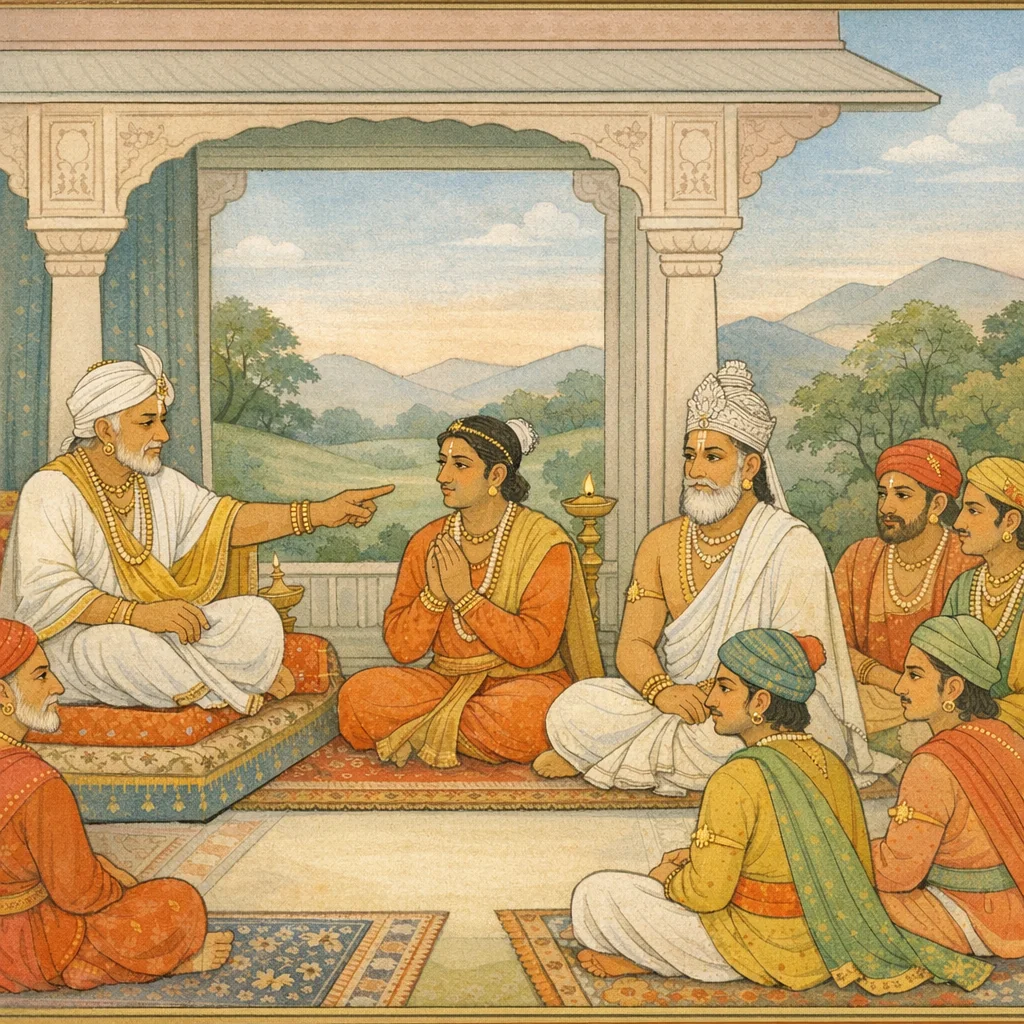
Adhyaya 21
Udyoga Parva 21 — Bhīṣma’s Conciliatory Counsel, Karṇa’s Rebuttal, and Dhṛtarāṣṭra Sends Sañjaya (भीष्म-कर्ण-विवादः; संजय-प्रेषणम्)
Upa-parva: Dūtavākyāni (Embassy Discourses) — Kuru-sabhā deliberations preceding Sañjaya’s mission
Vaiśaṃpāyana reports Bhīṣma’s response to prior remarks in the Kuru assembly. Bhīṣma begins with auspicious acknowledgment of the Pāṇḍavas’ welfare and their orientation toward dharma, emphasizing their preference for settlement over conflict. He affirms that the Pāṇḍavas have endured hardship yet remain entitled to their paternal inheritance by lawful principle. Bhīṣma then underscores Arjuna’s martial capacity, presenting a deterrence argument: an engagement against Dhanaṃjaya is strategically imprudent. Karṇa interrupts with a sharper counter-position, rejecting repeated cautions and reframing the dispute through the dice-game precedent and the exile term; he implies that the Pāṇḍavas’ claims are procedurally barred and that reliance on allies (Matsya and Pāñcāla) should not compel concessions. Bhīṣma rebukes Karṇa by recalling Arjuna’s demonstrated prowess and warns of likely defeat if prudent counsel is ignored. Dhṛtarāṣṭra then endorses Bhīṣma’s statement as beneficial for the Kurus and for broader stability, and resolves to send Sañjaya as envoy to the Pāṇḍavas, formally commissioning him in the assembly.
Chapter Arc: हस्तिनापुर की सभा में बीते तेरह वर्षों (बारह वर्ष वनवास + एक वर्ष अज्ञातवास) की गणना और उसके धर्मसम्मत पूर्ण होने का स्मरण होते ही प्रश्न उठता है—अब राज्य किसका, और शान्ति किसकी? → धृतराष्ट्र के निकट यह समाचार और विचार गूँजते हैं कि पाण्डव क्लेश सहकर भी धर्मतः पिता का धन पाने के अधिकारी हैं; साथ ही यह भी कि वे संधि चाहते हैं, युद्ध नहीं। परन्तु दुर्योधन-शकुनि की पुरानी कूटनीति (जुए द्वारा वनवास) स्मृति बनकर सभा में अविश्वास और भय बढ़ाती है। → सभा के बीच धृतराष्ट्र संजय को बुलाकर निर्णायक वाक्य कहता है—पाण्डवों के पास दूत बनाकर जाओ; उनके भाव, संधि की शर्तें और युद्ध की सम्भावना का सत्य लौटाकर लाओ। → ब्राह्मणों/पुरोहितों का सत्कार कर उन्हें पाण्डवों की ओर विदा करने के बाद, धृतराष्ट्र राजकीय स्तर पर संवाद का मार्ग चुनता है और संजय-यान की तैयारी करता है—कम से कम औपचारिक रूप से शान्ति का द्वार खुला रहता है। → संजय का प्रस्थान तय है; अब प्रश्न यह है कि पाण्डव क्या उत्तर देंगे—और क्या हस्तिनापुर उस उत्तर को स्वीकार करेगा?
Shlokas
Verse 1
नीपस्न्नगा हज न्ि््श्िन्य्य - बारह वर्षका वनवास एवं एक वर्षका अज्ञातवास दोनों मिलाकर तेरह वर्ष समझने चाहिये। > यहाँ अनेक रूपधारी शब्दका यह तात्पर्य है कि अर्जुन इतने वेगसे युद्ध करते थे कि वे रणभूमिमें अनेक-से दिखायी देते थे। द्रोणपर्वके ८९ वें अध्यायमें युद्धके प्रसंगमें ऐसा वर्णन भी मिलता है-- अयं पार्थ: कुतः पार्थ एष पार्थ इति प्रभो । तव सैन्येषु योधानां पार्थभूतमिवाभवत् ।। अन्योन्यमपि चाजघ्नुरात्मानमपि चापरे । पार्थभूतममन्यन्त जगत् कालेन मोहिता: ।। महाराज! आपके सैनिकोंको सब ओर अर्जुन-ही-अर्जुन दिखायी देते थे। वे बार-बार “अर्जुन यह है, अर्जुन कहाँ है? अर्जुन वह खड़ा है” इस प्रकार चिल्ला उठते थे। इस भ्रममें पड़कर उनमेंसे कोई-कोई तो आपसमें और कोई अपनेपर ही प्रहार कर बैठते थे। उस समय कालके वशीभूत हो वे सारे संसारको अर्जुनमय ही देखने लगे थे। एकविशो< ध्याय: भीष्मके द्वारा द्रुपदके पुरोहितकी बातका समर्थन करते हुए अर्जुनकी प्रशंसा करना, इसके विरुद्ध कर्णके आक्षेपपूर्ण वचन तथा धुृतराष्ट्रद्वारा भीष्मकी बातका समर्थन करते हुए दूतको सम्मानित करके विदा करना वैशम्पायन उवाच तस्य तद् वचन श्रुत्वा प्रज्ञावृद्धों महाद्युति: । सम्पूज्यैनं यथाकालं भीष्मो वचनमबत्रवीत्,वैशम्पायनजी कहते हैं--जनमेजय! पुरोहितकी यह बात सुनकर बुद्धिमें बढ़े-चढ़े महातेजस्वी भीष्मने समयके अनुरूप उनकी पूजा करके इस प्रकार कहा-- अ-४#--कात द्ाविशोद्ध्याय: धृतराष्ट्रका संजयसे पाण्डवोंके प्रभाव और प्रतिभाका वर्णन करते हुए उसे संदेश देकर पाण्डवोंके पास भेजना धृतराष्ट्र रवाच प्राप्तानाहु: संजय पाण्डुपुत्रा- नुपप्लव्ये तान् विजानीहि गत्वा । अजातशत्रुं च सभाजयेथा दिष्ट्या55नहा स्थानमुपस्थितस्त्वम्
Vaiśampāyana said: Hearing those words, the illustrious Bhīṣma—renowned for his ripened wisdom—honoured him as befitted the occasion and then spoke in reply.
Verse 2
दिष्ट्या कुशलिन: सर्वे सह दामोदरेण ते । दिष्ट्या सहायवन्तश्न दिष्ट्या धर्मे च ते रता:,“ब्रह्म! सब पाण्डव भगवान् श्रीकृष्णके साथ सकुशल हैं, यह सौभाग्यकी बात है। उनके बहुत-से सहायक हैं और वे धर्ममें भी तत्पर हैं, यह और भी सौभाग्य तथा हर्षका विषय है
Vaiśampāyana said: “It is indeed fortunate that all of them are safe and well, together with Dāmodara (Śrī Kṛṣṇa). Fortunate too that they have many supporters; and fortunate—bringing still greater joy—that they are devoted to dharma.”
Verse 3
दिष्ट्या च संधिकामास्ते भ्रातर: कुरुनन्दना: । दिष्ट्या न युद्धमनस: पाण्डवा: सह बान्धवै:,“कुरुकुलको आनन्दित करनेवाले पाँचों भाई पाण्डव सन्धिकी इच्छा रखते हैं, यह सौभाग्यका विषय है। वे अपने बन्धु-बान्धवोंके साथ युद्धमें मन नहीं लगा रहे हैं, यह भी सौभाग्यकी बात है
Fortunate it is that the Pāṇḍava brothers, delight of the Kuru line, desire reconciliation. Fortunate too that, together with their kinsmen, they do not set their hearts upon war.
Verse 4
भवता सत्यमुक्तं तु सर्वमेतन्न संशय: । अतितीक्षणं तु ते वाक्यं ब्राह्मण्यादिति मे मति:,“आपने जितनी बातें कही हैं, वे सब सत्य है; इसमें संशय नहीं है। परंतु आपकी बातें बड़ी तीखी हैं। यह तीक्ष्णता ब्राह्मण-स्वभावके कारण ही है, ऐसा मुझे प्रतीत होता है
All that you have spoken is true—there is no doubt of it. Yet your words are exceedingly sharp. In my view, this very sharpness arises from your Brahmin nature.
Verse 5
असंशयं क्लेशितास्ते वने चेह च पाण्डवा: । प्राप्ताश्न धर्मतः सर्व पितुर्धनमसंशयम्,“निस्संदेह पाण्डवोंको वनमें और यहाँ भी कष्ट उठाना पड़ा है। उन्हें धर्मतः अपनी सारी पैतृक सम्पत्ति पानेका अधिकार प्राप्त हो चुका है; इसमें भी कोई संशय नहीं है
Vaiśampāyana said: “Without doubt, the Pāṇḍavas have been made to suffer—both in the forest and here as well. By the rule of dharma, they have unquestionably obtained the rightful claim to their entire paternal inheritance.”
Verse 6
किरीटी बलवान पार्थ: कृतास्त्रश्न महारथ: । को हि पाण्डुसुतं युद्धे विषहेत धनंजयम्,“कुन्तीपुत्र किरीटधारी महारथी अर्जुन बलवान् तथा अस्त्रविद्यामें निपुण हैं। कौन ऐसा वीर है, जो युद्धमें पाण्डुपुत्र अर्जुनका वेग सह सके?
Vaiśampāyana said: “Arjuna—crowned with the diadem, mighty, fully trained in the use of weapons, and a great chariot-warrior—who indeed could endure Dhanañjaya, the son of Pāṇḍu, in battle?”
Verse 7
अपि वज्रधर: साक्षात् किमुतान्ये धनुर्भुतः । त्रयाणामपि लोकानां समर्थ इति मे मति:,'साक्षात् वज्रधारी इन्द्र भी युद्धमें उनका सामना नहीं कर सकते; फिर दूसरे धनुर्धरोंकी बात ही क्या है? मेरा तो ऐसा विश्वास है कि अर्जुन तीनों लोकोंका सामना करनेमें समर्थ हैं!
“Even Indra himself, wielder of the vajra, could not face him in war—how much less other bowmen? It is my conviction that Arjuna is able to confront the three worlds.”
Verse 8
भीष्मे ब्रुवति तद् वाक्य धृष्टमाक्षिप्य मन्युना । दुर्योधनं समालोक्य कर्णो वचनमब्रवीत्,भीष्मजी इस प्रकार कह ही रहे थे कि कर्णने दुर्योधनकी ओर देखकर क्रोधसे धृष्टतापूर्वक आक्षेप करते हुए (भीष्मजीके कथनकी अवहेलना करके) यह बात कही --[
As Bhīṣma was still speaking those words, Karṇa—stung by anger—boldly interrupted with a sharp retort. Casting his gaze upon Duryodhana, he spoke in a manner that disregarded Bhīṣma’s counsel, signaling a willful turn away from restraint and toward confrontation.
Verse 9
६... न तत्राविदितं ब्रहाँल्लोके भूतेन केनचित् । पुनरुक्तेन कि तेन भाषितेन पुनः पुनः,“ब्रह्मन] इस लोकमें जो घटना बीत चुकी है, वह किसीको अज्ञात नहीं है, उसको दोहरानेसे या बारंबार उसपर भाषण देनेसे क्या लाभ है?
Vaiśampāyana said: “O Brāhmaṇa, in that world there is nothing about what has already occurred that is unknown to anyone. What purpose is served by repeating it, or by speaking of it again and again?”
Verse 10
दुर्योधनार्थे शकुनिर्ययूते निर्जितवान् पुरा । समयेन गतो<रण्यं पाण्डुपुत्रो युधिष्ठिर:,“पहलेकी बात है, शकुनिने दुर्योधनके लिये पाण्डुपुत्र युधिष्ठिरको द्यूत-क्रीड़ामें परास्त किया था और वे उस जूएकी शर्तके अनुसार वनमें गये थे
Vaiśampāyana said: Formerly, for Duryodhana’s sake, Śakuni won the dice-game by deceit and defeated Yudhiṣṭhira, the son of Pāṇḍu. Bound by the agreed condition of that wager, Yudhiṣṭhira then went to the forest—showing how a wrongful act can still compel the righteous to uphold a pledged word, even at great personal cost.
Verse 11
स तं समयम॒श्रित्य राज्यं नेच्छति पैतृकम् । बलमाश्रित्य मत्स्यानां पज्चालानां च मूर्खवत्,'युधिष्ठिर उस शर्तका पालन करके अपना पैतृक राज्य चाहते हों, ऐसी बात नहीं है। वे तो मूर्खोकी भाँति मत्स्य और पांचाल देशकी सेनाके भरोसे राज्य लेना चाहते हैं
Vaiśampāyana said: “Relying on that stipulated agreement, he does not truly seek his ancestral kingdom. Rather, like a fool, he aims to seize sovereignty by leaning on the military strength of the Matsyas and the Pāñcālas.”
Verse 12
दुर्योधनो भयाद् विद्वन् न दद्यात् पादमन्तत: । धर्मतस्तु महीं कृत्स्नां प्रदद्याच्छत्रवेडषपि च,“विद्वन! दुर्योधन किसीके भयसे अपने राज्यका आधा कौन कहे चौथाई भाग भी नहीं देंगे; परंतु धर्मानुसार तो वे शत्रुको भी समूची पृथ्वीतक दे सकते हैं
Vaiśampāyana said: “O learned one, out of fear Duryodhana would not give even a quarter—indeed, not even a foot’s breadth—of the kingdom. Yet, if he were to act according to dharma, he could even grant the entire earth, even to an enemy.”
Verse 13
यदि काडुश्षन्ति ते राज्यं पितृपैतामहं पुन: । यथाप्रतिज्ञं काल॑ तं चरन्तु वनमाश्रिता:,“यदि पाण्डव अपने बाप-दादोंका राज्य लेना चाहते हैं तो पूर्व-प्रतिज्ञाके अनुसार उतने समयतक पुनः वनमें निवास करें
Vaiśampāyana said: “If they (the Pāṇḍavas) desire to obtain again the ancestral kingdom inherited from their father and forefathers, then—true to the pledge previously made—let them dwell in the forest for that very period of time.”
Verse 14
ततो दुर्योधनस्याड्के वर्तन्तामकुतो भया: । अधार्मिकीं तु मा बुद्धि मौख्यात् कुर्वन्तु केवलात्,“तत्पश्चात् वे दुर्योधनके आश्रयमें निर्भय होकर रह सकते हैं। केवल मूर्खतावश वे अपनी बुद्धिको अधर्मपरायण न बनावें
Then, let them remain in Duryodhana’s protection, free from fear on every side. But let them not, out of sheer folly, turn their understanding toward unrighteousness—choosing adharma merely through thoughtless stupidity.
Verse 15
अथ ते धर्ममुत्सृज्य युद्धमिच्छन्ति पाण्डवा: । आसट्येमान् कुरुश्रेष्ठान् स्मरिष्यन्ति वचो मम
Vaiśampāyana said: “If the Pāṇḍavas, setting aside the path of dharma, come to desire war, then these foremost of the Kurus—having acted untruthfully—will remember my words.”
Verse 16
“यदि पाण्डव धर्मको त्यागकर युद्ध ही करना चाहते हैं तो इन कुरुश्रेष्ठ वीरोंसे भिड़नेपर मेरी बात याद करेंगे” ।। भीष्म उवाच कि नु राधेय वाचा ते कर्म तत् स्मर्तुमहसि । एक एव यदा पार्थ: षड्रथाञ्जितवान् युधि,भीष्मजी बोले--राधानन्दन! तू जो इस प्रकार बढ़-बढ़कर बातें बनाता है, इससे क्या होगा? तुझे पार्थका वह पराक्रम याद करना चाहिये, जब कि विराटनगरके युद्धमें उन्होंने अकेले ही सम्पूर्ण सेनासहित छ: अतिरथियोंकोी जीत लिया था
Bhishma said: “O son of Radha (Karna), what will be gained by your boastful words? You ought to remember that deed of Partha (Arjuna): how, in battle, he alone defeated six great chariot-warriors.”
Verse 17
बहुशो जीयमानस्य कर्म दृष्टं तदैव ते । न चेदेवं करिष्यामो यदयं ब्राह्मणो5ब्रवीत् । ध्रुवं युधि हतास्तेन भक्षयिष्याम पांसुकान्,तेरा पराक्रम तो उसी समय देखा गया था, जब कि अनेक बार उनके सामने जाकर तुझे परास्त होना पड़ा। इन ब्राह्मणदेवताने जो कुछ कहा है, यदि हमलोग तदनुसार कार्य नहीं करेंगे तो यह निश्चय है कि युद्धमें पाण्डुनन्दन अर्जुनके हाथसे आहत होकर हमें धूल खानी पड़ेगी
Bhīṣma said: “Your prowess was seen at that very time—when, again and again, you were forced to retreat after being defeated in his presence. If we do not act in accordance with what this brahman has declared, then it is certain that, struck down by him in battle, we shall be made to eat dust.”
Verse 18
वैशम्पायन उवाच धृतराष्ट्रस्ततो भीष्ममनुमान्य प्रसाद्य च | अवभर्त्स्य च राधेयमिदं वचनमत्रवीत्,वैशम्पायनजी कहते हैं--जनमेजय! तदनन्तर धुृतराष्ट्रने कर्णको डाँटकर भीष्मजीका सम्मान किया और उन्हें राजी करके इस प्रकार कहा--
Vaiśampāyana said: Then Dhṛtarāṣṭra, having shown due regard to Bhīṣma and having conciliated him, proceeded to rebuke Rādheya (Karna) and spoke these words.
Verse 19
अस्मद्धितं वाक्यमिदं भीष्म: शान्तनवोडब्रवीत् | पाण्डवानां हित॑ चैव सर्वस्य जगतस्तथा,'शान्तनुनन्दन भीष्मने हमारे लिये यह हितकर बात कही है। इसमें पाण्डवोंका तथा सम्पूर्ण जगत्का भी हित है
Vaiśampāyana said: “This counsel, spoken by Bhīṣma, the son of Śāntanu, is beneficial to us. Indeed, it is also for the welfare of the Pāṇḍavas—and likewise for the good of the whole world.”
Verse 20
इस प्रकार श्रीमहाभारत उद्योगपर्वके अन्तर्गत संजययानपर्वमें पुरोहितका यात्राविषयक बीसवाँ अध्याय पूरा हुआ,चिन्तयित्वा तु पार्थेभ्य: प्रेषयिष्यामि संजयम् । स भवान् प्रति यात्वद्य पाण्डवानेव मा चिरम् “ब्रह्म! अब मैं कुछ सोच-विचारकर पाण्डवोंके पास संजयको भेजूँगा। आप पुनः पाण्डवोंके पास ही पधारें, विलम्ब न करें”
Vaiśampāyana said: “After due reflection, I shall dispatch Sañjaya to the sons of Pṛthā. As for you, revered one, return today to the Pāṇḍavas themselves—do not delay.”
Verse 21
स तं सत्कृत्य कौरव्य: प्रेषयामास पाण्डवान् । सभामध्ये समाहूय संजयं वाक्यमब्रवीत्,तदनन्तर राजा धृतराष्ट्रने उन ब्राह्मणका सत्कार करके उन्हें पाण्डवोंके पास वापस भेजा और सभामें संजयको बुलाकर यह बात कही
Vaiśampāyana said: Having duly honored him, the Kuru king sent him back to the Pāṇḍavas. Then, in the midst of the royal assembly, he summoned Sañjaya and spoke to him.
Frequently Asked Questions
Whether the Kurus should prioritize lawful restitution and social stability (acknowledging the Pāṇḍavas’ inheritance-right) or enforce a strict procedural reading of the dice-game and exile terms to deny concessions despite foreseeable harm.
Governance requires disciplined speech and prudent risk appraisal: counsel should integrate dharma (justice and legitimacy) with realistic assessment of capacity and consequences, rather than relying on pride or selective precedent.
No explicit phalaśruti appears here; the chapter’s meta-function is archival and procedural—showing how sabhā counsel and envoy dispatch operate as the epic’s mechanism for testing dharmic settlement before escalation.