Adhyaya 192
Śikhaṇḍinī’s Disclosure, Drupada’s Counsel, and the Petition to Yakṣa Sthūṇākarṇa (Udyoga Parva 192)
Upa-parva: Śikhaṇḍinī–Sthūṇākarṇa (Yakṣa) Episode (Udyoga Parva, Bhīṣma-vacana context)
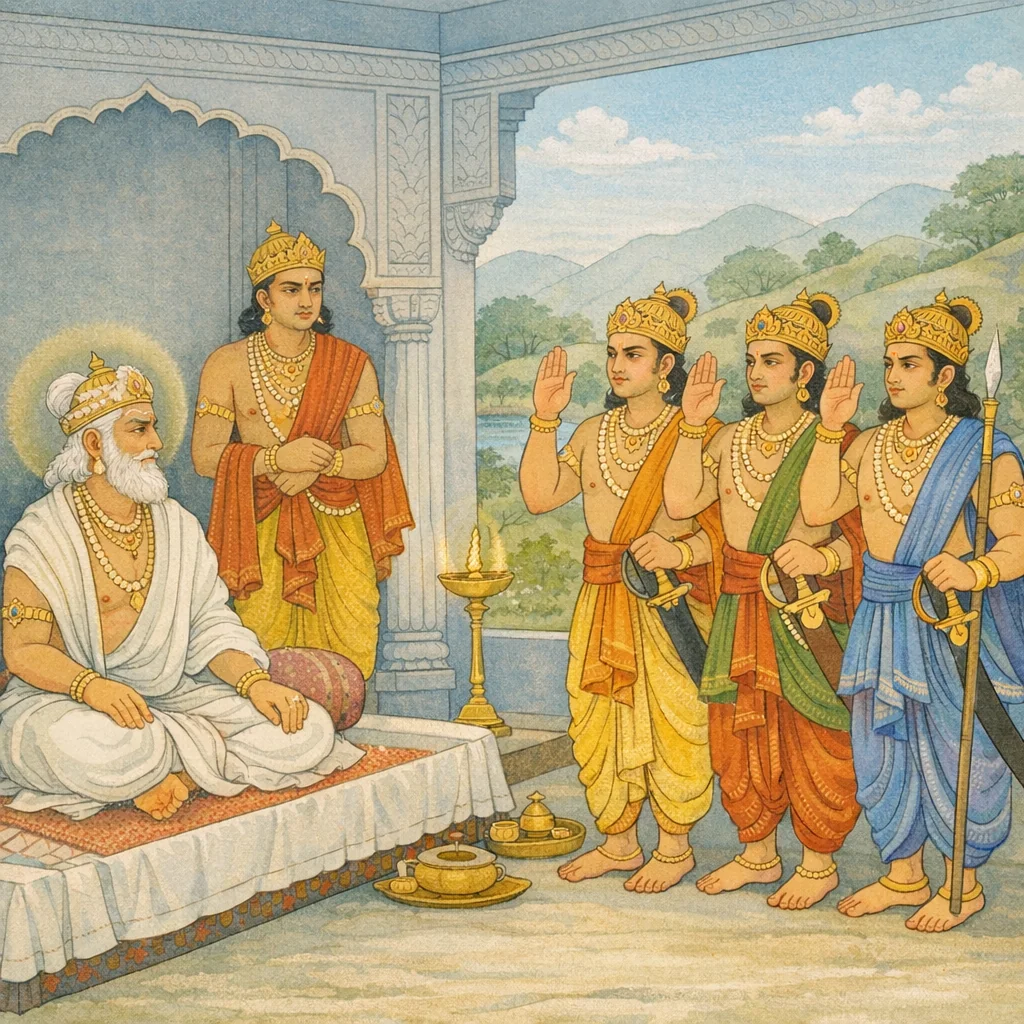
Bhīṣma recounts how Śikhaṇḍinī’s mother discloses the factual circumstances of Śikhaṇḍinī’s birth: due to fear of co-wives and the absence of a son, a daughter was presented as male, a decision earlier accepted in light of a prophetic assurance that she would later become male. Drupada, informed of the full situation, consults advisers on measures appropriate to protecting subjects and preventing civic harm. He attempts to stabilize the marital alliance with Daśārṇa while preparing defensive arrangements and seeking non-violent exit from the looming confrontation. The queen recommends intensified worship, offerings, and strategic reliance on divine favor alongside ministerial planning, arguing that success arises when human effort is paired with auspicious support. Observing her parents’ distress, Śikhaṇḍinī resolves to end the crisis at personal cost and departs for a remote forest feared by the public, guarded by the affluent yakṣa Sthūṇākarṇa. Entering his well-protected dwelling, she undertakes prolonged fasting. The yakṣa appears, offers boons as Kubera’s attendant, and invites her request; Śikhaṇḍinī explains the imminent attack by the powerful Daśārṇa king and petitions protection and the promised transformation into male form—at least until danger passes—so that political retaliation may be averted.
Chapter Arc: दुर्योधन, पाण्डव-सेना की अपारता और सज्जता देखकर भीष्म से पूछता है—यह ‘सेनासागर’ क्या सचमुच जीता जा सकता है? → भीष्म पाण्डवों की सेना का विराट वर्णन करते हैं—भीम-अर्जुन जैसे महाधनुर्धर, धृष्टद्युम्न के नेतृत्व में, लोकपाल-तुल्य रक्षकों से सुरक्षित; यह सेना सागर की तरह अजेय-सी प्रतीत होती है। दुर्योधन की चिंता बढ़ती है और वह आचार्यों से ‘कब और कैसे’ संहार सम्भव है, यह जानना चाहता है। → द्रोण, कृप, अश्वत्थामा और कर्ण—एक-एक कर अपनी-अपनी ‘समय-सीमा’ बताते हैं कि वे कितने दिनों/मासों में पाण्डव-सेना का क्षय कर सकते हैं; कर्ण का गर्वोक्त ‘पाँच दिन’ और उस पर वासुदेव-युक्त रथ में अर्जुन के सामने आने की चुनौती—सभा में वाणी-युद्ध को शिखर पर ले जाती है। → वृद्ध भीष्म भी प्रतिज्ञा-सा करते हैं कि क्षीण प्राणशक्ति के बावजूद अपने शस्त्राग्नि से पाण्डव-वाहिनी को भस्म कर देंगे; पर यह सब ‘आकलन’ और ‘अहंकार’ के रूप में रह जाता है—युद्ध अभी आरम्भ नहीं, केवल मनोबल की माप-तौल है। → कर्ण की डींग और अर्जुन-वासुदेव की जोड़ी का संकेत—आगामी महायुद्ध में निर्णायक टकराव की छाया डाल देता है।
Shlokas
Verse 1
[दाक्षिणात्य अधिक पाठका ह “लोक मिलाकर कुल ७० ६ “लोक हैं।] नशा (0) आज अत न त्रिनवर्त्याधिकशततमोब<् ध्याय: दुर्योधनके पूछनेपर भीष्म आदिके द्वारा अपनी-अपनी शक्तिका वर्णन संजय उवाच प्रभातायां तु शर्वर्या पुनरेव सुतस्तव । मध्ये सर्वस्य सैन्यस्थ पितामहमपृच्छत,संजय कहते हैं--राजन्! जब रात बीती और प्रभात हुआ, उस समय आपके पुत्र दुर्योधनने सारी सेनाके बीचमें पुनः पितामह भीष्मसे पूछा--
Sañjaya said: “O King, when the night had passed and dawn had come, your son Duryodhana, standing amid the whole army, once again questioned the grandsire Bhīṣma—”
Verse 2
पाण्डवेयस्य गाज़ेय यदेतत् सैन्यमुद्यतम् । प्रभूतनरनागाश्चं महारथसमाकुलम्,“गंगानन्दन! यह जो पाण्डवोंकी सेना युद्धके लिये उद्यत है। इसमें बहुत-से पैदल, हाथीसवार और घुड़सवार भरे हुए हैं। यह सेना बड़े-बड़े महारथियों एवं उनके विशाल रथोंसे व्याप्त है। लोकपालोंके समान महापराक्रमी एवं महाधनुर्धर भीमसेन, अर्जुन और धृष्टद्युम्न आदि वीर इस सेनाकी रक्षा करते हैं। यह उछलती हुई तरंगोंसे युक्त समुद्रकी भाँति दुर्धर्ष प्रतीत होती है। इसे आगे बढ़नेसे रोकना असम्भव है तथा बड़े-बड़े देवता भी इस महान् युद्धमें इस सैन्य-समुद्रको क्षुब्ध नहीं कर सकते
Sañjaya said: “O Gāṅgeya, this Pāṇḍava army, ready for battle, is vast—filled with multitudes of foot-soldiers, elephants, and horses, and crowded with great chariot-warriors. It appears a formidable force, hard to withstand.”
Verse 3
भीमार्जुनप्र भृतिभिममहेष्वासैर्महाबलै: । लोकपालसमैर्गुप्तं घृष्टद्युम्नपुरोगमै:,“गंगानन्दन! यह जो पाण्डवोंकी सेना युद्धके लिये उद्यत है। इसमें बहुत-से पैदल, हाथीसवार और घुड़सवार भरे हुए हैं। यह सेना बड़े-बड़े महारथियों एवं उनके विशाल रथोंसे व्याप्त है। लोकपालोंके समान महापराक्रमी एवं महाधनुर्धर भीमसेन, अर्जुन और धृष्टद्युम्न आदि वीर इस सेनाकी रक्षा करते हैं। यह उछलती हुई तरंगोंसे युक्त समुद्रकी भाँति दुर्धर्ष प्रतीत होती है। इसे आगे बढ़नेसे रोकना असम्भव है तथा बड़े-बड़े देवता भी इस महान् युद्धमें इस सैन्य-समुद्रको क्षुब्ध नहीं कर सकते
Sañjaya said: “That Pāṇḍava host is guarded by mighty, great bowmen—Bhīma and Arjuna foremost—and Dhṛṣṭadyumna leads in the van. Protected by heroes equal to the Lokapālas, it stands firm and formidable.”
Verse 4
अप्रधृष्यमनावार्यमुद्धूतमिव सागरम् । सेनासागरमक्षोभ्यमपि देवैर्महाहवे,“गंगानन्दन! यह जो पाण्डवोंकी सेना युद्धके लिये उद्यत है। इसमें बहुत-से पैदल, हाथीसवार और घुड़सवार भरे हुए हैं। यह सेना बड़े-बड़े महारथियों एवं उनके विशाल रथोंसे व्याप्त है। लोकपालोंके समान महापराक्रमी एवं महाधनुर्धर भीमसेन, अर्जुन और धृष्टद्युम्न आदि वीर इस सेनाकी रक्षा करते हैं। यह उछलती हुई तरंगोंसे युक्त समुद्रकी भाँति दुर्धर्ष प्रतीत होती है। इसे आगे बढ़नेसे रोकना असम्भव है तथा बड़े-बड़े देवता भी इस महान् युद्धमें इस सैन्य-समुद्रको क्षुब्ध नहीं कर सकते
Sañjaya said: “O son of Gaṅgā, the Pāṇḍavas’ host—like a surging ocean—is unassailable and impossible to restrain. It is a very sea of armies, crowded with footmen, elephant-riders, and horsemen, and spread over with great mahārathas and their vast chariots. Heroes such as Bhīmasena, Arjuna, and Dhṛṣṭadyumna—mighty as the Lokapālas and supreme bowmen—guard it. Like the sea with leaping waves it appears hard to face; and in this great war even the gods could not churn that ocean of troops into confusion.”
Verse 5
केन कालेन गाड़्ेय क्षपयेथा महाद्युते । आचार्यो वा महेष्वास: कृपो वा सुमहाबल:,“महातेजस्वी गंगानन्दन! आप कितने समयमें इस सारी सेनाका विध्वंस कर सकते हैं? महाधनुर्धर द्रोणाचार्य, अत्यन्त बलशाली कृपाचार्य, युद्धकी स्पृहा रखनेवाले कर्ण अथवा द्विजश्रेष्ठ अश्वत्थामा कितने समयमें शत्रुसेनाका संहार कर सकते हैं; क्योंकि मेरी सेनामें आप ही सब लोग दिव्यास्त्रोंके ज्ञाता हैं
Sañjaya said: “O Gāṅgeya, radiant with great splendor—within what span of time could you bring this entire army to destruction? And in what time could the Teacher Droṇa, that great archer, or Kripa of immense strength, accomplish the annihilation of the opposing host?”
Verse 6
कर्णो वा समरश्लाघी द्रौणिरर्वा द्विजसत्तम: । दिव्यास्त्रविदुष: सर्वे भवन्तो हि बले मम,“महातेजस्वी गंगानन्दन! आप कितने समयमें इस सारी सेनाका विध्वंस कर सकते हैं? महाधनुर्धर द्रोणाचार्य, अत्यन्त बलशाली कृपाचार्य, युद्धकी स्पृहा रखनेवाले कर्ण अथवा द्विजश्रेष्ठ अश्वत्थामा कितने समयमें शत्रुसेनाका संहार कर सकते हैं; क्योंकि मेरी सेनामें आप ही सब लोग दिव्यास्त्रोंके ज्ञाता हैं
Sañjaya said: “Whether it be Karṇa, famed for his relish for battle, or Droṇa’s son Aśvatthāmā, the best among the twice-born—indeed, all of you in my host are knowers of divine missiles (divyāstra).”
Verse 7
एतदिच्छाम्यहं ज्ञातुं परं कौतूहलं हि मे । ह्ृदि नित्यं महाबाहो वक्तुमहसि तन््मम,“महाबाहो! मैं यह जानना चाहता हूँ, इसके लिये मेरे हृदयमें सदा अत्यन्त कौतूहल बना रहता है। आप मुझे यह बतानेकी कृपा करें”
Sañjaya said: “I wish to know this; indeed, a deep curiosity about it constantly abides in my heart. O mighty-armed one, you ought to tell me that.”
Verse 8
भीष्म उवाच अनुरूप कुरुश्रेष्ठ त्वय्येतत् पृथिवीपते । बलाबलममित्राणां तेषां यदिह पृच्छसि,भीष्मजीने कहा--कुरुश्रेष्ठ! पृथ्वीपते! तुम जो यहाँ शत्रुओंके बलाबलके विषयमें पूछ रहे हो, यह तुम्हारे योग्य ही है
Bhishma said: “O best of the Kurus, O lord of the earth, it is entirely fitting for you. The fact that you ask here about the strength and weakness of your enemies is proper to your station and responsibility.”
Verse 9
शृणु राजन् मम रणे या शक्ति: परमा भवेत् | शस्त्रवीर्य रणे यच्च भुजयोश्व॒ महाभुज,राजन! महाबाहो! युद्धमें जो मेरी सबसे अधिक शक्ति है, मेरे अस्त्र-शस्त्रोंका तथा दोनों भुजाओंका जितना बल है, वह सब बताता हूँ, सुनो
Bhīṣma said: “Listen, O King. I shall tell you what my highest strength in battle truly is—how much power I possess in warfare through my weapons and through the might of my two arms, O great-armed one.”
Verse 10
आर्जवेनैव युद्धेन योद्धव्य इतरो जन: । मायायुद्धेन मायावी इत्येतद् धर्मनिश्चय:,साधारण लोगोंके साथ सरलभावसे ही युद्ध करना चाहिये। जो लोग मायावी हैं, उनका सामना मायायुद्धसे ही करना चाहिये। यही धर्मशास्त्रोंका निश्चय है
Bhīṣma declares an ethical rule for combat: with ordinary people one should fight straightforwardly, in open and honest battle. But against an opponent who relies on deception and stratagem, one may answer with counter-stratagem in kind. This, he says, is the settled determination of dharma.
Verse 11
हन्यामहं महाभाग पाण्डवानामनीकिनीम् | दिवसे दिवसे कृत्वा भागं प्रागाह्लिकं मम,महाभाग! मैं प्रतिदिन पाण्डवोंकी सेनाको पहले अपने दैनिक भागमें विभक्त करके उसका वध करूँगा
Bhīṣma said: “O noble one, I shall strike down the army of the Pāṇḍavas. Day after day, having first set aside my own allotted daily portion (of duty and time) in the early part of the day, I will proceed to their destruction.”
Verse 12
योधानां दशसाहसंं कृत्वा भागं महाद्युते । सहस्र॑ं रथिनामेकमेष भागो मतो मम
Bhīṣma said: “O illustrious one, in my judgment the proper measure is this: reckon ten thousand foot-soldiers as one unit, and count one chariot-warrior as equal to a thousand. This is the proportion I accept.”
Verse 13
महाद्युते! दस-दस हजार योद्धाओंका तथा एक हजार रथियोंका समूह मेरा एक भाग मानना चाहिये ।। अनेनाहं विधानेन संनद्ध: सततोत्थित: । क्षपयेयं महत् सैन्यं कालेनानेन भारत,भारत! इस विधानसे मैं सदा उद्यत और संनद्ध होकर उस विशाल सेनाको इतने ही समयमें नष्ट कर सकता हूँ
Bhishma said: “O mighty one! A formation consisting of ten thousand warriors and a thousand chariot-fighters should be regarded as one division of my force. By arranging matters in this way, ever armed and ever vigilant, I could, O Bharata, wear down and destroy even a vast army within that very span of time.”
Verse 14
मुज्चेयं यदि वास्त्राणि महान्ति समरे स्थित: । शतसाहस््रघातीनि हन्यां मासेन भारत,भारत! यदि मैं युद्धमें स्थित होकर लाखों वीरोंका संहार करनेवाले अपने महान् अस्त्रोंका प्रयोग करने लगूँ तो एक मासमें पाण्डवोंकी सारी सेनाको नष्ट कर सकता हूँ
Bhīṣma said: “If, standing firm in battle, I were to unleash my great weapons—those that can slay hundreds of thousands—then, O Bhārata, within a single month I could destroy the entire Pāṇḍava host.”
Verse 15
संजय उवाच श्रुत्वा भीष्मस्य तद् वाक््यं राजा दुर्योधनस्तत: । पर्यपृच्छत राजेन्द्र द्रोणमज्निरसां वरम्,संजय बोले--राजेन्द्र! भीष्मका यह वचन सुनकर राजा दुर्योधनने आंगिरस ब्राह्मणोंमें सबसे श्रेष्ठ द्रोणाचार्यससे पूछा--“आचार्य/ आप कितने समयमें पाण्डुपुत्र युधिष्ठिरके सैनिकोंका संहार कर सकते हैं?” यह प्रश्न सुनकर द्रोणाचार्य हँसते हुए-से बोले --
Sañjaya said: “O lord of kings! Hearing those words of Bhīṣma, King Duryodhana then questioned Droṇa—foremost among the Āṅgirasa Brahmins—asking, in effect, how quickly he could bring about the destruction of Yudhiṣṭhira’s forces.”
Verse 16
आचार्य केन कालेन पाण्डुपुत्रस्य सैनिकान् | निहन्या इति तं द्रोण: प्रत्युवाच हसन्निव,संजय बोले--राजेन्द्र! भीष्मका यह वचन सुनकर राजा दुर्योधनने आंगिरस ब्राह्मणोंमें सबसे श्रेष्ठ द्रोणाचार्यससे पूछा--“आचार्य/ आप कितने समयमें पाण्डुपुत्र युधिष्ठिरके सैनिकोंका संहार कर सकते हैं?” यह प्रश्न सुनकर द्रोणाचार्य हँसते हुए-से बोले --
Sañjaya said: “Duryodhana asked Droṇa, ‘Teacher, in how much time could you destroy the soldiers of the son of Pāṇḍu?’ Hearing this, Droṇa replied as though smiling.”
Verse 17
स्थविरो5स्मि महाबाहो मन्दप्राणविचेष्टित: । शस्त्राग्निना निर्दहेयं पाण्डवानामनीकिनीम्
“O mighty-armed one, I am aged, and my vital strength and movements are feeble. Yet with the fire of weapons I would burn down the Pāṇḍavas’ army.”
Verse 18
“महाबाहो! अब तो मैं बूढ़ा हो गया, मेरी प्राणशक्ति और चेष्टा कम हो गयी, तो भी अपने अस्त्र-शस्त्रोंकी अग्निसे पाण्डवोंकी विशाल वाहिनीको भस्म कर दूँगा ।। यथा भीष्म: शान्तनवो मासेनेति मतिर्मम । एषा मे परमा शक्तिरेतन्मे परमं बलम्,“जैसे शान्तनुनन्दन भीष्म एक मासमें पाण्डव-सेनाका विनाश कर सकते हैं, उसी प्रकार और उतने ही समयमें मैं भी कर सकता हूँ, ऐसा मेरा विश्वास है। यही मेरी सबसे बड़ी शक्ति है और यही मेरा अधिक-से-अधिक बल है'
“O mighty-armed one, I have now grown old; my vital force and my capacity for exertion have diminished. Yet even so, with the fire of my own weapons I shall reduce the vast host of the Pāṇḍavas to ashes. I am convinced that, just as Bhīṣma, the son of Śāntanu, could destroy the Pāṇḍava army within a month, so too can I—within the same span of time. This is my highest power; this is the utmost of my strength.”
Verse 19
द्वाभ्यामेव तु मासाभ्यां कृप: शारद्वतो5बवीत् । द्रौणिस्तु दशरात्रेण प्रतिजज्ञे बलक्षयम्,कृपाचार्यने दो महीनोंमें पाण्डव-सेनाके संहारकी बात कही; परंतु अश्वत्थामाने दस ही दिनोंमें शत्रुसेनाके संहारकी प्रतिज्ञा कर ली
Sañjaya said: “Kṛpa, the son of Śaradvat, declared that in only two months the Pāṇḍava host could be destroyed. But Aśvatthāman, Droṇa’s son, vowed that within ten nights he would bring about the annihilation of the enemy’s strength.”
Verse 20
कर्णस्तु पड्चरात्रेण प्रतिजज्ञे महास्त्रवित् । तच्छुत्वा सूतपुत्रस्य वाक्यं सागरगासुतः,बड़े-बड़े अस्त्रोंके ज्ञाता कर्णने पाँच ही दिनोंमें पाण्डवसेनाको नष्ट करनेकी प्रतिज्ञा की। सूतपुत्रका यह कथन सुनकर गंगानन्दन भीष्मजी ठहाका मारकर हँस पड़े और यह वचन बोले--'राधापुत्र! जबतक युद्धभूमिमें शंख, बाण और धनुष धारण करनेवाले श्रीकृष्णसहित अर्जुनको तुम एक ही रथसे आते हुए नहीं देखते और जबतक उनके साथ तुम्हारी मुठभेड़ नहीं होती, तभीतक ऐसा अभिमान प्रकट करते हो, तुम इच्छानुसार और भी ऐसी बहुत-सी बहकी-बहकी बातें कह सकते हो”
Sañjaya said: Karṇa, master of mighty weapons, vowed that within five nights he would destroy the Pāṇḍava army. Hearing this boast of the charioteer’s son, Bhīṣma—the son of the river Gaṅgā—laughed aloud and said: “O son of Rādhā, so long as you have not seen Arjuna advancing in a single chariot with Śrī Kṛṣṇa, bearing conch, bow, and arrows, and so long as you have not met him in battle, you may flaunt such pride and speak as many reckless words as you please.”
Verse 21
जहास सस्वनं हासं वाक््यं चेदमुवाच ह । न हि यावद् रणे पार्थ बाणशड्खधनुर्धरम्,बड़े-बड़े अस्त्रोंके ज्ञाता कर्णने पाँच ही दिनोंमें पाण्डवसेनाको नष्ट करनेकी प्रतिज्ञा की। सूतपुत्रका यह कथन सुनकर गंगानन्दन भीष्मजी ठहाका मारकर हँस पड़े और यह वचन बोले--'राधापुत्र! जबतक युद्धभूमिमें शंख, बाण और धनुष धारण करनेवाले श्रीकृष्णसहित अर्जुनको तुम एक ही रथसे आते हुए नहीं देखते और जबतक उनके साथ तुम्हारी मुठभेड़ नहीं होती, तभीतक ऐसा अभिमान प्रकट करते हो, तुम इच्छानुसार और भी ऐसी बहुत-सी बहकी-बहकी बातें कह सकते हो”
Sañjaya said: Bhīṣma laughed aloud with a resonant laugh and then spoke these words: “O Pārtha, so long as, on the battlefield, you do not behold the wielder of arrows, conch, and bow …”
Verse 22
वासुदेवसमायुक्त रथेनायान्तमाहवे । समागच्छसि राधेय तेनैवमभिमन्यसे । शक्यमेवं च भूयश्न त्वया वक्तुं यथेष्टत:,बड़े-बड़े अस्त्रोंके ज्ञाता कर्णने पाँच ही दिनोंमें पाण्डवसेनाको नष्ट करनेकी प्रतिज्ञा की। सूतपुत्रका यह कथन सुनकर गंगानन्दन भीष्मजी ठहाका मारकर हँस पड़े और यह वचन बोले--'राधापुत्र! जबतक युद्धभूमिमें शंख, बाण और धनुष धारण करनेवाले श्रीकृष्णसहित अर्जुनको तुम एक ही रथसे आते हुए नहीं देखते और जबतक उनके साथ तुम्हारी मुठभेड़ नहीं होती, तभीतक ऐसा अभिमान प्रकट करते हो, तुम इच्छानुसार और भी ऐसी बहुत-सी बहकी-बहकी बातें कह सकते हो”
Sañjaya said: “O Rādheya (Karna), you speak with such pride only so long as you have not yet met, on the field of battle, that warrior who advances in a single chariot accompanied by Vāsudeva (Kṛṣṇa). Until you actually confront him, you can, if you wish, go on uttering many more such boasts.”
Verse 193
इति श्रीमहा भारते उद्योगपर्वणि अम्बोपाख्यानपर्वणि भीष्मादिशक्तिकथने त्रिनवत्यधिकशततमो<ध्याय
Thus ends, in the revered Mahābhārata, within the Udyoga Parva, the sub-narrative known as the Amba Upākhyāna, in the section describing the powers and martial capacities of Bhīṣma and others—this being the one hundred and ninety-third chapter.
Frequently Asked Questions
A conflict between dynastic-political necessity (maintaining a marriage alliance and preventing war) and the ethical weight of concealment regarding identity; the chapter frames how a prior decision made under fear and social pressure becomes a state-level security risk.
Political stability is sustained through layered responsibility: counsel, protective planning, and culturally legitimate rites must converge, while individuals may assume burdens to prevent collective harm—yet such solutions carry moral residue when founded on secrecy.
No explicit phalaśruti is stated in the provided passage; the chapter’s meta-function is etiological—explaining causal conditions behind later battlefield dynamics and Bhīṣma’s narrative reasoning—rather than offering a formal recitation-benefit formula.