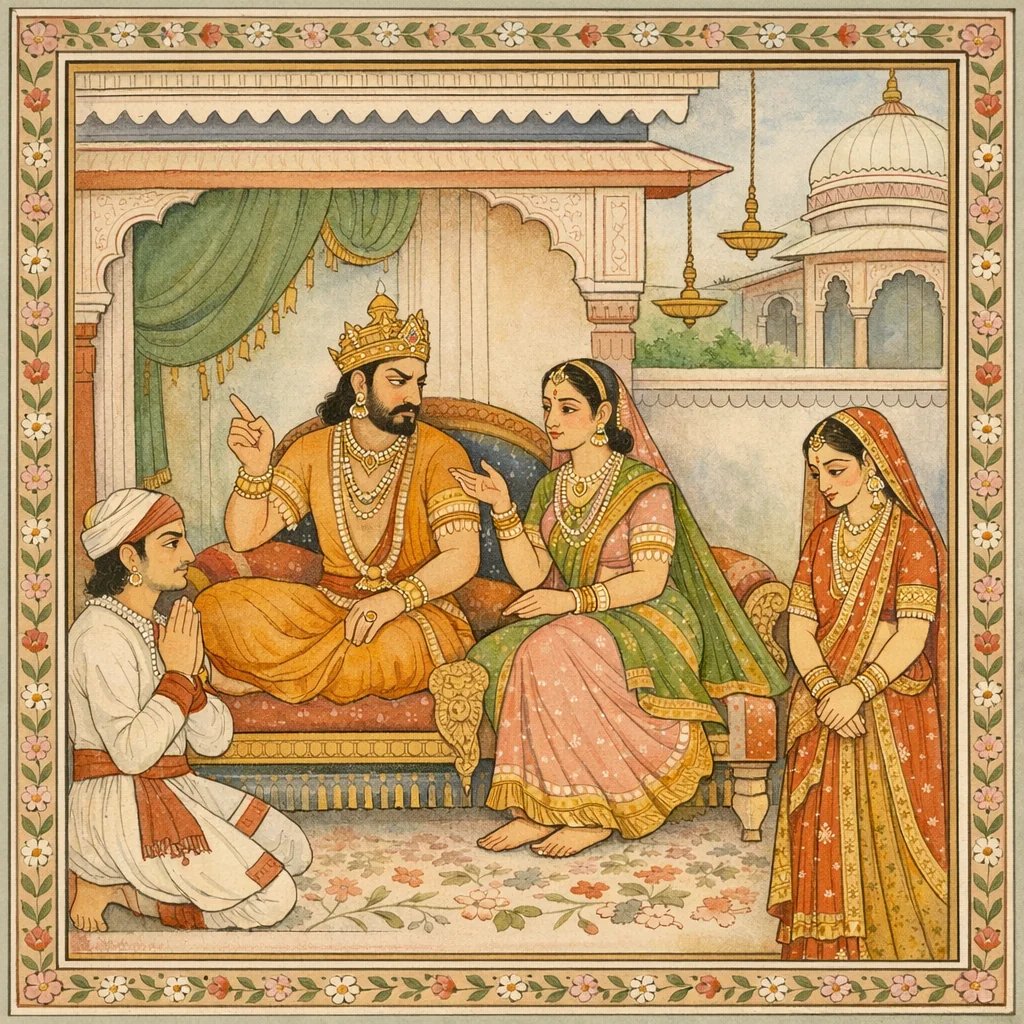
Adhyaya 188
अम्बायाः तपोदीक्षा–रुद्रवर–आत्मदाहः (Amba’s Ascetic Vow, Rudra’s Boon, and Self-Immolation)
Upa-parva: Ambopākhyāna (Amba–Śikhaṇḍin Narrative) — Bhīṣma’s recollection within Udyoga Parva
Bhīṣma recounts that ascetics, seeing the princess fixed in austerity, ask her purpose. She states she has been rejected by Bhīṣma and displaced from the marital order, and that her initiation is aimed solely at his defeat, not public welfare. She declares an unwavering resolve: she will not desist until she confronts and brings about Bhīṣma’s fall in battle, and she expresses distress at her social-embodied condition. Śiva (Rudra), appearing among the sages, offers a boon; she asks for his “defeat,” and Śiva confirms that she will be the instrument of Bhīṣma’s fall, will obtain masculinity in a later embodiment, and will be born in Drupada’s line as a celebrated warrior who remembers the prior cause. After Śiva disappears, she gathers wood, builds a pyre, kindles fire with an anger-lit mind, declares her intent toward Bhīṣma’s death, and enters the flames—an act framed as purposeful transition toward the promised rebirth.
Chapter Arc: भीष्म अम्बोपाख्यान के भीतर शिखण्डी के विवाह का प्रसंग उठाते हैं—जिसे पुत्रवत् पाला गया, वही अब द्रोण के पास धनुर्विद्या सीखता हुआ राजकुलों के बीच प्रतिष्ठित होने चला। → दशार्ण के दुर्जय राजा हिरण्यवर्मा से शिखण्डी का विवाह तय होता है। परन्तु नववधू (हिरण्यवर्मा की कन्या) को धात्रियों-सखियों से यह भेद ज्ञात होता है कि ‘शिखण्डी’ वास्तव में शिखण्डिनी (स्त्री) है; लज्जा, भय और अपमान का ज्वार राजमहल में फैलता है। → हिरण्यवर्मा का क्रोध फूट पड़ता है—वह इसे छल और अपमान मानकर पाञ्चाल पर चढ़ाई का निश्चय करता है और दूत के मुख से कठोर वचन कहलवाता है: ‘तूने मेरी कन्या के साथ धोखा किया; अब इस विप्रलम्भ का फल भोग।’ → रानी शिव-वरदान की अचूकता का स्मरण कराती है और राजा को विचारपूर्वक निर्णय लेने को कहती है—परन्तु अपमान की आग शांत नहीं होती; दूत-प्रेषण और युद्ध-उद्यम की दिशा स्पष्ट हो जाती है। → दशार्ण का दूत पाञ्चाल की ओर निकल चुका है—अब द्रुपद क्या उत्तर देगा, और क्या यह वैवाहिक कलह राज्य-युद्ध में बदल जाएगा?
Shlokas
Verse 1
अपन कराता बछ। अं: एकोननवर्त्याधेकशततमो< ध्याय: शिखण्डीका विवाह तथा उसके स्त्री होनेका समाचार पाकर उसके श्वशुर दशार्णगजका महान् कोप भीष्म उवाच चकार यत्नं द्रुपद: सुताया: सर्वकर्मसु | ततो लेख्यादिषु तथा शिल्पेषु च परंतप,भीष्म कहते हैं--तदनन्तर ट्रुपदने अपनी पुत्रीको लेखनशिक्षा और शिल्पशिक्षा आदि सभी कार्योंकी योग्यता प्राप्त करानेके लिये विशेष प्रयत्न किया
Bhishma said: “Thereafter King Drupada made a deliberate effort to train his child in every requisite duty and skill. Thus, O scorcher of foes, he had the child instructed in writing and related arts, as well as in the various crafts—preparing the way for the later events surrounding Śikhaṇḍī’s identity and marriage.”
Verse 2
इष्वस्त्रै चैव राजेन्द्र द्रोणशिष्यो बभूव ह । तस्य माता महाराज राजानं वरवर्णिनी,राजेन्द्र! धनुर्विद्याके लिये शिखण्डी द्रोणाचार्यका शिष्य हुआ। महाराज! शिखण्डीकी सुन्दरी माताने राजा द्रुपदको प्रेरित किया कि वे उसके पुत्रके लिये बहू ला दें। वह अपनी कन्याका पुत्रके समान ब्याह करना चाहती थी। ट्रुपदने देखा, मेरी बेटी जवान हो गयी तो भी अबतक स्त्री ही बनी हुई है (वरदानके अनुसार पुरुष नहीं हो सकी), इससे पत्नीसहित उनके मनमें बड़ी चिन्ता हुई
Bhishma said: “O king, Śikhaṇḍin indeed became a disciple of Droṇa in the use of arrows and weapons. And his mother—an illustrious lady—urged King Drupada to procure a bride for her child, for she wished the marriage to be arranged as for a son. Yet Drupada saw that, though the child had come of age, the form remained female according to the boon and had not become male; thus he and the queen were seized by grave anxiety.”
Verse 3
चोदयामास भार्यार्थ कन्याया: पुत्रवत् तदा । ततस्तां पार्षतो दृष्टवा कन्यां सम्प्राप्तयौवनाम् । स्त्रियं मत्वा तततद्रिन्तां प्रपेदे सह भार्यया,राजेन्द्र! धनुर्विद्याके लिये शिखण्डी द्रोणाचार्यका शिष्य हुआ। महाराज! शिखण्डीकी सुन्दरी माताने राजा द्रुपदको प्रेरित किया कि वे उसके पुत्रके लिये बहू ला दें। वह अपनी कन्याका पुत्रके समान ब्याह करना चाहती थी। ट्रुपदने देखा, मेरी बेटी जवान हो गयी तो भी अबतक स्त्री ही बनी हुई है (वरदानके अनुसार पुरुष नहीं हो सकी), इससे पत्नीसहित उनके मनमें बड़ी चिन्ता हुई
Bhīṣma said: Then the queen urged the king to procure a wife for their child, treating the daughter as though she were a son. Thereafter, when Drupada saw that the maiden had reached youth yet remained a woman, he—together with his wife—fell into deep and repeated anxiety, O best of kings.
Verse 4
दुपद उवाच कन्या ममेयं सम्प्राप्ता यौवनं शोकवर्धिनी । मया प्रच्छादिता चेयं वचनाच्छूलपाणिन:,द्रपद बोले--देवि! मेरी यह कन्या युवावस्थाको प्राप्त होकर मेरा शोक बढ़ा रही है। मैंने भगवान् शंकरके कथनपर विश्वास करके अबतक इसके कन्याभावको छिपा रखा था
Dupada said: “This daughter of mine has now reached youth, and it only increases my sorrow. Trusting the words of Śūlapāṇi (Śiva), I have kept her maidenhood concealed until now.”
Verse 5
भायोवाच न तन्मिथ्या महाराज भविष्यति कथंचन । त्रैलोेक्यकर्ता कस्माद्धि वृथा वक्तुमिहाहति,रानीने कहा--महाराज! भगवान् शिवका दिया हुआ वर किसी तरह मिथ्या नहीं होगा। भला, तीनों लोकोंकी सृष्टि करनेवाले भगवान् झूठी बात कैसे कह सकते हैं? राजन! यदि आपको अच्छा लगे तो कहूँ। मेरी बात सुनिये। पृषतनन्दन! इसे सुनकर अपनी बुद्धिके अनुसार ग्रहण करें
The queen said: “O great king, Śiva’s boon will never prove false in any way. For how could the Creator of the three worlds speak idly or untruthfully here? O king, if it pleases you, I shall speak—listen to my words. O son of Pṛṣata, having heard this, accept it according to your best judgment.”
Verse 6
यदि ते रोचते राजन् वक्ष्यामि शृणु मे वच: । श्र॒ुत्वेदानीं प्रपद्येथा: स्वां मतिं पृषतात्मज,रानीने कहा--महाराज! भगवान् शिवका दिया हुआ वर किसी तरह मिथ्या नहीं होगा। भला, तीनों लोकोंकी सृष्टि करनेवाले भगवान् झूठी बात कैसे कह सकते हैं? राजन! यदि आपको अच्छा लगे तो कहूँ। मेरी बात सुनिये। पृषतनन्दन! इसे सुनकर अपनी बुद्धिके अनुसार ग्रहण करें
The queen said: “King, if it pleases you, I shall speak—listen to my words. Having heard them now, O son of Pṛṣata, adopt the course that accords with your own judgment.”
Verse 7
क्रियतामस्य यत्नेन विधिवद् दारसंग्रह: । भविता तद्वच: सत्यमिति मे निश्चिता मति:,मेरा तो यह दृढ़ विश्वास है कि भगवान्का वचन सत्य होगा। अतः आप प्रयत्नपूर्वक शास्त्रीय विधिके अनुसार इसका कन्याके साथ विवाह कर दें
Dupada said: “Let his marriage be solemnized with due effort, in accordance with the prescribed rites. I am firmly convinced that the divine word will prove true.”
Verse 8
ततस्तौ निश्चयं कृत्वा तस्मिन् कार्येड्थ दम्पती । वरयांचक्रतुः कन्यां दशार्णाधिपते: सुताम्,इस प्रकार विवाहका निश्चय करके दोनों पति-पत्नीने दशार्णराजकी पुत्रीका अपने पुत्रके लिये वरण किया
Then the husband and wife, having reached a firm decision in that matter, chose as bride for their son the daughter of the lord of Daśārṇa—thus settling the marriage by deliberate resolve and proper selection.
Verse 9
ततो राजा द्रुपदो राजसिंह: सर्वान् राज्ञ कुलत: संनिशाम्य । दाशार्णकस्य नृपतेस्तनूजां शिखण्डिने वरयामास दारान्,तदनन्तर राजाओंमें श्रेष्ठ द्रपदने समस्त राजाओंके कुल आदिका परिचय सुनकर दशार्णराजकी ही पुत्रीका शिखण्डीके लिये वरण किया
Then King Drupada, lion among kings, having ascertained the lineage and standing of all the rulers, chose as bride for Śikhaṇḍin the daughter of the Daśārṇa king.
Verse 10
हिरण्यवर्मेति नूपो योडसौ दाशार्णक: स्मृत: । सच प्रादान्महीपाल: कन्यां तस्मै शिखण्डिने,दशार्णदेशके राजाका नाम हिरण्यवर्मा था। भूपाल हिरण्यवर्माने शिखण्डीको अपनी कन्या दे दी
Drupada said: “There was a king of Daśārṇa, remembered by the name Hiraṇyavarman. That ruler gave his daughter in marriage to Śikhaṇḍin.”
Verse 11
सच राजा दशार्णेषु महानासीत् सुदुर्जय: । हिरण्यवर्मा दुर्धर्षो महासेनो महामना:,दशार्णदेशका वह राजा हिरण्यवर्मा महान् दुर्जय और दुर्धर्ष वीर था। उसके पास विशाल सेना थी। साथ ही उसका हृदय भी विशाल था
Drupada said: “In the land of the Daśārṇas there once ruled a great king, difficult to conquer. Named Hiraṇyavarmā, he was unassailable and formidable; he commanded a vast army, and his spirit was equally great.”
Verse 12
कृते विवाहे तु तदा सा कन्या राजसत्तम । यौवनं समनुप्राप्ता सा च कन्या शिखण्डिनी,नृपश्रेष्ठी हिरण्यवर्माकी पुत्री भी युवावस्थाको प्राप्त थी। इधर टद्रुपदकी कन्या शिखण्डिनी भी पूर्ण युवती हो गयी थी। विवाहकार्य सम्पन्न हो जानेपर पत्नीसहित शिखण्डी पुनः काम्पिल्य नगरमें आया। दशार्णराजकी कन्याने कुछ ही दिनोंमें यह समझ लिया कि शिखण्डी तो स्त्री है
Drupada said: “When the marriage had been duly performed, that maiden, O best of kings, had reached the bloom of youth; and Drupada’s own child Śikhaṇḍinī too had likewise come into full youth.”
Verse 13
कृतदार: शिखण्डी च काम्पिल्यं पुनरागमत् | ततः सा वेद तां कनन््यां कज्चित् काल स्त्रियं किल,नृपश्रेष्ठी हिरण्यवर्माकी पुत्री भी युवावस्थाको प्राप्त थी। इधर टद्रुपदकी कन्या शिखण्डिनी भी पूर्ण युवती हो गयी थी। विवाहकार्य सम्पन्न हो जानेपर पत्नीसहित शिखण्डी पुनः काम्पिल्य नगरमें आया। दशार्णराजकी कन्याने कुछ ही दिनोंमें यह समझ लिया कि शिखण्डी तो स्त्री है
When the marriage rites were completed, Śikhaṇḍī returned once more to Kāmpilya with his wife. After some time, the maiden came to know the truth—Śikhaṇḍī was in fact a woman. Thus the tale reveals the ethical strain born when social rites are performed under concealment, and how such concealment must test trust, marital duty, and royal responsibility.
Verse 14
हिरण्यवर्मण: कन्या ज्ञात्वा तां तु शिखण्डिनीम् । धात्रीणां च सखीनां च व्रीडमाना न्यवेदयत् । कन्यां पञ्चालराजस्य सुतां तां वै शिखण्डिनीम्,हिरण्यवर्माकी पुत्रीने शिखण्डीके यथार्थ स्वरूपको जानकर अपनी धाय तथा सखियोंसे लजाते-लजाते यह गुप्त बात कह दी कि पांचालराजके पुत्र शिखण्डी वास्तवमें पुरुष नहीं, स्त्री हैं
Hiraṇyavarman’s daughter, having learned the truth about Śikhaṇḍinī, shyly and in embarrassment confided to her nurses and close companions that the child of the king of Pāñcāla, known as Śikhaṇḍinī, was in fact a girl, not a man. The verse shows how concealed identity and social expectations of gender become a wellspring of shame and secrecy, tightening the ethical knot that will later be pulled by honor and public repute.
Verse 15
ततस्ता राजशार्दूल धात्र्यो दाशार्णिकास्तदा । जम्मुरार्ति परां प्रेष्या: प्रेषयामासुरेव च,नृपश्रेष्ठ! यह सुनकर दशार्णदेशकी धायोंको बड़ा दुःख हुआ। उन्होंने यह समाचार सूचित करनेके लिये बहुत-सी दासियोंको दशार्णराजके यहाँ भेजा
Then, O bull among kings, the Dāśārṇa wet-nurses were overwhelmed with grievous distress. To convey the news, they dispatched many maidservants to the king of Dāśārṇa. The passage shows the swiftness of loyal service and the moral urgency felt by caretakers when sudden calamity falls upon a royal house.
Verse 16
ततो दशार्णाधिपते: प्रेष्या: सर्वा न्यवेदयन् | विप्रलम्भं यथावृत्तं स च चुक्रोध पार्थिव:,वे सब दासियाँ दशार्णराजसे सब बातें ठीक-ठीक बताती हुई बोलीं कि “राजा ट्रुपदने बहुत बड़ा धोखा दिया है'। यह सुनकर दशार्णराज अत्यन्त कुपित हो उठे
Then all the attendants of the lord of Daśārṇa reported the matter exactly as it had occurred—how deception had been practiced. Hearing this, the king of Daśārṇa flared up in anger. The verse shows how a breach of trust and honor, once confirmed by witnesses, can ignite royal wrath and set ethical and political consequences in motion.
Verse 17
शिखण्ड्यपि महाराज पुंवद् राजकुले तदा । विजहार मुदा युक्तः स्त्रीत्वं नैवातिरोचयन्,महाराज! शिखण्डी भी उस राजपरिवारमें पुरुषकी ही भाँति आनन्दपूर्वक घूमता- फिरता था। उसे अपना स्त्रीत्व अच्छा नहीं लगता था
O great king, even then Śikhaṇḍī, dwelling in that royal household, moved about joyfully like a man, taking no delight at all in a woman’s condition.
Verse 18
ततः कतिपयाहस्य तच्छुत्वा भरतर्षभ । हिरण्यवर्मा राजेन्द्र रोषादार्ति जगाम ह,भरतश्रेष्ठ! राजेन्द्र! तदनन्तर कुछ दिनोंमें उसके स्त्री होनेका समाचार सुनकर हिरण्यवर्मा क्रोधसे पीड़ित हो गया
Then, after a few days had passed, O bull among the Bharatas, King Hiraṇyavarman—on hearing that report—was seized with anguish born of anger.
Verse 19
ततो दाशार्णको राजा तीव्रकोपसमन्वित: । दूतं प्रस्थापयामास ट्रुपदस्य निवेशनम्,तदनन्तर दशार्णराजने दुःसह क्रोधसे युक्त हो राजा ट्रुपदके दरबारमें दूत भेजा
Then the king of Daśārṇa, seized by intense anger, dispatched a messenger to the residence of Drupada.
Verse 20
ततो द्रुपदमासाद्य दूत: काउचनवर्मण: । एक एकान्तमुत्सार्य रहो वचनमत्रवीत्,हिरण्यवर्माका वह दूत ट्रपदके पास पहुँचकर अकेला एकान्तमें सबको हटाकर केवल राजासे इस प्रकार बोला--
Then the envoy of Kāñcanavarman approached King Drupada. Having dismissed everyone and drawn him into a private place, the messenger spoke confidentially to the king.
Verse 21
दाशार्णराजो राजंस्त्वामिदं वचनमत्रवीत् | अभिषष्जात् प्रकुपितो विप्रलब्धस्त्वयानघ,“निष्पाप नरेश! आपने दशार्णराजको धोखा दिया है। आपके द्वारा किये गये अपमानसे उनका क्रोध बहुत बढ़ गया है। उन्होंने आपसे कहनेके लिये यह संदेश भेजा है
The messenger said: “O King, the ruler of Daśārṇa has sent you this message. Enraged and deeply provoked, he declares that you have deceived and insulted him; therefore his wrath has greatly increased.”
Verse 22
अवमन्यसे मां नृपते नून॑ दुर्मन्त्रितं तव । यन्मे कन्यां स्वकन्यार्थे मोहाद याचितवानसि,“नरेश्वर! तुमने जो मेरा अपमान किया है, वह निश्चय ही तुम्हारे खोटे विचारका परिचय है। तुमने मोहवश अपनी पुत्रीके लिये मेरी पुत्रीका वरण किया था। दुर्मती! उस ठगी और वंचनाका फल अब तुम्हें शीघ्र ही प्राप्त होगा, धीरज रखो। मैं अभी सेवकों और मन्त्रियोंसहित तुम्हें जड़भूलसहित उखाड़ फेकता हूँ”
“O king, you surely slight me; this reveals the perversity of your counsel. Deluded, you once asked for my daughter for the sake of your own daughter. The fruit of that deceit and humiliation will soon come upon you—wait and see.”
Verse 23
तस्याद्य विप्रलम्भस्य फल प्राप्रुहि दुर्मते । एष त्वां सजनामात्यमुद्धरामि स्थिरो भव,“नरेश्वर! तुमने जो मेरा अपमान किया है, वह निश्चय ही तुम्हारे खोटे विचारका परिचय है। तुमने मोहवश अपनी पुत्रीके लिये मेरी पुत्रीका वरण किया था। दुर्मती! उस ठगी और वंचनाका फल अब तुम्हें शीघ्र ही प्राप्त होगा, धीरज रखो। मैं अभी सेवकों और मन्त्रियोंसहित तुम्हें जड़भूलसहित उखाड़ फेकता हूँ”
Drupada said: “Today, you will receive the consequence of that deceit. O wicked-minded one, reap now the fruit of your betrayal. I will uproot you—together with your kinsmen and ministers—so stand firm and face it.”
Verse 189
इति श्रीमहाभारते उद्योगपर्वणि अम्बोपाख्यानपर्वणि हिरण्यवर्मदूतागमने एकोननवत्यधिकशततमो<ध्याय:
Thus, in the Śrī Mahābhārata, within the Udyoga Parva, in the section known as the “Tale of Ambā,” in the episode concerning the arrival of Hiraṇyavarman’s messenger, ends the one-hundred-and-eighty-ninth chapter.
Frequently Asked Questions
Amba frames a conflict between social-marital legitimacy and personal justice: being excluded from the expected marital order becomes the basis for a vow of retributive purpose, raising questions about how injured honor and dharma are negotiated when institutional remedies fail.
The chapter implies that disciplined intention (saṃkalpa) and moral injury can structure causality across time; decisions made within social norms can generate deferred constraints, and identity/embodiment are presented as mutable instruments within a broader karmic logic.
No explicit phalaśruti appears in these verses; the meta-significance is conveyed narratively through Śiva’s confirmation and the etiological function of explaining how Bhīṣma’s later defeat becomes possible within the epic’s causal architecture.