Adhyaya 109
Uttarā-diśā Māhātmya — Suparṇa’s Praise of the Northern Quarter (Suparṇa–Gālava Saṃvāda)
Upa-parva: Suparṇa–Gālava Saṃvāda (Dig-varṇana / Uttara-diśā-prasaṃśā)
Suparṇa explains to Gālava the etymological-ethical rationale for the term uttarā: it is so named because it ‘lifts’ one beyond pāpa and yields niḥśreyasa. He then outlines the ‘middle path’ associated with the northern gold-bearing region and proceeds to praise the north as a superior quarter where inauspicious or adharmic persons are said not to dwell. The chapter becomes a dense sacral topography: Badarī as the seat of Nārāyaṇa and Nara; Himavat as the abiding place of Maheśvara; the descent and reception of Gaṅgā; divine austerities and mythic births; Kubera’s consecration on Kailāsa; and celebrated locales such as Caitraratha, Vaikhānasa āśrama, Mandākinī, Mandara, and the Saugaṃdhika forest. Celestial phenomena (Dhruva, the revolutions of sun and moon, Svāti), guardianship motifs, and the ‘Gāyantikā gate’ guarded by truth-speaking sages are included, culminating in the claim that none have gone beyond that region except Nārāyaṇa and Nara. The chapter closes with Suparṇa offering to show all directions and the whole earth, inviting the brāhmaṇa to mount him—transitioning from description to guided traversal.
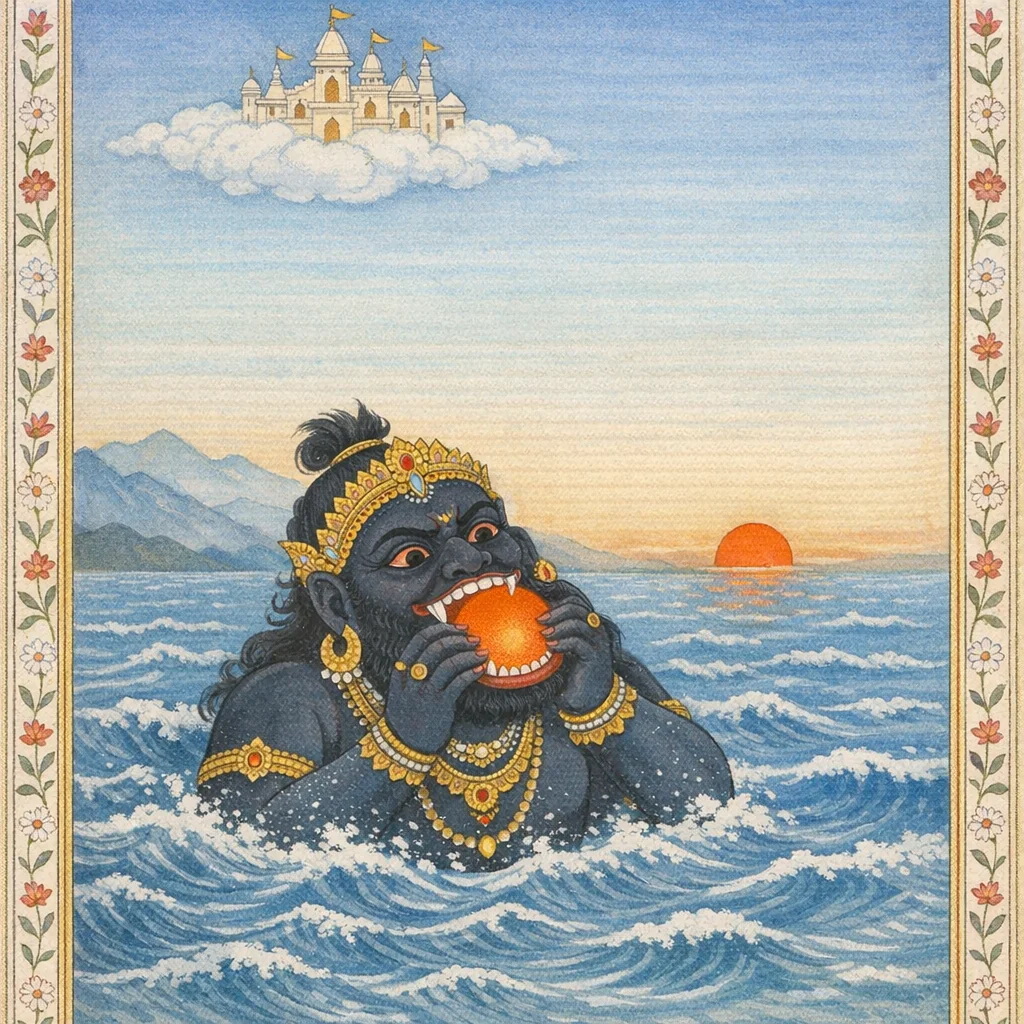
Chapter Arc: गालव के प्रश्न पर कथावाचक पश्चिम दिशा के रहस्यमय ‘दिग्द्वार’ का वर्णन आरम्भ करता है—जहाँ सूर्य अपनी किरणों को स्वयं ‘विसर्जित’ करता है और जहाँ देव-ऋषियों के प्राचीन कर्मों की छाप आज भी भूगोल में दिखती है। → वर्णन साधारण दिशा-ज्ञान से आगे बढ़कर ब्रह्माण्ड-व्यवस्था और देव-इतिहास में उतरता है: कश्यप द्वारा वरुण का अभिषेक, वायु द्वारा दैत्यों का पराभव, समुद्र के भीतर राहु (स्वर्भानु) का ‘कबन्ध’—ये सब पश्चिम को एक भय-आकर्षक, नियमबद्ध और अलौकिक सीमा-प्रदेश बना देते हैं। → समुद्र-मध्य में सूर्य-तुल्य तेजस्वी राहु-कबन्ध का दृश्य और सूर्य-आज्ञा से आकाश में स्थित ‘ध्वजवती’ कन्या का उल्लेख—यहाँ पश्चिम दिशा का चरम ‘अद्भुत’ प्रकट होता है, मानो दिग्द्वार स्वयं जीवित हो। → नक्षत्र-गति (अभिजित् सहित अट्ठाईस नक्षत्रों का चक्र) और सूर्य-चन्द्र संयोग के नियमों के साथ कथावाचक पश्चिम मार्ग का संक्षिप्त, व्यवस्थित निरूपण पूरा करता है और गालव से पूछता है—अब तुम किस बुद्धि/उद्देश्य से आगे जाना चाहते हो? → गालव के अगले निर्णय और यात्रा-उद्देश्य पर प्रश्न छोड़कर अध्याय समाप्त होता है।
Shlokas
Verse 1
न लॉ ंटडिड: - एक समय राजा रैवत अपनी पुत्रीके साथ उसके लिये वरका अनुसंधान करने ब्रह्माजीके पास गये थे। वहाँसे लौटते समय उन्होंने मन्दराचलके पुण्य प्रदेशोंमें गन्धवॉका सामगान सुना और कुछ देर ठहर गये। वहाँका थोड़ा-सा भी समय मनुष्यलोकके महान् कालके बराबर होता है। राजा जब लौटकर राजधानीमें आये; तब सत्ययुग और त्रेता बीतकर द्वापरका अन्तिम भाग व्यतीत हो रहा था। मन्त्री और परिवारके सभी लोग कालके गालमें जा चुके थे। उन दिनों उनकी राजधानी कुशस्थलीके स्थानपर दिव्य द्वारकापुरीका निर्माण हो चुका था। राजाने अपनी पुत्री रेवतीका विवाह बलरामजीसे कर दिया और स्वयं वे वनमें तपस्या करनेके लिये चले गये। दशाधिकशततमो&् ध्याय: पश्चिमदिशाका वर्णन युपर्ण उवाच इयं दिग् दयिता राज्ञो वरुणस्य तु गोपते: । सदा सलिलराजस्य प्रतिष्ठा चादिरेव च,गरुड़ कहते हैं--गालव! यह जो सामनेकी दिशा है, जलके स्वामी दिक्पाल राजा वरुणको सदा ही अत्यन्त प्रिय है। यही उनका आश्रय और उत्पत्ति-स्थान है
Yuparṇa said: “Gālava, this direction before us is ever dear to King Varuṇa, the guardian lord. It is the abiding seat of the sovereign of waters, and indeed his very primal source as well.”
Verse 2
अत्र पश्चादहः सूर्यो विसर्जयति गा: स्वयम् । पश्चिमेत्यभिविख्याता दिगियं द्विजसत्तम,द्विजश्रेष्ठ दिनके पश्चात् सूर्यदेव इसी दिशामें स्वयं अपनी किरणोंका विसर्जन करते हैं, इसलिये यह “पश्चिम' के नामसे विख्यात है
Here, at the close of the day, the Sun himself releases his rays. Therefore this quarter is renowned as ‘the West,’ O best of twice-born ones.
Verse 3
यादसामत्र राज्येन सलिलस्य च गुप्तये । कश्यपो भगवान् देवो वरुणं स्माभ्यषेचयत्,पूर्वकालमें भगवान् कश्यपदेवने जल-जन्तुओंका आधिपत्य और जलकी रक्षा करनेके लिये इसी दिशामें वरुणका अभिषेक किया था
Yuparṇa said: “Formerly, for the sovereignty over aquatic beings and for the protection of the waters, the blessed divine sage Kaśyapa consecrated Varuṇa here as ruler.”
Verse 4
अत्र पीत्वा समस्तान् वै वरुणस्य रसांस्तु षट् । जायते तरुण: सोम: शुक्लस्यादौ तमिस्रहा,अन्धकारका नाश करनेवाले चन्द्रमा वरुणके निकट रहकर छः: प्रकारके सम्पूर्ण रसोंका पान करके शुक्लपक्षकी प्रतिपदाको इसी दिशामें नूतनताको प्राप्त होकर उदित होते हैं
Here, having drunk in full the six essences of Varuṇa, the young Soma (the Moon)—the dispeller of darkness—is born anew at the beginning of the bright fortnight.
Verse 5
अत्र पश्चात् कृता दैत्या वायुना संयतास्तदा । निःश्वसन्तो महावातैरर्दिता: सुषुपुर्द्धिज
Then, at that point, the Dāityas were checked and held in by the wind. Buffeted by mighty gusts, they breathed hard and, overcome by the force of the storm, fell into sleep.
Verse 6
ब्रह्मन्! पूर्वकालमें वायुदेवने अपने महान् वेगसे यहाँ युद्धमें दैत्योंको पराड्मुख, आबद्ध और पीड़ित किया था, जिससे वे लंबी साँस छोड़ते हुए धराशायी हो गये थे ।। अत्र सूर्य प्रणयिनं प्रतिगृह्नाति पर्वत: । अस्तो नाम यतः संध्या पश्चिमा प्रतिसर्पति,इसी दिशामें अस्ताचल है, जो अपने प्रीतिपात्र सूर्यदेवको प्रतिदिन ग्रहण करता है। यहींसे पश्चिम संध्याका प्रसार होता है
Yūparṇa said: “O Brahmin, in former times the Wind-god, by his mighty speed, routed the Dāityas here in battle—binding and crushing them—so that, heaving long sighs, they fell to the ground. In this very direction stands the mountain called Asta (the ‘Setting’ mountain), which daily receives the Sun, his beloved; from here the western twilight spreads forth.”
Verse 7
अतो रात्रिश्व निद्रा च निर्गता दिवसक्षये । जायते जीवलोकस्य हर्तुमर्धमिवायुष:,इसी दिशासे दिनके अन्तमें मानो जीव-जगत्की आधी आयु हर लेनेके लिये रात्रि एवं निद्राका प्राकट्य होता है
Therefore, at the close of the day, night and sleep manifest—as though they have come forth to take away half the lifespan of living beings.
Verse 8
अत्र देवीं दितिं सुप्तामात्मप्रसवधारिणीम् । विगर्भामकरोच्छक्रो यत्र जातो मरुद्गण:,इसी दिशामें देवराज इन्द्रने सोयी हुई गर्भवती दितिदेवीके (उदरमें प्रवेश करके उसके) गर्भका उच्छेद किया था, जिससे मरुद्गणोंकी उत्पत्ति हुई
Here it was that Śakra (Indra), finding the goddess Diti asleep and bearing within her the seed of her own offspring, entered her womb and cut down the embryo, rendering her ‘without a fetus’; from that act the host of the Maruts came into being.
Verse 9
अतन्र मूलं हिमवतो मन्दरं याति शाश्वतम् । अपि वर्षसहस्त्रेण न चास्यान्तो5थधिगम्यते,इसी दिशामें हिमालयका मूलभाग सदा मन्दराचलतक फैलकर उसका स्पर्श करता है। सहसीरों वर्षोमें भी इसका अन्त पाना असम्भव है
The Himalaya, whose root-base is unbroken and firm, stretches eternally until it reaches Mount Mandara. Even in a thousand years, its end cannot be discovered.
Verse 10
अत्र काज्चनशैलस्य काज्चनाम्बुरुहस्य च । उदधेस्तीरमासाद्य सुरभि: क्षरते पय:,इसी दिशामें सुवर्णमय पर्वत मन्दराचल तथा स्वर्णमय कमलोंसे सुशोभित क्षीरसागरके तटपर पहुँचकर सुरभिदेवी अपने दूधका निर्सर बहाती हैं
Here, having reached the shore of the ocean—adorned by a golden mountain and by golden lotuses—Surabhī lets her milk flow forth in abundance.
Verse 11
अत्र मध्ये समुद्रस्य कबन्ध: प्रतिदृश्यते । स्वर्भानो: सूर्यकल्पस्य सोमसूर्यो जिघांसत:,पश्चिमदिशामें ही समुद्रके भीतर सूर्यके समान तेजस्वी उस राहुका कबन्ध (धड़) दिखायी देता है, जो सूर्य और चन्द्रमाको मार डालनेकी इच्छा रखता है
Here, in the midst of the ocean, the trunk-like form of Svarbhānu is seen—radiant like the sun—harboring the murderous intent to strike down both the Moon and the Sun.
Verse 12
सुवर्णशिरसो<प्यत्र हरिरोम्ण: प्रगायत: । अदृश्यस्याप्रमेयस्य श्रूयते विपुलो ध्वनि:,इसी दिशामें पिंगलवर्णके केशोंसे सुशोभित, अप्रमेय प्रभावशाली एवं अदृश्यमूर्ति मुनिवर सुवर्णशिरा सामगान करते हैं। उनके उस गीतकी विपुल ध्वनि स्पष्ट सुनायी देती है
Here, too, Suvarṇaśiras—of tawny-golden hair—chants the Sāman hymns. Though he is invisible and beyond measure, the vast resonance of his song is clearly heard.
Verse 13
अत्र ध्वजवती नाम कुमारी हरिमेधस: । आकाशे तिष्ठ तिछेति तस्थौ सूर्यस्य शासनात्,इसी दिशामें हरिमेधा मुनिकी कुमारी कन्या ध्वजवती निवास करती है, जो सूर्यदेवकी “ठहरो', “ठहरो' इस आज्ञासे आकाशमें स्थित है
Here dwells a maiden named Dhvajavatī, the daughter of the sage Harimedhas. By the Sun-god’s command—“Stay, stay!”—she remains stationed in the sky, as if held there by divine ordinance.
Verse 14
अत्र वायुस्तथा वह्लिराप: खं चापि गालव । अलह्रिकं चैव नैशं च दु:खं स्पर्श विमुड्चति,गालव! वायु, अग्नि, जल और आकाश--ये सब इस दिशामें रात्रि और दिनके दुःखदायी स्पर्शका परित्याग करते हैं (अर्थात् यहाँ इनका स्पर्श सदा सुखद ही होता है)
Yuparṇa said: “Here, O Gālava, wind, fire, water, and even space—these all cast off the painful touch that comes by night and by day. In this region their contact is not distressing, but naturally soothing.”
Verse 15
अतः:प्रभृति सूर्यस्य तिर्यगावर्तते गति: । अत्र ज्योतींषि सर्वाणि विशन्त्यादित्यमण्डलम्,इसी दिशासे सूर्यदेव तिरछी गतिसे चक्कर लगाना आरम्भ करते हैं। यहीं सम्पूर्ण ज्योतियाँ सूर्यमण्डलमें प्रवेश करती हैं
From this point onward, the Sun’s course turns into a slanting, circling path. Here, all the luminaries enter into the solar orb.
Verse 16
अष्टाविंशतिरात्रं च चड्क्रम्य सह भानुना । निष्पतन्ति पुन: सूर्यात् सोमसंयोगयोगतः,अभिजित्सहित अद्बाईस नक्षत्रोंमेंसे प्रत्येक अट्टाईसवें दिन सूर्यके साथ विचरण करके अमावस्याके बाद फिर सूर्यमण्डलसे पृथक् हो जाता है
Having completed a cycle of twenty-eight nights in company with the Sun, they again separate from the Sun’s sphere after the new-moon, by virtue of their conjunction with the Moon. Thus Abhijit, among the twenty-two lunar mansions, is described as moving with the Sun on each twenty-eighth day and then departing again—marking the rhythm by which time and ritual observances are understood.
Verse 17
अन्र नित्यं स्रवन्तीनां प्रभव: सागरोदय: । अत्र लोकत्रयस्यापस्तिष्ठन्ति वरुणालये,इसी दिशासे उन अधिकांश नदियोंका प्राकट्य हुआ है, जिनके जलसे समुद्रकी पूर्ति होती रहती है। यहींके वरुणालयमें त्रिभुवनके लिये उपयोगी जलराशि संचित है
Here is the perennial source of the ever-flowing rivers, by whose waters the ocean is continually replenished. Here, in the abode of Varuṇa, the waters that sustain the three worlds are gathered and held in reserve.
Verse 18
अत्र पन्नगराजस्याप्यनन्तस्य निवेशनम् । अनादिनिधनस्यात्र विष्णो: स्थानमनुत्तमम्
Here is also the abode of Ananta, the king of serpents. Here too is the unsurpassed dwelling-place of Viṣṇu—He who is without beginning or end.
Verse 19
यहीं नागराज अनन्तका निवास तथा आदि-अन्तसे रहित भगवान् विष्णुका सर्वोत्कृष्ट स्थान है ।। अत्रानलसखस्यापि पवनस्य निवेशनम् । महर्षे: कश्यपस्यात्र मारीचस्य निवेशनम्,इसी दिशामें अग्निदेवके सखा वायुदेवका भवन तथा मरीचिनन्दन महर्षि कश्यपका आश्रम है
Here is the abode of Ananta, king of serpents; and here too is the supreme station of Lord Viṣṇu, who is without beginning or end. In this very direction is also the dwelling of Vāyu, the friend of Agni; and here is the hermitage of the great sage Kaśyapa, son of Marīci.
Verse 20
एष ते पकश्िमो मार्गो दिग्द्वारेण प्रकीर्तित: । ब्रूहि गालव गच्छावो बुद्धि: का द्विजसत्तम,द्विजश्रेष्ठ गालव! इस प्रकार मैंने तुम्हें संक्षेपसे पश्चिमका मार्ग बताया है। अब बताओ, तुम्हारा क्या विचार है? हम दोनों किस दिशाकी ओर चलें?
This is the western route I have briefly described to you, indicated by its directional gateway. Now tell me, O Gālava, best of the twice-born—what is your judgment? In which direction should the two of us proceed?
Verse 109
इस प्रकार श्रीमहाभारत उद्योगपर्वके अन्तर्गत भगवद्यानपर्वमें गालवचरित्रविषयक एक सौ नौवाँ अध्याय पूरा हुआ
Thus ends the one hundred and ninth chapter of the Bhagavad-yāna section within the Udyoga Parva of the Śrī Mahābhārata, dealing with the narrative of Gālava.
Verse 110
इति श्रीमहाभारते उद्योगपर्वणि भगवद्यानपर्वणि गालवचरिते दशाधिकशततमो<ध्याय:
Thus ends the one-hundred-and-tenth chapter in the Udyoga Parva of the Śrī Mahābhārata—within the section concerning the Lord’s mission (Bhagavad-yāna), in the episode narrating Gālava’s story.
Frequently Asked Questions
The chapter frames a value-choice between ethically elevating orientation (seeking what leads to niḥśreyasa and purification) versus remaining within ordinary, potentially adharmic habit—expressed through the symbolic hierarchy of directions.
‘Uttarā’ is taught as a concept: movement toward the highest good is both semantic (how terms encode values) and practical (how places and exemplars guide conduct), with sacred geography serving as an instructional map for aspiration.
Yes in functional form: the opening asserts that the ‘uttarā’ direction is so named because it lifts one beyond sin and leads to niḥśreyasa, presenting an explicit merit-logic that frames the ensuing description as spiritually consequential knowledge.