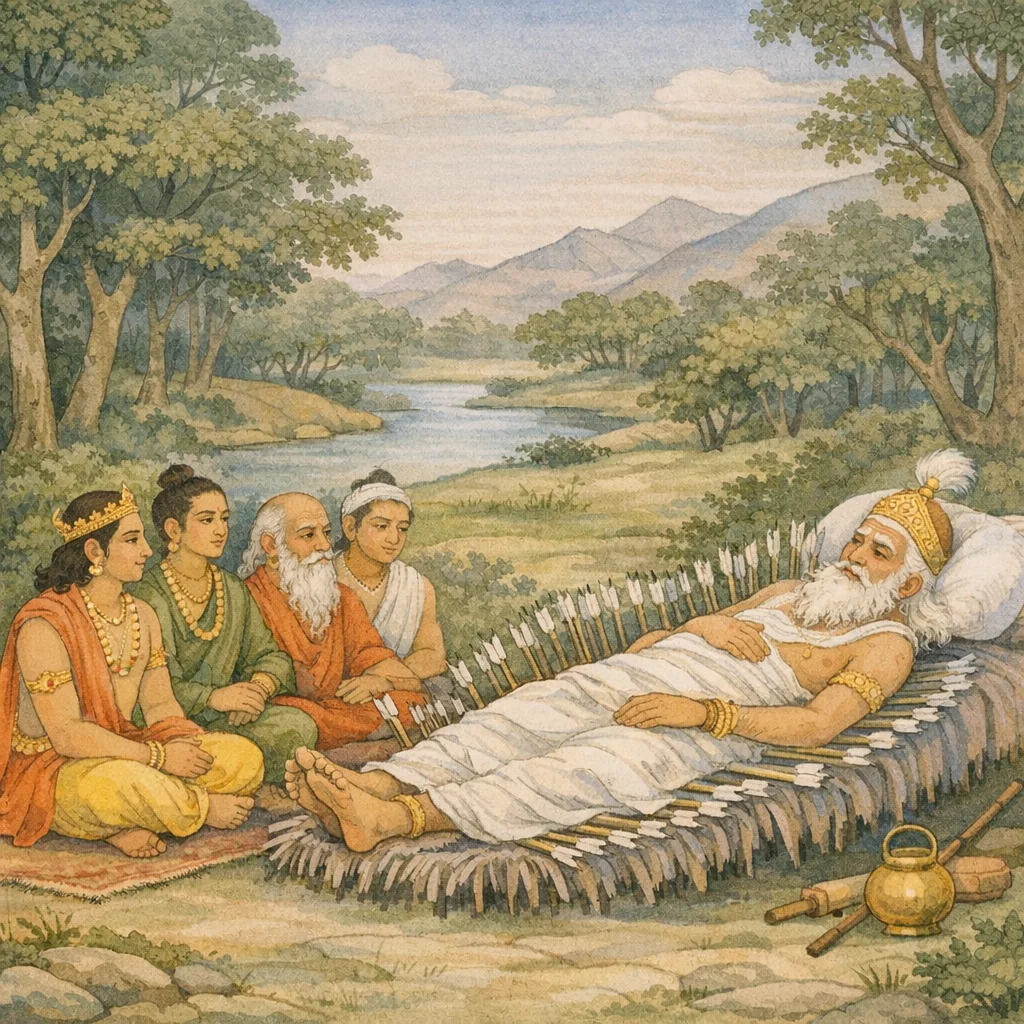
Adhyaya 81
Chapter 81: Trust, Allies, and the Qualifications of the King’s Artha-Secretary (अर्थसचिव)
Upa-parva: Rājadharmānuśāsana Upa-Parva (Instruction on Royal Duty)
Yudhiṣṭhira opens by stressing administrative realism: even minor tasks are difficult without assistance, so the burden of rulership demands reliable support. He asks Bhīṣma about the character and conduct suitable for an artha-sachiva (financial/policy secretary) and about criteria for trusting or distrusting persons around the throne. Bhīṣma responds with a typology of allies/friends (mित्राणि) and introduces a further category centered on dharma, noting that such a person may remain impartial rather than partisan. The chapter then develops a risk-aware doctrine: friends and enemies can change roles; human intention is unstable; total trust can destroy dharma and artha, while total distrust is socially corrosive. Hence, decisive matters should be verified directly. Bhīṣma provides practical markers for identifying an adversarial disposition (e.g., benefiting from one’s absence, seeking breaches in one’s safeguards) and for recognizing superior friendship—one who fears one’s harm, is satisfied with one’s prosperity, and supports one’s dharmic work. He concludes with a profile of ideal ministers (qualities of composure, non-envy, competence, truthful restraint, steadiness under honor or insult) and recommends honoring and coordinating such aides while maintaining prudent vigilance, including within kinship circles, to sustain long-term authority and reputation.
Chapter Arc: युधिष्ठिर का प्रश्न—राजा का सचिव (मन्त्री) कैसा हो, किस पर विश्वास किया जाए और किस पर नहीं; मित्र-अमित्र की पहचान करके नीति-युक्त व्यवहार कैसे रखा जाए। → भीष्म राजधर्म की सूक्ष्म भूमि पर ले जाते हैं: मित्र चार प्रकार के होते हैं—सहार्थ (हित-साझेदार), भजमान (सेवा-निष्ठ), सहज (स्वाभाविक/जन्मगत), कृत्रिम (उपार्जित/राजनीतिक)। फिर वे बताते हैं कि अति-विश्वास स्वयं ‘अकालमृत्यु’ है—विश्वास करने वाला ही विपत्ति में पड़ता है। → कुटुम्बी-ज्ञातियों के विषय में तीखा शिखर-वाक्य: उनसे ‘मृत्यु के भय’ की तरह सावधान रहो; उपराजा की भाँति ज्ञाति सहन नहीं करते। अतः उन पर पूर्ण विश्वास न करो, पर व्यवहार ऐसा रखो मानो विश्वास करते हो—सदैव मध्यस्थ, सावधान, और अप्रमादी। → श्रेष्ठ मित्र के लक्षण स्थापित होते हैं: जो राजा की वृद्धि से तृप्त न हो, और राजा भी अपनी शक्ति बढ़ने पर मित्र को सर्वतोमुखी समृद्ध करे; जो धर्म-कर्म में भी राजा को क्षति से रोकता रहे, वही सच्चा सहायक है। इस नीति से अमित्र भी प्रसन्न होकर मित्रवत हो सकते हैं और राजा दीर्घ यश पाता है।
Shlokas
Verse 1
2: छा आर: अशीतितमोब<्ध्याय: राजाके लिये मित्र और अमित्रकी पहचान तथा उन सबके साथ नीतिपूर्ण बर्तावका और मन्त्रीके लक्षणोंका वर्णन युधिछिर उवाच यदप्यल्पतरं कर्म तदप्येकेन दुष्करम् । पुरुषेणासहायेन किमु राज्ञा पितामह,युधिष्ठिरने पूछा--पितामह! जो छोटे-से-छोटा काम है, उसे भी बिना किसीकी सहायताके अकेले मनुष्यके द्वारा किया जाना कठिन हो जाता है। फिर राजा दूसरेकी सहायताके बिना महान् राज्यका संचालन कैसे कर सकता है? इति श्रीमहा भारते शान्तिपर्वणि राजधर्मानुशासनपर्वणि अशीतितमो<ध्याय: ।। ८० || इस प्रकार श्रीमह्ाभारत शान्तिपर्वके अन्तर्गत राजधर्मानुशासनपर्वनें अस्सीवाँ अध्याय पूरा हुआ ॥/ ८० ॥। अपना बा || ऑफ क्रा्छ > सहार्थ मित्र उनको कहते हैं, जो किसी शर्तपर एक-दूसरेकी सहायताके लिये मित्रता करते हैं। “अमुक शत्रुपर हम दोनों मिलकर चढ़ाई करें, विजय होनेपर दोनों उसके राज्यको आधा-आधा बाँट लेंगेट--इत्यादि शर्तें सहार्थ मित्रोंमें होती हैं। जिनके साथ परम्परागत वंशसम्बन्धसे मित्रता हो, वे भजमान” कहलाते हैं। जन्मसे ही साथ रहनेसे अथवा घनिष्ठ सम्बन्ध होनेके कारण जिनमें परस्पर स्वाभाविक मैत्री हो जाती है वे 'सहज' मित्र कहे गये हैं; और धन आदि देकर अपनाये हुए लोग “कृत्रिम” मित्र कहलाते हैं। - प्रकृतियाँ तीन प्रकारकी बतायी गयी हैं--अर्थप्रकृति, धर्मप्रकृति तथा अर्थ-धर्मप्रकृति। इनमें अर्थ-प्रकृतिके अन्तर्गत आठ वस्तुएँ हैं--खेती, वाणिज्य, दुर्ग, सेतु (पुल), जंगलमें हाथी बाँधनेके स्थान, सोने-चाँदी आदि धातुओंकी खान, कर- ग्रहण और सूने स्थानोंको बसाना। इनके अतिरिक्त जो दुर्गाध्यक्ष, बलाध्यक्ष, धर्माध्यक्ष, सेनापति, पुरोहित, वैद्य और ज्यौतिषी--ये सात प्रकृतियाँ हैं, इनमेंसे “धर्माध्यक्ष' तो धर्मप्रकृति हैं और शेष छ: “अर्थ-धर्मप्रकृति” के अन्तर्गत हैं। एकाशीतितमो<ध्याय: कुट॒म्बीजनोंमें दलबंदी होनेपर उस कुलके प्रधान पुरुषको क्या करना चाहिये? इसके विषयमें श्रीकृष्ण और नारदजीका संवाद युधिछ्िर उवाच एवमग्राह्ुके तस्मिन् ज्ञातिसम्बन्धिमण्डले । मित्रेष्वमित्रेष्वपि च कथं भावो विभाव्यते
Yudhiṣṭhira said: “Grandfather, even the smallest task becomes difficult when a man must do it alone, without help. How then can a king, without the support of others, successfully govern a vast kingdom?”
Verse 2
किंशील: किंसमाचारो राज्ञो5थ सचिवो भवेत् | कीदृशे विश्वसेद् राजा कीदृशे न च विश्वसेत्,अत: राजाकी सहायताके लिये जो सचिव (मन्त्री) हो, उसका स्वभाव और आचरण कैसा होना चाहिये? राजा कैसे मन्त्रीपर विश्वास करे और कैसे पर न करे?
Yudhiṣṭhira asked: “What disposition and conduct should a king’s counsellor (minister) possess? In what kind of person should a king place trust, and in what kind should he not place trust?”
Verse 3
भीष्म उवाच चतुर्विधानि मित्राणि राज्ञां राजन् भवन्त्युत । सहार्थो भजमानश्न सहज: कृत्रिमस्तथा,भीष्मजीने कहा--राजन्! राजाके सहायक या मित्र चार प्रकारके होते हैं--१-सहार्थ २-भजमान ३-सहज और ४-कृत्रिम-
Bhīṣma said: “O king, the allies and friends of kings are of four kinds: the sahārtha, who shares one’s interests; the bhajamāna, who attaches himself in devoted service; the sahaja, the natural friend born of kinship or long-standing bond; and the kṛtrima, the artificial friend formed by deliberate arrangement.”
Verse 4
धर्मात्मा पञज्चमश्षापि मित्र नैकस्य न द्वयो: । यतो धर्मस्ततो वा स्याद् धर्मस्थो वा ततो भवेत्,इनके सिवा, राजाका एक पाँचवाँ मित्र धर्मात्मा पुरुष होता है, वह किसी एकका पक्षपाती नहीं होता और न दोनों पक्षोंसे वेतन लेकर कपटपूर्वक दोनोंका ही मित्र बना रहता है। जिस पक्षमें धर्म होता है, उसी ओर वह भी हो जाता है अथवा जो धर्मपरायण राजा है, वही उसका आश्रय ग्रहण कर लेता है। ऐसे धर्मात्मा पुरुषको जो कार्य न रुचे, वह उसके सामने नहीं प्रकाशित करना चाहिये; क्योंकि विजयकी इच्छा रखनेवाले राजा कभी धर्ममार्गसे चलते हैं और कभी अधर्ममार्गसे
Bhishma said: A righteous man is also counted as a fifth kind of ally. He does not become the partisan of only one side, nor does he deceitfully pose as a friend to both by taking payment from each. He aligns himself with the side where dharma truly stands; or else he attaches himself to that king who is firmly established in dharma. Therefore, one should not disclose before such a righteous man a plan that would be displeasing to him—for kings who seek victory sometimes proceed by the path of dharma and sometimes by the path of adharma.
Verse 5
यस्तस्यार्थों न रोचेत न तं तस्य प्रकाशयेत् । धर्माधर्मेण राजानश्नरन्ति विजिगीषव:,इनके सिवा, राजाका एक पाँचवाँ मित्र धर्मात्मा पुरुष होता है, वह किसी एकका पक्षपाती नहीं होता और न दोनों पक्षोंसे वेतन लेकर कपटपूर्वक दोनोंका ही मित्र बना रहता है। जिस पक्षमें धर्म होता है, उसी ओर वह भी हो जाता है अथवा जो धर्मपरायण राजा है, वही उसका आश्रय ग्रहण कर लेता है। ऐसे धर्मात्मा पुरुषको जो कार्य न रुचे, वह उसके सामने नहीं प्रकाशित करना चाहिये; क्योंकि विजयकी इच्छा रखनेवाले राजा कभी धर्ममार्गसे चलते हैं और कभी अधर्ममार्गसे
Bhishma said: If a certain proposal or objective does not appeal to that righteous person, one should not disclose it to him. For kings who are intent on conquest do not move only by one path: at times they proceed by dharma, and at times they proceed by adharma. Therefore, a truly dharmic adviser—who is not partisan and does not serve both sides for pay—should be approached only with aims that can stand in the light of righteousness.
Verse 6
चतुर्णा मध्यमौ श्रेष्टी नित्यं शड्क्यौ तथापरौ । सर्वे नित्यं शड्कितव्या: प्रत्यक्ष कार्यमात्मन:,उपर्युक्त चार प्रकारके मित्रोंमेंसे भजमान और सहज--ये बीचवाले दो मित्र श्रेष्ठ समझे जाते हैं, किंतु शेष दो की ओरसे सदा सशडक रहना चाहिये। वास्तवमें तो अपने कार्यको ही दृष्टिमें रखकर सभी प्रकारके मित्रोंसे सदा सतर्क रहना चाहिये
Bhīṣma said: “Among the four kinds of friends, the two ‘middle’ ones are considered the best—those who are attached by choice and those who are naturally affectionate. Yet the other two should always be regarded with caution. Indeed, keeping one’s own practical purpose clearly in view, one should remain continually vigilant with every type of friend.”
Verse 7
नहि राज्ञा प्रमादो वै कर्तव्यो मित्ररक्षणे | प्रमादिनं हि राजानं लोका: परिभवन्त्युत,राजाको अपने मित्रोंकी रक्षामें कभी असावधानी नहीं करनी चाहिये; क्योंकि असावधान राजाका सभी लोग तिरस्कार करते हैं
Bhīṣma said: A king must never be negligent in safeguarding his friends and allies. For when a ruler becomes careless, people lose respect for him and openly disregard his authority—undermining both his honor and his rule.
Verse 8
असाधु: साधुतामेति साधुर्भवति दारुण: । अरिश्व मित्र भवति मित्र चापि प्रदुष्पति,बुरा मनुष्य भला और भला मनुष्य बुरा हो जाया करता है। शत्रु भी मित्र बन जाता है और मित्र भी बिगड़ जाता है; क्योंकि मनुष्यका चित्त सदैव एक-सा नहीं रहता। अतः उसपर किसी भी समय कोई कैसे विश्वास करेगा? इसलिये जो प्रधान कार्य हो, उसे अपनी आँखोंके सामने पूरा कर देना चाहिये
Bhishma said: A wicked man may come to goodness, and a good man may turn cruel. An enemy can become a friend, and even a friend may become corrupted. Since the human mind does not remain the same at all times, how can one place full trust in anyone at every moment? Therefore, whatever is the principal task, one should accomplish it directly before one’s own eyes—without leaving it to uncertain changes in people’s intentions.
Verse 9
अनित्यचित्त: पुरुषस्तस्मिन् को जातु विश्वसेत् | तस्मात्प्रधानं यत् कार्य प्रत्यक्ष तत् समाचरेत्,बुरा मनुष्य भला और भला मनुष्य बुरा हो जाया करता है। शत्रु भी मित्र बन जाता है और मित्र भी बिगड़ जाता है; क्योंकि मनुष्यका चित्त सदैव एक-सा नहीं रहता। अतः उसपर किसी भी समय कोई कैसे विश्वास करेगा? इसलिये जो प्रधान कार्य हो, उसे अपनी आँखोंके सामने पूरा कर देना चाहिये
Bhishma said: “A man’s mind is inconstant; who could ever place trust in him at any time? Therefore, whatever task is truly primary and necessary should be carried through to completion directly before one’s own eyes.”
Verse 10
एकान्तेन हि विश्वास: कृत्स्नो धर्मार्थनाशक: । अविश्वासश्च सर्वत्र मृत्युना च विशिष्यते,किसीपर भी किया हुआ अत्यन्त विश्वास धर्म और अर्थ दोनोंका नाश करनेवाला होता है और सर्वत्र अविश्वास करना भी मृत्युसे बढ़कर है
Bhishma said: Unreserved trust placed in someone can wholly ruin both dharma and material welfare. Yet to distrust everyone in every situation is even worse—more destructive than death itself. The wise therefore steer between blind faith and blanket suspicion.
Verse 11
अकालमृत्युर्विश्वासो विश्वसन् हि विपद्यते । यस्मिन् करोति विश्वासमिच्छतस्तस्य जीवति
Bhishma said: Trust can bring an untimely death; for one who places faith too readily is indeed ruined. Yet the person in whom one chooses to place trust lives on—benefiting from that confidence.
Verse 12
दूसरोंपर किया हुआ पूरा-पूरा विश्वास अकालमृत्युके समान है; क्योंकि अधिक विश्वास करनेवाला मनुष्य भारी विपत्तिमें पड़ जाता है। वह जिसपर विश्वास करता है, उसीकी इच्छापर उसका जीवन निर्भर होता है ।। तस्माद् विश्वसितव्यं च शड्कितव्यं च केषुचित् । एषा नीतिगतिस्तात लक्ष्या चैव सनातनी,इसलिये राजाको कुछ चुने हुए लोगोंपर विश्वास तो करना चाहिये, पर उनकी ओरसे सशड्क भी रहना चाहिये। तात! यही सनातन नीतिकी गति है। इसे सदा दृष्टिमें रखना चाहिये
Bhishma said: Therefore, one should place trust only in certain chosen persons—and even toward them one should remain watchful and cautious. Dear one, this is the eternal course of political ethics, and it must always be kept in view.
Verse 13
यं मन्येत ममाभावादिममर्थागमं स्पृशेत् । नित्यं तस्माच्छडुकितव्यममित्र तद् विदुर्बुधा:,“अमुक व्यक्ति मेरे मरनेके बाद राजा हो सकता है और धनकी यह सारी आय अपने हाथमें ले सकता है” ऐसी मान्यता जिसके विषयमें हो (वह भाई, पड़ोसी या पुत्र ही क्यों न हो) उससे सदा सतर्क ही रहना चाहिये; क्योंकि विद्वान् पुरुष उसे शत्रु ही समझते हैं
Bhishma said: “If one harbors the thought, ‘When I am gone, this person may become king and seize for himself the entire inflow of wealth,’ then—whoever that person may be, even a brother, a neighbor, or a son—one should remain continually on guard against him. For the wise recognize such a person as an enemy.”
Verse 14
यस्य क्षेत्रादप्युदकं क्षेत्रमन््यस्य गच्छति । न तत्रानिच्छतस्तस्य भियद्येरन् सर्वसेतव:,वर्षा आदिका जल जिसके खेतसे होकर दूसरेके खेतमें जाता है, उसकी इच्छाके बिना उसके खेतकी आड़ या मेड़को नहीं तोड़ना चाहिये
Bhīṣma said: If water flowing from one man’s field passes into another’s field, then—even if it benefits the other—one must not, against the owner’s will, break or cut through the embankments and boundaries there. This rule upholds restraint and respect for another’s property while regulating shared resources like irrigation water.
Verse 15
तथैवात्युदकाद् भीतस्तस्य भेदनमिच्छति । यमेवंलक्षणं विद्यात् तममित्र विनिर्दिशेत्,इसी प्रकार आड़ न टूटनेसे जिसके खेतमें अधिक जल भर जाता है, वह भयभीत हो उस जलको निकालनेके लिये खेतकी आड़को तोड़ डालना चाहता है। जिसमें ऐसे लक्षण जान पड़ें, उसीको शत्रु समझो, अर्थात् जो अपने राज्यकी सीमाका रक्षक है, वह यदि सीमा तोड़ दे तो अपने राज्यपर भय आ सकता है; अतः उसे भी शत्रु ही समझना चाहिये
Bhishma said: “Likewise, a man who is frightened because excessive water has collected in his field wishes to break the embankment to let it out. Know such a person by these signs and designate him an enemy: for if the very boundary-guard of a kingdom breaks the boundary, danger may come upon the realm; therefore he too should be regarded as an enemy.”
Verse 16
यस्तु वृद्धया न तृप्येत क्षये दीनतरो भवेत् । एतदुत्तममित्रस्य निमित्तमिति चक्षते,जो राजाकी उन्नतिसे कभी तृप्त न हो, उत्तरोत्तर उसकी अधिक उन्नति ही चाहता रहे और अवनति होनेपर बहुत दुखी हो जाय, यही उत्तम मित्रकी पहचान बतायी गयी है
Bhishma said: One who is never satisfied even when his friend prospers, who always longs for still greater rise, and who becomes exceedingly dejected when decline comes—this, they say, is the defining sign by which an ‘excellent friend’ is recognized (i.e., a friend whose heart is deeply invested in the other’s welfare).
Verse 17
यन्मन्येत ममाभावादस्या भावो भवेदिति । तस्मिन् कुर्वीत विश्वासं यथा पितरि वै तथा,जिसके विषयमें ऐसी मान्यता हो कि मेरे न रहनेपर यह भी नहीं रहेगा, उसपर पिताके समान विश्वास करना चाहिये
Bhīṣma said: “One in whom you hold the conviction, ‘If I were not, this person’s very existence or well-being would not endure,’ should be trusted with the same confidence one places in one’s own father.”
Verse 18
तं शक््त्या वर्धमानश्न सर्वतः परिबृंहयेत् । नित्यं क्षताद् वारयति यो धर्मेष्वपि कर्मसु,और जब अपनी वृद्धि हो तो यथाशक्ति उसे भी सब ओरसे समृद्धिशाली बनावे। जो धर्मके कार्योमें भी राजाको सदा हानिसे बचानेका प्रयत्न करता है तथा उसकी हानिसे भयभीत हो उठता है, उसके इस स्वभावको ही उत्तम मित्रका लक्षण समझना चाहिये। जो राजाकी हानि और विनाशकी इच्छा रखते हैं, वे उसके शत्रु माने गये हैं
Bhishma said: “As one’s own capacity and prosperity increase, one should, to the best of one’s ability, strengthen that person (the king) and promote his well-being on every side. He is the true friend who, even while engaged in works of dharma, constantly strives to protect the king from loss and feels anxious at the prospect of the king’s harm. Those who desire the king’s loss and destruction are to be regarded as his enemies.”
Verse 19
क्षताद् भीतं विजानीयादुत्तमं मित्रलक्षणम् | ये तस्य क्षतमिच्छन्ति ते तस्य रिपव: स्मृता:,और जब अपनी वृद्धि हो तो यथाशक्ति उसे भी सब ओरसे समृद्धिशाली बनावे। जो धर्मके कार्योमें भी राजाको सदा हानिसे बचानेका प्रयत्न करता है तथा उसकी हानिसे भयभीत हो उठता है, उसके इस स्वभावको ही उत्तम मित्रका लक्षण समझना चाहिये। जो राजाकी हानि और विनाशकी इच्छा रखते हैं, वे उसके शत्रु माने गये हैं
Bhishma said: One should recognize as the highest mark of a true friend the person who becomes afraid at the prospect of his ally’s injury or loss. Those who desire his harm are remembered as his enemies. In the kingly context, the friend is the one who strives—especially in matters of dharma—to protect the ruler from decline and, when prosperity arises, to promote his welfare to the best of his power.
Verse 20
व्यसनान्नित्यभीतो यः समृद्धया यो न दुष्यति । यत् स्यादेवंविध॑ मित्र तदात्मसममुच्यते,जो मित्रपर विपत्ति आनेकी सम्भावनासे सदा डरता रहता है और उसकी उन्नति देखकर मन-ही-मन ईर्ष्या नहीं करता है, ऐसे मित्रको अपने आत्माके समान बताया गया है
Bhishma said: A friend who is ever anxious about the calamities that may befall you, and who does not become tainted by envy when you prosper—such a friend is declared to be equal to one’s own self.
Verse 21
रूपवर्णस्वरोपेतस्तितिक्षुरनसूयक: । कुलीन: शीलसम्पन्न: स ते स्यात् प्रत्यनन्तर:,जिसका रूप-रंग सुन्दर और स्वर मीठा हो, जो क्षमाशील हो, निन्दक न हो तथा कुलीन और शीलवान् हो, वह तुम्हारा प्रधान सचिव होना चाहिये
Bhīṣma said: “Let the one who is endowed with pleasing appearance, good complexion, and a sweet voice—who is patient, free from fault-finding and envy, of noble lineage, and possessed of good conduct—be appointed as your principal secretary, the closest attendant in counsel.”
Verse 22
मेधावी स्मृतिमान् दक्ष: प्रकृत्या चानृशंस्यवान् | यो मानितो$5मानितो वा न च दुष्येत् कदाचन,जिसकी बुद्धि अच्छी और स्मरणशक्ति तीव्र हो, जो कार्यसाधनमें कुशल और स्वभावतः दयालु हो तथा कभी मान या अपमान हो जानेपर जिसके हृदयमें द्वेष या दुर्भाव नहीं पैदा होता हो, ऐसा मनुष्य यदि ऋत्विज, आचार्य अथवा अत्यन्त प्रशंसित मित्र हो तो वह मन्त्री बनकर तुम्हारे घरमें रहे तथा तुम्हें उसका विशेष आदर सम्मान करना चाहिये
Bhīṣma said: “Let the man who is intelligent, strong in memory, capable in accomplishing tasks, and naturally compassionate—one who never becomes tainted by resentment whether honored or insulted—if he is a priest, a teacher, or a highly esteemed friend, dwell in your house as a minister. You should show him special reverence and respect.”
Verse 23
ऋच्विग्वा यदि वा5<चार्य: सखा वात्यन्तसंस्तुत: । गृहे वसेदमात्यस्ते स स्थात् परमपूजित:,जिसकी बुद्धि अच्छी और स्मरणशक्ति तीव्र हो, जो कार्यसाधनमें कुशल और स्वभावतः दयालु हो तथा कभी मान या अपमान हो जानेपर जिसके हृदयमें द्वेष या दुर्भाव नहीं पैदा होता हो, ऐसा मनुष्य यदि ऋत्विज, आचार्य अथवा अत्यन्त प्रशंसित मित्र हो तो वह मन्त्री बनकर तुम्हारे घरमें रहे तथा तुम्हें उसका विशेष आदर सम्मान करना चाहिये
Bhīṣma said: “Whether he is your officiating priest, your teacher, or a highly acclaimed friend—if such a person is fit to accomplish tasks, naturally compassionate, and remains free from malice even when honored or insulted—then let him dwell in your household as your minister. You should treat him with the highest respect.”
Verse 24
स ते विद्यात् परं मन्त्र प्रकृतिं चार्थधर्मयो: । विश्वासस्ते भवेत् तत्र यथा पितरि वै तथा,वह तुम्हारे उत्तम-से-उत्तम गोपनीय मन्त्र तथा धर्म और अर्थकी प्रकृति" को भी जाननेका अधिकारी है। उसपर तुम्हारा वैसा ही विश्वास होना चाहिये, जैसा कि एक पुत्रका पितापर होता है
He is fit to know the highest secret mantra and to understand the true nature of dharma and artha. In him you should place the same trust that a son places in his father.
Verse 25
नैव द्वौ न त्रयः कार्या न मृष्येरन् परस्परम् । एकार्थे होव भूतानां भेदो भवति सर्वदा
Bhishma said: “One should not set up two or three competing authorities, nor should they be made to tolerate one another in rivalry. Even when the aim is one and the same, divisions among beings inevitably arise.”
Verse 26
एक कामपर एक ही व्यक्तिको नियुक्त करना चाहिये, दो या तीनको नहीं; क्योंकि वे आपसमें एक-दूसरेको सहन नहीं कर पाते; एक कार्यपर नियुक्त हुए अनेक व्यक्तियोंमें प्रायः सदा मतभेद हो ही जाता है ।। कीर्तिप्रधानो यस्तु स्याद् यश्व स्थात् समये स्थित: । समर्थान् यश्न न द्वेष्टि नानर्थान् कुरुते च यः:,जो कीर्तिको प्रधानता देता है और मर्यादाके भीतर स्थित रहता है, जो सामर्थ्यशाली पुरुषोंसे द्वेघ और अनर्थ नहीं करता है, जो कामनासे, भयसे, लोभसे अथवा क्रोधसे भी धर्मका त्याग नहीं करता, जिसमें कार्यकुशलता तथा आवश्यकताके अनुरूप बातचीत करनेकी पूरी योग्यता हो, वही पुरुष तुम्हारा प्रधानमन्त्री होना चाहिये
A single task should be entrusted to one person, not to two or three, for they often cannot tolerate one another; when many are appointed to one charge, disagreement almost always arises. Then Bhishma describes the ideal chief minister: one who prizes true honor, keeps within proper bounds and established norms, does not envy capable men and does not cause harm or disorder; who does not abandon dharma out of desire, fear, greed, or anger; and who is skilled in action and able to speak aptly according to the need of the hour. Such a man should be your prime minister.
Verse 27
यो न कामाद् भयाल्लोभात् क्रोधाद् वा धर्ममुत्सूजेत् । दक्ष: पर्याप्तवचन: स ते स्यात् प्रत्यनन्तर:,जो कीर्तिको प्रधानता देता है और मर्यादाके भीतर स्थित रहता है, जो सामर्थ्यशाली पुरुषोंसे द्वेघ और अनर्थ नहीं करता है, जो कामनासे, भयसे, लोभसे अथवा क्रोधसे भी धर्मका त्याग नहीं करता, जिसमें कार्यकुशलता तथा आवश्यकताके अनुरूप बातचीत करनेकी पूरी योग्यता हो, वही पुरुष तुम्हारा प्रधानमन्त्री होना चाहिये
Bhīṣma said: “He who does not abandon dharma under the pressure of desire, fear, greed, or anger—who is capable in action and measured, sufficient, and timely in speech—such a man should be your immediate attendant and principal minister.”
Verse 28
कुलीन: शीलसम्पन्नस्तितिक्षुरविकत्थन: । शुरक्षार्याश्न विद्वांश्व प्रतिपत्तिविशारद:,जो कुलीन, शीलसम्पन्न, सहनशील, झूठी आत्मप्रशंसा न करनेवाले, शूरवीर, श्रेष्ठ, विद्वान् तथा कर्तव्य-अकर्तव्यको समझनेमें कुशल हों, उन्हें तुम्हें मन्त्रिपदपर प्रतिष्ठित करना चाहिये। वे तुम्हारे सभी कार्योंमें नियुक्त होनेयोग्य हैं। उन्हें तुम सत्कारपूर्वक सुख और सुविधाकी वस्तुएँ देना। इस प्रकार आदरपूर्वक अपनाये जानेपर वे तुम्हारे अच्छे सहायक सिद्ध होंगे
Bhishma said: One should appoint as ministers those who are of noble lineage, endowed with good conduct, patient under hardship, and free from boastful self-praise—men who are truly heroic, worthy of honor, learned, and skilled in discerning what ought to be done and what ought not to be done. Such persons are fit to be entrusted with all the king’s undertakings. The ruler should support them with respectful hospitality and provide them with comforts and necessary resources; when thus honored and maintained, they become reliable and effective allies in the work of governance.
Verse 29
एते ह्मात्या: कर्तव्या: सर्वकर्मस्ववस्थिता: । पूजिता: संविभक्ताश्न सुसहाया: स्वनुछिता:,जो कुलीन, शीलसम्पन्न, सहनशील, झूठी आत्मप्रशंसा न करनेवाले, शूरवीर, श्रेष्ठ, विद्वान् तथा कर्तव्य-अकर्तव्यको समझनेमें कुशल हों, उन्हें तुम्हें मन्त्रिपदपर प्रतिष्ठित करना चाहिये। वे तुम्हारे सभी कार्योंमें नियुक्त होनेयोग्य हैं। उन्हें तुम सत्कारपूर्वक सुख और सुविधाकी वस्तुएँ देना। इस प्रकार आदरपूर्वक अपनाये जानेपर वे तुम्हारे अच्छे सहायक सिद्ध होंगे
Bhīṣma said: “Such men should be appointed as your close ministers, firmly engaged in every sphere of work. Honor them, and provide them with their due share of sustenance and comforts. When thus respected and properly maintained, they become fitting and reliable allies in all your undertakings.”
Verse 30
कृत्स्नमेते विनिक्षिप्ता: प्रतिरूपेषु कर्मसु । युक्ता महत्सु कार्येषु श्रेयांस्युत्थापयन्त्युत
Bhīṣma said: “All these are to be fully placed into their corresponding duties and proper forms of action. When thus rightly engaged in great undertakings, they indeed bring forth and elevate what is truly beneficial (śreyas).”
Verse 31
इन्हें इनकी योग्यताके अनुरूप कर्मोमें पूरा अधिकार देकर लगा दिया जाय तो ये बड़े- बड़े कार्योंके साधनमें तत्पर हो राजाके लिये कल्याणकी वृद्धि कर सकते हैं ।। एते कर्माणि कुर्वन्ति स्पर्थमाना मिथ: सदा | अनुतिष्ठन्ति चैवार्थमाचक्षाणा: परस्परम्,क्योंकि ये सदा परस्पर होड़ लगाकर कार्य करते हैं और एक-दूसरेसे सलाह लेकर अर्थकी सिद्धिके विषयमें विचार करते रहते हैं
Bhishma said: “These men, when assigned duties in accordance with their respective competence and granted full authority in those tasks, can become energetic instruments for accomplishing great undertakings and thereby increase the king’s welfare. For they constantly work in mutual rivalry, and they also pursue the king’s objectives by consulting one another—deliberating together on how best to secure success in matters of wealth and policy.”
Verse 32
ज्ञातिभ्यश्चैव बुद्धयेथा मृत्योरिव भयं सदा । उपराजेव राजर्धि ज्ञातिर्न सहते सदा,युधिष्ठिर! तुम अपने कुटुम्बीजनोंसे सदा उसी प्रकार भय मानना, जैसे लोग मृत्युसे डरते रहते हैं। जिस प्रकार पड़ोसी राजा अपने पासके राजाकी उन्नति देख नहीं सकता, उसी प्रकार एक कुट॒म्बी दूसरे कुटुम्बीका अभ्युदय कभी नहीं सह सकता
Bhishma said: “O Yudhiṣṭhira, be ever watchful and prudent regarding your own kinsmen, fearing them as people fear death. For just as a neighboring king cannot bear to see the rise and prosperity of the king next to him, so too one kinsman often cannot endure another kinsman’s advancement.”
Verse 33
ऋजोर्मुदोर्वदान्यस्य ह्वीमत: सत्यवादिन: । नान्यो ज्ञातेरमहाबाहो विनाशमभिनन्दति,महाबाहो! जो सरल, कोमल स्वभाववाला, उदार, लज्जाशील और सत्यवादी है; ऐसे राजाके विनाशका समर्थन कुट॒म्बीके सिवा दूसरा नहीं कर सकता
Bhishma said: “O mighty-armed one, for a king who is straightforward, gentle in disposition, generous, modest (possessed of a sense of shame), and truthful—no one approves of his ruin except a kinsman. Others do not rejoice in the destruction of such a virtuous ruler.”
Verse 34
अज्ञातिनो5पि न सुखा नावज्ञेयास्तत: परम् | अज्ञातिमन्तं पुरुषं परे चाभिभवन्त्युत,जिसके कुटुम्बी या सगे-सम्बन्धी नहीं हैं, वह भी सुखी नहीं होता; इसलिये कुटुम्बीजनोंकी अवहेलना नहीं करनी चाहिये। भाई-बन्धु या कुटुम्बीजनोंसे रहित पुरुषको दूसरे लोग दबाते रहते हैं
Even a man without kinsmen does not find happiness; therefore one should never slight one’s own family. A man bereft of brothers and relatives is continually overborne by others.
Verse 35
निकृतस्य नरैरन्यैज्ञातिरेव परायणम् । नान्यैनिकारं सहते ज्ञातिज्ञािति: कथठ्चन,दूसरोंके दबानेपर उस मनुष्यको उसके सगे भाई-बन्धु ही सहारा देते हैं। दूसरे लोग किसी सजातीय बन्धुका अपमान करें तो जाति-भाई उसको किसी तरह सहन नहीं कर सकते हैं
Bhishma said: “When a man is oppressed or wronged by others, his own kinsmen alone become his true refuge. If outsiders insult or subdue someone of their own lineage, the men of that kin cannot bear such an affront in any way.”
Verse 36
आत्मानमेव जानाति निकृतं बान्धवैरपि । तेषु सन्ति गुणाश्रैव नैर्गुण्यं चैव लक्ष्यते,यदि सगे-सम्बन्धी भी किसी पुरुषका अपमान करें तो उसकी जातिके लोग उसे अपना ही अपमान समझते हैं। इस प्रकार कुट॒म्बीजनोंमें गुण भी हैं और अवगुण भी दिखायी देते हैं
Bhīṣma said: “A person recognizes his own humiliation even when it is inflicted by his own relatives. Among one’s kinsmen, virtues are indeed found, and faults too are clearly seen.”
Verse 37
नाज्ञातिरनुगृह्नाति न चाज्ञातिर्नमस्यति । उभयं ज्ञातिवर्गेषु दृश्यते साथ्वसाधु च,दूसरी जातिका मनुष्य न अनुग्रह करता है, न नमस्कार। इस प्रकार जाति-भाइयोंमें भलाई और बुराई दोनों देखनेमें आती हैं
Bhīṣma said: “A person who is not of one’s kin does not readily extend favor, nor does one who is not kin offer reverence. Among one’s own circle of relatives, however, both are seen—noble conduct as well as ignoble conduct.”
Verse 38
सम्मानयेत् पूजयेच्च वाचा नित्यं च कर्मणा । कुर्याच्च प्रियमेतेभ्यो नाप्रियं किज्चिदाचरेत्,राजाका कर्तव्य है कि वह सदा अपने जातीय बन्धुओंका वाणी और क्रियाद्वारा आदर-सत्कार करे। वह प्रतिदिन उनका प्रिय ही करता रहे। कभी कोई अप्रिय कार्य न करे
Bhishma said: “A king should always honor and worship his own kinsmen—both through respectful speech and through consistent deeds. Day after day he should do what is pleasing to them, and he should not commit any act that causes them displeasure.”
Verse 39
विश्वस्तवदविश्व॒स्तस्तेषु वर्तेत सर्वदा । न हि दोषो गुणो वेति निरूप्यस्तेषु दृश्यते,उनपर विश्वास तो न करे; परंतु विश्वास करनेवालेकी ही भाँति सदा उनके साथ बर्ताव करे। उनमें दोष है या गुण इसका निर्णय करनेकी आवश्यकता नहीं दिखायी देती है
Bhīṣma said: One should not truly place trust in them; yet one should always conduct oneself toward them as though one did trust them. For in their case, it does not appear necessary—or even possible—to settle a final judgment that they are wholly faulty or wholly virtuous.
Verse 40
अस्यैवं वर्तमानस्य पुरुषस्याप्रमादिन: । अमित्रा: संप्रसीदन्ति तथा मित्रीभवन्त्यपि,जो पुरुष सदा सावधान रहकर ऐसा बर्ताव करता है, उसके शत्रु भी प्रसन्न हो जाते हैं और उसके साथ मित्रताका बर्ताव करने लगते हैं
Bhīṣma said: When a man conducts himself in this manner—ever vigilant and free from negligence—even his enemies become appeased; indeed, they begin to treat him with the regard of friends.
Verse 41
य एवं वर्तते नित्य॑ ज्ञातिसम्बन्धिमण्डले । मित्रेष्वमित्रे मध्यस्थे चिरं यशसि तिकछति,जो कुट॒म्बी, सगे-सम्बन्धी, मित्र, शत्रु तथा मध्यस्थ व्यक्तियोंकी मण्डलीमें सदा इसी नीतिसे व्यवहार करता है, वह चिरकालतक यशस्वी बना रहता है
Bhīṣma said: One who consistently conducts himself in this manner within the circle of kinsmen and relations—toward friends, foes, and those who stand neutral—remains established in lasting fame.
Frequently Asked Questions
The dilemma is between over-trusting (which can undermine dharma and material stability if misplaced) and over-suspecting (which can become socially destructive); the chapter prescribes a middle path anchored in verification for critical decisions.
Appoint aides of stable character—non-envious, competent, truthful, resilient under praise or insult—and distribute responsibilities among capable ministers while personally confirming high-stakes matters.
No explicit phalaśruti is stated here; the chapter’s internal rationale frames its benefit as durable authority, reduced vulnerability to betrayal, and sustained reputation through disciplined conduct toward friends, foes, and kin.