Adhyaya 59
Rājā–Rāja-Śabda-Prabhavaḥ — The Origin and Rationale of Kingship and Daṇḍanīti
Upa-parva: Rājadharmānuśāsana Upa-Parva (Instruction on Royal Duty)
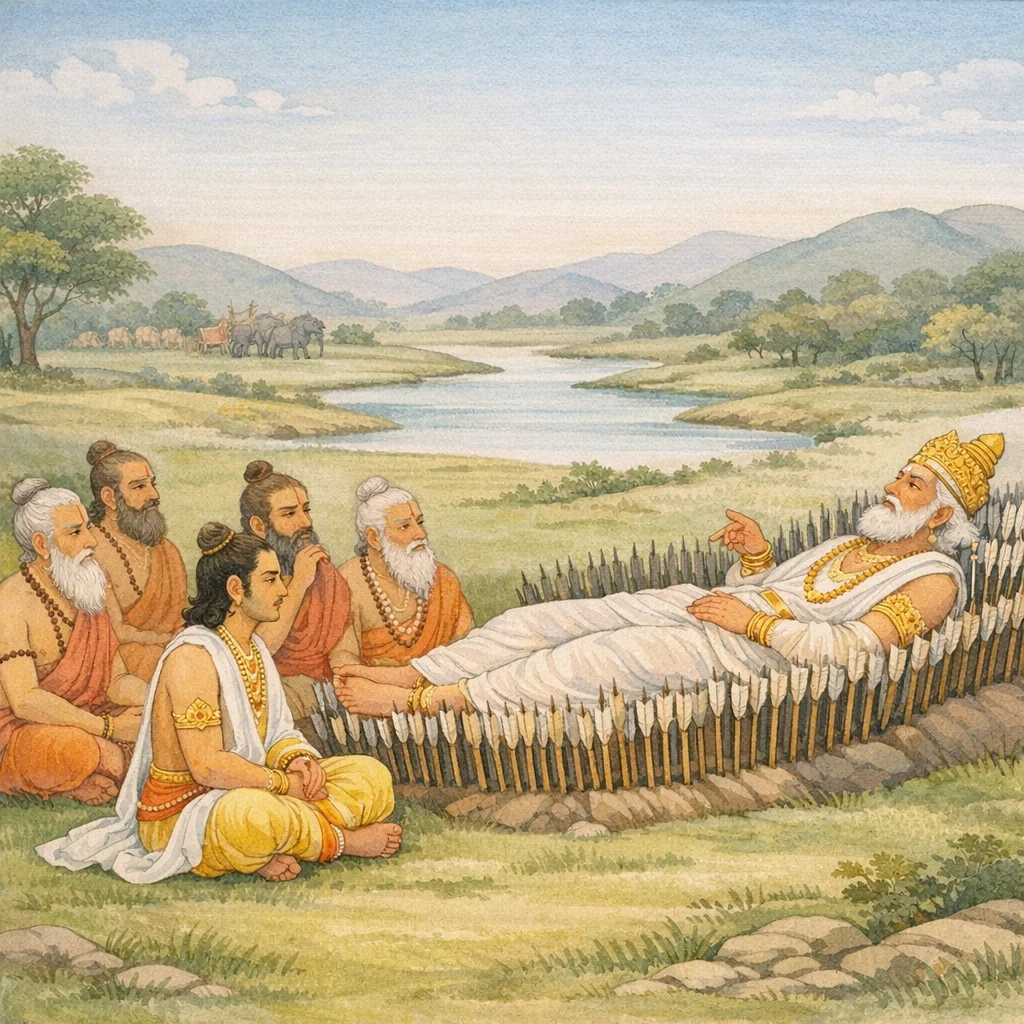
Vaiśaṃpāyana describes the Pāṇḍavas’ morning rites and their arrival at Kurukṣetra to sit around Bhīṣma. Yudhiṣṭhira asks why the designation “rājā” and the status “rāja-rāja” arise, and how one individual governs many who share comparable bodily and mental constituents. Bhīṣma answers with a cosmo-ethical history: in the early Kṛta age there was no king, no punishment, and mutual protection operated through dharma alone. Over time, fatigue and confusion lead to dharma’s weakening; lobha (greed), kāma (desire), rāga (attachment), and normative collapse follow, producing social disorder that alarms the gods. The gods seek Brahmā, who composes a vast śāstra integrating dharma, artha, kāma, and mokṣa, including the sciences of policy (daṇḍanīti), counsel, alliances, espionage, military organization, administration, and vices that undermine rule. This knowledge is successively condensed by Śiva, Indra, Bṛhaspati, and others to suit diminishing lifespans. The gods then request a single preeminent ruler; through genealogical episodes culminating in Pṛthu Vainya, kingship is instituted with vows of impartiality, protection, and disciplined punishment. The chapter concludes by defining “rājā” as one who ‘pleases/maintains’ the subjects (rañjana) through dharma-guided governance, and by linking royal authority to divine establishment and social stability.
Chapter Arc: प्रातःकाल युधिष्ठिर कुरुक्षेत्र में शरशय्या पर पड़े भीष्म के पास पहुँचते हैं; ऋषि-व्यास आदि का अभिवादन कर सब भीष्म के चारों ओर बैठते हैं—और राजा धर्म के मूल कारण को ‘तत्त्व’ से जानने की जिज्ञासा प्रकट करता है। → युधिष्ठिर पूछते हैं कि राज्य, राजा और दण्ड की आवश्यकता क्यों पड़ी—जबकि आदिकाल में न राज्य था, न राजा, न दण्ड; प्रजा धर्म से ही परस्पर रक्षा करती थी। फिर काम-राग के वश होकर मनुष्य कार्य-अकार्य भूलने लगे और व्यवस्था डगमगाने लगी। → देवताओं की सभा में यज्ञ-परम्परा के लोप से वर्षा-चक्र टूटने का संकट उठता है; तब स्वयंभू ब्रह्मा समाधान का संकल्प लेते हैं और त्रिवर्ग (धर्म-अर्थ-काम) का विस्तृत नीतिशास्त्र रचने की घोषणा करते हैं—यही ‘दण्ड-नीति’ और राजधर्म की वैचारिक उत्पत्ति का निर्णायक क्षण बनता है। → ब्रह्मा अपनी बुद्धि से एक विशाल नीतिशास्त्र की रचना करते हैं जिसमें धर्म, अर्थ और काम का विधान है; संकेत मिलता है कि इसी से लोक-व्यवस्था, दण्ड-व्यवस्था और राजसत्ता का औचित्य स्थापित हुआ। → पृथु-चरित्र और ब्रह्म-नीति के व्यावहारिक विस्तार की ओर कथा मुड़ती है—अब यह जानना शेष है कि यह नीति पृथ्वी-पालन और प्रजा-रक्षा में कैसे मूर्त होती है।
Shlokas
Verse 1
अपन का छा | अप्-४#-काल जा एकोनषशष्टितमो< ध्याय: ब्रह्माजीके नीतिशास्त्रका तथा राजा पृथुके चरित्रका वर्णन वैशम्पायन उवाच ततः कल्यं समुत्थाय कृतपूर्वाह्निकक्रिया: । ययुस्ते नगराकारै रथै: पाण्डवयादवा:,वैशम्पायनजी कहते हैं--जनमेजय! तदनन्तर दूसरे दिन सबेरे उठकर पाण्डव और यदुवंशी वीर पूर्वाह्नकालके नित्यकर्म पूर्ण करनेके अनन्तर नगराकार विशाल रथोंपर सवार हो हस्तिनापुरसे चल दिये
Vaiśampāyana said: “Then, O Janamejaya, on the next day at dawn, the Pāṇḍavas and the Yādava heroes rose and, having completed their prescribed morning rites, mounted great chariots fashioned like moving cities, and set out from Hastināpura.”
Verse 2
प्रतिपद्य कुरुक्षेत्र भीष्ममासाद्य चानघ । सुखां च रजनी पृष्टवा गाड्गेयं रथिनां वरम्,निष्पाप नरेश! कुरुक्षेत्रमें जा रथियोंमें श्रेष्ठ गड़ा-नन्दन भीष्मजीके पास पहुँचकर उनसे सुखपूर्वक रात बीतनेका समाचार पूछकर व्यास आदि महर्षियोंको प्रणाम करके उन सबके द्वारा अभिनन्दित हो वे पाण्डव और श्रीकृष्ण भीष्मजीको सब ओरसे घेरकर उनके पास ही बैठ गये
Vaiśampāyana said: “O sinless one, having reached Kurukṣetra and approached Bhīṣma, the best of chariot-warriors, they respectfully inquired whether he had passed the night in comfort.”
Verse 3
व्यासादीनभिवाद्यर्षन् सर्वैस्तैश्नाभिनन्दिता: । निषेदुरभितो भीष्म परिवार्य समन्ततः,निष्पाप नरेश! कुरुक्षेत्रमें जा रथियोंमें श्रेष्ठ गड़ा-नन्दन भीष्मजीके पास पहुँचकर उनसे सुखपूर्वक रात बीतनेका समाचार पूछकर व्यास आदि महर्षियोंको प्रणाम करके उन सबके द्वारा अभिनन्दित हो वे पाण्डव और श्रीकृष्ण भीष्मजीको सब ओरसे घेरकर उनके पास ही बैठ गये
Vaiśampāyana said: Having bowed to Vyāsa and the other seers, and being greeted and honored by them all, the Pāṇḍavas—together with Śrī Kṛṣṇa—sat down around Bhīṣma on every side, encircling him in reverence.
Verse 4
ततो राजा महातेजा धर्मराजो युधिष्ठिर: । अब्रवीत् प्राञ्जलिर्भीष्म॑ प्रतिपूज्य यथाविधि,तब महातेजस्वी राजा धर्मराज युधिष्ठिरने भीष्मजीका विधिपूर्वक पूजन करके उनसे दोनों हाथ जोड़कर कहा
Then King Yudhiṣṭhira, the radiant upholder of dharma, having duly honored Bhīṣma according to proper rite, spoke to him with hands joined in reverence—signaling humility, ethical seriousness, and readiness to receive instruction on righteous conduct after the devastation of war.
Verse 5
युधिछ्िर उवाच य एष राजनू् राजेति शब्दश्चरति भारत । कथमेष समुत्पन्नस्तन्मे ब्रूहि परंतप,युधिष्ठिर बोले--शत्रुओंको संताप देनेवाले भरत-वंशी नरेश! लोकमें जो यह राजा शब्द चल रहा है, इसकी उत्पत्ति कैसे हुई है? यह मुझे बतानेकी कृपा करें
Yudhiṣṭhira said: “O king, O scion of Bharata’s line—this word ‘rājā’ (king) is current in the world. How did this designation arise? Tell me, O subduer of foes.”
Verse 6
तुल्यपाणिभुजग्रीवस्तुल्यबुद्धीन्द्रियात्मक: । तुल्यदुः:खसुखात्मा च तुल्यपृष्ठमुखोदर:,जिसे हम राजा कहते हैं, वह सभी गुणोंमें दूसरोंके समान ही है। उसके हाथ, बाँह और गर्दन भी औरोंकी ही भाँति हैं। बुद्धि और इन्द्रियाँ भी दूसरे लोगोंके ही तुल्य हैं। उसके मनमें भी दूसरे मनुष्योंके समान ही सुख-दुःखका अनुभव होता है। मुँह, पेट, पीठ, वीर्य, हड्डी, मज्जा, मांस, रक्त, उच्छवास, निःश्वास, प्राण, शरीर, जन्म और मरण आदि सभी बातें राजामें भी दूसरोंके समान ही हैं। फिर वह विशिष्ट बुद्धि रखनेवाले अनेक शूरवीरोंपर अकेला ही कैसे अपना प्रभुत्व स्थापित कर लेता है?
Yudhiṣṭhira said: “A king’s hands, arms, and neck are like those of other men; his intellect and senses are like theirs as well. He too experiences pleasure and pain as they do, and his back, face, and belly are no different. If, in bodily nature and inner experience, he is equal to others, how does one man—alone—establish mastery over many heroes endowed with exceptional intelligence and valor?”
Verse 7
तुल्यशुक्रास्थिमज्जा च तुल्यमांसासूगेव च । नि:श्वासोच्छवासतुल्यश्षतुल्यप्राणशरीरवान्,जिसे हम राजा कहते हैं, वह सभी गुणोंमें दूसरोंके समान ही है। उसके हाथ, बाँह और गर्दन भी औरोंकी ही भाँति हैं। बुद्धि और इन्द्रियाँ भी दूसरे लोगोंके ही तुल्य हैं। उसके मनमें भी दूसरे मनुष्योंके समान ही सुख-दुःखका अनुभव होता है। मुँह, पेट, पीठ, वीर्य, हड्डी, मज्जा, मांस, रक्त, उच्छवास, निःश्वास, प्राण, शरीर, जन्म और मरण आदि सभी बातें राजामें भी दूसरोंके समान ही हैं। फिर वह विशिष्ट बुद्धि रखनेवाले अनेक शूरवीरोंपर अकेला ही कैसे अपना प्रभुत्व स्थापित कर लेता है?
Yudhiṣṭhira said: “A king is, in bodily substance, no different from other men: his semen, bones, and marrow are the same; his flesh and blood are the same; his inhalation and exhalation are the same; his vital breath and embodied frame are the same. Like others, he experiences pleasure and pain within the mind, and his intellect and senses are of the same kind. If in birth and death, in body and breath, he is equal to all, then by what means does he, alone, establish mastery over many heroic men endowed with superior intelligence?”
Verse 8
समानजन्ममरण: सम: सर्वर्गुणैर्नुणाम् । विशिष्टबुद्धीन् शूरांश्ष कथमेकोडथितिष्ठति,जिसे हम राजा कहते हैं, वह सभी गुणोंमें दूसरोंके समान ही है। उसके हाथ, बाँह और गर्दन भी औरोंकी ही भाँति हैं। बुद्धि और इन्द्रियाँ भी दूसरे लोगोंके ही तुल्य हैं। उसके मनमें भी दूसरे मनुष्योंके समान ही सुख-दुःखका अनुभव होता है। मुँह, पेट, पीठ, वीर्य, हड्डी, मज्जा, मांस, रक्त, उच्छवास, निःश्वास, प्राण, शरीर, जन्म और मरण आदि सभी बातें राजामें भी दूसरोंके समान ही हैं। फिर वह विशिष्ट बुद्धि रखनेवाले अनेक शूरवीरोंपर अकेला ही कैसे अपना प्रभुत्व स्थापित कर लेता है?
Yudhiṣṭhira said: “A king is born and dies like other men, and in his human qualities too he is essentially the same as everyone else. How, then, does a single person come to exercise dominion over many heroes who are courageous and endowed with superior intelligence? The question probes the ethical basis of political authority: if the ruler is not inherently different in body or fate, by what dharmic principle does his sovereignty become legitimate and effective?”
Verse 9
कथमेको महीं कृत्स्नां शूरवीरार्यसंकुलाम् । रक्षत्यपि च लोकस्य प्रसादमभिवाउछति,अकेला होनेपर भी वह शूरवीर एवं सत्पुरुषोंसे भरी हुई इस सारी पृथ्वीका कैसे पालन करता है और कैसे सम्पूर्ण जगत्की प्रसन्नता चाहता है?
Yudhiṣṭhira asked: “How can a single ruler, all alone, protect this entire earth—crowded with heroic warriors and noble men—and yet also seek the goodwill and contentment of all the people?”
Verse 10
एकस्य तु प्रसादेन कृत्स्नो लोक: प्रसीदति । व्याकुले चाकुल: सर्वो भवतीति विनिश्चय:,यह निश्चित रूपसे देखा जाता है कि एकमात्र राजाकी प्रसन्नतासे ही सारा जगत् प्रसन्न होता है और उस एकके ही व्याकुल होनेपर सब लोग व्याकुल हो जाते हैं
Yudhiṣṭhira said: “By the favor and contentment of a single ruler, the whole world becomes content; and when that one is distressed, everyone becomes distressed—this is the settled conclusion.”
Verse 11
एतदिच्छाम्यहं श्रोतुं तत््वेन भरतर्षभ । कृत्स्नं तन्मे यथातत्त्व॑ प्रत्रूहि वदतां वर,भरतश्रेष्ठ) इसका क्या कारण है? यह मैं यथार्थरूपसे सुनना चाहता हूँ। वक्ताओंमें श्रेष्ठ पितामह! यह सारा रहस्य मुझे यथावत् रूपसे बताइये
Yudhiṣṭhira said: “O bull among the Bharatas, I wish to hear this in its true essence. O best of speakers, explain to me fully and exactly as it is—the whole truth behind it.”
Verse 12
नैतत् कारणमल्पं हि भविष्यति विशाम्पते । यदेकस्मिन् जगत् सर्व देववद् याति संनतिम्,प्रजानाथ! यह सारा जगत् जो एक ही व्यक्तिको देवताके समान मानकर उसके सामने नतमस्तक हो जाता है, इसका कोई स्वल्प कारण नहीं हो सकता
Yudhiṣṭhira said: “O lord of the people, this cannot have a trivial cause. That the entire world, fixing its regard upon a single person, bows down to him as if to a deity—such universal reverence must arise from a weighty reason.”
Verse 13
भीष्म उवाच नियततस्त्वं नरव्याप्र शृणु सर्वमशेषत: । यथा राज्यं समुत्पन्नममादौ कृतयुगे5भवत्,भीष्मजीने कहा--पुरुषसिंह! आदि सत्ययुगमें जिस प्रकार राजा और राज्यकी उत्पत्ति हुई, वह सारा वृत्तान्त तुम एकाग्र होकर सुनो
Bhishma said: “O tiger among men, listen with steady attention to everything in full. I shall relate how kingship and the polity first arose in the beginning, in the age of Kṛta (Satya Yuga).”
Verse 14
न वै राज्यं न राजा55सीन्न च दण्डो न दाण्डिक: । धर्मेणैव प्रजा: सर्वा रक्षन्ति सम परस्परम्,पहले न कोई राज्य था, न राजा, न दण्ड था और न दण्ड देनेवाला, समस्त प्रजा धर्मके द्वारा ही एक-दूसरेकी रक्षा करती थी
Bhishma said: In the earliest time there was neither a kingdom nor a king; there was neither punishment nor an enforcer of punishment. All people, guided solely by dharma, protected one another in mutual regard.
Verse 15
पाल्यमानास्तथान्योन्यं नरा धर्मेण भारत । खेदं परमुपाजग्मुस्ततस्तान् मोह आविशत्,भारत! सब मनुष्य धर्मके द्वारा परस्पर पालित और पोषित होते थे। कुछ दिनोंके बाद सब लोग पारस्परिक संरक्षणके कार्यमें महान् कष्टका अनुभव करने लगे; फिर उन सबपर मोह छा गया
Bhishma said: “O Bharata, people were sustaining and nurturing one another through dharma. In time, however, they came to feel intense strain in the very work of mutual protection; and then delusion overcame them.”
Verse 16
ते मोहवशमापन्ना मनुजा मनुजर्षभ । प्रतिपत्तिविमोहाच्च धर्मस्तेषामनीनशत्,नरश्रेष्ठी जब सारे मनुष्य मोहके वशीभूत हो गये, तब कर्तव्याकर्तव्यके ज्ञानसे शून्य होनेके कारण उनके धर्मका नाश हो गया
Bhishma said: “O bull among men, when people fell under the sway of delusion, and became bewildered about what ought to be done and what ought not to be done, their dharma—right order and moral restraint—was destroyed.”
Verse 17
नष्टायां प्रतिपत्तो च मोहवश्या नरास्तदा । लोभस्य वशमापतन्ना: सर्वे भरतसत्तम
Bhishma said: “When right understanding had been lost, men at that time became helpless under delusion; and all of them, O best of the Bharatas, fell under the sway of greed.”
Verse 18
भरतभूषण! कर्तव्याकर्तव्यका ज्ञान नष्ट हो जानेपर मोहके वशीभूत हुए सब मनुष्य लोभके अधीन हो गये ।। अप्राप्तस्याभिमर्श तु कुर्वन्तो मनुजास्तत: । कामो नामापरस्तत्र प्रत्यपद्यत वै प्रभो,फिर जो वस्तु उन्हें प्राप्त नहीं थी, उसे पानेका वे प्रयत्न करने लगे। प्रभो! इतनेहीमें वहाँ काम नामक दूसरे दोषने उन्हें घेर लिया
Bhishma said: “O ornament of the Bharata line! When discernment of what ought to be done and what ought not to be done is lost, all people, overpowered by delusion, fall under the sway of greed. Then, striving after what they have not obtained, they begin to scheme and reach for it; and at that very point, O lord, another fault—called desire—comes upon them and takes hold.”
Verse 19
तांस्तु कामवशं प्राप्तान् रागो नाम समस्पृशत् । रक्ताश्न नाभ्यजानन्त कार्याकार्ये युधिष्ठिर,युधिष्ठिर! कामके अधीन हुए उन मनुष्योंपर क्रोध नामक शत्रुने आक्रमण किया। क्रोधके वशीभूत होकर वे यह न जान सके कि क्या कर्तव्य है और क्या अकर्तव्य?
Bhishma said: Those men, having fallen under the sway of desire, were then seized by passion. Inflamed by it, O Yudhishthira, they could no longer discern what ought to be done and what ought not to be done.
Verse 20
अगम्यागमनं चैव वाच्यावाच्यं तथैव च । भक्ष्याभक्ष्यं च राजेन्द्र दोषादोषं च नात्यजन्,राजेन्द्र! उन्होंने अगम्यागमन, वाच्य-अवाच्य, भक्ष्य-अभक्ष्य तथा दोष-अदोष कुछ भी नहीं छोड़ा
Bhishma said: O best of kings, they did not refrain from anything—going to forbidden places and persons, speaking what should or should not be spoken, eating what is permitted or forbidden, or committing acts that are blameworthy or blameless. In their conduct, no boundary of propriety was left untransgressed.
Verse 21
विप्लुते नरलोके वै ब्रह्म चैव ननाश ह । नाशाच्च ब्रह्मणो राजन् धर्मो नाशमथागमत्,इस प्रकार मनुष्यलोकमें धर्मका विप्लव हो जानेपर वेदोंके स्वाध्यायका भी लोप हो गया। राजन! वैदिक ज्ञानका लोप होनेसे यज्ञ आदि कर्मोंका भी नाश हो गया
Bhishma said: When disorder overwhelmed the world of men, the sacred Vedic learning itself perished. O King, with the loss of that Brahman (Vedic knowledge), dharma too fell into ruin.
Verse 22
नष्टे ब्रह्मणि धर्मे च देवांस्त्रास: समाविशत् | ते त्रस्ता नरशार्दूल ब्रह्माणं शरणं ययु:,इस प्रकार जब वेद और धर्मका नाश होने लगा, तब देवताओंके मनमें भय समा गया। पुरुषसिंह! वे भयभीत होकर ब्रह्माजीकी शरणमें गये
Bhishma said: When sacred knowledge (brahman/veda) and dharma began to perish, fear entered the gods. Terrified, O tiger among men, they went to Brahmā for refuge.
Verse 23
प्रसाद्य भगवन्तं ते देव लोकपितामहम् । ऊचुः: प्राज्जलय: सर्वे दुःखवेगसमाहता:,लोकपितामह भगवान् ब्रह्माको प्रसन्न करके दुःखके वेगसे पीड़ित हुए समस्त देवता उनसे हाथ जोड़कर बोले--
Bhishma said: Having propitiated that Blessed Lord, Brahmā—the grandsire of the worlds—the gods, all with hands joined in reverence and struck by the surge of sorrow, addressed him—
Verse 24
भगवन् नरलोकस्थं ग्रस्तं ब्रह्म सनातनम् । लोभमोहादिभिभ्भावैस्ततो नो भयमाविशत्,“भगवन्! मनुष्यलोकमें लोभ, मोह आदि दूषित भावोंने सनातन वैदिक ज्ञानको विलुप्त कर डाला है; इसलिये हमें बड़ा भय हो रहा है
Bhishma said: “O venerable one, in the human world the eternal Brahman—here meaning the timeless Vedic wisdom—has been swallowed up by corrupted states such as greed and delusion. Therefore fear has entered us, for when true knowledge is eclipsed by moral confusion, dharma itself becomes endangered.”
Verse 25
ब्रह्मणश्ष प्रणाशेन धर्मो व्यनशदी श्वर । ततः सम समतां याता मर्त्यस्त्रिभुवनेश्वर,“ईश्वर! तीनों लोकोंके स्वामी परमेश्वर! वैदिक ज्ञानका लोप होनेसे यज्ञ-धर्म नष्ट हो गया। इससे हम सब देवता मनुष्योंके समान हो गये हैं
Bhishma said: “O Lord! When the Brahman (Vedic sacred knowledge) was lost, dharma too perished. Thereafter, O Sovereign of the three worlds, we (the gods) were reduced to the same level as mortals.”
Verse 26
अधो हि वर्षमस्माकं नरास्तूर्ध्वप्रवर्षिण: । क्रियाव्युपरमात् तेषां ततो गच्छाम संशयम्
Bhīṣma said: “For us, the rain seems to fall downward, while those men appear to have rain falling upward. When their ritual and rightful activity comes to a halt, then we too, without doubt, proceed to the same fate.”
Verse 27
“मनुष्य यज्ञ आदिमें घीकी आहुति देकर हमारे लिये ऊपरकी ओर वर्षा करते थे और हम उनके लिये नीचेकी ओर पानी बरसाते थे; परंतु अब उनके यज्ञकर्मका लोप हो जानेसे हमारा जीवन संशयमें पड़ गया है ।। अत्र नि:श्रेयसं यन्नस्तद् ध्यायस्व पितामह । त्वत्प्रभावसमुत्थोडसौ स्वभावो नो विनश्यति,“पितामह! अब जिस उपायसे हमारा कल्याण हो सके, वह सोचिये। आपके प्रभावसे हमें जो दैवस्वभाव प्राप्त हुआ था, वह नष्ट हो रहा है”
Bhishma said: “In former times, men began their sacrifices by offering ghee, sending the oblation upward for our sake; and we, in return, sent water downward as rain for theirs. But now, with the decline and disappearance of sacrificial rites, our very existence has fallen into uncertainty. Grandfather, consider what course will bring us true welfare. The divine nature that arose from your power is now being lost.”
Verse 28
तानुवाच सुरान् सर्वान् स्वयम्भूर्भगवांस्ततः । श्रेयो5हं चिन्तयिष्यामि व्येतु वो भी:सुरर्षभा:,तब भगवान् ब्रह्माने उन सब देवताओंसे कहा--'सुरश्रेष्ठगण! तुम्हारा भय दूर हो जाना चाहिये। मैं तुम्हारे कल्याणका उपाय सोचूँगा'
Then the Blessed Self-born (Brahmā) addressed all the gods: “O best of the Suras, let your fear be dispelled. I shall reflect upon what is truly beneficial and devise the means for your welfare.”
Verse 29
ततो<ध्यायसहस्राणां शतं चक्रे स्वबुद्धिजम् । यत्र धर्मस्तथैवार्थ: कामश्चैवाभिवर्णित:
Bhīṣma said: “Thereafter, by the power of his own intellect, he composed a hundred thousand chapters, in which dharma, artha, and kāma were all set forth and explained.”
Verse 30
त्रिवर्ग इति विख्यातो गण एष स्वयम्भुवा । तदनन्तर ब्रह्माजीने अपनी बुद्धिसे एक लाख अध्यायोंका एक ऐसा नीतिशास्त्र रचा, जिसमें धर्म, अर्थ और कामका विस्तारपूर्वक वर्णन है। जिसमें इन वर्गोंका वर्णन हुआ है, वह प्रकरण “त्रिवर्ग” नामसे विख्यात है ।। चतुर्थो मोक्ष इत्येव पृथगर्थ: पृथग्गुण:
Bhishma said: This triad, famed as the ‘three aims of life’ (trivarga), is a classification taught from the tradition of Svayambhu (the Self-born). Thereafter Brahmā, by his own intellect, composed a vast treatise on polity and right conduct—said to extend to a hundred thousand chapters—in which Dharma, Artha, and Kāma are explained in full detail. The section that expounds these three is therefore known as ‘Trivarga’. Yet there is also a fourth aim, called Mokṣa—distinct in its purpose and distinct in its quality.
Frequently Asked Questions
The dilemma concerns political legitimacy: if humans are broadly equal in constitution and capacity, on what ethical basis can one person wield coercive authority, and why should society seek that person’s favor?
Governance is portrayed as a remedial institution: when dharma no longer self-regulates society, disciplined authority (daṇḍa) becomes necessary to protect the vulnerable, restrain transgression, and re-anchor the puruṣārthas within a stable order.
No explicit phalaśruti is stated; the meta-commentary appears as a legitimizing frame—nīti is presented as a divinely authored and progressively condensed śāstra, implying its authoritative status for sustaining social welfare and ethical rule.