Adhyaya 34
कालनिर्देशः शोकनिवारणं च (Instruction on Kāla and the Removal of Grief)
Upa-parva: Śoka-nivāraṇa and Kāla–Karma Upadeśa (Vyāsa’s Consolation to Yudhiṣṭhira)
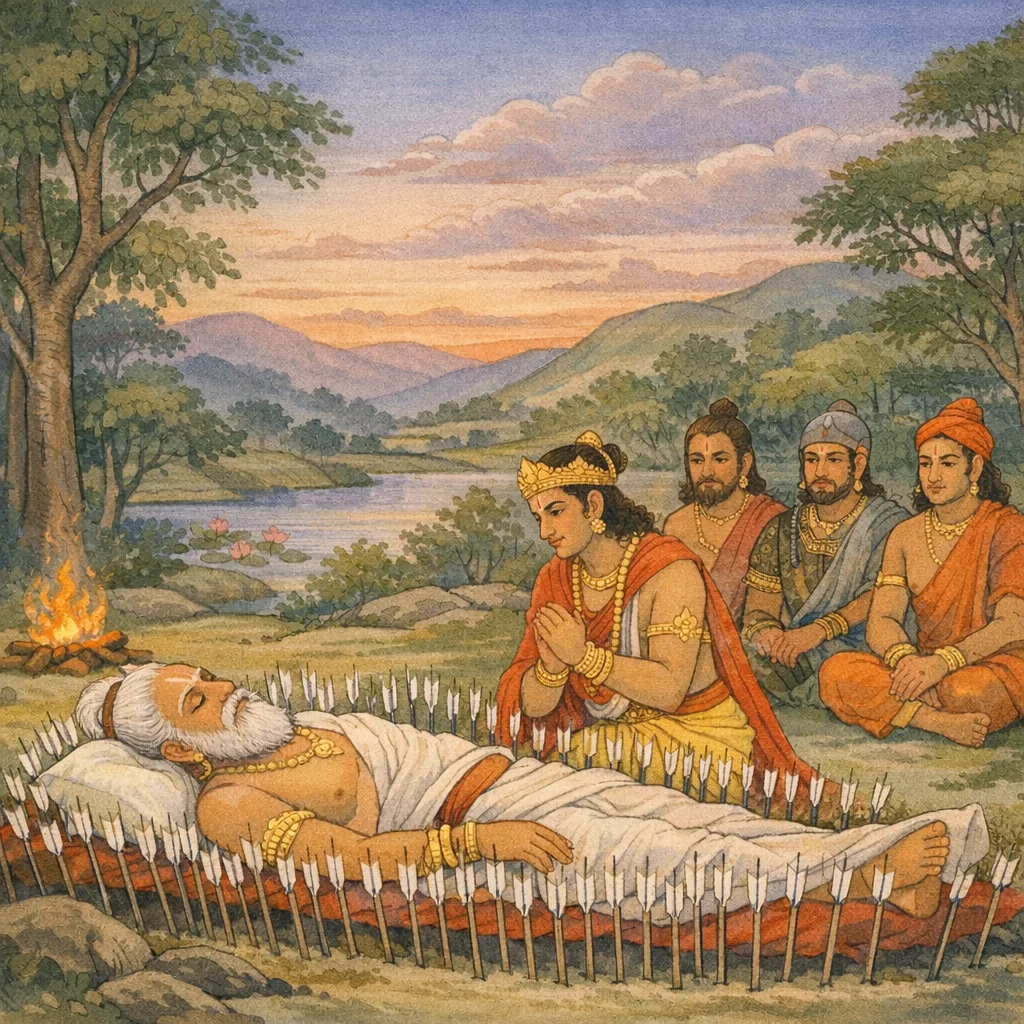
Vaiśaṃpāyana reports that, after hearing Yudhiṣṭhira’s troubled words, Dvaipāyana (Vyāsa) responds with a carefully reasoned consolation. He instructs the king not to sink into despair and to remember kṣatriya-dharma: those who fell did so within their own duty and under the dispensation of kāla. Vyāsa limits personal culpability by asserting that neither Yudhiṣṭhira nor his brothers are the ultimate agents; time, operating through cyclical law and karmic witnessing, withdraws life from embodied beings. Kāla is described as the witness of merit and demerit and as the dispenser of resultant pleasure and pain. The discourse then turns to pragmatic remediation: where remorse arises from mental agitation and perceived fault, prāyaścitta is advised, specifically the aśvamedha as a royal expiation. Exempla are introduced (a prior deva–asura conflict and subsequent purgation) to normalize large-scale loss within cosmic order and to distinguish complex cases where “dharma can appear as adharma and adharma as dharma,” requiring discernment. Vyāsa concludes by urging Yudhiṣṭhira to reassure kin and subjects, install successors across realms, protect dependents, and then perform the horse-sacrifice, thereafter ruling in accordance with dharma for present stability and future welfare.
Chapter Arc: युधिष्ठिर पितामह से पूछते हैं—किन कर्मों से मनुष्य प्रायश्चित्त का अधिकारी बनता है, और कौन-सा प्रायश्चित्त उसे पाप से मुक्त करता है? → भीष्म ‘करने-न-करने’ की सूक्ष्म रेखा खींचते हैं: ब्रह्मचर्य-भंग के प्रसंग (सूर्योदय/सूर्यास्त तक सोना, स्वप्न-दोष), द्विज-वध, अनुचित आचरण, तीर्थ/दान में त्रुटि, और आपत्ति-काल में किए गए कर्म—इन सबमें दोष, न दोष, और शुद्धि के भेद बताकर शंका को गहरा करते हैं। → निर्णायक बिंदु यह स्थापित होता है कि ‘दोष’ केवल कर्म से नहीं, बल्कि तत्त्व-ज्ञान, उद्देश्य (काम/लोभ बनाम आवश्यकता), परिस्थिति (आपद्-धर्म), और अनजानेपन (अज्ञान) से तय होता है—जैसे आपत्काल में गुरु-कार्य हेतु किया गया स्तेय, स्वप्न में शुक्रमोक्ष पर आज्यहोम-प्रायश्चित्त, तथा सोम-विक्रय/सेवक-त्याग/गोरक्षा हेतु वनदाह जैसे कर्मों में दोष-अदोष का विवेचन। → अध्याय का निष्कर्ष यह है कि प्रायश्चित्त का विधान ‘अपराध की प्रकृति’ के साथ ‘कर्ता की चेतना’ को जोड़कर चलता है: अज्ञानजन्य त्रुटियाँ स्वतः दूषण नहीं बनतीं; कुछ कर्म आपत्ति या धर्म-रक्षा में किए जाएँ तो दोषरहित माने जाते हैं; और जहाँ दोष है वहाँ नियत शुद्धि-कर्म (जैसे आज्यहोम) से पुनः धर्म-स्थिति संभव है।
Shlokas
Verse 1
ऑपनआ कराता बछ। अर: चतुस्त्रिंशो 5 ध्याय: जिन कर्मोके करने और न करनेसे कर्ता प्रायश्षित्तका भागी होता और नहीं होता--उनका विवेचन युधिषछ्िर उवाच कानि कृत्वेह कर्माणि प्रायश्षित्तीयते नर: । कि कृत्वा मुच्यते तत्र तन्मे ब्रूहि पितामह
Yudhiṣṭhira said: “O Grandsire, what kinds of actions done in this world make a person liable to expiation? And by doing what does one become freed from that burden? Please tell me.”
Verse 2
युधिष्ठिरने पूछा--पितामह! किन-किन कर्मोंको करनेसे मनुष्य प्रायश्चित्तका अधिकारी होता है और उनके लिये कौन-सा प्रायश्चित्त करके वह पापसे मुक्त होता है? इस विषयमें यह मुझे बतानेकी कृपा करें ।। व्यास उवाच अकुर्वन् विहित॑ कर्म प्रतिषिद्धानि चाचरन् | प्रायश्षित्तीयते होवं नरो मिथ्यानुवर्तयन्,व्यासजी बोले--राजन्! जो मनुष्य शास्त्रविहित कर्मोका आचरण न करके निषिद्ध कर्म कर बैठता है, वह उस विपरीत आचरणके कारण प्रायश्चित्तका भागी होता है
Vyāsa said: ‘O King, a man becomes liable to expiation when he neglects the duties enjoined by the śāstras and instead performs acts that are forbidden. By following such a wrong course of conduct, he incurs sin and therefore falls within the scope of prāyaścitta.’
Verse 3
सूर्येणा भ्युदितो यश्चव ब्रह्मचारी भवत्युत । तथा सूर्याभिनिर्मुक्त: कुनखी श्यावदन्नपि,जो ब्रह्मचारी सूर्योदय अथवा सूर्यास्तके समयतक सोता रहे तथा जिसके नख और दाँत काले हों,- उन सबको प्रायश्रित्त करना चाहिये
Vyāsa said: A brahmacārin who remains asleep even after the sun has risen, and likewise one who is still in bed at sunset; and also one whose nails are deformed and whose teeth are blackened—such persons should undertake expiatory observances. The teaching underscores that a student’s discipline is measured by wakeful vigilance, bodily cleanliness, and regulated conduct, and that lapses in these are to be corrected through prescribed penance rather than ignored.
Verse 4
परिवित्ति: परिवेत्ता ब्रह्मघ्नो यश्व॒ कुत्सक: । दिधिषूपपतिर्य: स्यादग्रेदिधिषुरेव च,कुन्तीनन्दन! इसके सिवा परिवेत्ता (बड़े भाईके अविवाहित रहते हुए विवाह करनेवाला छोटा भाई), परिवित्ति (परिवेत्ताका बड़ा भाई), ब्रह्महत्यारा और जो दूसरोंकी निन्दा करनेवाला है वह तथा छोटी बहिनके विवाहके बाद उसकी बड़ी बहिनसे ब्याह करनेवाला, जेठी बहिनके अविवाहित रहते हुए ही उसकी छोटी बहिनसे विवाह करनेवाला, जिसका व्रत नष्ट हो गया हो वह ब्रह्मचारी, द्विजकी हत्या करनेवाला, अपात्रको दान देनेवाला, सुपात्र ब्राह्मणको दान न देनेवाला, ग्रामका नाश करनेवाला, मांस बेचनेवाला तथा जो आग लगानेवाला है, जो वेतन लेकर वेद पढ़ानेवाला एवं स्त्री और शूद्रका वध करनेवाला है, इनमें पीछेवालोंसे पहलेवाले अधिक पापी हैं तथा पशु-वध करनेवाला, दूसरोंके घरमें आग लगानेवाला, झूठ बोलकर पेट पालनेवाला, गुरुका अपमान और सदाचारकी मर्यादाका उल्लंघन करनेवाला--ये सभी पापी माने गये हैं। इन्हें प्रायश्रित्त करना चाहिये
Vyāsa said: “O son of Kuntī, sinful are: the elder brother who is ‘passed over’ and left unmarried (parivitti), the younger brother who marries while his elder brother is still unmarried (parivettā), the slayer of a brāhmaṇa, and the reviler who habitually censures others. Likewise blameworthy are: the man who takes the younger sister as wife while the elder sister remains unmarried, and the man who seeks first to marry the younger in preference to the elder. These are transgressions of social and moral order, and they call for expiation (prāyaścitta).”
Verse 5
अवकीर्णी भवेद् यश्नव द्विजातिवधकस्तथा । अतीर्थ ब्राह्मणस्त्यागी तीर्थे चाप्रतिपादक:,कुन्तीनन्दन! इसके सिवा परिवेत्ता (बड़े भाईके अविवाहित रहते हुए विवाह करनेवाला छोटा भाई), परिवित्ति (परिवेत्ताका बड़ा भाई), ब्रह्महत्यारा और जो दूसरोंकी निन्दा करनेवाला है वह तथा छोटी बहिनके विवाहके बाद उसकी बड़ी बहिनसे ब्याह करनेवाला, जेठी बहिनके अविवाहित रहते हुए ही उसकी छोटी बहिनसे विवाह करनेवाला, जिसका व्रत नष्ट हो गया हो वह ब्रह्मचारी, द्विजकी हत्या करनेवाला, अपात्रको दान देनेवाला, सुपात्र ब्राह्मणको दान न देनेवाला, ग्रामका नाश करनेवाला, मांस बेचनेवाला तथा जो आग लगानेवाला है, जो वेतन लेकर वेद पढ़ानेवाला एवं स्त्री और शूद्रका वध करनेवाला है, इनमें पीछेवालोंसे पहलेवाले अधिक पापी हैं तथा पशु-वध करनेवाला, दूसरोंके घरमें आग लगानेवाला, झूठ बोलकर पेट पालनेवाला, गुरुका अपमान और सदाचारकी मर्यादाका उल्लंघन करनेवाला--ये सभी पापी माने गये हैं। इन्हें प्रायश्रित्त करना चाहिये
Vyāsa said: “A brahmacārin whose vow has been broken (avakīrṇin), one who kills a twice-born (dvija), one who abandons a brāhmaṇa worthy of support, and one who fails to make the proper offering or gift at a sacred ford (tīrtha)—such persons are to be regarded as grievous sinners. For violations of vows, violence against the learned, neglect of rightful giving, and irreverence at holy occasions are serious breaches of dharma and call for expiation (prāyaścitta).”
Verse 6
ग्रामघाती च कौन्तेय मांसस्य परिविक्रयी । यश्चाग्नीनपविध्येत तथैव ब्रद्मुविक्रयी,कुन्तीनन्दन! इसके सिवा परिवेत्ता (बड़े भाईके अविवाहित रहते हुए विवाह करनेवाला छोटा भाई), परिवित्ति (परिवेत्ताका बड़ा भाई), ब्रह्महत्यारा और जो दूसरोंकी निन्दा करनेवाला है वह तथा छोटी बहिनके विवाहके बाद उसकी बड़ी बहिनसे ब्याह करनेवाला, जेठी बहिनके अविवाहित रहते हुए ही उसकी छोटी बहिनसे विवाह करनेवाला, जिसका व्रत नष्ट हो गया हो वह ब्रह्मचारी, द्विजकी हत्या करनेवाला, अपात्रको दान देनेवाला, सुपात्र ब्राह्मणको दान न देनेवाला, ग्रामका नाश करनेवाला, मांस बेचनेवाला तथा जो आग लगानेवाला है, जो वेतन लेकर वेद पढ़ानेवाला एवं स्त्री और शूद्रका वध करनेवाला है, इनमें पीछेवालोंसे पहलेवाले अधिक पापी हैं तथा पशु-वध करनेवाला, दूसरोंके घरमें आग लगानेवाला, झूठ बोलकर पेट पालनेवाला, गुरुका अपमान और सदाचारकी मर्यादाका उल्लंघन करनेवाला--ये सभी पापी माने गये हैं। इन्हें प्रायश्रित्त करना चाहिये
Vyāsa said: “O Kaunteya, the destroyer of a village, the seller of flesh, and he who sets fires—likewise, the one who ‘sells’ sacred knowledge by teaching the Veda for wages—all are counted among grievous sinners. Such acts violate the foundations of social order and sacred duty; therefore they require expiation (prāyaścitta).”
Verse 7
स्त्रीशूद्रवधको यश्न पूर्व: पूर्वस्तु गर्हित: । यथा पशुसमालम्भी गृहदाहस्य कारक:,कुन्तीनन्दन! इसके सिवा परिवेत्ता (बड़े भाईके अविवाहित रहते हुए विवाह करनेवाला छोटा भाई), परिवित्ति (परिवेत्ताका बड़ा भाई), ब्रह्महत्यारा और जो दूसरोंकी निन्दा करनेवाला है वह तथा छोटी बहिनके विवाहके बाद उसकी बड़ी बहिनसे ब्याह करनेवाला, जेठी बहिनके अविवाहित रहते हुए ही उसकी छोटी बहिनसे विवाह करनेवाला, जिसका व्रत नष्ट हो गया हो वह ब्रह्मचारी, द्विजकी हत्या करनेवाला, अपात्रको दान देनेवाला, सुपात्र ब्राह्मणको दान न देनेवाला, ग्रामका नाश करनेवाला, मांस बेचनेवाला तथा जो आग लगानेवाला है, जो वेतन लेकर वेद पढ़ानेवाला एवं स्त्री और शूद्रका वध करनेवाला है, इनमें पीछेवालोंसे पहलेवाले अधिक पापी हैं तथा पशु-वध करनेवाला, दूसरोंके घरमें आग लगानेवाला, झूठ बोलकर पेट पालनेवाला, गुरुका अपमान और सदाचारकी मर्यादाका उल्लंघन करनेवाला--ये सभी पापी माने गये हैं। इन्हें प्रायश्रित्त करना चाहिये
Vyāsa said: “A sacrifice that involves the killing of women and Śūdras is condemned; and among such sinful acts, the earlier-mentioned is held to be more blameworthy than the later. Likewise, one who slaughters animals and one who sets fire to another’s house are counted among grievous wrongdoers.”
Verse 8
अनृतेनोपवर्ती च प्रतिरोद्धा गुरोस्तथा । एतान्येनांसि सर्वाणि व्युत्क्रान्तसमयश्नल यः:,कुन्तीनन्दन! इसके सिवा परिवेत्ता (बड़े भाईके अविवाहित रहते हुए विवाह करनेवाला छोटा भाई), परिवित्ति (परिवेत्ताका बड़ा भाई), ब्रह्महत्यारा और जो दूसरोंकी निन्दा करनेवाला है वह तथा छोटी बहिनके विवाहके बाद उसकी बड़ी बहिनसे ब्याह करनेवाला, जेठी बहिनके अविवाहित रहते हुए ही उसकी छोटी बहिनसे विवाह करनेवाला, जिसका व्रत नष्ट हो गया हो वह ब्रह्मचारी, द्विजकी हत्या करनेवाला, अपात्रको दान देनेवाला, सुपात्र ब्राह्मणको दान न देनेवाला, ग्रामका नाश करनेवाला, मांस बेचनेवाला तथा जो आग लगानेवाला है, जो वेतन लेकर वेद पढ़ानेवाला एवं स्त्री और शूद्रका वध करनेवाला है, इनमें पीछेवालोंसे पहलेवाले अधिक पापी हैं तथा पशु-वध करनेवाला, दूसरोंके घरमें आग लगानेवाला, झूठ बोलकर पेट पालनेवाला, गुरुका अपमान और सदाचारकी मर्यादाका उल्लंघन करनेवाला--ये सभी पापी माने गये हैं। इन्हें प्रायश्रित्त करना चाहिये
Vyāsa said: “O son of Kuntī, one who lives by falsehood, and one who obstructs or opposes his teacher—these and all such acts are sins; likewise, whoever transgresses the accepted bounds of proper conduct and established observances is counted among the sinful.”
Verse 9
अकार्याणि तु वक्ष्यामि यानि तानि निबोध मे । लोकवेदविरुद्धानि तान्येकाग्रमना: शृणु,इनके सिवा, जो लोक और वेदसे विरुद्ध न करनेयोग्य कर्म हैं, उन्हें भी बताता हूँ। तुम एकाग्रचित होकर सुनो और समझो
Vyāsa said: “Now I shall tell you of those acts that must not be done. Understand them from me. They stand opposed to both common moral order in the world and the authority of the Veda; therefore listen with a single-pointed mind.”
Verse 10
स्वधर्मस्य परित्याग: परधर्मस्य च क्रिया । अयाज्ययाजनं चैव तथाभक्ष्यस्य भक्षणम्
Vyāsa said: “Abandoning one’s own rightful duty and instead performing another’s duty; officiating in sacrifices for those who are unfit to be served as patrons; and likewise consuming what is forbidden to eat—these are grave deviations from dharma.”
Verse 12
आधानादीनि कर्माणि शक्तिमान्न करोति यः । अप्रयच्छंश्व॒ सर्वाणि नित्यदेयानि भारत
Vyāsa said: “O Bhārata, a person who has the means yet does not perform the prescribed rites beginning with the household sacraments, and who withholds all those gifts that ought to be given regularly, fails in his duty and falls short of righteous conduct.”
Verse 13
शरणागतसंत्यागो भृत्यस्यथाभरणं तथा । रसानां विक्रयश्षापि तिर्यग्योनिवधस्तथा,दक्षिणानामदानं च ब्राह्मणस्वाभिमर्शनम् । सर्वाण्येतान्यकार्याणि प्राहुर्धमविदो जना:
Vyāsa said: “To abandon one who has sought refuge, to withhold proper maintenance and protection from one’s dependent servant, to trade in intoxicating or pleasure-giving substances, to kill creatures of the animal realm, to refuse the customary gifts (especially those due in rites), and to violate or outrage a brāhmaṇa—those who truly know dharma declare all these to be acts that must not be done.”
Verse 14
भारत! अपने धर्मको त्याग देना और दूसरेके धर्मका आचरण करना, यज्ञके अनधिकारीको यज्ञ कराना तथा अभक्ष्य भक्षण करना, शरणागतका त्याग करना और भरण करने योग्य व्यक्तियोंका भरण-पोषण न करना, एवं रसोंको बेचना, पशु-पक्षियोंको मारना और शक्ति रहते हुए भी अग्न्याधान आदि कर्मोको न करना, नित्य देने योग्य गोग्रास आदि को न देना, ब्राह्मणोंको दक्षिणा न देना और उनका सर्वस्व छीन लेना, धर्मतत्त्वके जाननेवालोंने ये सभी कर्म न करने योग्य बताये हैं ।। पित्रा विवदते पुत्रो यश्व स्थाद् गुरुतल्पग: । अप्रजायन् नरव्याप्र भवत्यधार्मिको नर:,राजन! जो पुरुष पिताके साथ झगड़ा करता है, गुरुकी शय्यापर सोता है, ऋतुकालमें भी अपनी पत्नीके साथ समागम नहीं करता है, वह मनुष्य अधार्मिक होता है
Vyāsa said: “O Bhārata, abandoning one’s own rightful duty and taking up another’s; making an unqualified person perform a sacrifice; eating what is forbidden; forsaking one who has sought refuge; failing to maintain those who ought to be supported; trading in intoxicating ‘juices’ and the like; killing beasts and birds; neglecting rites such as establishing the sacred fires even when one has the means; withholding daily offerings such as the cow’s portion; refusing sacrificial fees to Brahmins and even seizing their entire livelihood—those who know the principles of dharma declare all these to be acts that must not be done. And, O king: the man who quarrels with his father, who violates the teacher’s bed, and who—though the proper season has come—does not approach his wife for progeny, becomes an unrighteous man.”
Verse 15
उक्तान्येतानि कर्माणि विस्तरेणेतरेण च । यानि कुर्वन्नकुर्वश्च प्रायश्षित्तीयते नर:,इस प्रकार संक्षेप और विस्तारसे जो ये कर्म बताये गये हैं, उनमेंसे कुछको करनेसे और कुछको न करनेसे मनुष्य प्रायश्चित्तका भागी होता है
Vyāsa said: “These acts have been stated—some in detail and others in brief. By performing certain of them, and by refraining from certain others, a person becomes subject to prāyaścitta, that is, he incurs the need for atonement and purification in accordance with dharma.”
Verse 16
एतान्येव तु कर्माणि क्रियमाणानि मानवा: । येषु येषु निमित्तेषु न लिप्यन्तेडथ तान् शृणु,अब जिन-जिन कारणोंके होनेपर इन कर्मोौंको करते रहनेपर भी मनुष्य पापसे लिप्त नहीं होते, उनका वर्णन सुनो
“These very actions, when performed by human beings, do not bring moral taint in certain specific circumstances. Now listen as I explain the particular grounds on which, even while continuing to do these deeds, one is not stained by sin.”
Verse 17
प्रगृह् शस्त्रमायान्तमपि वेदान्तगं रणे | जिघांसन्तं जिघांसीयाजन्न तेन ब्रह्महा भवेत्,यदि युद्धस्थलमें वेदवेदान्तोंका पारगामी दिद्वान् ब्राह्मण भी हाथमें हथियार लेकर मारनेके लिये आवे तो स्वयं भी उसको मार डालनेकी चेष्टा करे। इससे ब्रह्महत्याका पाप नहीं लगता है
Vyāsa said: “Even if a Brahmin who has mastered the Vedas and Vedānta comes onto the battlefield with a weapon, intent on killing, one should strive to kill him in return. By doing so in the context of battle and self-defense, one does not incur the sin of Brahmin-slaying (brahmahatyā).”
Verse 18
इति चाप्यत्र कौन्तेय मन्त्रो वेदेषु पठ्यते । वेदप्रमाणविद्ितं धर्म च प्रत्रवीमि ते,कुन्तीनन्दन! इस विषयमें वेदका एक मन्त्र भी पढ़ा जाता है। मैं तुमसे उसी धर्मकी बात कहता हूँ, जो वैदिक प्रमाणसे विहित है
Vyāsa said: “O son of Kuntī, in this very matter a mantra is also recited in the Vedas. I shall declare to you that dharma which is known and established by Vedic authority.”
Verse 19
अपेतं ब्राह्मण वृत्ताद् यो हन्यादाततायिनम् | न तेन ब्रह्महा स स्यान्मन्युस्तन्मन्युमृच्छति,जो ब्राह्मणोचित आचारसे भ्रष्ट होकर आततायी बन गया हो--हाथमें हथियार लेकर मारने आ रहा हो, ऐसे ब्राह्मणको मारनेसे ब्रह्महत्याका पाप नहीं लगता। क्रोध ही उसके क्रोधका सामना करता है
Vyāsa said: “If a man kills a brāhmaṇa who has fallen away from brahminical conduct and has become an ātatāyin—an armed aggressor coming to slay—he does not thereby incur the sin of brahmahatyā (killing a brāhmaṇa). In such a case, it is wrath that meets wrath: the aggressor’s violent intent is answered by the force required to stop it.”
Verse 20
प्राणात्यये तथाज्ञानादाचरन्मदिरामपि । आदेशितो धर्मपरै: पुन: संस्कारमरहति,अनजानमें अथवा प्राणसंकटके समय भी यदि मदिरापान कर ले तो बादमें धर्मात्मा पुरुषोंकी आज्ञाके अनुसार उसका पुनः संस्कार होना चाहिये
Vyāsa said: Even if a person drinks intoxicating liquor out of ignorance, or in a moment when life itself is in peril, he is still fit afterward to undergo re-sanctification, when so directed by righteous authorities devoted to dharma. This teaching declares that blame rests upon intention and circumstance, and that moral restoration through prescribed rites is possible under proper guidance.
Verse 21
एतत् ते सर्वमाख्यातं कौन्तेयाभक्ष्यभक्षणम् । प्रायश्षित्तविधानेन सर्वमेतेन शुद्धयति,कुन्तीनन्दन! यही बात अन्य सब अभक्ष्यभक्षणोंके विषयमें भी कही गयी है। प्रायश्रित्त कर लेनेसे सब शुद्ध हो जाता है
Vyāsa said: “O son of Kuntī, I have now fully explained to you the matter of eating what is forbidden. By the prescribed method of expiation (prāyaścitta), all such fault is purified. The same principle applies to other instances of consuming what should not be consumed: once the proper expiation is performed, one becomes clean again.”
Verse 22
गुरुतल्पं हि गुर्वर्थ न दूषयति मानवम् | उद्दालक: श्वेतकेतुं जनयामास शिष्यत:,गुरुकी आज्ञासे उन्हींके प्रयोजनकी सिद्धिके लिये गुरुकी शय्यापर शयन करना मनुष्यको दूषित नहीं करता है। उद्दालकने अपने पुत्र श्वेतकेतुको शिष्यद्वारा उत्पन्न कराया था
Vyāsa said: Lying upon the teacher’s bed (gurūtālpa), when done for the teacher’s purpose and by the teacher’s command, does not defile a person. Thus it is said that Uddālaka caused his son Śvetaketu to be begotten through a disciple, in accordance with the intended purpose and authority of the guru.
Verse 23
स्तेय॑ कुर्वश्न गुर्वर्थमापत्सु न निषिध्यते । बहुश: कामकारेण न चेद् यः सम्प्रवर्तते
Vyāsa said: In times of distress, taking (even by stealth) for the sake of one’s teacher is not condemned. But one who does not repeatedly set himself to such acts out of mere desire and self-will is thereby distinguished from the habitually lawless.
Verse 24
अन्यत्र ब्राह्मणस्वेभ्य आददानो न दुष्यति । स्वयमप्राशिता यश्ष न स पापेन लिप्यते
Vyāsa said: “Except in the case of what belongs to Brahmins, one who takes (property) does not incur moral taint. And one who has not himself eaten (the food in question) is not stained by sin.”
Verse 25
(चोरी सर्वथा निषिद्ध है) किंतु आपत्तिकालमें कभी गुरुके लिये चोरी करनेवाला पुरुष दोषका भागी नहीं होता है। यदि मनमें कामना रखकर बारंबार उस चौर्य-कर्ममें वह प्रवृत्त न होता हो तो आपत्तिके समय ब्राह्मणके सिवा किसी दूसरेका धन लेनेवाला मनुष्य पापका भागी नहीं होता है। जो स्वयं उस चोरीका अन्न नहीं खाता, वह भी चौर्यदोषसे लिप्त नहीं होता है ।। प्राणत्राणेडनृतं वाच्यमात्मनो वा परस्य च । गुर्वर्थे स्त्रीषु चैव स््पाद् विवाहकरणेषु च,अपने या दूसरेके प्राण बचानेके लिये, गुरुके लिये, एकान्तमें अपनी स्त्रीके पास विनोद करते समय अथवा विवाहके प्रसड़में झूठ बोल दिया जाय तो पाप नहीं लगता है
Vyāsa explains that untruth may be spoken without incurring sin in narrowly defined emergencies and social necessities: to save one’s own life or another’s, for the sake of one’s teacher (guru), in private playful intimacy with one’s wife, or in the course of arranging a marriage. The ethical point is that dharma weighs intention and circumstance; truthfulness remains the norm, but it yields when higher goods—life, duty to the guru, and protection of social order—are at stake.
Verse 26
नावर्तते व्रतं स्वप्ने शुक्रमोक्षे कथंचन । आज्यहोम: समिद्धे्ग्नौ प्रायक्षित्तं विधीयते,यदि किसी कारणसे स्वप्रमें वीर्य स्खलित हो जाय तो इससे ब्रह्मचारीके लिये दुबारा व्रत लेने--उपनयन-संस्कार करानेकी आवश्यकता नहीं है। इसके लिये प्रज्वलित अग्निमें घीका हवन करना प्रायश्चित्त बताया गया है
Vyāsa said: If, in a dream, there is an involuntary emission of semen, the vow of brahmacarya is not considered broken in any way and need not be undertaken anew. For such an occurrence, an expiation is prescribed: an offering of ghee into a duly kindled fire.
Verse 27
पारिवित्त्यं तु पतिते नास्ति प्रव्रजिते तथा । भिक्षिते पारदार्य च तद् धर्मस्य न दूषकम्
Vyāsa said: “The fault called ‘pārivittya’ does not apply in the case of one who has fallen from right conduct, nor likewise in the case of one who has renounced the world. And when one is reduced to begging, even taking another’s wife (as a means of survival) is not regarded as a defilement of dharma.”
Verse 28
यदि बड़ा भाई पतित हो जाय या संन्यास ले ले तो उसके अविवाहित रहते हुए भी छोटे भाईका विवाह कर लेना दोषकी बात नहीं है। संतान-प्राप्तिके लिये स्त्रीद्वारा प्रार्थना करनेपर यदि कभी परस्त्रीसंगम किया जाय तो वह धर्मका लोप करनेवाला नहीं होता है ।। वृथा पशुसमालम्भं नैव कुर्यान्न कारयेत् । अनुग्रह: पशूनां हि संस्कारो विधिनोदित:,मनुष्यको चाहिये कि वह व्यर्थ ही पशुओंका वध न तो करे और न करावे। विधिपूर्वक किया हुआ पशुओंका संस्कार उनपर अनुग्रह है
Vyāsa explains that if the elder brother has fallen from right conduct or has taken renunciation, the younger brother may marry even while the elder remains unmarried, without incurring fault. Likewise, when a wife petitions for the sake of obtaining offspring, an exceptional union with another woman is said not to destroy dharma. He then adds a restraint: one should neither perform nor cause the needless killing of animals; when an animal is ritually consecrated according to prescribed rules, that act is regarded as a form of ‘favor’ or regulated dispensation toward the creature rather than mere violence.
Verse 29
अनरहें ब्राह्मणे दत्तमज्ञानात् तन्न दूषकम् | सत्काराणां तथा तीर्थ नित्यं वाप्रतिपादनम्,यदि अनजानमें किसी अयोग्य ब्राह्मणको दान दे दिया जाय अथवा योग्य ब्राह्मणको सत्कारपूर्वक दान न दिया जा सके तो वह दोषकारक नहीं होता
Vyāsa explains that if, through ignorance, a gift is given to an unworthy brāhmaṇa, it does not become a moral fault. Likewise, if one is unable to offer continual honoring gifts—whether to worthy recipients or in connection with sacred places and rites—and this failure, when not willful but constrained by circumstance, is not counted as blameworthy. The ethical emphasis is on intention and knowledge rather than accidental misdirection of charity.
Verse 30
स्त्रियास्तथापचारिण्या निष्कृति: स्याददूषिका । अपि सा पूयते तेन न तु भर्ता प्रदुष्पति,यदि व्यभिचारिणी स्त्रीका तिरस्कार किया जाय तो वह दोषकी बात नहीं है। उस तिरस्कारसे स्त्रीकी तो शुद्धि होती है और पति भी दोषका भागी नहीं होता
Vyāsa said: In the case of a woman who has behaved improperly, repudiation or social censure is a blameless form of expiation (prāyaścitta). By that very censure she is held to be purified, and the husband is not tainted by her transgression.
Verse 31
तत्त्वं ज्ञात्वा तु सोमस्य विक्रय: स्याददोषवान् | असमर्थस्य भृत्यस्य विसर्ग: स्याददोषवान् | वनदाहो गवामर्थे क्रियमाणो न दूषक:
Vyāsa said: “When one understands the true principle involved, even the selling of Soma may be free from fault. Likewise, dismissing a servant who is incapable may be free from fault. And a forest-fire set for the sake of cattle—when done for that purpose—is not blameworthy.”
Verse 32
सोमरसके तत्त्वको जानकर यदि उसका विक्रय किया जाय तो बेचनेवाला दोषका भागी नहीं होता। जो सेवक काम करनेमें असमर्थ हो जाय, उसे छोड़ देनेसे भी दोष नहीं लगता। गौओंकी सुविधाके लिये यदि जंगलमें आग लगायी जाय तो उससे पाप नहीं होता है।। उक्तान्येतानि कर्माणि यानि कुर्वन्न दुष्यति । प्रायक्षित्तानि वक्ष्यामि विस्तरेणैव भारत,भरतनन्दन! ये सब तो मैंने वे कर्म बताये हैं, जिन्हें करनेवाला दोषका भागी नहीं होता है। अब मैं विरतारपूर्वक प्रायश्ित्तोंका वर्णन करूँगा
Vyāsa said: If one, knowing the true nature of the Soma-juice, sells it, the seller does not incur blame. Likewise, there is no fault in dismissing a servant who has become incapable of performing his duties. And if, for the welfare of cattle, a forest is set on fire, no sin arises from that act. These are the kinds of actions, O Bhārata, which, when performed, do not taint a person with wrongdoing. Having thus stated the acts that do not generate culpability, I shall now describe, in full detail, the expiations (prāyaścitta) to be undertaken.
Verse 34
इति श्रीमहाभारते शान्तिपर्वणि राजधर्मानुशासनपर्वणि प्रायश्षित्तीये चतुस्त्रिंशो 5ध्याय:
Thus ends the thirty-fourth chapter on expiation (prāyaścitta) within the section on the instruction of royal duties (rājadharma) in the Śānti Parva of the Śrī Mahābhārata.
Frequently Asked Questions
Yudhiṣṭhira’s dilemma is self-attribution of blame for mass death versus the demands of kṣatriya-duty; Vyāsa resolves this by distinguishing immediate instrumental action from ultimate causality (kāla/karma) while still prescribing responsible restitution through rājadharma.
The chapter teaches a dual register: accept the impersonal operation of kāla as karmic witness and result-giver, yet do not abandon duty—transform grief into disciplined governance, social reassurance, and ethically framed remedial action.
A formal phalaśruti is not explicit; the functional equivalent is prescriptive closure—Vyāsa links correct understanding of kāla–karma to psychological steadiness, legitimate rule, and purification through aśvamedha, implying beneficial outcomes in both political order and the ruler’s moral trajectory.