Adhyaya 290
Adhyāya 290: Sāṃkhya-vidhi, Deha-doṣa, Guṇa-vicāra, and Mokṣa-gati (Bhīṣma–Yudhiṣṭhira Dialogue)
Upa-parva: Mokṣa-dharma (Liberation Teachings) — Sāṃkhya-Yoga Discourse Unit
Yudhiṣṭhira first acknowledges the previously explained yoga-path and requests a complete method of Sāṃkhya, recognizing Bhīṣma as authoritative across the three worlds (1–2). Bhīṣma presents a ‘pure’ Sāṃkhya associated with Kapila and accomplished ascetics, characterized by the removal of defects and the discernment of qualities (3–4). The chapter proceeds by cataloging the ‘viṣayas’ (domains/objects of experience) across multiple orders of beings and states, then expands into a comparative evaluation of pleasure, time, longevity, and the suffering that follows sense-seeking, including adverse destinies and embodied vulnerability (5–51). Yudhiṣṭhira asks specifically about bodily defects; Bhīṣma lists five: desire, anger, fear, sleep, and breath, and prescribes corresponding disciplines (52–55). The discourse then deepens into guṇa-analysis (sattva, rajas, tamas) and a layered account of how faculties and elements are ‘attached’ in a chain of dependence culminating in the self and Nārāyaṇa, while mokṣa itself is described as unattached (14–24, 18–23). Bhīṣma uses extended metaphors of crossing a perilous ocean of saṃsāra through jñāna-yoga, leading to an ascent through subtle carriers (sun-rays, winds, space, rajas, sattva) toward the supreme Nārāyaṇa/Paramātman and non-return (61–75). Yudhiṣṭhira raises a subtle concern about memory and the ‘defect’ of liberation if sages remain engaged with knowledge; Bhīṣma replies with a nuanced model of the subtle self’s movement, the dissolution of senses, and the self’s transcendence of prakṛti into the guṇa-less Paramātman, while mind and senses return in due course as if executing a teacher’s instruction (76–94). The chapter concludes by asserting the supremacy and antiquity of Sāṃkhya-knowledge, its presence across Veda, yoga, purāṇa, itihāsa, and śāstra, and by locating its ultimate ground in Nārāyaṇa as the sustaining principle of creation and dissolution (95–110).
Chapter Arc: भीष्म युधिष्ठिर को ‘यथापूर्व’ एक प्राचीन संवाद का द्वार खोलते हैं—जनक का महात्मा पराशर से प्रश्न: ऐसा कौन-सा शुभ कर्म है जो इस लोक और परलोक—दोनों में परम श्रेय देता है? → उत्तर कर्म-फल की सूक्ष्म गति में उतरता है: जीव कभी केवल पुण्य में स्थिर नहीं रहता; दुःख-क्षय के बाद पुण्य क्षीण होता है और फिर दुष्कृत का भोग उभर आता है। इस चक्र में मनुष्य की सबसे बड़ी भूल—पुण्य-पाप दोनों में आसक्ति—बताई जाती है। → पराशर-उपदेश का शिखर: ‘दुष्कृते सुकृते चापि न जन्तुर्नियतो भवेत्’—विद्वान जीवन भर पुण्य या पाप किसी में भी बँधकर न रहे; नित्य मनः-समाधान (चित्त-स्थैर्य) के लिए प्रयत्न करे। यही कर्म-फल के जाल से ऊपर उठने का उपाय है। → आचार-शुद्धि का व्यावहारिक नियम जोड़कर उपदेश पूर्ण होता है: जिस कर्म की निन्दा करो, उसे स्वयं न करो; अन्यथा निन्दक स्वयं उपहास का पात्र बनता है। इस प्रकार ‘श्रेय’ का मार्ग बाह्य कर्म से अधिक अंतःकरण की समता, सत्य-आचरण और आत्मसंयम में प्रतिष्ठित किया जाता है।
Shlokas
Verse 1
- कहते हैं, किसी समय असुरगण देवताओंको कष्ट पहुँचाकर भृगुपत्नीके आश्रममें जाकर छिप जाते थे। असुरोंने “माता” कहकर उनकी शरण ली थी और उन्होंने पुत्र मानकर उन सबको निर्भय कर दिया था। देवता जब असुरोंको दण्ड देनेके लिये उनका पीछा करते हुए आते, तब भृगुपत्नीके प्रभावसे उनके आश्रममें प्रवेश नहीं कर पाते थे। यह देख समस्त देवताओं ने भगवान् विष्णुकी शरण ली। भुवनपालक भगवान् विष्णुने देवताओं और दैवी-सम्पत्तिकी रक्षाके लिये चक्र उठाया, तथा असुरों एवं आसुर भावके उत्थानमें योग देनेवाली भूगुपत्नीका सिर काट लिया। उस समय मरनेसे बचे हुए असुर भृगुपुत्र उशनाकी शरणमें गये। उशना माताके वधसे खिन्न थे; इसलिये उन्होंने असुरोंको अभयदान दे दिया। तभीसे वे देवताओंकी उन्नतिके मार्गमें असुरोंद्वारा बाधाएँ खड़ी करते रहते हैं। नवत्यथिकद्वधिशततमो< ध्याय: पराशरगीताका आरम्भ--पराशर मुनिका राजा जनकको कल्याणकी प्राप्तिके साधनका उपदेश युधिष्ठिर उदाच अत: परं महाबाहो यच्छेयस्तद् वदस्व मे | न तृप्याम्यमृतस्येव वचसस्ते पितामह,युधिष्ठिरने कहा--महाबाहु पितामह! अब इसके बाद जो भी कल्याण-प्राप्तिका उपाय हो, वह मुझे बताइये। जैसे अमृत पीनेसे मन नहीं भरता, उसी तरह आपके वचन सुननेसे मुझे तृप्ति नहीं होती है
Bhīṣma said: It is told that once the Asuras, after tormenting the gods, would go and hide in the hermitage of Bhṛgu’s wife. Calling her “Mother,” they sought her refuge, and she, regarding them as her own sons, granted them fearlessness. When the gods pursued the Asuras to punish them, they could not enter her hermitage, restrained by the power of Bhṛgu’s wife. Seeing this, all the gods took refuge in Lord Viṣṇu. Viṣṇu, protector of the worlds, raised his discus to safeguard the gods and the divine order, and he severed the head of Bhṛgu’s wife—she who was aiding the rise of the Asuras and the asuric disposition. The Asuras who escaped death then sought refuge with Bhṛgu’s son, Uśanā (Śukra). Grieved by his mother’s killing, Uśanā granted the Asuras protection; and from that time onward, they continue to place obstacles, through the Asuras, in the path of the gods’ prosperity. Yudhiṣṭhira said: O mighty-armed Grandfather, tell me now what further means leads to the highest good. Just as one is never satiated by nectar, so I am not satisfied by hearing your words.
Verse 2
कि कर्म पुरुष: कृत्वा शुभं पुरुषसत्तम | श्रेय: परमवाप्रोति प्रेत्य चेह च तद् वद,पुरुषप्रवर! इसीलिये मैं पूछता हूँ कि पुरुष कौन-सा शुभ कर्म करे तो इसे इस लोक और परलोकमें भी परम कल्याणकी प्राप्ति हो सकती है, यह मुझे बतानेकी कृपा करें
Bhishma said: “O best of men, what auspicious deed should a person perform by which he attains the highest good—both after death and here in this very world? Tell me that.”
Verse 3
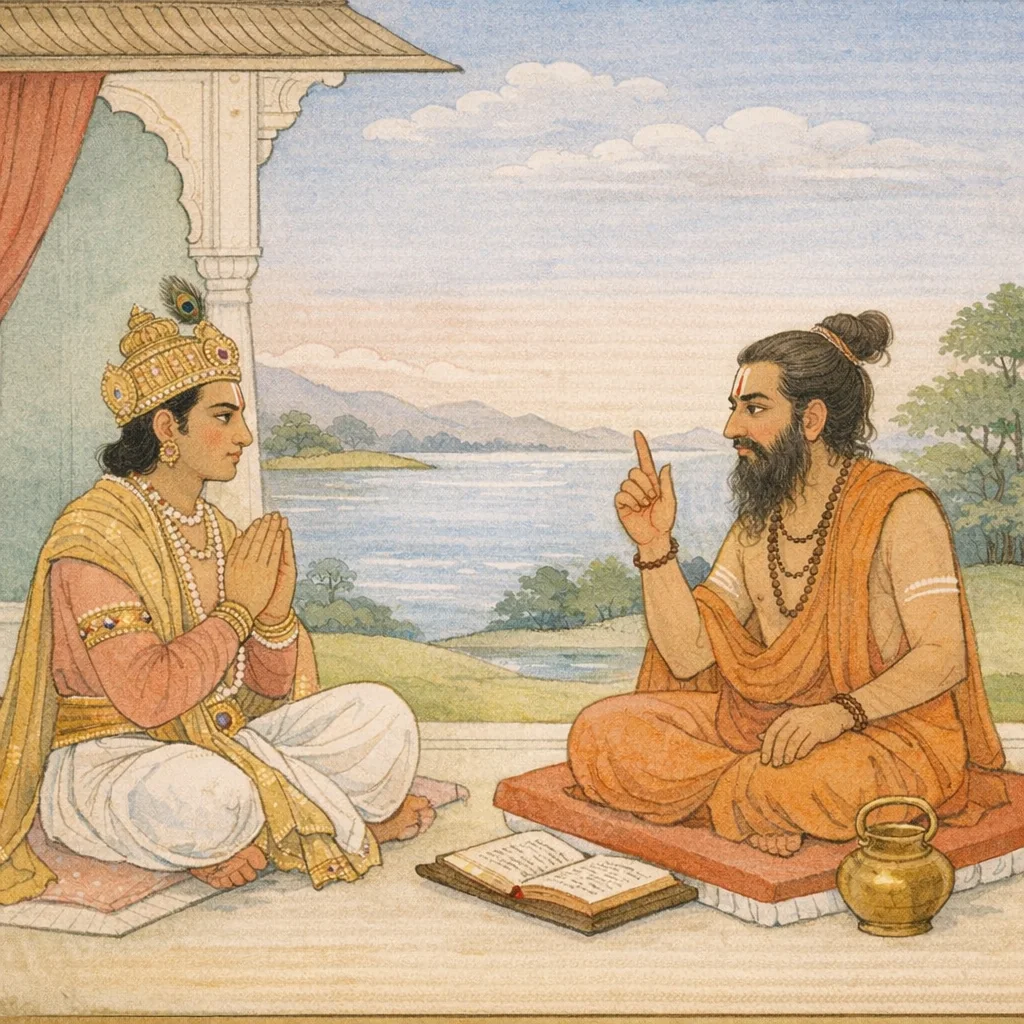
भीष्म उवाच अन्न ते वर्तयिष्यामि यथापूर्व महायशा: । पराशरं महात्मानं पप्रच्छ जनको नृपः:
Bhishma said: “O illustrious one, I shall recount to you, exactly as it occurred, an ancient account. King Janaka once questioned the great-souled sage Parāśara.”
Verse 4
भीष्मजीने कहा--युधिष्ठिर! इस विषयमें भी मैं तुम्हें पूर्ववत् एक प्राचीन प्रसंग सुनाऊँगा। एक समय महा-यशस्वी राजा जनकने महात्मा पराशर मुनिसे पूछा-- ।। कि श्रेय: सर्वभूतानामस्मिंललोके परत्र च । यद् भवेत् प्रतिपत्तव्यं तद् भवान् प्रब्रवीतु मे,“मुने! कौन-सी ऐसी वस्तु है जो समस्त प्राणियोंके लिये इहलोक और परलोकमें भी कल्याणकारी एवं जानने योग्य है? उसे आप मुझे बताइये'
Bhishma said: “Yudhishthira, on this matter too I will relate to you, as before, an ancient episode. Once, the highly renowned King Janaka questioned the great sage Parashara: ‘O sage, what is that which brings welfare to all beings in this world and in the next, and which is truly to be understood and adopted? Please tell me that.’”
Verse 5
ततः स तपसा युक्तः सर्वधर्मविधानवित् | नृपायानुग्रहमना मुनिर्वाक्यमथाब्रवीत्,तब सम्पूर्ण धर्मोके विधानको जाननेवाले वे तपस्वी मुनि राजा जनकपर अनुग्रह करनेकी इच्छासे इस प्रकार बोले
Then that ascetic sage—disciplined by austerity and fully conversant with the ordinances of dharma—wishing to show favor to the king, spoke these words.
Verse 6
पराशर उवाच धर्म एव कृत: श्रेयानिह लोके परत्र च । तस्माद्धि परम नास्ति यथा प्राहुर्मनीषिण:
Parāśara said: “Dharma alone, when actually practiced, is the highest good—both in this world and in the world beyond. Therefore nothing is superior to it, as the wise have declared.”
Verse 7
पराशरजीने कहा--राजन्! जैसा कि मनीषी पुरुषोंका कथन है, धर्मका ही विधिपूर्वक अनुष्ठान किया जाय तो वह इहलोक और परलोकमें भी कल्याणकारी होता है। उससे बढ़कर दूसरा कोई श्रेयका उत्तम साधन नहीं है ।। प्रतिपद्य नरो धर्म स्वर्गलोके महीयते । धर्मात्मकः कर्मविधिदेंहिनां नृपसत्तम,नृपश्रेष्ठ) धर्मको जानकर उसका आश्रय लेनेवाला मनुष्य स्वर्गलोकमें सम्मानित होता है। वेदोंमें जो 'सत्यं वद, धर्म चर, यजेत, जुहुयात्” इत्यादि वाक्योंद्वारा मनुष्योंका कर्तव्य विधान किया गया है, वही धर्मका लक्षण है
Parāśara said: “O King, as the wise declare, when dharma is practiced in the proper, prescribed manner, it brings well-being both in this world and in the next. There is no higher means to true welfare than that. A man who understands dharma and takes refuge in it is honored in the heavenly realm. For embodied beings, O best of kings, the rule of action grounded in dharma is set forth in the Vedas; the injunctions such as ‘Speak the truth, practice dharma, perform sacrifice, offer oblations’—these constitute the very mark by which dharma is known.”
Verse 8
तस्मिन्नाश्रमिण: सन्त: स्वकर्माणीह कुर्वते
In that hermitage, the resident ascetics—being true and disciplined—carry out their own prescribed duties here, each according to his proper role and observance.
Verse 9
सभी आश्रमोंके लोग उस धर्ममें ही स्थित रहकर इस जगत्में अपने-अपने कर्मोंका अनुष्ठान करते हैं ।। चतुर्विधा हि लोकेडस्मिन् यात्रा तात विधीयते । मर्त्या यत्रावतिष्ठन्ते सा च कामात् प्रवर्तते,तात! इस लोकमें चार प्रकारकी जीविकाका विधान है (ब्राह्मणके लिये यज्ञादि कराकर दक्षिणा लेना, क्षत्रियके लिये कर लेना, वैश्यके लिये खेती आदि करना और शाद्रके लिये तीनों वर्णॉंकी सेवा करना)। मनुष्य इन्हीं चार प्रकारकी जीविकाओंका आश्रय लेकर रहते हैं। वह जीविका दैवेच्छासे चलती है
Parāśara said: “Dear child, in this world a fourfold means of livelihood is laid down. Mortals take their stand upon these ways of living, and their activity proceeds from desire. Remaining established within their own dharma, people of all āśramas carry out in this world the performance of their respective duties.”
Verse 10
सुकृतासुकृतं कर्म निषेव्य विविधै: क्रमै: । दशार्धप्रविभक्तानां भूतानां बहुधा गति:,जो प्राणी नाना प्रकारके क्रमसे पुण्य और पापकर्मका सेवन करके पज्चत्वको प्राप्त हो गये हैं अर्थात् स्थूल शरीरका त्याग कर देते हैं, उनको मिलनेवाली गति नाना प्रकारकी बतायी गयी है
Creatures, having engaged in meritorious and sinful deeds through many different sequences, are said to attain many kinds of destinies; for beings divided into fifteen parts (by their constituent elements), the course of their going is manifold.
Verse 11
सौवर्ण राजतं चापि यथा भाण्डं निषिच्यते । तथा निषिच्यते जनन््तुः पूर्वकर्मवशानुग:,जैसे ताँबे आदिके बर्तनोंपर जब सोने और चाँदीकी कलई चढ़ा दी जाती है तब वे वैसे ही दिखायी देने लगते हैं। उसी प्रकार पूर्व कर्मोके वशीभूत प्राणी पूर्वकृत कर्मसे लिप्त रहता है (पुण्यकर्मसे लिप्त होनेके कारण वह सुखी होता है और पापसे लिप्त होनेके कारण उसे दुःख उठाना पड़ता है)
Parāśara said: “Just as a vessel is overlaid with a coating of gold or silver and thereby appears to be of that very substance, so too a living being is ‘coated’ by prior action. Bound to the force of former deeds, one remains marked by what one has done before—experiencing happiness when one is invested with merit, and suffering when one is invested with sin.”
Verse 12
नाबीजाज्जायते किंचिन्नाकृत्वा सुखमेधते । सुकृतैर्विन्दते सौख्य॑ प्राप्य देहक्षयं नर:,जैसे बिना बीजके कोई अंकुर पैदा नहीं होता, उसी प्रकार पुण्यकर्म किये बिना कोई सुखी या समृद्धिशाली नहीं हो सकता; अतः मनुष्य देहत्यागके पश्चात् पुण्यकर्मोंके फलसे ही सुख पाता है
Nothing is born without a seed, and without action happiness does not flourish. By meritorious deeds one finds well-being; and when a man reaches the end of the body—after he has cast it off—he attains happiness only through the fruits of his good actions.
Verse 13
दैवं तात न पश्यामि नास्ति दैवस्य साधनम् । स्वभावतो हि संसिद्धा देवगन्धर्वदानवा:
Parāśara said: “My dear son, I do not perceive any separate ‘fate’ as an independent power, nor do I see any means by which such fate is produced or controlled. For the gods, Gandharvas, and Dānavas attain their respective capacities and conditions by their own inherent nature.”
Verse 14
तात! इस विषयमें नास्तिक कहते हैं “मैं प्रारब्धको प्रत्यक्ष नहीं देख पाता तथा प्रारब्धके अस्तित्वका सूचक अनुमानप्रमाण भी नहीं है। किंतु देवता, गन्धर्व और दानव आदि योनियाँ तो स्वभावसे ही प्राप्त होती हैं” ।। प्रेत्य जातिकृतं कर्म न स्मरन्ति सदा जना: | ते वै तस्य फलप्राप्ती कर्म चापि चतुर्विधम्
Parāśara said: “After death and a new birth, people do not consistently remember the actions done in a former life. Yet the results of those deeds are certainly encountered; and action, in this context, is spoken of as fourfold.”
Verse 15
इसके उत्तरमें यह कहा जा सकता है कि मरकर गये हुए प्राणी पूर्वजन्ममें किये हुए कर्मोको सदैव याद नहीं रख सकते। किंतु जब किसी पूर्वकृत कर्मका फल प्राप्त होता है तब वे ही लोग सदा (मन, वाणी, नेत्र और क्रियाद्वारा किये हुए) चार प्रकारके कर्मोंका स्मरण करते हैं--अर्थात् यह कहते हैं कि मैंने पूर्व जन्ममें कोई ऐसा कर्म किया होगा जिसका फल इस रूपमें प्राप्त हुआ है ।। लोकयात्राश्रयश्वैव शब्दो वेदाश्रय: कृत: । शान्त्यर्थ मनसस्तात नैतद् वृद्धानुशासनम्,तात! नास्तिक लोग जो यह कहते हैं कि लोकयात्राके निर्वाह और मनकी शान्तिके लिये वेदोक्त शब्दोंको प्रमाण माना गया है; अर्थात् वेदोंमें जो कर्म करनेका विधान है, वह तो असमर्थ पुरुषोंके जीविकानिर्वाहके लिये है और जो पूर्वजन्मके किये हुए कर्मकी चर्चा आयी है वह दुखी मनुष्योंके मनको धीरज बँधानेके लिये है, परंतु यह मत ठीक नहीं है; क्योंकि पतञ्जलि आदि ज्ञानवृद्ध पुरुषोंने ऐसा उपदेश नहीं किया है (पतञ्जलिने “तद्विपाको जात्यायुर्भोगा:” इस सूत्रके द्वारा जाति (जन्म), आयु और सुख-दुःखरूप भोगको पूर्वकृत कर्मका फल बताया है)
Parāśara said: “In reply it may be said that beings who have died cannot always remember the deeds done in a former birth. Yet when the fruit of some past action is obtained, they recall that action is fourfold—by mind, by speech, by the eye, and by bodily deed—and they say, ‘Surely I must have done such a deed in a previous life, for its result has come to me in this form.’ Some skeptics also claim that the authority of Vedic words is accepted only to sustain worldly life and to quiet the mind; but, my dear son, this is not the teaching of the wise elders.”
Verse 16
चक्षुषा मनसा वाचा कर्मणा च चतुर्विधम् | कुरुते यादृशं कर्म तादृशं प्रतिपद्यते,मनुष्य नेत्र, मन, वाणी और क्रियाके द्वारा चार प्रकारके कर्म करता है और जैसा कर्म करता है वैसा ही उसका फल पाता है
A human being performs action in four ways—through the eye, the mind, speech, and bodily deed. Whatever the character of one’s action, of that very character is the result one comes to experience.
Verse 17
निरन्तरं च मिश्र च लभते कर्म पार्थिव । कल्याणं यदि वा पापं न तु नाशो<स्य विद्यते,राजन! मनुष्य कर्मके फलरूपसे कभी केवल सुख, कभी सुख-दुःख दोनोंको एक साथ प्राप्त करता है। पुण्य या पाप कोई भी कर्म क्यों न हो, फल भोगे बिना उसका नाश नहीं होता
Parāśara said: “O king, a human being receives the results of action sometimes as unbroken pleasure and sometimes as a mixed experience of pleasure and pain. Whether the deed is auspicious or sinful, it does not perish without being experienced as its due fruit.”
Verse 18
कदाचित् सुकृतं तात कूटस्थमिव तिष्ठति । मज्जमानस्य संसारे यावद् दुःखाद विमुच्यते
At times, dear child, one’s accumulated merit stands firm—like something unshakably established—until the person who is sinking in saṃsāra is finally released from suffering.
Verse 19
ततो दुःखक्षयं कृत्वा सुकृतं कर्म सेवते । सुकृतक्षयाच्च दुष्कृतं तद् विद्धि मनुजाधिप
“Then, having exhausted his stock of suffering, a person comes to engage in meritorious action. And when that merit is used up, he falls again into demerit—know this, O lord of men.”
Verse 20
तात! संसार-सागरमें डूबते हुए मनुष्यका पुण्यकर्म कभी-कभी तबतक स्थिर-जैसा रहता है जबतक कि दुःखसे उसका छुटकारा नहीं हो जाता। तदनन्तर दुःखका भोग समाप्त कर लेनेपर जीव अपने पुण्य कर्मके फलका उपभोग आरम्भ करता है। जब पुण्यका भी क्षय हो जाता है तब फिर वह पापका फल भोगता है। नरेश्वर! इस बातको तुम अच्छी तरह समझ लो ।। दम: क्षमा धृतिस्तेज: संतोष: सत्यवादिता । ह्वीरहिंसा5व्यसनिता दाक्ष्यं चेति सुखावहा:,इन्द्रियसंयम, क्षमा, धैर्य, तेज, संतोष, सत्यभाषण, लज्जा, अहिंसा, दुर्व्यसनका अभाव तथा दक्षता--ये सब सुख देनेवाले हैं
Parāśara said: “Dear child, for a person sinking in the ocean of worldly existence, the merit he has accumulated sometimes remains, as it were, held in reserve until he is released from the experience of suffering. Thereafter, when the burden of that suffering has been exhausted, the living being begins to enjoy the fruits of his meritorious deeds. When even that merit is spent, he again undergoes the results of sin. O king, understand this clearly. Self-restraint, forgiveness, steadfastness, inner radiance, contentment, truthfulness, modesty, non-violence, freedom from addictions, and skillfulness—these are all bringers of happiness.”
Verse 21
दुष्कृते सुकृते चापि न जन्तुर्नियतो भवेत् । नित्यं मनःसमाधाने प्रयतेत विचक्षण:,विद्वान् पुरुषको जीवनपर्यन्त पाप या पुण्यमें भी आसक्त न होकर अपने मनको परमात्माके ध्यानमें लगानेका प्रयत्न करना चाहिये
Parāśara said: A living being is not irrevocably fixed by either wrongdoing or good deeds. Therefore, the discerning person should constantly strive to steady the mind in deep contemplation—living without clinging to sin or even to merit, and directing the inner attention toward the Supreme Self.
Verse 22
नायं परस्य सुकृतं दुष्कृतं चापि सेवते । करोति यादृशं कर्म तादृशं प्रतिपद्यते,जीव दूसरेके किये हुए शुभ अथवा अशुभ कर्मको नहीं भोगता, वह स्वयं जैसा कर्म करता है वैसा ही फल पाता है
Parāśara said: “A person does not partake of another’s merit or demerit. Whatever kind of action one performs, one meets with a result of that very kind.”
Verse 23
सुखदु:खे समाधाय पुमानन्येन गच्छति । अन्येनैव जन: सर्व: संगतो यश्न पार्थिव:,विवेकी पुरुष सुख और दुःखको अपने भीतर विलीन करके अन्य मार्गसे अर्थात् मोक्षप्राप्तिके मार्गद्वारा चलता है। जो स्त्री, पुत्र और धन आदिमें आसक्त हैं, वे सब संसारी जीव उससे भिन्न दूसरे ही मार्गपर चलते हैं; अत: जन्मते और मरते रहते हैं
Having gathered and inwardly resolved both pleasure and pain, the discerning person proceeds by a different path—the path that leads toward liberation. But all people who are bound by attachment, along with whatever belongs to them in worldly terms (O king), move along another path; therefore they continue in the cycle of birth and death.
Verse 24
परेषां यदसूयेत न तत् कुर्यात् स्वयं नरः । यो हासूयुस्तथायुक्त: सो5वहासं नियच्छति
A person should not do himself what he would condemn in others. For one who is habitually fault-finding and inclined that way ends up in ridicule and contempt—his conduct collapses into mockery rather than virtue.
Verse 25
मनुष्य दूसरेके जिस कर्मकी निन्दा करे, उसको स्वयं भी न करे। जो दूसरेकी निन्दा करता है; किंतु स्वयं उसी निन्द्य कर्ममें लगा रहता है, वह उपहासका पात्र होता है ।। भीरू राजन्यो ब्राह्मण: सर्वभक्ष्यो वैश्योडनीहावान् हीनवर्णोडलसश्व । विद्वांक्वाशीलो वृत्तहीन: कुलीन: सत्याद् विश्रष्टो धार्मिक: स्त्री च दुष्टा,राजन! डरपोक क्षत्रिय, (भक्ष्याभक्ष्यका विचार न करके) सब कुछ खानेवाला ब्राह्मण, धनोपार्जनकी चेष्टासे रहित या अकर्मण्य वैश्य, आलसी शाूद्र, उत्तम गुणोंसे रहित विद्वान, सदाचारका पालन न करनेवाला कुलीन पुरुष, सत्यसे भ्रष्ट हुआ धार्मिक पुरुष, दुराचारिणी स्त्री, विषयासक्त योगी, केवल अपने लिये भोजन बनानेवाला मनुष्य, मूर्ख वक्ता, राजासे रहित राष्ट्र तथा अजितेन्द्रिय होकर प्रजाके प्रति स्नेह न रखनेवाला राजा--ये सब-के-सब शोकके योग्य हैं, अर्थात् निन्दनीय हैं
Parāśara said: “A person should not himself do the very act for which he censures another. One who condemns others yet remains engaged in that same blameworthy conduct becomes an object of ridicule. O king, these are fit for lament—and therefore worthy of censure: a cowardly kṣatriya; a brāhmaṇa who eats anything without regard for what is proper; a vaiśya who makes no effort (or is inert) in earning and duty; a lazy śūdra; a learned man devoid of good character; a man of noble birth who does not uphold right conduct; a ‘righteous’ man fallen away from truth; a woman of corrupt conduct; a yogin attached to sense-objects; one who cooks only for himself; a foolish speaker; a kingdom without a king; and a king who has not conquered his senses and bears no affection for his subjects.”
Verse 26
रागी युक्त: पचमानो<35त्महेतो- मूर्खो वक्ता नृपहीनं च राष्ट्रम् । एते सर्वे शोच्यतां यान्ति राजन् यश्चायुक्त: स्नेहहीन: प्रजासु,राजन! डरपोक क्षत्रिय, (भक्ष्याभक्ष्यका विचार न करके) सब कुछ खानेवाला ब्राह्मण, धनोपार्जनकी चेष्टासे रहित या अकर्मण्य वैश्य, आलसी शाूद्र, उत्तम गुणोंसे रहित विद्वान, सदाचारका पालन न करनेवाला कुलीन पुरुष, सत्यसे भ्रष्ट हुआ धार्मिक पुरुष, दुराचारिणी स्त्री, विषयासक्त योगी, केवल अपने लिये भोजन बनानेवाला मनुष्य, मूर्ख वक्ता, राजासे रहित राष्ट्र तथा अजितेन्द्रिय होकर प्रजाके प्रति स्नेह न रखनेवाला राजा--ये सब-के-सब शोकके योग्य हैं, अर्थात् निन्दनीय हैं
Parāśara said: “O king, one who is driven by passion, a so‑called yogin enslaved to sense-objects, a man who cooks only for himself, a foolish speaker, and a realm bereft of a king—all these are fit for lamentation. Likewise, a ruler who is undisciplined and without affection for his subjects is also to be lamented.”
Verse 289
इस प्रकार श्रीमह्याभारत शान्तिपर्वके अन्तर्गत मोक्षधर्मपर्वमें मगहादेवजी और शुक्राचार्यका समागमविषयक दी सौ नवासीवाँ अध्याय पूरा हुआ
Thus ends the 289th chapter in the Mokṣadharma section of the Śānti Parva of the Śrī Mahābhārata, describing the meeting between Mahādeva (Śiva) and Śukrācārya. This colophon marks the completion of the unit and frames it within the larger discourse on dharma and mokṣa.
Verse 290
इति श्रीमहाभारते शान्तिपर्वणि मोक्षधर्मपर्वणि पराशरगीतायां नवत्यधिकद्विशततमो< ध्याय:,इस प्रकार श्रीमहाभारत शान्तिपर्वके अन्तर्गत मोक्षधर्मपर्वमें पराशरगीताविषयक दो सौ नब्बेवाँ अध्याय पूरा हुआ
Thus, in the Śrī Mahābhārata, within the Śānti Parvan and specifically the Mokṣa-dharma section, the two-hundred-and-ninetieth chapter—connected with the teaching called the Parāśara-gītā—comes to its conclusion.
Frequently Asked Questions
It is a classificatory discernment that enumerates experiential domains and their limitations, analyzes guṇas and the attachment-chain of faculties and elements, and uses that knowledge to weaken identification with body and sense-objects.
The five are kāma (desire), krodha (anger), bhaya (fear), nidrā (sleep), and śvāsa (breath). Bhīṣma prescribes: kṣamā (forbearance) for anger, saṅkalpa-varjana (renunciation of compulsive intention) for desire, apramāda (vigilant care) for fear, sattva-saṃśīlana (cultivation of sattva/clarity) for sleep, and laghvāhāra (light diet) as a discipline connected with regulating breath.
Rather than a formal phalāśruti verse, the chapter makes an explicit meta-assertion: this Sāṃkhya-knowledge is supreme, widely attested across Veda, yoga, purāṇa, and itihāsa, and it leads to the highest, non-returning state upon realization of the guṇa-less Paramātman.