Adhyaya 26
कालनियमः शोकशमनं च (Kāla as Regulator; Pacification of Grief)
Upa-parva: Rājadharmānuśāsana (Kingship and Governance Instruction) — Kāla-Nīti Discourse (Senajit Itihāsa frame)
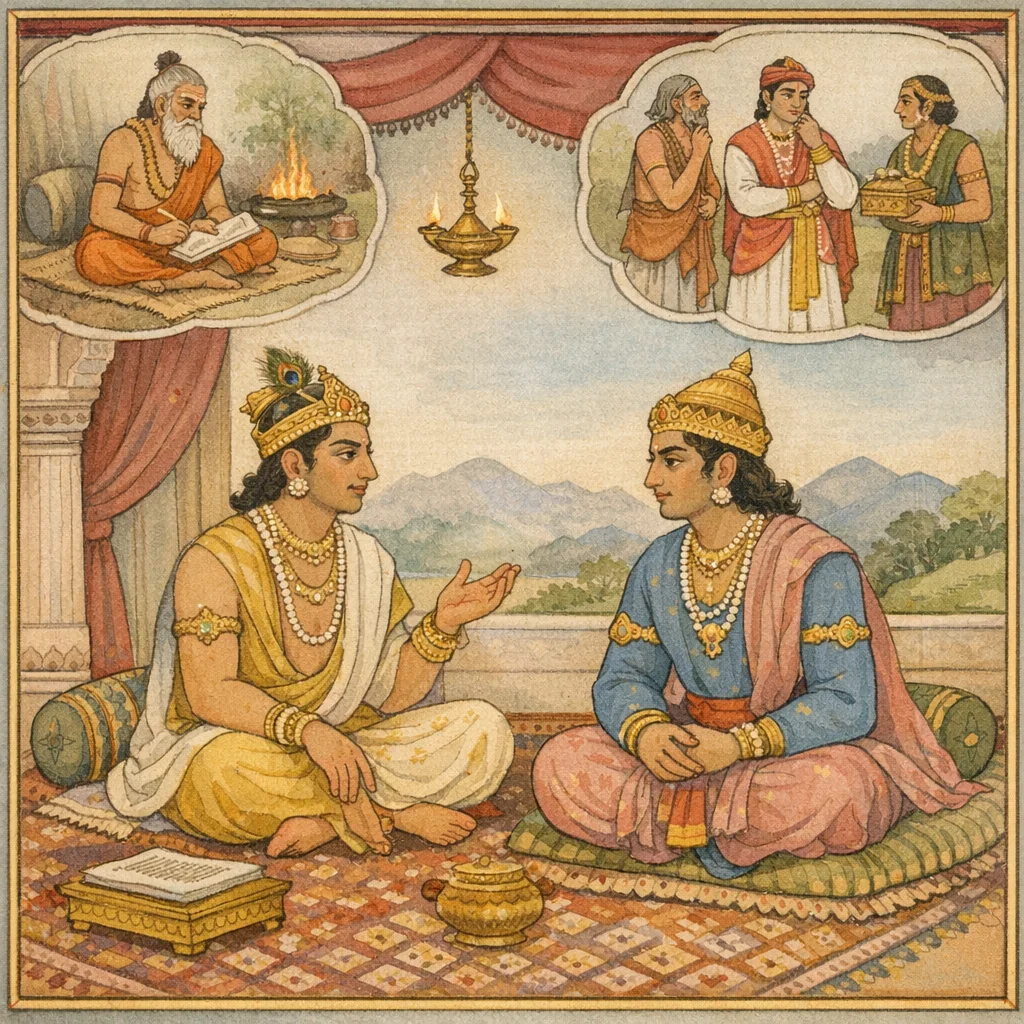
Vaiśaṃpāyana narrates that after hearing Vyāsa’s words—and amid heightened emotion in the broader aftermath—Yudhiṣṭhira confesses that neither sovereignty nor pleasures can gratify him, as he is overwhelmed by sorrow upon hearing the lamentations of widows and the bereaved. Vyāsa, presented as a master of yogic insight and Vedic learning, replies with a structured consolation grounded in kāla (time) and paryāya (cyclical succession). He argues that attainments do not arise merely from effort, intellect, or technique when time is not ripe; even skills, mantras, and medicines bear fruit only in their proper season. Natural phenomena (winds, rains, lunar phases, flowering, gestation, growth, birth and death) are cited to establish time’s universal governance. Vyāsa then introduces an ancient exemplum associated with King Senajit: all mortals are touched by an inescapable succession; humans strike others and are struck in turn, while common speech misattributes agency (“he kills”) despite the regularity of arising and passing. The counsel reframes grief as an endless field of triggers that visits the untrained mind daily, whereas the wise remain less captured by it. Pleasure and pain alternate; neither is permanent, and attachment to their causes should be relinquished to seek stable well-being. The chapter concludes with governance-oriented purification themes: disciplined kingship—protecting the realm through policy (daṇḍanīti), sustaining social order, and acting with sacrifice-like self-control—leads to merit and posthumous reward, while a ruler whose conduct is revered is termed exemplary.
Chapter Arc: वैशम्पायन जनमेजय को सुनाते हैं कि उसी प्रसंग में धर्मराज युधिष्ठिर अर्जुन के सामने एक ‘युक्तियुक्त’ प्रतिवाद रखते हैं—धन को सर्वोच्च मानने की धारणा पर सीधा प्रश्न। → अर्जुन की मान्यता उभरती है कि निर्धन के लिए न स्वर्ग है, न सुख, न अर्थ; युधिष्ठिर इसे ‘मृषा’ कहकर काटते हैं और उदाहरण रखते हैं कि स्वाध्याय-यज्ञ, तप और अहिंसक वृत्ति से भी सिद्धि और सनातन लोक प्राप्त होते हैं। फिर धन-प्राप्ति की चेष्टा के दोष, और ‘अनीहा’ (लोभ-रहित विरक्ति/अतिचेष्टा-त्याग) की श्रेष्ठता का तर्क आगे बढ़ता है। → दान-धर्म की सूक्ष्म कसौटी पर निर्णायक प्रहार होता है—अयोग्य को देना और योग्य को न देना, दोनों ही पतन के द्वार हैं; ‘अपात्रे प्रतिपत्ति’ और ‘पात्रे अप्रतिपादन’—धन के उपयोग की ये दो अतिवृत्तियाँ अध्याय का शिखर बनती हैं। → युधिष्ठिर धन को नकारते नहीं, उसका धर्मोन्मुख प्रयोजन स्थिर करते हैं—विधाता मनुष्यों को धन देता है ताकि वह स्वार्थ-सीमा में न अटके, यज्ञार्थ/लोकहित में प्रवाहित हो; धन का मूल्य उसके धर्म-नियोजन में है, न कि उसके संग्रह में। → अगले प्रसंग के लिए प्रश्न खुला रह जाता है—यदि धन का धर्म-मार्ग इतना कठिन और सूक्ष्म है, तो ‘पात्र’ की पहचान और दान का सही विधान किस प्रकार निश्चित किया जाए?
Shlokas
Verse 1
वैशम्पायनजी कहते हैं--जनमेजय। इसी प्रसंगमें उदारबुद्धि राजा युधिष्छिरने अर्जुनसे यह युक्तियुक्त बात कही
Vaiśampāyana said: “O Janamejaya, in this very context the noble-minded King Yudhiṣṭhira addressed Arjuna with a well-reasoned and fitting statement.”
Verse 2
यदेतन्मन्यसे पार्थ न ज्यायो5स्ति धनादिति । न स्वर्गो न सुखं नार्थो निर्धनस्येति तन््मृषा,'पार्थ! तुम जो यह समझते हो कि धनसे बढ़कर कोई वस्तु नहीं है तथा निर्धनको स्वर्ग, सुख और अर्थकी भी प्राप्ति नहीं हो सकती, यह ठीक नहीं है
Vaiśampāyana said: “O Pārtha, the notion you hold—that nothing is superior to wealth, and that for one without wealth there can be no heaven, no happiness, and no meaningful attainment—this is not true.”
Verse 3
स्वाध्याययज्ञसंसिद्धा दृश्यन्ते बहवो जना: । तपोरताश्न मुनयो येषां लोका: सनातना:,“बहुत-से मनुष्य केवल स्वाध्याययज्ञ करके सिद्धिको प्राप्त हुए देखे जाते हैं। तपस्यामें लगे हुए बहुतेरे मुनि ऐसे हो गये हैं, जिन्हें सनातन लोकोंकी प्राप्ति हुई है
Vaiśampāyana said: Many people are seen to have attained fulfillment through the sacrifice of self-study (svādhyāya) alone. And many sages, devoted to austerity, have become such that the eternal worlds are theirs to attain—showing that disciplined learning and sustained tapas are recognized paths to enduring spiritual fruition.
Verse 4
ऋषीणां समयं शश्चद् ये रक्षन्ति धनंजय । अश्रिता: सर्वधर्मज्ञा देवास्तान् ब्राह्मणान् विदु:
Vaiśampāyana said: “O Dhanañjaya, those who constantly uphold the covenant and discipline laid down by the seers—being sheltered by the gods and knowing all that pertains to dharma—are recognized by the gods themselves as true brāhmaṇas.”
Verse 5
“धनंजय! सम्पूर्ण धर्मोंको जाननेवाले जो लोग ब्रह्मचर्य-आश्रममें स्थित हो ऋषियोंकी स्वाध्याय-परम्पराकी सदैव रक्षा करते हैं, देवता उन्हें ही ब्राह्मण मानते हैं ।। स्वाध्यायनिष्ठान् हि ऋषीन् ज्ञाननिष्ठांस्तथापरान् । बुद्धोथा: संततं चापि धर्मनिष्ठानू धनंजय,“अर्जुन! तुम्हें सदा यह समझना चाहिये कि ऋषियोंमेंसे कुछ लोग वेद-शास्त्रोंके स्वाध्यायमें ही तत्पर रहते हैं, कुछ ज्ञानोपार्जनमें संलग्न होते हैं और कुछ लोग धर्म-पालनमें ही निष्ठा रखते हैं
Vaiśampāyana said: “O Dhanañjaya (Arjuna), those who know dharma in its fullness, who abide in the discipline of brahmacarya, and who continually safeguard the sages’ lineage of Vedic study—these alone are regarded by the gods as true brāhmaṇas. Understand also, O Dhanañjaya, that among the ṛṣis some are steadfast in sacred recitation and study, some are devoted to the pursuit of knowledge, and others remain firmly established in the practice of dharma.”
Verse 6
ज्ञाननिष्ठेषु कार्याणि प्रतिष्ठाप्पानि पाण्डव । वैखानसानां वचन यथा नो विदितं प्रभो,'पाण्डुनन्दन! प्रभो! वानप्रस्थोंक वचनको जैसा हमने समझा है, उसके अनुसार ज्ञाननिष्ठ महात्माओंको ही राज्यके सारे कार्य सौंपने चाहिये
Vaiśampāyana said: “O Pāṇḍava, the affairs of governance should be entrusted to those who are firmly established in true knowledge. This is what we understand to be the instruction of the Vaikhānasas, O lord.”
Verse 7
अजाश्न पृश्नयश्चैव सिकताश्चैव भारत । अरुणा: केतवश्चैव स्वाध्यायेन दिव॑ गता:,“भारत! अज, पृश्चि, सिकत, अरुण और केतु नामवाले ऋषिगणोंने तो स्वाध्यायके द्वारा ही स्वर्ग प्राप्त कर लिया था
Vaiśampāyana said: “O Bhārata, the sages named Ajāśna, Pṛśniya, Sikata, Aruṇa, and Ketu attained heaven solely through svādhyāya—devoted self-study and recitation of sacred learning.”
Verse 8
अवाप्यैतानि कर्माणि वेदोक्तानि धनंजय । दानमध्ययन यज्ञो निग्रहश्रैव दुर्गह:,“धनंजय! दान, अध्ययन, यज्ञ और निग्रह--ये सभी कर्म बहुत कठिन हैं। इन वेदोक्त कर्मोंका (सकामभावसे) आश्रय लेकर लोग सूर्यके दक्षिण मार्गसे स्वर्गमें जाते हैं। इन कर्ममार्गी पुरुषोंके लोकोंकी चर्चा मैं पहले भी कर चुका हूँ
Vaiśampāyana said: “O Dhanaṃjaya, these Veda-enjoined acts—charity, sacred study, sacrifice, and self-restraint—are indeed difficult. Yet, relying on these Vedic duties with desire for their fruits, people go to heaven by the sun’s southern course. I have already spoken of the worlds attained by such followers of the ritual path.”
Verse 9
दक्षिणेन च पन्थानमर्यम्णो ये दिव॑ गता: । एतान् क्रियावतां लोकानुक्तवान् पूर्वमप्पयहम्,“धनंजय! दान, अध्ययन, यज्ञ और निग्रह--ये सभी कर्म बहुत कठिन हैं। इन वेदोक्त कर्मोंका (सकामभावसे) आश्रय लेकर लोग सूर्यके दक्षिण मार्गसे स्वर्गमें जाते हैं। इन कर्ममार्गी पुरुषोंके लोकोंकी चर्चा मैं पहले भी कर चुका हूँ
Vaiśampāyana said: “Those who have gone to heaven by the southern path of Aryaman—these are the worlds attained by people devoted to ritual action. I have spoken of these worlds even earlier.”
Verse 10
उत्तरेण तु पन्थानं नियमाद् यं प्रपश्यसि । एते यागवतां लोका भान्ति पार्थ सनातना:,“कुन्तीनन्दन! सूर्यके उत्तरमें स्थित जो मार्ग है, जिसे तुम नियमके प्रभावसे देख रहे हो, वहाँ जो ये सनातन लोक प्रकाशित होते हैं, वे निष्काम यज्ञ करनेवालोंको प्राप्त होते हैं
Vaiśampāyana said: “O Pārtha, the path that lies to the north, which you are able to behold through the power of disciplined observance—there the eternal worlds of the sacrificers shine forth. Those radiant realms are attained by people devoted to selfless sacrifice, whose rites are performed without grasping for personal reward.”
Verse 11
तत्रोत्तरां गतिं पार्थ प्रशंसन्ति पुराविद: । संतोषो वै स्वर्गतम: संतोष: परमं सुखम्,'पार्थ! प्राचीन इतिहासको जाननेवाले लोग इन दोनों मार्गोमेंसे उत्तर मार्गकी प्रशंसा करते हैं। वास्तवमें संतोष ही सबसे बढ़कर स्वर्ग है और संतोष ही सबसे बड़ा सुख है
Vaiśampāyana said: “O Pārtha, those who know the ancient lore praise, of the two paths, the northern one. Truly, contentment (santoṣa) is the highest heaven, and contentment is the supreme happiness.”
Verse 12
तुष्टेन किज्चित् परमं सा सम्यक् प्रतितिष्ठति । विनीतक्रोधहर्षस्य सततं सिद्धिरुत्तमा,'संतोषसे बढ़कर कुछ नहीं है। जिसने क्रोध और हर्षको जीत लिया है, उसीके हृदयमें उस परम वैराग्यरूप संतोषकी सम्यक् प्रतिष्ठा होती है और उसे ही सदा उत्तम सिद्धि प्राप्त होती है
Nothing surpasses contentment (santoṣa). In the heart of one who has conquered anger and exultant joy, that supreme contentment—shaped as dispassion (vairāgya)—is firmly established, and he ever attains the highest fulfillment.
Verse 13
अत्राप्युदाहरन्तीमा गाथा गीता ययातिना । याश्रि: प्रत्याहरेत् कामान् कूर्मोडज्ानीव सर्वश:,इस प्रसंगमें लोग राजा ययातिकी गायी हुई इन गाथाओंको उदाहरणके तौरपर कहा करते हैं। जिनके द्वारा मनुष्य सम्पूर्ण कामनाओंको उसी प्रकार समेट लेता है, जैसे कछुआ अपने अंगोंको सब ओरसे सिकोड़ लिया करता है
Vaiśampāyana said: Here too people cite, as an illustration, these verses sung by King Yayāti—verses by which a person gathers back and restrains all desires, just as a tortoise draws in its limbs on every side.
Verse 14
यदा चायं न बिभेति यदा चास्मान्न बिभ्यति | यदा नेच्छति न देष्टि ब्रह्म सम्पद्यते तदा,राजा ययातिने कहा था--“जब यह पुरुष किसीसे नहीं डरता, जब इससे भी किसीको भय नहीं रहता तथा जब यह न तो किसीको चाहता है और न उससे द्वेष ही रखता है, तब ब्रह्मभावको प्राप्त हो जाता है
Vaiśampāyana said: “When a man fears no one, and no one fears him; when he neither craves nor hates—then he attains the state of Brahman.”
Verse 15
यदा न भावं कुरुते सर्वभूतेषु पापकम् । कर्मणा मनसा वाचा ब्रद्म सम्पद्यते तदा,“जब यह मन, वाणी और क्रियाद्वारा सम्पूर्ण भूतोंके प्रति पाप-बुद्धिका परित्याग कर देता है, तब परब्रह्म परमात्माको प्राप्त कर लेता है
Vaiśampāyana said: When a person no longer entertains any sinful intention toward any being—whether through deed, thought, or speech—then he attains Brahman, the Supreme Reality.
Verse 16
विनीतमानमोहश्च बहुसड्भविवर्जित: । तदा55त्मज्योतिष: साधोर्निवाणमुपपद्यते,“जिसके मान और मोह दूर हो गये हैं, जो नाना प्रकारकी आसक्तियोंसे रहित है तथा जिसे आत्माका ज्ञान प्राप्त हो गया है, उस साधु पुरुषको मोक्षकी प्राप्ति हो जाती है!
Vaiśampāyana said: When a holy person has become humble, with pride and delusion removed, free from the many kinds of attachments, and established in the inner light of the Self, then liberation (nirvāṇa) comes to him.
Verse 17
इदं तु शृणु मे पार्थ ब्रुवन: संयतेन्द्रिय: । धर्ममन्ये वृत्तमन्ये धनमीहन्ति चापरे,“कुन्तीनन्दन! मैं जो बात कह रहा हूँ, उसे अपनी सम्पूर्ण इन्द्रियोंको संयममें रखकर सुनो! कुछ लोग धर्मकी, कोई सदाचारकी और दूसरे कितने ही मनुष्य धनकी प्राप्तिके लिये सचेष्ट रहते हैं
O Pārtha, hear what I say, with all your senses held in restraint. Some strive for dharma, some for righteous conduct, and many others labor to gain wealth.
Verse 18
धनहेतोर्य ईहेत तस्यानीहा गरीयसी । भूयान् दोषो हि वित्तस्य यश्व धर्मस्तदाश्रय:,“जो धनके लिये चेष्टा करता है, उसका निश्रेष्ट होकर बैठ रहना ही ठीक है, क्योंकि धन और उसके आश्रित धर्ममें महान् दोष दिखायी देता है
For one who strives with wealth as the motive, it is better to refrain from such striving and remain without anxious pursuit. For wealth carries great faults, and even the dharma that depends upon wealth is tainted by those very defects.
Verse 19
प्रत्यक्षमनुपश्यामि त्वमपि द्रष्टमर्हसि । वर्जन वर्जनीयानामीहमानेन दुष्करम्
I see it directly before me; you too ought to recognize it. Here, giving up what must be given up is difficult when one is driven by pride.
Verse 20
“मैं प्रत्यक्ष देख रहा हूँ और तुम भी देख सकते हो, जो लोग धनोपार्जनके प्रयत्नमें लगे हुए हैं, उनके लिये त्याज्य कर्मोंको छोड़ना अत्यन्त कठिन हो रहा है ।। ये वित्तमभिपद्यन्ते सम्यक्त्वं तेषु दुर्लभम् । द्रह्मतः प्रैति तत् प्राहु: प्रतिकूलं यथातथम्,'जो धनके पीछे पड़े हुए हैं, उनमें साधुता दुर्लभ है; क्योंकि जो लोग दूसरोंसे द्रोह करते हैं, उन्हींको धन प्राप्त होता है, ऐसा कहा जाता है तथा वह मिला हुआ धन प्रकारान्तरसे प्रतिकूल ही होता है
I see it plainly—and you too may observe it—that for those absorbed in the pursuit of wealth, it becomes exceedingly difficult to abandon actions that ought to be renounced. Among people who run after riches, true rectitude is rare; for it is commonly said that wealth comes to those who act with malice toward others, and even when such wealth is obtained, it turns adverse in one way or another.
Verse 21
यस्तु सम्मभिन्नवृत्त: स्याद् वीतशोकभयो नर: । अल्पेन तृषितो द्रह्मन् भ्रूणहत्यां न बुध्यते,“शोक और भयसे रहित होनेपर भी जो मनुष्य सदाचारसे भ्रष्ट है, उसे यदि धनकी थोड़ी-सी भी तृष्णा हो तो वह दूसरोंसे ऐसा द्रोह करता है कि भ्रूण-हत्या-जैसे पापका भी ध्यान नहीं रखता
Even if a man is free from sorrow and fear, yet has fallen away from righteous conduct, if he feels even a small thirst for wealth, he will turn to treachery against others and take no heed even of a sin as grave as the killing of an unborn child.
Verse 22
दुष्यन्त्याददतो भृत्या नित्यं दस्युभयादिव । दुर्लभं च धन प्राप्य भृशं दत्त्वानुतप्यते,“अपना वेतन यथासमय पाते हुए भी जब भृत्योंको संतोष नहीं होता, तब वे स्वामीसे अप्रसन्न रहते हैं और वह धनी दुर्लभ धनको पाकर यदि सेवकोंको अधिक देता है तो उसे उतना ही अधिक संताप होता है, जितना चोर-डाकुओंसे भयके कारण हुआ करता है
Vaiśampāyana said: Even while receiving their wages, servants remain discontented and, as though out of constant fear of thieves, keep taking and taking. And when a master has obtained wealth that is hard to come by, if he gives lavishly, he later repents—his distress becoming as great as the fear one feels of robbers.
Verse 23
अधन: कस्य किं वाच्यो विमुक्त: सर्वश: सुखी । देवस्वमुपगृहीव धनेन न सुखी भवेत्,“निर्धनको कौन क्या कह सकता है? वह सब प्रकारके भयसे मुक्त हो सुखी रहता है। देवताओंकी सम्पत्ति लेकर भी कोई धनसे सुखी नहीं हो सकता
Vaiśaṃpāyana said: “What can be said to, or demanded from, a man without wealth? Freed in every way, he lives happily, unburdened by fear. Even if one were to seize what belongs to the gods, one would still not become happy through wealth.”
Verse 24
अत्र गाथां यज्ञगीतां कीर्तयन्ति पुराविद: । त्रयीमुपाश्रितां लोके यज्ञसंस्तरकारिकाम्,“इस विषयमें यज्ञमें ऋत्विजोंद्वारा गायी हुई एक गाथा है जो तीनों वेदोंके आश्रित है, वह गाथा लोकमें यज्ञकी प्रतिष्ठा करनेवाली है। पुरानी बातोंको जाननेवाले लोग उसे ऐसे अवसरोंपर दुहराया करते हैं
Here, the knowers of ancient tradition recite a sacrificial verse—one sung in the rite by the officiating priests. Grounded in the three Vedas, it is said to establish and uphold the proper standing of sacrifice in the world; therefore, those versed in old lore repeat it on such occasions.
Verse 25
यज्ञाय सृष्टानि धनानि धात्रा यज्ञाय सृष्ट: पुरुषो रक्षिता च । तस्मात् सर्व यज्ञ एवोपयोज्यं धनं न कामाय हित॑ प्रशस्तम्,“विधाताने यज्ञके लिये ही धनकी सृष्टि की है और यज्ञके लिये उसकी रक्षा करनेके निमित्त पुरुषको उत्पन्न किया है; इसलिये सारे धनका यज्ञ-कार्यमें ही उपयोग करना चाहिये। भोगके लिये धनका उपयोग न तो हितकर है और न उत्तम ही
Vaiśampāyana said: The Creator brought wealth into being for the sake of sacrifice, and for the sake of sacrifice He also brought forth the human being as its guardian. Therefore, all wealth should be employed in sacrificial and sacred duties; using wealth merely for pleasure is neither truly beneficial nor commendable.
Verse 26
एतत् स्वार्थे च कौन्तेय धनं धनवतां वर । धाता ददाति मर्त्येभ्यो यज्ञार्थमिति विद्धि तत्,“धनवानोंमें श्रेष्ठ कुन्तीकुमार धनंजय! विधाता मनुष्योंको स्वार्थके लिये भी जो धन देते हैं उसे यज्ञार्थ ही समझो इति श्रीमहाभारते शान्तिपर्वणि राजधर्मानुशासनपर्वणि युधिष्ठिरवाक्ये षड्विंशो5ध्याय:
O son of Kuntī, best among the wealthy—know this: whatever wealth the Ordainer grants to mortals, even for their personal aims, is in truth to be understood as meant for sacrifice. Wealth is not merely for private enjoyment; it is entrusted so that it may be turned toward sacred offering and the sustaining of righteous order.
Verse 27
तस्माद् बुद्धान्ति पुरुषा न हि तत् कस्यचिद् ध्रुवम् | श्रद्धधानस्ततो लोको दद्याच्चैव यजेत च,“इसीलिये बुद्धिमान् पुरुष यह समझते हैं कि धन कभी किसी एकके पास स्थिर होकर नहीं रहता; अतः श्रद्धालु मनुष्यको चाहिये कि वह उस धनका दान करे और उसे यज्ञमें लगावे
Therefore the wise understand that wealth never remains permanently with any one person. Hence a person endowed with faith should give that wealth in charity and also employ it in sacrifice—using transient possessions for enduring merit and the welfare of others.
Verse 28
लब्धस्य त्यागमित्याहुर्न भोगं न च संचयम् । तस्य कि संचयेनार्थ: कार्ये ज्यायसि तिष्ठतति,“प्राप्त किये हुए धनका दान करना ही उचित बताया गया है। उसे भोगमें लगाना या संग्रह करके रखना ठीक नहीं है। जिसके सामने बहुत बड़ा कार्य यज्ञ आदि मौजूद है, उसे धनको संग्रह करके रखनेकी क्या आवश्यकता है?
They declare that, once wealth is obtained, the proper course is to give it away—not to consume it in indulgence, nor to hoard it. For one before whom a greater duty stands—such as a sacrifice—what purpose is served by keeping wealth in accumulation?
Verse 29
ये स्वधर्मादपेतेभ्य: प्रयच्छन्त्यल्पबुद्धय: । शतं वर्षाणि ते प्रेत्य पुरीषं भुज्जते जना:,“जो मन्दबुद्धि मानव अपने धर्मसे गिरे हुए मनुष्योंको धन देते हैं, वे मरनेके बाद सौ वर्षोंतक विष्ठा भोजन करते हैं
Vaiśampāyana said: Those of little discernment who give (wealth or support) to people who have fallen away from their own dharma—after death, such persons are said to eat filth for a hundred years. The verse warns that charity, when directed toward the unrighteous and used to sustain adharma, becomes ethically tainted and yields painful consequences rather than merit.
Verse 30
अनर्हते यद् ददाति न ददाति यदर्हते । अहनिहपिरिज्ञानाद दानधर्मोडपि दुष्कर:,“लोग अधिकारीको धन नहीं देते और अनधिकारीको दे डालते हैं, योग्य-अयोग्य पात्रका ज्ञान न होनेसे दानधर्मका सम्पादन भी बहुत कठिन है
Vaiśampāyana said: People give to one who is not worthy, and they do not give to one who is worthy. Because there is no clear discernment here (in the world) from day to day, even the practice of the dharma of giving becomes difficult to carry out.
Verse 31
लब्धानामपि वित्तानां बोद्धव्यौ द्वावतिक्रमौ । अपात्रे प्रतिपत्तिश्व पाये चाप्रतिपादनम्,“प्राप्त हुए धनका उपयोग करनेमें दो प्रकारकी भूलें हुआ करती हैं, जिन्हें ध्यानमें रखना चाहिये। पहली भूल है अपात्रको धन देना और दूसरी है सुपात्रको धन न देना'
Vaiśampāyana said: “Even after wealth has been obtained, there are two transgressions one must recognize. The first is to bestow wealth upon an unworthy recipient; the second is to withhold it from one who is worthy.”
Frequently Asked Questions
Yudhiṣṭhira faces a dharma-sankat between assuming the obligations of rulership and being psychologically immobilized by grief and compassion after hearing the bereaved; the chapter addresses whether sorrow should override public duty.
The upadeśa is equanimity grounded in kāla and paryāya: since pleasure and pain alternate and ripen in time, one should neither collapse into lamentation nor become elated, but meet circumstances with a steady mind and relinquish attachment to grief-producing causes.
Rather than a formal phalaśruti, the chapter embeds a governance-oriented valuation: disciplined protection of the realm through right policy and purified conduct is portrayed as ‘pāvana’ (purifying) and as yielding merit and elevated posthumous outcomes, functioning as an implicit motivational frame.