Adhyaya 20
धन-यज्ञ-दानविवेकः (Wealth, Sacrifice, and Disciplined Giving)
Upa-parva: Rājadharmānuśāsana (Instruction on Royal Duty) — contextual unit for Chapter 20
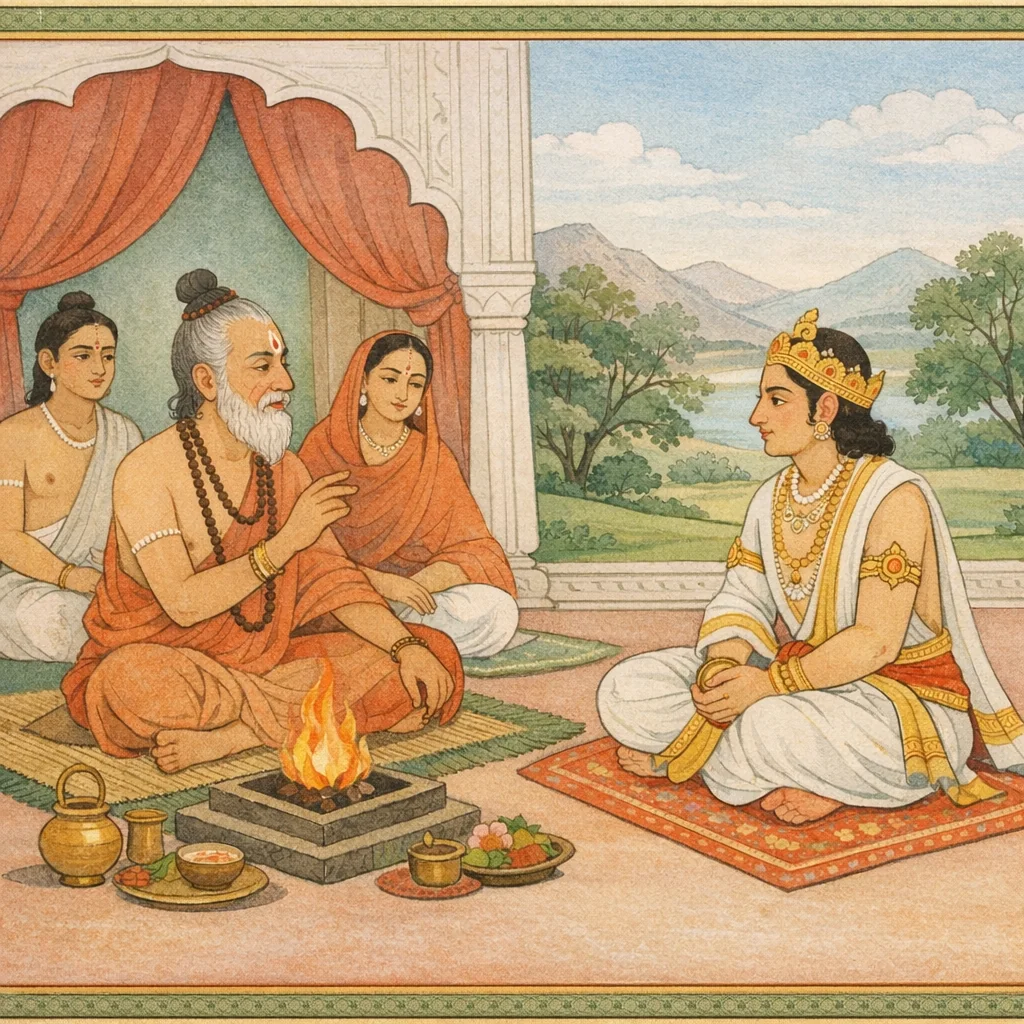
Vaiśaṃpāyana reports that the ascetic Devasthāna addresses Yudhiṣṭhira, responding to a prior assertion attributed to Phalguna (Arjuna) that nothing surpasses wealth. The speaker argues that Yudhiṣṭhira has obtained the earth through dharma and should not abandon kingship without purpose. A ‘four-rung ladder’ of action is invoked, urging stepwise performance of duty. The discourse then redirects wealth toward yajña: resources are depicted as created for sacrificial deployment, with desire (kāma) treated as secondary to ritual-social obligation. The text warns that wealth-seeking can amplify faults, drive harmful accumulation, and impair moral discernment. It also problematizes dāna as difficult because one may give to the unworthy and fail to give to the worthy due to misrecognition. Exempla are provided: Indra’s status is linked to varied sacrifices; Mahādeva’s cosmic eminence is described via a total offering (sarvamedha motif); and royal figures such as Marutta and Hariścandra are cited as humans who, through sacrificial prosperity, rivaled or surpassed Indra’s standing—reinforcing the normative claim that wealth finds its highest legitimacy when subordinated to yajña and righteous public use.
Chapter Arc: युधिष्ठिर के वचनों के विराम पर प्रवचन-कुशल महातपस्वी देवस्थान सभा में उठते हैं और धर्म-विजयी राजा को राज्य-धारण तथा यज्ञ-मार्ग की ओर मोड़ने का संकल्प लेते हैं। → देवस्थान युधिष्ठिर को स्मरण कराते हैं कि उन्होंने धर्म से समस्त पृथ्वी जीती है—ऐसी विजय को ‘वृथा’ छोड़ना नरेश्वर के लिए उचित नहीं। वे आश्रम-धर्म की ‘चतुष्पदी नि:श्रेणी’ (ब्रह्मचर्य, गार्हस्थ्य, वानप्रस्थ, संन्यास) का क्रम बताकर संकेत देते हैं कि अभी राजा का उचित स्थान कर्म-प्रधान गार्हस्थ्य/राजधर्म में है, न कि त्याग में। → देवस्थान का निर्णायक उपदेश: ‘महायज्ञों’ का अनुष्ठान करो, बहु-दक्षिणा दो—क्योंकि धन की सृष्टि विधाता ने यज्ञ के लिए की है; यज्ञ-उद्दिष्ट पुरुष रक्षक है; अतः धन का प्रथम उपयोग यज्ञ में हो, कामना/भोग उसके बाद। वे आविक्षित-पुत्र मरुत्त और हरिश्चन्द्र जैसे राजाओं के उदाहरण देकर यज्ञ-वैभव और पुण्य-प्रतिष्ठा का शिखर दिखाते हैं। → उपदेश का निष्कर्ष यह बनता है कि युधिष्ठिर को राज्य-धर्म में स्थित रहकर कर्म-निष्ठा के साथ यज्ञ, दान, स्वाध्याय और ज्ञान—इन विविध ‘यज्ञ-रूप’ साधनों द्वारा लोक-कल्याण और आत्म-शुद्धि करनी चाहिए; त्याग का मार्ग क्रम से, समय पर। → देवस्थान के तर्क और उदाहरणों के बाद अब प्रश्न यह रह जाता है कि शोक-संतप्त युधिष्ठिर इस कर्म-मार्ग को स्वीकार करेंगे या वैराग्य की ओर ही झुकेंगे।
Shlokas
Verse 1
है अर ० छा | अ-क्राछ विशो<् ध्याय: मुनिवर देवस्थानका राजा युधिष्ठिरको यज्ञानुष्ठानके लिये प्रेरित करना वैशम्पायन उवाच अस्मिन् वाक्यान्तरे वक्ता देवस्थानो महातपा: । अभिनीततरं वाक्यमित्युवाच युधिष्ठटिरम्
Vaiśampāyana said: In the midst of that exchange, the great ascetic Devāsthāna stepped forth as the speaker and addressed Yudhiṣṭhira with words of deeper weight, urging him toward the proper performance of sacrificial rites. Thus the counsel is shown as dharma’s intervention: the sage turns the king from mere deliberation to righteous action, grounded in Vedic duty and royal responsibility.
Verse 2
वैशम्पायनजी कहते हैं--राजन! युधिष्ठिरकी यह बात समाप्त होनेपर प्रवचनकुशल महातपस्वी देवस्थानने युक्तियुक्त वाणीमें राजा युधिष्ठिरसे कहा ।। देवस्थान उवाच यद् वच: फाल्गुनेनोक्त न ज्यायो5स्ति धनादिति । अत्र ते वर्तयिष्यामि तदेकान्तमना: शृणु,देवस्थान बोले--राजन्! अर्जुनने जो यह बात कही है कि “धनसे बढ़कर कोई वस्तु नहीं है।” इसके विषयमें मैं भी तुमसे कुछ कहूँगा। तुम एकाग्रचित्त होकर सुनो
Devasthāna said: “O King, concerning the words spoken by Phālguna (Arjuna)—that nothing is superior to wealth—I shall explain this matter to you. Listen with your mind wholly concentrated.”
Verse 3
अजाततशत्रो धर्मेण कृत्स्ना ते वसुधा जिता । तां जित्वा च वृथा राजन् न परित्यक्तुमहसि,नरेश्वर! अजातशत्रो! तुमने धर्मके अनुसार यह सारी पृथ्वी जीती है। इसे जीतकर व्यर्थ ही त्याग देना तुम्हारे लिये उचित नहीं है
“O Ajātaśatru, by righteousness you have conquered this entire earth. Having won it, O king—lord of men—you ought not to abandon it in vain. Such a renunciation would be unfitting after a victory gained through dharma.”
Verse 4
चतुष्पदी हि नि:श्रेणी ब्रह्मण्येव प्रतिष्ठिता । तां क्रमेण महाबाहो यथावज्जय पार्थिव,महाबाहु भूपाल! ब्रह्मचर्य, गार्हस्थ्य, वानप्रस्थ और संन्यास--ये चारों आश्रम ब्रह्मको प्राप्त करानेकी चार सीढ़ियाँ हैं, जो वेदमें ही प्रतिष्ठित हैं। इन्हें क्रमश: यथोचितरूपसे पार करो
“O mighty-armed king, the four-stepped ladder that leads to the highest good is established in Brahman alone, as the Veda teaches. Therefore ascend it in due order and in the proper way: disciplined studenthood (brahmacarya), household responsibility (gṛhastha), forest-dwelling withdrawal (vānaprastha), and renunciation (saṃnyāsa), so that life becomes a steady ascent toward realization rather than a disorderly pursuit of desire.”
Verse 5
तस्मात् पार्थ महायज्जैर्यजस्व बहुदक्षिणै: । स्वाध्याययज्ञा ऋषयो ज्ञानयज्ञास्तथापरे,कुन्तीनन्दन! अतः तुम बहुत-सी दक्षिणावाले बड़े-बड़े यज्ञोंका अनुष्ठान करो। स्वाध्याययज्ञ और ज्ञानयज्ञ तो ऋषिलोग किया करते हैं
“Therefore, O Pārtha, perform great sacrifices endowed with abundant gifts (dakṣiṇā) to the officiants. The seers undertake the sacrifice of sacred study (svādhyāya-yajña), and others perform the sacrifice of knowledge (jñāna-yajña), O son of Kuntī.”
Verse 6
कर्मनिष्ठां श्न बुद्धयेथास्तपोनिष्ठां श्व पार्थिव । वैखानसानां कौन्तेय वचन श्रूयते यथा,राजन! तुम्हें मालूम होना चाहिये कि ऋषियोंमें कुछ लोग कर्मनिष्ठ और तपोनिष्ठ भी होते हैं। कुन्तीनन्दन! वैखानस महात्माओंका वचन इस प्रकार सुननेमें आता है--
O king, you should understand that among the seers there are some who are steadfast in karma, ritual action, and others who are steadfast in tapas, austerity. O son of Kuntī, the saying of the Vaikhānasa sages is heard in this manner—thus begins their authoritative counsel on the proper orientations of religious life.
Verse 7
ईहेत धनहेतोर्यस्तस्यानीहा गरीयसी । भूयान् दोषो हि वर्धेत यस्तं धनमुपाश्रयेत्,'जो धनके लिये विशेष चेष्टा करता है, वह वैसी चेष्टा न करे--यही सबसे अच्छा है; क्योंकि जो उस धनकी उपासना करने लगता है, उसके महान् दोषकी वृद्धि होती है
Devastāna said: “If someone strives with the aim of gaining wealth, it is better for him to refrain from such striving. For when a person begins to depend upon and ‘worship’ that wealth, a great fault grows ever stronger within him.”
Verse 8
कृच्छाच्च द्रव्यसंहारं कुर्वन्ति धनकारणात् । धनेन तृषितो<बुद्धया भ्रूणहत्यां न बुद्धयते,“लोग धनके लिये बड़े कष्टसे नाना प्रकारके द्रव्योंका संग्रह करते हैं। परंतु धनके लिये प्यासा हुआ मनुष्य अज्ञानवश भ्रूणहत्या-जैसे पापका भागी हो जाता है, इस बातको वह नहीं समझता
Driven by the desire for wealth, people with great hardship amass various possessions. Yet a person parched with craving for money, through lack of discernment, fails to realize that he may become implicated in sins as grave as the killing of an embryo.
Verse 9
अनरहहते यद् ददाति न ददाति यदर्हते । अह्निहपिरिज्ञानाद दानधर्मो5पि दुष्कर:,“बहुधा मनुष्य अनधिकारीको धन दे देता है और योग्य अधिकारीको नहीं देता। योग्य- अयोग्य पात्रकी पहचान न होनेसे (भ्रूणहत्याके समान दोष लगता है, अतः) दानधर्म भी दुष्कर ही है
Devastāna said: ‘A man often gives to one who is unworthy and fails to give to one who is worthy. Because of ignorance in recognizing the proper recipient, even the duty of charity becomes difficult—since misdirected giving can incur moral fault rather than merit.’
Verse 10
यज्ञाय सृष्टानि धनानि धात्रा यज्ञोद्दिष्ट: पुरुषो रक्षिता च । तस्मात् सर्व यज्ञ एवोपयोज्यं धनं ततो5नन्तर एव काम:,“ब्रह्माने यज्ञके लिये ही धनकी सृष्टि की है तथा यज्ञके उद्देश्यसे ही उसकी रक्षा करनेवाले पुरुषको उत्पन्न किया है, इसलिये यज्ञमें ही सम्पूर्ण धनका उपयोग कर देना चाहिये। फिर शीघ्र ही (उस यज्ञसे ही) यजमानके सम्पूर्ण कामनाओंकी सिद्धि हो जाती है
Devastāna said: The Creator brought wealth into being for the sake of sacrifice, and for the sake of sacrifice He also brought forth the man who protects it. Therefore, all wealth should be employed in sacrifice; and then, soon after, the sacrificer’s desired aims are fulfilled through that very rite.
Verse 11
यज्जैरिन्द्रो विविध रत्नवद्धि- देवान् सर्वानिभ्ययाद् भूरितेजा: । तेनेन्द्रत्वं प्राप्प विभ्राजते5सौ तस्माद् यज्ञे सर्वमेवोपयोज्यम्,“महातेजस्वी इन्द्र धनरत्नोंसे सम्पन्न नाना प्रकारके यज्ञोंद्वारा यज्ञपुरुषका यजन करके सम्पूर्ण देवताओंसे अधिक उत्कर्षशाली हो गये; इसलिये इन्द्रका पद पाकर वे स्वर्गलोकमें प्रकाशित हो रहे हैं, अतः यज्ञमें ही सम्पूर्ण धनका उपयोग करना चाहिये
By performing many kinds of sacrifices, richly furnished with diverse treasures, Indra—abounding in splendor—surpassed all the gods. Having thus attained the status of Indra, he shines in heaven. Therefore, one should employ one’s entire wealth in sacrifice—namely, in sacred offering and righteous giving—for such consecrated use of riches is what leads to exaltation and lasting radiance.
Verse 12
महादेव: सर्वयज्ञे महात्मा हुत्वा$5त्मानं देवदेवो बभूव । विश्वॉल्लोकान् व्याप्य विष्ट भ्य कीर्त्या विराजते द्युतिमान् कृत्तिवासा:,“गजासुरके चर्मको वस्त्रकी भाँति धारण करनेवाले महात्मा महादेवजी सर्वस्वसमर्पणरूप यज्ञमें अपने-आपको होमकर देवताओंके भी देवता हो गये। वे अपने उत्तम कीर्तिसे सम्पूर्ण विश्वको व्याप्त करके तेजस्वी रूपसे प्रकाशित हो रहे हैं
Mahādeva, the great-souled one, having offered his very self in the sacrifice that is the total offering of all, became the God of gods. Pervading all the worlds and upholding them through his fame, the radiant Kṛttivāsā shines forth—his glory presented as the ethical ideal of complete self-surrender and supreme renunciation.
Verse 13
आविक्षित: पार्थिवोडसौ मरुत्तो वृद्धया शक्रं योडजयद् देवराजम् । यज्ञे यस्य श्री: स्वयं संनिविष्टा यस्मिन् भाण्डं काज्चनं सर्वमासीतू,“अविक्षितके पुत्र सुप्रसिद्ध महाराज मरुत्तने अपनी समृद्धिके द्वारा देवराज इन्द्रको भी पराजित कर दिया था, उनके यज्ञमें लक्ष्मी देवी स्वयं ही पधारी थीं। उस यज्ञके उपयोगमें आये हुए सारे पात्र सोनेके बने हुए थे
Devastāna said: “That king Āvikṣita’s son, the renowned Mahārāja Marutta, by the sheer force of his prosperity and increase, outshone and even surpassed Śakra (Indra), the lord of the gods. In Marutta’s sacrifice, Śrī (Lakṣmī) herself took her seat; and every vessel used in that rite was made of gold.”
Verse 14
हरिश्नन्द्र: पार्थिवेन्द्र: श्रुतस्ते यज्ञैरिष्टवा पुण्यभाग् वीतशोक: । ऋद्धया शक्रं योडजयन्मानुष: सं- स्तस्माद् यज्ञे सर्वमेवोपयोज्यम्,“राजाधिराज हरिश्वन्द्रका नाम तुमने सुना होगा, जिन्होंने मनुष्य होकर भी अपनी धन- सम्पत्तिके द्वारा इन्द्रको भी परास्त कर दिया था, वे भी अनेक प्रकारके यज्ञोंका अनुष्ठान करके पुण्यके भागी एवं शोकशून्य हो गये थे; अतः यज्ञमें ही सारा धन लगा देना चाहिये”
You have heard of King Hariścandra, the lord of the earth. Though human, he surpassed even Śakra (Indra) by the power of his prosperity; and by performing many sacrifices he became a sharer in great merit and free from sorrow. Therefore, one should devote one’s entire wealth to the sacrifice—placing all resources in the service of righteous offering and duty.
Verse 20
इति श्रीमहाभारते शान्तिपर्वणि राजधर्मानुशासनपर्वणि देवस्थानवाक्ये विंशो5ध्याय:
Thus, in the Śrī Mahābhārata, within the Śānti Parva—specifically in the section on the instruction concerning the duties of kings (rājadharma)—ends the twentieth chapter, in the discourse spoken by Devastāna.
Frequently Asked Questions
Whether wealth (artha) is the highest good and therefore worth pursuing as an end, versus treating wealth as a regulated instrument for dharmic governance—especially yajña, protection, and disciplined giving—without falling into acquisitive harm.
Artha is ethically valid only under governance-oriented restraint: desire for wealth can expand faults and impair judgment, while wealth becomes legitimate when subordinated to yajña and carefully evaluated dāna aligned with dharma.
No explicit phalaśruti formula is stated in the supplied verses; instead, the chapter uses exempla (Indra, Mahādeva, Marutta, Hariścandra) as an implicit validation that yajña-oriented use of wealth yields enduring status and social-cosmic stability.