Adhyaya 184
दान-धर्म-आश्रमविधानम् (Dana, Dharma, and the Four Āśramas)
Upa-parva: Āśramadharma–Dānaphala Saṃvāda (Bharadvāja–Bhṛgu Dialogue)
Bharadvāja opens by asking Bhṛgu about the respective fruits of dāna (giving), dharma-practice, intense tapas, svādhyāya (self-recitation/study), and huta (oblations). Bhṛgu replies with a results-mapping: offerings pacify pāpa, study yields superior tranquility, charity is said to yield enjoyment/benefit, and austerity can lead to comprehensive attainment. He then distinguishes two modalities of giving—(i) gifts to the worthy (sat) that ‘stand by’ the giver in the beyond, and (ii) gifts to the unworthy (asat) whose reward is exhausted here; the fruit corresponds to the quality and context of the gift. Next, Bharadvāja asks for dharma’s definition, its marks, and its types; Bhṛgu anchors dharma in svadharma, stating that the wise who adhere to their own duty obtain dharma’s fruit, while deviation leads to confusion. The chapter then outlines cāturāśramya: (1) brahmacarya framed as disciplined gurukula life—purity, rule-governed conduct, service to the teacher, sandhyā observances, Veda study, and restraint; (2) gārhasthya as the second āśrama for those with spouses seeking co-operative dharma—acquiring wealth by non-censured means to support ritual, study, and social distribution, and described as the ‘root’ of all āśramas; (3) vānaprastha and itinerant holy life are noted with recommended forms of respectful reception. Embedded verses stress that honoring the teacher supports both spiritual result and mental steadiness; hospitality is framed as ethically decisive (an unfulfilled guest transfers demerit and takes away merit). The chapter also enumerates relational duties through yajña and progeny (deities, ancestors, ṛṣis, and Prajāpati), prescribes gentle, agreeable speech while censuring slander and harshness, and lists cross-āśrama virtues—non-violence, truth, and freedom from anger—alongside the rejection of contempt, egoism, and hypocrisy. Concluding verses praise the gṛhastha who sustains the trivarga (dharma-artha-kāma) with discipline, and the restrained householder (even of gleaning livelihood) as attaining auspicious posthumous results.
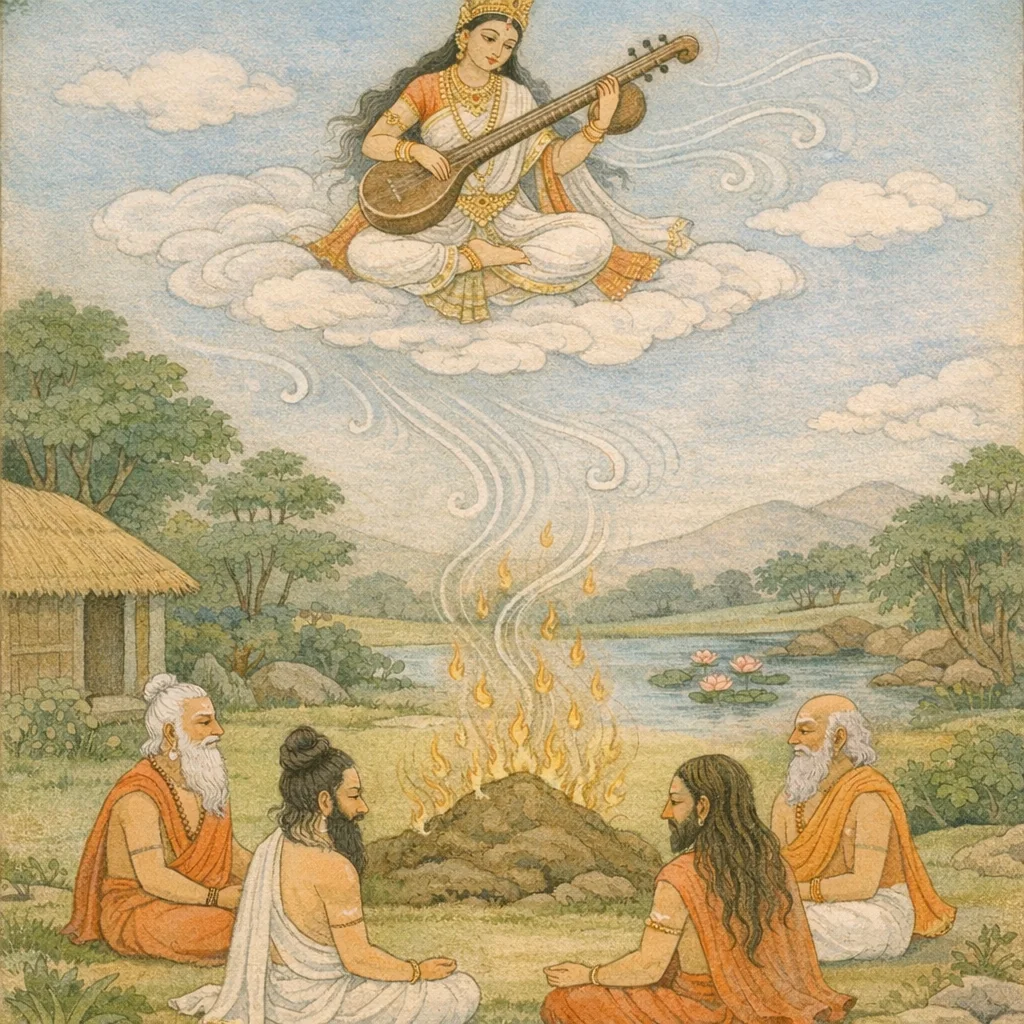
Chapter Arc: भरद्वाज के प्रश्न के उत्तर में भृगु सृष्टि-क्रम का एक विशिष्ट (श्रुति-क्रम से भिन्न) मानस-उद्भव वर्णन आरम्भ करते हैं—जहाँ संकल्प ही प्रथम कारण बनकर प्रजा-विसर्ग को गति देता है। → भृगु बताते हैं कि संरक्षणार्थ पहले जल की सृष्टि हुई—वही प्राणियों का प्राण, वृद्धि का आधार और समस्त जगत का आवरण है। फिर ध्यानस्थ, मौनव्रती, आहार-त्यागी ब्रह्मर्षियों की दीर्घ तपस्या का चित्र आता है; उनके भीतर-बाहर का जगत स्थिर है, पर सृष्टि के तत्त्व क्रमशः उभरने को आतुर हैं। → ध्यान की चरम अवस्था में आकाश से दिव्य सरस्वती प्रकट होकर ‘ब्रह्ममयी वाणी’ के रूप में ऋषियों के श्रवण में उतरती है; उसी के साथ तत्त्व-परिवर्तन तीव्र होता है—जल से (तमस-सा) घन अन्धकार-सा आवरण, फिर सलिलोत्पीड से मारुत का उदय; अग्नि-मारुत के संयोग से जल का आकाश में उछलना और घनीभूत होकर पृथ्वी-योनि का बनना, जो रस-गन्ध-स्नेह और प्राणियों की जननी है। → अध्याय सृष्टि के तत्त्व-क्रम को ‘मानस-संकल्प’ से आरम्भ कर जल, वायु, अग्नि और पृथ्वी तक स्थापित करता है, और पृथ्वी को समस्त रस-गन्ध-जीव-उत्पत्ति का आधार घोषित कर संवाद को अगले विवेचन हेतु स्थिर बिन्दु पर ले आता है। → पृथ्वी-योनि के स्थापित होते ही प्रश्न खुला रह जाता है कि इन तत्त्वों से जीवों के गुण, कर्म और बन्धन-मोक्ष का क्रम आगे कैसे विकसित होता है।
Shlokas
Verse 1
(दाक्षिणात्य अधिक पाठके २ श्लोक मिलाकर कुल ४० श्लोक हैं) प्याज बक। डे - यहाँ जो सृष्टिका क्रम बताया गया है, वह श्रुतिसम्मत क्रमसे भिन्न है। श्रुतिने आकाशसे वायु, वायुसे अग्नि, अग्निसे जल और जललसे पृथ्वीकी उत्पत्तिका क्रम बताया है। त्र्यशीरत्याधेकशततमो< ध्याय: आकाशसे अन्य चार स्थूल भूतोंकी उत्पत्तिका वर्णन भरद्वाज उवाच प्रजाविसर्ग विविधं कथं स सृजते प्रभु: । मेरुमध्ये स्थितो ब्रह्मा तद् ब्रूहि द्विजसत्तम,भरद्वाजने पूछा-दद्विजश्रेष्ठ! मेरुपर्वतके मध्यभागमें स्थित होकर ब्रह्माजी नाना प्रकारकी प्रजासृष्टि कैसे करते हैं, यह मुझे बताइये?
Bharadvāja said: “O best of the twice-born, tell me this: how does that Lord create the manifold process of generating beings? How does Brahmā, stationed in the midst of Mount Meru, bring forth the diverse creation of creatures?”
Verse 2
भूगुरुवाच प्रजाविसर्ग विविधं मानसो मनसासृजत् | संरक्षणार्थ भूतानां सृष्ट प्रथणतो जलम्,भगुने कहा--उन मानसदेवने अपने मानसिक संकल्पसे ही नाना प्रकारकी प्रजासृष्टि की है। उन्होंने प्राणियोंकी रक्षाके लिये सबसे पहले जलकी सृष्टि की
Bhṛgu said: “With the power of mind alone, the Mind-born Lord brought forth a diverse creation of beings. And for the protection and sustenance of creatures, he first created water.”
Verse 3
यत् प्राण: सर्वभूतानां वर्थन्ते येन च प्रजा: । परित्यक्ताश्न नश्यन्ति तेनेदं सर्वमावृतम्,वह जल समस्त प्राणियोंका जीवन है। उसीसे प्रजाकी वृद्धि होती है। जलके न मिलनेसे प्राणी नष्ट हो जाते हैं। उसीने इस सम्पूर्ण जगत्के व्याप्त कर रखा है
Bharadvāja said: “That by which the life-breath of all beings is sustained, and by which creatures and communities grow—when it is absent, beings perish. By that very principle this entire world is pervaded and enveloped.”
Verse 4
पृथिवी पर्वता मेघा मूर्तिमन्तश्न ये परे । सर्व तद् वारुणं ज्ञेयमापस्तस्तम्भिरे यत:,पृथ्वी, पर्वत, मेघ तथा अन्य जो मूर्तिमानू, वस्तुएँ हैं, उन सबको जलमय समझना चाहिये; क्योंकि जलने ही उन सबको स्थिर कर रखा है
Bharadvāja said: “The earth, the mountains, the clouds, and whatever other things possess tangible form—know all of that to be of the nature of water. For it is water that upholds and stabilizes them.”
Verse 5
भरद्वाज उवाच कथं सलिलमुत्पन्नं कथं चैवाग्निमारुतौ | कथं वा मेदिनी सूष्टेत्यत्र मे संशयो महान्,भरद्वाजने पूछा--भगवन्! जलकी उत्पत्ति कैसे हुई? अग्नि और वायुकी सृष्टि किस प्रकार हुई तथा पृथ्वीकी भी रचना कैसे की गयी, इस विषयमें मुझे महान् संदेह है
Bharadvāja said: “How did water come into being? How, indeed, were fire and wind produced? And how was the earth fashioned? On these matters I am seized by a great doubt.”
Verse 6
भूगुरुवाच ब्रह्मकल्पे पुरा ब्रह्मन् ब्रद्मर्षीणां समागमे । लोकसम्भवसंदेह: समुत्पन्नो महात्मनाम्,भगुने कहा--ब्रह्मन! पूर्वकालमें जब ब्रह्मकल्प चल रहा था, उस समय ब्रह्मर्षियोंका परस्पर समागम हुआ। उन महात्माओंकी उस सभामें लोकसृष्टिविषयक संदेह उपस्थित हुआ
Bhṛgu said: “O Brahmin, long ago, when the Brahma-kalpa was in progress, the Brahmarṣis gathered together. In that assembly of great-souled ones, a doubt arose concerning the origin of the worlds.”
Verse 7
ते$तिष्ठन् ध्यानमालम्ब्य मौनमास्थाय निश्चला: । त्यक्ताहारा: पवनपा दिव्यं वर्षशतं द्विजा:,वे ब्रह्मर्षि भोजन छोड़कर वायु पीकर रहते हुए सौ दिव्य वर्षोतक ध्यान लगाकर मौनका आश्रय ले निश्चलभावसे बैठे रह गये
Steady and unmoving, they remained seated, taking refuge in silence and sustaining themselves through meditation. Having renounced food and living only on air, those twice-born ascetics maintained this divine discipline for a hundred celestial years.
Verse 8
तेषां ब्रह्ममयी वाणी सर्वेषां श्रोत्रमागमत् | दिव्या सरस्वती तत्र सम्बभूव नभस्तलात्,उस ध्यानावस्थामें उन सबके कानोंमें ब्रह्ममयी वाणी सुनायी पड़ी। उस समय वहाँ आकाशसे दिव्य सरस्वती प्रकट हुई थी
While they were absorbed in meditation, a voice imbued with the power of Brahman reached the ears of them all. At that very moment, the divine Sarasvatī manifested there, descending from the expanse of the sky.
Verse 9
पुरा स्तिमितमाकाशमनन्तमचलोपमम् । नष्टचन्द्रार्कपवनं प्रसुप्तमिव सम्बभौ,वह आकाशवाणी इस प्रकार है--'पूर्वकालमें अनन्त आकाश पर्वतके समान निश्चल था। उसमें चन्द्रमा, सूर्य अथवा वायु किसीके दर्शन नहीं होते थे। वह सोया हुआ-सा जान पड़ता था
“In ancient times the boundless sky stood utterly still, like an unmoving mountain. No moon, no sun, and no wind were to be seen within it; it appeared as though it were asleep.”
Verse 10
ततः सलिलमुत्पन्नं तमसीवापरं तम: । तस्माच्च सलिलोत्पीडादुदतिष्ठत मारुत:,“तदनन्तर आकाशसे जलकी उत्पत्ति हुई; मानो अन्धकारमें ही दूसरा अन्धकार प्रकट हुआ हो। उस जलप्रवाहसे वायुका उत्थान हुआ
Thereafter water came into being—like a second darkness arising within darkness itself. And from the pressure and surge of that mass of waters, the Wind (Vāyu) arose.
Verse 11
यथा भाजनमच्छिद्रं नि:शब्दमिव लक्ष्यते । तच्चाम्भसा पूर्यमाणं सशब्दं कुरुतेडनिल:,'जैसे कोई छिद्ररहित पात्र निःशब्द-सा लक्षित होता है; परंतु जब उसमें छिद्र करके जल भरा जाता है, तब वायु उसमें आवाज प्रकट कर देती है
Just as a vessel without any hole appears to be silent, so too it seems soundless. But when it is pierced and then filled with water, the wind makes it resound.
Verse 12
तथा सलिलसंरुद्धे नभसो<न््ते निरन्तरे । भित्त्वार्णवतलं वायु: समुत्पतति घोषवान्,“इसी प्रकार जलसे आकाशका सारा प्रान्त ऐसा अवरुद्ध हो गया था कि उसमें कहीं थोड़ा-सा भी अवकाश नहीं था। तब उस एकार्णवके तलप्रदेशका भेदन करके बड़ी भारी आवाजके साथ वायुका प्राकट्य हुआ
In the same way, water had hemmed in the whole expanse of space so completely that not even the slightest opening remained. Then, piercing the floor of that single ocean, the Wind burst forth with a mighty roar.
Verse 13
स एष चरते वायुरणवोत्पीडसम्भव: । आकाश स्थानमासाद्य प्रशान्तिं नाधिगच्छति,“इस प्रकार समुद्रके जलसमुदायसे प्रकट हुई यह वायु सर्वत्र विचरने लगी और आकाशके किसी भी स्थानमें पहुँचकर वह शान्त नहीं हुई
Thus, this wind—born from the pressure and agitation of subtle particles—began to move everywhere. Even after reaching the expanse of space in whatever region, it did not attain calm.
Verse 14
तस्मिन् वाय्वम्बुसंघर्षे दीप्ततेजा महाबल: । प्रादुरभूदूर्धशिख: कृत्वा निस्तिमिरं नभ:,“वायु और जलके उस संघर्षसे अत्यन्त तेजोमय महाबली अग्निदेवका प्राकट्य हुआ, जिनकी लपटें ऊपरकी ओर उठ रही थीं। वह आग आकाशके सारे अन्धकारको नष्ट करके प्रकट हुई थी
When wind and water clashed in that great turmoil, the mighty Agni—radiant with blazing energy—manifested, his flames rising upward. Appearing, he dispelled the darkness from the sky, making the heavens clear.
Verse 15
अग्नि: पवनसंयुक्तः खं समाक्षिपते जलम् | सोडग्निमारुतसंयोगाद् घनत्वमुपपद्यते,“वायुका संयोग पाकर अग्नि जलको आकाशमें उछालने लगी; फिर वही जल अग्नि और वायुके संयोगसे घनीभूत हो गया
Bharadvāja explains a natural process to show causality: when fire, joined with wind, hurls water up into the sky, that very water—through the conjunction of fire and wind—then becomes condensed into a dense mass.
Verse 16
तस्याकाशे निपतित: स्नेहस्तिष्ठति योडपर: । स संघातत्वमापन्नो भूमित्वमनुगच्छति,“उसका जो वह गीलापन आकाशमें गिरा, वही घनीभूत होकर पृथ्वीके रूपमें परिणत हो गया
Bharadvāja said: “That remaining moisture which fell into the sky persists there; then, becoming condensed into a mass, it comes to assume the state of earth.”
Verse 17
रसानां सर्वगन्धानां स्नेहानां प्राणिनां तथा । भूमियोनिरिह ज्ञेया यस्यां सर्व प्रसूयते,“इस पृथ्वीको सम्पूर्ण रसों, गन्धों, स्नेहों तथा प्राणियोंका कारण समझना चाहिये। इसीसे सबकी उत्पत्ति होती है”
Bharadvāja said: “This Earth should be understood here as the womb and source of all tastes, all fragrances, all unctuous substances, and of living beings as well; for from her everything is brought forth.”
Verse 182
इस प्रकार श्रीमह्याभारत शान्तिपर्वके अन्तर्गत गोक्षधर्मपर्वमें भूगु और भरद्वाजका संवादविषयक एक सौ बयासीवाँ अध्याय पूरा हुआ
Thus, in the Śrī Mahābhārata, within the Śānti Parva, in the section known as the Gokṣa-dharma Parva, the one hundred and eighty-second chapter—whose subject is the dialogue between Bhṛgu and Bharadvāja—comes to its conclusion.
Verse 183
इति श्रीमहाभारते शान्तिपर्वणि मोक्षधर्मपर्वणि भुगुभरद्वाजसंवादे मानसभूतोत्पत्तिकथने >यशीत्यधिकशततमो<ध्याय:
Thus, in the Śrī Mahābhārata, within the Śānti Parva—specifically the Mokṣadharma section—during the dialogue between Bhṛgu and Bharadvāja, in the account describing the origin of mental beings, ends the one-hundred-and-eightieth chapter (Adhyāya 180).
Frequently Asked Questions
The ethical problem of ‘how to give’ is foregrounded: whether charity should be evaluated merely by the act of giving or by recipient-worthiness and intention; the chapter resolves this by asserting a twofold dāna and proportional, context-sensitive results.
Merit is not mechanically produced by isolated acts; it is structured by svadharma and disciplined life-stage conduct. Inner peace is tied to study, moral purification to offerings, and social stability to the regulated household economy and hospitality.
Yes in functional form: the text states explicit result-claims (phala) for huta, svādhyāya, dāna, and tapas; additionally, it offers a cautionary meta-ethic via the atithi verse—neglect of a guest reverses moral accounting by transferring demerit and removing merit.