Adhyaya 150
शल्मलि–पवनसंवादः (The Dialogue of Śalmali and Pavana)
Upa-parva: Mokṣa-dharma (Dialogic Exemplum: Śalmali–Pavana Saṃvāda)
Bhīṣma introduces an ancient exemplum: a dialogue involving the śalmali tree and Pavana (wind), mediated by Nārada. The narrative opens with a description of a massive, shade-giving tree near Himavān, thriving with branches, flowers, fruits, and bird-song; it shelters elephants and other animals, and serves as a resting place for merchants and ascetics. Nārada praises the tree’s beauty and observes that its branches and trunk appear unbroken despite the known force of wind that can uproot trees, disturb mountain peaks, and dry waters. He hypothesizes a protective friendship between the tree and Pavana. The śalmali denies any such dependence and boasts that its own tejas-bala surpasses the wind, claiming it has often checked and broken the gale. Nārada rebukes the tree’s inverted understanding, asserting that no being equals vāyu in power; even major deities are not comparable in this respect. He frames vāyu as the pervasive agent that enables ceṣṭā (activity) and prāṇa (vital function) in all beings, and criticizes the tree’s failure to honor what is worthy of honor. The chapter’s thematic lesson is an archival critique of pride and misrecognition: stability should not be confused with autonomy, and foundational sustaining principles merit respect.
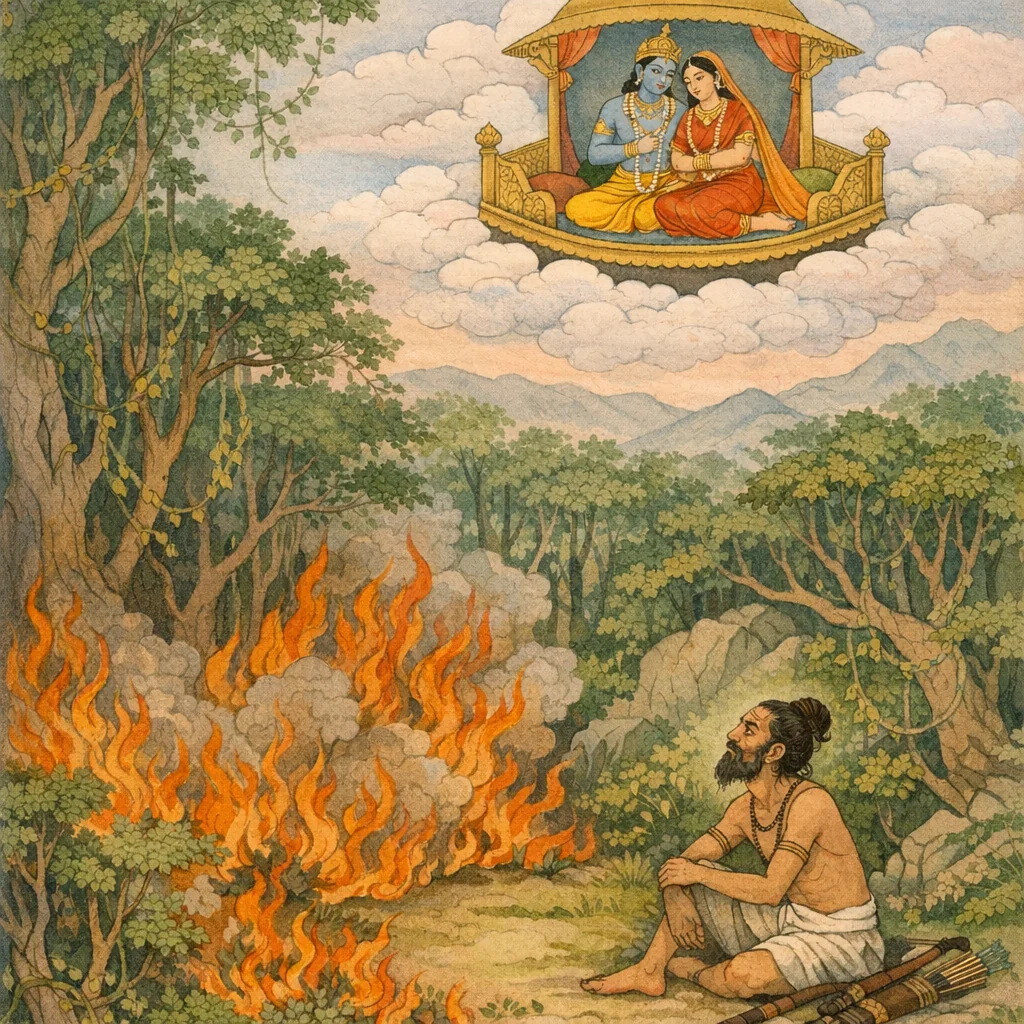
Chapter Arc: भीष्म युधिष्ठिर से एक प्राचीन आख्यान आरम्भ करते हैं—आकाश में विमान पर आरूढ़ एक दिव्य दम्पती को एक लुब्धक (पक्षियों से जीविका चलाने वाला शिकारी) देख लेता है और उनके स्वर्ग-प्राप्ति के रहस्य पर चकित हो उठता है। → लुब्धक के मन में तीव्र आकांक्षा जागती है—‘मैं भी इसी प्रकार तप करके परम गति पाऊँ।’ वह महाप्रस्थान-सा कठोर व्रत धारण करता है: निश्चेष्ट, वायु-आहार, निर्मम, स्वर्ग-कांक्षी। उपवास से कृश होकर भी वह संकल्प नहीं छोड़ता; प्यास से पीड़ित होकर भी धैर्य साधता है। → वन में प्रचण्ड दावानल उठता है—युगान्त-अग्नि के समान क्रुद्ध पावक लताओं-विटपों से भरे वन को घेरकर मृग-पक्षियों सहित भस्म करने लगता है। इस सर्वनाश के बीच लुब्धक का तप, भय और करुणा एक ही क्षण में चरम पर पहुँचते हैं। → भीष्म निष्कर्ष देते हैं कि यह लुब्धक और धर्मिष्ठ कपोत—दोनों की गति ‘पुण्य कर्म’ से सिद्ध हुई; शरणागत-पालन और आपद्धर्म में भी निष्कृति का मार्ग है। युधिष्ठिर को बताया जाता है कि धर्म का सार केवल जन्म/वृत्ति नहीं, बल्कि संकट में किया गया सत्य-धर्म और करुणा है।
Shlokas
Verse 1
अत्-#-#कञ एकोनपज्चाशर्दाधिकशततमो< ध्याय: बहेलियेको स्वर्गलोककी प्राप्ति भीष्म उवाच विमानस्थौ तु तौ राजन् लुब्धक: खे ददर्श ह । दृष्टवा तौ दम्पती राजन् व्यचिन्तयत तां गतिम्,भीष्मजी कहते हैं--राजन्! व्याधने उन दोनों पक्षियोंको दिव्य रूप धारण करके विमान पर बैठे और आकाशमार्गसे जाते देखा। उन दिव्य दम्पतिको देखकर व्याध उनकी उस सद्गतिके विषयमें विचार करने लगा
Bhīṣma said: “O King, the hunter saw those two birds, now in a divine form, seated upon a celestial aerial car and moving through the sky. Seeing that radiant pair as a blessed couple, the hunter began to reflect upon the cause and meaning of their exalted destiny.”
Verse 2
ईदृशेनैव तपसा गच्छेयं परमां गतिम् । इति बुद्धया विनिश्चित्य गमनायोपचक्रमे,मैं भी इसी प्रकार तपस्या करके परम गतिको प्राप्त होऊँगा, ऐसा अपनी बुद्धिके द्वारा निश्चय करके पक्षियोंद्वारा जीवन-निर्वाह करनेवाला वह बहेलिया वहाँसे महाप्रस्थानके पथका आश्रय लेकर चल दिया। उसने सब प्रकारकी चेष्टा त्याग दी। वायु पीकर रहने लगा। स्वर्गकी अभिलाषासे अन्य सब वस्तुओंकी ओरसे उसने ममता हटा ली
Bhishma said: “By austerity of this very kind I too shall attain the highest state.” Having reached this firm resolve through his own discernment, the fowler—who had been sustaining himself by means of birds—set out from there, taking to the path of the Great Departure. He abandoned all exertion, lived by drinking only air, and, driven by the desire for heaven, withdrew his sense of ‘mine’ from every other object.
Verse 3
महाप्रस्थानमाश्रित्य लुब्धक: पक्षिजीवक: । निश्चेष्टो मरुदाहारो निर्मम: स्वर्गकांक्षया,मैं भी इसी प्रकार तपस्या करके परम गतिको प्राप्त होऊँगा, ऐसा अपनी बुद्धिके द्वारा निश्चय करके पक्षियोंद्वारा जीवन-निर्वाह करनेवाला वह बहेलिया वहाँसे महाप्रस्थानके पथका आश्रय लेकर चल दिया। उसने सब प्रकारकी चेष्टा त्याग दी। वायु पीकर रहने लगा। स्वर्गकी अभिलाषासे अन्य सब वस्तुओंकी ओरसे उसने ममता हटा ली
Bhishma said: Taking refuge in the path of the Great Departure, the fowler—who sustained himself by means of birds—set out. He abandoned all exertion, lived by drinking only the air, and, longing for heaven, cast off possessiveness toward everything else.
Verse 4
ततो<पश्यत् सुविस्तीर्ण हद्यं पद्माभिभूषितम् । नानापक्षिगणाकीर्ण सर: शीतजलं शिवम्,आगे जाकर उसने एक विस्तृत एवं मनोरम सरोवर देखा जो कमल-समूहोंसे सुशोभित हो रहा था। नाना प्रकारके जलपक्षी उसमें कलरव कर रहे थे। वह तालाब शीतलजलसे भरा था और अत्यन्त सुखद जान पड़ता था
Then he beheld a lake spread wide and fair, adorned with lotuses. It was thronged with flocks of many kinds of birds, and its waters were cool—pure and auspicious, bringing a sense of peace.
Verse 5
पिपासार्तोडपि तद् दृष्टवा तृप्त: स्यान्नात्र संशय: । उपवासकृशोत्यर्थ स तु पार्थिव लुब्धक:,राजन! कोई मनुष्य कितनी ही प्याससे पीड़ित क्यों न हो, नि:ःसंदेह उस सरोवरके दर्शनमात्रसे वह तृप्त हो सकता था। इधर यह व्याध उपवासके कारण अत्यन्त दुर्बल हो गया था, तो भी उधर दृष्टिपात किये बिना ही बड़े हर्षके साथ हिंसक जन्तुओंसे भरे हुए वनमें प्रवेश कर गया। महान् लक्ष्यपर पहुँचनेका निश्चय करके बहेलिया उस वनमें घुसा। घुसते ही कैँटीली झाड़ियोंमें फँस गया। काँटोंस उसका सारा शरीर छिदकर लहूलुहान हो गया
Bhishma said: “Even a man tormented by thirst, merely on seeing that lake, could feel satisfied—of this there is no doubt. Yet that hunter, though extremely emaciated from fasting, entered with great eagerness a forest filled with fierce beasts, without even casting his gaze toward it. Having resolved to reach a great objective, the fowler pushed into the woods; and as soon as he entered, he became entangled in thorny thickets, his whole body pierced by thorns and smeared with blood.”
Verse 6
अनवेक्ष्यैव संहृष्ट: श्वापदाध्युषितं वनम् । महान्तं निश्चयं कृत्वा लुब्धक: प्रविवेश ह,राजन! कोई मनुष्य कितनी ही प्याससे पीड़ित क्यों न हो, नि:ःसंदेह उस सरोवरके दर्शनमात्रसे वह तृप्त हो सकता था। इधर यह व्याध उपवासके कारण अत्यन्त दुर्बल हो गया था, तो भी उधर दृष्टिपात किये बिना ही बड़े हर्षके साथ हिंसक जन्तुओंसे भरे हुए वनमें प्रवेश कर गया। महान् लक्ष्यपर पहुँचनेका निश्चय करके बहेलिया उस वनमें घुसा। घुसते ही कैँटीली झाड़ियोंमें फँस गया। काँटोंस उसका सारा शरीर छिदकर लहूलुहान हो गया
Bhishma said: Without even looking around, the hunter—delighted and elated—entered the forest inhabited by wild beasts. Having formed a firm and lofty resolve to reach his goal, he went into that dangerous wood, O King.
Verse 7
प्रविशन्नेव स वनं निगृहीत: सकण्टकै: । स कण्टकैर्विभिन्नाड्को लोहिताद्रीकृतच्छवि:,राजन! कोई मनुष्य कितनी ही प्याससे पीड़ित क्यों न हो, नि:ःसंदेह उस सरोवरके दर्शनमात्रसे वह तृप्त हो सकता था। इधर यह व्याध उपवासके कारण अत्यन्त दुर्बल हो गया था, तो भी उधर दृष्टिपात किये बिना ही बड़े हर्षके साथ हिंसक जन्तुओंसे भरे हुए वनमें प्रवेश कर गया। महान् लक्ष्यपर पहुँचनेका निश्चय करके बहेलिया उस वनमें घुसा। घुसते ही कैँटीली झाड़ियोंमें फँस गया। काँटोंस उसका सारा शरीर छिदकर लहूलुहान हो गया
Bhishma said: As he entered the forest, he was at once seized and held back by thorny growths. His limbs were pierced all over by the thorns, and his body’s appearance turned blood-red. The episode shows how one, driven by a fixed resolve toward a chosen aim, may rush ahead even when weakened—yet nature and circumstance can immediately inflict the painful consequences of such heedless haste.
Verse 8
बशभ्राम तस्मिन् विजने नानामृगसमाकुले । ततो द्रुमाणां महता पवनेन वने तदा,ददाह पावक: क्रुद्धो युगान्ताग्निसमप्रभ: । नाना प्रकारके वन्य पशुओंसे भरे हुए उस निर्जन वनमें वह इधर-उधर भटकने लगा। इतनेही में प्रचण्ड पवनके वेगसे वृक्षोंमें परस्पर रगड़ होनेके कारण उस वनमें बड़ी भारी आग लग गयी। आग की बड़ी-बड़ी लपटें ऊपरको उठने लगीं। प्रलयकालकी संवर्तक अग्निके समान प्रज्वलित एवं कुपित हुए अग्निदेव लता, डालियों और वृक्षोंसे व्याप्त हुए उस वनको दग्ध करने लगे
Bhishma said: In that lonely wilderness, teeming with many kinds of wild animals, he wandered about in confusion. Then a fierce wind made the trees rub against one another, and a great fire broke out. The enraged Fire—blazing like the conflagration at the end of an age—began to burn that forest, spreading through its creepers, branches, and trees. The scene warns how uncontrolled forces, once ignited, can consume an entire environment through a chain of causes.
Verse 9
उदतिष्ठत संघर्षात् सुमहान् हव्यवाहन: । तद् वन॑ वृक्षसम्पूर्ण लताविटपसंकुलम्
Bhishma said: From the violent friction there rose a very great fire, the carrier of oblations. That forest—dense with trees and tangled with creepers and branching thickets—was seized by the blaze, showing how unchecked force can swiftly consume even what seems abundant and secure.
Verse 10
स ज्वालै: पवनोदशभूतैर्विस्फुलिज्ज:ः समन््तत:
Bhishma describes a blazing manifestation: it is surrounded on all sides by flames and by the tenfold forces of wind, scattering sparks everywhere—an image of overwhelming, all-pervading energy and of consequences that spread inescapably once great forces are unleashed.
Verse 11
ततः स देहमोक्षार्थ सम्प्रहषष्टेन चेतसा,अभ्यधावत वर्धन्तं पावकं लुब्धकस्तदा । बहेलिया अपने शरीरका परित्याग करनेके लिये मनमें हर्ष और उल्लास भरकर उस बढ़ती हुई आगकी ओर दौड़ पड़ा
Bhishma said: Then the hunter, his mind filled with joy and exhilaration, ran toward the growing fire, intending to cast off his body. The scene underscores a grim resolve: having decided inwardly to end embodied existence, he moves toward self-destruction rather than turning back to restraint or repentance.
Verse 12
ततस्तेनाग्निना दग्धो लुब्धको नष्टकल्मष: । जगाम परमां सिद्धिं ततो भरतसत्तम,भरतश्रेष्ठ) तदनन्तर उस आगमें जल जानेसे बहेलियेके सारे पाप नष्ट हो गये और उसने परम सिद्धि प्राप्त कर ली
Bhishma said: Then, burned by that fire, the hunter was freed from every stain of sin. Thereafter, O best of the Bharatas, he attained the highest spiritual perfection.
Verse 13
ततः स्वर्गस्थमात्मानमपश्यद् विगतज्वर: । यक्षगन्धर्वसिद्धानां मध्ये भ्राजन्तमिन्द्रवत्,थोड़ी ही देरमें अपने आपको उसने देखा कि वह बड़े आनन्दसे स्वर्गलोकमें विराजमान है तथा अनेक यक्ष, सिद्ध और गन्धर्वोके बीचमें इन्द्रके समान शोभा पा रहा है
Bhishma said: Then, freed from all feverish distress, he beheld himself established in heaven—radiant like Indra—shining in the midst of Yakshas, Gandharvas, and Siddhas.
Verse 14
एवं खलु कपोतश्न कपोती च पतिव्रता । लुब्धकेन सह स्वर्ग गता: पुण्येन कर्मणा,इस प्रकार वह धर्मात्मा कबूतर, पतिव्रता कपोती और बहेलिया--तीनों साथ-साथ अपने पुण्यकर्मके बलसे स्वर्गलोकमें जा पहुँचे
Thus, the righteous pigeon and the devoted, husband-faithful she-pigeon—together with the hunter—attained heaven, borne there by the merit of their virtuous deeds.
Verse 15
यापि चैवंविधा नारी भर्तारिमनुवर्तते । विराजते हि सा क्षिप्रं कपोतीव दिवि स्थिता,इसी प्रकार जो स्त्री अपने पतिका अनुसरण करती है, वह कपोतीके समान शीघ्र ही स्वर्गलोकमें स्थित हो अपने तेजसे प्रकाशित होती है
Bhishma said: Even a woman of such a disposition, if she faithfully follows and supports her husband, soon shines forth—like a dove—established in heaven, radiant with her own spiritual splendor.
Verse 16
एवमेतत् पुरावृत्तं लुब्धकस्य महात्मन: । कपोतस्य च धर्मिष्ठा गति: पुण्येन कर्मणा,यह प्राचीन वृत्तान्त (परशुरामजीने मुचुकुन्दकों सुनाया था) यह ठीक ऐसा ही है। बहेलिये और महात्मा कबूतरको उनके पुण्यकर्मके प्रभावसे धर्मात्माओंकी गति प्राप्त हुई
Bhishma said: “So it is indeed—this is an ancient episode. By the merit of their righteous deeds, both the hunter and the noble pigeon attained the dharmic course, the blessed destiny reserved for the virtuous.”
Verse 17
यश्चेदं शृणुयान्नित्यं यश्चेद॑ं परिकीर्तयेत् । नाशुभ॑ विद्यते तस्य मनसापि प्रमादत:,जो मनुष्य इस प्रसंगको प्रतिदिन सुनता और जो इसका वर्णन करता है, उन दोनोंको मनसे भी प्रमादजनित अशुभकी प्राप्ति नहीं होती
Bhīṣma said: Whoever listens to this account daily, and whoever recites or proclaims it, for that person no inauspiciousness arises—even in the mind—through heedlessness. The teaching affirms the purifying, protective power of regular hearing and recitation: disciplined attention to dharma-bearing discourse guards one from moral lapse and its harmful consequences.
Verse 18
युधिष्ठिर महानेष धर्मो धर्मभूतां वर । गोघ्नेष्वपि भवेदस्मिन्निष्कृति: पापकर्मण:,धर्मात्माओंमें श्रेष्ठ युधिष्ठिर| यह शरणागतका पालन महान् धर्म है। ऐसा करनेसे गोवध करनेवाले पुरुषोंके पापका भी प्रायश्रित्त हो जाता है
Bhīṣma said: “O Yudhiṣṭhira, best among the righteous, this is indeed a great dharma: the protection of one who has sought refuge. When this is practiced, it becomes an expiation even for those stained by grievous sins—yes, even for a killer of cows.”
Verse 19
न निष्कृतिर्भवेत् तस्य यो हन्याच्छरणागतम् । इतिहासमिमं श्रुत्वा पुण्यं पापप्रणाशनम् । न दुर्गतिमवाप्रोति स्वर्गलोक॑ च गच्छति,जो शरणागतका वध करता है, उसको कभी इस पापसे छुटकारा नहीं मिलता। इस पापनाशक पुण्यमय इतिहासको सुन लेनेपर मनुष्य कभी दुर्गतिमें नहीं पड़ता। उसे स्वर्गलोककी प्रप्ति होती है
Bhīṣma said: “There is no expiation for the one who kills a person who has come seeking refuge. But whoever listens to this sacred, sin-destroying account does not fall into a wretched state; rather, he attains the heavenly world.”
Verse 93
ददाह पावक: क्रुद्धो युगान्ताग्निसमप्रभ: । नाना प्रकारके वन्य पशुओंसे भरे हुए उस निर्जन वनमें वह इधर-उधर भटकने लगा। इतनेही में प्रचण्ड पवनके वेगसे वृक्षोंमें परस्पर रगड़ होनेके कारण उस वनमें बड़ी भारी आग लग गयी। आग की बड़ी-बड़ी लपटें ऊपरको उठने लगीं। प्रलयकालकी संवर्तक अग्निके समान प्रज्वलित एवं कुपित हुए अग्निदेव लता, डालियों और वृक्षोंसे व्याप्त हुए उस वनको दग्ध करने लगे
Bhishma said: Enraged, the Fire-god blazed like the world-ending conflagration and began to burn that forest. Driven by fierce winds, trees rubbed against one another and a great fire erupted; towering flames rose upward, and the wrathful, blazing Agni consumed the creepers, branches, and trees—like the destructive fire at the time of dissolution.
Verse 103
ददाह तद् वन॑ घोरं मृगपक्षिसमाकुलम् | हवासे उड़ी हुई चिनगारियों तथा ज्वालाओंद्वारा चारों और फैलकर उस दावानलने पशु-पक्षियोंसे भरे हुए भयंकर वनको जलाना आरम्भ किया
Bhishma said: The fierce wildfire began to consume that dreadful forest, crowded with beasts and birds, as sparks and tongues of flame spread in every direction.
Verse 149
इति श्रीमहा भारते शान्तिपर्वणि आपद्धर्मपर्वणि लुब्धकस्वर्गगमने एकोनपञ्चाशदधिकशततमोड< ध्याय:,इस प्रकार श्रीमहाभारत शान्तिपर्वके अन्तर्गत आपद्धर्मपर्वमें व्याधका स्वर्गलोकमें गमनविषयक एक सौ उनचासवाँ अध्याय पूरा हुआ
Bhishma concludes: “Thus, in the revered Mahabharata, within the Shanti Parva—specifically the section on conduct in times of distress (Āpaddharma)—ends the one-hundred-and-forty-ninth chapter, concerning the hunter’s ascent to heaven.” The colophon signals the close of a teaching episode that shows dharma tested under hardship, where intention, repentance, and right conduct can transform even a life marked by violence into a path toward higher destiny.
Frequently Asked Questions
The dilemma is epistemic-ethical: whether to attribute one’s flourishing to self-sufficient power or to recognize dependence on broader sustaining forces; the śalmali chooses self-attribution, and Nārada corrects it as a form of pride and delusion.
The chapter teaches that foundational conditions—here symbolized by vāyu as prāṇa and the cause of motion—are not to be dismissed; accurate self-knowledge includes recognizing enabling causes and cultivating humility rather than boastful speech.
No explicit phalaśruti formula appears in the provided verses; the meta-function is exemplum-based instruction within Bhīṣma’s larger Śānti-parva pedagogy, where narrative illustration substitutes for promised merit statements.