Adhyaya 54
गदायुद्ध-समारम्भः (Commencement of the Mace-Duel Proceedings)
Upa-parva: Gadāyuddha-prastāva (Prelude to the Mace Duel at Samantapañcaka)
Vaiśaṃpāyana introduces the aftermath of intense fighting and situates Dhṛtarāṣṭra’s grief-driven inquiry to Saṃjaya: how will Duryodhana confront Bhīma when Rāma (Balarāma) is present at the gadāyuddha? Saṃjaya reports Duryodhana’s renewed confidence upon attaining Rāma’s proximity. The narrative then shifts to logistical and sacral staging: Yudhiṣṭhira directs movement to Samantapañcaka, praised as Prajāpati’s famed altar-region and a place where death in battle is described as leading surely to heaven. The parties proceed westward to an open area south of the Sarasvatī, near the Svayana tīrtha, selecting it as the combat ground. Both duelists are described in heightened martial imagery—armored, mace-bearing, mutually appraising—while the gods and onlookers acclaim the approaching contest. Duryodhana formally announces to Yudhiṣṭhira that the duel is settled between himself and Bhīma, instructing the kings to sit and witness. Balarāma, honored among the seated royal circle, is depicted as centrally placed and luminous. The chapter closes with both combatants exchanging harsh words and standing poised like archetypal rivals, marking the transition from procession and proclamation to imminent engagement.
Chapter Arc: कुरुक्षेत्र के तीर्थ-प्रदेशों का दर्शन करते हुए सात्वतवंशी बलराम दान-धर्म से भूमि को पवित्र करते हैं और एक दिव्य, वन-समृद्ध आश्रम के रहस्य को जानने हेतु ऋषियों से प्रश्न करते हैं। → आश्रम-वैभव के पीछे छिपी तपस्या-कथा खुलती है—स्त्रियों के लिए ‘अत्यन्त दुष्कर’ घोर तप, देव-ब्राह्मणों का सम्मान, और अंततः स्वर्गगमन; इसी बीच देवर्षि नारद का आगमन कथा को तीर्थ-महिमा से युद्ध-भाग्य की ओर मोड़ देता है। → नारद के वचन बलराम के भीतर दबे क्षोभ को जगा देते हैं—कौरव-विनाश का संकेत और भीम-दुर्योधन के निर्णायक गदा-युद्ध का प्रसंग सुनकर कटु वचनों से व्यथित वीर हृदय से उठकर विशाल गदा ग्रहण करता है। → नारद की बात सुनकर बलराम अपने साथ आए श्रेष्ठ ब्राह्मणों का पूजन करते हैं और तीर्थ-यात्रा की शांति से लौटकर द्वारका-गमन का आदेश देते हैं—मानो युद्ध-धर्म से स्वयं को अलग रखते हुए भी उसके परिणाम को स्वीकार कर लेते हों। → भीम और दुर्योधन के गदा-युद्ध का अनिवार्य समागम निकट है—बलराम का मन किस ओर झुकेगा, और धर्म की कसौटी पर कौन-सा निर्णय टिकेगा?
Shlokas
Verse 1
आपय>जा>जों छा हि मा चतुष्पठ्चाशत्तमोडध्याय: प्लक्षप्रस्वण आदि तीर्थों तथा सरस्वतीकी महिमा एवं नारदजीसे कौरवोंके विनाश और भीम तथा दुर्योधनके युद्धका समाचार सुनकर बलरामजीका उसे देखनेके लिये जाना वैशम्पायन उवाच कुरुक्षेत्र ततो दृष्टवा दत्त्वा दायांश्व॒ सात्वत: । आश्रमं सुमहद् दिव्यमगमज्जनमेजय
Vaiśampāyana said: “Then the Sāttvata (Balarāma), having beheld Kurukṣetra and having bestowed the due shares (gifts), proceeded—O Janamejaya—to a vast and radiant hermitage.”
Verse 2
वैशम्पायनजी कहते हैं--जनमेजय! सात्वतवंशी बलरामजी कुरुक्षेत्रका दर्शन कर वहाँ बहुत-सा धन दान करके उस स्थानसे एक महान् एवं दिव्य आश्रममें गये ।। मधूकाम्रवणोपेतं प्लक्षन्यग्रोधसंकुलम् । चिरबिल्वयुतं पुण्यं पनसार्जुनसंकुलम्,महुआ और आमके वन उस आश्रमकी शोभा बढ़ा रहे थे। पाकड़ और बरगदके वृक्ष वहाँ अपनी छाया फैला रहे थे। चिलबिल, कटहल और अर्जुन (समूह)-के पेड़ चारों ओर भरे हुए थे। पुण्यदायक लक्षणोंसे युक्त उस पुण्यमय श्रेष्ठ आश्रमका दर्शन करके यादवश्रेष्ठ बलरामजीने उन समस्त ऋषियोंसे पूछा कि “यह सुन्दर आश्रम किसका है?”
Vaiśampāyana said: “O Janamejaya, Balarāma of the Sātvata line, after beholding Kurukṣetra and giving abundant gifts there, departed from that place and went to a great, divine hermitage. It was graced with groves of madhūka and mango, thick with plakṣa and nyagrodha trees, adorned with long-standing bilva trees, and filled with jackfruit and arjuna trees—an auspicious, merit-bearing retreat. Having seen that holy and excellent āśrama, Balarāma, foremost among the Yādavas, asked all the sages: ‘To whom does this beautiful hermitage belong?’”
Verse 3
त॑ दृष्टवा यादवश्रेष्ठ: प्रवरं पुण्यलक्षणम् । पप्रच्छ तानृषीन् सर्वान् कस्याश्रमवरस्त्वयम्,महुआ और आमके वन उस आश्रमकी शोभा बढ़ा रहे थे। पाकड़ और बरगदके वृक्ष वहाँ अपनी छाया फैला रहे थे। चिलबिल, कटहल और अर्जुन (समूह)-के पेड़ चारों ओर भरे हुए थे। पुण्यदायक लक्षणोंसे युक्त उस पुण्यमय श्रेष्ठ आश्रमका दर्शन करके यादवश्रेष्ठ बलरामजीने उन समस्त ऋषियोंसे पूछा कि “यह सुन्दर आश्रम किसका है?”
Seeing that excellent hermitage, marked by auspicious and sanctifying signs, Balarāma—the foremost of the Yādavas—approached all those sages and asked: “Whose is this beautiful, pre-eminent āśrama?”
Verse 4
ते तु सर्वे महात्मानमूचू राजन् हलायुधम् । शृणु विस्तरशो राम यस्यायं पूर्वमाश्रम:,राजन्! तब वे सभी ऋषि महात्मा हलधरसे बोले--“बलरामजी! पहले यह आश्रम जिसके अधिकारमें था, उसकी कथा विस्तारपूर्वक सुनिये--
Vaiśampāyana said: Then all those great sages addressed Halāyudha (Balarāma), saying, “O King, O Rāma, listen in detail to the account of the one to whom this hermitage formerly belonged.”
Verse 5
अत्र विष्णु: पुरा देवस्तप्तवांस्तप उत्तमम् | अत्रास्य विधिवद् यज्ञा: सर्वे वृत्ता: सनातना:,'प्राचीनकालमें यहाँ भगवान् विष्णुने उत्तम तपस्या की है, यहीं उनके सभी सनातन यज्ञ विधिपूर्वक सम्पन्न हुए हैं
Vaiśampāyana said: “In this very place, the god Viṣṇu in ancient times performed the highest austerity. Here, too, all his eternal sacrifices were duly carried out according to proper rite.”
Verse 6
अन्रैव ब्राह्मणी सिद्धा कौमारब्रह्म॒चारिणी । योगयुक्ता दिवं याता तपःसिद्धा तपस्विनी,“यहीं कुमारावस्थासे ब्रह्मचर्यका पालन करनेवाली एक सिद्ध ब्राह्मणी रहती थी, जो तपःसिद्ध तपस्विनी थी। वह योगयुक्त होकर स्वर्गलोकमें चली गयी
Vaiśampāyana said: “Right here there lived a perfected Brahmin woman, one who had observed brahmacarya from her very girlhood. Accomplished through austerity and steadfast in ascetic discipline, she—absorbed in yoga—departed to the heavenly realm.”
Verse 7
बभूव श्रीमती राजन् शाण्डिल्यस्य महात्मन: । सुता धृतव्रता साध्वी नियता ब्रह्मचारिणी,“राजन! नियमपूर्वक व्रतधारण और ब्रह्मचर्यपालन करनेवाली वह तेजस्विनी साध्वी महात्मा शाण्डिल्यकी सुपुत्री थी
Vaiśampāyana said: “O King, she was a radiant and illustrious maiden—the daughter of the great-souled Śāṇḍilya—steadfast in her vows, virtuous in conduct, disciplined in self-restraint, and devoted to the observance of brahmacarya.”
Verse 8
सा तु तप्त्वा तपो घोरें दुश्चरं सत्रीजनेन ह । गता स्वर्ग महाभागा देवब्राद्मणपूजिता
But she, having undertaken a fierce and difficult austerity—one rarely borne by women—attained heaven. Fortunate and honored, she was revered by the gods and by the brāhmaṇas, her life standing as a testament to the moral power of disciplined self-restraint and pious conduct.
Verse 9
'स्त्रियोंके लिये जो अत्यन्त दुष्कर था, ऐसा घोर तप करके देवताओं और ब्राह्मणोंद्वारा सम्मानित हुई वह महान् सौभाग्यशालिनी देवी स्वर्गलोकको चली गयी थी” ।। श्रुत्वा ऋषीणां वचनमाश्रमं तं जगाम ह । ऋषींस्तानभिवाद्याथ पाश्वे हिमवतो5च्युत:
Having performed a severe austerity—one exceedingly difficult for women—she, that greatly fortunate goddess, honored by the gods and by the Brahmins, departed to the world of heaven. Hearing the sages’ words, he went to that hermitage; and after paying reverence to those sages, the unfallen one stayed by the side of the Himalaya.
Verse 10
नातिदूरं ततो गत्वा नगं तालध्वजो बली,जिनकी ध्वजापर तालका चिह्न सुशोभित होता है, वे बलरामजी उस पर्वतपर थोड़ी ही दूर गये थे कि उनकी दृष्टि एक पुण्यमय उत्तम तीर्थपर पड़ी। वह सरस्वतीकी उत्पत्तिका स्थान प्लक्षप्रख्वण नामक तीर्थ था। उसका दर्शन करके बलरामजीको बड़ा आश्चर्य हुआ
Vaiśampāyana said: After going only a short distance from there, the mighty Balarāma—whose banner bears the emblem of the palm tree—reached a mountain. There his gaze fell upon a supremely holy and auspicious tīrtha, the place of origin of the river Sarasvatī, known as Plakṣa-prasravaṇa. Beholding it, Balarāma was filled with wonder, underscoring the epic’s reverence for sacred geography and the purifying power of pilgrimage even amid the wider context of war.
Verse 11
पुण्यं तीर्थवरं दृष्टवा विस्मयं परमं गत: । प्रभावं च सरस्वत्या: प्लक्षप्रस्रवणं बल:,जिनकी ध्वजापर तालका चिह्न सुशोभित होता है, वे बलरामजी उस पर्वतपर थोड़ी ही दूर गये थे कि उनकी दृष्टि एक पुण्यमय उत्तम तीर्थपर पड़ी। वह सरस्वतीकी उत्पत्तिका स्थान प्लक्षप्रख्वण नामक तीर्थ था। उसका दर्शन करके बलरामजीको बड़ा आश्चर्य हुआ
Vaiśampāyana said: Seeing a supremely holy and excellent ford, Balarāma was filled with the greatest wonder. He beheld there the manifest power of the river Sarasvatī—at Plakṣa-prasravaṇa, the revered place where she is said to arise—an encounter that inspires reverence for sacred geography and the purifying force of pilgrimage even amid the wider turmoil of war.
Verse 12
सम्प्राप्त: कारपवन प्रवरं तीर्थमुत्तमम् । हलायुधस्तत्र चापि दत्त्वा दानं महाबल:,फिर वे कारपवन नामक उत्तम तीर्थमें गये। महाबली हलधरने वहाँके निर्मल, पवित्र और अत्यन्त शीतल पुण्यदायक जलमें गोता लगाकर ब्राह्मणोंको दान दे देवताओं और पितरोंका तर्पण किया। तत्पश्चात् रणदुर्मद बलरामजी यतियों और ब्राह्मणोंके साथ वहाँ एक रात रहकर मित्रावरुणके पवित्र आश्रमपर गये
Vaiśampāyana said: Balarāma, the mighty bearer of the plough-weapon, arrived at the excellent and foremost sacred ford called Kārapavana. There he performed acts of generosity, honoring the sanctity of the place through giving. The passage underscores a dharmic pause amid the wider violence of the war: the warrior’s strength is tempered by pilgrimage, purity, and reverence—expressed through charity and ritual duty toward gods, sages, and ancestors.
Verse 13
आप्लुत: सलिले पुण्ये सुशीते विमले शुचौ । संतर्पयामास पितृन् देवांश्व रणदुर्मद:,फिर वे कारपवन नामक उत्तम तीर्थमें गये। महाबली हलधरने वहाँके निर्मल, पवित्र और अत्यन्त शीतल पुण्यदायक जलमें गोता लगाकर ब्राह्मणोंको दान दे देवताओं और पितरोंका तर्पण किया। तत्पश्चात् रणदुर्मद बलरामजी यतियों और ब्राह्मणोंके साथ वहाँ एक रात रहकर मित्रावरुणके पवित्र आश्रमपर गये
Vaiśampāyana said: Having bathed in that meritorious water—cool, clear, and pure—the mighty Balarāma, famed as Raṇadurmada (“proud in battle”), performed the rites of satisfaction (tarpana) for the gods and for the ancestral spirits (pitṛs). The episode shows that even a warrior of great strength upholds dharma through purification, generosity, and reverence to devas and pitṛs.
Verse 14
तत्रोष्यैकां तु रजनीं यतिभिर्रद्मणै: सह । मित्रावरुणयो: पुण्यं जगामाश्रममच्युत:,फिर वे कारपवन नामक उत्तम तीर्थमें गये। महाबली हलधरने वहाँके निर्मल, पवित्र और अत्यन्त शीतल पुण्यदायक जलमें गोता लगाकर ब्राह्मणोंको दान दे देवताओं और पितरोंका तर्पण किया। तत्पश्चात् रणदुर्मद बलरामजी यतियों और ब्राह्मणोंके साथ वहाँ एक रात रहकर मित्रावरुणके पवित्र आश्रमपर गये
Vaiśampāyana said: After staying there for a single night together with ascetics and brāhmaṇas, Acyuta (Balarāma) proceeded to the sacred hermitage of Mitra and Varuṇa. The passage highlights a warrior’s restraint and reverence: even amid the wider violence of the age, he pauses for pilgrimage, disciplined company, and sanctified places—affirming that purity of conduct and honoring holy institutions remain duties that steady the mind and uphold dharma.
Verse 15
इन्द्रोडग्निरर्यमा चैव यत्र प्राक् प्रीतिमाप्रुवन् त॑ देशं कारपवनाद् यमुनायां जगाम ह,उपविष्ट: कथा: शुभ्रा: शुश्राव यदुपुड्रवः । जहाँ पूर्वकालमें इन्द्र, अग्नि और अर्यमाने बड़ी प्रसन्नता प्राप्त की थी, वह स्थान यमुनाके तटपर है। कारपवनसे उस तीर्थमें जाकर महाबली धर्मात्मा बलरामने स्नान करके बड़ा हर्ष प्राप्त किया। फिर वे यदुपुंगव बलभद्र ऋषियों और सिद्धोंके साथ बैठकर उत्तम कथाएँ सुनने लगे
Vaiśampāyana said: “That place on the bank of the Yamunā where, in ancient times, Indra, Agni, and Aryaman attained great delight—there the foremost of the Yadus went from Kārapavana. Having bathed at that sacred ford, the mighty and righteous Baladeva felt deep joy; then, seated together with sages and perfected beings (siddhas), he listened to noble and purifying accounts.”
Verse 16
स््नात्वा तत्र च धर्मात्मा परां प्रीतिमवाप्य च । ऋषिभिश्नैव सिद्धैश्न सहितो वै महाबल:
Having bathed there, the righteous-souled and mighty one attained profound joy; and he remained in the company of seers and perfected beings (siddhas). The verse underscores how inner purity and a dharmic disposition naturally draw one toward holy fellowship and deep contentment, even amid the larger turmoil of the war narrative.
Verse 17
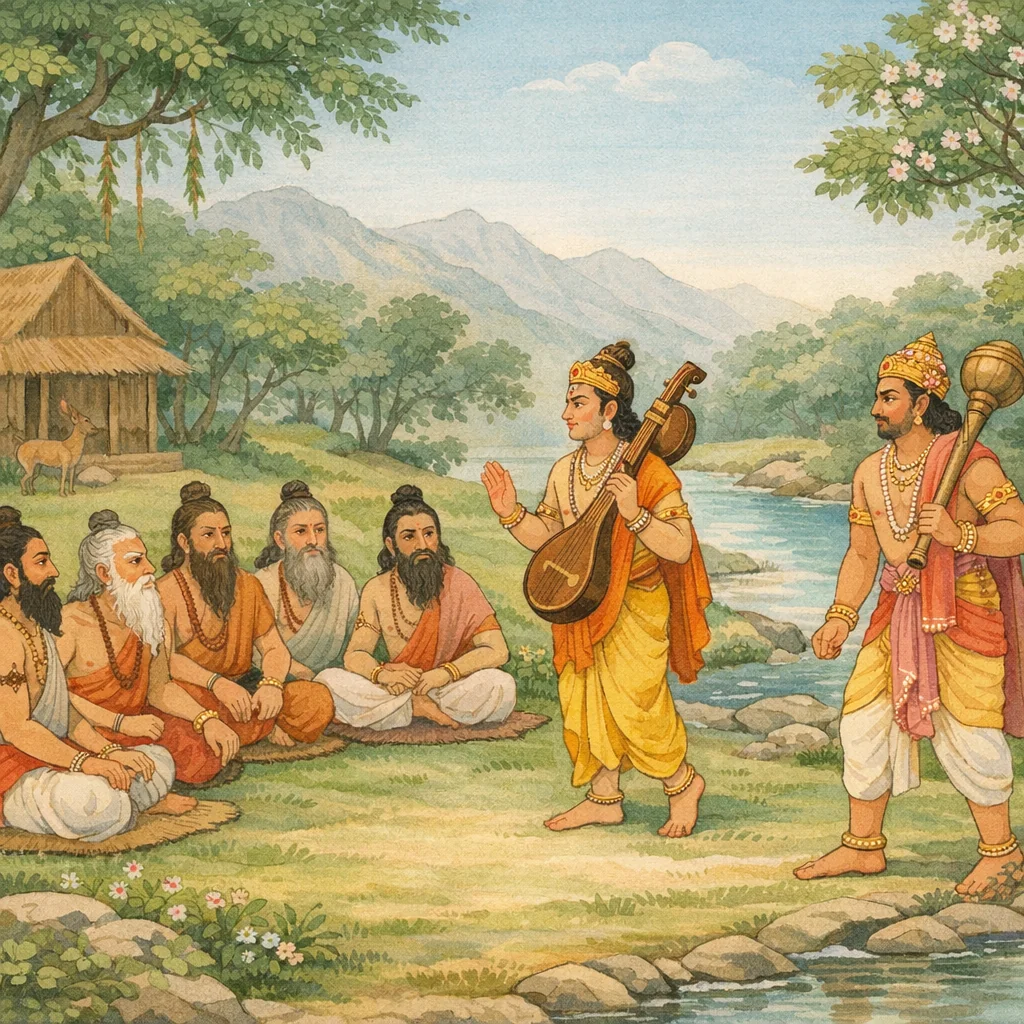
तथा तु तिष्ठतां तेषां नारदो भगवानृषि:
As they remained standing there, the venerable sage Nārada arrived—an authoritative seer whose presence typically signals counsel, moral clarification, or the turning of events through higher insight.
Verse 18
जटामण्डलसंवीत: स्वर्णचीरो महातपा:,राजन्! महातपस्वी नारद जटामण्डलसे मण्डित हो सुनहरा चीर धारण किये हुए थे। उन्होंने कमण्डलु, सोनेका दण्ड तथा सुखदायक शब्द करनेवाली कच्छपी नामक मनोरम वीणा भी ले रखी थी
Vaiśampāyana said: O King, the great ascetic Nārada appeared, adorned with a circle of matted locks and wearing a shining golden garment. He carried his water-pot and a golden staff, and he also bore the delightful vīṇā called Kacchapī, whose notes were soothing—signs of a sage whose presence brings counsel, restraint, and auspicious guidance amid the turmoil of war.
Verse 19
हेमदण्डथरो राजन् कमण्डलुधरस्तथा । कच्छपीं सुखशब्दां तां गृह्द वीणां मनोरमाम्,राजन्! महातपस्वी नारद जटामण्डलसे मण्डित हो सुनहरा चीर धारण किये हुए थे। उन्होंने कमण्डलु, सोनेका दण्ड तथा सुखदायक शब्द करनेवाली कच्छपी नामक मनोरम वीणा भी ले रखी थी
Vaiśampāyana said: “O King, the great ascetic Nārada appeared bearing a golden staff and a water-pot; and he also held the delightful vīṇā called Kacchapī, whose sound is pleasing.” The scene underscores the authority of a sage whose spiritual discipline and sacred music together signal counsel meant to steady minds amid the turmoil of war.
Verse 20
नृत्ये गीते च कुशलो देवब्राह्मणपूजित: । प्रकर्ता कलहानां च नित्यं च कलहप्रिय:,वे नृत्य-गीतमें कुशल, देवताओं तथा ब्राह्मणोंसे सम्मानित, कलह करानेवाले तथा सदैव कलहके प्रेमी हैं
Vaiśampāyana said: He is skilled in dance and song, honored by the gods and by brāhmaṇas; yet he is also one who provokes quarrels and is ever fond of strife. The verse underscores a moral contrast: refined accomplishments and social/religious honor can coexist with a disruptive, conflict-seeking disposition.
Verse 21
त॑ देशमगमद् यत्र श्रीमान् रामो व्यवस्थित: । प्रत्युत्थाय च त॑ सम्पक् पूजयित्वा यतव्रतम्
Vaiśampāyana said: He went to the place where the illustrious Rāma was stationed. Rising to greet him, he duly honored that self-disciplined man—showing the proper respect owed to virtue and restraint even amid the pressures of war.
Verse 22
ततो<5स्याक थयदू राजन् नारद: सर्वधर्मवित्
Then Nārada, the knower of all dharma, related the matter to him, O King—setting forth the account with an eye to righteous conduct and its consequences.
Verse 23
ततोअब्रवीद् रोहिणेयो नारदं दीनया गिरा
Then Rohiṇeya spoke to Nārada in a sorrowful voice.
Verse 24
किमवस्थं तु तत् क्षत्रं ये तु तत्राभवन् नृपा: । श्रुतमेतन्मया पूर्व सर्वमेव तपोधन
Vaiśampāyana said: “But what became of that warrior order, and of the kings who were present there? I have heard this before, O treasure of ascetic merit; tell it in full.”
Verse 25
विस्तरश्रवणे जातं कौतूहलमतीव मे । तब रोहिणीनन्दन बलरामने दीनवाणीमें नारदजीसे पूछा--“तपोधन! जो राजा लोग वहाँ उपस्थित हुए थे, उन सब क्षत्रियोंकी क्या अवस्था हुई है, यह सब तो मैंने पहले ही सुन लिया था। इस समय कुछ विशेष और विस्तृत समाचार जाननेके लिये मेरे मनमें अत्यन्त उत्सुकता हुई है' ।। नारद उवाच पूर्वमेव हतो भीष्मो द्रोण: सिन्धुपतिस्तथा
Eager to hear the matter at length, Balarāma, Rohiṇī’s son, asked Nārada in a sorrowful voice: “O tapodhana, what became of the kings and Kṣatriyas who were present there? All that I have heard before; now my mind is exceedingly eager for some special and fuller tidings.” Nārada said: “Earlier indeed Bhīṣma was slain; Droṇa too, and likewise the lord of Sindhu.”
Verse 26
हतो वैकर्तन: कर्ण: पुत्राश्नास्य महारथा: । भूरिश्रवा रौहिणेय मद्रराजश्न वीर्यवान्
Nārada said: “Karna, Vaikartana, has been slain, and his sons—mighty chariot-warriors as well. Bhūriśravas too has fallen, and Rauhiṇeya (Sātyaki), and the valiant king of Madra.”
Verse 27
नारदजीने कहा--रोहिणीनन्दन! भीष्मजी तो पहले ही मारे गये। फिर सिंधुराज जयद्रथ, द्रोण, वैकर्तन कर्ण तथा उसके महारथी पुत्र भी मारे गये हैं। भूरिश्रवा तथा पराक्रमी मद्रराज शल्य भी मार डाले गये ।। एते चान्ये च बहवस्तत्र तत्र महाबला: । प्रियान् प्राणान् परित्यज्य जयार्थ कौरवस्य वै
Nārada said: “O Rohiṇī’s son! Bhīṣma had already been slain. Then Jayadratha, king of Sindhu, Droṇa, Vaikartana Karna, and his sons—mighty chariot-warriors—were also killed. Bhūriśravas and the valiant Madra king Śalya were slain as well. And many other great warriors, here and there upon that field, abandoned their dear lives, indeed for the sake of victory for the Kaurava cause.”
Verse 28
अहतांस्तु महाबाहो शृणु मे तत्र माधव,महाबाहु माधव! जो वहाँ नहीं मारे गये हैं, उनके नाम भी मुझसे सुन लो। दुर्योधनकी सेनामें कृपाचार्य, कृतवर्मा और पराक्रमी द्रोणपुत्र अश्वत्थामा-ये शत्रुदलका मर्दन करनेवाले तीन ही वीर शेष रह गये हैं
Nārada said: “O mighty-armed Mādhava, listen to me about those who were not slain there. Hear their names from me as well. In Duryodhana’s host, only three heroes remain—Kṛpācārya, Kṛtavarmā, and the valiant son of Droṇa, Aśvatthāmā—men famed for crushing the enemy’s ranks.”
Verse 29
धार्तराष्ट्रबले शेषास्त्रयः समितिमर्दना: । कृपश्च कृतवर्मा च द्रोणपुत्रश्न वीर्यवान्,महाबाहु माधव! जो वहाँ नहीं मारे गये हैं, उनके नाम भी मुझसे सुन लो। दुर्योधनकी सेनामें कृपाचार्य, कृतवर्मा और पराक्रमी द्रोणपुत्र अश्वत्थामा-ये शत्रुदलका मर्दन करनेवाले तीन ही वीर शेष रह गये हैं
Narada said: “O mighty-armed Madhava, hear from me also the names of those who were not slain there. In Duryodhana’s host, only three heroes remain—Kripa, Kritavarma, and the valiant son of Drona, Ashvatthama—all of them fierce crushers of enemy ranks.”
Verse 30
ते5पि वै विद्रुता राम दिशो दश भयात् तदा | दुर्योधने हते शल्ये विद्रुतेषु कृपादिषु
Nārada said: “O Rāma, they too fled in fear at that time, scattering to the ten directions—when Duryodhana had been slain, when Śalya had fallen, and when Kṛpa and the others had taken flight.”
Verse 31
शयान धार॑राष्ट्र तु सलिले स्तम्भिते तदा
Then Dhātarāṣṭra lay there, while the water was held back and made still. In Nārada’s telling, the image underscores how even a king’s power and lineage cannot prevent the body from being rendered helpless by fate and the consequences of one’s choices.
Verse 32
स तुद्यमानो बलवान् वाग्भी राम समन्ततः
Though assailed on every side by sharp and stinging words, the mighty Rāma endured the verbal blows, standing firm amid the surrounding reproaches—an image of strength tested not only in battle, but in restraint under provocation.
Verse 33
स चाप्युपगतो योद्धुं भीमेन सह साम्प्रतम्,इस समय वह भीमके साथ युद्ध करनेके लिये उनके पास जा पहुँचा है। राम! आज उन दोनोंमें बड़ा भयंकर युद्ध होगा, माधव! यदि तुम्हारे मनमें भी उसे देखनेका कौतूहल हो तो शीघ्र जाओ। यदि ठीक समझो तो अपने दोनों शिष्योंका वह महाभयंकर युद्ध अपनी आँखोंसे देख लो
Nārada said: “He too has now gone forth to fight with Bhīma and has reached their presence. Rāma, today there will be a most dreadful battle between those two. Mādhava, if your heart is curious to witness it, go quickly. If you deem it right, behold with your own eyes that terrifying combat between your two disciples.”
Verse 34
भविष्यति तयोरद्य युद्ध राम सुदारुणम् । यदि कौतूहलं ते$स्ति ब्रज माधव मा चिरम् | पश्य युद्ध महाघोरं शिष्ययोर्यदि मनन््यसे,इस समय वह भीमके साथ युद्ध करनेके लिये उनके पास जा पहुँचा है। राम! आज उन दोनोंमें बड़ा भयंकर युद्ध होगा, माधव! यदि तुम्हारे मनमें भी उसे देखनेका कौतूहल हो तो शीघ्र जाओ। यदि ठीक समझो तो अपने दोनों शिष्योंका वह महाभयंकर युद्ध अपनी आँखोंसे देख लो
Nārada said: “Rāma, today a most dreadful battle will take place between those two. Mādhava, if you feel any curiosity to witness it, go at once—do not delay. If you deem it fitting, behold with your own eyes that exceedingly terrible combat between your two disciples.”
Verse 35
वैशम्पायन उवाच नारदस्य वच: श्रुत्वा तानभ्यर्च्य द्विजर्षभान् । सर्वान् विसर्जयामास ये तेनाभ्यागता: सह
Vaiśampāyana said: Having heard Nārada’s words, he duly honored those bull-like Brahmins and then respectfully dismissed all who had come there in Nārada’s company.
Verse 36
सो<वतीर्याचलश्रेष्ठात् प्लक्षप्रस्रनणाच्छुभात्,फिर वे प्लक्षप्रसवण नामक शुभ पर्वतशिखरसे नीचे उतर आये और तीर्थ-सेवनका महान् फल सुनकर प्रसन्नचित्त हो अच्युत बलरामने ब्राह्मणोंके समीप इस श्लोकका गान किया--
Vaiśampāyana said: Descending from the finest of mountains, from the auspicious Plakṣa-prasravaṇa, Acyuta Balarāma—gladdened at heart after hearing of the great reward that comes from visiting sacred fords—approached the Brahmins and sang this verse.
Verse 37
ततः प्रीतमना राम: श्र॒ुत्वा तीर्थफलं महत् | विप्राणां संनिधौ "लोकमगायदिममच्युत:,फिर वे प्लक्षप्रसवण नामक शुभ पर्वतशिखरसे नीचे उतर आये और तीर्थ-सेवनका महान् फल सुनकर प्रसन्नचित्त हो अच्युत बलरामने ब्राह्मणोंके समीप इस श्लोकका गान किया--
Then Rāma (Balarāma), his mind filled with joy on hearing of the great merit gained by visiting sacred fords, sang this verse in the presence of the Brahmins.
Verse 38
सरस्वतीवाससमा कुतो रति: सरस्वतीवाससमा: कुतो गुणा: । सरस्वतीं प्राप्प दिवं गता जना: सदा स्मरिष्यन्ति नदीं सरस्वतीम्,“सरस्वती नदीके तटपर निवास करनेमें जो सुख और आनन्द है, वह अन्यत्र कहाँसे मिल सकता है? सरस्वतीतटपर निवास करनेमें जो गुण हैं, वे अन्यत्र कहाँ हैं? सरस्वतीका सेवन करके स्वर्गलोकमें पहुँचे हुए मनुष्य सदा सरस्वती नदीका स्मरण करते रहेंगे!
Vaiśampāyana said: “Where else could one find delight equal to living on the banks of the Sarasvatī? Where else are virtues comparable to those gained by dwelling there? Those who have approached the Sarasvatī and, through her sanctifying power, attained heaven will forever remember the river Sarasvatī.”
Verse 39
सरस्वती सर्वनदीषु पुण्या सरस्वती लोकशुभावहा सदा । सरस्वती प्राप्प जना: सुदुष्कृतं सदा न शोचन्ति परत्र चेह च,“सरस्वती सब नदियोंमें पवित्र है। सरस्वती सदा सम्पूर्ण जगत्का कल्याण करनेवाली है। सरस्वतीको पाकर मनुष्य इहलोक और परलोकमें कभी पापोंके लिये शोक नहीं करते हैं!
Vaiśampāyana said: “Among all rivers, Sarasvatī is holy. Sarasvatī ever brings welfare to the world. Having reached (or bathed in) Sarasvatī, people do not grieve—either here in this life or in the hereafter—for their grievous misdeeds.”
Verse 40
ततो मुहुर्मुहुः प्रीत्या प्रेक्षमाण: सरस्वतीम् । हयैर्युक्ते रथं शुभ्रमातिषछ्ठत परंतप:,तदनन्तर शत्रुओंको संताप देनेवाले बलरामजी बारंबार प्रेमपूर्वक सरस्वती नदीकी ओर देखते हुए घोड़ोंसे जुते उज्ज्वल रथपर आरूढ़ हुए
Then, again and again, with affectionate joy, he kept looking toward the river Sarasvatī. Thereafter the scorcher of foes mounted his bright chariot yoked with horses.
Verse 41
स शीघ्रगामिना तेन रथेन यदुपुड्भव: । दिदृक्षुरभिसम्प्राप्त: शिष्ययुद्धमुपस्थितम्,उसी शीघ्रगामी रथके द्वारा तत्काल उपस्थित हुए दोनों शिष्योंका युद्ध देखनेके लिये यदुपुंगव बलरामजी उनके पास जा पहुँचे
Vaiśampāyana said: Then Balarāma, the foremost of the Yadus, arrived at once in that swift-moving chariot, wishing to witness the duel that had arisen between the two disciples.
Verse 53
इस प्रकार श्रीमहाभारत शल्यपर्वके अन्तर्गत गदापव॑नमें बलदेवजीकी तीर्थयात्रा और सारस्वतोपाख्यानके प्रसंगमें कुरुक्षेत्रकी महिमाका वर्णनविषयक तिरपनवाँ अध्याय पूरा हुआ
Thus ends the fifty-third chapter of the Śalya Parva of the Śrī Mahābhārata, within the section concerning the mace: in the context of Baladeva’s pilgrimage and the episode of Sārasvata, it has described the glory of Kurukṣetra.
Verse 54
इति श्रीमहाभारते शल्यपर्वणि गदापर्वणि बलदेवतीर्थयात्रायां सारस्वतोपाख्याने चतुष्पञ्चाशत्तमो<ध्याय:
Thus, in the Śrī Mahābhārata, within the Śalya Parva—specifically in the Gada Parva—during Baladeva’s pilgrimage to the sacred fords (tīrthas), in the episode known as the Sārasvata Upākhyāna, ends the fifty-fourth chapter. This line serves as a formal colophon, placing the narrative within its wider ethical frame: the remembrance of tīrthas and exemplary tales as sources of restraint, reflection, and dharmic orientation amid the violence of war.
Verse 96
संध्याकार्याणि सर्वाणि निर्वत्यरुरुहेड्चलम् । ऋषियोंका वचन सुनकर अपनी महिमासे कभी च्युत न होनेवाले बलरामजी उस आश्रममें गये। वहाँ हिमालयके पार्श्रभागमें उन ऋषियोंको प्रणाम करके संध्या-वन्दन आदि सब कार्य करनेके अनन्तर वे हिमालयपर चढ़ने लगे
Vaiśampāyana said: Having duly completed all the rites of twilight worship, Balarāma—unyielding from his own divine majesty—heeded the sages’ words and went to that hermitage. There, on the flank of the Himālaya, he bowed to those seers; and after performing the evening salutations (sandhyā-vandana) and the rest of the prescribed observances, he then began to ascend the Himālaya.
Verse 163
उपविष्ट: कथा: शुभ्रा: शुश्राव यदुपुड्रवः । जहाँ पूर्वकालमें इन्द्र, अग्नि और अर्यमाने बड़ी प्रसन्नता प्राप्त की थी, वह स्थान यमुनाके तटपर है। कारपवनसे उस तीर्थमें जाकर महाबली धर्मात्मा बलरामने स्नान करके बड़ा हर्ष प्राप्त किया। फिर वे यदुपुंगव बलभद्र ऋषियों और सिद्धोंके साथ बैठकर उत्तम कथाएँ सुनने लगे
Vaiśampāyana said: The foremost of the Yadus, seated there, listened to pure and auspicious tales. That place lies on the bank of the Yamunā—where in ancient times Indra, Agni, and Aryaman attained great delight. Reaching that sacred ford (tīrtha) by the Kārapavana route, the mighty and righteous Balarāma bathed and felt profound joy. Then Balabhadra, the Yadu chief, sat together with sages and perfected beings (siddhas) and listened to excellent narratives.
Verse 216
देवर्षि पर्यपृच्छत् स यथा वृत्तं कुरून् प्रति । वे उस स्थानपर गये, जहाँ तेजस्वी बलराम बैठे हुए थे। उन्होंने उठकर नियम और व्रतका पालन करनेवाले देवर्षिका भलीभाँति पूजन करके उनसे कौरवोंका समाचार पूछा
Vaiśampāyana said: The divine seer inquired in detail about what had occurred concerning the Kurus. They then went to the place where the radiant Balarāma was seated; rising, they duly honored the devarṣi—steadfast in vows and observances—and asked him for news of the Kauravas, seeking a truthful account amid the moral weight of the war.
Verse 226
सर्वमेतद् यथावृत्तमतीव कुरुसंक्षयम् | राजन! तब सम्पूर्ण धर्मोके ज्ञाता नारदजीने उनसे यह सारा वृत्तान्त यथार्थरूपसे बता दिया कि कुरुकुलका अत्यन्त संहार हो गया है
Vaiśaṃpāyana said: “O King, Nārada—fully conversant with the teachings of dharma—reported the entire account exactly as it had occurred, declaring in truth that the Kuru lineage had met with a devastating and near-total destruction.”
Verse 273
राजानो राजपुत्राश्व॒ समरेष्वनिवर्तिन: । ये तथा और भी बहुत-से महाबली राजा और राजकुमार जो युद्धसे पीछे हटनेवाले नहीं थे, कुरुराज दुर्योधनकी विजयके लिये अपने प्यारे प्राणोंका परित्याग करके स्वर्गलोकमें चले गये हैं
Nārada said: “Kings and princes—unyielding in battle—along with many other mighty rulers and royal sons, did not turn back from the fight. For the sake of the Kuru king Duryodhana’s victory, they renounced their beloved lives and departed to the world of heaven.”
Verse 303
हृदं द्वैघायनं नाम विवेश भूशदु:खित: । परंतु बलरामजी! जब शल्य मारे गये, तब ये तीनों भी भयके मारे सम्पूर्ण दिशाओंमें पलायन कर गये थे। शल्यके मारे जाने और कृप आदिके भाग जानेपर दुर्योधन बहुत दुःखी हुआ और भागकर द्वैपायनसरोवरमें जा छिपा
Nārada said: “Overwhelmed with grief and distress, he entered the lake known as Dvaighāyana. And, O Balarāma, when Śalya was slain, those three too fled in fear to all directions. After Śalya’s fall and the departure of Kṛpa and the others, Duryodhana became deeply sorrowful and, fleeing, went and hid in the Dvaipāyana lake.”
Verse 313
पाण्डवा: सह कृष्णेन वाग्भिरुग्राभिरार्दयन् । जब दुर्योधन जलको स्तम्भित करके उसके भीतर सो रहा था, उस समय पाण्डवलोग भगवान् श्रीकृष्णके साथ वहाँ आ पहुँचे और अपनी कठोर बातोंसे उसे कष्ट पहुँचाने लगे
Nārada said: “The Pāṇḍavas, accompanied by Kṛṣṇa, assailed him with harsh words. At the time when Duryodhana had immobilized the water and lay hidden asleep within it, the Pāṇḍavas arrived there with Lord Śrī Kṛṣṇa and began to distress him with severe speech.”
Verse 323
उत्थितः स हृदाद् वीर: प्रगृह् महतीं गदाम् | बलराम! जब सब ओरसे कड़वी बातोंद्वारा उसे व्यथित किया जाने लगा, तब वह बलवान् वीर विशाल गदा हाथमें लेकर सरोवरसे उठ खड़ा हुआ
Nārada said: “The hero rose up from the lake, taking hold of his great mace. O Balarāma, when harsh words from all sides began to trouble and wound him, that mighty warrior stood up from the waters, grasping his massive club.”
Verse 356
गम्यतां द्वारकां चेति सोडन्वशादनुयायिन: । वैशम्पायनजी कहते हैं--राजन्! नारदजीकी बात सुनकर बलरामजीने अपने साथ आये हुए श्रेष्ठ ब्राह्मणोंकी पूजा करके उन्हें विदा कर दिया और सेवकोंको आज्ञा दे दी कि तुम लोग द्वारका चले जाओ
Vaiśampāyana said: “O King, after hearing Nārada’s words, Balarāma honored the eminent brāhmaṇas who had come with him and then respectfully dismissed them. He also instructed his attendants, ‘Go to Dvārakā.’”
Verse 1736
आजगामाथ तं॑ देशं यत्र रामो व्यवस्थित: । इस प्रकार वे लोग वहीं ठहरे हुए थे, तबतक देवर्षि भगवान् नारद भी उनके पास उसी स्थानपर आ पहुँचे, जहाँ बलरामजी विराजमान थे
Vaiśaṃpāyana said: Then he came to that very region where Rāma (Balarāma) was staying. As they remained there, the divine seer Nārada also arrived at that place and approached Balarāma—showing that even amid the turmoil of war, higher counsel and moral perspective descend to guide events.
Frequently Asked Questions
The dilemma concerns legitimacy in terminal conflict: whether decisive violence can remain within publicly recognized rules (witnessed duel, chosen ground, acknowledged umpire-like presence) even as grief and desperation intensify.
The text implies that actions gain ethical weight through context—place, procedure, and public accountability—suggesting that dharma is not only intention but also the regulated form in which power is exercised.
A direct phalaśruti is not presented; however, the chapter includes a normative claim that death in battle at the highly sanctified Samantapañcaka leads surely to heaven, functioning as an embedded moral framing of the chosen venue.