Adhyaya 20
Kṛtavarmā–Sātyaki Chariot Duel and Kaurava Morale Shock (कृतवर्म-सात्यकि-द्वैरथम्)
Upa-parva: Kṛtavarmā–Sātyaki Dvayuddha (Śalya-parva episodic unit)
Saṃjaya reports that after Śālva’s death the Kaurava force fractures rapidly, likened to a great tree broken by wind. Kṛtavarmā, described as a mahāratha, attempts to hold the line against the Pāṇḍava-aligned troops, prompting renewed engagement. Sātyaki advances amid the din of battle and strikes down King Kṣemadhūrti, then meets Kṛtavarmā in a focused dvayuddha. The duel intensifies through alternating volleys: Sātyaki wounds Kṛtavarmā; Kṛtavarmā cuts Sātyaki’s bow; Sātyaki swiftly re-arms and retaliates by killing Kṛtavarmā’s charioteer, horses, and banner, rendering him chariotless. Kṛtavarmā attempts a decisive spear-cast, which Sātyaki neutralizes with arrows and counters with a direct strike, forcing Kṛtavarmā to the ground. The resulting spectacle produces widespread fear across formations; Dhṛtarāṣṭra’s camp experiences acute distress at the sight of Kṛtavarmā disabled. Kṛpa rushes in, lifts Kṛtavarmā onto his chariot, and withdraws him. With Kṛtavarmā removed, Duryodhana’s troops again turn away in retreat until Duryodhana personally intervenes to halt and reconstitute the line, standing as an immovable focal point while Kṛtavarmā remounts another chariot.
Chapter Arc: संजय धृतराष्ट्र से कहता है—कौरव-सेना फिर युद्ध के लिए लौटती है, और शाल्वराज एक पर्वत-प्राय, मदोन्मत्त, ऐरावत-सदृश महागज पर आरूढ़ होकर पाण्डवों की पंक्तियों को रौंदने आता है। → शाल्व का गज-वेग पाण्डव-चमू में भगदड़ मचा देता है; चारों दिशाओं में सैनिक बिखरते हैं, भय से पंक्तियाँ टूटती हैं और परस्पर कुचले जाने का दृश्य बनता है। इस उथल-पुथल में पाण्डवों की प्रतिष्ठा और मोर्चा—दोनों डगमगाते दिखते हैं। → धृष्टद्युम्न विजय की उतावली में उस गजेन्द्र के सामने बढ़ता है और पर्वत-शिखर-सी भारी गदा से आक्रमण कर गज को गिराने लगता है; उसी निर्णायक क्षण में सात्यकि शाल्वराज पर तीक्ष्ण भल्ल चलाकर उसका सिर काट गिराता है—राजा और गज, दोनों का पतन युद्धभूमि को हाहाकार से भर देता है। → शाल्व के वध और गज-आतंक के टूटते ही पाण्डव-सेना का बिखराव थमता है; कौरव-पक्ष में शोक और स्तब्धता फैलती है, और पाण्डव-पक्ष को फिर से मोर्चा सँभालने का अवसर मिलता है। → कौरव-सेना के अगले प्रत्युत्तर और शल्य के नेतृत्व में पलटवार की आहट—युद्ध की धारा फिर किस ओर मुड़ेगी, यह अनिश्चित रह जाता है।
Shlokas
Verse 1
(दाक्षिणात्य अधिक पाठका १ श्लोक मिलाकर कुल ७१ “लोक हैं।) #स्न्ैमा+ () अिन्मनन- विशो< ध्याय: धृष्टद्युम्नद्वारा राजा शाल्वके हाथीका और सात्यकिद्धारा राजा शाल्वका वध संजय उवाच संनिवृत्ते जनौघे तु शाल्वो म्लेच्छगणाधिप: । अभ्यवर्तत संक्रुद्ध: पाण्डवानां महद् बलम्,संजय कहते हैं--राजन्! जब कौरवपक्षका जनसमूह पुनः युद्धके लिये लौट आया, उस समय म्लेच्छोंका राजा शाल्व अत्यन्त क्रुद्ध हो मदकी धारा बहानेवाले, पर्वतके समान विशालकाय, अभिमानी तथा ऐरावतके सदृश शत्रुसमुदायका संहार करनेमें समर्थ एक महान् गजराजपर आखरूढ़ हो पाण्डवोंकी विशाल सेनाका सामना करनेके लिये आया
Sañjaya said: O King, when the mass of warriors on the Kaurava side had turned back again to the fight, Śālva, the chieftain of the Mleccha hosts, enraged, advanced to confront the mighty force of the Pāṇḍavas.
Verse 2
आस्थाय सुमहानागं प्रभिन्नं पर्वतोपमम् । दृप्तमैरावतप्रख्यममित्रगणमर्दनम्,संजय कहते हैं--राजन्! जब कौरवपक्षका जनसमूह पुनः युद्धके लिये लौट आया, उस समय म्लेच्छोंका राजा शाल्व अत्यन्त क्रुद्ध हो मदकी धारा बहानेवाले, पर्वतके समान विशालकाय, अभिमानी तथा ऐरावतके सदृश शत्रुसमुदायका संहार करनेमें समर्थ एक महान् गजराजपर आखरूढ़ हो पाण्डवोंकी विशाल सेनाका सामना करनेके लिये आया
Sañjaya said: O King, mounting a very great elephant—rutted and in full musth, mountain-like in size, proud, resembling Airāvata, and capable of crushing hosts of foes—the Mleccha king Śālva, exceedingly enraged, advanced to confront the vast army of the Pāṇḍavas as the Kaurava forces returned again to battle.
Verse 3
योडसौ महाभद्रकुलप्रसूत: सुपूजितो धार्तराष्ट्रेण नित्यम् । सुकल्पित: शास्त्रविनिश्चयज्ञै: सदोपवाहाः समरेषु राजन्,राजन्! वह हाथी महाभद्र नामक गजराजके कुलमें उत्पन्न हुआ था। धृतराष्ट्रपुत्र दुर्योधनने नित्य ही उसका आदर किया था, गजशास्त्रके ज्ञाता पुरुषोंने उसे अच्छी तरह सजाया था और सदा ही युद्धके अवसरोंपर वह सवारीके उपयोगमें लाया जाता था
Sañjaya said: “That elephant, born in the noble lineage of the great Mahābhadra elephants, was continually honored by Dhṛtarāṣṭra’s son. Experts, skilled in the settled conclusions of elephant-lore, had adorned and equipped him well; and, O King—O King—he was always employed as a mount whenever battles arose.”
Verse 4
तमास्थितो राजवरो बभूव यथोदयस्थ: सविता क्षपान्ते | स तेन नागप्रवरेण राज- न्नभ्युद्ययौ पाण्डुसुतान् समेतान्
Sañjaya said: Stationed there, that foremost of kings shone like the rising sun at the end of night. Then, O King, mounted upon that excellent elephant, he advanced to meet the assembled sons of Pāṇḍu—pressing into battle with the confidence of royal duty and the grim resolve that war demands.
Verse 5
ततः शरान् वै सृजतो महारणे योधांश्व राजन् नयतो यमालयम्
Sañjaya said: Then, O King, in that great battle, as he kept releasing arrows, he was driving the warriors to Yama’s abode—sending them to death amid the relentless clash.
Verse 6
नास्यान्तरं ददृशु: स्वे परे वा यथा पुरा वज्रधरस्य दैत्या: । ऐरावणस्थस्य चमूविमर्दे- दैत्या: पुरा वासवस्येव राजन्
Sañjaya said: “O King, neither among their own ranks nor among the enemy did they find any opening—just as, in ancient times, the Dāityas could find none against Vajradhara (Indra) when he, mounted on Airāvata, crushed their host. So too now, in the press of armies, the foe stood as unyielding as Vāsava of old.”
Verse 7
राजन! जैसे पूर्वकालमें ऐरावतपर बैठकर शत्रु-सेनाका संहार करते हुए वज्रधारी इन्द्रके बाण छोड़ने और विपक्षीको मार गिरानेके अन्तरको दैत्य और देवता नहीं देख पाते थे, उसी प्रकार उस महासमरमें शाल्वके बाण छोड़ने तथा सैनिकोंको यमलोक पहुँचानेमें कितनी देर लगती है, इसे अपने या शत्रुपक्षके योद्धा नहीं देख सके ।। ते पाण्डवा: सोमका: सृञ्जयाश्र तमेकनागं ददृशु: समनन््तात् । सहस्रशो वै विचरन्तमेकं यथा महेन्द्रस्य गजं समीपे,इन्द्रके ऐरावत हाथीकी भाँति म्लेच्छशजका वह गजराज यद्यपि रणभूमिमें अकेला ही निकट विचर रहा था, तो भी पाण्डव, सूंजय और सोमकयोद्धा उसे सहस्रोंकी संख्यामें देखते थे। उन्हें सब ओर वही वह दिखायी देता था
Sañjaya said: “O King, just as in former times—when thunderbolt-bearing Indra, seated upon Airāvata, was destroying the enemy host—neither demons nor gods could perceive the interval between his releasing an arrow and the foe’s falling, so too in that great battle no warrior, whether of our side or the enemy’s, could discern how little time it took for Śālva to loose his shafts and send soldiers to Yama’s realm. The Pāṇḍavas, the Somakas, and the Sṛñjayas saw that elephant-king on every side; though he moved about alone on the battlefield, he appeared to them in thousands—like Mahendra’s elephant seen close at hand.”
Verse 8
संद्राव्यमाणं तु बल॑ परेषां परीतकल्पं विबभौ समन्ततः । नैवावतस्थे समरे भृशं भयाद् विमृद्यमानं तु परस्परं तदा,उस हाथीके द्वारा खदेड़ी जाती हुई वह सेना सब ओरसे घिरी हुई-सी जान पड़ती थी। अत्यन्त भयके कारण वह समरभूमिमें ठहर न सकी। उस समय सभी सैनिक आपसमें ही धक्के खाकर कुचले जाने लगे
Sañjaya said: Driven into flight by that elephant, the enemy host appeared as though hemmed in on every side. Overwhelmed by intense fear, it could not hold its ground on the battlefield; and then, in the crush, the soldiers began to trample and be trampled by one another.
Verse 9
ततः प्रभग्ना सहसा महाचमू: सा पाण्डवी तेन नराधिपेन । दिशश्चतस्र: सहसा विधाविता गजेन्द्रवेगं तमपारयन्ती,म्लेच्छशज शाल्वने पाण्डवोंकी उस विशाल सेनामें सहसा भगदड़ मचा दी। उस गजराजके वेगको सहन न कर सकनेके कारण वह सेना तत्काल चारों दिशाओंमें भाग चली! उस वेगशालिनी सेनाको भागती देख युद्धस्थलमें खड़े हुए आपके सभी प्रधान- प्रधान योद्धा म्लेच्छशाज शाल्वकी प्रशंसा करने और चन्द्रमाके समान उज्ज्वल शंख बजाने लगे
Sañjaya said: Then, all at once, that vast Pāṇḍava host broke in disorder because of that king. Unable to withstand the onrush like that of a lordly elephant, the army suddenly fled in all four directions. Seeing that swift host in flight, the foremost warriors standing on your side began to praise the Mleccha-king Śālva and to sound their bright, moon-like conches on the battlefield.
Verse 10
दृष्टवा च तां वेगवतीं प्रभग्नां सर्वे त्वदीया युधि योधमुख्या: । अपूजयंस्ते तु नराधिपं त॑ दध्मुश्न शड्खान् शशिसंनिकाशान्,म्लेच्छशज शाल्वने पाण्डवोंकी उस विशाल सेनामें सहसा भगदड़ मचा दी। उस गजराजके वेगको सहन न कर सकनेके कारण वह सेना तत्काल चारों दिशाओंमें भाग चली! उस वेगशालिनी सेनाको भागती देख युद्धस्थलमें खड़े हुए आपके सभी प्रधान- प्रधान योद्धा म्लेच्छशाज शाल्वकी प्रशंसा करने और चन्द्रमाके समान उज्ज्वल शंख बजाने लगे
Sañjaya said: Seeing that swift-moving force shattered and in flight, all your foremost warriors standing in the battle praised that king and blew their conch-shells, bright as the moon.
Verse 11
श्रुत्वा निनादं त्वथ कौरवाणां हर्षाद् विमुक्ते सह शड्खशब्दै: | सेनापति: पाण्डवसृज्जयानां पाञ्चालपुत्रो ममृषे न कोपात्,शंखध्वनिके साथ कौरवोंका वह हर्षनाद सुनकर पाण्डवों और सूंजयोंके सेनापति पांचालराजकुमार धृष्टद्युम्न क्रोधपूर्वक उसे सहन न कर सके
Sañjaya said: Hearing the Kauravas’ roar of exultation, released together with the blare of conches, Dhṛṣṭadyumna—the Pāñcāla prince and commander of the Pāṇḍavas and the Sṛñjayas—could not endure it; in wrath, he was stirred to respond.
Verse 12
ततस्तु त॑ वै द्विरदं महात्मा प्रत्युद्ययौ त्वरमाणे जयाय । जम्भो यथा शक्रसमागमे वै नागेन्द्रमैरावणमिन्द्रवाहमुम्,तदनन्तर उन महामनस्वी धृष्टद्युम्नने बड़ी उतावलीके साथ विजय प्राप्त करनेके लिये उस हाथीपर चढ़ाई की। जैसे इन्द्रके साथ युद्ध छिड़नेपर जम्भासुरने इन्द्रवाहन नागराज ऐरावतपर धावा किया था
Sañjaya said: Then that great-souled warrior, hastening for victory, advanced straight against the elephant. He charged it as Jambha once rushed upon Airāvata, the lord of elephants and Indra’s mount, when battle was joined with Śakra.
Verse 13
तमापतन्तं सहसा तु दृष्टवा पाज्चालपुत्र युधि राजसिंह: । त॑ वै द्विपं प्रेषयामास तूर्ण वधाय राजन द्रुपदात्मजस्य,राजन! पांचालपुत्र धृष्टद्युम्नको युद्धमें सहसा आक्रमण करते देख नृपश्रेष्ठ शाल्वने उस हाथीको उनके वधके लिये तुरंत ही उनकी ओर बढ़ाया
Sañjaya said: Seeing the son of Pāñcāla suddenly charging in the battle, the lion among kings (Śālva) swiftly dispatched that elephant, O King, with the intent to kill Drupada’s son.
Verse 14
सततं द्विपेन्द्रे सहसा पतन्त- मविध्यदन्निप्रतिमै: पृषत्कैः । कर्मारधौतैर्निशितैज्वलद्धि- नरिाचमुख्यैस्त्रिभिरुग्रवेगै:,उस नागराजको सहसा आते देख धृष्टद्युम्नने अग्निके समान प्रज्वलित, कारीगरके साफ किये हुए, तेजधारवाले, तीन भयंकर वेगशाली उत्तम नाराचोंद्वारा घायल कर दिया
Sañjaya said: As that lordly elephant came charging in suddenly, Dhṛṣṭadyumna struck it at once with three foremost nārāca arrows—keen-edged, burnished by the smith, and blazing like fire—shot with terrible force. The scene reveals the battle’s relentless fury, where skill and swift action decide life and death, even against a mighty creature driven into the fray.
Verse 15
ततो<5परान् पञ्चशतान् महात्मा नाराचमुख्यान् विससर्ज कुम्भे । स तैस्तु विद्ध: परमद्विपो रणे तदा परावृत्य भृशं प्रदुद्रवे,तत्पश्चात् महामना धृष्टद्युम्नने उसके कुम्भस्थलको लक्ष्य करके पाँच सौ उत्तम नाराच और छोड़े। उनके द्वारा अत्यन्त घायल हुआ वह महान् गजराज युद्धसे मुँह मोड़कर वेगपूर्वक भागने लगा
Sañjaya said: Then that great-souled warrior discharged another five hundred choice nārāca arrows, aiming at the elephant’s frontal globe. Struck by them and grievously wounded in the thick of battle, the mighty lord of elephants turned away from the fight and fled in great speed. The scene shows how, in war, even the most formidable strength collapses when relentlessly pierced, and how violence—though tactically effective—drives beings into fear and flight rather than true victory.
Verse 16
त॑ नागराजं सहसा प्रणुन्नं विद्राव्यमाणं विनिवर्त्य शाल्व: | तोत्राडुकुशै: प्रेषयामास तूर्ण पाञ्चालराजस्य रथं प्रदिश्य,उस नागराजको सहसा पीड़ित होकर भागते देख शाल्वराजने पुनः युद्धकी ओर लौटाया और पीड़ा देनेवाले अंकुशोंसे मारकर उसे तुरंत ही पांचालराजके रथकी ओर दौड़ाया
Sañjaya said: Seeing the lordly elephant, suddenly goaded and fleeing in distress, Śālva quickly turned it back toward the fight. Striking it with the painful goad and hook, he drove it at once in the direction of the chariot of the king of the Pāñcālas—pressing the battle forward through force and control rather than restraint.
Verse 17
दृष्टवा55पतन्तं सहसा तु नागं धृष्टद्युम्न: स्वरथाच्छीघ्रमेव । गदां प्रगृह्मोग्रजवेन वीरो भूमिं प्रपन्नो भयविह्वलाड्र:,हाथीको सहसा आक्रमण करते देख वीर धृष्टद्युम्न हाथमें गदा ले शीघ्र ही अत्यन्त वेगपूर्वक अपने रथसे कूदकर पृथ्वीपर आ गये। उस समय उनके सारे अंग भयसे व्याकुल हो रहे थे
Sañjaya said: Seeing the elephant suddenly charging in, the warrior Dhṛṣṭadyumna swiftly leapt down from his chariot. Grasping his mace, he came to the ground with fierce speed—his limbs trembling in fear as the onrushing beast bore down.
Verse 18
सतं रथं हेमविभूषिताडूं साश्वं ससूतं सहसा विमृद्य । उत्क्षिप्प हस्तेन नदन् महाद्विपो विपोथयामास वसुन्धरातले,गर्जना करते हुए उस विशालकाय हाथीने धृष्टद्युम्नके उस सुवर्णभूषित रथको घोड़ों और सारथि-सहित सहसा कुचल डाला और सूँड़से ऊपर उठाकर पृथ्वीपर दे मारा
Sañjaya said: The great elephant, trumpeting loudly, suddenly crushed that chariot of Dhṛṣṭadyumna—its frame adorned with gold—together with its horses and charioteer. Then, lifting it up with its trunk, it violently dashed it down upon the surface of the earth. The scene underscores the brutal momentum of war, where strength and fury can annihilate even the finest martial splendor in an instant.
Verse 19
इस प्रकार श्रीमह्याभारत शल्यपर्वमें संकुलयुद्धविषयक उन्नीसवाँ अध्याय पूरा हुआ,पाञ्जालराजस्य सुतं च दृष्टवा तदार्दितं नागवरेण तेन । तमभ्यधावत् सहसा जवेन भीम: शिखण्डी च शिनेक्ष नप्ता पांचालराजकुमार धृष्टद्युम्मको उस गजराजके द्वारा पीड़ित हुआ देख भीमसेन, शिखण्डी और सात्यकि सहसा बड़े वेगसे उसकी ओर दौड़े
Sañjaya said: Seeing the son of the Pāñcāla king grievously assailed by that foremost of elephants, Bhīma, Śikhaṇḍī, and Śaineya (Sātyaki) at once rushed toward him with great speed—moved by the warrior’s duty to protect an ally amid the confusion of battle.
Verse 20
शरैश्नव वेगं सहसा निगृहा तस्याभितो व्यापततो गजस्य । स संगृहीतो रथिभियर्गजो वै चचाल तैरवर्यमाणश्न संख्ये,उन रथियोंने सब ओर आक्रमण करनेवाले उस हाथीके वेगको सहसा अपने बाणोंद्वारा अवरुद्ध कर दिया। उनके द्वारा अपनी प्रगति रुक जानेके कारण वह निगृहीत-सा होकर विचलित हो उठा इति श्रीमहाभारते शल्यपर्वणि शाल्ववधे विंशो5ध्याय:
Sañjaya said: With their arrows the chariot-warriors suddenly checked the elephant’s fresh, surging speed as it charged about on every side. Its advance thus arrested by them, the elephant—held as if restrained—staggered and swayed on the battlefield.
Verse 21
ततः पृषत्कान् प्रववर्ष राजा सूर्यो यथा रश्मिजालं समन्तात् । तैराशुगैर्वध्यमाना रथौघा: प्रदुद्रुवु: सहितास्तत्र तत्र,तदनन्तर जैसे सूर्यदेव सब ओर अपनी किरणोंका प्रसार करते हैं, उसी प्रकार राजा शाल्वने बाणोंकी वर्षा आरम्भ कर दी। उन शीघ्रगामी बाणोंकी मार खाकर वे पाण्डव रथी एक साथ इधर-उधर भागने लगे
Sañjaya said: Then the king began to shower arrows, spreading them on every side like the Sun casting forth a net of rays. Struck and harried by those swift-flying shafts, the massed charioteers of the Pāṇḍavas, though together, broke formation and fled here and there.
Verse 22
तत् कर्म शाल्वस्य समीक्ष्य सर्वे पाउ्चालपुत्रा नृप सृज्जयाश्न । हाहाकारैर्नादयन्ति सम युद्धे द्विपं समन्ताद् रुरुधुर्नराग्रया:,नरेश्वर! शास्त्रका वह पराक्रम देखकर समस्त नरश्रेष्ठ पांचाल तथा सूृंजय अपने हाहाकारोंसे सम्पूर्ण दिशाओंको प्रतिध्वनित करने लगे। उन्होंने युद्धभूमिमें उस हाथीको चारों ओरसे घेर लिया
Sañjaya said: Seeing that deed and prowess of Śālva, all the sons of Pāñcāla and the Sṛñjayas, O king, raised a great battle-cry that made the quarters resound. Then those foremost of men surrounded the elephant on every side in the midst of the fight.
Verse 23
पाज्चालपुत्रस्त्वरितस्तु शूरो गदां प्रगृह्माचलशूज्भकल्पाम् । ससम्भ्रमं भारत शत्रुघाती जवेन वीरो5नुससार नागम्
Sañjaya said: The valiant son of the Pāñcālas, acting with haste, seized his mace—mighty as a mountain-bolt—and, in urgent resolve, O Bhārata, that slayer of foes pursued the Nāga with speed.
Verse 24
भारत! इसी समय शशत्रुघाती शूरवीर पांचालराजकुमार धूृष्टद्युम्नने तुरंत ही पर्ववतशिखरके समान विशाल गदा हाथमें लेकर बड़े वेगसे उस हाथीपर आक्रमण किया ।। ततस्तु नागं धरणीधराभं मर्द स्रवन्तं जलदप्रकाशम् । गदां समाविद्धय भूशं॑ जघान पाञज्चालराजस्य सुतस्तरस्वी,पांचालराजके वेगवान् पुत्रने मेघोंके समान मदकी वर्षा करनेवाले उस पर्वताकार गजराजपर अपनी गदा घुमाकर बड़े वेगसे प्रहार किया
Sañjaya said: “O Bhārata, at that very moment the enemy-slaying hero Dhṛṣṭadyumna, prince of the Pāñcālas, seized a massive mace like a mountain peak and, with great speed, charged the elephant. Then the swift son of the Pāñcāla king whirled his mace and struck that lordly elephant—mountain-like in bulk, streaming with rut, and dark as a rain-cloud—with a forceful blow.”
Verse 25
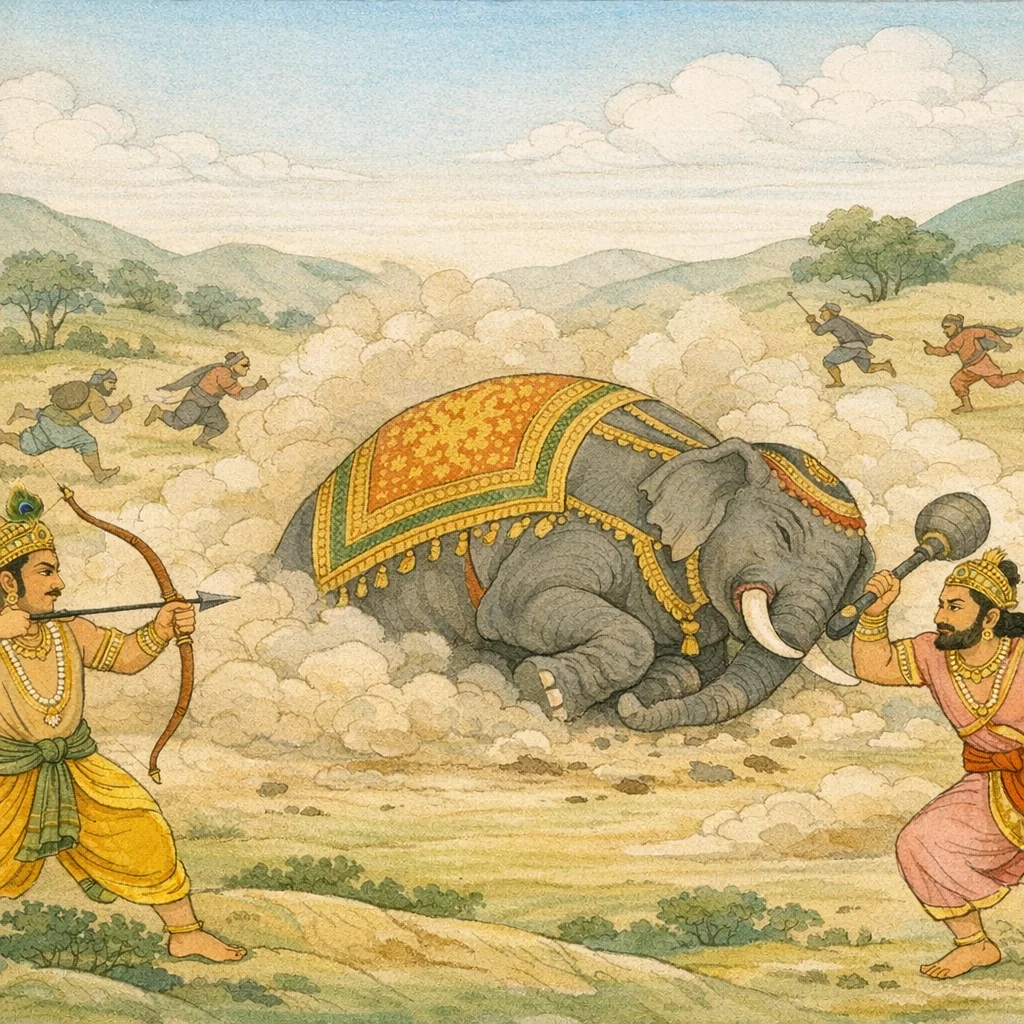
स भिन्नकुम्भ: सहसा विनद्य मुखात् प्रभूतं क्षतजं विमुड्चन् । पपात नागो धरणीधराभ: क्षितिप्रकम्पाच्चलितो यथाद्रि:,गदाके आघातसे हाथीका कुम्भस्थल फट गया और वह पर्वतके समान विशालकाय गजराज सहसा चीत्कार करके मुँहसे रक्तवमन करता हुआ गिर पड़ा, मानो भूकम्प आनेसे कोई पहाड़ ढह गया हो
Sañjaya said: “With its temple-region split open, the elephant suddenly let out a loud cry; pouring forth copious blood from its mouth, that mountain-like lord of elephants collapsed to the ground—like a hill brought down when the earth trembles in an earthquake.”
Verse 26
निपात्यमाने तु तदा गजेन्द्रे हाहाकृते तव पुत्रस्य सैन्ये । स शाल्वराजस्य शिनिप्रवीरो जहार भल्लेन शिर: शितेन,जब वह गजराज गिराया जाने लगा, उस समय आपके पुत्रकी सेनामें हाहाकार मच गया। इतनेहीमें शिनिवंशके प्रमुख वीर सात्यकिने एक तीखे भल्लसे शाल्वराजका सिर काट दिया
As that lord of elephants was brought down, a cry of alarm rose in your son’s army. At that very moment Sātyaki, foremost hero of the Śini line, severed King Śālva’s head with a keen bhalla arrow.
Verse 27
ह्वतोत्तमाज़ी युधि सात्वतेन पपात भूमौ सह नागराज्ञा । यथाद्रिशृज्ूं सुमहत् प्रणुन्नं वज्नेण देवाधिपचोदितेन,रणभूमिमें सात्यकिद्वारा मस्तक कट जानेपर शाल्वराज भी उस गजराजके साथ ही धराशायी हो गया, मानो देवराज इन्द्रके चलाये हुए वज़से कटकर कोई विशाल पर्वतशिखर पृथ्वीपर गिर पड़ा हो
Sañjaya said: “When his head was cut off in battle by Sātvata (Sātyaki), Śālva, together with that lordly elephant, fell to the earth—like a massive mountain-peak struck down by the thunderbolt hurled by the king of the gods.”
Verse 46
शितै: पृषत्कैर्विददार वेगै- महेन्द्रवज़ञप्रतिमै: सुघोरै: । राजाओंमें श्रेष्ठ शाल्व उस गजराजपर बैठकर प्रातःकाल उदयाचलपर स्थित हुए सूर्यदेवके समान सुशोभित होने लगा। महाराज! वह उस श्रेष्ठ हाथीके द्वारा वहाँ एकत्र हुए समस्त पाण्डवोंपर चढ़ आया और इन्द्रके वज्रकी भाँति अत्यन्त भयंकर तीखे बाणोंसे उन सबको वेगपूर्वक विदीर्ण करने लगा
Sañjaya said: “With swift, razor-sharp arrows—terrible and comparable to Indra’s thunderbolt—he tore through them. Śālva, foremost among kings, mounted upon that lordly elephant, shone like the morning sun poised on the eastern mountain. O King, borne by that excellent elephant, he charged at all the Pāṇḍavas gathered there and, like Indra’s bolt, violently rent them with exceedingly dreadful, keen arrows.”
Frequently Asked Questions
The implied dilemma is prioritization between personal valor and collective preservation: whether to persist in a losing tactical position for honor, or to accept withdrawal and rescue as a legitimate duty to preserve remaining capability.
The chapter underscores that outcomes in complex systems hinge on both individual excellence and fragile morale; leadership is measured not only by striking power but by the capacity to arrest panic and restore coordinated action.
No explicit phalaśruti appears in this passage; its meta-significance lies in demonstrating how tactical events (loss of horses, charioteer, banner) translate into psychological contagion across armies, shaping the war’s late-phase trajectory.