Adhyaya 13
Sauptika-parva Adhyāya 13 — Bhīmasena’s Pursuit of Drauṇi and the Release of a Divine Astra
Upa-parva: Bhīmasena–Drauṇi Anusaraṇa (Pursuit to the Bhāgīrathī bank)
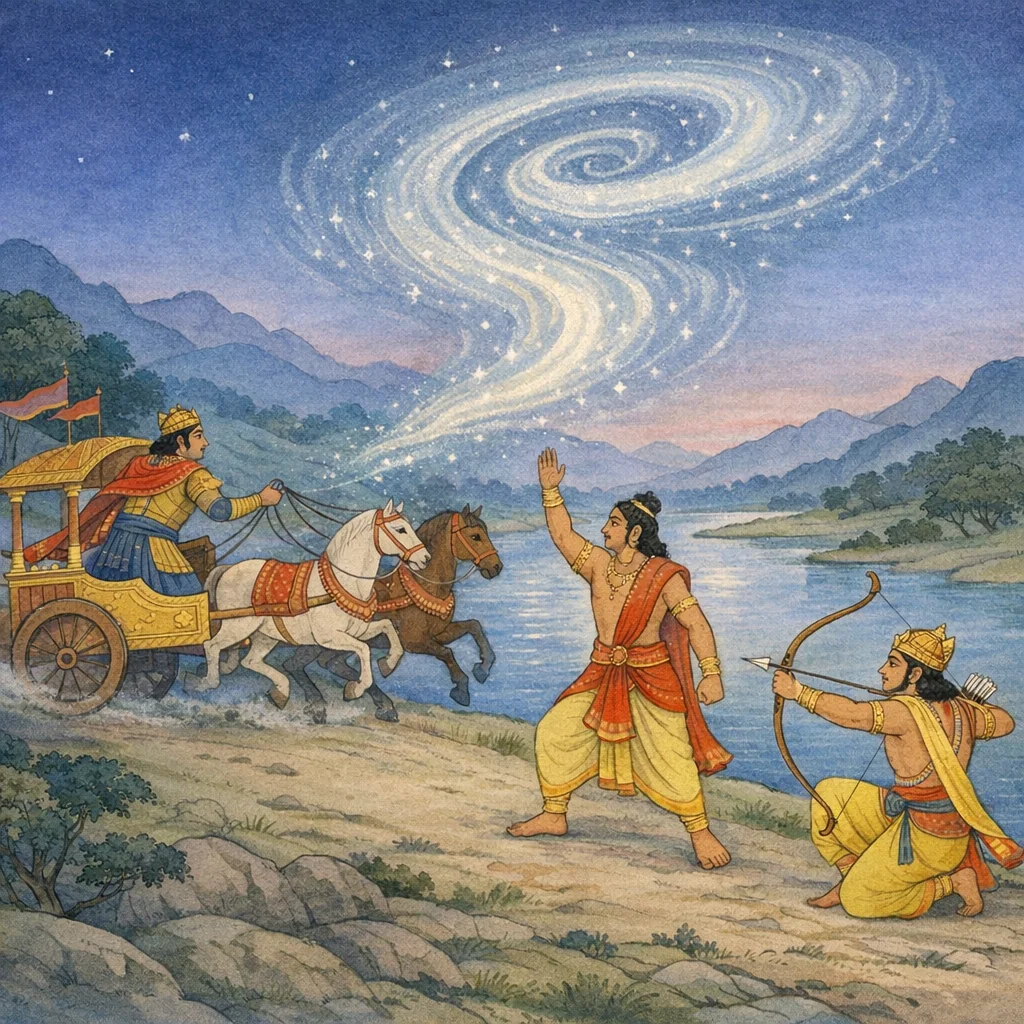
Vaiśaṃpāyana describes the mobilization of a celebrated chariot equipped with superior weapons and yoked to Kāmboja horses adorned with gold garlands. The chariot’s divine craftsmanship is emphasized: a Viśvakarman-made standard and auspicious emblems are noted. Kṛṣṇa (Hṛṣīkeśa) mounts with Arjuna and King Yudhiṣṭhira, and the team advances with great speed and noise, closing on Bhīmasena, who is portrayed as wrathful and difficult to restrain even by assembled great warriors. The party reaches the Bhāgīrathī bank, where they see Kṛṣṇadvaipāyana Vyāsa seated with ṛṣis, indicating a setting of oversight and moral gravity. Drauṇi is also seen nearby in an abject, ritualized state (smeared with ghee, wearing kuśa-grass garments, dust-disheveled), suggesting both desperation and an attempt to access extraordinary power. Bhīma charges with bow and arrows, commanding him to stop. Observing Bhīma’s readiness and the presence of Kṛṣṇa and Arjuna behind, Drauṇi becomes distressed and, in crisis, grasps an aiṣīkā (reed/ritual implement) to invoke a supreme divine weapon. He utters hostile words and releases the astra, from which a fire-like force arises, described as capable of consuming the worlds like a cosmic terminus, marking a sharp escalation from pursuit to existential threat.
Chapter Arc: रात्रि के रक्त-धुएँ के बाद, श्रीकृष्ण, अर्जुन और युधिष्ठिर भीमसेन के पीछे-पीछे उस पथ पर बढ़ते हैं जहाँ द्रोणपुत्र अश्वत्थामा भाग निकला है—और दूर से ही दिव्य रथ की अरुण प्रभा उगते सूर्य-सी चमकती दिखती है। → काबुली (कम्बोज) अश्वों से युक्त, विश्वकर्मा-निर्मित ध्वजा और रत्नधातु-विभूषित रथ का वैभव संकेत देता है कि यह केवल पलायन नहीं, एक दिव्य प्रतिरोध है। भीम धनुष-बाण लेकर ललकारता हुआ आगे बढ़ता है; अर्जुन भी शर-सहित धनुष उठाकर दौड़ पड़ता है। → घिरते ही अश्वत्थामा क्रोध में ‘अपाण्डवाय’ कहकर दारुण वचन छोड़ता है और सर्वलोक-प्रमोहन हेतु वह दिव्यास्त्र (ब्रह्मास्त्र) का प्रयोग कर देता है—क्षण भर में युद्ध का धरातल मानवीय द्वंद्व से उठकर ब्रह्माण्डीय संकट बन जाता है। → पाण्डव पक्ष उस अस्त्र-उद्घाटन को देखकर स्तब्ध और सावधान हो उठता है; अब प्रश्न यह नहीं कि अश्वत्थामा पकड़ा जाए या नहीं, बल्कि यह कि छोड़े गए महास्त्र के विनाश को कैसे रोका जाए। → ब्रह्मास्त्र के प्रक्षेप के साथ ही अध्याय अगले निर्णायक क्षण पर ठहरता है—कौन, किस विधि से, इस सर्वनाशक तेज को प्रत्याहृत करेगा?
Shlokas
Verse 1
ऑपन-माजल बछ। अकाल त्रयोदशो< ध्याय: श्रीकृष्ण, अर्जुन और युधिष्ठिरका भीमसेनके पीछे जाना, भीमका लीक पहुँचकर अभ्वत्थामाको ललकारना और अभ्चवृत द्वारा ब्रह्मास्त्रका प्रयोग वैशम्पायन उवाच एवमुक्त्वा युधां श्रेष्ठ: सर्वयादवनन्दन: । सर्वायुधवरोपेतमारुरोह रथोत्तमम्,वैशम्पायनजी कहते हैं--राजन! सम्पूर्ण यादवकुलको आनन्दित करनेवाले योद्धाओंमें श्रेष्ठ भगवान् श्रीकृष्ण ऐसा कहकर समस्त श्रेष्ठ आयुधोंसे सम्पन्न उत्तम रथपर आरूढ़ हुए
Vaiśampāyana said: Having spoken thus, the foremost among warriors—Śrī Kṛṣṇa, the delight of all the Yādavas—mounted an excellent chariot, fully equipped with the finest of weapons.
Verse 2
उसमें सोनेकी माला पहने हुए अच्छी जातिके काबुली घोड़े जुते हुए थे। उस श्रेष्ठ रथकी कान्ति उदयकालीन सूर्यके समान अरुण थी। उसकी दाहिनी धुरीका बोझ शैव्य ढो रहा था और बायींका सुग्रीव। उन दोनोंके पार्श्वभागमें क्रमश: मेघपुष्प और बलाहक जुते हुए थे
Vaiśampāyana said: That excellent chariot was harnessed with fine-bred Kabul horses, adorned with a golden garland. Its radiance was crimson like the rising sun. The right yoke-burden was borne by Śaivya and the left by Sugrīva; on their flanks, in due order, were yoked Meghapuṣpa and Balāhaka.
Verse 3
युक्त परमकाम्बोजैस्तुरगै्हेममालिभि: । आदित्योदयवर्णस्य धुरं रथवरस्य तु २ ।। दक्षिणामवहच्छैब्य: सुग्रीव: सव्यतो5भवत् | पार्ष्णिवाहौ तु तस्यास्तां मेघपुष्पबलाहकौ,उसमें सोनेकी माला पहने हुए अच्छी जातिके काबुली घोड़े जुते हुए थे। उस श्रेष्ठ रथकी कान्ति उदयकालीन सूर्यके समान अरुण थी। उसकी दाहिनी धुरीका बोझ शैव्य ढो रहा था और बायींका सुग्रीव। उन दोनोंके पार्श्वभागमें क्रमश: मेघपुष्प और बलाहक जुते हुए थे
Vaiśampāyana said: That excellent chariot was yoked with first-rate Kāmboja horses, their necks adorned with golden garlands. Its splendor was ruddy like the sun at dawn. The right side of the yoke was borne by Śaibya, and the left by Sugrīva; and at the rear-flanks were the two horses Meghapuṣpa and Balāhaka.
Verse 4
विश्वकर्मकृता दिव्या रत्नधातुविभूषिता । उच्छितेव रथे माया ध्वजयष्टिरदृश्यत,उस रथपर विश्वकर्माद्वारा निर्मित तथा रत्नमय धातुओंसे विभूषित दिव्य ध्वजा दिखायी दे रही थी, जो ऊँचे उठी हुई मायाके समान प्रतीत होती थी
Vaiśampāyana said: Upon that chariot there appeared a celestial flagstaff, fashioned by Viśvakarman and adorned with jewel-like metals. Rising high, it seemed like an embodiment of wondrous illusion—an awe-inspiring sign amid the grim aftermath of war, where splendor and destruction stand side by side.
Verse 5
वैनतेय: स्थितस्तस्यां प्रभामण्डलरश्मिवान् । तस्य सत्यवत: केतुर्भुजगारिरदृश्यत,उस ध्वजापर प्रभापुंज एवं किरणोंसे सुशोभित विनतानन्दन गरुड़ विराज रहे थे। सर्पोके शत्रु गरुड़ सत्यवान् श्रीकृष्णके रथकी पताकाके रूपमें दृष्टिगोचर हो रहे थे
Vaiśampāyana said: There, upon that chariot, stood Vainateya (Garuḍa), radiant with a halo of light and streaming rays. As the banner of the truthful one (Kṛṣṇa), the serpent-slayer Garuḍa was visible as the chariot’s standard—an emblem of divine protection and moral authority amid the violence of war.
Verse 6
अथारोहद्धृषीकेश: केतु: सर्वधनुष्मताम् । अर्जुन: सत्यकर्मा च कुरुराजो युधिष्ठिर:,सम्पूर्ण धनुर्धरोंमें श्रेष्ठ श्रीकृष्ण पहले उस रथपर सवार हुए। तत्पश्चात् सत्यपराक्रमी अर्जुन तथा कुरुराज युधिष्ठिर उस रथपर बैठे
Then Hṛṣīkeśa (Śrī Kṛṣṇa), foremost like a standard among all bowmen, mounted that chariot first. After him sat Arjuna, steadfast in true deeds, and Yudhiṣṭhira, king of the Kurus.
Verse 7
अशोभेतां महात्मानौ दाशार्हमभित: स्थितौ | रथस्थं शार्जधन्वानमश्विनाविव वासवम्,वे दोनों महात्मा पाण्डव रथपर स्थित हुए शार्क़् धनुषधारी दशा्हकुलनन्दन श्रीकृष्णके समीप विराजमान हो इन्द्रके पास बैठे हुए दोनों अश्विनीकुमारोंके समान सुशोभित हो रहे थे
Vaiśampāyana said: The two great-souled heroes, standing on either side of Dāśārha (Śrī Kṛṣṇa), shone brilliantly. Stationed near the bearer of the Śārṅga bow upon the chariot, they appeared like the twin Aśvins seated beside Vāsava (Indra).
Verse 8
तावुपारोप्य दाशार्ह: स्यन्दनं लोकपूजितम् । प्रतोदेन जवोपेतान् परमाश्चानचोदयत्,उन दोनों भाइयोंको उस लोकपूजित रथपर चढ़ाकर दशार्हवंशी श्रीकृष्णने वेगशाली उत्तम अश्वोंको चाबुकसे हाँका
Vaiśampāyana said: Having seated those two brothers upon the world-honoured chariot, Dāśārha (Śrī Kṛṣṇa) urged on with the whip the swift, excellent horses.
Verse 9
ते हया: सहसोत्पेतुर्गृहीत्वा स्यन्दनोत्तमम् । आस्थितं पाण्डवेयाभ्यां यदूनामृषभेण च,वे घोड़े दोनों पाण्डवों तथा यदुकुलतिलक श्रीकृष्णकी सवारीमें आये हुए उस उत्तम रथको लेकर सहसा उड़ चले
Vaiśampāyana said: The horses suddenly sprang forward, carrying off that excellent chariot—mounted by the two sons of Pāṇḍu and also by Kṛṣṇa, the bull among the Yadus—and sped on as though in flight.
Verse 10
वहतां शार्जर्धन्वानमश्चानां शीघ्रगामिनाम् । प्रादुरासीन्महान् शब्द: पक्षिणां पततामिव,शार्ज्र्धन्वा श्रीकृष्णकी सवारी ढोते हुए उन शीघ्रगामी अश्वोंका महान् शब्द उड़ते हुए पक्षियोंके समान प्रकट हो रहा था
Vaiśampāyana said: As the swift-moving horses bore Śārṅgadhanvan (Kṛṣṇa, wielder of the Śārṅga bow), a great sound arose—like that of birds in flight.
Verse 11
ते समार्च्छन्नरव्याप्रा: क्षणेन भरतर्षभ । भीमसेन महेष्वासं समनुद्रुत्य वेगिता:,भरतश्रेष्ठ! वे तीनों नरश्रेष्ठ बड़े वेगसे पीछे-पीछे दौड़कर क्षणभरमें महाधनुर्धर भीमसेनके पास जा पहुँचे
Vaiśampāyana said: O bull among the Bharatas, those three foremost of men, swift in action, rushed after him with great speed and, in a moment, came up to Bhīmasena, the mighty archer.
Verse 12
क्रोधदीप्तं तु कौन्तेयं द्विषदर्थे समुद्यतम् । नाशवनुवन् वारयितुं समेत्यापि महारथा:,इस समय कुन्तीकुमार भीमसेन क्रोधसे प्रज्वलित हो शत्रुका संहार करनेके लिये तुले हुए थे। इसलिये वे तीनों महारथी उनसे मिलकर भी उन्हें रोक न सके
Vaiśampāyana said: Kuntī’s son (Bhīmasena), blazing with wrath and intent on the destruction of the foe, had risen to act. Therefore, even when the three great chariot-warriors came together and confronted him, they were unable to restrain him.
Verse 13
स तेषां प्रेक्षतामेव श्रीमतां दृढ्धन्विनाम् ययौ भागीरथीतीरं हरिभिर्भुशवेगितैः,इति श्रीमहा भारते सौप्तिकपर्वणि ऐषीकपर्वणि ब्रह्मशिरो<स्त्रत्यागे त्रयोदशो<5 ध्याय: इस प्रकार श्रीमहाभारत सौप्तिकपर्वके अन्तर्गत ऐषीकपर्वनें अश्वत्थामाके द्वारा ब्रह्मास्रका प्रयोगविषयक तेरहवाँ अध्याय पूरा हुआ
Vaiśaṃpāyana said: While those illustrious, steadfast archers looked on, he departed for the bank of the Bhāgīrathī, borne swiftly by his tawny horses. Thus ends the thirteenth chapter in the Sauptika Parva of the Śrī Mahābhārata, in the Aiṣīka section, concerning the relinquishing of the Brahmaśiras weapon.
Verse 14
स ददर्श महात्मानमुदकान्ते यशस्विनम्,रजसा ध्वस्तमासीन ददर्श द्रौणिमन्तिके । वहाँ जाकर उन्होंने गंगाजीके जलके किनारे परम यशस्वी महात्मा श्रीकृष्ण द्वैपायन व्यासको अनेकों महर्षियोंके साथ बैठे देखा। उनके पास ही वह क्रूरकर्मा द्रोणपुत्र भी बैठा दिखायी दिया। उसने अपने शरीरमें घी लगाकर कुशका चीर पहन रखा था। उसके सारे अंगोंपर धूल छा रही थी
Vaiśampāyana said: He beheld the illustrious great-souled one seated on the bank of the river, his body covered with dust; and nearby he saw Droṇa’s son (Aśvatthāman) sitting close at hand.
Verse 15
कृष्णद्वैपायनं व्यासमासीनमृषिभि: सह । तं॑ चैव क्रूरकर्माणं घृताक्तं कुशचीरिणम्
Vaiśaṃpāyana said: They saw Kṛṣṇa-Dvaipāyana Vyāsa seated with the sages; and they also beheld that doer of cruel deeds, smeared with ghee and clad in a garment of kuśa-grass—an image of grim austerity and ominous resolve in the aftermath of slaughter.
Verse 16
तमभ्यधावत् कौन्तेय: प्रगृह्य सशरं धनु:
Vaiśampāyana said: Then the son of Kuntī rushed toward him, having seized his bow with arrows ready—moving with urgent resolve in the midst of the post-war violence, intent on confronting the threat directly.
Verse 17
स दृष्टवा भीमधन्वानं प्रगृहीतशरासनम्,अश्वत्थामाने देखा कि भयंकर धनुर्थर भीमसेन हाथमें धनुष लिये आ रहे हैं। उनके पीछे श्रीकृष्णके रथपर बैठे हुए दो भाई और हैं। यह सब देखकर द्रोणकुमारके हृदयमें बड़ी व्यथा हुई। उस घबराहटमें उसने यही करना उचित समझा
Seeing Bhīma—terrible in battle—approaching with bow in hand and arrows ready, and noticing behind him the two brothers seated upon Śrī Kṛṣṇa’s chariot, Aśvatthāmā was seized by deep anguish. Confronted with that sudden fear and pressure, the son of Droṇa judged a single course of action to be the most fitting.
Verse 18
भ्रातरौ पृष्ठतश्नास्य जनार्दनरथे स्थितौ | व्यथितात्माभवद् द्रौणि: प्राप्त चेदममन्यत,अश्वत्थामाने देखा कि भयंकर धनुर्थर भीमसेन हाथमें धनुष लिये आ रहे हैं। उनके पीछे श्रीकृष्णके रथपर बैठे हुए दो भाई और हैं। यह सब देखकर द्रोणकुमारके हृदयमें बड़ी व्यथा हुई। उस घबराहटमें उसने यही करना उचित समझा
Vaiśaṃpāyana said: Seeing Bhīmasena approaching in a fearsome, bow-bearing stance, and noticing behind him the two brothers seated upon Janārdana’s chariot, Droṇa’s son Aśvatthāman became deeply distressed at heart. In that agitation he judged that this was the course now to be taken.
Verse 19
स तद् दिव्यमदीनात्मा परमास्त्रमचिन्तयत् | जग्राह च स चैषीकां द्रौणि: सव्येन पाणिना,उदारहृदय अभश्रव॒त्थामाने उस दिव्य एवं उत्तम अस्त्रका चिन्तन किया। साथ ही बायें हाथसे एक सींक उठा ली
Vaiśaṃpāyana said: Then Aśvatthāman—unyielding in spirit—fixed his mind upon a supreme, divine weapon. And at the same time, Droṇa’s son picked up a blade of grass with his left hand, preparing to employ that extraordinary power in the grim aftermath of war.
Verse 20
स तामापदमासाद्य दिव्यमस्त्रमुदैरयत् । अमृष्यमाणस्तान् शूरान् दिव्यायुधवरान् स्थितान्
Fallen into that crisis, he unleashed a celestial weapon. Unable to endure the presence of those heroic warriors—standing firm, armed with excellent divine arms—he acted in wrath, choosing supernatural force when ordinary means seemed insufficient.
Verse 21
इत्युक्त्वा राजशार्टूल द्रोणपुत्र: प्रतापवान्
Vaiśampāyana said: Having spoken thus, the mighty son of Droṇa—valiant in prowess—then proceeded further, addressing the king as a “tiger among rulers.” The line marks a narrative transition: after declaring his intent, Aśvatthāmā moves from words to action, foreshadowing the grave ethical consequences that follow in the Sauptika episode.
Verse 22
ततस्तस्यामिषीकायां पावक: समजायत । प्रधक्ष्यन्निव लोकांस्त्रीन कालान्तकयमोपम:,तदनन्तर उस सींकमें काल, अन्तक और यमराजके समान भयंकर आग प्रकट हो गयी। उस समय ऐसा जान पड़ा कि वह अग्नि तीनों लोकोंको जलाकर भस्म कर डालेगी
Vaiśampāyana said: Then, within that bundle of reeds, a fire suddenly arose—terrible like Kāla, Antaka, and Yama—so fierce that it seemed as though it would burn up all the three worlds.
Verse 136
यत्र सम श्रूयते द्रौणि: पुत्रहन्ता महात्मनाम् उन सुदृढ़ धनुर्धर तेजस्वी वीरोंके देखते-देखते वे अत्यन्त वेगशाली घोड़ोंके द्वारा भागीरथीके तटपर जा पहुँचे, जहाँ उन महात्मा पाण्डवोंके पुत्रोंका वध करनेवाला अश्वत्थामा बैठा सुना गया था
Vaiśampāyana said: They heard that Drauṇi—Aśvatthāmā, the slayer of the sons of the great-souled Pāṇḍavas—was there. Before the very eyes of those radiant, mighty warriors, firm in their bowmanship, he sped away on exceedingly swift horses and reached the bank of the Bhāgīrathī, where it was reported that Aśvatthāmā had taken his seat.
Verse 156
रजसा ध्वस्तमासीन ददर्श द्रौणिमन्तिके । वहाँ जाकर उन्होंने गंगाजीके जलके किनारे परम यशस्वी महात्मा श्रीकृष्ण द्वैपायन व्यासको अनेकों महर्षियोंके साथ बैठे देखा। उनके पास ही वह क्रूरकर्मा द्रोणपुत्र भी बैठा दिखायी दिया। उसने अपने शरीरमें घी लगाकर कुशका चीर पहन रखा था। उसके सारे अंगोंपर धूल छा रही थी
Vaiśampāyana said: He saw Droṇa’s son (Aśvatthāman) sitting nearby, his body smeared and dulled by dust. In the broader scene, the narrative places him close to the supremely renowned sage Kṛṣṇa Dvaipāyana Vyāsa, who is seated on the bank of the Gaṅgā along with many great seers—highlighting the stark ethical contrast between ascetic, truth-bearing authority and the presence of a man marked by cruel deeds and the moral fallout of war.
Verse 163
भीमसेनो महाबाहुस्तिष्ठ तिछ्ठेति चाब्रवीत् | कुन्तीकुमार महाबाहु भीमसेन बाणसहित धनुष लिये उसकी ओर दौड़े और बोले --'अरे! खड़ा रह, खड़ा रह'
Vaiśampāyana said: Mighty-armed Bhīmasena cried, “Stand! Stand!” and rushed forward with bow and arrows. The moment captures an unrelenting pursuit after slaughter—valor and wrath surging, while the ethical tension of violence continuing beyond the main battle still hangs over the scene.
Verse 203
अपाण्डवायेति रुषा व्यसृजद् दारुणं वच: । दिव्य आयुध धारण करके खड़े हुए उन शूरवीरोंका आना वह सहन न कर सका। उस आपत्तिमें पड़कर उसने रोषपूर्वक दिव्यास्त्रका प्रयोग किया और मुखसे कठोर वचन निकाला कि “यह अस्त्र समस्त पाण्डवोंका विनाश कर डाले'
Vaiśampāyana said: In wrath he hurled a cruel utterance—“For the destruction of the Pāṇḍavas!” Unable to endure the sight of those heroes standing firm, bearing celestial weapons, he—driven into extremity—released a divine missile in anger and declared harshly that this weapon would bring about the ruin of all the Pāṇḍavas. Ethically, the moment marks a collapse into rage and desperation, where the intent shifts from combat to annihilation, foreshadowing the peril of unrestrained astric power.
Verse 216
सर्वलोकप्रमोहार्थ तदस्त्र॑ प्रमुमोच ह । नृपश्रेष्ठ ऐसा कहकर प्रतापी द्रोणपुत्रने सम्पूर्ण लोकोंको मोहमें डालनेके लिये वह अस्त्र छोड़ दिया
Vaiśaṃpāyana said: With the intent to bewilder and confound all beings, he then released that weapon. The act signals a deliberate escalation in warfare—using a force meant not merely to defeat an opponent but to overwhelm the moral and mental order of the world itself.
Frequently Asked Questions
The chapter stages a dilemma of proportionality: whether righteous pursuit and capture can remain within controlled force when the pursued party threatens to override norms by deploying a world-endangering astra to escape accountability.
Power without restraint amplifies harm: the narrative frames astras as ethically regulated instruments, implying that desperation does not nullify responsibility, and that escalation produces consequences beyond immediate tactical aims.
No explicit phalaśruti appears in the supplied verses; the chapter’s meta-commentary is implicit, conveyed through the presence of Vyāsa and ṛṣis as moral witnesses and through the depiction of catastrophic astra-effects as a cautionary frame.