Adhyaya 11
Adhyaya 11 — Draupadī’s Grief, Demand for Justice, and Bhīma’s Departure
Upa-parva: Sauptika Parva — Draupadī’s Lament and Bhīma’s Pursuit of Droṇiputra
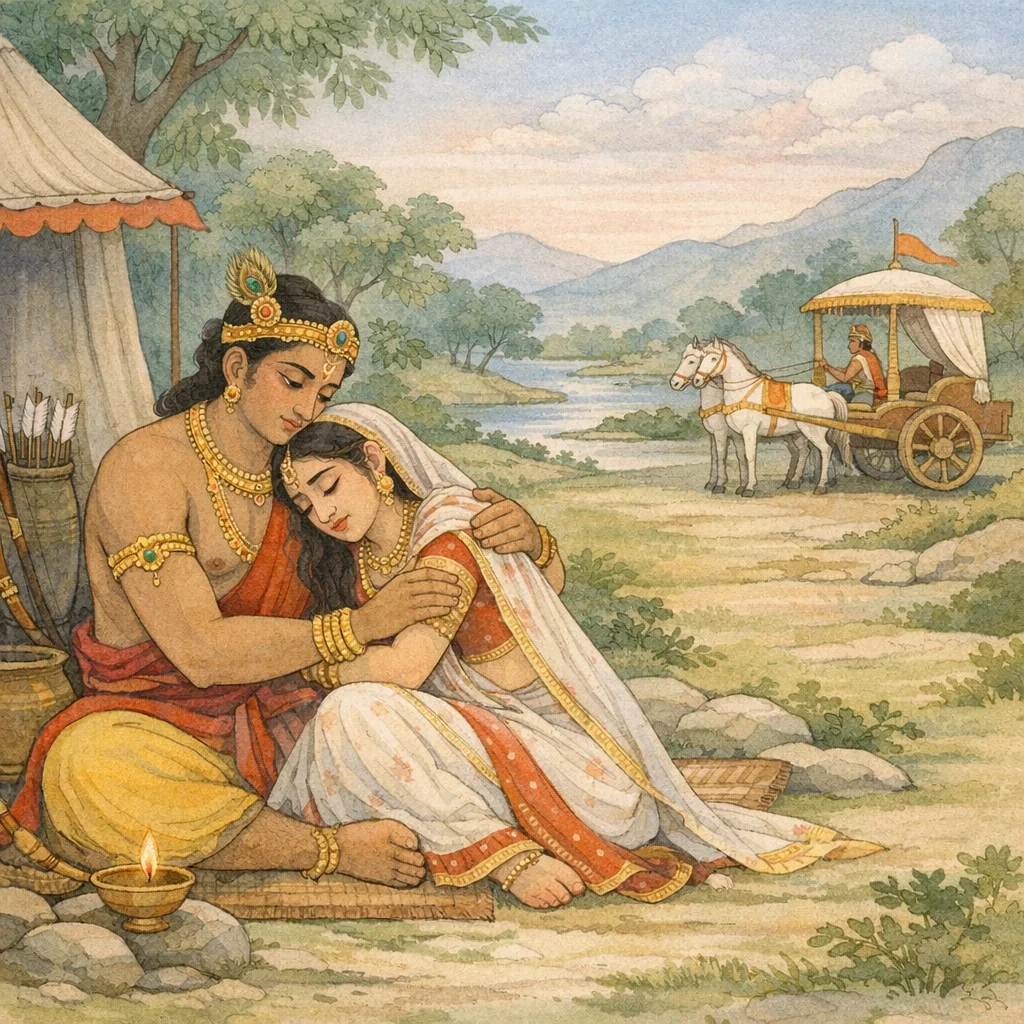
Vaiśaṃpāyana describes the court’s shock as the slain sons, brothers, and companions are seen, producing acute grief. Nakula arrives with Draupadī (Kṛṣṇā/Yājñasenī), who—overwhelmed—falls to the ground and is steadied by Bhīma. Draupadī’s speech combines lament with biting irony: she frames kingship and territorial gain as hollow when achieved amid the loss of the young heirs, and she identifies the night killing by Droṇiputra as a moral rupture that demands response. Yudhiṣṭhira answers with dharmic consolation, asserting that the fallen met a ‘proper’ end according to warrior norms and questioning the feasibility of reaching the perpetrator who has fled into the forest. Draupadī counters with a specific juridical objective: Droṇiputra’s inborn head-jewel (maṇi) should be brought as proof of his defeat, and she imagines restoration of life-purpose only upon seeing it. She then exhorts Bhīma to protect her and act according to kṣatra-dharma, recalling his prior rescues as precedent for decisive intervention. Bhīma, unable to endure her extended lament, arms himself, mounts his chariot, appoints Nakula as charioteer, and departs swiftly by the trail of Droṇiputra’s chariot—marking the shift from grief to pursuit and enforcement.
Chapter Arc: रात्रि के संहार के बाद प्रभात में युधिष्ठिर पुत्र-पौत्र, भ्राता और स्वजन-स्मृति से शोक में डूब जाते हैं; आँसुओं से भरी आँखें, काँपता शरीर और चेतना-सा लोप—विजय का कोई स्वाद नहीं, केवल रिक्तता। → द्रौपदी का मुख शोक से राहुग्रस्त सूर्य-सा तेजहीन हो उठता है; वह विलाप करती हुई द्रोणपुत्र अश्वत्थामा के वध का आग्रह करती है। परन्तु सूचना मिलती है कि वह दुर्गम वन में भाग गया है—‘युद्ध में मारा भी जाए तो विश्वास कैसे होगा?’ इस संशय के बीच प्रतिशोध की आग और भी भड़कती है। → द्रौपदी अश्वत्थामा के जन्मजात मस्तक-मणि का उल्लेख कर प्रमाण और प्रतिकार दोनों का लक्ष्य तय कर देती है—वध/दण्ड का ऐसा चिह्न जो असंदिग्ध हो। तब पाण्डव, विशेषतः भीम, द्रोणपुत्र-वध का निश्चय कर रथारूढ़ होकर तीव्र वेग से पीछा करते हैं; घोड़े वायु-वेग से दौड़ते हैं। → पीछा और प्रतिशोध की प्रतिज्ञा के बीच द्रौपदी शोक से गिर पड़ती है; क्रोध से भरे सत्यपराक्रमी भीमसेन उछलकर उसे दोनों बाँहों से उठा लेते हैं—शोकाकुल गृहस्थ-धर्म और रण-धर्म एक ही क्षण में टकराते और संभाले जाते हैं। → अश्वत्थामा वन में ओझल है; पाण्डवों का रथ-वेग उसे पकड़ पाएगा या वह किसी और भयावह उपाय की ओर बढ़ चुका है—अगला प्रसंग इसी अनिश्चितता पर टिकता है।
Shlokas
Verse 1
अपन क्रा बछ। अ--काजज एकादशोब< ध्याय: युधिष्ठिरका शोकमें व्याकुल होना, द्रौपदीका विलाप तथा द्रोणकुमारके वधके लिये आग्रह, भीमसेनका अश्र॒त्थामाको मारनेके लिये प्रस्थान वैशम्पायन उवाच स दृष्टवा निहतान् संख्ये पुत्रान् पौत्रान् सखींस्तथा । महादुःखपरीतात्मा बभूव जनमेजय,वैशम्पायनजी कहते हैं-जनमेजय! अपने पुत्रों, पौत्रों और मित्रोंको युद्धमें मारा गया देख राजा युधिष्ठिरका हृदय महान् दुःखसे संतप्त हो उठा
Vaiśampāyana said: O Janamejaya, when King Yudhiṣṭhira saw his sons, grandsons, and companions lying slain on the battlefield, his inner being was overwhelmed and consumed by profound grief. The verse frames the moral aftermath of war: even the righteous victor is not spared the crushing weight of loss.
Verse 2
ततस्तस्य महान् शोक: प्रादुरासीन्महात्मन: । स्मरतः पुत्रपौत्राणां भ्रातृणां स््वजनस्य ह,उस समय पुत्रों, पौत्रों, भाइयों और स्वजनोंका स्मरण करके उन महात्माके मनमें महान् शोक प्रकट हुआ
Then, as that noble-hearted man recalled his sons and grandsons, his brothers, and his own kinsmen, a great sorrow rose up within him—an inward reckoning with the human cost of what had been done.
Verse 3
तमश्रुपरिपूर्णाक्ष॑ं वेपमानमचेतसम् । सुहृदो भृशसंविग्ना: सान्त्वयाज्चक्रिरे तदा,उनकी आँखें आँसुओंसे भर आयीं, शरीर काँपने लगा और चेतना लुप्त होने लगी। उनकी ऐसी अवस्था देख उनके सुहृद् अत्यन्त व्याकुल हो उस समय उन्हें सान्त्वना देने लगे
His eyes filled with tears; his body trembled, and his awareness began to fail. Seeing him in such a condition, his close well-wishers, deeply distressed, then tried to console him.
Verse 4
ततस्तस्मिन् क्षणे कल्पो रथेनादित्यवर्चसा । नकुल: कृष्णया सार्धमुपायात् परमार्तया,इसी समय सामर्थ्यशाली नकुल सूर्यके समान तेजस्वी रथके द्वारा शोकसे अत्यन्त पीड़ित हुई कृष्णाको साथ लेकर वहाँ आ पहुँचे
Then, at that very moment, Nakula arrived there in a chariot radiant like the sun, bringing with him Krishna (Draupadi), who was overwhelmed by the deepest grief.
Verse 5
उपप्लव्यं गता सा तु श्रुत्वा सुमहदप्रियम् । तदा विनाशं सर्वेषां पुत्राणां व्यथिताभवत्,उस समय द्रौपदी उपप्लव्य नगरमें गयी हुई थी, वहाँ अपने सारे पुत्रोंके मारे जानेका अत्यन्त अप्रिय समाचार सुनकर वह व्यथित हो उठी थी
Vaiśampāyana said: Having gone to Upaplavya, she heard the exceedingly grievous and unwelcome news. On learning of the destruction of all her sons, she was overwhelmed with anguish.
Verse 6
कम्पमानेव कदली वातेनाभिसमीरिता । कृष्णा राजानमासाद्य शोकार्ता न्यपतद् भुवि,राजा युधिष्ठिरके पास पहुँचकर शोकसे व्याकुल हुई कृष्णा हवासे हिलायी गयी कदलीके समान कम्पित हो पृथ्वीपर गिर पड़ी
Vaiśampāyana said: Like a plantain tree trembling when driven by the wind, Krishna (Draupadi), overwhelmed by grief, approached King Yudhishthira and collapsed upon the earth.
Verse 7
बभूव वदनं तस्या: सहसा शोककर्षितम् । फुल्लपद्मपलाशाक्ष्यास्तमोग्रस्त इवांशुमान्
Vaiśampāyana said: Her face, suddenly drawn and worn by grief, became like the sun swallowed by darkness—though she was lotus-eyed, with eyes like the petals of a fully blossomed lotus.
Verse 8
प्रफुल्ल कमलके समान विशाल एवं मनोहर नेत्रोंवाली द्रौपदीका मुख सहसा शोकसे पीड़ित हो राहुके द्वारा ग्रस्त हुए सूर्यके समान तेजोहीन हो गया ।। ततस्तां पतितां दृष्टवा संरम्भी सत्यविक्रम: । बाहुभ्यां परिजग्राह समुत्पत्य वृकोदर:
Vaiśampāyana said: Draupadī—whose eyes were large and lovely like fully blossomed lotuses—was suddenly seized by grief, and her face lost its radiance, like the sun eclipsed by Rāhu. Then, seeing her fallen, Vṛkodara (Bhīma), impetuous yet true in valor, sprang up and clasped her in his arms.
Verse 9
रुदती पाण्डवं कृष्णा सा हि भारतमब्रवीत्,उस समय रोती हुई कृष्णाने भरतनन्दन पाण्डुपुत्र युधिष्ठिससे कहा--“राजन! सौभाग्यकी बात है कि आप क्षत्रिय-धर्मके अनुसार अपने पुत्रोंकोी यमराजकी भेंट चढ़ाकर यह सारी पृथ्वी पा गये और अब इसका उपभोग करेंगे
Vaiśampāyana said: Weeping, Kṛṣṇā (Draupadī) spoke to the Pāṇḍava, O descendant of Bharata. In grief and bitter irony she addressed Yudhiṣṭhira: “Fortunate indeed, O King, that—by the kṣatriya code—you have offered your own sons to Yama, won this whole earth, and now will enjoy its sovereignty.”
Verse 10
इस प्रकार श्रीमह्ाभारत सौप्तिकपर्वके अन्तर्गत ऐषीकपर्वनें युधिष्ठिरका शिविरमें प्रवेशविषयक दसवाँ अध्याय पूरा हुआ,दिष्टया राजन्नवाप्येमामखिलां भोक्ष्यसे महीम् । आत्मजान क्षत्रधर्मेण सम्प्रदाय यमाय वै उस समय रोती हुई कृष्णाने भरतनन्दन पाण्डुपुत्र युधिष्ठिससे कहा--“राजन! सौभाग्यकी बात है कि आप क्षत्रिय-धर्मके अनुसार अपने पुत्रोंकोी यमराजकी भेंट चढ़ाकर यह सारी पृथ्वी पा गये और अब इसका उपभोग करेंगे
Kṛṣṇā (Draupadī), weeping, said to Yudhiṣṭhira, the son of Pāṇḍu: “Fortunate indeed, O King, that—having offered your own sons to Yama in accordance with the kṣatriya code—you have obtained this entire earth, and now you will enjoy its sovereignty.”
Verse 11
दिष्टया त्वं कुशली पार्थ मत्तमातड़गामिनीम् । अवाप्य पृथिवीं कृत्स्नां सौभद्रे न स्मरिष्यसि,“कुन्तीनन्दन! सौभाग्यसे ही आपने कुशलपूर्वक रहकर इस मत्त-मातंगगामिनी सम्पूर्ण पृथ्वीका राज्य प्राप्त कर लिया, अब तो आपको सुभद्राकुमार अभिमन्युकी भी याद नहीं आयेगी
“Fortunate are you, O son of Kuntī, that you remain unharmed and have gained the whole earth—restless as a maddened elephant; now you will not even remember Abhimanyu, Subhadrā’s son.”
Verse 12
आत्मजान क्षत्रधर्मेण श्रुत्वा शूरान् निपातितान् । उपप्लव्ये मया सार्ध दिष्टया त्वं न स्मरिष्यसि
Vaiśampāyana said: “Having heard that your own sons—heroic warriors—have been struck down in accordance with the harsh code of kṣatriya duty, you will, by good fortune, not lose your composure; together with me at Upaplavya you will not be overwhelmed by grief.”
Verse 13
“अपने वीर पुत्रोंको क्षत्रिय-धर्मके अनुसार मारा गया सुनकर भी आप उपप्लव्यनगरमें मेरे साथ रहते हुए उन्हें सर्वथा भूल जायँगे; यह भी भाग्यकी ही बात है ।। प्रसुप्तानां वर्ध॑ श्रुत्वा द्रोणिना पापकर्मणा । शोकस्तपति मां पार्थ हुताशन इवाश्रयम्,'पार्थ! पापाचारी द्रोणपुत्रके द्वारा मेरे सोये हुए पुत्रोंका वध किया गया, यह सुनकर शोक मुझे उसी प्रकार संतप्त कर रहा है, जैसे आग अपने आधारभूत काष्ठको ही जला डालती है इति श्रीमहाभारते सौप्तिकपर्वणि ऐषीकपर्वणि द्रौणिवधार्थ भीमसेनगमने एकादशो<ध्याय:
Vaiśampāyana said: “O Pārtha, on hearing that my sons were slain while asleep by Droṇa’s son—whose deed was sinful—grief burns me, just as fire consumes the very fuel on which it rests. Even when one knows that warriors fall according to kṣatriya-duty, the manner of this killing violates the moral order and turns righteous sorrow into a consuming blaze.”
Verse 14
तस्य पापकृतो द्रौणेर्न चेदद्य त्वया रणे । हियते सानुबन्धस्य युधि विक्रम्पय जीवितम्
“If, today, in battle, you do not take away the life of that evil-doer Drauṇi, then the life of the one who has acted with such sinful intent—together with all its consequences and entanglements—will be diminished and brought to ruin amid the struggle. The statement presses an urgent ethical demand: a grievous wrong committed in war must be answered decisively, lest its chain of repercussions continue to corrode life and order.”
Verse 15
इहैव प्रायमासिष्ये तन्निबोधत पाण्डवा: । न चेत् फलमवाप्रोति द्रौणि: पापस्य कर्मण:
Vaiśampāyana said: “Here itself I shall undertake the fast unto death—understand this well, O Pāṇḍavas—if Droṇa’s son does not receive the due consequence of his sinful deed.”
Verse 16
“यदि आज आप रणभूमिमें पराक्रम प्रकट करके सगे-सम्बन्धियोंसहित पापाचारी द्रोणकुमारके प्राण नहीं हर लेते हैं तो मैं यहीं अनशन करके अपने जीवनका अन्त कर दूँगी। पाण्डवो! आप सब लोग इस बातको कान खोलकर सुन लें। यदि अश्वत्थामा अपने पापकर्मका फल नहीं पा लेता है तो मैं अवश्य प्राण त्याग दूँगी” ।। एवमुक्त्वा ततः कृष्णा पाण्डवं प्रत्युपाविशत् । युधिष्ठिरं याज्ञसेनी धर्मराजं यशस्विनी,ऐसा कहकर यशस्विनी ट्रुपदकुमारी कृष्णा पाण्डुपुत्र युधिष्ठिरके सामने ही अनशनके लिये बैठ गयी
Vaiśampāyana said: “If today you do not display your valor on the battlefield and, together with your kinsmen, take the life of the sinful son of Droṇa, then I will end my life here itself by fasting. O Pāṇḍavas, listen to this with open ears: if Aśvatthāmā does not receive the fruit of his wicked deed, I will surely give up my life.” Having spoken thus, the illustrious Kṛṣṇā (Draupadī), daughter of Drupada, sat down facing Yudhiṣṭhira—the Dharmarāja—undertaking a fast.
Verse 17
दृष्टवोपविष्टां राजर्षि: पाण्डवो महिषीं प्रियाम् । प्रत्युवाच स धर्मात्मा द्रौपदी चारुदर्शनाम्,अपनी प्रिय महारानी परम सुन्दरी द्रौपदीको उपवासके लिये बैठी देख धर्मात्मा राजर्षि युधिष्ठिरने उससे कहा--
Seeing his beloved queen Draupadī—radiant in appearance—seated for a fast, the Pāṇḍava king, the royal sage Yudhiṣṭhira, a man devoted to dharma, addressed her in reply.
Verse 18
धर्म्य॑ धर्मेण धर्मज्ञे प्राप्तास्ते निधनं शुभे | पुत्रास्ते भ्रातरश्नैव तान्न शोचितुमरहसि,'शुभे! तुम धर्मको जाननेवाली हो। तुम्हारे पुत्रों और भाइयोंने धर्मपूर्वक युद्ध करके धर्मानुकूल मृत्यु प्राप्त की है; अतः तुम्हें उनके लिये शोक नहीं करना चाहिये
Vaiśampāyana said: “O auspicious lady, you are righteous and a knower of dharma. Your sons and your brothers have met their end in accordance with dharma, having fought a righteous battle; therefore you ought not to grieve for them.”
Verse 19
स कल्याणि बन दुर्ग दूरं द्रौणिरितो गत: । तस्य त्वं पातनं संख्ये कथं ज्ञास्यसि शोभने
Vaiśampāyana said: “O auspicious lady, Drauṇi has gone far from this forest stronghold. How, then, O fair one, will you come to know of his downfall in battle?”
Verse 20
“कल्याणि! द्रोणकुमार तो यहाँसे भागकर दुर्गम वनमें चला गया है। शोभने! यदि उसे युद्धमें मार गिराया जाय तो भी तुम्हें इसका विश्वास कैसे होगा?” ।। द्रौपहुुवाच द्रोणपुत्रस्य सहजो मणि: शिरसि मे श्रुतः । निहत्य संख्ये तं पापं पश्येयं मणिमाहृतम्
Vaiśampāyana said: “O auspicious lady, Droṇa’s son has fled from here and gone into an inaccessible forest. O fair one, even if he were struck down in battle, how could you be certain of it?” Draupadī replied: “I have heard that Droṇa’s son bears by birth a jewel upon his head. If that sinner is slain in the fight, I would see that jewel brought here.”
Verse 21
पाणए्डुपुत्र राजा युधिष्ठिरसे ऐसा कहकर सुन्दरी कृष्णा भीमसेनके पास आयी और यह उत्तम वचन बोली--'प्रिय भीम! आप क्षत्रिय-धर्मका स्मरण करके मेरे जीवनकी रक्षा कर सकते हैं
Having spoken thus to King Yudhiṣṭhira, the beautiful Kṛṣṇā (Draupadī) came to Bhīmasena and addressed him with noble words: “Beloved Bhīma, remembering the duty of a kṣatriya, you are able—and ought—to protect my life.”
Verse 22
भीमसेनमथागत्य परम वाक्यमब्रवीत् | त्रातुमहसि मां भीम क्षत्रधर्ममनुस्मरन्,पाणए्डुपुत्र राजा युधिष्ठिरसे ऐसा कहकर सुन्दरी कृष्णा भीमसेनके पास आयी और यह उत्तम वचन बोली--'प्रिय भीम! आप क्षत्रिय-धर्मका स्मरण करके मेरे जीवनकी रक्षा कर सकते हैं
Then she approached Bhīmasena and spoke these excellent words: “O Bhīma, remembering the duty of a kṣatriya, you ought to protect me—save my life.”
Verse 23
इत्युक्त्वा पाण्डवं कृष्णा राजानं चारुदर्शना,जहि तं॑ पापकर्माणं शम्बरं मघवानिव । नहि ते विक्रमे तुल्य: पुमानस्तीह कश्नन “वीर! जैसे इन्द्रने शम्बरासुरको मारा था, उसी प्रकार आप भी उस पापकर्मी अश्वत्थामाका वध करें। इस संसारमें कोई भी पुरुष पराक्रममें आपकी समानता करनेवाला नहीं है
Vaiśampāyana said: Having spoken thus, Kṛṣṇā (Draupadī), the lovely queen, urged the Pāṇḍava king: “Slay that doer of sinful deeds—just as Maghavān (Indra) slew Śambara. In this world there is no man equal to you in valor.”
Verse 24
श्रुतं तत् सर्वलोकेषु परमव्यसने यथा । दीपो<भूस्त्वं हि पार्थानां नगरे वारणावते
Vaiśampāyana said: “That deed became known throughout all the worlds—how, in their hour of utmost calamity, you became a lamp for the Pārthas in the city of Vāraṇāvata.”
Verse 25
“यह बात सम्पूर्ण जगतमें प्रसिद्ध है कि वारणावतनगरमें जब कुन्तीके पुत्रोंपर भारी संकट पड़ा था, तब आप ही द्वीपके समान उनके रक्षक हुए थे ।। हिडिम्बदर्शने चैव तथा त्वमभवो गति: । तथा विराटनगरे कीचकेन भृशार्दिताम्
This is well known throughout the world: when Kuntī’s sons fell into a grave peril in the city of Vāraṇāvata, you alone became their protector—like an island for those drowning. Likewise, at the encounter with Hiḍimba you became their refuge; and so too in the city of Virāṭa, when they were cruelly harassed by Kīcaka.
Verse 26
यथैतान्यकृथा: पार्थ महाकर्माणि वै पुरा
Vaiśaṃpāyana said: “O Pārtha, just as you formerly accomplished these mighty deeds…”
Verse 27
तस्या बहुविध॑ दुःखातन्निशम्य परिदेवितम्
Vaiśampāyana said: Hearing her lamentation—born of many kinds of sorrow—he took in the full weight of her grief.
Verse 28
नामर्षयत कौन्तेयो भीमसेनो महाबल: । दुःखके कारण द्रौपदीका यह भाँति-भाँतिका विलाप सुनकर महाबली कुन्तीकुमार भीमसेन इसे सहन न कर सके ।। स काउ्चनविचित्राड्रमारुरोह महारथम्,विस्फार्य सशरं चापं तूर्णमश्वानचोदयत् । वे द्रोणपुत्रके वधका निश्चय करके सुवर्णभूषित विचित्र अंगोंवाले रथपर आरूढ़ हुए। उन्होंने बाण और प्रत्यंचासहित एक सुन्दर एवं विचित्र धनुष हाथमें लेकर नकुलको सारथि बनाया तथा बाणसहित धनुषको फैलाकर तुरंत ही घोड़ोंको हँकवाया
Vaiśampāyana said: The mighty Bhīmasena, son of Kuntī, could not endure it when he heard Draupadī’s many-sided lament—born of grief and its causes. Resolute about slaying Droṇa’s son, that great chariot-warrior mounted a splendid, gold-adorned chariot of varied workmanship; stretching his bow with arrows ready, he urged the horses forward at once (with Nakula as his charioteer).
Verse 29
आदाय रुचिरं चित्र समार्गणगुणं धनु: । नकुलं सारथिं कृत्वा द्रोणपुत्रवधे धृत:
Vaiśampāyana said: Taking up a splendid, finely wrought bow endowed with excellent qualities for battle, he appointed Nakula as his charioteer and set his resolve upon the slaying of Droṇa’s son.
Verse 30
ते हया: पुरुषव्याप्र चोदिता वातरंहस:
Vaiśampāyana said: Those horses—urged on by the tiger-like men—sped forward with the swiftness of the wind.
Verse 31
शिबिरात् स्वाद् गृहीत्वा स रथस्य पदमच्युत:,(द्रोणपुत्रगतेनाशु ययौ मार्गेण भारत ।) भरतनन्दन! छावनीसे बाहर निकलकर अपनी टेकसे न टलनेवाले भीमसेन अश्वृत्थामाके रथका चिह्न देखते हुए उसी मार्गसे शीघ्रतापूर्वक आगे बढ़े, जिससे द्रोणपुत्र अश्व॒त्थामा गया था
O scion of Bharata! Leaving the camp, Bhīmasena—unyielding in his resolve—caught sight of the mark of Aśvatthāman’s chariot (Droṇa’s son) and hastened onward by the very road Aśvatthāman had taken.
Verse 203
राजन् शिरसि ते कृत्वा जीवेयमिति मे मतिः । द्रौपदी बोली--महाराज! मैंने सुना है कि द्रोणपुत्रके मस्तकमें एक मणि है जो उसके जन्मके साथ ही पैदा हुई है। उस पापीको युद्धमें मारकर यदि वह मणि ला दी जायगी तो मैं उसे देख लूँगी। राजन! उस मणिको आपके सिरपर धारण कराकर ही मैं जीवन धारण कर सकूँगी; ऐसा मेरा दृढ़ निश्चय है
Vaiśampāyana said: “O King, my resolve is this: only after placing it upon your head will I be able to go on living.” (In context, Draupadī declares that Aśvatthāman’s birth-gem, once taken from him, must be set upon the king’s head; only then, she says, can her life and dignity be sustained after the outrage of the night slaughter.)
Verse 256
मामप्युद्धृतवान् कृच्छात् पौलोमीं मघवानिव । “इसी प्रकार हिडिम्बासुरसे भेंट होनेपर भी आप ही उनके आश्रयदाता हुए। विराटनगरमें जब कीचकने मुझे बहुत तंग कर दिया, तब उस महान् संकटसे आपने मेरा भी उसी तरह उद्धार किया, जैसे इन्द्रने शवीका किया था
Vaiśampāyana said: “You rescued me too from a grievous peril—just as Maghavān (Indra) once delivered Paulomī. In the same way, when the encounter with the asura Hiḍimba occurred, you became their refuge and protector; and in Virāṭa’s city, when Kīcaka tormented me greatly, you saved me from that great calamity, as Indra saved Paulomī.”
Verse 266
तथा द्रौणिममित्रघ्न विनिहत्य सुखी भव । 'शत्रुसूदन पार्थ! जैसे पूर्वकालमें ये महान् कर्म आपने किये थे, उसी प्रकार इस द्रोणपुत्रको भी मारकर सुखी हो जाइये'
Vaiśampāyana said: “O slayer of foes, become happy by striking down Drauṇi. O Śatrusūdana Pārtha, just as in former times you accomplished great deeds, so now too—having killed this son of Droṇa—be at peace and regain happiness.”
Verse 293
विस्फार्य सशरं चापं तूर्णमश्वानचोदयत् । वे द्रोणपुत्रके वधका निश्चय करके सुवर्णभूषित विचित्र अंगोंवाले रथपर आरूढ़ हुए। उन्होंने बाण और प्रत्यंचासहित एक सुन्दर एवं विचित्र धनुष हाथमें लेकर नकुलको सारथि बनाया तथा बाणसहित धनुषको फैलाकर तुरंत ही घोड़ोंको हँकवाया
Vaiśampāyana said: Having strung and drawn his bow, already fitted with arrows, he at once urged the horses forward. Resolute to slay Droṇa’s son, they mounted a chariot adorned with gold and fashioned with wondrous, varied parts. Taking in hand a beautiful, uncommon bow with its string and arrows, he made Nakula his charioteer; then, spreading the bow with arrows ready, he immediately drove the horses on.
Verse 303
वेगेन त्वरिता जम्मुर्हरय: शीघ्रगामिन: । पुरुषसिंह नरेश! नकुलके द्वारा हाँके गये वे वायुके समान वेगवाले शीघ्रगामी घोड़े बड़ी उतावलीके साथ तीव्र गतिसे चल दिये
Vaiśampāyana said: “O lion among men, O king—urged on by Nakula, the swift horses, moving with the speed of the wind, set off at once in great haste, surging forward with fierce momentum.”
Verse 836
सा समाश्चासिता तेन भीमसेनेन भामिनी । उसे गिरी हुई देख क्रोधमें भरे हुए सत्यपराक्रमी भीमसेनने उछलकर दोनों बाँहोंसे उसको उठा लिया और उस मानिनी पत्नीको धीरज बँधाया
Vaiśampāyana said: The proud lady was consoled by Bhīmasena. Seeing her fallen, Bhīmasena—whose valor was true and unwavering, and who was filled with wrath—sprang forward, lifted her up with both arms, and steadied his noble wife with words of reassurance.
Frequently Asked Questions
The dilemma is how to pursue justice for an atrocity without turning grief into uncontrolled retaliation: Draupadī demands punitive action, while Yudhiṣṭhira emphasizes dharmic framing and practical constraints.
The chapter juxtaposes two dharmic impulses—consolation through normative meaning-making and enforcement through accountable action—implying that ethical governance must integrate compassion, evidence, and regulated force.
No explicit phalaśruti appears; the chapter’s meta-function is transitional, moving from collective lament to procedural response (pursuit and proof), situating later adjudication within the epic’s broader inquiry into dharma.