Adhyaya 10
सौप्तिकपर्व — धृष्टद्युम्नसारथिवृत्तान्तः (Report of the Night Raid and Yudhiṣṭhira’s Lament)
Upa-parva: Sauptika-upākhyāna (Night-Raid Aftermath: Report to Yudhiṣṭhira)
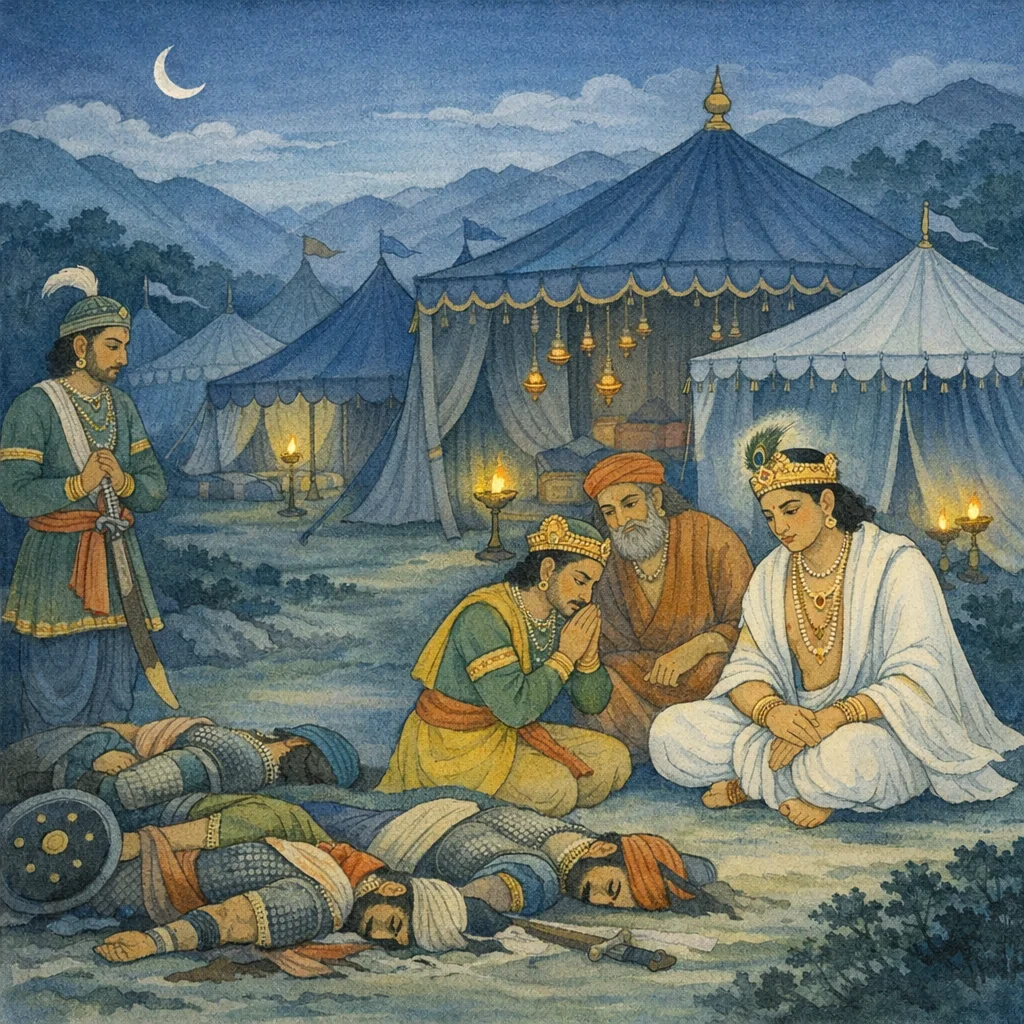
Vaiśaṃpāyana recounts that, when night has passed, Dhṛṣṭadyumna’s charioteer informs Yudhiṣṭhira of the nocturnal devastation. The report specifies that Draupadī’s sons and the sons of Drupada were asleep in their own camp, trusting and unguarded, when the assault occurred. The perpetrators are named: Aśvatthāmā, Kṛpācārya (Gautama), and Kṛtavarmā, who cut down men, elephants, and horses with spears, lances, and axes, producing a sound likened to a great forest being felled. The messenger states he alone escaped from the forces, narrowly freed amid the chaos. Yudhiṣṭhira collapses under grief; Sātyaki, Bhīma, Arjuna, and the Mādrī twins support him. Regaining composure, Yudhiṣṭhira laments the paradox of victory: having defeated enemies, they are now “defeated,” and the fruits of conquest appear as calamity. He reflects on the moral inversion where artha resembles anartha, and jaya resembles ajaya. Extended metaphors portray the battle as an ocean with chariots, arrows, banners, and weapons as its elements, emphasizing the scale of the ordeal and the tragedy that the princes who endured it were later slain through pramāda. The chapter underscores that no ruin exceeds negligence; it displaces learning, austerity, prosperity, and fame, while inviting misfortune. Yudhiṣṭhira worries for Draupadī, imagining her collapse upon hearing of her sons’ death, and instructs Nakula to bring her (together with her maternal kin). He then proceeds, with companions and lamentation, toward the dreadful scene, where he sees bodies of sons, friends, and allies lying bloodied and mutilated, and again falls unconscious in anguish.
Chapter Arc: रात्रि के अंधकार से बच निकला एकमात्र सारथि काँपते स्वर में राजसभा को बताता है—द्रौपदी के पुत्र और पांचाल-शिविर, सब सोते हुए काट डाले गए। → वह हत्यारों के नाम गिनाता है—कृतवर्मा, कृपाचार्य और अश्वत्थामा—और बताता है कि कैसे प्रमाद (असावधानी) ने विजयी शिविर को असहाय बना दिया; युधिष्ठिर के भीतर शोक के साथ-साथ धर्म-संकट उठता है: यह विजय है या पराजय का दूसरा रूप? → युधिष्ठिर युद्धभूमि/शिविर में प्रवेश कर रक्तरंजित देहों को देखता है—पुत्र, सुहृद, सखा—कटे-फटे पड़े हैं; धर्मराज ऊँचे स्वर में विलाप करता हुआ मूर्छित होकर धरती पर गिर पड़ता है। → शोक से टूटे युधिष्ठिर को साथियों द्वारा संभाला जाता है; द्रौपदी को बुलाने/सूचित करने की अनिवार्यता सामने आती है—अब यह दुःख केवल राजधर्म नहीं, गृहधर्म और मातृत्व का भी है। → द्रौपदी जब इस समाचार को सुनेगी, तब उसका प्रतिशोध और धर्म-निर्णय किस दिशा में जाएगा?
Shlokas
Verse 1
अपन बक। ] अति्शशाड< (ऐषीकपर्व) दशमो<ध्याय: धृष्टद्युम्नके सारथिके मुखसे पुत्रों और पांचालोंके वधका वृत्तान्त सुनकर युधिष्ठटिरका विलाप, द्रौपदीको बुलानेके लिये नकुलको भेजना, सुहृदोंके साथ शिविरमें जाना तथा मारे हुए पुत्रादिको देखकर भाईसहित शोकातुर होना वैशम्पायन उवाच तस्यां रात्र्यां व्यतीतायां धृष्टद्युम्नस्य सारथि: । शशंस धर्मराजाय सौप्तिके कदनं कृतम्,वैशम्पायनजी कहते हैं--राजन्! वह रात व्यतीत होनेपर धृष्टद्युम्नके सारथिने रातको सोते समय जो संहार किया गया था, उसका समाचार धर्मराज युधिष्ठिरसे कह सुनाया
Vaiśampāyana said: When that night had passed, Dhṛṣṭadyumna’s charioteer reported to Dharmarāja Yudhiṣṭhira the slaughter that had been carried out in the sleeping-camp.
Verse 2
सूत उवाच द्रौपदेया हता राजन् द्रपदस्यात्मजै: सह | प्रमत्ता निशि विश्वस्ता: स्वपन्त: शिबिरे स्वके,सारथि बोला--राजन! ट्रुपदके पुत्रोंसहित द्रौपदी देवीके भी सारे पुत्र मारे गये। वे रातको अपने शिबिरमें निश्चिन्त एवं असावधान होकर सो रहे थे
Sūta said: O King, the sons of Draupadī were slain, along with the sons of Drupada. At night, in their own camp, they lay asleep—carefree, off their guard, and trusting—when the massacre occurred.
Verse 3
कृतवर्मणा नृशंसेन गौतमेन कृपेण च । अश्रत्थाम्ना च पापेन हतं व: शिबिरं निशि,उसी समय क्रूर कृतवर्मा, गौतमवंशी कृपाचार्य तथा पापी अअश्वत्थामाने आक्रमण करके आपके सारे शिबिरका विनाश कर डाला
Sūta said: “In the night, your camp was destroyed—slain down—by the ruthless Kṛtavarman, by Kṛpa of the Gautama lineage, and by the sinful Aśvatthāman.”
Verse 4
एतैर्नरगजाश्रानां प्रासशक्तिपरश्रवधथैः । सहस्राणि निकृन्तद्धिर्नि:शेषं ते बल॑ कृतम्,इन तीनोंने प्रास, शक्ति और फरसोंद्वारा सहस्रों मनुष्यों, घोड़ों और हाथियोंको काट- काटकर आपकी सारी सेनाको समाप्त कर दिया है
Sūta said: “With these weapons—spears, javelins, and axes—those men cut down thousands of warriors, horses, and elephants, and thus made your entire force utterly without remainder.”
Verse 5
छिद्यमानस्य महतो वनस्येव परश्चधै: । शुश्रुवे सुमहान् शब्दो बलस्य तव भारत,भारत! जैसे फरसोंसे विशाल जंगल काटा जा रहा हो, उसी प्रकार उनके द्वारा छिन्न- भिन्न की जाती हुई आपकी विशाल वाहिनीका महान् आर्तनाद सुनायी पड़ता था
Sūta said: As when a vast forest is being hewn down with axes, so was heard the tremendous roar and wail of your great host, O Bhārata—its ranks being cut to pieces by them.
Verse 6
अहमेको<वशिष्ट स्तु तस्मात् सैन्यान्महामते । मुक्त: कथंचिद् धर्मात्मन् व्यग्राच्च कृतवर्मण:,महामते! धर्मात्मन्! उस विशाल सेनासे अकेला मैं ही किसी प्रकार बचकर निकल आया हूँ। कृतवर्मा दूसरोंको मारनेमें लगा हुआ था; इसीलिये मैं उस संकटसे मुक्त हो सका हूँ
The Sūta said: “From that great host, O wise one, I alone remained. O righteous one, I somehow escaped—because Kṛtavarman was preoccupied (elsewhere) in the act of slaying, and thus I was freed from that peril.”
Verse 7
तच्छुत्वा वाक्यमशिवं कुन्तीपुत्रो युधिष्ठिर: । पपात महां दुर्धर्ष: पुत्रशोकसमन्वित:,वह अमंगलमय वचन सुनकर दुर्धर्ष राजा दुन्तीपुत्र युधिष्ठिर पुत्रशोकसे संतप्त हो पृथ्वीपर गिर पड़े
Hearing those inauspicious words, Yudhiṣṭhira—the son of Kuntī, great and hard to overpower—collapsed to the ground, overwhelmed by grief for his sons.
Verse 8
पतन्तं तमतिक्रम्य परिजग्राह सात्यकि: । भीमसेनोथ्डर्जुनश्वैव माद्रीपुत्री च पाण्डवौ,गिरते समय आगे बढ़कर सात्यकिने उन्हें थाम लिया। भीमसेन, अर्जुन तथा माद्रीकुमार नकुल-सहदेवने भी उन्हें पकड़ लिया
As he was falling, Sātyaki rushed forward, overtook him, and caught hold of him. Then Bhīmasena and Arjuna as well, and the two Pāṇḍava sons of Mādrī—Nakula and Sahadeva—also seized and supported him.
Verse 9
इस प्रकार श्रीमह्या भारत सौप्तिकपर्वमें दुर्योधनका प्राणत्यागविषयक नवाँ अध्याय पूरा हुआ,लब्धचेतास्तु कौन्तेय: शोकविह्नललया गिरा । जित्वा शत्रून् जितः पश्चात् पर्यदेवयदार्तवत् फिर होशमें आनेपर कुन्तीनन्दन युधिष्ठिर शोकाकुल वाणीद्वारा आर्तकी भाँति विलाप करने लगे--'हाय! मैं शत्रुओंको पहले जीतकर पीछे पराजित हो गया
Vaiśampāyana said: When he regained his composure, Kuntī’s son Yudhiṣṭhira, his voice choked with grief, began to lament like one in deep distress: “Alas! Having first conquered my enemies, I have afterward been conquered.”
Verse 10
दुर्विदा गतिरर्थानामपि ये दिव्यचक्षुष: । जीयमाना जयन्त्यन्ये जयमाना वयं जिता:,“जो लोग दिव्य दृष्टिसे सम्पन्न हैं, उनके लिये भी पदार्थोकी गतिको समझना अत्यन्त दुष्कर है। हाय! दूसरे लोग तो हारकर जीतते हैं; किंतु हमलोग जीतकर हार गये हैं! उन्हें देखकर कुरुकुलशिरोमणि तथा धर्मात्माओंमें श्रेष्ठ राजा युधिष्ठिर अत्यन्त दुःखी हो गये और उच्चस्वरसे फ़ूट-फूटकर रोने लगे। धीरे-धीरे उनकी संज्ञा लुप्त हो गयी और वे अपने साथियोंसहित पृथ्वीपर गिर पड़े ।। इति श्रीमहा भारते सौप्तिकपर्वणि ऐषीकपर्वणि युधिष्ठिरशिविरप्रवेशे दशमो<ध्याय:
Sūta said: Even for those endowed with divine sight, the course and outcome of worldly affairs are exceedingly hard to discern. Alas—others attain victory even while being defeated; but we, though victorious, have been vanquished. Seeing this reversal of fortune and its dreadful consequences, Yudhiṣṭhira—the crest-jewel of the Kuru line and foremost among the righteous—was overwhelmed with grief, cried aloud, and gradually lost consciousness, falling to the earth with his companions.
Verse 11
हत्वा भ्रातृन् वयस्यांश्व पितृन् पुत्रान् सुहृद्गणान् । बन्धूनमात्यान् पोत्रांश्व जित्वा सर्वाञ्जिता वयम्,“हमने भाइयों, समवयस्क मित्रों, पितृतुल्य पुरुषों, पुत्रों, सुहृदगणों, बन्धुओं, मन्त्रियों तथा पौत्रोंकी हत्या करके उन सबको जीतकर विजय प्राप्त की थी; परंतु अब शत्रुओंद्वारा हम ही पराजित हो गये
Sūta said: “Having slain our brothers, our companions of the same age, father-like elders, sons, circles of well-wishers, kinsmen, ministers, and even grandsons, we had ‘conquered’ them all and claimed victory. Yet now, in the end, we ourselves have been overcome by our enemies.”
Verse 12
अनर्थों हुर्थसंकाशस्तथानर्थो<र्थदर्शन: । जयो5यमजयाकारो जयस्तस्मात् पराजय:,“कभी-कभी अनर्थ भी अर्थ-सा हो जाता है और अर्थके रूपमें दिखायी देनेवाली वस्तु भी अनर्थके रूपमें परिणत हो जाती है, इसी प्रकार हमारी यह विजय भी पराजयका ही रूप धारण करके आयी थी, इसलिये जय भी पराजय बन गयी
Sūta said: Misfortune can sometimes appear in the guise of gain, and what looks like gain can turn out to be misfortune. In the same way, this ‘victory’ of ours arrived wearing the form of defeat; therefore even victory became defeat.
Verse 13
यज्जित्वा तप्यते पश्चादापन्न इव दुर्मति: । कथं मन्येत विजयं ततो जिततर: परै:,“दुर्बुद्धि मनुष्य यदि विजय-लाभके पश्चात् विपत्तिमें पड़े हुए पुरुषकी भाँति अनुताप करता है तो वह अपनी उस जीतको जीत कैसे मान सकता है? क्योंकि उस दशामें तो वह शत्रुओंद्वारा पूर्णतः: पराजित हो चुका है
Sūta said: “If a man of misguided judgment, after gaining victory, afterward burns with remorse like one fallen into calamity, how can he deem that victory to be victory? For in that condition he has already been utterly conquered by his enemies.”
Verse 14
येषामर्थाय पापं स्थाद् विजयस्य सुहृद्वधैः । निर्जितिरप्रमत्ति्हि वेजिता जितकाशिन:,“जिन्हें विजयके लिये सुहृदोंके वधका पाप करना पड़ता है, वे एक बार विजयलक्ष्मीसे उललसित भले ही हो जायँ, अन्तमें पराजित होकर सतत सावधान रहनेवाले शत्रुओंके हाथसे उन्हें पराजित होना ही पड़ता है
Sūta said: Those who, for the sake of victory, incur sin by killing their own well-wishers may indeed exult for a time in the splendour of triumph; yet in the end they are bound to be overcome—defeated by vigilant enemies—because such victory is stained and cannot stand.
Verse 15
कर्णिनालीकरदंष्टस्य खड्गजिह्डस्य संयुगे । चापव्यात्तस्य रौद्रस्य ज्यातलस्वननादिन:,'क्रोधमें भरा हुआ कर्ण मनुष्योंमें सिंहंके समान था। कर्णि और नालीक नामक बाण उसकी दाँढ़ें तथा युद्धमें उठी हुई तलवार उसकी जिह्ला थी। धनुषका खींचना ही उसका मुँह फैलाना था। प्रत्यंचाकी टंकार ही उसके लिये दहाड़नेके समान थी। युद्धोंमें कभी पीठ न दिखानेवाले उस भयंकर पुरुषसिंहके हाथसे जो जीवित छूट गये, वे ही ये मेरे सगे-सम्बन्धी अपनी असावधानीके कारण मार डाले गये हैं
Sūta said: In battle he was a terrifying, wrath-filled lion among men. The Karṇin and Nālīka arrows were his fangs; the sword raised in combat was his tongue. The drawing of his bow was as though his mouth gaped wide, and the twang of the bowstring was like his roar. Those who escaped alive from the hands of that dreadful man-lion—who never turned his back in war—are precisely these, my own kinsmen, who have now been slain because of their heedlessness.
Verse 16
क़ुद्धस्य नरसिंहस्य संग्रामेष्वपलायिन: । ये व्यमुज्चन्त कर्णस्य प्रमादात् त इमे हता:,'क्रोधमें भरा हुआ कर्ण मनुष्योंमें सिंहंके समान था। कर्णि और नालीक नामक बाण उसकी दाँढ़ें तथा युद्धमें उठी हुई तलवार उसकी जिह्ला थी। धनुषका खींचना ही उसका मुँह फैलाना था। प्रत्यंचाकी टंकार ही उसके लिये दहाड़नेके समान थी। युद्धोंमें कभी पीठ न दिखानेवाले उस भयंकर पुरुषसिंहके हाथसे जो जीवित छूट गये, वे ही ये मेरे सगे-सम्बन्धी अपनी असावधानीके कारण मार डाले गये हैं
Sūta said: “Karna, when inflamed with wrath, was like a lion among men, never one to turn his back in battle. Those who once escaped alive from that dreadful lion-man’s hand—through their own heedlessness—have now been slain here.”
Verse 17
रथद्वदं शरवर्षोर्मिमन्तं रत्नाचितं वाहनवाजियुक्तम् | शक्त्यूष्टिमीनध्वजनागनक्रं शरासनावर्तमहेषुफेनम्,“ट्रोणाचार्य महासागरके समान थे, रथ ही पानीका कुण्ड था, बाणोंकी वर्षा ही लहरोंके समान ऊपर उठती थी, रत्नमय आभूषण ही उस द्रोणरूपी समुद्रके रत्न थे, रथके घोड़े ही समुद्री घोड़ोंके समान जान पड़ते थे, शक्ति और ऋष्टि मत्स्यके समान तथा ध्वज नाग एवं मगरके तुल्य थे, धनुष ही भँवर तथा बड़े-बड़े बाण ही फेन थे, संग्राम ही चन्द्रोदय बनकर उस समुद्रके वेगको चरम सीमातक पहुँचा देता था, प्रत्यंचा और पहियोंकी ध्वनि ही उस महासागरकी गर्जना थी; ऐसे टद्रोणरूपी सागरको जो छोटे-बड़े नाना प्रकारके शस्त्रोंकी नौका बनाकर पार गये, वे ही राजकुमार असावधानीसे मार डाले गये
Sūta said: “That ocean-like Drona was as though a lake made of chariots: its waves were the surging showers of arrows; its treasures were the jeweled ornaments; its steeds and vehicles were like the sea’s horses; its fish were the spears and lances; its serpents and crocodiles were the standards and fierce weapons; its whirlpool was the bow, and its foam the great arrows. Those princes who had once crossed that Drona-ocean by making boats of many kinds of weapons—great and small—were later slain through heedlessness.”
Verse 18
संग्रामचन्द्रोदयवेगवेलं द्रोणार्णवं ज्यातलनेमिघोषम् । ये तेरुरुच्चावचशस्त्रनौभि- स्ते राजपुत्रा निहता: प्रमादात्,“ट्रोणाचार्य महासागरके समान थे, रथ ही पानीका कुण्ड था, बाणोंकी वर्षा ही लहरोंके समान ऊपर उठती थी, रत्नमय आभूषण ही उस द्रोणरूपी समुद्रके रत्न थे, रथके घोड़े ही समुद्री घोड़ोंके समान जान पड़ते थे, शक्ति और ऋष्टि मत्स्यके समान तथा ध्वज नाग एवं मगरके तुल्य थे, धनुष ही भँवर तथा बड़े-बड़े बाण ही फेन थे, संग्राम ही चन्द्रोदय बनकर उस समुद्रके वेगको चरम सीमातक पहुँचा देता था, प्रत्यंचा और पहियोंकी ध्वनि ही उस महासागरकी गर्जना थी; ऐसे टद्रोणरूपी सागरको जो छोटे-बड़े नाना प्रकारके शस्त्रोंकी नौका बनाकर पार गये, वे ही राजकुमार असावधानीसे मार डाले गये
Sūta said: The battle, like a moonrise, swelled the surging tide of that ocean-like Droṇa—whose roar was the sound of bowstrings and chariot-wheels. Those royal princes who had once crossed that ‘Droṇa-sea’ by making boats of diverse weapons, high and low, were later slain through heedlessness.
Verse 19
न हि प्रमादात् परमस्ति कश्रिद् वधो नराणामिह जीवलोके । प्रमत्तमर्था हि नरं समन्तात् त्यजन्त्यनर्थाक्ष समाविशन्ति,'प्रमादसे बढ़कर इस संसारमें मनुष्योंके लिये दूसरी कोई मृत्यु नहीं। प्रमादी मनुष्यको सारे अर्थ सब ओरसे त्याग देते हैं और अनर्थ बिना बुलाये ही उसके पास चले आते हैं
For people living in this world, there is no deadlier destroyer than heedlessness. When a man becomes careless, prosperity and right aims abandon him from every side, while misfortunes—uninvited—press in and take possession of his life.
Verse 20
ध्वजोत्तमाग्रोच्छितधूमकेतु शरार्चिषं कोपमहासमीरम् । महाथनुर्ज्यातलनेमिघोषं तनुत्रनानाविधशस्त्रहोमम्,“महासमरमें भीष्मरूपी अग्नि जब पाण्डव-सेनाको जला रही थी, उस समय ऊँची ध्वजाओंके शिखरपर फहराती हुई पताका ही धूमके समान जान पड़ती थी, बाण-वर्षा ही आगकी लपछें थीं, क्रोध ही प्रचण्ड वायु बनकर उस ज्वालाको बढ़ा रहा था, विशाल धनुषकी प्रत्यंचा, हथेली और रथके पहियोंका शब्द ही मानो उस अग्निदाहसे उठनेवाली चट-चट ध्वनि था, कवच और नाना प्रकारके अस्त्र-शस्त्र उस आगकी आहुति बन रहे थे, विशाल सेनारूपी सूखे जंगलमें दावानलके समान वह आग लगी थी, हाथमें लिये हुए अस्त्र-शस्त्र ही उस अग्निके प्रचण्ड वेग थे, ऐसे अग्निदाहके कष्टको जिन्होंने सह लिया, वे ही राजपुत्र प्रमादवश मारे गये
Sūta said: When the Bhīṣma-like fire of the great battle was burning through the Pāṇḍava host, the lofty banners seemed like its smoke; the shower of arrows was its tongues of flame; wrath became the fierce wind that fanned it. The thunder of the great bow’s string, the slap of the palm, and the rumble of chariot-wheels sounded like the crackling of that blaze, while armor and the many kinds of weapons served as its oblations.
Verse 21
महाचमूकक्षदवाभिपन्नं महाहवे भीष्ममयाग्निदाहम् । ये सेहुरात्तायुधती&णवेगं ते राजपुत्रा निहता: प्रमादात्,“महासमरमें भीष्मरूपी अग्नि जब पाण्डव-सेनाको जला रही थी, उस समय ऊँची ध्वजाओंके शिखरपर फहराती हुई पताका ही धूमके समान जान पड़ती थी, बाण-वर्षा ही आगकी लपछें थीं, क्रोध ही प्रचण्ड वायु बनकर उस ज्वालाको बढ़ा रहा था, विशाल धनुषकी प्रत्यंचा, हथेली और रथके पहियोंका शब्द ही मानो उस अग्निदाहसे उठनेवाली चट-चट ध्वनि था, कवच और नाना प्रकारके अस्त्र-शस्त्र उस आगकी आहुति बन रहे थे, विशाल सेनारूपी सूखे जंगलमें दावानलके समान वह आग लगी थी, हाथमें लिये हुए अस्त्र-शस्त्र ही उस अग्निके प्रचण्ड वेग थे, ऐसे अग्निदाहके कष्टको जिन्होंने सह लिया, वे ही राजपुत्र प्रमादवश मारे गये
Sūta said: In that great battle, when the vast army was seized by a wildfire-like conflagration—Bhīṣma himself as the very fire—those royal sons who endured the fierce onrush of weapons in his blazing assault were later slain through heedlessness.
Verse 22
न हि प्रमत्तेन नरेण शक््यं विद्या तप: श्रीविंपुलं यशो वा । पश्याप्रमादेन निहत्य शत्रून् सर्वान् महेन्द्र सुखमेधमानम्,'प्रमादी मनुष्य कभी विद्या, तप, वैभव अथवा महान् यश नहीं प्राप्त कर सकता। देखो, देवराज इन्द्र प्रमाद छोड़ देनेके ही कारण अपने सारे शत्रुओंका संहार करके सुखपूर्वक उन्नति कर रहे हैं
A man who is careless cannot truly attain learning, austerity, abundant prosperity, or great fame. See how Mahendra (Indra), by casting off negligence and striking down all his enemies, continues to flourish and advance in happiness.
Verse 23
इन्द्रोपमान् पार्थिवपुत्रपौत्रान् पश्याविशेषेण हतान् प्रमादात् । तीर्त्वा समुद्र वणिज: समृद्धा मग्ना: कुनद्यामिव हेलमाना:
The Sūta said: “Beholding, without distinction, the sons and grandsons of kings—men like Indra in prowess—slain through heedlessness, one is reminded of prosperous merchants who, after crossing the ocean, still sink in a petty river, carelessly overconfident.”
Verse 24
“देखो, प्रमादके ही कारण ये इन्द्रके समान पराक्रमी, राजाओंके पुत्र और पौत्र सामान्य रूपसे मार डाले गये, जैसे समृद्धिशाली व्यापारी समुद्रको पार करके प्रमादवश अवहेलना करनेके कारण छोटी-सी नदीमें डूब गये हों ।। अमर्षितैयें निहता: शयाना निःसंशयं ते त्रिदिवं प्रपन्ना: कृष्णां तु शोचामि कथं नु साध्वी शोकार्णवे साद्य विनड्क्षयतीति,'शत्रुओंने अमर्षके वशीभूत होकर जिन्हें सोते समय ही मार डाला है वे तो निःसंदेह स्वर्गलोकमें पहुँच गये हैं। मुझे तो उस सती साध्वी कृष्णाके लिये चिन्ता हो रही है जो आज शोकके समुद्रमें डूबकर नष्ट हो जानेकी स्थितिमें पहुँच गयी है
Sūta said: “See how, through sheer negligence, these princes and grandsons of kings—men of Indra-like prowess—have been cut down indiscriminately, as though prosperous merchants, after crossing the ocean, were to drown in a petty river because of careless contempt. Those who, overcome by wrath, slew them while they lay asleep—those slain have, without doubt, attained the heavenly world. Yet my concern is for the virtuous lady Kṛṣṇā (Draupadī): how will she not be destroyed today, sinking into an ocean of grief?”
Verse 25
भातृश्न पुत्रांश्ष हतान् निशम्य पाज्चालराजं पितरं च वृद्धम् । ध्रुवं विसंज्ञा पतिता पृथिव्यां सा शोष्यते शोककृशाड्रयष्टि:,“एक तो पहलेसे ही शोकके कारण क्षीण होकर उसकी देह सूखी लकड़ीके समान हो गयी है? दूसरे फिर जब वह अपने भाइयों, पुत्रों तथा बूढ़े पिता पांचालराज ट्रुपदकी मृत्युका समाचार सुनेगी तब और भी सूख जायगी तथा अवश्य ही अचेत होकर पृथ्वीपर गिर पड़ेगी
Sūta said: Hearing that her brothers and sons have been slain, and that her aged father—the king of the Pāñcālas—has also fallen, she will surely collapse senseless upon the earth. Already emaciated by grief, she will wither still further, like a dry wooden staff.
Verse 26
तच्छोकजं दुःखमपारयन्ती कथं भविष्यत्युचिता सुखानाम् | पुत्रक्षय भ्रातृवधप्रणुन्ना प्रदह्ममानेन हुताशनेन,“जो सदा सुख भोगनेके ही योग्य है, वह उस शोकजनित दुःखको न सह सकनेके कारण न जाने कैसी दशाको पहुँच जायगी? पुत्रों और भाइयोंके विनाशसे व्यथित हो उसके हृदयमें जो शोककी आग जल उठेगी, उससे उसकी बड़ी शोचनीय दशा हो जायगी'
Sūta said: “She, accustomed only to comfort, will be unable to endure that sorrow-born anguish—what state will she be reduced to? Struck down by the loss of her sons and the slaughter of her brothers, she will be driven by the inner fire of grief that blazes within her, and her condition will become deeply pitiable.”
Verse 27
इत्येवमार्त: परिदेवयन् स राजा कुरूणां नकुलं बभाषे । गच्छानयैनामिह मन्दभाग्यां समातृपक्षामिति राजपुत्रीम्,इस प्रकार आर्तस्वरसे विलाप करते हुए कुरुराज युधिष्ठिरने नकुलसे कहा--“भाई! जाओ, मन्दभागिनी राजकुमारी द्रौपदीको उसके मातृपक्षकी स्त्रियोंक साथ यहाँ लिया लाओ'”
Thus, lamenting in anguish, the Kuru king addressed Nakula: “Go—bring here that ill-fated princess, Draupadī, together with the women of her maternal family.”
Verse 28
माद्रीसुतस्तत् परिगृहा वाक््यं धर्मेण धर्मप्रतिमस्य राज्ञ: । ययौ रथेनालयमाशो देव्या: पाञ्चालराजस्य च यत्र दारा:,माद्रीकुमार नकुलने धर्माचरणके द्वारा साक्षात् धर्ममाजकी समानता करनेवाले राजा युधिष्ठिरकी आज्ञा शिरोधार्य करके रथके द्वारा तुरंत ही महारानी द्रौपदीके उस भवनकी ओर प्रस्थान किया, जहाँ पांचालराजके घरकी भी महिलाएँ रहती थीं
Nakula, the son of Mādrī, having respectfully accepted the command of King Yudhiṣṭhira—who was steadfast in dharma and like Dharma himself—swiftly set out by chariot toward the queen’s residence, the quarters where Draupadī stayed and where the women of the Pāñcāla royal household also dwelt.
Verse 29
प्रस्थाप्य माद्रीसुतमाजमीढ: शोकार्दितस्तै: सहित: सुहृद्धिः । रोरूयमाण: प्रययौ सुताना- मायोधनं भूतगणानुकीर्णम्,माद्रीकुमारको वहाँ भेजकर अजमीढ़कुलनन्दन युधिष्ठिर शोकाकुल हो उन सभी सुहृदोंके साथ बारंबार रोते हुए पुत्रोंके उस युद्धस्थलमें गये, जो भूतगणोंसे भरा हुआ था
Having dispatched Mādrī’s son, Ajāmīḍha’s descendant (Yudhiṣṭhira), crushed by grief, set out with those loyal friends. Weeping again and again, he went to the battlefield where his sons lay—now a place thronged with bands of spirits—underscoring how war’s aftermath overwhelms even the righteous with sorrow and dread.
Verse 30
स तत् प्रविश्याशिवमुग्ररूप॑ ददर्श पुत्रान् सुहृद: सखी श्व॒ । भूमौ शयानान् रुधिराद्द्रगात्रान् विभिन्नदेहान् प्रह्तोत्तमाड्रान्,उस भयंकर एवं अमंगलमय स्थानमें प्रवेश करके उन्होंने अपने पुत्रों, सुहदों और सखाओंको देखा, जो खूनसे लथपथ होकर पृथ्वीपर पड़े थे। उनके शरीर छिज्न-भिन्न हो गये थे और मस्तक कट गये थे
Entering that dreadful place, ominous and fierce in aspect, he beheld his sons, his well-wishers, and his companions lying on the ground—limbs soaked in blood, bodies mangled and torn apart, their heads struck down. The scene exposes the moral collapse of nocturnal slaughter: when restraint and dharma are abandoned, victory turns into a vision of ruin and grief.
Verse 31
स तांस्तु दृष्टवा भृशमार्तरूपो युधिष्ठिरो धर्मभृतां वरिष्ठ: । उच्चै: प्रचुक्रोश च कौरवाग्रय: पपात चोर्व्या सगणो विसंज्ञ:
Seeing them thus, Yudhiṣṭhira—foremost among the upholders of dharma—was overwhelmed with acute anguish. The chief of the Kaurus cried out loudly and, together with his attendants, collapsed upon the earth, senseless. The verse underscores how even the most steadfastly righteous are shaken when confronted with the catastrophic moral and human cost of war.
Frequently Asked Questions
The crisis is the collapse of moral clarity after a nominal victory: the slaughter of sleeping allies forces Yudhiṣṭhira to question whether conquest that culminates in such loss can be called ‘jaya’ at all.
The chapter presents negligence as a comprehensive destroyer—undermining security, competence, and prosperity—implying that vigilance and disciplined governance are ethical necessities, not merely tactical preferences.
No explicit phalaśruti appears here; the meta-commentary functions implicitly through didactic reflection, positioning the episode as a cautionary case-study on pramāda and the moral volatility of ‘victory’.