Adhyaya 73
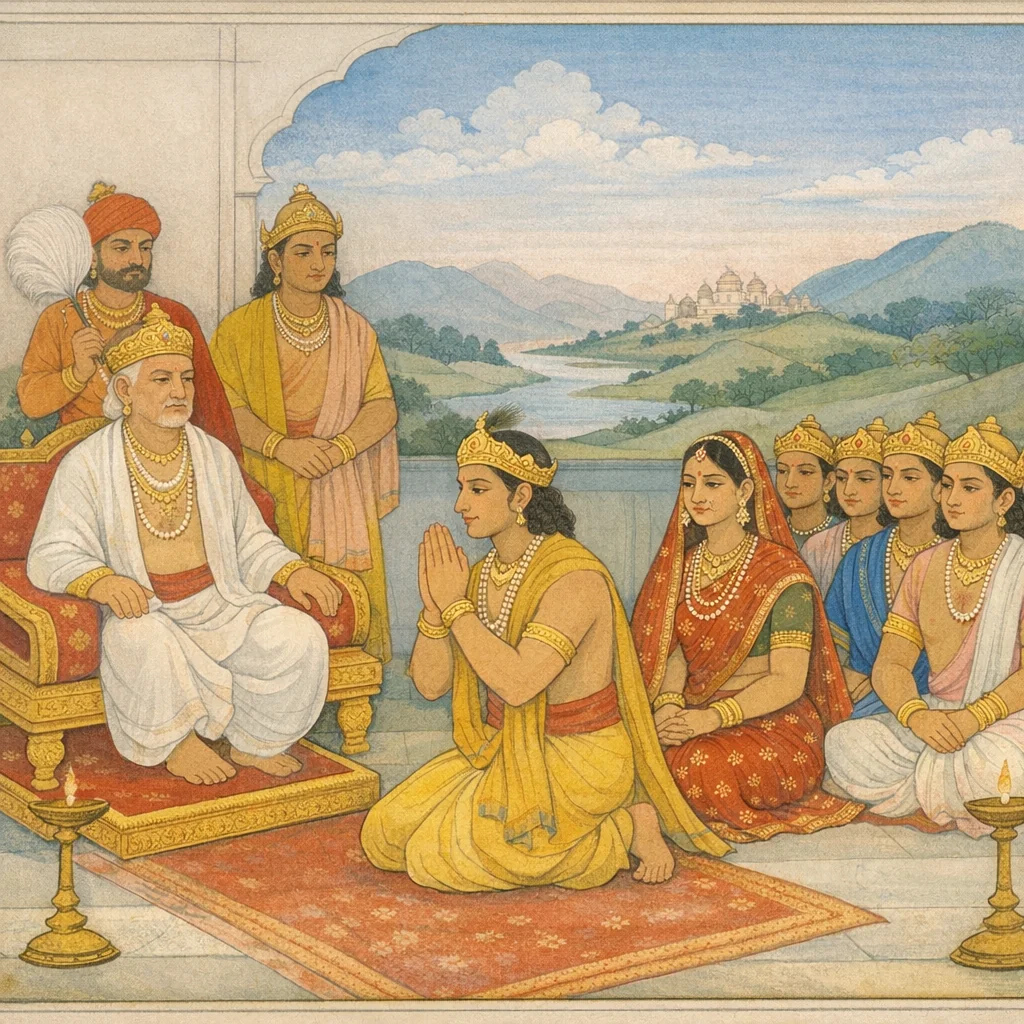
Chapter Arc: द्यूत-अपमान और द्रौपदी-पराभव के बाद सभा में एक अप्रत्याशित मोड़ आता है—धृतराष्ट्र, वृद्ध और अंधे होते हुए भी, युधिष्ठिर को ‘सहधन’ लौटाकर कुशल-क्षेम के साथ विदा करने का आदेश देते हैं। → धृतराष्ट्र का उपदेश केवल औपचारिक नहीं रहता; वह युधिष्ठिर को कटुवचन न रखने, आर्य-मर्यादा न तोड़ने, और दुर्योधन के पारुष्य को हृदय में न बसाने की सीख देता है—पर भीतर-भीतर यह भय भी धड़कता है कि यह शांति क्षणिक है और दुर्योधन की विष-वृत्ति फिर सिर उठाएगी। → धृतराष्ट्र का निर्णायक वचन—‘अनुज्ञाता: सहधना: स्वराज्यमनुशासत’—युधिष्ठिर को धन सहित अपने राज्य का शासन करने और इन्द्रप्रस्थ लौटने की आज्ञा; साथ ही दुर्योधन के कठोर व्यवहार को क्षमा कर देने का आग्रह। → युधिष्ठिर, भ्राताओं और द्रौपदी सहित, मेघ-निनाद करते रथों पर प्रसन्न-मन से इन्द्रप्रस्थ की ओर प्रस्थान करते हैं; सभा का तत्कालिक संकट शांत होता दिखता है। → यह विदाई उपदेश की शांति में लिपटी हुई है, पर दुर्योधन के अपमान और अधर्म की स्मृति भविष्य के संघर्ष का बीज छोड़ जाती है।
Shlokas
Verse 1
ऑपन-माज (_) अऑ-आकऋााज त्रिसप्ततितमो< ध्याय: धृतराष्ट्रका युधिष्ठिरको सारा धन लौटाकर एवं समझा- बुझाकर इन्द्रप्रस्थ जानेका आदेश देना युधिछिर उवाच राजन् कि करवामस्ते प्रशाध्यस्मांस्त्वमी श्वर: । नित्यं हि स्थातुमिच्छामस्तव भारत शासने,युधिष्ठिर बोले--राजन्! आप हमारे स्वामी हैं। आज्ञा दीजिये, हम कया करें। भारत! हमलोग सदा आपकी आज्ञाके अधीन रहना चाहते हैं
Yudhiṣṭhira said: “O King, what shall we do for you? You are our lord and have authority over us. O Bhārata, we wish always to remain under your rule and obey your command.”
Verse 2
धृतराष्ट्र रवाच अजाततशत्रो भद्र|ं ते अरिष्टं स्वस्ति गच्छत । अनुज्ञाता: सहधना: स्वराज्यमनुशासत,धृतराष्ट्रने कहा--अजातशत्रो! तुम्हारा कल्याण हो। तुम मेरी आज्ञासे हारे हुए धनके साथ बिना किसी विषघ्न-बाधाके कुशलपूर्वक अपनी राजधानीको जाओ और अपने राज्यका शासन करो
Dhṛtarāṣṭra said: “Ajātaśatru (Yudhiṣṭhira), may auspiciousness be yours. With my leave, return safely to your capital, untroubled by any evil hindrance, taking with you the wealth that remains, and rule your kingdom.”
Verse 3
इदं चैवावबोद्धव्यं वृद्धस्य मम शासनम् । मया निगदितं सर्व पथ्यं नि:श्रेयसं परम्,मुझ वृद्धकी यही आज्ञा है। एक बात और है, उसपर भी ध्यान देना। मेरी कही हुई सारी बातें तुम्हारे हित और परम मंगलके लिये होंगी
“This too must be clearly understood—this injunction of mine, spoken as an elder. All that I have stated is wholesome counsel, intended for your welfare and for the highest good.”
Verse 4
वेत्थ त्वं तात धर्माणां गतिं सूक्ष्मां युधिष्ठिर । विनीतो$सि महाप्राज्ञ वृद्धानां पर्युपासिता
“Dear child Yudhiṣṭhira, you understand the subtle course and true drift of dharma. You are disciplined and well-trained, greatly wise, and have respectfully served and attended upon elders.”
Verse 5
तात युधिष्ठिर! तुम धर्मकी सूक्ष्म गतिको जानते हो। महामते! तुममें विनय है। तुमने बड़े-बूढ़ोंकी उपासना की है ।। यतो बुद्धिस्ततः शान्ति: प्रशमं गच्छ भारत । नादारुणि पतेच्छस्त्रं दारुण्येतन्निपात्यते,जहाँ बुद्धि है, वहीं शान्ति है। भारत! तुम शान्त हो जाओ। (जो कुछ हुआ है, उसे भूल जाओ।) पत्थर या लोहेपर कुल्हाड़ी नहीं पड़ती। लोग उसे लकड़ीपर ही चलाते हैं
“Dear Yudhiṣṭhira, you understand the subtle course of dharma. O great-minded one, humility abides in you, and you have served and revered the elders. Where there is discernment, there is peace; therefore, O Bhārata, enter into calm—let your agitation subside. A weapon does not strike stone or iron; it is brought down upon wood.”
Verse 6
न वैराण्यभिजानन्ति गुणान् पश्यन्ति नागुणान् । विरोधं नाधिगच्छन्ति ये त उत्तमपूरुषा:,जो पुरुष वैरको याद नहीं रखते, गुणोंको ही देखते हैं, अवगुणोंको नहीं तथा किसीसे विरोध नहीं रखते, वे ही उत्तम पुरुष कहे गये हैं। साधु पुरुष दूसरोंके सत्कर्मों (उपकारादि)- को ही याद रखते हैं, उनके किये हुए वैरको नहीं। वे दूसरोंकी भलाई तो करते हैं; परंतु उनसे बदला लेनेकी भावना नहीं रखते
Yudhiṣṭhira said: “The best of men do not keep track of enmities. They look to virtues, not to faults. They do not enter into hostility; those who live in this way are truly called ‘excellent persons.’”
Verse 7
स्मरन्ति सुकृतान्येव न वैराणि कृतान्यपि । सन्त: परार्थ कुर्वाणा नावेक्षन्ते प्रतिक्रियाम्,जो पुरुष वैरको याद नहीं रखते, गुणोंको ही देखते हैं, अवगुणोंको नहीं तथा किसीसे विरोध नहीं रखते, वे ही उत्तम पुरुष कहे गये हैं। साधु पुरुष दूसरोंके सत्कर्मों (उपकारादि)- को ही याद रखते हैं, उनके किये हुए वैरको नहीं। वे दूसरोंकी भलाई तो करते हैं; परंतु उनसे बदला लेनेकी भावना नहीं रखते
Yudhiṣṭhira said: “The good remember only the merits done by others, not even the enmities that were committed. Acting for the welfare of others, noble people do not look for retaliation or a return in kind.”
Verse 8
संवादे परुषाण्याहुर्युधिष्ठिर नराधमा: । प्रत्याहुर्मध्यमास्त्वेतेडनुक्ता: परुषमुत्तरम्,युधिष्ठिर! नीच मनुष्य साधारण बातचीतमें भी कटुवचन बोलने लगते हैं। जो स्वयं पहले कटु वचन न कहकर प्रत्युत्तरमें कठोर बातें कहते हैं, वे मध्यम श्रेणीके पुरुष हैं। परंतु जो धीर एवं श्रेष्ठ पुरुष हैं, वे किसीके कटुवचन बोलने या न बोलनेपर भी अपने मुखसे कभी कठोर एवं अहितकर बात नहीं निकालते
Yudhiṣṭhira said: “In ordinary conversation, the lowest of men are the ones who begin by speaking harshly. Those who do not start with harsh words but reply with harshness when provoked are men of the middle sort. But the steadfast and truly noble never let harsh and harmful speech escape their mouths—whether others speak harshly to them or not.”
Verse 9
नचोक्ता नैव चानुक्तास्त्वहिता: परुषा गिर: | प्रतिजल्पन्ति वै धीरा: सदा तूत्तमपूरुषा:,युधिष्ठिर! नीच मनुष्य साधारण बातचीतमें भी कटुवचन बोलने लगते हैं। जो स्वयं पहले कटु वचन न कहकर प्रत्युत्तरमें कठोर बातें कहते हैं, वे मध्यम श्रेणीके पुरुष हैं। परंतु जो धीर एवं श्रेष्ठ पुरुष हैं, वे किसीके कटुवचन बोलने या न बोलनेपर भी अपने मुखसे कभी कठोर एवं अहितकर बात नहीं निकालते
Yudhiṣṭhira said: “Harsh and harmful words are neither to be spoken first nor even in reply. Some people, being low-minded, utter bitter speech even in ordinary talk. Those who do not begin with harshness but answer harshly when provoked are of a middling sort. But the steadfast and truly excellent never let cruel, injurious words escape their mouths—whether others speak harshly or not.”
Verse 10
स्मरन्ति सुकृतान्येव न वैराणि कृतान्यपि । सन्त: प्रतिविजानन्तो लब्ध्वा प्रत्ययमात्मन:,महात्मा पुरुष अपने अनुभवको सामने रखकर दूसरोंके सुख-दुःखको भी अपने समान जानते हुए उनके अच्छे बर्तावोंको ही याद रखते हैं, उनके द्वारा किये हुए वैर-विरोधको नहीं
Yudhiṣṭhira said: “The noble remember only the good deeds, not even the enmities that were done. Having gained inner certainty through their own experience, they recognize others’ joys and sorrows as akin to their own, and therefore keep in mind people’s good conduct rather than their hostility.”
Verse 11
असम्भधिन्नार्थमर्यादा: साधव: प्रियदर्शना: । तथा चरितमार्येण त्वयास्मिन् सत्समागमे,सत्पुरुष आर्यमर्यादाको कभी भंग नहीं करते। उनके दर्शनसे सभी लोग प्रसन्न हो जाते हैं। युधिष्ठि!! कौरव-पाण्डवोंके समागममें तुमने श्रेष्ठ पुरुषोंके समान ही आचरण किया है
“The righteous never transgress the bounds of noble conduct; the very sight of them brings joy to all. And in this worthy gathering—this meeting of the Kauravas and the Pāṇḍavas—you have behaved just as a truly noble person should.”
Verse 12
दुर्योधनस्य पारुष्यं तत् तात हृदि मा कृथा: । मातरं चैव गान्धारीं मां च त्वं गुणकाड्क्षया
Dear one, do not take Duryodhana’s harshness to heart. Out of regard for virtue and good conduct, show consideration for my mother Gandhārī—and for me as well.
Verse 13
प्रेक्षापूर्व मया द्यूतमिदमासीदुपेक्षितम्
Yudhiṣṭhira said: “This game of dice was, by me, previously regarded with due forethought; yet it came to be neglected, and I failed to keep proper watch over its peril.”
Verse 14
मित्राणि द्रष्टकामेन पुत्राणां च बलाबलम् | अशोच्या: कुरवो राजन् येषां त्वमनुशासिता
Yudhiṣṭhira said: “O King, the Kuru princes are not to be lamented for—since you are the one who has governed and guided them. Whether one wishes to see the loyalty of friends, or to test the strength and weakness of one’s sons, under a ruler’s discipline their fate follows the order you have set; grief is misplaced where responsibility and instruction have already been exercised.”
Verse 15
मन्त्री च विदुरो धीमान् सर्वशास्त्रविशारद: । मैंने सोच-समझकर भी इस जूएकी इसलिये उपेक्षा कर दी--उसे रोकनेकी चेष्टा नहीं की कि मैं मित्रों और सुहृदोंसे मिलना चाहता था और अपने पुत्रोंक बलाबलको देखना चाहता था। राजन! जिनके तुम शासक हो और सब शास्त्रोंमें निपुण परम बुद्धिमान् विदुर जिनके मन्त्री हैं, वे कुरुवंशी कदापि शोकके योग्य नहीं हैं ।। त्वयि धर्मोडर्जुने धैर्य भीमसेने पराक्रम:,तुममें धर्म है, अर्जुनमें धैर्य है, भीमसेनमें पराक्रम है और नरश्रेष्ठ नकुल-सहदेवमें श्रद्धा एवं विशुद्ध गुरुसेवाका भाव है। अजातशत्रो! तुम्हारा भला हो। अब तुम खाण्डवप्रस्थको जाओ । दुर्योधन आदि बन्धुओंके प्रति तुम्हें अच्छे भाईका-सा स्नेहभाव रहे और तुम्हारा मन सदा धर्ममें लगा रहे
Yudhiṣṭhira said: “And Vidura—wise, discerning, and thoroughly versed in all the śāstras—is our minister.”
Verse 16
श्रद्धा च गुरुशुश्रूषा यमयो: पुरुषाग्रययो: । अजाततगशत्रो भद्र|ं ते खाण्डवप्रस्थमाविश । भ्रातृभिस्ते<स्तु सौश्षात्रं धर्मे ते धीयतां मन:,तुममें धर्म है, अर्जुनमें धैर्य है, भीमसेनमें पराक्रम है और नरश्रेष्ठ नकुल-सहदेवमें श्रद्धा एवं विशुद्ध गुरुसेवाका भाव है। अजातशत्रो! तुम्हारा भला हो। अब तुम खाण्डवप्रस्थको जाओ । दुर्योधन आदि बन्धुओंके प्रति तुम्हें अच्छे भाईका-सा स्नेहभाव रहे और तुम्हारा मन सदा धर्ममें लगा रहे
Yudhiṣṭhira said: “In those foremost of men, the twins (Nakula and Sahadeva), there are faith and pure devotion expressed as attentive service to the teacher. O Ajātaśatru, may good befall you—now enter Khāṇḍavaprastha. Let there be true brotherly affection in you toward your kinsmen such as Duryodhana and the rest, and let your mind ever be set upon dharma.”
Verse 17
वैशम्पायन उवाच इत्युक्तो भरतश्रेष्ठ धर्मराजो युधिष्ठिर: । कृत्वा5<र्यसमयं सर्व प्रतस्थे भ्रातृभि: सह,वैशम्पायनजी कहते हैं--भरतश्रेष्ठ! राजा धृतराष्ट्रके इस प्रकार कहनेपर धर्मराज युधिष्ठिर पूज्यवर धृतराष्ट्रकरे आदेशको स्वीकार करके भाइयोंके सहित वहाँसे विदा हो गये
Vaiśampāyana said: “O best of the Bharatas! Thus addressed, Dharmarāja Yudhiṣṭhira—having duly accepted and fulfilled the respectful understanding owed to the venerable elder—departed from there together with his brothers.”
Verse 18
ते रथान् मेघसंकाशानास्थाय सह कृष्णया । प्रययुहष्टमनस इन्द्रप्रस्थं पुरोत्तमम्
Vaiśampāyana said: Mounting their chariots, which looked like massed rain-clouds, and accompanied by Kṛṣṇā (Draupadī), they set out with joyful hearts for Indraprastha, the foremost of cities.
Verse 72
इस प्रकार श्रीमह्ााभारत सभापव॑के अन्तर्गत झ्यूतपर्वमें भीमसेनका क्रोधविषयक बहत्तरवाँ अध्याय पूरा हुआ
Thus ends the seventy-second chapter, concerning Bhīmasena’s wrath, within the Dyūta section of the Sabhā Parva of the Śrī Mahābhārata.
Verse 73
वे मेघके समान शब्द करनेवाले रथोंपर द्रौपदीके साथ बैठकर प्रसन्नमनसे नगरोंमें उत्तम इन्द्रप्रसथ्थको चल दिये ।। इति श्रीमहाभारते सभापर्वणि द्यूतपर्वणि धृतराष्ट्रवरप्रदानपूर्वकमिन्द्रप्रस्थं प्रति युधिष्ठिरगमने त्रिसप्ततितमो5ध्याय:
Vaiśampāyana said: Then, seated with Draupadī upon chariots whose rumbling sounded like thunderclouds, they set out with joyful hearts toward the foremost of cities—Indraprastha. Thus in the Mahābhārata, in the Sabhā Parva, in the Dyūta section, the seventy-third chapter concludes, describing Yudhiṣṭhira’s departure for Indraprastha after the granting of a boon by Dhṛtarāṣṭra.
Verse 126
उपस्थितं वृद्धमन्धं पितरं पश्य भारत । तात! दुर्योधनने जो कठोर बर्ताव किया है, उसे तुम अपने हृदयमें मत लाना। भारत! तुम तो उत्तम गुण ग्रहण करनेकी इच्छासे अपनी माता गान्धारी तथा यहाँ बैठे हुए मुझ अंधे बूढ़े ताऊकी ओर देखो
“Look, O Bhārata, at your aged and blind father who stands before you. Dear child, do not take to heart the harsh treatment that Duryodhana has shown. O Bhārata, with the wish to adopt noble qualities, keep your gaze upon your mother Gāndhārī and upon me—your blind, aged uncle—seated here.”