Adhyaya 39
Adhyāya 39: Śiśupāla’s Censure and Bhīma’s Contained Wrath (शिशुपाल-निन्दा तथा भीमक्रोध-निग्रहः)
Upa-parva: Rājasūya-sabhā-vāda (Assembly Disputation in the Rājasūya Context)
This chapter presents a structured exchange in the royal assembly. Śiśupāla opens by praising Jarāsandha’s strength and reframes Kṛṣṇa’s role in Jarāsandha’s death as indirect and therefore, in his rhetoric, ethically or valorously suspect. He emphasizes entry “by a non-gate,” disguise, and brahminical pretext to argue that Kṛṣṇa assessed Jarāsandha’s power through stratagem rather than open contest, and he uses this to question the assembly’s standards of excellence. He then broadens the critique to the Pāṇḍavas’ judgment, implying deviation from the path of the virtuous, and attributes it to their reliance on an elder advisor whose guidance he disparages. Vaiśaṃpāyana narrates the immediate affective consequence: Bhīma’s anger manifests physically (reddened eyes, knitted brow, threatening posture), generating a crisis of decorum. Bhīṣma, acting as senior authority, physically restrains Bhīma and uses varied counsel to calm him, restoring order without immediate punitive action. Śiśupāla remains rhetorically confident, even inviting the audience to witness Bhīma’s defeat by his “splendor,” thereby further testing the assembly’s capacity for restraint. The chapter closes with Bhīṣma addressing Bhīma again, indicating continued management of escalation through institutional authority and speech.
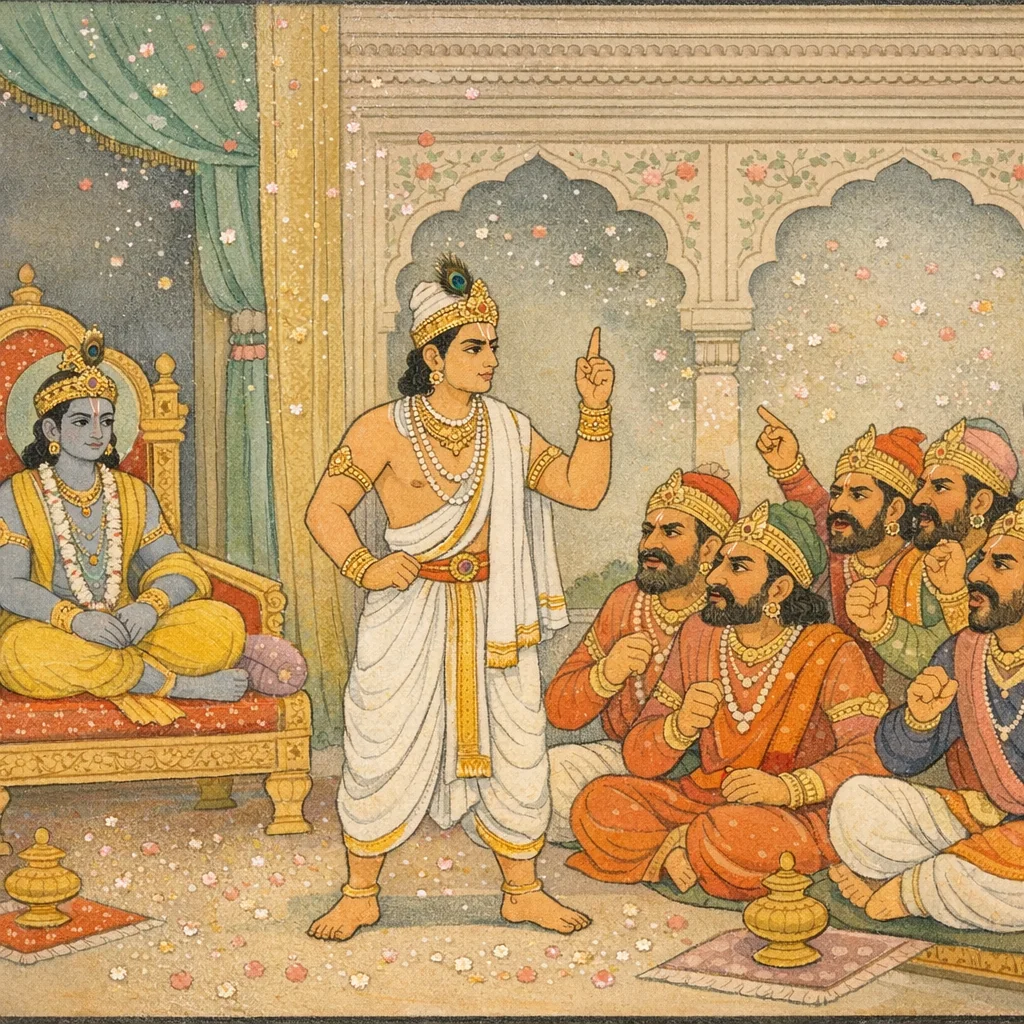
Chapter Arc: राजसूय-यज्ञ के वैभव के बीच युधिष्ठिर की सभा में राजाओं का जमघट है; सहदेव कृष्ण के अर्घ्य-पूजन का प्रस्ताव रखकर सबके सामने एक निर्णायक कसौटी रख देता है। → सहदेव घोषणा करता है कि केशीहन्ता, अप्रमेय-पराक्रमी केशव की पूजा को जो राजा सहन नहीं करेगा, वही उसके द्वारा वध्य होगा—और वह अपना पग ‘बलिनां मूर्ध्नि’ रखने की चुनौती देता है, जिससे मान-अपमान और राज-गौरव की आग भड़क उठती है। → क्रोध से मूर्छित-से अनेक राजा भीतर ही भीतर उबलते हैं, पर सहदेव के निर्भीक वचन और धर्मसम्मत तर्क के सामने कोई प्रतिवाद का साहस नहीं कर पाता; सभा में निर्णायक मौन छा जाता है। → अंततः बुद्धिमान राजा सहदेव के अर्घ्य-निवेदन को अनुमोदित करते हैं—‘अर्च्यमर्चितमर्घाहम्’—और सहदेव के मस्तक पर आकाश से पुष्प-वर्षा होती है; अदृश्य देववाणी ‘साधु, साधु’ कहकर निर्णय को धर्म-समर्थन देती है। → कृष्ण-पूजन की स्वीकृति के साथ ही उन हृदयों में ईर्ष्या और अपमान का बीज पड़ जाता है जो इसे सहन नहीं कर सके—आगामी अध्यायों में वही बीज द्यूत और विनाश की ओर बढ़ेगा।
Shlokas
Verse 1
(दाक्षिणात्य अधिक पाठके ७२८६ श्लोक मिलाकर कुल ७६१३ “लोक हैं) न२््््स्निताथ् श््यु #ा-ान्तल्स - जिनमें ऋतुधर्म (रजस्वलावस्था)-का प्रादुर्भाव न हुआ हो, उन्हें नग्निका कहते हैं। - मूर्ति या शिवलिंगके आकारका कोई दुर्भेद्य गृह, जो पृथ्वीके भीतर गुफामें बनाया गया हो। शत्रुओंसे आत्मरक्षाकी दृष्टिसे नरकासुरने ऐसे निवासस्थानका निर्माण करा रखा था। - रोहिणीके गद और सारण आदि कई पुत्र थे। एकोनचत्वारिशोड् ध्याय: सहदेवकी राजाओंको चुनौती तथा क्षुब्ध हुए शिशुपाल आदि नरेशोंका युद्धके लिये उद्यत होना वैशम्पायन उवाच एवमुक्त्वा ततो भीष्मो विरराम महाबल: । व्याजहारीत्तरं तत्र सहदेवो<र्थवद् वच:,वैशम्पायनजी कहते हैं-जनमेजय! ऐसा कहकर महाबली भीष्म चुप हो गये। तत्पश्चात् माद्रीकुमार सहदेवने शिशुपालकी बातोंका मुँहतोड़ उत्तर देते हुए यह सार्थक बात कही--
Vaiśampāyana said: “O Janamejaya, having spoken thus, the mighty Bhīṣma fell silent. Then Sahadeva, the son of Mādrī, delivered there a pointed and meaningful reply, directly countering Śiśupāla’s words.”
Verse 2
केशवं केशिहन्तारमप्रमेयपराक्रमम् । पूज्यमानं मया यो व: कृष्णं न सहते नृपा:,स एव हि मया वध्यो भविष्यति न संशय: । “राजाओ! केशी दैत्यका वध करनेवाले अनन्त-पराक्रमी भगवान् श्रीकृष्णकी मेरे द्वारा जो पूजा की गयी है, उसे आपलोगोंमेंसे जो सहन न कर सकें, उन सब बलवानोंके मस्तकपर मैंने यह पैर रख दिया। मैंने खूब सोच-समझकर यह बात कही है। जो इसका उत्तर देना चाहे, वह सामने आ जाय। मेरे द्वारा वह वधके योग्य होगा; इसमें संशय नहीं है
Vaiśampāyana said: “O kings, Keśava—slayer of the demon Keśin, of immeasurable might—has been honored by me. Whoever among you cannot bear this worship of Kṛṣṇa, that very man shall be slain by me—of this there is no doubt.”
Verse 3
सर्वेषां बलिनां मूर्थ्नि मयेदं निहितं पदम् । एवमुक्ते मया सम्यगुत्तरं प्रत्रवीतु सः,स एव हि मया वध्यो भविष्यति न संशय: । “राजाओ! केशी दैत्यका वध करनेवाले अनन्त-पराक्रमी भगवान् श्रीकृष्णकी मेरे द्वारा जो पूजा की गयी है, उसे आपलोगोंमेंसे जो सहन न कर सकें, उन सब बलवानोंके मस्तकपर मैंने यह पैर रख दिया। मैंने खूब सोच-समझकर यह बात कही है। जो इसका उत्तर देना चाहे, वह सामने आ जाय। मेरे द्वारा वह वधके योग्य होगा; इसमें संशय नहीं है
Vaiśaṃpāyana said: “I have set this foot upon the heads of all those mighty men who cannot endure the worship I have offered to the infinitely valorous Lord Śrī Kṛṣṇa, the slayer of the demon Keśin. I have spoken this after due consideration. Let whoever wishes to answer me come forward; for he alone will become fit to be slain by me—of this there is no doubt.”
Verse 4
मतिमन्तश्न ये केचिदाचार्य पितरं गुरुम्,स एव हि मया वध्यो भविष्यति न संशय: । “राजाओ! केशी दैत्यका वध करनेवाले अनन्त-पराक्रमी भगवान् श्रीकृष्णकी मेरे द्वारा जो पूजा की गयी है, उसे आपलोगोंमेंसे जो सहन न कर सकें, उन सब बलवानोंके मस्तकपर मैंने यह पैर रख दिया। मैंने खूब सोच-समझकर यह बात कही है। जो इसका उत्तर देना चाहे, वह सामने आ जाय। मेरे द्वारा वह वधके योग्य होगा; इसमें संशय नहीं है
Vaiśaṃpāyana said: “Whoever among you—however wise or strong—cannot endure the honor I have offered to Śrī Kṛṣṇa, the slayer of the demon Keśin, and therefore sets himself against it: I have, as it were, placed my foot upon the heads of all such men. I speak this after due deliberation. Let anyone who wishes to answer come forward; by me he shall be deemed fit to be slain—of this there is no doubt.”
Verse 5
ततो न व्याजहारैषां कक्रिद् बुद्धिमतां सताम्,स एव हि मया वध्यो भविष्यति न संशय: । “राजाओ! केशी दैत्यका वध करनेवाले अनन्त-पराक्रमी भगवान् श्रीकृष्णकी मेरे द्वारा जो पूजा की गयी है, उसे आपलोगोंमेंसे जो सहन न कर सकें, उन सब बलवानोंके मस्तकपर मैंने यह पैर रख दिया। मैंने खूब सोच-समझकर यह बात कही है। जो इसका उत्तर देना चाहे, वह सामने आ जाय। मेरे द्वारा वह वधके योग्य होगा; इसमें संशय नहीं है
Vaiśaṃpāyana said: Then none among those wise and honorable men spoke in reply. Indeed, whoever among them would answer in challenge would, by that very act, become fit to be slain by me—of this there is no doubt.
Verse 6
ततो<5पतत् पुष्पवृष्टि: सहदेवस्य मूर्थनि,स एव हि मया वध्यो भविष्यति न संशय: । “राजाओ! केशी दैत्यका वध करनेवाले अनन्त-पराक्रमी भगवान् श्रीकृष्णकी मेरे द्वारा जो पूजा की गयी है, उसे आपलोगोंमेंसे जो सहन न कर सकें, उन सब बलवानोंके मस्तकपर मैंने यह पैर रख दिया। मैंने खूब सोच-समझकर यह बात कही है। जो इसका उत्तर देना चाहे, वह सामने आ जाय। मेरे द्वारा वह वधके योग्य होगा; इसमें संशय नहीं है
Then a shower of flowers fell upon Sahadeva’s head. Sahadeva declared: “O kings! Whoever among you cannot endure the worship I have offered to Śrī Kṛṣṇa—of boundless prowess, the slayer of the Keśī demon—upon the heads of all such mighty men I have set my foot. I have spoken this after careful reflection. Let anyone who wishes to answer come forward; by me he shall be fit to be slain—of this there is no doubt.”
Verse 7
आविध्यदजितं कृष्णं भविष्यद्भूतजल्पक:,स एव हि मया वध्यो भविष्यति न संशय: । “राजाओ! केशी दैत्यका वध करनेवाले अनन्त-पराक्रमी भगवान् श्रीकृष्णकी मेरे द्वारा जो पूजा की गयी है, उसे आपलोगोंमेंसे जो सहन न कर सकें, उन सब बलवानोंके मस्तकपर मैंने यह पैर रख दिया। मैंने खूब सोच-समझकर यह बात कही है। जो इसका उत्तर देना चाहे, वह सामने आ जाय। मेरे द्वारा वह वधके योग्य होगा; इसमें संशय नहीं है तदनन्तर कभी पराजित न होनेवाले भगवान् श्रीकृष्णकी महिमाके ज्ञाता, भूत, वर्तमान और भविष्य--तीनों कालोंकी बातें बतानेवाले, सब लोगोंके सभी संशयोंका निवारण करनेवाले तथा सम्पूर्ण लोकोंसे परिचित देवर्षि नारद समस्त उपस्थित प्राणियोंके बीच स्पष्ट शब्दोंमें बोले--
Vaiśampāyana said: The one who speaks of things past and yet to come hurled an insult at unconquered Kṛṣṇa and declared, “He alone shall be slain by me—of this there is no doubt.” Then Devarṣi Nārada—knower of the glory of Kṛṣṇa, speaker of the three times, dispeller of all doubts, and versed in all worlds—spoke plainly amid all the beings assembled.
Verse 8
सर्वसंशयनिर्मोक्ता नारद: सर्वलोकवित् | उवाचाखिलभूतानां मध्ये स्पष्टतरं वच:,स एव हि मया वध्यो भविष्यति न संशय: । “राजाओ! केशी दैत्यका वध करनेवाले अनन्त-पराक्रमी भगवान् श्रीकृष्णकी मेरे द्वारा जो पूजा की गयी है, उसे आपलोगोंमेंसे जो सहन न कर सकें, उन सब बलवानोंके मस्तकपर मैंने यह पैर रख दिया। मैंने खूब सोच-समझकर यह बात कही है। जो इसका उत्तर देना चाहे, वह सामने आ जाय। मेरे द्वारा वह वधके योग्य होगा; इसमें संशय नहीं है तदनन्तर कभी पराजित न होनेवाले भगवान् श्रीकृष्णकी महिमाके ज्ञाता, भूत, वर्तमान और भविष्य--तीनों कालोंकी बातें बतानेवाले, सब लोगोंके सभी संशयोंका निवारण करनेवाले तथा सम्पूर्ण लोकोंसे परिचित देवर्षि नारद समस्त उपस्थित प्राणियोंके बीच स्पष्ट शब्दोंमें बोले--
Vaiśampāyana said: Nārada—who dispels every doubt and knows all the worlds—spoke with even greater clarity in the midst of all beings: “Indeed, that very person shall be slain by me; of this there is no doubt.”
Verse 9
कृष्णं कमलपत्राक्षं नार्चयिष्यन्ति ये नरा: । जीवन्मृतास्तु ते ज्ञेया न सम्भाष्या: कदाचन,स एव हि मया वध्यो भविष्यति न संशय: । “राजाओ! केशी दैत्यका वध करनेवाले अनन्त-पराक्रमी भगवान् श्रीकृष्णकी मेरे द्वारा जो पूजा की गयी है, उसे आपलोगोंमेंसे जो सहन न कर सकें, उन सब बलवानोंके मस्तकपर मैंने यह पैर रख दिया। मैंने खूब सोच-समझकर यह बात कही है। जो इसका उत्तर देना चाहे, वह सामने आ जाय। मेरे द्वारा वह वधके योग्य होगा; इसमें संशय नहीं है “जो मानव कमलनयन भगवान् श्रीकृष्णकी पूजा नहीं करेंगे, वे जीते-जी ही मृतक- तुल्य समझे जायँगे। ऐसे लोगोंसे कभी बातचीत नहीं करनी चाहिये”
Vaiśampāyana said: “Those men who will not worship Kṛṣṇa, the lotus-eyed one, should be regarded as dead even while living; they are never to be conversed with. Indeed, whoever stands in such opposition will be slain by me—of this there is no doubt.”
Verse 10
वैशम्पायन उवाच पूजयित्वा च पूजाहतनि ब्रद्मक्षत्रविशेषवित् । सहदेवो नृणां देव: समापद्यत कर्म तत्,स एव हि मया वध्यो भविष्यति न संशय: । “राजाओ! केशी दैत्यका वध करनेवाले अनन्त-पराक्रमी भगवान् श्रीकृष्णकी मेरे द्वारा जो पूजा की गयी है, उसे आपलोगोंमेंसे जो सहन न कर सकें, उन सब बलवानोंके मस्तकपर मैंने यह पैर रख दिया। मैंने खूब सोच-समझकर यह बात कही है। जो इसका उत्तर देना चाहे, वह सामने आ जाय। मेरे द्वारा वह वधके योग्य होगा; इसमें संशय नहीं है वैशम्पायनजी कहते हैं--जनमेजय! वहाँ आये हुए ब्राह्मणों और क्षत्रियोंमें विशिष्ट व्यक्तियोंको पहचानने-वाले नरदेव सहदेवने क्रमशः पूज्य व्यक्तियोंकी पूजा करके वह अर्घ्यनिवेदनका कार्य पूरा कर दिया
Vaiśampāyana said: Having duly honoured those who were worthy of honour, Sahadeva—like a god among men and skilled in discerning the foremost among brāhmaṇas and kṣatriyas—brought that ceremonial act to completion. And whoever cannot bear that honour shown (to the chosen recipient) is, indeed, fit to be slain by me—of this there is no doubt.
Verse 11
तस्मिन्नभ्यर्चिते कृष्णे सुनीथ: शत्रुकर्षण: । अतिताम्रेक्षण: कोपादुवाच मनुजाधिपान्,स एव हि मया वध्यो भविष्यति न संशय: । “राजाओ! केशी दैत्यका वध करनेवाले अनन्त-पराक्रमी भगवान् श्रीकृष्णकी मेरे द्वारा जो पूजा की गयी है, उसे आपलोगोंमेंसे जो सहन न कर सकें, उन सब बलवानोंके मस्तकपर मैंने यह पैर रख दिया। मैंने खूब सोच-समझकर यह बात कही है। जो इसका उत्तर देना चाहे, वह सामने आ जाय। मेरे द्वारा वह वधके योग्य होगा; इसमें संशय नहीं है इस प्रकार श्रीकृष्णका पूजन सम्पन्न हो जानेपर शत्रुविजयी शिशुपालने क्रोधसे अत्यन्त लाल आँखें करके समस्त राजाओंसे कहा--
When Kṛṣṇa had thus been duly honored, Sunītha’s son—Shiśupāla, the subduer of foes—his eyes reddened with rage, addressed the assembled kings: “Indeed, that very man shall be slain by me—of this there is no doubt.”
Verse 12
स्थित: सेनापतिर्यो5हं मन्यध्वं कि तु साम्प्रतम् । युधि तिष्ठाम संनहा समेतान् वृष्णिपाण्डवान्,स एव हि मया वध्यो भविष्यति न संशय: । “राजाओ! केशी दैत्यका वध करनेवाले अनन्त-पराक्रमी भगवान् श्रीकृष्णकी मेरे द्वारा जो पूजा की गयी है, उसे आपलोगोंमेंसे जो सहन न कर सकें, उन सब बलवानोंके मस्तकपर मैंने यह पैर रख दिया। मैंने खूब सोच-समझकर यह बात कही है। जो इसका उत्तर देना चाहे, वह सामने आ जाय। मेरे द्वारा वह वधके योग्य होगा; इसमें संशय नहीं है 'भूमिपालो! मैं सबका सेनापति बनकर खड़ा हूँ। अब तुमलोग किस चिन्तामें पड़े हो। आओ, हम सब लोग युद्धके लिये सुसज्जित हो पाण्डवों और यादवोंकी सम्मिलित सेनाका सामना करनेके लिये डट जाये
Vaiśampāyana said: “I stand here as your commander—so what are you thinking of now? Come, let us stand ready for battle and face the united forces of the Vṛṣṇis and the Pāṇḍavas. Whoever confronts me in this way will be fit to be slain by me—of this there is no doubt.”
Verse 13
इति सर्वान् समुत्साहा राज्ञस्तांश्चैदिपुड़व: । यज्ञोपघाताय तत: सोअमन्त्रयत राजभि:,स एव हि मया वध्यो भविष्यति न संशय: । “राजाओ! केशी दैत्यका वध करनेवाले अनन्त-पराक्रमी भगवान् श्रीकृष्णकी मेरे द्वारा जो पूजा की गयी है, उसे आपलोगोंमेंसे जो सहन न कर सकें, उन सब बलवानोंके मस्तकपर मैंने यह पैर रख दिया। मैंने खूब सोच-समझकर यह बात कही है। जो इसका उत्तर देना चाहे, वह सामने आ जाय। मेरे द्वारा वह वधके योग्य होगा; इसमें संशय नहीं है इस प्रकार उन सब राजाओंको युद्धके लिये उत्साहित करके चेदिराजने युधिष्ठिरके यज्ञमें विघ्न डालनेके उद्देश्यसे राजाओंसे सलाह की। शिशुपालके इस प्रकार बुलानेपर उसके सेनापतित्वमें सुनीथ आदि कुछ प्रमुख नरेशगण चले आये। वे सब-के-सब अत्यन्त क्रोधसे भर रहे थे एवं उनके मुखकी कान्ति बदली हुई दिखायी देती थी
Vaiśaṃpāyana said: Having thus roused and provoked all those kings, the ruler of Cedi then took counsel with them, intending to disrupt Yudhiṣṭhira’s sacrifice. He declared with certainty, “That very man is to be slain by me—there is no doubt.”
Verse 14
तत्राहूता गता: सर्वे सुनीथप्रमुखा गणा: । समदृश्यन्त संक्रुद्धा विवर्णवदनास्तथा,स एव हि मया वध्यो भविष्यति न संशय: । “राजाओ! केशी दैत्यका वध करनेवाले अनन्त-पराक्रमी भगवान् श्रीकृष्णकी मेरे द्वारा जो पूजा की गयी है, उसे आपलोगोंमेंसे जो सहन न कर सकें, उन सब बलवानोंके मस्तकपर मैंने यह पैर रख दिया। मैंने खूब सोच-समझकर यह बात कही है। जो इसका उत्तर देना चाहे, वह सामने आ जाय। मेरे द्वारा वह वधके योग्य होगा; इसमें संशय नहीं है इस प्रकार उन सब राजाओंको युद्धके लिये उत्साहित करके चेदिराजने युधिष्ठिरके यज्ञमें विघ्न डालनेके उद्देश्यसे राजाओंसे सलाह की। शिशुपालके इस प्रकार बुलानेपर उसके सेनापतित्वमें सुनीथ आदि कुछ प्रमुख नरेशगण चले आये। वे सब-के-सब अत्यन्त क्रोधसे भर रहे थे एवं उनके मुखकी कान्ति बदली हुई दिखायी देती थी
Vaiśampāyana said: Then, when they had been summoned, all those groups—led by Sunītha—came forward. They appeared inflamed with anger, their faces drained of color. (Shishupāla’s challenge stood firm:) “Indeed, whoever answers me will be slain by me—of this there is no doubt.”
Verse 15
युधिष्ठिराभिषेकं च वासुदेवस्य चार्हणम् । न स्याद् यथा तथा कार्यमेवं सर्वे तदाब्रुवन्,स एव हि मया वध्यो भविष्यति न संशय: । “राजाओ! केशी दैत्यका वध करनेवाले अनन्त-पराक्रमी भगवान् श्रीकृष्णकी मेरे द्वारा जो पूजा की गयी है, उसे आपलोगोंमेंसे जो सहन न कर सकें, उन सब बलवानोंके मस्तकपर मैंने यह पैर रख दिया। मैंने खूब सोच-समझकर यह बात कही है। जो इसका उत्तर देना चाहे, वह सामने आ जाय। मेरे द्वारा वह वधके योग्य होगा; इसमें संशय नहीं है उन सबने यह कहा कि “युधिष्ठिरके अभिषेक और श्रीकृष्णकी पूजाका कार्य सफल न हो, वैसा प्रयत्न करना चाहिये”
Vaiśampāyana said: Then all the kings declared, “Efforts must be made—by whatever means—that Yudhiṣṭhira’s consecration and the honoring of Vāsudeva (Kṛṣṇa) do not succeed.” (The passage also conveys an air of provocation and threat: whoever cannot endure Kṛṣṇa’s worship is challenged to respond and is deemed fit to be slain, without doubt.)
Verse 16
निष्कर्षन्निश्चयात् सर्वे राजान: क्रोधमूर्छिता: । अब्लुव॑ंस्तत्र राजानो निर्वेदादात्मनिश्चयात्,स एव हि मया वध्यो भविष्यति न संशय: । “राजाओ! केशी दैत्यका वध करनेवाले अनन्त-पराक्रमी भगवान् श्रीकृष्णकी मेरे द्वारा जो पूजा की गयी है, उसे आपलोगोंमेंसे जो सहन न कर सकें, उन सब बलवानोंके मस्तकपर मैंने यह पैर रख दिया। मैंने खूब सोच-समझकर यह बात कही है। जो इसका उत्तर देना चाहे, वह सामने आ जाय। मेरे द्वारा वह वधके योग्य होगा; इसमें संशय नहीं है इस निर्णय एवं निष्कर्षपर पहुँचकर वे सभी नरेश क्रोधसे मोहित हो गये। सहदेवकी बातोंसे अपमानका अनुभव करके अपनी शक्तिकी प्रबलताका विश्वास करके राजाओंने उपर्युक्त बातें कही थीं
Vaiśampāyana said: Having reached a firm conclusion, all the kings—overwhelmed by anger—spoke out there. Stung by humiliation and relying on their own sense of power and resolve, they declared, “Indeed, he alone shall be slain by me; there is no doubt.” The scene shows how wounded pride and certainty in one’s own strength can harden into a vow of violence, eclipsing restraint and discernment.
Verse 17
सुहृद्धिवार्यमाणानां तेषां हि वपुराबभौ । आमिषादपकृष्टानां सिंहानामिव गर्जताम्,स एव हि मया वध्यो भविष्यति न संशय: । “राजाओ! केशी दैत्यका वध करनेवाले अनन्त-पराक्रमी भगवान् श्रीकृष्णकी मेरे द्वारा जो पूजा की गयी है, उसे आपलोगोंमेंसे जो सहन न कर सकें, उन सब बलवानोंके मस्तकपर मैंने यह पैर रख दिया। मैंने खूब सोच-समझकर यह बात कही है। जो इसका उत्तर देना चाहे, वह सामने आ जाय। मेरे द्वारा वह वधके योग्य होगा; इसमें संशय नहीं है
Vaiśampāyana said: Though restrained by their well-wishers, their bodies blazed with fury—like roaring lions dragged away from their prey. And he declared, “Whoever among you answers this challenge will be slain by me; of this there is no doubt.” The scene underscores how wounded honor and public insult can ignite violence even when elders and friends attempt to prevent it, pushing the assembly toward a breakdown of restraint and dharma.
Verse 18
अपने सगे-सम्बन्धियोंके मना करनेपर भी उनका क्रोधसे तमतमाता हुआ शरीर उन सिंहोंके समान सुशोभित हुआ, जो मांससे वंचित कर दिये जानेके कारण दहाड़ रहे हों। त॑ बलौघमपर्यन्तं राजसागरमक्षयम् | कुर्वाणं समयं कृष्णो युद्धाय बुबुधे तदा,स एव हि मया वध्यो भविष्यति न संशय: । “राजाओ! केशी दैत्यका वध करनेवाले अनन्त-पराक्रमी भगवान् श्रीकृष्णकी मेरे द्वारा जो पूजा की गयी है, उसे आपलोगोंमेंसे जो सहन न कर सकें, उन सब बलवानोंके मस्तकपर मैंने यह पैर रख दिया। मैंने खूब सोच-समझकर यह बात कही है। जो इसका उत्तर देना चाहे, वह सामने आ जाय। मेरे द्वारा वह वधके योग्य होगा; इसमें संशय नहीं है राजाओंका वह समुदाय अक्षय समुद्रकी भाँति उमड़ रहा था। उसका कहीं अन्त नहीं दिखायी देता था। सेनाएँ ही उसकी अपार जलराशि थीं। उसे इस प्रकार शपथ करते देख भगवान् श्रीकृष्णने यह समझ लिया कि अब ये नरेश युद्धके लिये तैयार हैं
Vaiśampāyana said: Even though their own kinsmen tried to restrain them, their bodies—flushed and trembling with anger—took on a fierce splendor, like lions roaring when deprived of flesh. That host of kings surged like an inexhaustible ocean, seemingly without end, its armies like boundless waters. When Kṛṣṇa saw them making such a vow and challenge—declaring that whoever could not endure the honor paid to him would be treated as an enemy fit to be slain—he understood that the rulers had now resolved upon war. The scene frames a moral collapse: wounded pride and envy at devotion shown to Kṛṣṇa harden into a public oath, turning a courtly dispute into a battlefield decision.
Verse 19
स एव हि मया वध्यो भविष्यति न संशय: । “राजाओ! केशी दैत्यका वध करनेवाले अनन्त-पराक्रमी भगवान् श्रीकृष्णकी मेरे द्वारा जो पूजा की गयी है, उसे आपलोगोंमेंसे जो सहन न कर सकें, उन सब बलवानोंके मस्तकपर मैंने यह पैर रख दिया। मैंने खूब सोच-समझकर यह बात कही है। जो इसका उत्तर देना चाहे, वह सामने आ जाय। मेरे द्वारा वह वधके योग्य होगा; इसमें संशय नहीं है
Vaiśampāyana said: “Indeed, that very man will be slain by me—of this there is no doubt.” (This line seals the speaker’s vow of retribution in the wake of an affront, framing the moment as a public challenge and a declaration of inevitable punishment.)
Verse 20
स एव हि मया वध्यो भविष्यति न संशय: । “राजाओ! केशी दैत्यका वध करनेवाले अनन्त-पराक्रमी भगवान् श्रीकृष्णकी मेरे द्वारा जो पूजा की गयी है, उसे आपलोगोंमेंसे जो सहन न कर सकें, उन सब बलवानोंके मस्तकपर मैंने यह पैर रख दिया। मैंने खूब सोच-समझकर यह बात कही है। जो इसका उत्तर देना चाहे, वह सामने आ जाय। मेरे द्वारा वह वधके योग्य होगा; इसमें संशय नहीं है
Vaiśampāyana said: “That very man shall be slain by me—of this there is no doubt.” The statement underscores a vow of decisive retribution: the speaker frames the intended killing as certain and justified, presenting it as a morally warranted response to an affront that has crossed the limits of acceptable conduct.
Verse 21
स एव हि मया वध्यो भविष्यति न संशय: । “राजाओ! केशी दैत्यका वध करनेवाले अनन्त-पराक्रमी भगवान् श्रीकृष्णकी मेरे द्वारा जो पूजा की गयी है, उसे आपलोगोंमेंसे जो सहन न कर सकें, उन सब बलवानोंके मस्तकपर मैंने यह पैर रख दिया। मैंने खूब सोच-समझकर यह बात कही है। जो इसका उत्तर देना चाहे, वह सामने आ जाय। मेरे द्वारा वह वधके योग्य होगा; इसमें संशय नहीं है
Vaiśampāyana said: “He indeed shall be slain by me—of this there is no doubt.” The line conveys a firm vow of retribution, reflecting the escalating ethical crisis in the assembly where honor, restraint, and rightful conduct are being tested, and where a speaker asserts personal responsibility for punishing an intolerable affront.
Verse 22
स एव हि मया वध्यो भविष्यति न संशय: । “राजाओ! केशी दैत्यका वध करनेवाले अनन्त-पराक्रमी भगवान् श्रीकृष्णकी मेरे द्वारा जो पूजा की गयी है, उसे आपलोगोंमेंसे जो सहन न कर सकें, उन सब बलवानोंके मस्तकपर मैंने यह पैर रख दिया। मैंने खूब सोच-समझकर यह बात कही है। जो इसका उत्तर देना चाहे, वह सामने आ जाय। मेरे द्वारा वह वधके योग्य होगा; इसमें संशय नहीं है
Vaiśampāyana said: “Indeed, that very man will be slain by me—of this there is no doubt.”
Verse 23
स एव हि मया वध्यो भविष्यति न संशय: । “राजाओ! केशी दैत्यका वध करनेवाले अनन्त-पराक्रमी भगवान् श्रीकृष्णकी मेरे द्वारा जो पूजा की गयी है, उसे आपलोगोंमेंसे जो सहन न कर सकें, उन सब बलवानोंके मस्तकपर मैंने यह पैर रख दिया। मैंने खूब सोच-समझकर यह बात कही है। जो इसका उत्तर देना चाहे, वह सामने आ जाय। मेरे द्वारा वह वधके योग्य होगा; इसमें संशय नहीं है
Vaiśampāyana said: “Indeed, that very man will be slain by me—of this there is no doubt.”
Verse 24
स एव हि मया वध्यो भविष्यति न संशय: । “राजाओ! केशी दैत्यका वध करनेवाले अनन्त-पराक्रमी भगवान् श्रीकृष्णकी मेरे द्वारा जो पूजा की गयी है, उसे आपलोगोंमेंसे जो सहन न कर सकें, उन सब बलवानोंके मस्तकपर मैंने यह पैर रख दिया। मैंने खूब सोच-समझकर यह बात कही है। जो इसका उत्तर देना चाहे, वह सामने आ जाय। मेरे द्वारा वह वधके योग्य होगा; इसमें संशय नहीं है
Vaiśampāyana said: “Indeed, that very man will be slain by me—of this there is no doubt.”
Verse 25
स एव हि मया वध्यो भविष्यति न संशय: । “राजाओ! केशी दैत्यका वध करनेवाले अनन्त-पराक्रमी भगवान् श्रीकृष्णकी मेरे द्वारा जो पूजा की गयी है, उसे आपलोगोंमेंसे जो सहन न कर सकें, उन सब बलवानोंके मस्तकपर मैंने यह पैर रख दिया। मैंने खूब सोच-समझकर यह बात कही है। जो इसका उत्तर देना चाहे, वह सामने आ जाय। मेरे द्वारा वह वधके योग्य होगा; इसमें संशय नहीं है
Vaiśampāyana said: “Indeed, that very man will be slain by me—of this there is no doubt.” The words proclaim a vow of retributive justice amid the rising courtly strife: an affront is met with an open readiness to punish, sharpening the moral tension between restraint and vengeance.
Verse 26
स एव हि मया वध्यो भविष्यति न संशय: । “राजाओ! केशी दैत्यका वध करनेवाले अनन्त-पराक्रमी भगवान् श्रीकृष्णकी मेरे द्वारा जो पूजा की गयी है, उसे आपलोगोंमेंसे जो सहन न कर सकें, उन सब बलवानोंके मस्तकपर मैंने यह पैर रख दिया। मैंने खूब सोच-समझकर यह बात कही है। जो इसका उत्तर देना चाहे, वह सामने आ जाय। मेरे द्वारा वह वधके योग्य होगा; इसमें संशय नहीं है
Vaiśampāyana said: “He indeed will be slain by me—of this there is no doubt.”
Verse 27
स एव हि मया वध्यो भविष्यति न संशय: । “राजाओ! केशी दैत्यका वध करनेवाले अनन्त-पराक्रमी भगवान् श्रीकृष्णकी मेरे द्वारा जो पूजा की गयी है, उसे आपलोगोंमेंसे जो सहन न कर सकें, उन सब बलवानोंके मस्तकपर मैंने यह पैर रख दिया। मैंने खूब सोच-समझकर यह बात कही है। जो इसका उत्तर देना चाहे, वह सामने आ जाय। मेरे द्वारा वह वधके योग्य होगा; इसमें संशय नहीं है
Vaiśampāyana said: “He indeed shall be slain by me—of this there is no doubt.” The words are a public challenge cast in honor and retaliation: whoever cannot endure the proclaimed act of reverence and answers with hostility is declared fit to be killed, turning a dispute over devotion and status into an explicit threat of violence.
Verse 28
स एव हि मया वध्यो भविष्यति न संशय: । “राजाओ! केशी दैत्यका वध करनेवाले अनन्त-पराक्रमी भगवान् श्रीकृष्णकी मेरे द्वारा जो पूजा की गयी है, उसे आपलोगोंमेंसे जो सहन न कर सकें, उन सब बलवानोंके मस्तकपर मैंने यह पैर रख दिया। मैंने खूब सोच-समझकर यह बात कही है। जो इसका उत्तर देना चाहे, वह सामने आ जाय। मेरे द्वारा वह वधके योग्य होगा; इसमें संशय नहीं है
Vaiśaṃpāyana said: “That very man shall be slain by me—of this there is no doubt.” In the surrounding speech, the speaker casts it as a deliberate challenge: having honored Kṛṣṇa, the slayer of the demon Keśin, the Lord of boundless might, he declares that whoever cannot endure that devotion and would contest it should step forward, and will be deemed fit to be killed. The ethical tension is plain—pride and provocation are asserted as warrant for violence, turning a religious act into a test of dominance.
Verse 29
स एव हि मया वध्यो भविष्यति न संशय: । “राजाओ! केशी दैत्यका वध करनेवाले अनन्त-पराक्रमी भगवान् श्रीकृष्णकी मेरे द्वारा जो पूजा की गयी है, उसे आपलोगोंमेंसे जो सहन न कर सकें, उन सब बलवानोंके मस्तकपर मैंने यह पैर रख दिया। मैंने खूब सोच-समझकर यह बात कही है। जो इसका उत्तर देना चाहे, वह सामने आ जाय। मेरे द्वारा वह वधके योग्य होगा; इसमें संशय नहीं है
Vaiśampāyana said: “That very man will be slain by me—of this there is no doubt.” In the surrounding exchange, the speaker frames his threat as a deliberate, public challenge: anyone who cannot tolerate the honor shown to Kṛṣṇa and wishes to contest it should step forward, and he will be treated as fit to be killed. The ethical tension is clear—personal pride and factional hostility are being converted into a vow of violence, escalating the courtly dispute toward open conflict.
Verse 30
स एव हि मया वध्यो भविष्यति न संशय: । “राजाओ! केशी दैत्यका वध करनेवाले अनन्त-पराक्रमी भगवान् श्रीकृष्णकी मेरे द्वारा जो पूजा की गयी है, उसे आपलोगोंमेंसे जो सहन न कर सकें, उन सब बलवानोंके मस्तकपर मैंने यह पैर रख दिया। मैंने खूब सोच-समझकर यह बात कही है। जो इसका उत्तर देना चाहे, वह सामने आ जाय। मेरे द्वारा वह वधके योग्य होगा; इसमें संशय नहीं है
Vaiśampāyana said: “Indeed, that very man will be slain by me—of this there is no doubt.” In the surrounding context, the statement conveys a stern ethical posture: an affront to rightful honor and devotion is treated as a punishable transgression, and the speaker frames his resolve as certain and uncompromising.
Verse 31
स एव हि मया वध्यो भविष्यति न संशय: । “राजाओ! केशी दैत्यका वध करनेवाले अनन्त-पराक्रमी भगवान् श्रीकृष्णकी मेरे द्वारा जो पूजा की गयी है, उसे आपलोगोंमेंसे जो सहन न कर सकें, उन सब बलवानोंके मस्तकपर मैंने यह पैर रख दिया। मैंने खूब सोच-समझकर यह बात कही है। जो इसका उत्तर देना चाहे, वह सामने आ जाय। मेरे द्वारा वह वधके योग्य होगा; इसमें संशय नहीं है
Vaiśampāyana said: “Indeed, he alone will be slain by me—of this there is no doubt.” (This line seals the speaker’s resolve in the assembly: the affront is framed as intolerable and the response as certain, reflecting the escalating ethic of honor and retribution that drives the conflict.)
Verse 32
स एव हि मया वध्यो भविष्यति न संशय: । “राजाओ! केशी दैत्यका वध करनेवाले अनन्त-पराक्रमी भगवान् श्रीकृष्णकी मेरे द्वारा जो पूजा की गयी है, उसे आपलोगोंमेंसे जो सहन न कर सकें, उन सब बलवानोंके मस्तकपर मैंने यह पैर रख दिया। मैंने खूब सोच-समझकर यह बात कही है। जो इसका उत्तर देना चाहे, वह सामने आ जाय। मेरे द्वारा वह वधके योग्य होगा; इसमें संशय नहीं है
Vaiśaṃpāyana said: “Indeed, that very man will be slain by me—of this there is no doubt.”
Verse 33
स एव हि मया वध्यो भविष्यति न संशय: । “राजाओ! केशी दैत्यका वध करनेवाले अनन्त-पराक्रमी भगवान् श्रीकृष्णकी मेरे द्वारा जो पूजा की गयी है, उसे आपलोगोंमेंसे जो सहन न कर सकें, उन सब बलवानोंके मस्तकपर मैंने यह पैर रख दिया। मैंने खूब सोच-समझकर यह बात कही है। जो इसका उत्तर देना चाहे, वह सामने आ जाय। मेरे द्वारा वह वधके योग्य होगा; इसमें संशय नहीं है
Vaiśampāyana said: “Indeed, that very man will be slain by me—of this there is no doubt.”
Verse 39
इति श्रीमहाभारते सभापर्वणि अर्घाभिहररणपर्वणि राजमन्त्रणे एकोनचत्वारिंशो5ध्याय:
Thus ends the thirty-ninth chapter in the Sabha Parva of the Śrī Mahābhārata, within the section concerning the offering of honor (argha) and the deliberation of royal counsel. The colophon signals the close of a unit where questions of rightful precedence, public honor, and the ethics of kingship are weighed through formal consultation.
Verse 43
अर्च्यमर्चितमर्घाहमनुजानन्तु ते नृपा: । 'जो बुद्धिमान् राजा हों वे मेरे द्वारा की हुई आचार्य, पिता, गुरु, पूजनीय तथा अर्घ्यनिवेदनके सर्वथा योग्य भगवान् श्रीकृष्णकी पूजाका हृदयसे अनुमोदन करें”
Vaiśampāyana said: “Let those kings who are truly wise give their heartfelt assent to the worship I have performed—worship offered to Śrī Kṛṣṇa, who is worthy to be revered as an ācārya, a father, a guru, and as one supremely deserving of the arghya-offering.”
Verse 53
मानिनां बलिनां राज्ञां मध्ये वै दर्शिते पदे । सहदेवने महामानी और बलवान् राजाओंके बीच खड़े होकर अपना पैर दिखाया था, तो भी जो बुद्धिमान एवं श्रेष्ठ नरेश थे, उनमेंसे कोई कुछ न बोला
Vaiśampāyana said: In the midst of proud and powerful kings, Sahadeva—standing among those great, self-regarding rulers—displayed his foot. Yet even then, none of the wise and eminent monarchs present uttered a word.
Verse 66
अदृश्यरूपा वाचश्चाप्यब्रुवन् साधु साध्विति । उस समय सहदेवके मस्तकपर आकाशसे फूलोंकी वर्षा होने लगी और अदृश्यरूपसे खड़े हुए देवताओंने 'साधु', 'साधु” कहकर उनके सत्साहसकी प्रशंसा की
Vaiśampāyana said: Invisible voices exclaimed, “Well done! Well done!” At that moment a shower of flowers fell from the sky upon Sahadeva’s head, and unseen gods, standing there, praised his righteous courage.
Frequently Asked Questions
The dilemma is whether a provoked warrior response (Bhīma’s impulse to act) should override assembly order, or whether restraint under institutional authority (Bhīṣma’s intervention) better serves dharma in a public, multi-king setting.
The chapter underscores that dharma in governance includes managing anger and preserving procedural stability; senior counsel and self-restraint are portrayed as necessary correctives when rhetoric threatens to convert deliberation into immediate violence.
No explicit phalaśruti appears in the provided passage; the meta-level emphasis is conveyed narratively through Vaiśaṃpāyana’s depiction of anger’s effects and Bhīṣma’s successful de-escalation as an implicit lesson on sabhā-dharma.