Adhyaya 37
सभा पर्व, अध्याय ३७ — युधिष्ठिरस्य भीष्मोपदेशः (Yudhiṣṭhira’s Consultation and Bhīṣma’s Counsel in the Assembly)
Upa-parva: Rājasūya-yajña Sabhā-ākhyāna (Rājasūya Episode within the Assembly Narratives)
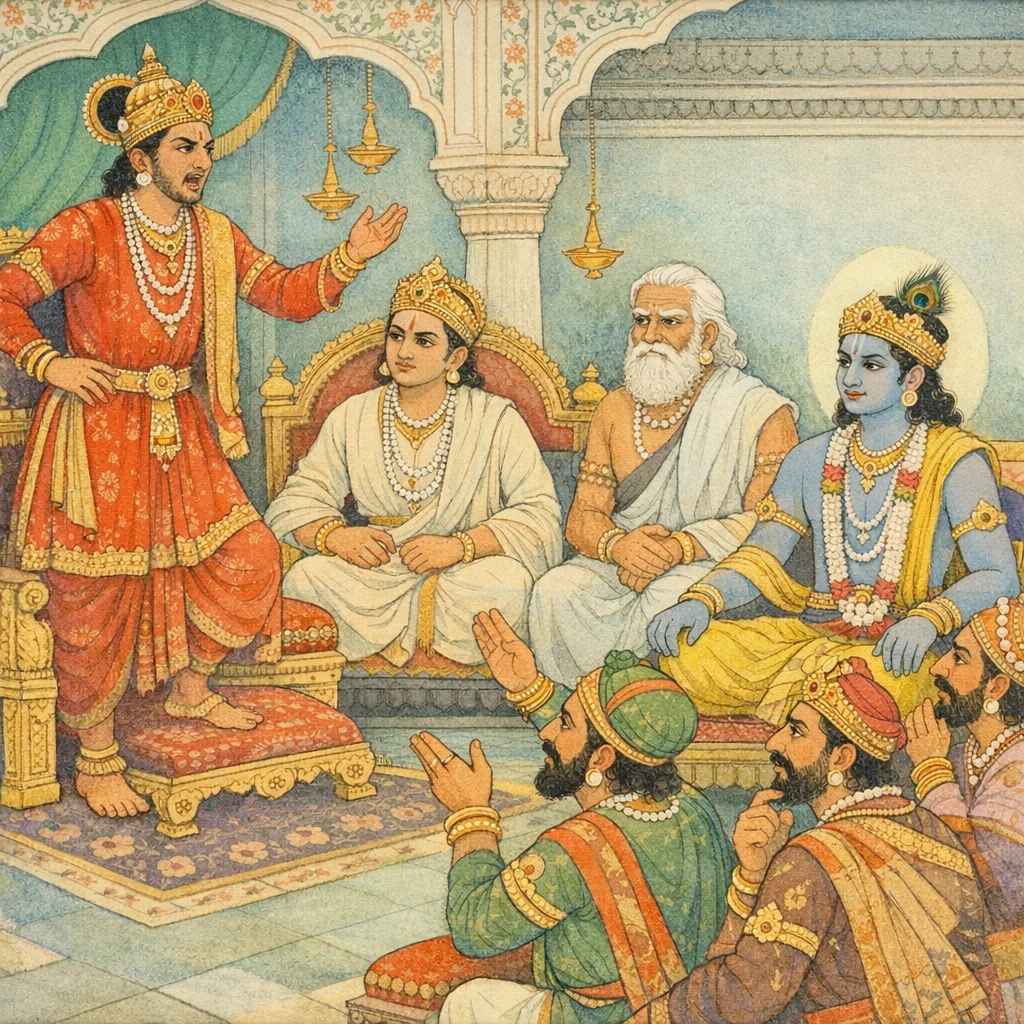
Vaiśaṃpāyana reports Yudhiṣṭhira’s reaction upon observing a powerful, sea-like gathering of kings stirred by anger. Yudhiṣṭhira addresses Bhīṣma—portrayed as the foremost among the wise and an authoritative elder—requesting guidance on what course of action will prevent obstruction to the rājasūya sacrifice and secure the welfare of the people. Bhīṣma replies with reassurance and strategic framing: he employs a series of analogies in which lesser forces (dogs) become noisy around a superior force (a lion) when it is momentarily inactive, implying that the assembly’s agitation is opportunistic rather than decisive. He characterizes Śiśupāla as lacking discernment and suggests that when a superior agent (identified with Kṛṣṇa/Mādhava) intends to seize or end something, the opponent’s judgment becomes disordered, presenting Śiśupāla’s hostility as a symptom of impending reversal. The chapter closes as Śiśupāla, hearing Bhīṣma’s remarks, directs harsh speech toward Bhīṣma, intensifying the rhetorical confrontation within the sabhā.
Chapter Arc: राजसूय-सभा के मध्य, जहाँ समस्त नरेश उपस्थित हैं, शिशुपाल उठकर युधिष्ठिर के द्वारा कृष्ण को दी गई राजोचित अग्रपूजा को ‘अनुचित’ और ‘अपमानजनक’ ठहराता है। → वह पाण्डवों को ‘धर्म के सूक्ष्म स्वरूप’ का उपदेश देने के बहाने तिरस्कार करता है—कहता है कि इतने महात्मा राजाओं के रहते वृष्णिवंशी कृष्ण राजाओं की भाँति पूज्य नहीं हो सकते; यह सभा में लाए गए राजाओं का अवमान है। → शिशुपाल तीखे उपमानों से कृष्ण-पूजा को उपहास बताता है—‘अराजा को राजा-सा पूजन’ को नपुंसक-विवाह और अंधे को रूप-दर्शन जैसा कहकर, युधिष्ठिर, भीष्म और समस्त सभा की मर्यादा पर प्रहार करता है। → अपनी निन्दा-वाणी पूरी कर वह आसन से उठता है और कुछ राजाओं के साथ सभा से बाहर निकल जाता है, पर उसके शब्द सभा में विष की तरह रह जाते हैं। → कृष्ण का प्रत्युत्तर और शिशुपाल के अपराधों का फल—क्या सभा-धर्म शान्ति माँगेगा या दण्ड?
Shlokas
Verse 1
शिशुपाल बोला--कौरव्य! यहाँ इन महात्मा भूमिपतियोंके रहते हुए यह वृष्णिवंशी कृष्ण राजाओंकी भाँति राजोचित पूजाका अधिकारी कदापि नहीं हो सकता
Shishupala said: “O scion of the Kuru line! While these great-souled kings of the earth are present here, this Krishna of the Vrishni clan can never be entitled to the royal honor and worship that is due to kings.”
Verse 2
नायं युक्त: समाचार: पाण्डवेषु महात्मसु । यत् कामात् पुण्डरीकाक्षं पाण्डवार्चितवानसि,महात्मा पाण्डवोंके लिये यह विपरीत आचार कभी उचित नहीं है। पाण्डुकुमार! तुमने स्वार्थवश कमलनयन श्रीकृष्णका पूजन किया है। पाण्डवो! अभी तुमलोग बालक हो। तुम्हें धर्मका पता नहीं है, क्योंकि धर्मका स्वरूप अत्यन्त सूक्ष्म है। ये गंगानन्दन भीष्म बहुत बूढ़े हो गये हैं। अब इनकी स्मरणशक्ति जवाब दे चुकी है। इनकी सूझ और समझ भी बहुत कम हो गयी है (तभी इन्होंने श्रीकृष्णपूजाकी सम्मति दी है)
This is not proper conduct toward the high-souled Pāṇḍavas. O son of Pāṇḍu! You honored the lotus-eyed Kṛṣṇa out of personal desire, not from rightful judgment.
Verse 3
बाला यूयं न जानीध्वं धर्म: सूक्ष्मो हि पाण्डवा: । अयं च स्मृत्यतिक्रान्तो ह्वापगेयो5ल्पदर्शन:,महात्मा पाण्डवोंके लिये यह विपरीत आचार कभी उचित नहीं है। पाण्डुकुमार! तुमने स्वार्थवश कमलनयन श्रीकृष्णका पूजन किया है। पाण्डवो! अभी तुमलोग बालक हो। तुम्हें धर्मका पता नहीं है, क्योंकि धर्मका स्वरूप अत्यन्त सूक्ष्म है। ये गंगानन्दन भीष्म बहुत बूढ़े हो गये हैं। अब इनकी स्मरणशक्ति जवाब दे चुकी है। इनकी सूझ और समझ भी बहुत कम हो गयी है (तभी इन्होंने श्रीकृष्णपूजाकी सम्मति दी है)
Śiśupāla said: “You are still like children; you do not understand. Dharma is indeed subtle, O Pāṇḍavas. And this man here—his memory has failed with age; his discernment has grown dim.” (By this insult he implies that the elders’ approval of honoring Kṛṣṇa is not grounded in clear judgment.)
Verse 4
त्वादृशो धर्मयुक्तो हि कुर्वाण: प्रियकाम्यया । भवत्यभ्यधिकं भीष्म लोकेष्ववमत: सताम्,भीष्म तुम्हारे-जैसा धर्मात्मा पुरुष भी जब मनमाना अथवा किसीका प्रिय करनेके लिये मुँहदेखी करने लगता है, तब वह साधु पुरुषोंके समाजमें अधिक अपमानका पात्र बन जाता है
O Bhīṣma, when a man like you—steadfastly aligned with dharma—acts out of a desire to please and indulges in favor-seeking, he becomes even more contemptible in the eyes of the good people of the world.
Verse 5
कथं हाराजा दाशाहो मध्ये सर्वमहीक्षिताम् । अर्हणामहति तथा यथा युष्माभिरचिंत:,यह सभी जानते हैं कि यदुवंशी कृष्ण राजा नहीं है, फिर सम्पूर्ण भूपालोंके बीच तुमलोगोंने जिस प्रकार इसकी पूजा की है, वैसी पूजाका अधिकारी यह कैसे हो सकता है?
Śiśupāla said: “How can this Dāśārha be a king among all the rulers of the earth? How could he be worthy of the honor you have offered—honor of the kind you have bestowed upon him—when he is not, in fact, fit to receive such worship?”
Verse 6
अथ वा मन्यसे कृष्णं स्थविरं कुरुपुड्रव । वसुदेवे स्थिते वृद्धे कथमर्हति तत्सुत:,कुरुपुंगव! अथवा यदि तुम श्रीकृष्णको बड़ा-बूढ़ा समझते हो तो इसके पिता वृद्ध वसुदेवजीके रहते हुए उनका यह पुत्र कैसे पूजाका पात्र हो सकता है?
Or perhaps, O bull among the Kurus, you consider Kṛṣṇa to be an elder worthy of precedence. Yet while the aged Vasudeva—his father—still lives and is present, how can that son be the proper recipient of worship?
Verse 7
अथ वा वासुदेवो5पि प्रियकामो<नुवृत्तवान् । द्रपदे तिष्ठति कथं माधवो5हति पूजनम्,अथवा यह मान लिया जाय कि वासुदेव कृष्ण तुमलोगोंका प्रिय चाहनेवाला और तुम्हारा अनुसरण करनेवाला सुहृद् है, इसीलिये तुमने इसकी पूजा की है, तो यह भी ठीक नहीं है, क्योंकि तुम्हारे सबसे बड़े सुहृद् तो राजा ट्रुपद हैं। उनके रहते यह माधव पूजा पानेका अधिकारी कैसे हो सकता है। कुरुनन्दन! अथवा यह समझ लें कि तुम कृष्णको आचार्य मानते हो, फिर भी आचार्योमें भी बड़े-बूढ़े द्रोणाचार्यके रहते हुए इस यदुवंशीकी पूजा तुमने क्यों की है?
Śiśupāla said: “Or suppose Vāsudeva is indeed one who seeks your pleasure and follows your wishes—then even that does not justify this worship. For while King Drupada, your greatest well-wisher, is present, how can Mādhava be entitled to receive the foremost honor? And if you claim you regard Kṛṣṇa as an ācārya, then why honor this Yadu prince when elders among teachers—such as Droṇa—are still here?”
Verse 8
आचार्य मन्यसे कृष्णमथ वा कुरुनन्दन । द्रोणे तिष्ठति वाष्णेयं कस्मादर्चितवानसि,अथवा यह मान लिया जाय कि वासुदेव कृष्ण तुमलोगोंका प्रिय चाहनेवाला और तुम्हारा अनुसरण करनेवाला सुहृद् है, इसीलिये तुमने इसकी पूजा की है, तो यह भी ठीक नहीं है, क्योंकि तुम्हारे सबसे बड़े सुहृद् तो राजा ट्रुपद हैं। उनके रहते यह माधव पूजा पानेका अधिकारी कैसे हो सकता है। कुरुनन्दन! अथवा यह समझ लें कि तुम कृष्णको आचार्य मानते हो, फिर भी आचार्योमें भी बड़े-बूढ़े द्रोणाचार्यके रहते हुए इस यदुवंशीकी पूजा तुमने क्यों की है?
Śiśupāla said: “O Kurunandana, do you regard Kṛṣṇa as your teacher? Or if you claim he should be honored while Droṇa still stands among the preceptors, then why have you worshiped this Vāṣṇeya? By honoring Kṛṣṇa in this royal assembly, you have set aside the established order of precedence—an act that, in my view, violates the decorum by which elders and acknowledged teachers are to be respected first.”
Verse 9
भीष्मका युधिष्ठटिरको श्रीकृष्णकी महिमा बताना 5 है 22 + 64 ॥/ ५ शिशुपालका युद्धके लिये उद्योग ऋत्विजं मन्यसे कृष्णमथ वा कुरुनन्दन । द्वैपायने स्थिते वृद्धे कं कृष्णो<र्चितस्त्वया,कुरुकुलको आनन्दित करनेवाले युधिष्ठिर! अथवा यदि यह कहा जाय कि तुम कृष्णको अपना ऋत्विज् समझते हो तो ऋत्विजोंमें भी सबसे वृद्ध द्वैधायन वेदव्यासके रहते हुए तुमने कृष्णकी अग्रपूजा कैसे की?
Śiśupāla said: “O Yudhiṣṭhira, delight of the Kuru line—if you claim that Kṛṣṇa is to be regarded as your officiating priest, then how is it that, while the venerable elder Dvaipāyana (Vyāsa) is present, you have offered the foremost honor to Kṛṣṇa? In what capacity, then, have you worshiped Kṛṣṇa—above the elder sage?”
Verse 10
भीष्मे शान्तनवे राजन् स्थिते पुरुषसत्तमे | स्वच्छन्दमृत्युके राजन् कथं कृष्णोड<र्चितस्त्वया,राजन! शान्तनुनन्दन भीष्म पुरुषशिरोमणि तथा स्वच्छन्दमृत्यु हैं। इनके रहते तुमने कृष्णकी अर्चना कैसे की? कुरुनन्दन युधिष्ठिर! सम्पूर्ण शास्त्रोंके निपुण विद्वान् वीर अश्व॒ृत्थामाके रहते हुए तुमने कृष्णकी पूजा कैसे कर डाली?
Śiśupāla said: “O King, while Bhīṣma, the son of Śāntanu—foremost among men—still stands here, and while that great one who can choose the time of his own death is present, how is it that you have offered worship to Kṛṣṇa?”
Verse 11
अभश्रृत्थाम्नि स्थिते वीरे सर्वशास्त्रविशारदे | कथं कृष्णस्त्वया राजन्नर्चित: कुरुनन्दन,राजन! शान्तनुनन्दन भीष्म पुरुषशिरोमणि तथा स्वच्छन्दमृत्यु हैं। इनके रहते तुमने कृष्णकी अर्चना कैसे की? कुरुनन्दन युधिष्ठिर! सम्पूर्ण शास्त्रोंके निपुण विद्वान् वीर अश्व॒ृत्थामाके रहते हुए तुमने कृष्णकी पूजा कैसे कर डाली?
Śiśupāla said: “O King, O delight of the Kurus—when the heroic Aśvatthāmā, skilled in all the śāstras, is present, how is it that you have honored Kṛṣṇa with worship?”
Verse 12
दुर्योधने च राजेन्द्रे स्थिते पुरुषसत्तमे । कृपे च भारताचार्ये कथं कृष्णस्त्वयार्चित:,पुरुषप्रवर राजाधिराज दुर्योधन और भरतवंशके आचार्य महात्मा कृपके रहते हुए तुमने कृष्णकी पूजाका औचित्य कैसे स्वीकार किया? तुमने किम्पुरुषोंके आचार्य ट्रुमका उल्लंघन करके कृष्णकी अग्रपूजा क्यों की? पाण्डुके समान दुर्धर्ष वीर तथा राजोचित शुभ- लक्षणोंसे सम्पन्न भीष्मक, राजा रुक्मी और उसी प्रकार श्रेष्ठ धनुर्धर एकलव्य तथा मद्रराज शल्यके रहते हुए तुम्हारे द्वारा कृष्णकी पूजा किस दृष्टिसे की गयी?
Śiśupāla said: “When King Duryodhana—the foremost of men—was present, and when Kṛpa, the preceptor of the Bhāratas, was also there, how could you deem it proper to honor Kṛṣṇa? In the presence of such royal and venerable figures, on what grounds did you accept Kṛṣṇa as worthy of special worship?”
Verse 13
द्रुमं किम्पुरुषाचार्यमतिक्रम्य तथार्चित: । भीष्मके चैव दुर्धर्षे पाण्डुवत् कृतलक्षणे,पुरुषप्रवर राजाधिराज दुर्योधन और भरतवंशके आचार्य महात्मा कृपके रहते हुए तुमने कृष्णकी पूजाका औचित्य कैसे स्वीकार किया? तुमने किम्पुरुषोंके आचार्य ट्रुमका उल्लंघन करके कृष्णकी अग्रपूजा क्यों की? पाण्डुके समान दुर्धर्ष वीर तथा राजोचित शुभ- लक्षणोंसे सम्पन्न भीष्मक, राजा रुक्मी और उसी प्रकार श्रेष्ठ धनुर्धर एकलव्य तथा मद्रराज शल्यके रहते हुए तुम्हारे द्वारा कृष्णकी पूजा किस दृष्टिसे की गयी?
Śiśupāla said: “How could you deem it proper to honor Kṛṣṇa with foremost worship, bypassing Druma, the preceptor of the Kiṁpuruṣas? And when the formidable Bhīṣmaka—endowed with auspicious, kingly marks like Pāṇḍu—was present, by what reasoning was this worship of Kṛṣṇa performed?”
Verse 14
नृपे च रुक्मिणि श्रेष्ठे एकलव्ये तथैव च । शल्ये मद्राधिपे चैव कथं कृष्णस्त्वयार्चित:,पुरुषप्रवर राजाधिराज दुर्योधन और भरतवंशके आचार्य महात्मा कृपके रहते हुए तुमने कृष्णकी पूजाका औचित्य कैसे स्वीकार किया? तुमने किम्पुरुषोंके आचार्य ट्रुमका उल्लंघन करके कृष्णकी अग्रपूजा क्यों की? पाण्डुके समान दुर्धर्ष वीर तथा राजोचित शुभ- लक्षणोंसे सम्पन्न भीष्मक, राजा रुक्मी और उसी प्रकार श्रेष्ठ धनुर्धर एकलव्य तथा मद्रराज शल्यके रहते हुए तुम्हारे द्वारा कृष्णकी पूजा किस दृष्टिसे की गयी?
“And when the eminent king Rukmī, Ekalavya the foremost archer, and Śalya the lord of Madra were present, how could Kṛṣṇa be the one you chose to honor with worship?”
Verse 15
अयं च सर्वराज्ञां वै बलश्लाघी महाबल: । जामदग्न्यस्य दयित: शिष्यो विप्रस्थ भारत,भारत! ये जो अपने बलके द्वारा सब राजाओंसे होड़ लेते हैं, विप्रवर परशुरामजीके प्रिय शिष्य हैं तथा जिन्होंने अपने बलका भरोसा करके युद्धमें अनेक राजाओंको परास्त किया है, उन महाबली कर्णको छोड़कर तुमने कृष्णकी आराधना कैसे की?
And here stands Karṇa—mighty indeed, proud of his strength, and ever challenging all kings; he is the beloved disciple of Jamadagni’s son (Paraśurāma). O Bhārata, how could you set aside such a powerful warrior, famed for defeating many rulers in battle by sheer confidence in his might, and instead offer worship and honor to Kṛṣṇa?
Verse 16
येनात्मबलमरश्रित्य राजानो युधि निर्जिता: । तं च कर्णमतिक्रम्य कथं कृष्णस्त्वयार्चित:,भारत! ये जो अपने बलके द्वारा सब राजाओंसे होड़ लेते हैं, विप्रवर परशुरामजीके प्रिय शिष्य हैं तथा जिन्होंने अपने बलका भरोसा करके युद्धमें अनेक राजाओंको परास्त किया है, उन महाबली कर्णको छोड़कर तुमने कृष्णकी आराधना कैसे की?
Relying on his own strength, he has defeated kings in battle. Yet, passing over that Karṇa, how is it that you have honored Kṛṣṇa, O Bhārata?
Verse 17
नैवर्त्विंग नैव चाचार्यो न राजा मधुसूदन: । अर्चितश्न कुरुश्रेष्ठ किमन्यत्प्रियकाम्यया,कुरुश्रेष्ठ! मधुसूदन कृष्ण न ऋत्विज् है, न आचार्य है और न राजा ही है; फिर तुमने किस प्रिय कामनासे इसकी पूजा की है?
Śiśupāla said: “Kṛṣṇa, the slayer of Madhu, is neither your officiating priest, nor your preceptor, nor your king. O best of the Kurus, for what other reason—driven by the desire to please—have you honored him with worship?”
Verse 18
अथ वाभ्यर्चनीयो<यं युष्माकं॑ मधुसूदन: । कि राजभिरिहानीतैरवमानाय भारत,भारत! अथवा यदि यह मधुसूदन ही तुमलोगोंका पूजनीय देवता है, इसलिये इसकी ही पूजा तुम्हें करनी थी तो इन राजाओंको केवल अपमानित करनेके लिये बुलानेकी क्या आवश्यकता थी?
Śiśupāla said: “If, after all, this Madhusūdana is the one worthy of worship for you, then why were these kings brought here at all, O Bhārata—only to be insulted?”
Verse 19
वयं तु न भयादस्य कौन्तेयस्य महात्मन: । प्रयच्छाम: करान् सर्वे न लोभान्न च सान्त्वनात्,राजाओ! हम सब लोग इन महात्मा कुन्तीनन्दन युधिष्ठिरको जो कर दे रहे हैं, वह भय, लोभ अथवा कोई विशेष आश्वासन मिलनेके कारण नहीं
“O kings! We all render tribute to this great-souled son of Kuntī not out of fear. We pay these dues neither from greed nor because of any placating promise.”
Verse 20
अस्य धर्मप्रवृत्तस्य पार्थिवत्वं चिकीर्षत: । करानस्मै प्रयच्छाम: सो5यमस्मान् न मन्यते,हमने तो यही समझा था कि यह धर्माचरणमें संलग्न रहनेवाला क्षत्रिय सम्राट्का पद पाना चाहता है तो अच्छा ही है। यही सोचकर हम उसे कर देते हैं, परंतु यह राजा युधिष्ठिर हमलोगोंको नहीं मानता है
“We thought: ‘This man is devoted to dharma and seeks the status of a sovereign king; that is only fitting.’ With that in mind, we offered him tribute. Yet this King Yudhiṣṭhira does not acknowledge us—he does not treat us as worthy of regard.”
Verse 21
किमन्यदवमानाद्धि यदेनं राजसंसदि । अप्राप्तलक्षणं कृष्णमध्येणार्चितवानसि,युधिष्ठिर! इससे बढ़कर दूसरा अपमान और क्या हो सकता है कि तुमने राजाओंकी सभामें जिसे राजोचित चिह्न छत्र-चँवर आदि प्राप्त नहीं हुआ है, उस कृष्णकी अर्घ्यके द्वारा पूजा की है
Śiśupāla said: “What greater insult could there be than this—that in the assembly of kings you, Yudhiṣṭhira, have honored Kṛṣṇa with the arghya, placing him in the foremost position, though he has not obtained the royal insignia and marks of sovereignty (such as umbrella and chowries)?”
Verse 22
अकस्माद् धर्मपुत्रस्य धर्मात्मेति यशो गतम् | को हि धर्मच्युते पूजामेवं युक्तां नियोजयेत्,धर्मपुत्र युधिष्ठिरको अकस्मात् ही धर्मात्मा होनेका यश प्राप्त हो गया है, अन्यथा कौन ऐसा धर्मनिष्ठ पुरुष होगा जो किसी धर्मच्युतकी इस प्रकार पूजा करेगा
Śiśupāla said: “All at once the son of Dharma has gained the reputation of being ‘righteous-souled.’ For who, if he had truly fallen from dharma, would ever arrange such fitting honor and worship for him?”
Verse 23
यो<यं वृष्णिकुले जातो राजानं हतवान् पुरा | जरासंध॑ महात्मानमन्यायेन दुरात्मवान्,वृष्णिकुलमें पैदा हुए इस दुरात्माने तो कुछ ही दिन पहले महात्मा राजा जरासंधका अन्यायपूर्वक वध किया है
Śiśupāla said: “This man, born in the Vṛṣṇi clan, has already slain a king—Jarāsandha, a great-souled ruler—and he did so unjustly. Such a deed reveals a wicked disposition rather than righteousness.”
Verse 24
अद्य धर्मात्मता चैव व्यपकृष्टा युधिष्ठिरात् । दर्शितं कृपणत्वं च कृष्णे<र्घ्यस्य निवेदनात्,आज युधिष्ठिरका धर्मात्मापन दूर निकल गया, क्योंकि इन्होंने कृष्णको अर्घ्य निवेदन करके अपनी कायरता ही दिखायी है
Śiśupāla declares that today Yudhiṣṭhira’s famed righteousness has fallen away, for by offering the arghya to Kṛṣṇa he has, in Śiśupāla’s hostile reading, displayed not moral courage but pitiable weakness—publicly elevating one man above all assembled kings and thereby inviting resentment and conflict.
Verse 25
यदि भीताश्न कौन्तेया: कृपणाश्न॒ तपस्विन: । ननु त्वयापि बोद्धव्यं यां पूजां माधवाहसि,(अब शिशुपालने भगवान् श्रीकृष्णको देखकर कहा--) माधव! कुन्तीके पुत्र डरपोक, कायर और तपस्वी हैं। इन्होंने तुम्हें ठीक-ठीक न जानकर यदि तुम्हारी पूजा कर दी तो तुम्हें तो समझना चाहिये था कि तुम किस पूजाके अधिकारी हो?
Śiśupāla said: “If the sons of Kuntī are fearful, weak-spirited, and given to austerity, then even so, O Mādhava, you too ought to have understood what sort of worship you were truly fit to receive. If, not knowing you rightly, they offered you honor, it was for you to discern whether such honor was appropriate.”
Verse 26
अथ वा कृपणैरेतामुपनीतां जनार्दन | पूजामनर्ह: कस्मात् त्वमभ्यनुज्ञातवानसि,अथवा जनार्दन! इन कायरोंद्वारा उपस्थित की हुई इस अग्रपूजाको उसके योग्य न होते हुए भी तुमने क्यों स्वीकार कर लिया?
Or else, O Janārdana, why did you approve and accept this foremost honor when it was presented by these wretched men—an honor that one unworthy of it should not receive?
Verse 27
अयुक्तामात्मन: पूजां त्वं पुनर्बहु मन््यसे । हविष: प्राप्य निष्यन्दं प्राशिता श्वेव निर्जने,जैसे कुत्ता एकान्तमें चूकर गिरे हुए थोड़े-से हविष्य (घृत)-को चाट ले और अपनेको धन्य धन्य मानने लगे, उसी प्रकार तुम अपने लिये अयोग्य पूजा स्वीकार करके अपने- आपको बहुत बड़ा मान रहे हो
Śiśupāla says: “You think far too highly of yourself for accepting worship that is not truly deserved. Like a dog in a lonely place that licks up a small dribble of sacrificial ghee and then imagines itself greatly blessed, so you, having received an unfit honor, are swelling with self-importance.”
Verse 28
न त्वयं पार्थिवेन्द्राणामपमान: प्रयुज्यते । त्वामेव कुरवो व्यक्त प्रलम्भन्ते जनार्दन,कृष्ण! तुम्हारी इस अग्रपूजासे हम राजाधिराजोंका कोई अपमान नहीं होता, परंतु ये कुरुवंशी पाण्डव तुम्हें अर्घ्य देकर वास्तवमें तुम्हींको ठग रहे हैं
Śiśupāla said: “This act does not truly amount to an insult to the kings of the earth. Rather, O Janārdana, it is you whom the Kurus are plainly deceiving—by offering you the arghya and proclaiming you foremost.”
Verse 29
क्लीबे दारक्रिया यादृगन्धे वा रूपदर्शनम् । अराज्ञो राजवत् पूजा तथा ते मधुसूदन,मधुसूदन! जैसे नपुंसकका ब्याह रचाना और अंधेको रूप दिखाना उनका उपहास ही करना है, उसी प्रकार तुम-जैसे राज्यहीनकी यह राजाओंके समान पूजा भी विडम्बनामात्र ही है
Śiśupāla said: “Just as arranging a marriage for a eunuch, or showing a form to a blind man, is only mockery, so too this worship offered to you—who have no kingdom—as if you were a king, O Madhusūdana, is nothing but a farce.”
Verse 30
दृष्टो युधिष्ठिरो राजा दृष्टो भीष्मश्न यादृश: । वासुदेवो5प्ययं दृष्ट: सर्वमेतद् यथातथम्,आज मैंने राजा युधिष्ठटिरको देख लिया; भीष्म भी जैसे हैं, उनको भी देख लिया और इस वासुदेव कृष्णका भी वास्तविक रूप क्या है, यह भी देख लिया। वास्तवमें ये सब ऐसे ही हैं
Śiśupāla said: “I have now seen King Yudhiṣṭhira; I have seen Bhīṣma as he truly is; and I have also seen this Vāsudeva. Everything here is exactly as it is in reality.”
Verse 31
इत्युक्त्वा शिशुपालस्तानुत्थाय परमासनात् । निर्यया सदसस्तस्मात् सहितो राजभिस्तदा,उनसे ऐसा कहकर शिशुपाल अपने उत्तम आसनसे उठकर कुछ राजाओंके साथ उस सभाभवनसे जानेको उद्यत हो गया
Having spoken thus, Śiśupāla rose from his excellent seat and, accompanied by certain kings, then set out to leave that assembly hall.
Verse 37
इति श्रीमहा भारते सभापर्वणि अर्घाभिहरणपर्वणि शिशुपालक्रोधे सप्तत्रिंशो 5 ध्याय:,इस प्रकार श्रीमह्ाभारत सभापव॑के अन्तर्गत अर्घाभिहरणपर्वमें शिशुपालका क्रोधविषयक सैंतीसवाँ अध्याय पूरा हुआ
Thus, in the revered Mahābhārata, within the Sabhā Parva—specifically in the section concerning the offering of the arghya—ends the thirty-seventh chapter, dealing with Śiśupāla’s anger.
Frequently Asked Questions
He must balance restraint and institutional responsibility: responding to provocation in a charged assembly without allowing the yajña to be obstructed or public welfare to be destabilized by reactive escalation.
Bhīṣma teaches that public anger can be opportunistic and performative; sound governance prioritizes composure, senior counsel, and protection of communal order over immediate retaliation to hostile speech.
No explicit phalaśruti is presented in these verses; the meta-level function is structural, positioning the sabhā as a moral-political arena where counsel and speech-ethics determine whether ritual and governance remain stable under provocation.