Adhyaya 30
Rājasūya-sambhāra: Prosperity under Rājadharma and the Initiation of Yudhiṣṭhira’s Sacrifice
Upa-parva: Rājasūya-ārambha (Preparations for the Rājasūya)
Vaiśaṃpāyana describes the prosperity of Yudhiṣṭhira’s realm as an outcome of protective rule, truthfulness, disciplined taxation, and suppression of predatory disruption. The text links stable governance to environmental regularity (timely rain) and the smooth functioning of agriculture, cattle protection, and trade. Once the treasury and granaries are assessed, Yudhiṣṭhira turns his intent to yajña; allies encourage the timing. Kṛṣṇa arrives visibly, bringing abundant wealth and endorsing Yudhiṣṭhira’s fitness for the imperial rite, offering full assistance. Yudhiṣṭhira then initiates operational planning for the Rājasūya: Sahadeva and ministers are tasked with ritual requisites and auspicious arrangements; provisioning officers are named; artisans construct extensive accommodations. Dvaipāyana (Vyāsa) brings eminent priests, assigns ritual roles (including himself as Brahmā-priest), and the priestly teams execute prescribed preliminaries. Envoys are dispatched to invite brāhmaṇas, kings, and respected social groups. In due course, Yudhiṣṭhira undergoes dīkṣā and proceeds to the yajña enclosure amid large assemblies, with extensive gifting and hospitality marking the rite’s commencement; invitations to Hastināpura elders are also initiated via Nakula.
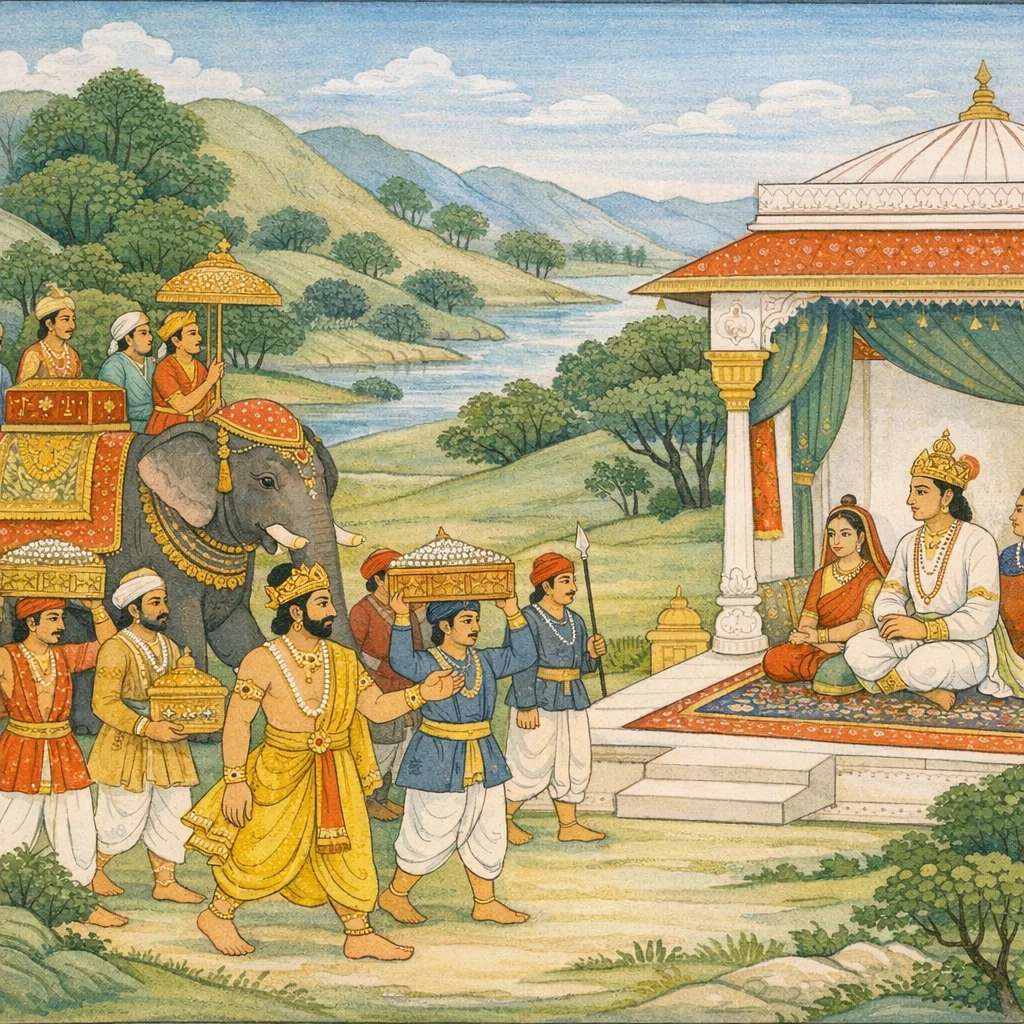
Chapter Arc: भीमसेन की दिग्विजय-यात्रा का वेग थमता नहीं—पूर्व दिशा के अनेक जनपदों को झुकाकर वह धन-रत्नों के भार सहित इन्द्रप्रस्थ की ओर लौटता है, मानो यज्ञ की सामग्री स्वयं चलकर आ रही हो। → अयोध्या के धर्मज्ञ दीर्घयज्ञ, गोपालकक्ष और उत्तर कोसल, मल्ल-देश, काशी के सुबाहु, दण्ड और दण्डधार, गिरिव्रज की ओर बढ़ते हुए अनेक राजाओं का दमन—हर विजय के साथ कर-आहरण और अधीनता का जाल फैलता जाता है; समुद्र-तट और द्वीपों के म्लेच्छ नृप भी रत्नों सहित कर देने को बाध्य होते हैं। → समुद्र-नूपवासियों और विविध म्लेच्छ राजाओं से रत्न-कर वसूल कर, भीम का वैभव-प्रवाह चरम पर पहुँचता है—यह केवल युद्ध-विजय नहीं, युधिष्ठिर के राजसूय हेतु पृथ्वी की स्वीकृति का उद्घोष बन जाता है। → भीमपराक्रमी भीम इन्द्रप्रस्थ पहुँचकर समस्त संचित धन-सम्पदा धर्मराज युधिष्ठिर को निवेदित करता है—दिग्विजय का फल व्यक्तिगत नहीं, राज्य-धर्म और यज्ञ-उद्देश्य के चरणों में समर्पित होता है। → अब जब पूर्व दिशा भी कर-बंधन में आ गई, राजसूय की तैयारी पूर्णता की ओर बढ़ती है—पर क्या सभी राजाओं का मन सचमुच झुका है, या कहीं अपमान की अग्नि भविष्य का वैर रच रही है?
Shlokas
Verse 1
ऑपन-माज बक। अऑपफि-छऋाज-ज त्रिशो&्थ्याय: भीमका पूर्व दिशाके अनेक देशों तथा राजाओंको जीतकर भारी धन-सम्पत्तिके साथ इन्द्रप्रस्थमें लौटना वैशम्पायन उवाच ततः कुमारविषये श्रेणिमन्तमथाजयत् । कोसलाधिपतिं चैव बृहद्धलमरिंदम:,वैशम्पायनजी कहते हैं--जनमेजय! तदनन्तर शत्रुओंका दमन करनेवाले भीमसेनने कुमारदेशके राजा श्रेणिमान् तथा कोसलराज बृहद्वलको परास्त किया
Vaiśampāyana said: Thereafter Bhīmasena, the subduer of foes, conquered Śreṇimān, the king in the region of Kumāra, and also Bṛhaddhala, the lord of Kośala. The narrative underscores the Pāṇḍavas’ expanding sovereignty through disciplined conquest and the gathering of wealth in service of Yudhiṣṭhira’s imperial design, not for private gain.
Verse 2
अयोध्यायां तु धर्मज्ञं दीर्घयज्ञ महाबलम् । अजयतू पाण्डवश्रेष्ठो नातितीव्रेण कर्मणा,इसके बाद अयोध्याके धर्मज्ञ नरेश महाबली दीर्घयज्ञको पाण्डवश्रेष्ठ भीमने कोमलतापूर्ण बर्तावसे वशमें कर लिया
Vaiśampāyana said: In Ayodhyā, the foremost of the Pāṇḍavas brought under his sway the righteous king Dīrghayajña, a man of great strength—winning him not by harsh measures, but through conduct that was not excessively severe.
Verse 3
ततो गोपालकक्षं च सोत्तरानपि कोसलान् | मल्लानामधिपं चैव पार्थिवं चाजयत् प्रभु:,तत्पश्चात् शक्तिशाली पाण्डुकुमारने गोपालकक्ष और उत्तर कोसल देशको जीतकर मल्लराष्ट्रके अधिपति पार्थिवको अपने अधीन कर लिया
Then the mighty son of Pāṇḍu subdued Gopālakakṣa and also the Kosalas together with their northern region; thereafter he conquered the king who ruled over the Mallas, bringing that realm under his authority.
Verse 4
ततो हिमवतः पार्श्व समभ्येत्य जलोद्धवम् । सर्वमल्पेन कालेन देशं चक्रे वशं बली,इसके बाद हिमालयके पास जाकर बलवान भीमने सारे जलोद्धव देशपर थोड़े ही समयमें अधिकार प्राप्त कर लिया
Then, approaching the flank of the Himālaya, the mighty one swiftly brought the entire region called Jaloddhava under his control.
Verse 5
एवं बहुविधान् देशान् विजिग्ये भरतर्षभ: । भल्लाटमभितो जिग्ये शुक्तिमन्तं च पर्वतम्,इस प्रकार भरतवंशभूषण भीमसेनने अनेक देश जीते और भल्लाटके समीपतवर्ती देशों तथा शुक्तिमान् पर्वतपर भी विजय प्राप्त की
Vaiśampāyana said: Thus the bull among the Bharatas (Bhīmasena) conquered many kinds of regions. He also subdued the territories surrounding Bhallāṭa and brought the mountain called Śuktimān under his control.
Verse 6
पाण्डव: सुमहावीर्यों बलेन बलिनां वर: । स काशिराजं समरे सुबाहुमनिवर्तिनम्
Vaiśampāyana said: The Pāṇḍava, possessed of exceedingly great prowess and foremost among the strong in might, confronted in battle the king of Kāśī—Subāhu—who was unyielding and would not turn back.
Verse 7
वशे चक्रे महाबाहुर्भीमो भीमपराक्रम: । बलवानोंमें श्रेष्ठ महापराक्रमी तथा भयंकर पुरुषार्थ प्रकट करनेवाले पाण्डुकुमार महाबाहु भीमसेनने समरमें पीठ न दिखानेवाले काशिराज सुबाहुको बलपूर्वक हराया ।। ६ १ *3॥ ततः सुपार्श्वमभितस्तथा राजपतिं क्रथम्
Vaiśampāyana said: Mighty-armed Bhīma, famed for terrifying valor, brought them under his control. The Pāṇḍava prince Bhīmasena—foremost among the strong, of great prowess, and one who displayed fearsome manly effort—overpowered by sheer force Subāhu, the king of Kāśī, who did not turn his back in battle. Then he went on to subdue Supārśva and also Krathu, a lord of kings.
Verse 8
ततो मत्स्यान् महातेजा मलदांश्व महाबलान्,तत्पश्चात् महातेजस्वी कुन्तीकुमारने मत्स्य, महाबली मलद, अनघ और अभय नामक देशोंको जीतकर पशुभूमि (पशुपतिनाथके निकटवर्ती स्थान--नेपाल)-को भी सब ओरसे जीत लिया। वहाँसे लौटकर महाबाहु भीमने मदधार पर्वत और सोमधेयनिवासियों-को परास्त किया। इसके बाद बलवान् भीमने उत्तराभिमुख यात्रा की और वत्सभूमिपर बलपूर्वक अधिकार जमा लिया
Vaiśampāyana said: Then the mighty and radiant Bhīma subdued the Matsyas and the powerful Maladas. After that, the illustrious son of Kuntī conquered the realms known as Anagha and Abhaya, and also brought Paśubhūmi under control on all sides. Returning from there, the strong-armed Bhīma defeated the people dwelling around Mount Madadhāra and those of Somadheya. Thereafter, the valiant Bhīma marched northward and, by force of arms, established dominion over the land of the Vatsas.
Verse 9
अनघानभयांश्रैव पशुभूमिं च सर्वश: । निवृत्य च महाबाहुर्मदधारं महीधरम्,तत्पश्चात् महातेजस्वी कुन्तीकुमारने मत्स्य, महाबली मलद, अनघ और अभय नामक देशोंको जीतकर पशुभूमि (पशुपतिनाथके निकटवर्ती स्थान--नेपाल)-को भी सब ओरसे जीत लिया। वहाँसे लौटकर महाबाहु भीमने मदधार पर्वत और सोमधेयनिवासियों-को परास्त किया। इसके बाद बलवान् भीमने उत्तराभिमुख यात्रा की और वत्सभूमिपर बलपूर्वक अधिकार जमा लिया
Vaiśampāyana said: Bhīma, the mighty-armed son of Kuntī, conquered the regions called Anagha and Abhaya, and also subdued Paśubhūmi on all sides. Returning from there, he overcame the mountain called Madadhāra and the people dwelling in Somadheya. Thereafter, the powerful Bhīma turned his march northward and, by force of arms, established his dominion over Vatsabhūmi.
Verse 10
सोमधथेयांश्व निर्जित्य प्रययावुत्तरामुख: । वत्सभूमिं च कौन्तेयो विजिग्ये बलवान् बलातू,तत्पश्चात् महातेजस्वी कुन्तीकुमारने मत्स्य, महाबली मलद, अनघ और अभय नामक देशोंको जीतकर पशुभूमि (पशुपतिनाथके निकटवर्ती स्थान--नेपाल)-को भी सब ओरसे जीत लिया। वहाँसे लौटकर महाबाहु भीमने मदधार पर्वत और सोमधेयनिवासियों-को परास्त किया। इसके बाद बलवान् भीमने उत्तराभिमुख यात्रा की और वत्सभूमिपर बलपूर्वक अधिकार जमा लिया
Vaiśampāyana said: Having subdued the Somadhāteya people, the mighty son of Kuntī (Bhīma) marched northward. By sheer force of arms, that powerful warrior brought the land of Vatsa under his control.
Verse 11
भर्गाणामधिपं चैव निषादाधिपतिं तथा । विजिग्ये भूमिपालांश्व मणिमत्प्रमुखान् बहून्ू,फिर क्रमशः भगर्गोंके स्वामी, निषादोंके अधिपति तथा मणिमान् आदि बहुत-से भूपालोंको अपने अधिकारमें कर लिया। तदनन्तर दक्षिण मल्लदेश तथा भोगवान् पर्वतको भीमसेनने अधिक प्रयास किये बिना ही वेगपूर्वक जीत लिया
Vaiśampāyana said: Bhīmasena, in the course of his campaign, brought under his sway the lord of the Bhargas and likewise the chief of the Niṣādas; he also subdued many other kings, with Maṇimat among the foremost. Thereafter, without great exertion, he swiftly conquered the southern Malladeśa and the mountain called Bhogavān.
Verse 12
ततो दक्षिणमल्लांश्व भोगवन्तं च पर्वतम् । तरसैवाजयद् भीमो नातितीव्रेण कर्मणा,फिर क्रमशः भगर्गोंके स्वामी, निषादोंके अधिपति तथा मणिमान् आदि बहुत-से भूपालोंको अपने अधिकारमें कर लिया। तदनन्तर दक्षिण मल्लदेश तथा भोगवान् पर्वतको भीमसेनने अधिक प्रयास किये बिना ही वेगपूर्वक जीत लिया
Vaiśampāyana said: Thereafter Bhīma swiftly subdued the Southern Mallas and also the mountain called Bhogavat, accomplishing the conquest by sheer force and momentum, without resorting to excessively harsh measures. In the continuing campaign he likewise brought many other rulers—such as the lord of the Bhargas, the chief of the Niṣādas, and Maṇimān—under his authority, extending the Pāṇḍavas’ sway through disciplined, efficient domination rather than needless cruelty.
Verse 13
शर्मकान् वर्मकांश्वैव व्यजयत् सान्त्वपूर्वकम् । वैदेहक॑ च राजानं जनक॑ जगतीपतिम्,शर्मक और वर्मकोंको उन्होंने समझा-बुझाकर ही जीत लिया। विदेह देशके राजा जनकको भी पुरुषसिंह भीमने अधिक उग्र प्रयास किये बिना ही परास्त किया। फिर शकों और बर्बरोंपर छलसे विजय प्राप्त कर ली
Vaiśampāyana said: He overcame the Śarmakas and the Varmakas by first employing conciliation. He also subdued Janaka, the king of Videha, a lord of the earth—achieving victory without resorting to excessive harshness. The passage underscores a graded ethic of statecraft: winning where possible through persuasion and restraint, and reserving force or stratagem for those who cannot be brought to order by gentler means.
Verse 14
विजिग्ये पुरुषव्यात्रो नातितीव्रेण कर्मणा । शकांश्व॒ बर्बरांश्नेव अजयच्छझञझपूर्वकम्,शर्मक और वर्मकोंको उन्होंने समझा-बुझाकर ही जीत लिया। विदेह देशके राजा जनकको भी पुरुषसिंह भीमने अधिक उग्र प्रयास किये बिना ही परास्त किया। फिर शकों और बर्बरोंपर छलसे विजय प्राप्त कर ली
Vaiśampāyana said: The tiger among men won without resorting to excessively harsh exertion. Yet he overcame the Śakas and the Barbaras by employing stratagem—signaling that his victories were achieved sometimes through measured effort and sometimes through policy rather than straightforward force.
Verse 15
वैदेहस्थस्तु कौन्तेय इन्द्रपर्वतमन्तिकात् । किरातानामधिपतीनजयत् सप्त पाण्डव:,विदेह देशमें ही ठहरकर कुन्तीकुमार भीमने इन्द्रपर्वतके निकटवर्ती सात किरातराजोंको जीत लिया। इसके बाद सुह्य और प्रसुह्म देशके राजाओंको, जिनके पक्षमें बहुत लोग थे, अत्यन्त पराक्रमी और बलवान कुन्तीकुमार भीम युद्धमें परास्त करके मगधदेशको चल दिये
Vaiśampāyana said: Remaining in the land of Videha, Bhīma—the son of Kuntī—defeated seven Kirāta chieftains who dwelt near Mount Indraparvata. The episode underscores the Pandavas’ campaign of conquest as a means to secure political order and resources for the larger royal undertaking, where strength is exercised in the service of a declared duty rather than for mere plunder.
Verse 16
ततः सुद्यान् प्रसुद्यांश्ष सपक्षानतिवीर्यवान् | विजित्य युधि कौन्तेयो मागधानभ्यधाद् बली,विदेह देशमें ही ठहरकर कुन्तीकुमार भीमने इन्द्रपर्वतके निकटवर्ती सात किरातराजोंको जीत लिया। इसके बाद सुह्य और प्रसुह्म देशके राजाओंको, जिनके पक्षमें बहुत लोग थे, अत्यन्त पराक्रमी और बलवान कुन्तीकुमार भीम युद्धमें परास्त करके मगधदेशको चल दिये
Then the mighty and exceedingly valiant son of Kuntī, Bhīma, having defeated in battle the rulers of Sudya and Prasudya along with their allied supporters, advanced against the Magadhas. The narrative underscores the Pandava campaign of conquest as a means to secure political legitimacy and resources for the larger dharmic objective (the royal sacrifice), while also portraying Bhīma’s forceful energy directed toward a sanctioned end rather than personal vendetta.
Verse 17
दण्डं च दण्डधारं च विजित्य पृथिवीपतीन् | तैरेव सहितै: सर्वैर्गिरि्रजमुपाद्रवत्,मार्गमें दण्ड-दण्डधार तथा अन्य राजाओंको जीतकर उन सबके साथ वे गिरिव्रज नगरमें आये
Vaiśaṃpāyana said: Having subdued the kings of the earth—both those who wielded the rod of authority and those who bore arms—he advanced upon Girivraja, accompanied by all those very rulers.
Verse 18
जारासंधि सान्त्वयित्वा करे च विनिवेश्य ह । तैरेव सहितै: सर्वे: कर्णमभ्यद्रवद् बली,वहाँ जरासंधकुमार सहदेवको सान्त्वना देकर उसे कर देनेकी शर्तपर उसी राज्यपर प्रतिष्ठित कर दिया और उन सबके साथ बलवान भीमने कर्णपर चढ़ाई की। पाण्डवश्रेष्ठ भीमने पृथ्वीको कम्पित-सी करते हुए चतुरंगिणी सेना साथ ले शत्रुघाती कर्णके साथ युद्ध छेड़ दिया। भारत! उस युद्धमें कर्णको परास्त करके अपने वशमें कर लेनेके पश्चात् बलवान् भीमने पर्वतीय राजाओंपर विजय प्राप्त की। तदनन्तर पाण्डुनन्दन भीमसेनने मोदागिरिके अत्यन्त बलिष्ठ राजाको अपनी भुजाओंके बलसे महासमरमें मार गिराया
Vaiśaṃpāyana said: Having consoled Jārāsaṃdhi (the son/line of Jarāsandha) and installing him in the kingdom on the condition of paying tribute, the mighty Bhīma then advanced against Karṇa together with all those allies.
Verse 19
स कम्पयन्निव महीं बलेन चतुरज्लिणा । युयुधे पाण्डवश्रेष्ठ: कर्णेनामित्रघातिना,वहाँ जरासंधकुमार सहदेवको सान्त्वना देकर उसे कर देनेकी शर्तपर उसी राज्यपर प्रतिष्ठित कर दिया और उन सबके साथ बलवान भीमने कर्णपर चढ़ाई की। पाण्डवश्रेष्ठ भीमने पृथ्वीको कम्पित-सी करते हुए चतुरंगिणी सेना साथ ले शत्रुघाती कर्णके साथ युद्ध छेड़ दिया। भारत! उस युद्धमें कर्णको परास्त करके अपने वशमें कर लेनेके पश्चात् बलवान् भीमने पर्वतीय राजाओंपर विजय प्राप्त की। तदनन्तर पाण्डुनन्दन भीमसेनने मोदागिरिके अत्यन्त बलिष्ठ राजाको अपनी भुजाओंके बलसे महासमरमें मार गिराया
Vaiśampāyana said: Then Bhīma, the foremost of the Pāṇḍavas, advanced with his fourfold army, as though making the earth tremble by his might, and engaged in battle with Karṇa, the slayer of foes.
Verse 20
स कर्ण युधि निर्जित्य वशे कृत्वा च भारत । ततो विजिग्ये बलवान् राज्ञ: पर्वतवासिन:,वहाँ जरासंधकुमार सहदेवको सान्त्वना देकर उसे कर देनेकी शर्तपर उसी राज्यपर प्रतिष्ठित कर दिया और उन सबके साथ बलवान भीमने कर्णपर चढ़ाई की। पाण्डवश्रेष्ठ भीमने पृथ्वीको कम्पित-सी करते हुए चतुरंगिणी सेना साथ ले शत्रुघाती कर्णके साथ युद्ध छेड़ दिया। भारत! उस युद्धमें कर्णको परास्त करके अपने वशमें कर लेनेके पश्चात् बलवान् भीमने पर्वतीय राजाओंपर विजय प्राप्त की। तदनन्तर पाण्डुनन्दन भीमसेनने मोदागिरिके अत्यन्त बलिष्ठ राजाको अपनी भुजाओंके बलसे महासमरमें मार गिराया
Vaiśampāyana said: O Bhārata, having defeated Karṇa in battle and brought him under his control, the mighty Bhīma thereafter conquered the kings who dwelt in the mountains.
Verse 21
अथ मोदागिरौ चैव राजानं बलवत्तरम् | पाण्डवो बाहुवीर्येण निजघान महामृधे,वहाँ जरासंधकुमार सहदेवको सान्त्वना देकर उसे कर देनेकी शर्तपर उसी राज्यपर प्रतिष्ठित कर दिया और उन सबके साथ बलवान भीमने कर्णपर चढ़ाई की। पाण्डवश्रेष्ठ भीमने पृथ्वीको कम्पित-सी करते हुए चतुरंगिणी सेना साथ ले शत्रुघाती कर्णके साथ युद्ध छेड़ दिया। भारत! उस युद्धमें कर्णको परास्त करके अपने वशमें कर लेनेके पश्चात् बलवान् भीमने पर्वतीय राजाओंपर विजय प्राप्त की। तदनन्तर पाण्डुनन्दन भीमसेनने मोदागिरिके अत्यन्त बलिष्ठ राजाको अपनी भुजाओंके बलसे महासमरमें मार गिराया
Vaiśaṃpāyana said: Then, at Modāgiri, the Pāṇḍava (Bhīma) struck down in the great battle a king of exceptional strength by the might of his own arms.
Verse 22
ततः पुण्ड्राधिपं वीरं॑ वासुदेव॑ं महाबलम् | कौशिकीकच्छनिलयं राजानं च महौजसम्,महाराज! तत्पश्चात् भीमसेन पुण्ड्रकदेशके अधिपति महाबली वीर राजा वासुदेवके साथ, जो कोसी नदीके कछारमें रहनेवाले तथा महान् तेजस्वी थे, जा भिड़े। वे दोनों ही बलवान् एवं दुःसह पराक्रमवाले वीर थे। भीमने विपक्षी वासुदेव (पौण्ड्रक)-को युद्धमें हराकर वंगदेशके राजापर आक्रमण किया
Vaiśampāyana said: Thereafter Bhīmasena engaged in battle with Vāsudeva, the mighty hero who ruled the land of Puṇḍra and dwelt in the marshy lowlands along the Kauśikī (Kosi). Both were powerful and hard to withstand in valor. Bhīma overcame the opposing Vāsudeva in combat and then advanced to attack the king of Vaṅga—an episode that underscores the relentless, duty-driven momentum of the campaign, where royal prowess and the ethics of kṣatriya warfare are tested through direct confrontation.
Verse 23
उभौ बलभूतौ वीरावुभौ तीव्रपराक्रमौ । निर्जित्याजी महाराज वज्भराजमुपाद्रवत्,महाराज! तत्पश्चात् भीमसेन पुण्ड्रकदेशके अधिपति महाबली वीर राजा वासुदेवके साथ, जो कोसी नदीके कछारमें रहनेवाले तथा महान् तेजस्वी थे, जा भिड़े। वे दोनों ही बलवान् एवं दुःसह पराक्रमवाले वीर थे। भीमने विपक्षी वासुदेव (पौण्ड्रक)-को युद्धमें हराकर वंगदेशके राजापर आक्रमण किया
Vaiśampāyana said: Both were mighty warriors, each possessed of fierce and irresistible valor. Having defeated his opponent in battle, O King, Bhīmasena then pressed onward and attacked the king of Vaṅga. The passage underscores the relentless momentum of conquest in a royal campaign: victory is immediately followed by further aggression, highlighting the ethical tension between kṣatriya duty in warfare and the escalating drive for domination.
Verse 24
समुद्रसेनं निर्जित्य चन्द्रसेनं च पार्थिवम् । ताम्रलिप्तं च राजानं कर्वटाधिपतिं तथा,तदनन्तर भरतश्रेष्ठ भीमसेनने समुद्रसेन, भूपाल चन्द्रसेन, राजा ताम्रलिप्त, कर्वटाधिपति तथा सुह्यनरेशको जीतकर समुद्रके तटपर निवास करनेवाले समस्त म्लेच्छोंको भी अपने अधीन कर लिया
Vaiśampāyana said: Having defeated Samudrasena, and also the king Candrasena, Bhīmasena further subdued the ruler of Tāmrālipta and the lord of Karvaṭa. Thereafter, he brought under his control the coastal Mleccha communities dwelling along the seashore—an episode that underscores the Pandavas’ expansion of lawful sovereignty in preparation for the imperial rite, while also reflecting the epic’s tension between political consolidation and the ethical responsibilities of conquest.
Verse 25
सुह्यानामधिपं चैव ये च सागरवासिन: । सर्वान् म्लेच्छगणांश्वैव विजिग्ये भरतर्षभ:,तदनन्तर भरतश्रेष्ठ भीमसेनने समुद्रसेन, भूपाल चन्द्रसेन, राजा ताम्रलिप्त, कर्वटाधिपति तथा सुह्यनरेशको जीतकर समुद्रके तटपर निवास करनेवाले समस्त म्लेच्छोंको भी अपने अधीन कर लिया
Vaiśampāyana said: Then Bhīma, the bull among the Bharatas, subdued the lord of the Śuhyas and also those who dwelt by the sea; indeed, he brought under his control all the bands of mlecchas living along the ocean’s shore. The passage frames Bhīma’s campaign as an extension of imperial consolidation—asserting political order over frontier peoples and coastal regions in service of his side’s larger royal objective.
Verse 26
एवं बहुविधान् देशान् विजित्य पवनात्मज: । वसु तेभ्य उपादाय लौहित्यमगमद् बली,इस प्रकार पवनपुत्र बलवान् भीमने बहुत-से देशोंपर अधिकार प्राप्त करके उन सबसे धन लेकर लौहित्य देशकी यात्रा की
Vaiśampāyana said: Thus the mighty Bhīma, son of the Wind-god, having conquered many and varied regions and taken wealth from them, proceeded onward to the land of Lauhitya. The episode underscores the royal duty of securing resources and asserting sovereignty, while also hinting at the ethical tension inherent in conquest and exaction of tribute.
Verse 27
स सर्वान् म्लेच्छनूपतीन् सागरानूपवासिन: । करमाहारयामास रत्नानि विविधानि च,वहाँ उन्होंने समुद्रके टापुओंमें रहनेवाले बहुत-से म्लेच्छ राजाओंको जीतकर उनसे करके रूपमें भाँति-भाँतिके रत्न वसूल किये
Vaiśampāyana said: Having subdued all those mleccha (foreign) kings who dwelt in the sea-girt islands and the coastal marshlands, he made them bring tribute—taxes and many kinds of precious gems.
Verse 28
चन्दनागुरुवस्त्राणि मणिमौक्तिककम्बलम् | काज्चनं रजत चैव विद्रुमं च महाधनम्,इतना ही नहीं, उन राजाओंने भीमसेनको चन्दन, अगुरु, वस्त्र, मणि, मोती, कम्बल, सोना, चाँदी और बहुमूल्य मूँगे भेंट किये। कुन्ती और पाण्डुके पुत्र महात्मा भीमसेनके पास उन्होंने करोड़की संख्यामें धन-रत्नोंकी वर्षा की (करके रूपमें धन-रत्न प्रदान किये)
Vaiśampāyana said: They presented Bhīmasena with sandalwood and fragrant agaru, fine garments, a blanket adorned with gems and pearls, as well as gold, silver, and precious coral—lavish wealth offered in abundance.
Verse 29
इस प्रकार श्रीमहाभारत यसभापववके अन्तर्गत विग्विजयपर्वमें भीमदिग्विजयविषयक उन्तीसवाँ अध्याय पूरा हुआ,ते कोटिशतसंख्येन कौन्तेयं महता तदा । अभ्यवर्षन् महात्मानं धनवर्षेण पाण्डवम् इतना ही नहीं, उन राजाओंने भीमसेनको चन्दन, अगुरु, वस्त्र, मणि, मोती, कम्बल, सोना, चाँदी और बहुमूल्य मूँगे भेंट किये। कुन्ती और पाण्डुके पुत्र महात्मा भीमसेनके पास उन्होंने करोड़की संख्यामें धन-रत्नोंकी वर्षा की (करके रूपमें धन-रत्न प्रदान किये)
Then, in vast measure—counted in hundreds of crores—those kings showered the magnanimous son of Pāṇḍu, Bhīmasena, with a veritable rain of wealth.
Verse 30
इन्द्रप्रस्थमुपागम्य भीमो भीमपराक्रम: । निवेदयामास तदा धर्मराजाय तद् धनम्,तदनन्तर भयानक पराक्रमी भीमने इन्द्रप्रसथ्थमें आकर वह सारा धन धर्मराजको सौंप दिया इति श्रीमहाभारते सभापर्वणि दिग्विजयपर्वणि भीमप्राचीदिग्विजये त्रिशो5ध्याय: ।। ३० || इस प्रकार श्रीमहाभारत सभापरव्वके अन्तर्गत दिग्विजयपर्वमें भीमके द्वारा पूर्व दिशाकी विजयसे सम्बन्ध रखनेवाला तीसवाँ अध्याय पूरा हुआ
Vaiśampāyana said: Having returned to Indraprastha, Bhīma—mighty in valor—then presented that wealth to Dharmarāja (Yudhiṣṭhira).
Verse 76
युध्यमानं बलात् संख्ये विजिग्ये पाण्डवर्षभ: । इसके बाद पाण्बुपुत्र भीमने सुपाश्वके निकट राजराजेश्वर क्रथको, जो युद्धमें बलपूर्वक उनका सामना कर रहे थे, हरा दिया
Vaiśampāyana said: In the thick of battle, the bull among the Pāṇḍavas overcame his opponent who was fighting with sheer force.
Frequently Asked Questions
It implicitly balances coercive authority (suppression of predation and enforcement of order) with ethical restraint (truthfulness, regulated revenue), presenting sovereignty as legitimate only when power is subordinated to dharma and public welfare.
Material surplus is ethically meaningful when produced through dharmic governance and then redirected toward collective, rule-governed ends—here, yajña—rather than private accumulation.
No explicit phalaśruti formula appears in the provided passage; the meta-function is narrative-structural, establishing that dharmic rule yields prosperity and ritual legitimacy, thereby justifying the Rājasūya’s initiation within the epic’s moral economy.