Adhyaya 86
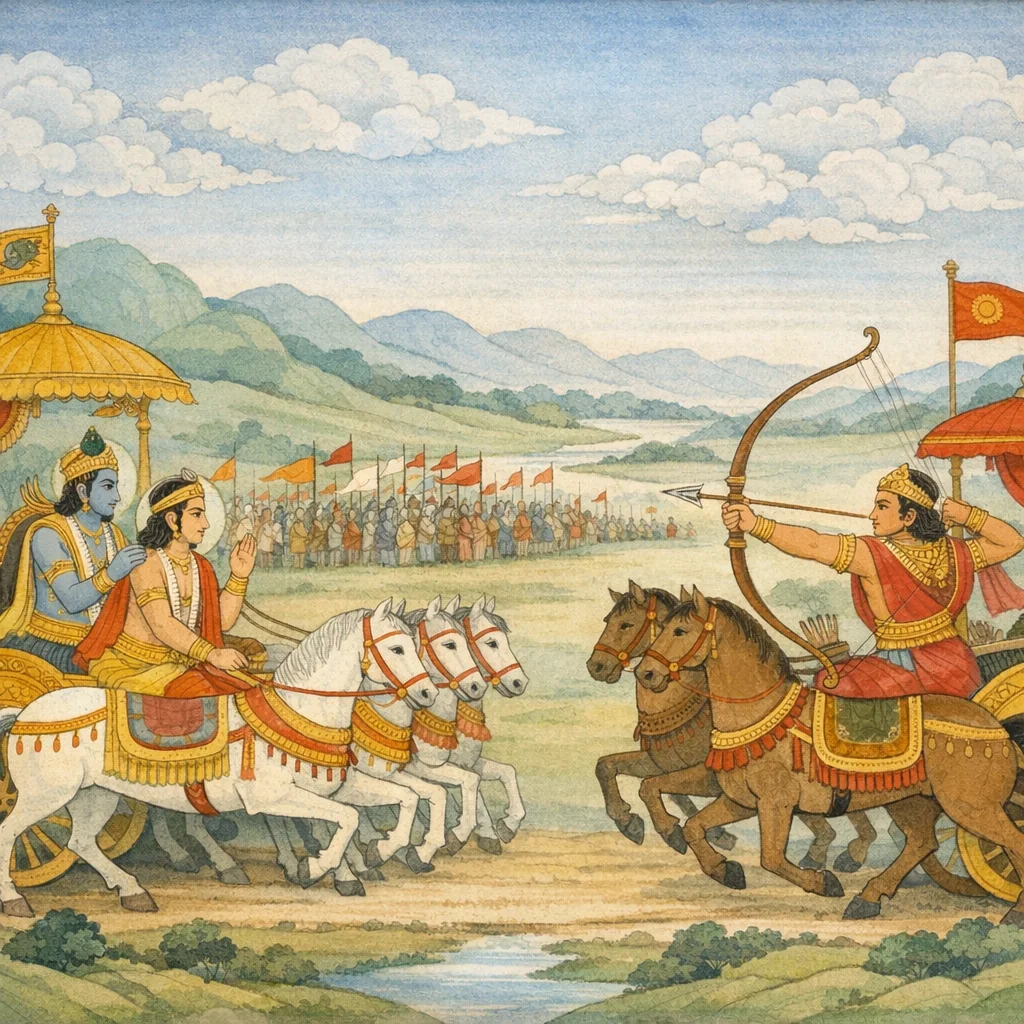
Chapter Arc: संजय धृतराष्ट्र से कहता है कि सीमा लाँघकर आगे बढ़ते हुए, समुद्र-से विशाल और गर्जनशील कर्ण का रथ रणभूमि में बढ़ रहा है; उसी क्षण अर्जुन, दाशार्ह कृष्ण से हँसते हुए संकेत करता है—“वह श्वेताश्वों वाला शल्य-सारथि रथ आ रहा है।” → कृष्ण अर्जुन को स्थिर होने का उपदेश देते हैं—जिससे तुम्हें युद्ध करना है, उसे देखो: कर्ण का रथ सुसज्जित है, धनुष की टंकार भारी ध्वनियों को दबा देती है, चारों ओर शंख-नाद, दुन्दुभि और सिंहनाद उठते हैं। कर्ण की आभा इन्द्र के धनुष-सा, आकाश को उकेरती हुई प्रतीत होती है; उसके आगमन से दोनों सेनाओं में भय और उत्कंठा फैलती है। → कृष्ण अर्जुन के भीतर के संशय को काटते हुए कर्ण-वध का स्पष्ट आदेश देते हैं—“जहि कर्ण… वृत्रहा यथा”; और यह भी कि कर्ण के बाणों को सहने वाला दूसरा कोई नहीं, इसलिए पूर्ण प्रयत्न से उसी का वध करना चाहिए। कर्ण को महादेव-तुल्य उग्र, दुर्जय बताकर भी कृष्ण अर्जुन को विजय-विश्वास देते हैं। → अध्याय का निष्कर्ष एक निर्णायक मानसिक तैयारी है: अर्जुन का लक्ष्य स्थिर होता है, कर्ण के प्रति युद्ध-प्रतिज्ञा दृढ़ होती है, और रणभूमि का शोर एक ‘महायुद्ध’ के आरम्भ-घोष में बदल जाता है। → कर्ण और अर्जुन के रथ आमने-सामने आने ही वाले हैं—अगला क्षण सीधे महाद्वंद्व के प्रहारों में फूटेगा।
Shlokas
Verse 1
इस प्रकार श्रीमहाभारत कर्णपर्वमें वृषसेनका वधविषयक पचासीवाँ अध्याय पूरा हुआ ॥/ ८५ ॥ नशा (0) आज अन+- षडशीतितमो<्ध्याय: कर्णके साथ युद्ध करनेके विषयमें श्रीकृष्ण और पा की बातचीत तथा अर्जुनका कर्णके सामने उपस्थित संजय उवाच तमायान्तमभिप्रेक्ष्य वेलोद्वृत्तमिवार्णवम् । गर्जन्तं सुमहाकायं दुर्निवारं सुरैरपि,संजय कहते हैं--राजन्! सीमाको लाँधकर आगे बढ़ते हुए महासागरके सदृश विशालकाय कर्ण गर्जना करता हुआ आगे बढ़ा। वह देवताओंके लिये भी दुर्जय था। उसे आते देख दशार्हकुलनन्दन पुरुषश्रेष्ठ भगवान् श्रीकृष्णने हँसकर अर्जुनसे कहा--'पार्थ! जिसके सारथि शल्य हैं और रथमें श्वेत घोड़े जुते हैं, वही यह कर्ण रथसहित इधर आ रहा है महामना पाण्डुकुमार अर्जुनके ऐसा कहनेपर भगवान् श्रीकृष्णने विजयसूचक आशीर्वादके द्वारा उनका आदर करके उस समय मनके समान वेगशाली घोड़ोंको तीव्रवेगसे आगे बढ़ाया। पाण्डुपुत्र अर्जुनका वह मनोजव रथ एक ही क्षणमें कर्णके रथके सामने जाकर खड़ा हो गया ।। इति श्रीमहाभारते कर्णपर्वणि कर्णार्जुनद्वैरथे वासुदेववाक्ये षडशीतितमो<ध्याय: ।। ८६ ।। इस प्रकार श्रीमह्याभारत कर्णपर्वमें कर्ण और अजुनिके द्वैरथयुद्धके प्रसंगें भगवान् श्रीकृष्णका वाक्यविषयक छियासीवाँ अध्याय पूरा हुआ ॥/ ८६ ॥/ ऑप--+ह-< बक। ] अि्शशाएड<ह सप्ताशीतितमोब ध्याय: कर्ण और अर्जुनका द्वैरथयुद्धमें समागम, उनकी जय- पराजयके सम्बन्धमें सब प्राणियोंका संशय, ब्रह्मा और महादेवजीद्वारा अर्जुनकी विजय-घोषणा तथा कर्णकी शल्यसे और अर्जुनकी श्रीकृष्णसे वार्ता संजय उवाच वृषसेनं हतं दृष्टवा शोकामर्षसमन्वित: । पुत्रशोकोद्धवं वारि नेत्राभ्यां समवासृजत्
Sañjaya said: “O King, seeing him advancing—like the ocean swelling beyond its shoreline—Karna, of immense stature, came forward roaring. He was a force that even the gods would find hard to restrain.”
Verse 2
अर्जुन प्राह दाशार्ह: प्रहस्य पुरुषर्षभ: । अयं सरथ आयाति श्वेताश्वः शल्यसारथि:,संजय कहते हैं--राजन्! सीमाको लाँधकर आगे बढ़ते हुए महासागरके सदृश विशालकाय कर्ण गर्जना करता हुआ आगे बढ़ा। वह देवताओंके लिये भी दुर्जय था। उसे आते देख दशार्हकुलनन्दन पुरुषश्रेष्ठ भगवान् श्रीकृष्णने हँसकर अर्जुनसे कहा--'पार्थ! जिसके सारथि शल्य हैं और रथमें श्वेत घोड़े जुते हैं, वही यह कर्ण रथसहित इधर आ रहा है
Sañjaya said: Then Dāśārha Kṛṣṇa—the bull among men—smiled and spoke to Arjuna: “Look, that warrior is approaching with his chariot: the one whose horses are white and whose charioteer is Śalya.”
Verse 3
येन ते सह योद्धव्यं स्थिरो भव धनंजय । पश्य चैनं समायुक्तं रथं कर्णस्य पाण्डव
Sañjaya said: “O Dhanañjaya (Arjuna), be steady and resolute, for it is with him that you must engage in battle. Look, O Pāṇḍava—behold Karṇa’s chariot, fully harnessed and ready.”
Verse 4
नानापताकाकलिलं किड्किणीजालमालिनम्,“इसपर भाँति-भाँतिकी पताकाएँ फहरा रही हैं तथा वह छोटी-छोटी घंटियोंवाली झालरसे अलंकृत है। ये सफेद घोड़े आकाशमें विमानके समान इस रथको लेकर मानो उड़े जा रहे हैं। महामनस्वी कर्णकी इस ध्वजाको तो देखो, जिसमें हाथीके रस्सेका चिह्न बना हुआ है
Sanjaya said: “That chariot is crowded with many kinds of fluttering banners and adorned with a net of small tinkling bells. Drawn by white horses, it seems to glide through the sky like a celestial car. Behold the standard of the great-souled Karna—marked with the emblem of an elephant’s rope—proclaiming his warrior identity and steadfast resolve amid the moral gravity of war.”
Verse 5
उह्यमानमिवाकाशे विमान पाण्ड्रैर्हयै: । ध्वजं च पश्य कर्णस्य नागकक्षं महात्मन:,“इसपर भाँति-भाँतिकी पताकाएँ फहरा रही हैं तथा वह छोटी-छोटी घंटियोंवाली झालरसे अलंकृत है। ये सफेद घोड़े आकाशमें विमानके समान इस रथको लेकर मानो उड़े जा रहे हैं। महामनस्वी कर्णकी इस ध्वजाको तो देखो, जिसमें हाथीके रस्सेका चिह्न बना हुआ है
Sanjaya said: “Look at Karna’s banner—marked with the emblem of an elephant’s girth-rope—belonging to that great-souled warrior. Drawn by pale-white horses, his chariot seems to be borne through the sky like a celestial craft, as though it were flying. The sight heightens the battlefield’s moral tension: splendor and martial prowess blaze at their peak, even as the war’s destructive stakes press upon all.”
Verse 6
आखण्डलथनु:प्रख्यमुल्लिखन्तमिवाम्बरम् । पश्य कर्ण समायान्तं धार्तराष्ट्रप्रियेषिणम्
Sanjaya said: “Behold, O Karna—he is coming toward you as if he were scoring the very sky, famed for a bow like that of Ākhaṇḍala (Indra). He advances with a single aim: to do what is dear to the son of Dhṛtarāṣṭra.”
Verse 7
एष मद्रेश्व॒रो राजा रथाग्रे पर्यवस्थित:
Sanjaya said: “Here stands the king, the lord of Madra, positioned at the very front of the chariot.”
Verse 8
शृणु दुन्दुभिनिर्घोषं शड्खशब्दं च दारुणम्
Sanjaya said: “Listen—there is the booming roar of the war-drums, and the harsh, dreadful blare of conch-shells.”
Verse 9
अन्तर्धाय महाशब्दान् कर्णेनामिततेजसा
Sañjaya said: Then Karṇa, of immeasurable splendor, made the great clamors and thunderous sounds vanish—his overpowering presence and action silencing the tumult of battle.
Verse 10
एते दीर्यन्ति सगणा: पठ्चालानां महारथा:
Sañjaya said: “These great chariot-warriors of the Pāñcālas, along with their companies, are being torn apart (in battle).” The line underscores the grim momentum of war: even renowned champions, supported by their troops, are reduced by the relentless violence of the Kurukṣetra conflict.
Verse 11
दृष्टवा केसरिणं क्रुद्धं मृगा इव महावने । “जैसे महान् वनमें मृग कुपित हुए सिंहको देखकर भागने लगते हैं, उसी प्रकार ये पांचाल महारथी अपने सैन्यदलके साथ कर्णको देखकर भागे जा रहे हैं ।। सर्वयत्नेन कौन्तेय हन्तुमहसि सूतजम्
Sanjaya said: “Just as deer in a vast forest flee when they see an enraged lion, so too these Panchala great chariot-warriors, along with their troops, are retreating on seeing Karna. Therefore, O son of Kunti, you must strive with every effort to slay the charioteer’s son.”
Verse 12
सदेवासुरगन्धर्वास्त्रील्लॉकान् सचराचरान्
Sañjaya said: “(He beheld/overwhelmed) the three worlds—together with the gods, the asuras, and the gandharvas—indeed all that moves and all that is unmoving.”
Verse 13
भीममुग्र॑ महात्मानं त्र्यक्ष॑ शर्व॑ कपर्दिनम्,“जिनकी मूर्ति बड़ी ही उग्र और भयंकर है, जो महात्मा हैं, जिनके तीन नेत्र और मस्तकपर जटाजूट है, उन सर्वसमर्थ ईश्वर भगवान् शंकरको दूसरे लोग देख भी नहीं सकते फिर उनके साथ युद्ध करनेकी तो बात ही कया है? परंतु तुमने सम्पूर्ण जीवोंका कल्याण करनेवाले उन्हीं स्थाणुस्वरूप महादेव साक्षात् भगवान् शिवकी युद्धके द्वारा आराधना की है, अन्य देवताओंने भी तुम्हें वरदान दिये है; इसलिये महाबाहु पार्थ! तुम उन देवाधिदेव त्रिशूलधारी भगवान् शंकरकी कृपासे कर्णको उसी प्रकार मार डालो, जैसे वृत्रविनाशक इन्द्रने नमुचिका वध किया था। कुन्तीनन्दन! तुम्हारा सदा ही कल्याण हो। तुम युद्धमें विजय प्राप्त करो”
Sanjaya said: “That awe-inspiring, mighty-souled Lord—three-eyed, Shara, the matted-haired one—cannot even be beheld by ordinary beings; how then could anyone speak of fighting Him? Yet you have worshipped that very Mahadeva—Shiva Himself, the steadfast one—through battle, for the welfare of all creatures. Other gods too have granted you boons. Therefore, O mighty-armed Partha, by the grace of Shankara, the trident-bearing Lord of the gods, strike down Karna just as Indra, the slayer of Vritra, killed Namuci. O son of Kunti, may you ever be blessed; win victory in this war.”
Verse 14
नशक्ता द्रष्टमीशानं किं पुनर्योधितुं प्रभुम् त्वया साक्षान्महादेव: सर्वभूतशिव: शिव:,“जिनकी मूर्ति बड़ी ही उग्र और भयंकर है, जो महात्मा हैं, जिनके तीन नेत्र और मस्तकपर जटाजूट है, उन सर्वसमर्थ ईश्वर भगवान् शंकरको दूसरे लोग देख भी नहीं सकते फिर उनके साथ युद्ध करनेकी तो बात ही कया है? परंतु तुमने सम्पूर्ण जीवोंका कल्याण करनेवाले उन्हीं स्थाणुस्वरूप महादेव साक्षात् भगवान् शिवकी युद्धके द्वारा आराधना की है, अन्य देवताओंने भी तुम्हें वरदान दिये है; इसलिये महाबाहु पार्थ! तुम उन देवाधिदेव त्रिशूलधारी भगवान् शंकरकी कृपासे कर्णको उसी प्रकार मार डालो, जैसे वृत्रविनाशक इन्द्रने नमुचिका वध किया था। कुन्तीनन्दन! तुम्हारा सदा ही कल्याण हो। तुम युद्धमें विजय प्राप्त करो”
Sañjaya said: “Others are not even able to behold Īśāna; how much less could they fight that Supreme Lord? Yet you have truly worshipped Mahādeva himself in battle—Śiva, the auspicious benefactor of all beings. Therefore, O mighty-armed Pārtha, by the grace of that God of gods, the trident-bearing Śaṅkara, strike down Karṇa just as Indra, the slayer of Vṛtra, killed Namuci. Son of Kuntī, may you ever be blessed; win victory in this war.”
Verse 15
युद्धेनाराधित: स्थाणुर्देवाश्न॒ वरदास्तव । तस्य पार्थ प्रसादेन देवदेवस्थ शूलिन:,“जिनकी मूर्ति बड़ी ही उग्र और भयंकर है, जो महात्मा हैं, जिनके तीन नेत्र और मस्तकपर जटाजूट है, उन सर्वसमर्थ ईश्वर भगवान् शंकरको दूसरे लोग देख भी नहीं सकते फिर उनके साथ युद्ध करनेकी तो बात ही कया है? परंतु तुमने सम्पूर्ण जीवोंका कल्याण करनेवाले उन्हीं स्थाणुस्वरूप महादेव साक्षात् भगवान् शिवकी युद्धके द्वारा आराधना की है, अन्य देवताओंने भी तुम्हें वरदान दिये है; इसलिये महाबाहु पार्थ! तुम उन देवाधिदेव त्रिशूलधारी भगवान् शंकरकी कृपासे कर्णको उसी प्रकार मार डालो, जैसे वृत्रविनाशक इन्द्रने नमुचिका वध किया था। कुन्तीनन्दन! तुम्हारा सदा ही कल्याण हो। तुम युद्धमें विजय प्राप्त करो”
Sañjaya said: By battle you have worshipped and won the favor of Sthāṇu (Śiva), and the gods too have granted you boons. Therefore, O Pārtha, by the grace of that God of gods, the trident-bearing Lord, strike down Karṇa—just as Indra, the slayer of Vṛtra, killed Namuci. May auspiciousness ever attend you; win victory in this war.
Verse 16
जहि कर्ण महाबाहो नमुचिं वृत्रहा यथा । श्रेयस्ते5स्तु सदा पार्थ युद्धे जयमवाप्नुहि,“जिनकी मूर्ति बड़ी ही उग्र और भयंकर है, जो महात्मा हैं, जिनके तीन नेत्र और मस्तकपर जटाजूट है, उन सर्वसमर्थ ईश्वर भगवान् शंकरको दूसरे लोग देख भी नहीं सकते फिर उनके साथ युद्ध करनेकी तो बात ही कया है? परंतु तुमने सम्पूर्ण जीवोंका कल्याण करनेवाले उन्हीं स्थाणुस्वरूप महादेव साक्षात् भगवान् शिवकी युद्धके द्वारा आराधना की है, अन्य देवताओंने भी तुम्हें वरदान दिये है; इसलिये महाबाहु पार्थ! तुम उन देवाधिदेव त्रिशूलधारी भगवान् शंकरकी कृपासे कर्णको उसी प्रकार मार डालो, जैसे वृत्रविनाशक इन्द्रने नमुचिका वध किया था। कुन्तीनन्दन! तुम्हारा सदा ही कल्याण हो। तुम युद्धमें विजय प्राप्त करो”
Sañjaya said: “Slay Karṇa, O mighty-armed Pārtha, as Vṛtrahā (Indra, the slayer of Vṛtra) slew Namuci. May the highest good be ever yours; attain victory in battle.”
Verse 17
अजुन उवाच ध्रुव एव जय: कृष्ण मम नास्त्यत्र संशय: । सर्वलोकगुरुर्यस्त्वं तुष्टो$सि मधुसूदन,अर्जुनने कहा--मधुसूदन श्रीकृष्ण! मेरी विजय अवश्य होगी, इसमें संशय नहीं है; क्योंकि सम्पूर्ण जगत्के गुरु आप मुझपर प्रसन्न हैं
Arjuna said: “Victory is surely mine, O Krishna; of this there is no doubt. For you—teacher of all the worlds—are pleased with me, O Madhusudana.”
Verse 18
चोदयाश्वान् हृषीकेश रथं मम महारथ । नाहत्वा समरे कर्ण निवर्तिष्यति फाल्गुन:,महारथी हृषीकेश! आप मेरे रथ और घोड़ोंको आगे बढ़ाइये। अब अर्जुन समरांगणमें कर्णका वध किये बिना पीछे नहीं लौटेगा
Arjuna said: “O Hṛṣīkeśa, O great warrior, urge on the horses and drive my chariot forward. Phālguna will not turn back from this battlefield until he has slain Karṇa.”
Verse 19
अद्य कर्ण हतं पश्य मच्छर: शकलीकृतम् । मां वा द्रक्ष्यसि गोविन्द कर्णेन निहतं शरै:,गोविन्द! आज आप मेरे बाणोंसे भरकर टुकड़े-टुकड़े हुए कर्णको देखिये। अथवा मुझे ही कर्णके बाणोंसे मरा हुआ देखियेगा
Arjuna said: “Today, Govinda, behold Karṇa—slain and shattered into pieces by my arrows. Or else you will see me myself, struck down by Karṇa’s shafts. Let this day decide which of us stands by strength and fate in this righteous war.”
Verse 20
उपस्थितमिदं घोरें युद्ध त्रलोक्यमोहनम् । यज्जना: कथयिष्यन्ति यावद् भूमिर्धरिष्यति,आज तीनों लोकोंको मोहमें डालनेवाला यह घोर युद्ध उपस्थित है। जबतक पृथ्वी कायम रहेगी तबतक संसारके लोग इस युद्धकी चर्चा करेंगे
Arjuna said: “This dreadful war, which will bewilder the three worlds, now stands before us. So long as the earth endures, people will speak of it.”
Verse 21
एवं ब्रुवंस्तदा पार्थ: कृष्णमक्लिष्टकारिणम् । प्रत्युद्ययौ रथेनाशु गजं प्रतिगजो यथा,अनायास ही महान् कर्म करनेवाले भगवान् श्रीकृष्णसे ऐसा कहते हुए कुन्तीकुमार अर्जुन उस समय रथके द्वारा शीघ्रतापूर्वक कर्णके सामने गये, मानो किसी हाथीका सामना करनेके लिये प्रतिद्वन्द्ी हाथी जा रहा हो
Arjuna said: Speaking thus to Krishna, the tireless doer of mighty deeds, Partha at once drove forth swiftly in his chariot to meet Karna—like a rival elephant rushing to confront an elephant. The verse underscores Arjuna’s resolute acceptance of the warrior’s duty, carried out with reliance on Krishna’s steadfast guidance amid the moral gravity of battle.
Verse 22
पुनरप्याह तेजस्वी पार्थ: कृष्णमरिंदमम् । चोदयाश्वान् हषीकेश कालो5यमतिवर्तते,उस समय तेजस्वी पार्थने शत्रुदमन श्रीकृष्णसे पुनः इस प्रकार कहा--'हृषीकेश! मेरे घोड़ोंको हाँकिये, यह समय बीता जा रहा है”
Then the radiant Pārtha (Arjuna) again addressed Kṛṣṇa, the subduer of foes: “Hṛṣīkeśa, urge on the horses—this moment is slipping away.” In the press of battle, Arjuna’s words convey the ethical urgency of timely action: delay can endanger one’s duty and the lives depending on decisive leadership.
Verse 23
एवमुक्तस्तदा तेन पाण्डवेन महात्मना । जयेन सम्पूज्य स पाण्डवं तदा प्रचोदयामास हयान् मनोजवान् । स पाणए्डुपुत्रस्य रथो मनोजव: क्षणेन कर्णस्य रथाग्रतो5भवत्
Thus addressed at that time by the great-souled Pāṇḍava, the charioteer—honouring the Pāṇḍava with a cry of victory—urged on the swift horses. In an instant, the fast-moving chariot of Pāṇḍu’s son came to the very front of Karṇa’s chariot. The moment underscores disciplined obedience and purposeful action in battle: honour is expressed not by words alone, but by prompt, skillful service aligned with one’s duty.
Verse 33
श्वेतवाजिसमायुक्तं युक्त राधासुतेन च । “धनंजय! तुम्हें जिसके साथ युद्ध करना है, वह कर्ण आ गया। अब स्थिर हो जाओ। पाण्डुनन्दन! श्वेत घोड़ोंसे जुते हुए कर्णके इस सजे-सजाये रथको, जिसपर वह स्वयं विराजमान है, देखो
Sañjaya said: “O Dhanañjaya (Arjuna), the one with whom you must fight—Karna—has arrived. Now stand firm. O son of Pāṇḍu, behold Karna’s well-adorned chariot, yoked to white horses, with Karna himself seated upon it.”
Verse 66
शरधारा विमुञ्चन्तं धारासारमिवाम्बुदम् । वह ध्वज इन्द्रधनुषके समान प्रकाशित होता हुआ आकाशमें रेखा-सा खींच रहा है। देखो, दुर्योधनका प्रिय चाहनेवाला कर्ण इधर ही आ रहा है। वह जलकी धारा गिरानेवाले बादलके समान बाणधाराकी वर्षा कर रहा है
Sañjaya said: “He is releasing a torrent of arrows, like a rain-cloud pouring down dense streams. His banner, shining like a rainbow, seems to draw a line across the sky. Look—Karna, intent on what pleases Duryodhana, is coming this way, showering arrow-showers like a cloud that lets fall sheets of water.”
Verse 76
नियच्छति हयानस्य राधेयस्यामितौजस: । 'ये मद्रदेशके स्वामी राजा शल्य रथके अग्रभागमें बैठकर अमित बलशाली इस राधापुत्र कर्णके घोड़ोंको काबूमें रख रहे हैं
Sañjaya said: “King Śalya, the lord of the Madra country, seated at the front of the chariot, was restraining and guiding the horses of Rādheya (Karna), the warrior of immeasurable might.”
Verse 83
सिंहनादांश्व विविधान् शृणु पाण्डव सर्वतः । 'पाण्डुनन्दन! सुनो, दुन्दुभिका गम्भीर घोष और भयंकर शंखध्वनि हो रही है। चारों ओर नाना प्रकारके सिंहनाद भी होने लगे हैं, इन्हें सुनो
Sañjaya said: “O Pandava, listen—on every side there are many kinds of lion-like battle-cries resounding.”
Verse 96
दोधूयमानस्य भृशं धनुष: शृणु नि:स्वनम् । “अमित तेजस्वी कर्ण अपने धनुषको बड़े वेगसे हिला रहा है। उसकी टंकारथ्वनि बड़ी भारी आवाजको भी दबाकर सुनायी पड़ रही है, सुनो
Sañjaya said: “Listen to the resounding twang of the bow as it is being shaken with great force. Karṇa, blazing with immeasurable prowess, is whirling his bow so powerfully that its reverberation seems to drown out even other mighty sounds—hear it.”
Verse 116
न हि कर्णशरानन्य: सोदुमुत्सहते नर: । “कुन्तीनन्दन! तुम्हें पूर्ण प्रयत्न करके सूतपुत्र कर्णका वध करना चाहिये। दूसरा कोई मनुष्य कर्णके बाणोंको नहीं सह सकता है
Sañjaya said: “No man but you has the strength to endure Karṇa’s arrows. Therefore, O son of Kuntī, you must strive with all your might and slay Karṇa, the charioteer’s son; for no other can bear Karṇa’s shafts.”
Verse 1236
त्वं हि जेतुं रणे शक्तस्तथैव विदितं मम । “देवता, असुर, गन्धर्व तथा चराचर प्राणियोंसहित तीनों लोकोंको तुम रणभूमिमें जीत सकते हो; यह मुझे अच्छी तरह मालूम है
Sañjaya said: “You are indeed able to conquer in battle—this I know well. Even with the gods, the asuras, and the gandharvas, and with all beings moving and unmoving, you could subdue the three worlds upon the field of war; of this I am wholly certain.”