Adhyaya 22
Karṇa’s Camp-Council Discourse: Dhṛtarāṣṭra’s Lament, Sañjaya’s Counsel, and Karṇa’s Request for Śalya (Book 8, Chapter 22)
Upa-parva: Kaurava-śibira-mantraṇā (Council in the Kaurava Camp) — Karṇa’s Resolve and the Request for Śalya as Charioteer
Dhṛtarāṣṭra opens by emphasizing Arjuna’s singular prowess through a catalogue of past exploits, implying that even formidable adversaries cannot easily escape him in battle. Sañjaya reports the Kaurava camp’s distressed condition and describes renewed deliberations. Karṇa, angered yet calculating, attributes the day’s reversal to Arjuna’s readiness and to timely inspiration, promising to counter Arjuna’s intentions on the following day. Dhṛtarāṣṭra presses for details on Karṇa’s conduct and the renewed fighting. Sañjaya interjects a reflective admonition: regret after missed opportunities is unproductive, and Dhṛtarāṣṭra’s earlier failures of judgment have contributed to the present destruction. At dawn, Karṇa approaches Duryodhana, declares his intent to meet Arjuna decisively, and analyzes comparative resources—Arjuna’s famed Gāṇḍīva, divine equipment, and Kṛṣṇa’s charioteership—contrasted with Karṇa’s own bow (Vijaya) and martial capacity. To neutralize disadvantages, Karṇa requests Śalya as charioteer and logistical support for specialized missiles; Duryodhana assents and moves to secure Śalya, closing the chapter on a concrete strategic reconfiguration.
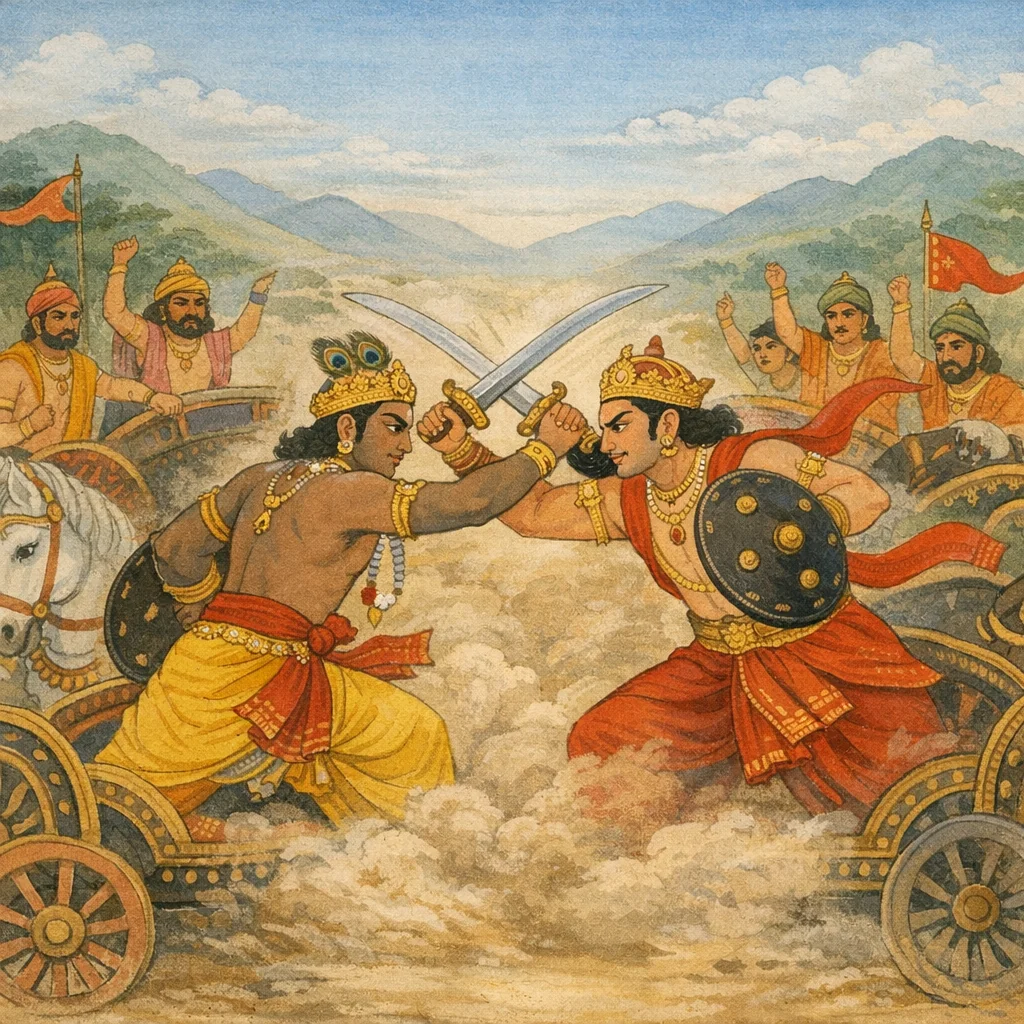
Chapter Arc: संजय धृतराष्ट्र को दिखाते हैं—सहदेव क्रोधाग्नि-सा धधकता हुआ कौरव वाहिनी को जलाता बढ़ रहा है; तभी भाई-द्वेष और कुल-रक्षा के आवेग में दुःशासन उसे रोकने को ललकारता है। → दोनों भाई रणभूमि में आमने-सामने आते हैं; आसपास खड़े महारथी सिंहनाद करते हैं, वस्त्र झटकते हैं—मानो युद्ध का रंगमंच स्वयं श्वास रोक ले। धनुष-बाण, फिर तलवार और पुनः धनुष—अस्त्रों का क्रम बदलता है, और प्रहारों की तीव्रता बढ़ती जाती है। → दुःशासन सहदेव पर तीखी तलवार घुमाकर वार करता है, फिर दूसरा धनुष लेकर बाण साधता है; प्रत्युत्तर में सहदेव की प्रहार-श्रृंखला और रथ-युद्ध की गति इतनी तीव्र हो जाती है कि अंततः वह दुःशासन को रण में पराजित कर देता है। → दुःशासन की पराजय के बाद सहदेव दुर्योधन की सेना/बल को देखकर उसे भी दबाने-रौंदने लगता है—कौरवी सेना ‘पिपीलिका’ (चींटी) की तरह मर्दित-सी प्रतीत होती है। → पराजय के अपमान से तिलमिलाए कौरव पक्ष की प्रतिक्रिया और दुर्योधन-बल का प्रत्याघात अगले प्रसंग में और उग्र होने का संकेत देता है।
Shlokas
Verse 1
ऑपनआक्ाता बा अकाल त्रयोविशो5 ध्याय: सहदेवके द्वारा दःशासनकी पराजय संजय उवाच सहदेवं तथा क्रुद्धं दहन्तं तव वाहिनीम् । दुःशासनो महाराज भ्राता भ्रातरमभ्ययात्,संजय कहते हैं--महाराज! सहदेव क्रोधमें भरकर आपकी विशाल सेनाको दग्ध करने लगे। उस समय भाई दुःशासनने अपने उस भ्राताका सामना किया
Sanjaya said: “O King, Sahadeva, inflamed with wrath, began to burn through your vast host. At that moment your brother Duhshasana advanced to confront his brother.”
Verse 2
तौ समेतौ महायुद्धे दृष्टवा तत्र महारथा: । सिंहनादरवांक्षक्रुर्वासांस्यादुधुवुश्चव ह,उस महायुद्धमें उन दोनों भाइयोंको एकत्र हुआ देख वहाँ खड़े हुए महारथी योद्धा सिंहनाद करने और वस्त्र हिलाने लगे
Sanjaya said: Seeing those two brothers come together on that field of great battle, the mighty chariot-warriors standing there raised lion-like roars and waved their garments in excitement.
Verse 3
ततो भारत क्रुद्धेन तव पुत्रेण धन्विना । पाण्डुपुत्रस्त्रिभिर्बाणैर्वक्षस्थभिहतो बली,भारत! उस समय कुपित हुए आपके धनुर्धर पुत्रने अपने तीन बाणोंद्वारा बलवान् पाण्डुपुत्र सहदेवकी छातीमें गहरा आघात किया
Then, O Bharata, your son—the archer—angered in battle, struck the mighty son of Pandu, Sahadeva, on the chest with three arrows.
Verse 4
सहदेवस्ततो राजन् नाराचेन तवात्मजम् | विद्ध्वा विव्याध सप्तत्या सारथिं च त्रिभि: शरै:,राजन्! तब सहदेवने आपके पुत्रको एक नाराचसे घायल करके पुनः सत्तर बाणोंसे बींध डाला। तत्पश्चात् उनके सारथिको भी तीन बाण मारे
Sañjaya said: “Then, O King, Sahadeva struck your son with a nārāca, a heavy iron arrow. Having pierced him, he further transfixed him with seventy arrows, and he also wounded his charioteer with three shafts.”
Verse 5
दुःशासनस्ततकश्चापं छित्त्वा राजन् महाहवे । सहदेवं त्रिसप्तत्या बाह्वोरुरसि चार्पयत्,राजन्! उस महासमरमें दुःशासनने सहदेवका धनुष काटकर उनकी दोनों भुजाओं और छातीमें तिहत्तर बाण मारे
Sañjaya said: “O King, in that great battle Duḥśāsana cut down Sahadeva’s bow and then drove seventy-three arrows into Sahadeva—striking his arms and his chest.”
Verse 6
सहदेवस्तु संक्रुद्ध: खड्ग॑ गृह महाहवे । आविध्य प्रासृजत् तूर्ण तव पुत्ररथं प्रति,तब सहदेवने अत्यन्त कुपित होकर उस महासमरमें तलवार उठा ली और उसे घुमाकर तुरंत ही आपके पुत्रके रथकी ओर फेंका
Sañjaya said: “Sahadeva, inflamed with anger, seized his sword in that great battle. Whirling it, he hurled it swiftly toward the chariot of your son.”
Verse 7
समार्गणगुणं चापं छित्त्वा तस्यप महानसि: । निपपात ततो भूमौ च्युत: सर्प इवाम्बरात्,उनकी वह लंबी तलवार दुःशासनके धनुष, बाण और प्रत्यंचाकों काटकर आकाशसे भ्रष्ट हुए सर्पकी भाँति वहाँ पृथ्वीपर गिर पड़ी
Sañjaya said: “Having cut down his well-strung bow—together with its fittings—the mighty sword then fell to the earth, like a serpent dropping from the sky.”
Verse 8
अथान्यद् धनुरादाय सहदेव: प्रतापवान् | दुःशासनाय चिक्षेप बाणमन्तकरं ततः,तदनन्तर प्रतापी सहदेवने दूसरा धनुष लेकर दुःशासनपर एक विनाशकारी बाणका प्रहार किया
Sañjaya said: “Then the valiant Sahadeva took up another bow and hurled a death-dealing arrow at Duhshasana.”
Verse 9
तमापतन्तं विशिखं यमदण्डोपमत्विषम् | खड्गेन शितधारेण द्विधा चिच्छेद कौरव:,यमदण्डके समान प्रकाशित होनेवाले उस बाणको आते देख कुरुवंशी दुःशासनने तीखी धारवाले खड्गसे उसके दो टुकड़े कर डाले
Sañjaya said: Seeing that arrow rushing toward him, blazing like Yama’s rod of punishment, the Kaurava (Duḥśāsana) cleaved it in two with his keen-edged sword. The scene reveals the grim precision of battlefield skill—lethal intent met not with pause but with swift counterstroke, and the instruments of death treated as things to be mastered rather than feared.
Verse 10
ततस्तं निशितं खड्गमाविध्य युधि सत्वर: । धनुश्नान्यत् समादाय शरं जग्राह वीर्यवान्
Sañjaya said: Then, swiftly in the midst of battle, the mighty warrior brandished that keen-edged sword; taking up another bow, he seized an arrow—showing unbroken resolve and readiness to continue the fight despite the shifting fortunes of war.
Verse 11
तत्पश्चात् दुःशासनने युद्धस्थलमें तुरंत ही तीखी तलवार घुमाकर सहदेवपर दे मारी; फिर उस पराक्रमी वीरने दूसरा धनुष लेकर उसपर बाणका संधान किया ।। तमापतन्तं सहसा निस्त्रिंशं निशितै: शरै: । पातयामास समरे सहदेवो हसन्निव,सहदेवने हँसते हुए-से सहसा अपनी ओर आती हुई उस तलवारको तीखे बाणोंसे समरभूमिमें गिरा दिया
Sañjaya said: Next, Duḥśāsana swiftly whirled his keen sword on the battlefield and hurled it at Sahadeva; then that valiant warrior took up another bow and set an arrow to aim at him. But as the sword came suddenly hurtling in, Sahadeva—calm, as if smiling—brought it down in the fight with sharp arrows, casting it to the ground. The scene shows disciplined warcraft: even amid lethal aggression, Sahadeva’s composure and measured reply restrain chaos and uphold the kṣatriya code of controlled, purposeful combat.
Verse 12
ततो बाणांश्षतुःषष्टिं तव पुत्रो महारणे | सहदेवरथं तूर्ण प्रेषयामास भारत,भारत! इतनेहीमें आपके पुत्रने उस महासमरमें सहदेवपर तुरंत ही चौंसठ बाण चलाये
Sañjaya said: Then, in that great battle, your son swiftly discharged sixty-four arrows at Sahadeva’s chariot. The narration underscores the relentless tempo of war, where prowess is displayed through rapid, measured volleys, even as the moral weight of striking one’s kin remains implicit in the Kurukṣetra conflict.
Verse 13
तान् शरान् समरे राजन् वेगेनापततो बहून् । एकैकं पजञ्चभिर्बाणै: सहदेवो नन््यकृन्तत,राजन! सहदेवने रणभूमिमें वेगसे आते हुए उन बहुसंख्यक बाणोंमेंसे प्रत्येकको पाँच- पाँच बाण मारकर काट गिराया
Sañjaya said: O King, in that battle Sahadeva swiftly intercepted the many arrows that were rushing in with force, and he cut down each one by striking it with five arrows. The scene underscores disciplined martial skill used in the service of one’s side in war, where alertness and measured force protect comrades amid chaos.
Verse 14
संनिवार्य महाबाणांस्तव पुत्रेण प्रेषितान् अथास्मै सुबहून् बाणान् प्रेषयामास संयुगे,इस प्रकार आपके पुत्रके चलाये हुए उन महाबाणोंका निवारण करके युद्धस्थलमें सहदेवने उसके ऊपर भी बहुत-से बाण छोड़े
Sañjaya said: Having checked the mighty arrows shot by your son, Sahadeva then, in the thick of battle, sent a great many arrows back at him—meeting force with force in the disciplined exchange of war.
Verse 15
तान् बाणांस्तव पुत्रो5पि छित्त्वैकैकं त्रिभि: शरै: । ननाद सुमहानादं दारयाणो वसुन्धराम्,आपके पुत्रने भी सहदेवके उन बाणोंमेंसे प्रत्येकको तीन-तीन बाणोंसे काटकर पृथ्वीको विदीर्ण-सी करते हुए बड़े जोरसे गर्जना की
Sañjaya said: Your son too cut down each of those arrows, one by one, with three shafts apiece; then, as though rending the very earth, he let out a tremendous roar—an act of martial pride meant to overawe the foe and proclaim dominance in the battle.
Verse 16
ततो दुःशासनो राजन् विद्ध्वा पाण्डुसुतं रणे । सारथिं नवभिर्बाणैमद्रियस्प समार्पयत्,राजन्! इसके बाद दुःशासनने रणभुमिमें पाण्डुकुमार सहदेवको घायल करके उन माद्रीकुमारके सारथिको भी नौ बाण मारे
Sañjaya said: Then, O King, Duḥśāsana, having struck the son of Pāṇḍu in the battle, also pierced the charioteer of Mādrī’s son with nine arrows.
Verse 17
ततः क्रुद्धो महाराज सहदेव: प्रतापवान् | समाधत्त शरं घोर मृत्युकालान्तकोपमम्
Sañjaya said: Then Sahadeva, blazing with wrath and valor, O King, set an arrow upon his bow—terrible in its force, like Death itself at the end of time.
Verse 18
महाराज! इससे कुपित होकर प्रतापी सहदेवने अपने धनुषपर मृत्यु, काल और यमराजके समान भयंकर बाण रखा ।। विकृष्य बलवच्चापं तव पुत्राय सोडसृजत् । स तं निर्भिद्य वेगेन भित्त्वाच कवचं महत्,फिर उस धनुषको बलपूर्वक खींचकर उसने आपके पुत्रपर वह बाण छोड़ दिया। राजन! वह बाण दुःशासनको तथा उसके विशाल कवचको भी वेगपूर्वक विदीर्ण करके बाँबीमें घुसनेवाले सर्पके समान धरतीमें समा गया। महाराज! इससे आपका महारथी पुत्र मूर्च्छित हो गया
Sañjaya said: “O King, provoked to anger by this, the valiant Sahadeva set upon his bow a dreadful arrow, like Death, Time, and Yama himself. Drawing the bow with great force, he released it at your son. That arrow, speeding on, pierced him and tore through his massive armor, then sank into the earth like a serpent slipping into its hole. O King, by this your great chariot-warrior son was struck senseless.”
Verse 19
प्राविशद् धरणीं राजन् वल्मीकमिव पन्नग: । ततः सम्मुमुहे राज॑ंस्तव पुत्रो महारथ:,फिर उस धनुषको बलपूर्वक खींचकर उसने आपके पुत्रपर वह बाण छोड़ दिया। राजन! वह बाण दुःशासनको तथा उसके विशाल कवचको भी वेगपूर्वक विदीर्ण करके बाँबीमें घुसनेवाले सर्पके समान धरतीमें समा गया। महाराज! इससे आपका महारथी पुत्र मूर्च्छित हो गया
Sañjaya said: “O King, the arrow sank into the earth like a serpent entering its anthill. Thereupon, O King, your son—the great chariot-warrior—fell into a swoon.”
Verse 20
मूढं चैनं समालोक्य सारथिस्त्वरितो रथम् | अपोवाह भृशं त्रस्तो वध्यमान: शितै: शरै:,उसे मूर्च्छित देख उसका सारथि तीखे बाणोंकी मार खाकर अत्यन्त भयभीत हो तुरंत ही रथको रणभूमिसे दूर हटा ले गया
Sañjaya said: Seeing him lying senseless, the charioteer—struck by sharp arrows and seized by intense fear—swiftly drove the chariot away from the battlefield.
Verse 21
पराजित्य रणे तं तु कौरव्यं पाण्डुनन्दन: । दुर्योधनबलं दृष्टवा प्रममाथ समनन््तत:,कुरुवंशी दुःशासनको रणभूमिमें पराजित करके पाण्डुनन्दन सहदेवने दुर्योधनकी सेनाको वहाँ उपस्थित देख उसे सब ओरसे मथ डाला
Sañjaya said: Having defeated that Kaurava in battle, the son of Pāṇḍu—on seeing Duryodhana’s forces drawn up there—proceeded to crush them on every side.
Verse 22
इस प्रकार श्रीमह्ाभारत कर्णपर्वमें संकुलयुद्धाविषयक बाईसवाँ अध्याय पूरा हुआ,पिपीलिकपुं राजन् यथा मृदनन्नरो रुषा । तथा सा कौरवी सेना मृदिता तेन भारत भरतवंशी नरेश! जैसे मनुष्य रोषमें आकर चींटियोंके दलको मसल डालता है, उसी प्रकार सहदेवने उस कौरव-सेनाको धूलमें मिला दिया
Sañjaya said: O King, just as a man, seized by anger, crushes a swarm of ants underfoot, so too was that Kaurava host ground down by him, O scion of Bharata.
Verse 23
इति श्रीमहाभारते कर्णपर्वणि सहदेवदु:शासनयुद्धे त्रयोविंशो 5ध्याय:
Thus, in the revered Mahābhārata, within the Karṇa Parva, ends the twenty-third chapter, describing the battle between Sahadeva and Duḥśāsana.
Frequently Asked Questions
The chapter frames a governance dilemma: whether leadership can responsibly persist in a course whose harms are now evident. Sañjaya’s critique highlights accountability and the ethical cost of earlier partial decisions, while the court still pursues tactical remedies rather than moral reversal.
That retrospective anxiety cannot repair what was not done at the proper time; prudent discernment must precede crisis. Excessive rumination after preventable errors becomes self-destructive and fails to change outcomes already set in motion.
No formal phalaśruti appears. The meta-commentary functions implicitly through Sañjaya’s didactic counsel on timely judgment and responsibility, positioning the episode as an interpretive key for understanding causality across the war narrative.