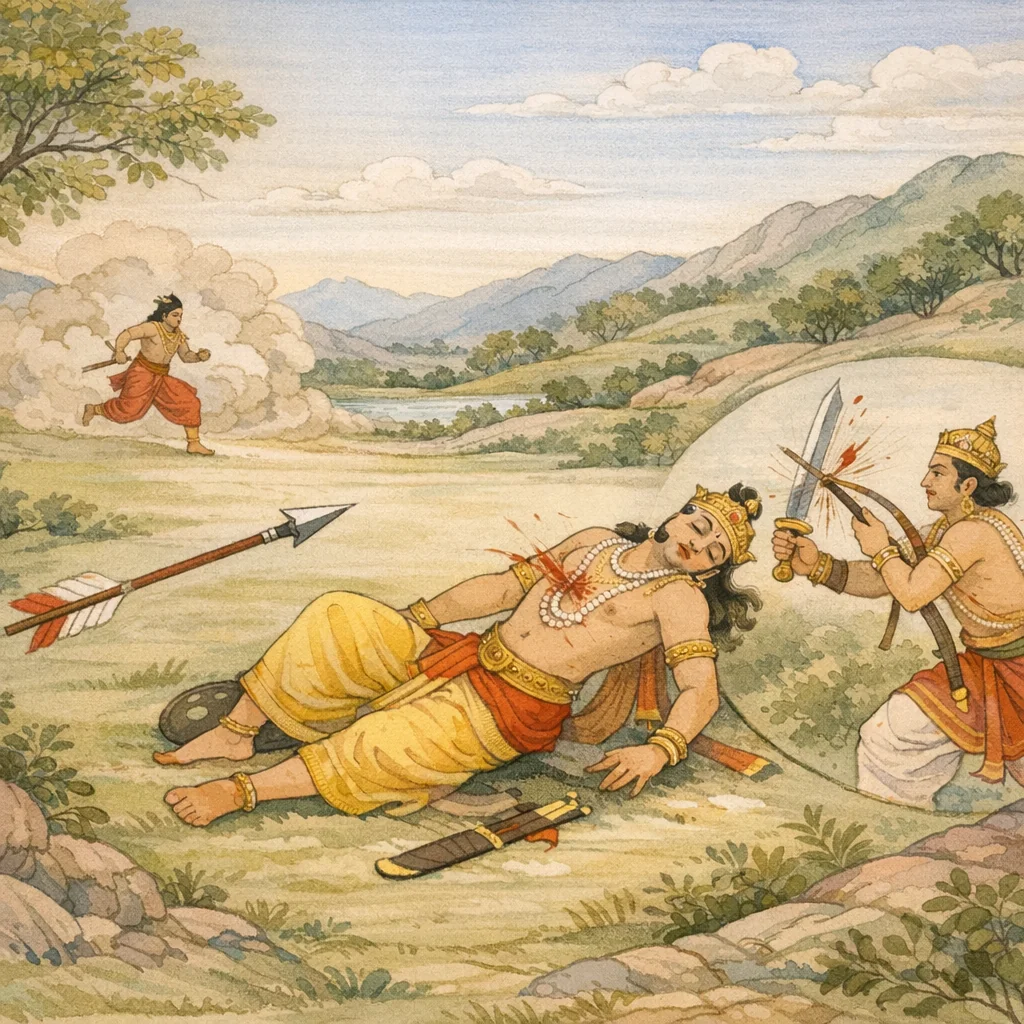
Adhyaya 13
दण्डधारवधः | The Slaying of Daṇḍadhāra
Upa-parva: Daṇḍadhāra-vadha (Engagement with the Magadhan elephant-warrior Daṇḍadhāra)
Saṃjaya reports a surge of battle-noise from the Pāṇḍava side as Kṛṣṇa turns Arjuna’s chariot with high speed and directs him toward Daṇḍadhāra, a leading Magadhan combatant mounted on a formidable elephant and supported by mixed forces. Daṇḍadhāra’s elephant formation causes severe disruption among opposing troops, described through repeated similes emphasizing unstoppable momentum. Arjuna advances in a chariot amid conch, drum, and war-instrument signals. Daṇḍadhāra strikes Arjuna and Kṛṣṇa with missiles and attempts to destabilize their position. Arjuna responds with precise archery: he severs the opponent’s banner and key attendants, then progressively incapacitates Daṇḍadhāra—cutting off arms and finally the head—before bringing down the elephant with concentrated volleys. The opposing elephant unit collapses, contributing to broader disarray among allied forces. Pāṇḍava soldiers acclaim Arjuna for removing a source of fear, and Arjuna, after receiving their words with composure, proceeds to re-engage other hostile formations (the Saṃśaptakas), maintaining the chapter’s emphasis on tactical sequencing and controlled escalation.
Chapter Arc: संजय धृतराष्ट्र से कहते हैं कि रणभूमि में द्रौपदी-पुत्र श्रुतकर्मा क्रोध से जल उठता है और कौरव-पक्ष के राजा चित्रसेन पर बाण-वर्षा आरम्भ करता है—युद्ध का रुख अचानक द्रौपदी के पुत्रों की ओर झुकने लगता है। → श्रुतकर्मा चित्रसेन को क्रमशः अनेक बाणों से बेधता है, फिर मर्मस्थल में तीक्ष्ण नाराच उतार देता है; उधर प्रतिविन्ध्य चित्रक को बाणों से क्षत-विक्षत कर सारथी और ध्वज तक को घायल करता है। कौरव-सेना पाण्डवों की मार से तितर-बितर होने लगती है—मानो हवा से उड़े घन-समूह। → श्रुतकर्मा एक पैने, निशित भल्ल से चित्रसेन का शिरस्त्राण सहित शिर काट गिराता है; उसी समय प्रतिविन्ध्य चित्रक का धनुष काटकर उसे निर्णायक रूप से परास्त करता है। कौरव-सेना भयभीत होकर दावाग्नि से दग्ध हाथियों-सी दिशाओं में भागती है। → भागती और कटती सेना के बीच द्रोणपुत्र अश्वत्थामा अकेला ही महाबली भीमसेन की ओर वेग से बढ़ता है; दोनों का सामना देवासुर-संग्राम में वृत्र और इन्द्र के तुल्य घोर बनता है—रण का केन्द्र अब इस द्वंद्व की ओर खिंच जाता है। → अश्वत्थामा और भीम का तात्कालिक, भीषण समागम—अगले क्षण किसका पराक्रम किस पर भारी पड़ेगा?
Shlokas
Verse 1
भीस्न्म+ज () अमसना चतुर्दशो 5 ध्याय: द्रौपदीपुत्र श्रुतकर्मा और प्रतिविन्ध्यद्वारा क्रमश: चित्रसेन एवं चित्रका वध, कौरव-सेनाका पलायन तथा अश्वत्थामाका भीमसेनपर आक्रमण संजय उवाच श्रुतकर्मा ततो राजंश्रित्रसेनं महीपतिम् । आजलमेने समरे क्रुद्ध: पञ्चाशद्धि: शिलीमुखै:
Sañjaya said: “Then, O King, Śrutakarmā—angered in the thick of battle—struck down Citrasena, the ruler of the earth, with fifty sharp arrows.”
Verse 2
संजय कहते हैं--राजन्! तदनन्तर श्रुतकर्माने समरांगणमें कुपित हो राजा चित्रसेनको पचास बाण मारे ।। अभिसारस्तु तं राजन् नवभिरन्नतपर्वभि: । श्रुतकर्माणमाहत्य सूतं विव्याध पञ्चभि:,नरेश्वर! अभिसारके राजा चित्रसेनने झुकी हुई गाँठवाले नौ बाणोंसे श्रुतकर्माको घायल करके पाँचसे उसके सारथिको भी बींध डाला
Sañjaya said: “O King, thereafter, in the midst of the battlefield, the enraged Śrutakarmā struck King Citrasena with fifty arrows. But Abhisāra, O King, having wounded Śrutakarmā with nine arrows whose joints were bent downward, also pierced his charioteer with five.”
Verse 3
श्रुतकर्मा ततः क्रुद्धश्चित्रसेनं चमूमुखे । नाराचेन सुतीक्ष्णेन मर्मदेशे समार्पयत्,तब क्रोधमें भरे हुए श्रुतकर्माने सेनाके मुहानेपर तीखे नाराचसे चित्रसेनके मर्मस्थलपर आघात किया
Sañjaya said: “Then Śrutakarmā, inflamed with anger, struck Citrasena at the very front of the army, driving a razor-sharp nārāca arrow into a vital spot.”
Verse 4
सो5तिविद्धों महाराज नाराचेन महात्मना । मूर्च्छामभिययौ वीर: कश्मलं चाविवेश ह,महामना श्रुतकर्माके नाराचसे अत्यन्त घायल होनेपर वीर चित्रसेनको मूर्च्छा आ गयी। वे अचेत हो गये
Sañjaya said: “O King, struck through by a nārāca-arrow shot by a great-souled warrior, the hero fell into a swoon; confusion and distress seized him, and he became insensible.”
Verse 5
एतस्मिन्नन्तरे चैनं श्रुतकीर्तिमहायशा: । नवत्या जगतीपालं छादयामास पत्रिभि:,इसी बीचमें महायशस्वी श्रुतकीर्तिने नब्बे बाणोंसे भूपाल चित्रसेनको आच्छादित कर दिया
Sañjaya said: In that very moment, the greatly renowned Śrutakīrti showered King Citraseṇa with ninety arrows, covering him over.
Verse 6
प्रतिलभ्य तत: संज्ञां चित्रसेनो महारथ: । धनुश्विच्छेद भल्लेन तं च विव्याध सप्तभि:,तदनन्तर होशमें आकर महारथी चित्रसेनने एक भल्ल्लसे श्रुतकर्माका धनुष काट डाला और उसे भी सात बाणोंसे घायल कर दिया
Sañjaya said: Regaining consciousness, the great chariot-warrior Citraseṇa cut down Śrutakarman’s bow with a sharp bhalla-arrow, and then struck him as well with seven shafts.
Verse 7
सोअन्यत् कार्मुकमादाय वेगघ्नं रुक्मभूषितम् | चित्ररूपधरं चक्रे चित्रसेनं शरोमिभि:,तब श्रुतकर्माने शत्रुओंके वेगको नष्ट करनेवाला दूसरा सुवर्णभूषित धनुष लेकर चित्रसेनको अपने बाणोंकी लहरोंसे विचित्र रूपधारी बना दिया
Sañjaya said: Then, taking up another bow—gold-adorned and famed for checking the enemy’s onrush—he made Citraseṇa appear in many strange forms, as if transformed by the surging waves of his arrows.
Verse 8
स शरैश्षित्रितो राजा चित्रमाल्यधरो युवा । अशोभत महारज्जे श्वाविच्छललतो यथा,विचित्र माला धारण करनेवाले नवयुवक राजा चित्रसेन उन बाणोंसे चित्रित हो युद्धके महान् रंगस्थलमें काँटोंसे भरे हुए साहीके समान सुशोभित होने लगे
Sañjaya said: The young king, wearing a variegated garland, appeared as though painted all over by the arrows; and on the vast stage of battle he shone like a porcupine bristling with quills.
Verse 9
श्रुतकर्माणमथ वै नाराचेन स्तनान्तरे । बिभेद तरसा शूरस्तिष्ठ तिछेति चाब्रवीत्,तब उस शूरवीर नरेशने श्रुतकर्माकी छातीमें बड़े वेगसे नाराचका प्रहार किया और कहा--'खड़ा रह, खड़ा रह”
Sañjaya said: Then that valiant warrior swiftly struck Śrutakarmā with a nārāca arrow in the space between the breasts, and cried, “Stand! Stand!”
Verse 10
श्रुतकर्मापि समरे नाराचेन समर्पित: । सुस्त्राव रुधिरं तत्र गैरिकार्द्र इवाचल:,उस समय नाराचसे घायल हुआ श्रुतकर्मा समरांगणमें उसी प्रकार रक्त बहाने लगा, जैसे गेरूसे भीगा हुआ पर्वत लाल रंगकी जलधारा बहाता है
Sañjaya said: Though Śrutakarmā was a valiant warrior, when he was struck in battle by a nārāca arrow, he began to pour forth blood upon that field—like a mountain soaked with red ochre, letting streams of crimson water run down.
Verse 11
ततः स रुधिराक्ताड़रो रुधिरेण कृतच्छवि: । रराज समरे वीर: सपुष्प इव किंशुक:,तत्पश्चात् खूनसे लथपथ अंगोंवाला वीर श्रुतकर्मा समरांगणमें उस रुधिरसे अभिनव शोभा धारण करके खिले हुए पलाशवृक्षके समान सुशोभित हुआ
Sañjaya said: Then that hero, his limbs smeared with blood and his splendor newly fashioned by that very blood, shone on the battlefield like a kiṃśuka tree in full bloom.
Verse 12
श्रुतकर्मा ततो राजन् शत्रुणा समभिद्रुत: । शत्रुसंवारणं क्रुद्धों द्विधा चिच्छेद कार्मुकम्,राजन! शत्रुके द्वारा इस प्रकार आक्रान्त होनेपर श्रुतकर्मा कुपित हो उठा और उसने राजा चित्रसेनके शत्रु-निवारक धनुषके दो टुकड़े कर डाले
Sañjaya said: Then, O King, Śrutakarmā—assailed headlong by his foe—flared up in wrath and cut in two the enemy-checking bow.
Verse 13
इस प्रकार श्रीमह्याभारत कर्णपर्वमें विन्द और अनुविन्दका वधविषयक तेरहवाँ अध्याय पूरा हुआ,अथैनं छिन्नथन्वानं नाराचानां शतैस्त्रिभि: । छादयन् समरे राजन् विव्याध च सुपत्रिभि: महाराज! धनुष कट जानेपर चित्रसेनको आच्छादित करते हुए श्रुतकर्माने सुन्दर पंखवाले तीन सौ नाराचोंद्वारा उसे घायल कर दिया
Sañjaya said: Then, O King, when his bow had been cut, Śrutakarmā, covering him in the thick of battle, pierced Citraseṇa with three hundred nārāca arrows, each furnished with fine feathers.
Verse 14
ततो5परेण भल्लेन तीक्ष्णेन निशितेन च | जहार सशिरस्त्राणं शिरस्तस्य महात्मन:,तदनन्तर एक पैनी धारवाले तीखे भल्लसे उसने महामना चित्रसेनके शिरस्त्राणसहित मस्तकको काट लिया इति श्रीमहा भारते कर्णपर्वणि चित्रवधे चतुर्दशो5ध्याय:
Sañjaya said: Then, with another arrow—a sharp, keen-edged bhalla—he severed and carried off the head of that great-souled warrior, cutting it down together with its helmet.
Verse 15
तच्छिरो न्न्यपतद् भूमौ चित्रसेनस्य दीप्तिमत् | यदृच्छया यथा चन्द्रश्न्युत: स्वर्गान्महीतलम्,चित्रसेनका वह दीप्तिशाली मस्तक पृथ्वीपर गिर पड़ा, मानो चन्द्रमा दैवेच्छावश स्वर्गसे भूतलपर आ गिरा हो
Sañjaya said: Then the radiant head of Citraseṇa fell upon the earth, as though the moon itself, by the turn of fate, had slipped from heaven down to the ground.
Verse 16
राजानं निहतं दृष्टवा तेडभिसारं तु मारिष । अभ्यद्रवन्त वेगेन चित्रसेनस्य सैनिका:,माननीय नरेश! अभिसार देशके अधिपति राजा चित्रसेनको मारा गया देख उनके सैनिक बड़े वेगसे भाग चले
Sañjaya said: Seeing their king slain, those warriors of Abhisāra—O venerable one—rushed forward with great speed, the soldiers of Citraseṇa, driven by shock and the impulse to respond in battle.
Verse 17
ततः क्रुद्धों महेष्वासस्तत्सैन्यं प्राद्रवच्छरै: । अन्तकाले यथा क्रुद्ध: सर्वभूतानि प्रेतराट्,तत्पश्चात् क्रोधमें भरे हुए महाधनुर्धर श्रुतकर्माने अपने बाणोंद्वारा उस सेनापर आक्रमण किया, मानो प्रलयकालमें कुपित हुए यमराज समस्त प्राणियोंपर धावा बोल रहे हों
Then, wrathful, that mighty bowman assailed the host with his arrows, like Yama, lord of the departed, raging at the end of time and rushing upon all beings.
Verse 18
ते वध्यमाना: समरे तव पौत्रेण धन्विना । व्यद्रवन्त दिशस्तूर्ण दावदग्धा इव द्विपा:,युद्धमें आपके धनुर्धर पौत्र श्रुतकर्माद्वारा मारे जाते हुए वे सैनिक दावानलमें झुलसे हुए हाथियोंके समान तुरंत ही सम्पूर्ण दिशाओंमें भाग गये
Sañjaya said: As they were being cut down in battle by your grandson, the bowman, those soldiers fled at once in every direction—like elephants scorched by a raging forest-fire.
Verse 19
तांस्तु विद्रवतो दृष्टवा निरुत्साहान् द्विषज्जये । द्रावयन्निषुभिस्तीक्षणै: श्रुतकर्मा व्यरोचत,शत्रुओंपर विजय पानेका उत्साह छोड़कर भागते हुए उन सैनिकोंको देखकर अपने तीखे बाणोंसे उन्हें खदेड़ते हुए श्रुतकर्माकी अपूर्व शोभा हो रही थी
Sañjaya said: Seeing those warriors fleeing, their spirit for victory over the enemy drained away, Śrutakarmā shone with remarkable brilliance as he drove them on with his sharp arrows, forcing them back toward the fight.
Verse 20
प्रतिविन्ध्यस्ततश्रित्रं भित्ता पठचभिराशुगै: । सारथिं च त्रिभिरविंद्ध्वा ध्वजमेकेषुणापि च
Sañjaya said: Then Prativindhya, piercing the foe’s armor with five swift arrows, struck the charioteer with three more; and with a single shaft he also hit the banner—an emphatic display of precision amid the relentless discipline of war, where prowess is measured by controlled force rather than mere fury.
Verse 21
दूसरी ओर प्रतिविन्ध्यने पाँच बाणोंद्वारा चित्रको क्षत-विक्षत करके तीन बाणोंसे सारथिको घायल कर दिया और एक बाणसे उसके ध्वजको भी बींध डाला ।। त॑ चित्रो नवभिर्भल्लैर्बाह्वोरुरगसि चार्पयत् स्वर्णपुड्खै: प्रसन्नाग्रै: कड्कबरहिणवाजितै:,तब चित्रने कंक और मयूरकी पाँखोंसे युक्त स्वच्छ धार और सुनहरे पंखवाले नौ भल््लोंसे प्रतिविन्ध्यकी दोनों भुजाओं और छातीमें गहरी चोट पहुँचायी
Meanwhile, Prativindhya struck Chitra with five arrows, tearing and wounding him; with three more he injured Chitra’s charioteer, and with a single arrow he pierced the banner as well. Chitra, in return, drove nine bhalla-arrows—gold-feathered, keen-pointed, and fletched with heron and peacock plumes—deep into Prativindhya’s two arms and chest. The passage shows the relentless reciprocity of battlefield violence, where skill and retaliation eclipse restraint, and even the chariot’s emblem becomes a target in the contest for dominance and morale.
Verse 22
प्रतिविन्ध्यो धनुश्छित्त्वा तस्य भारत सायकै: । पजञ्चभिर्निशितैर्बाणैरथैनं स हि जध्निवान्
Sañjaya said: Prativindhya cut down his opponent’s bow with his arrows; then, O Bhārata, with five keen shafts he struck him down. The scene lays bare the grim efficiency of martial skill—once turned to lethal precision, it swiftly decides life and death amid the larger moral tragedy of fratricidal war.
Verse 23
भारत! प्रतिविन्ध्यने अपने बाणोंद्वारा उसके धनुषको काटकर पाँच तीखे बाणोंसे चित्रको भी घायल कर दिया ।। ततः शक्ति महाराज स्वर्णघण्टां दुरासदाम् | प्राहिणोत् तव पौत्राय घोरामग्निशिखामिव,महाराज! तदनन्तर चित्रने आपके पौत्रपर घोर अग्निशिखाके समान सुवर्णमय घंटोंसे सुशोभित एक दुर्धर्ष शक्ति चलायी
Sañjaya said: O Bhārata, Prativindhya, with his own arrows, cut down his opponent’s bow, and with five sharp shafts also wounded Chitra. Then, O great king, Chitra hurled at your grandson a fearsome śakti-weapon, hard to withstand, adorned with golden bells, blazing like a tongue of fire—showing how, in the fury of battle, skill and retaliation rapidly escalate toward ever more lethal means.
Verse 24
तामापतन्तीं सहसा महोल्काप्रतिमां तदा | द्विधा चिच्छेद समरे प्रतिविन्ध्यो हसन्निव,समरांगणमें बड़ी भारी उल्काके समान सहसा आती हुई उस शक्तिको प्रतिविन्ध्यने हँसते हुए-से दो टुकड़ोंमें काट डाला
Sañjaya said: Then, as that weapon came hurtling down all at once—like a great blazing meteor—Prativindhya, as if smiling, cleft it in two on the battlefield. The scene underscores the warrior’s trained composure: even amid lethal force, mastery of arms and steadiness of mind become a form of battlefield dharma, restraining panic and meeting violence with controlled skill rather than rage.
Verse 25
सा पपात द्विधा छिज्ना प्रतिविन्ध्यशरै: शितै: । युगान्ते सर्वभूतानि त्रासयन्ती यथाशनि:,प्रतिविन्ध्यके तीखे बाणोंसे दो टूक होकर वह शक्ति प्रलयकालनमें सम्पूर्ण प्राणियोंको भयभीत करनेवाली अशनिके समान गिर पड़ी
Sañjaya said: Struck by Prativindhya’s sharp arrows, that śakti-weapon was cut in two and fell. It crashed down like a thunderbolt at the end of an age, terrifying all beings.
Verse 26
शक्ति तां प्रहतां दृष्टवा चित्रो गृह महागदाम् । प्रतिविन्ध्याय चिक्षेप रुक्मजालविभूषिताम्,उस शक्तिको नष्ट हुई देख चित्रने सोनेकी जालियोंसे विभूषित एक विशाल गदा हाथमें ले ली और उसे प्रतिविन्ध्यपर छोड़ दिया
Sañjaya said: Seeing that the śakti had been struck down and rendered useless, Citra seized a massive mace (gadā) adorned with a network of gold and hurled it at Prativindhya.
Verse 27
सा जघान हयांस्तस्य सारथिं च महारणे । रथं प्रमृद्य वेगेन धरणीमन्वपद्यत,उस गदाने महासमरमें प्रतिविन्ध्यके घोड़ों और सारथिको मार डाला और रथको भी चूर-चूर करती हुई वह बड़े वेगसे पृथ्वीपर गिर पड़ी
Sañjaya said: In that great battle it struck down his horses and his charioteer; and, crushing the chariot with force, it fell to the earth at great speed.
Verse 28
एतस्मिन्नेव काले तु रथादाप्लुत्य भारत | शक्ति चिक्षेप चित्राय स्वर्णदण्डामलंकृताम्,भारत! इसी बीचमें रथसे कूदकर प्रतिविन्ध्यने चित्रपर एक सुवर्णमय दण्डवाली सुसज्जित शक्ति चलायी
Sañjaya said: At that very moment, O Bhārata, leaping down from his chariot, Prativindhya hurled a splendid śakti toward Citra, adorned with a golden shaft.
Verse 29
तामापतन्तीं जग्राह चित्रो राजन् महामना: । ततस्तामेव चिक्षेप प्रतिविन्ध्याय पार्थिव:,राजन! महामना राजा चित्रने अपनी ओर आती हुई उस शक्तिको हाथसे पकड़ लिया और फिर उसीको प्रतिविन्ध्यपर दे मारा
Sañjaya said: O King, the great-souled ruler Citra seized with his hand that śakti as it came rushing toward him; then he hurled that very weapon back at Prativindhya.
Verse 30
समासाद्य रणे शूरं प्रतिविन्ध्यं महाप्रभा । निर्भिद्य दक्षिणं बाहुं निषषात महीतले । पतिताभासयच्चैव तं देशमशनिर्यथा,वह अत्यन्त कान्तिमती शक्ति रणभूमिमें शूरवीर प्रतिविन्ध्यको जा लगी और उसकी दाहिनी भुजाको विदीर्ण करती हुई पृथ्वीपर गिर पड़ी। वह जहाँ गिरी, उस स्थानको बिजलीके समान प्रकाशित करने लगी
Sañjaya said: In the thick of battle, that mighty, radiant weapon struck the hero Prativindhya. Piercing his right arm, it fell and lodged upon the earth; and where it landed, it lit up that spot like a flash of lightning—an image of war’s sudden, impartial violence, where prowess and fate collide in an instant.
Verse 31
प्रतिविन्ध्यस्ततो राजंस्तोमरं हेम भूषितम् । प्रेषयामास संक्रुद्धश्चित्रस्य वधकाड्क्षया,राजन! तब अत्यन्त क्रोधमें भरे हुए प्रतिविन्ध्यने चित्रके वधकी इच्छासे उसके ऊपर एक सुवर्णभूषित तोमरका प्रहार किया
Sañjaya said: Then Prativindhya, O King, burning with fierce anger and longing to slay Citra, hurled at him a spear adorned with gold. The moment shows how, in the heat of battle, wrath and the desire to kill drive warriors to decisive, violent action, tightening the spiral of retaliation that eclipses calmer judgment.
Verse 32
स तस्य गात्रावरणं भित्त्वा हृदयमेव च । जगाम धरणीं तूर्ण महोरग इवाशयम्,वह तोमर उसके कवच और वक्ष:स्थलको विदीर्ण करता हुआ तुरंत धरतीमें समा गया, जैसे कोई बड़ा सर्प बिलमें घुस गया हो
Sañjaya said: The spear, having pierced through his bodily armour and even his heart, swiftly sank into the earth—like a great serpent slipping into its burrow. The image underscores the pitiless finality of battlefield violence: a single, well-aimed weapon ends a life, and the earth receives both the fallen and the instrument of death without pause or sentiment.
Verse 33
स पपात तदा राजा तोमरेण समाहतः । प्रसार्य विपुलौ बाहू पीनौ परिघसंनिभौ,तोमरसे अत्यन्त आहत हो राजा चित्र अपनी परिघके समान मोटी और विशाल भुजाओंको फैलाकर तत्काल पृथ्वीपर गिर पड़ा
Sañjaya said: Then the king, struck hard by a javelin, fell to the earth at once, flinging out his two broad arms—thick and massive like iron clubs—an image of royal might brought down by the ruthless logic of war.
Verse 34
चित्र सम्प्रेक्ष्य निहतं तावका रणशोभिन: । अभ्यद्रवन्त वेगेन प्रतिविन्ध्यं समन्तत:ः,चित्रको मारा गया देख संग्राममें शोभा पानेवाले आपके योद्धा प्रतिविन्ध्यपर चारों ओरसे वेगपूर्वक टूट पड़े
Sañjaya said: Seeing Citra struck down, your warriors—who had been lending splendor to the battlefield—rushed with great speed and closed in on Prativindhya from all sides. The moment shows how, in war, grief and rage quickly harden into collective retaliation, and how the fall of one fighter can ignite a surge that threatens to overwhelm even a valiant opponent.
Verse 35
सृजन्तो विविधान् बाणान् शतघ्नीश्व॒ सकिंकिणी: । तमवच्छादयामासु: सूर्यम भ्रगणा इव,जैसे बादल सूर्यको ढक लेते हैं, उसी प्रकार उन योद्धाओंने नाना प्रकारके बाणों और छोटी-छोटी घंटियोंसहित शतघ्नियोंका प्रहार करके उसे आच्छादित कर दिया
Sañjaya said: Releasing volleys of many kinds of arrows and hurling sataghni missiles that rang with little bells, those warriors covered him completely—like clouds veiling the sun.
Verse 36
तान् विधम्य महाबाहु: शरजालेन संयुगे । व्यद्रावयत् तव चमूं वज़हस्त इवासुरीम्,जैसे वज्रधारी इन्द्र असुरोंकी सेनाको खदेड़ते हैं, उसी प्रकार युद्धस्थलमें महाबाहु प्रतिविन्ध्यने अपने बाणसमूहोंसे उन अस्त्र-शस्त्रोंको नष्ट करके आपकी सेनाको मार भगाया
Sañjaya said: In the thick of battle, the mighty-armed Prativindhya struck them down with a net of arrows and routed your army—just as Indra, wielder of the thunderbolt, drives the hosts of the Asuras into flight.
Verse 37
ते वध्यमाना: समरे तावका: पाण्डवैर्नप । विप्राकीर्यन्त सहसा वातनुन्ना घना इव,नरेश्वरर समरभूमिमें पाण्डवोंकी मार खाकर आपके सैनिक हवाके उड़ाये हुए बादलोंके समान सहसा छिन्न-भिन्न होकर बिखर गये
Sañjaya said: O king, as your troops were being cut down in battle by the Pāṇḍavas, they suddenly scattered in all directions—shattered and dispersed like clouds driven apart by the wind.
Verse 38
विप्रद्रुते बले तस्मिन् वध्यमाने समन्ततः । द्रौणिरेको5 भ्ययात् तूर्ण भीमसेनं महाबलम्,उनके द्वारा मारी जाती हुई आपकी वह सेना जब चारों ओर भागने लगी, तब अकेले अश्वत्थामाने तुरंत ही महाबली भीमसेनपर आक्रमण कर दिया
Sañjaya said: When your army, being cut down on every side, broke and fled in disorder, Droṇa’s son (Aśvatthāmā) alone rushed swiftly to confront the mighty Bhīmasena.
Verse 39
ततः समागमो घोरो बभूव सहसा तयो: । यथा देवासुरे युद्धे वृत्रवासवयोरिव,फिर तो देवासुर-संग्राममें वृत्रासुर और इन्द्रके समान उन दोनों वीरोंमें सहसा घोर युद्ध छिड़ गया
Then, all at once, a dreadful clash erupted between those two warriors—like the war of gods and demons, as if it were the combat between Vṛtra and Vāsava (Indra).
Frequently Asked Questions
The tension lies in executing kṣātra-dharma efficiently—neutralizing a high-impact threat—while the narrative simultaneously registers the human cost and the inevitability of consequence in mass conflict.
Methodical action under pressure: identify the most destabilizing node in the opposing system, apply calibrated force to remove it, and then return to the larger operational objective without losing strategic continuity.
No explicit phalaśruti appears; the chapter’s meta-function is archival and tactical, reinforcing how narrated causality (decision → engagement → collapse of a unit) contributes to the epic’s broader ethical accounting.