Adhyaya 91
अध्याय ९१ — शैनेयस्य गजानीकभेदनं जलसंधवधश्च (Chapter 91: Sātyaki breaks the elephant array and slays Jalasaṃdha)
Upa-parva: Śaineya–Kṛtavarmā–Jalasaṃdha Saṃgrāma (Episode within Droṇa-parva)
Saṃjaya reports to Dhṛtarāṣṭra the sequence of Sātyaki’s actions amid a pressured Kaurava front. After a sharp exchange with Kṛtavarmā (including weapon and chariot disruption), Sātyaki advances through Droṇa’s dense battle-array and identifies a large elephant formation positioned on the flank. Noting that many resolute fighters are stationed there under Duryodhana’s directive, he orders a controlled approach and engages the elephant corps with concentrated volleys, causing disorder and retreat among elephants and their crews. Jalasaṃdha of Magadha, prominently described with martial regalia and mounted on a powerful elephant, attempts to check Sātyaki. A close exchange follows: Jalasaṃdha wounds Sātyaki and severs his bow; Sātyaki re-arms, counters with heavy arrow-fire, disables Jalasaṃdha’s weapons, and ultimately dismembers and beheads him. The leader’s fall triggers panic and flight in the surrounding Kaurava troops. In response, Droṇa rapidly advances with allied Kuru champions to surround Sātyaki, and the engagement expands into a broader, intense confrontation likened to a deva–asura-scale clash.
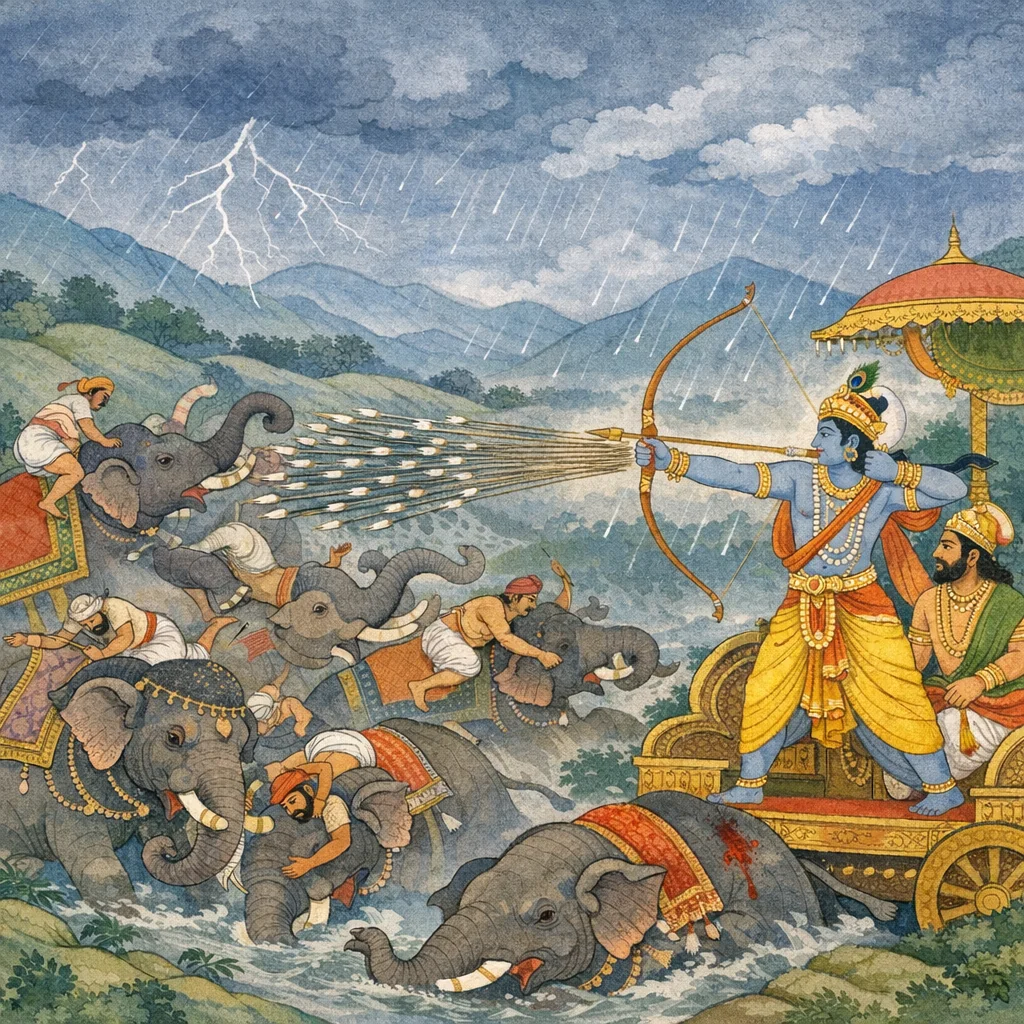
Chapter Arc: अर्जुन, हृषीकेश कृष्ण से कहता है—जहाँ दुर्मर्षण खड़ा है, वहीं रथ बढ़ाओ; मैं उसकी गजसेना को भेदकर शत्रु-वाहिनी के भीतर प्रवेश करूँगा। → एक अकेले महावीर और असंख्य रथी-नाग-नर-रक्षकों के बीच ‘तुमुल’ और ‘सुदारुण’ संग्राम छिड़ता है। अर्जुन मेघ-सा बाण-वर्षा करता है; शत्रु रोकते हैं, पर वह क्रुद्ध होकर रथियों के शिर काटता, पंक्तियाँ तोड़ता आगे बढ़ता है। रक्त से सने सुवर्ण-कवचधारी योद्धा बिजली-युक्त मेघसमूहों जैसे दिखते हैं; गजदल में भगदड़ और सम्मोह उत्पन्न होता है। → अर्जुन के परमेषु बाणों से गजदल की अग्र-पंक्तियाँ टूटती हैं—कटे हुए अंग, विचेष्टा करते योद्धा, और अंकुश-पाष्ण्य से हाथियों को मोड़ते महावत भी भ्रमित होकर उसी की ओर धँसते चले आते हैं; अर्जुन शिर-च्छेदन और तीव्र बाण-वर्षा से दुर्मर्षण की गजसेना का ‘भेदन’ कर देता है। → गजसेना के संहार और शत्रु-रक्षा-व्यूह के छिन्न होने से अर्जुन को विशाल कौरव-वाहिनी में प्रवेश का मार्ग मिल जाता है; कौरव पक्ष में हतोत्साह और अव्यवस्था फैलती है। → अर्जुन भीतर घुस चुका है—अब उसके सामने और कौन-कौन से महारथी अवरोध बनेंगे, और जयद्रथ तक पहुँचने की दौड़ किस मोड़ पर रक्त-ऋण माँगेगी?
Shlokas
Verse 1
(दाक्षिणात्य अधिक पाठका १ श्लोक मिलाकर कुल ३० “लोक हैं।) ऑपन-माज बछ। अति ऋाण एकोननवतितमो<ध्याय: अर्जुनके द्वारा दुर्मरषणकी गजसेनाका संहार और समस्त सैनिकोंका पलायन अजुन उवाच चोदयाश्वान् हृषीकेश यत्र दुर्मर्षण: स्थित: । एतदू भित्त्वा गजानीकं प्रवेक्ष्याम्यरिवाहिनीम्
Arjuna said: “Urge on the horses, O Hṛṣīkeśa (Kṛṣṇa), to where Durmarṣaṇa is stationed. Having broken through this elephant-corps, I shall enter the enemy host.”
Verse 2
अर्जुन बोले--हृषीकेश! जहाँ दुर्मर्षण खड़ा है, उसी ओर घोड़ोंको बढ़ाइये। मैं उसकी इस गजसेनाका भेदन करके शत्रुओंकी विशाल वाहिनीमें प्रवेश करूँगा ।। संजय उवाच एवमुक्तो महाबाहु: केशव: सव्यसाचिना । अचोदयद्धयांस्तत्र यत्र दुर्मर्षण: स्थित:,संजय कहते हैं--राजन्! सव्यसाची अर्जुनके ऐसा कहनेपर महाबाह श्रीकृष्णने, जहाँ दुर्मषण खड़ा था, उसी ओर घोड़ोंको हाँका
Arjuna said: “Hṛṣīkeśa, drive the horses toward the place where Durmarṣaṇa stands. I will break through his elephant-corps and enter the enemy’s vast host.” Sañjaya said: Thus addressed by the ambidextrous Arjuna, mighty-armed Keśava urged the horses forward to where Durmarṣaṇa was stationed.
Verse 3
स सम्प्रहारस्तुमुल: सम्प्रवृत्त: सुदारुण: । एकस्य च बहूनां च रथनागनरक्षय:,उस समय एक वीरका बहुत-से योद्धाओंके साथ बड़ा भयंकर घमासान युद्ध छिड़ गया, जो रथों, हाथियों और मनुष्योंका संहार करनेवाला था
Sañjaya said: A tumultuous and exceedingly dreadful clash then broke out—one hero against many—bringing destruction to chariots, elephants, and men. The scene underscores how, once battle is unleashed, prowess and numbers alike are swallowed by indiscriminate ruin, and the moral weight of war falls upon all who sustain it.
Verse 4
ततः सायकवर्षेण पर्जन्य इव वृष्टिमान् । परानवाकिरत् पार्थ: पर्वतानिव नीरद:,तदनन्तर अर्जुन बाणोंकी वर्षा करते हुए जल बरसानेवाले मेघके समान प्रतीत होने लगे। जैसे मेघ पानीकी वर्षा करके पर्वतोंको आच्छादित कर देता है, उसी प्रकार अर्जुनने अपनी बाण-वर्षसे शत्रुओंको ढक दिया
Sañjaya said: Then Pārtha (Arjuna), pouring forth a rain of arrows, appeared like a rain-laden cloud. As a cloud, by its downpour, covers the mountains, so did Arjuna blanket the enemy ranks with his shower of shafts—an image of overwhelming martial force directed toward victory in a dharma-bound war.
Verse 5
ते चापि रथिन: सर्वे त्वरिता: कृतहस्तवत् । अवाकिरन् बाणजालैस्तत्र कृष्णधनंजयौ,उधर उन समस्त कौरव रथियोंने भी सिद्धहस्त पुरुषोंकी भाँति शीघ्रतापूर्वक अपने बाणसमूहोंद्वारा वहाँ श्रीकृष्ण और अर्जुनको आच्छादित कर दिया
Sañjaya said: Those Kaurava chariot-warriors too, moving with swift precision like fully accomplished archers, showered dense nets of arrows there, covering Kṛṣṇa and Dhanañjaya (Arjuna). The scene underscores the impersonal ferocity of battlefield skill—where mastery and speed can momentarily eclipse discernment, and even the foremost heroes are tested by coordinated force.
Verse 6
ततः क्रुद्धों महाबाहुर्वार्यमाण: परैर्युधि । शिरांसि रथिनां पार्थ: कायेभ्योडपाहरच्छरै:,उस समय युद्धस्थलमें शत्रुओंके द्वारा रोके जानेपर महाबाहु अर्जुन कुपित हो उठे और अपने बाणोंद्वारा रथियोंके मस्तकोंको उनके शरीरोंसे काटकर गिराने लगे
Sañjaya said: Then Arjuna, the mighty-armed son of Pṛthā, angered as he was being checked by the enemy in the midst of battle, began to sever with his arrows the heads of the chariot-warriors from their bodies. The verse underscores the fierce escalation that occurs when restraint fails in war—valor and wrath turning skill into lethal decisiveness within the harsh ethics of battlefield duty.
Verse 7
उदभ्रान्तनयनैर्वक्त्रै: संदष्टौष्ठपुटै: शुभै: । सकुण्डलशिरस्त्राणैर्वसुधा समकीर्यत,कुण्डल और टोपोंसहित उन रथियोंके घूमते हुए नेत्रों तथा दाँतोंद्वारा चबाये जाते हुए ओठोंवाले सुन्दर मुखोंसे सारी रणभूमि पट गयी
Sañjaya said: The earth was strewn all over with beautiful faces—eyes rolling in bewilderment, lips clenched and bitten by the teeth—along with their earrings and helmets. Thus the battlefield became covered with the grim remnants of the fallen, revealing the terrible moral cost of war.
Verse 8
पुण्डरीकवनानीव विध्वस्तानि समन्तत: । विनिकीर्णानि योधानां वदनानि चकाशिरे,सब ओर बिखरे हुए योद्धाओंके मुख कटकर गिरे हुए कमल-समूहोंके समान सुशोभित होने लगे
Sañjaya said: All around, the faces of the warriors—shattered and strewn—shone like groves of white lotuses laid waste.
Verse 9
तपनीयतनुत्राणा: संसिक्ता रुधिरेण च । संसक्ता इव दृश्यन्ते मेघसंघा: सविद्युत:,सुवर्णमय कवच धारण किये और खूनसे लथपथ हो एक-दूसरेसे सटे हुए हताहत योद्धाओंके शरीर विद्युत्सहित मेघसमूहोंके समान दिखायी देते थे
Sañjaya said: The fallen warriors, clad in golden cuirasses and drenched in blood, lay pressed close together; they looked like dense masses of clouds streaked with lightning—splendor and terror mingled in one battlefield sight.
Verse 10
शिरसां पततां राजन् शब्दो5भूद् वसुधातले । कालेन परिपकवानां तालानां पततामिव,राजन्! कालसे परिपक्व हुए ताड़के फलोंके पृथ्वीपर गिरनेसे जैसा शब्द होता है, उसी प्रकार रणभूमिमें कटकर गिरते हुए योद्धाओंके मस्तकोंका शब्द होता था
Sañjaya said: O King, upon the earth there arose the sound of heads falling—like the dull thud of palm fruits, ripened in their season, dropping to the ground.
Verse 11
ततः कबन्धं किंचित् तु धनुरालम्ब्य तिष्ठति । किंचित् खड्गं विनिष्कृष्य भुजेनोद्यम्य तिषछतति,कोई-कोई कबन्ध (बिना सिरका धड़) धनुष लेकर खड़ा था और कोई तलवार खींचकर उसे हाथमें उठाये खड़ा हुआ था
Sañjaya said: Then some headless trunks stood, bracing themselves upon their bows, while others, having drawn their swords, stood with their arms raised.
Verse 12
पतितानि न जानन्ति शिरांसि पुरुषर्षभा: । अमृष्यमाणा: संग्रामे कौन्तेयं जयगृद्धिन:,संग्राममें विजयकी अभिलाषा रखनेवाले कितने ही श्रेष्ठ पुरुष कुन्तीपुत्र अर्जुनके प्रति अमर्षशील होकर यह भी न जान पाये कि उनके मस्तक कब कटकर गिर गये
Sañjaya said: In the press of battle, many bull-like heroes—burning with resentment toward Kaunteya (Arjuna) and greedy for victory—did not even realize that their heads had been severed and had fallen.
Verse 13
हयानामुत्तम ज्ैश्व हस्तेहस्तैश्न मेदिनी । बाहुभिश्न शिरोभिश्नल वीराणां समकीर्यत,घोड़ोंके मस्तकों, हाथियोंकी सूँड़ों और वीरोंकी भुजाओं तथा सिरोंसे सारी रणभूमि आच्छादित हो गयी थी
Sañjaya said: The earth of the battlefield was strewn and covered over with the severed heads of horses, the trunks of elephants, and the arms and heads of warriors—so thickly that the ground itself seemed buried beneath the wreckage of war. The verse underscores the grim moral cost of battle: even when fought for a cause, violence leaves a landscape of suffering and irreversible loss.
Verse 14
अयं पार्थ: कुतः पार्थ एष पार्थ इति प्रभो । तव सैन्येषु योधानां पार्थभूतमिवाभवत्,प्रभो! आपकी सेनाओंके समस्त योद्धाओंकी दृष्टिमें सब ओर अर्जुनमय-सा हो रहा था। वे बार-बार “यह अर्जुन है, कहाँ अर्जुन है? यह अर्जुन है' इस प्रकार चिल्ला उठते थे
Sanjaya said: “O lord, among your troops the warriors kept crying out again and again—‘Here is Partha! Where is Partha? This is Partha!’ To their eyes it was as though the whole field had become nothing but Arjuna, for his presence and prowess seemed to appear everywhere at once, shaking their resolve and spreading fear through the ranks.”
Verse 15
अन्योन्यमपि चाजघ्नुरात्मानमपि चापरे । पार्थभूतममन्यन्त जगत् कालेन मोहिता:
Sanjaya said: Deluded by the overpowering force of Time, they struck down one another—and some even destroyed themselves. In that confusion they came to regard the whole world as having become a battlefield, as if all existence had turned into hostile ranks.
Verse 16
बहुत-से दूसरे सैनिक आपसमें ही एक-दूसरेपर तथा अपने ऊपर भी प्रहार कर बैठते थे। वे कालसे मोहित होकर सारे संसारको अर्जुनमय ही मानने लगे ।। निष्टनन्तः: सरुधिरा विसंज्ञा गाढवेदना: । शयाना बहवो वीरा: कीर्तयन्त: स्वबान्धवान्,बहुत-से वीर रक्तसे भीगे शरीरसे धराशायी होकर गहरी वेदनाके कारण कराहते हुए अपनी चेतना खो बैठते थे और कितने ही योद्धा धरतीपर पड़े-पड़े अपने बन्धु-बान्धवोंको पुकार रहे थे
Sañjaya said: Many heroes, their bodies drenched in blood, groaned in agony and, overwhelmed by intense pain, lost consciousness. Many lay fallen on the ground, calling out the names of their own kinsmen. The scene reveals how, in the blindness of battle, warriors are reduced from proud agents of violence to helpless sufferers—reminding that war’s momentum eclipses discernment and turns even the mighty into mourners.
Verse 17
श्रीकृष्ण और अर्जुनका दुर्मर्षणकी गजसेनामें प्रवेश सभिन्दिपाला: सप्रासा: सशक्त्यूष्टिपरश्वधा: । सनिर्व्यूहा: सनिस्त्रिंशा: सशरासनतोमरा:,अर्जुनके श्रेष्ठ बाणोंसे कटी हुई वीरोंकी परिघके समान मोटी और महान् सर्पके समान दिखायी देनेवाली भिन्दिपाल, प्रास, शक्ति, ऋष्टि, फरसे, निर्व्यूह, खड्ग, धनुष, तोमर, बाण, कवच, आभूषण, गदा और भुजबंद आदिसे युक्त भुजाएँ आवेशमें भरकर अपना महान् वेग प्रकट करती, ऊपरको उछलती, छटपटाती और सब प्रकारकी चेष्टाएँ करती थीं
Sanjaya said: As Krishna and Arjuna forced their way into Durmarshana’s elephant-corps, weapons of every kind were seen everywhere—bhindipālas, spears, lances, javelins, axes, swords, bows, tomaras and arrows. Yet Arjuna’s finest shafts cut down the warriors’ arms: thick like iron clubs and appearing like great serpents as they fell. Still adorned with armor, ornaments, maces, armlets and the like, those severed arms—driven by the warriors’ battle-fury—seemed to leap upward, writhe, and display violent motion, revealing the terrible momentum of war where prowess and life are abruptly undone.
Verse 18
सबाणवर्माभरणा: सगदा: साड्भदा रणे | महाभुजगसंकाशा बाहव: परिघोपमा:,अर्जुनके श्रेष्ठ बाणोंसे कटी हुई वीरोंकी परिघके समान मोटी और महान् सर्पके समान दिखायी देनेवाली भिन्दिपाल, प्रास, शक्ति, ऋष्टि, फरसे, निर्व्यूह, खड्ग, धनुष, तोमर, बाण, कवच, आभूषण, गदा और भुजबंद आदिसे युक्त भुजाएँ आवेशमें भरकर अपना महान् वेग प्रकट करती, ऊपरको उछलती, छटपटाती और सब प्रकारकी चेष्टाएँ करती थीं
Sañjaya said: In that battle, arms of warriors were seen severed by Arjuna’s finest shafts—still pierced with arrows, still bearing armour and ornaments; some still clenched maces and standards. Thick like iron clubs and resembling great serpents, they sprang upward with violent momentum, writhed and quivered, showing many involuntary motions as life and strength ebbed away. The sight reveals the dreadful cost of war: even heroic prowess and splendid martial gear are brought down to suffering and ruin when dharma is pursued through slaughter.
Verse 19
उद्वेष्टन्ति विचेष्टन्ति संचेष्टन्ति च सर्वश: । वेग॑ कुर्वन्ति संरब्धा निकृत्ता: परमेषुभि:,अर्जुनके श्रेष्ठ बाणोंसे कटी हुई वीरोंकी परिघके समान मोटी और महान् सर्पके समान दिखायी देनेवाली भिन्दिपाल, प्रास, शक्ति, ऋष्टि, फरसे, निर्व्यूह, खड्ग, धनुष, तोमर, बाण, कवच, आभूषण, गदा और भुजबंद आदिसे युक्त भुजाएँ आवेशमें भरकर अपना महान् वेग प्रकट करती, ऊपरको उछलती, छटपटाती और सब प्रकारकी चेष्टाएँ करती थीं
Sañjaya said: Severed by the finest arrows, the warriors’ arms—still seized by battle-fury—twisted, writhed, and moved in every manner, as if striving onward even after being cut down. Like heavy iron clubs and like great serpents, they leapt upward and convulsed, displaying the terrible momentum of war even in dismemberment—an image of rage and violence surging beyond the body’s limits and beyond restraint.
Verse 20
यो यः सम समरे पार्थ प्रतिसंचरते नर: । तस्य तस्यान्तको बाण: शरीरमुपसर्पति,जो-जो मनुष्य उस समरांगणमें अर्जुनका सामना करनेके लिये चलता था, उस-उसके शरीरपर प्राणान्तकारी बाण आ गिरता था
Sañjaya said: In that battle, whoever advanced to confront Pārtha (Arjuna), for each such man a death-dealing arrow swiftly found its way to his body. The verse lays bare the grim moral weight of war: courage and aggression meet an answering force, and the battlefield turns intent into consequence without delay.
Verse 21
नृत्यतो रथमार्गेषु धनुर्व्यायच्छतस्तथा । न वश्षित् तत्र पार्थस्य ददृशेडन्तरमण्वपि,अर्जुन वहाँ इस प्रकार निरन्तर रथके मार्गोंपर विचरते और खींच रहे थे कि उस समय कोई भी उनपर प्रहार करनेका धनुषको थोड़ा-सा भी अवसर नहीं देख पाता था
Sañjaya said: As Pārtha (Arjuna) moved ceaselessly along the chariot-tracks, whirling as if in a dance and repeatedly drawing and stretching his bow, no one there could perceive even the slightest opening to strike him. The verse shows how disciplined mastery and unwavering focus, amid the chaos of war, can deny the enemy any chance—tactical or even moral—and turn skill itself into protection.
Verse 22
यत्तस्य घटमानस्य क्षिप्रं विक्षिपत: शरान् | लाघवात् पाण्डुपुत्रस्य व्यस्मयन्त परे जना:
Sañjaya said: As that son of Pāṇḍu pressed on in combat, swiftly releasing his arrows in rapid succession, the opposing warriors were struck with astonishment at his sheer lightness of hand and speed—an excellence that, in the midst of war, signals disciplined mastery rather than mere fury.
Verse 23
पाणए्डुपुत्र अर्जुन पूर्ण सावधान हो विजय पानेकी चेष्टा करते और शीघ्रतापूर्वक बाण चलाते थे। उस समय उनकी फुर्ती देखकर दूसरे लोगोंको बड़ा आश्वर्य होता था ।। हस्तिनं हस्तियन्तारमश्वमाश्चिकमेव च । अभिनत् फाल्गुनो बाणौ रथिनं च ससारथिम्,अर्जुनने हाथी और महावतको, घोड़े और घुड़सवारको तथा रथी और सारथिको भी अपने बाणोंसे विदीर्ण कर डाला
Sañjaya said: Arjuna (Phālguna), fully alert and intent on victory, shot his arrows with swift precision. With unerring aim he pierced the elephant with its driver, the horse with its rider, and the chariot-warrior with his charioteer—an astonishing display of speed and martial mastery amid the relentless duty of the battlefield.
Verse 24
आवर्तमानमावृत्तं युध्यमानं च पाण्डव: । प्रमुखे तिष्ठटमानं च न किंचिन्न निहन्ति सः,जो लौटकर आ रहे थे, जो आ चुके थे, जो युद्ध करते थे और जो सामने खड़े थे-- इनमेंसे किसीको भी पाण्डुकुमार अर्जुन मारे बिना नहीं छोड़ते थे
Sañjaya said: The Pāṇḍava (Arjuna) spared no one—whether they were turning back, had already returned, were fighting on, or stood facing him in the forefront; he struck them down, leaving none untouched.
Verse 25
यथोदयन् वै गगने सूर्यो हन्ति महत् तमः । तथार्जुनो गजानीकमवधीत् कड्कपत्रिभि:,जैसे आकाशमें उदित हुआ सूर्य महान् अन्धकारको नष्ट कर देता है, उसी प्रकार अर्जुनने कंककी पाँखवाले बाणोंद्वारा उस गजसेनाका संहार कर डाला
Sañjaya said: Just as the sun, rising in the sky, destroys the vast darkness, so Arjuna, with arrows feathered like the wings of a heron, cut down and annihilated that elephant-corps.
Verse 26
हस्तिभि: पतितैर्भिन्नैस्तव सैन्यमदृश्यत । अन्तकाले यथा भूमिर्व्यवकीर्णा महीधरै:,राजन! बाणोंसे छिन्न-भिन्न होकर धरतीपर पड़े हुए हाथियोंसे आपकी सेना वैसी ही दिखायी देती थी, जैसे प्रलयकालमें यह पृथ्वी इधर-उधर बिखरे हुए पर्वतोंसे आच्छादित देखी जाती है
Sañjaya said: Your army appeared strewn with elephants—fallen to the ground and hacked apart by arrows—so that it looked like the earth at the end of time, when the land is seen covered and scattered over with mountains thrown out of place.
Verse 27
यथा मध्यन्दिने सूर्यो दुष्प्रेक्ष्य: प्राणिभि: सदा । तथा धनंजय: क्रुद्धो दुष्प्रेक्ष्यो युधि शत्रुभि:,जैसे दोपहरके सूर्यकी ओर देखना समस्त प्राणियोंके लिये सदा ही कठिन होता है, उसी प्रकार उस युद्धस्थलमें कुपित हुए अर्जुनकी ओर शत्रुलोग बड़ी कठिनाईसे देख पाते थे
Sañjaya said: As the midday sun is ever hard for living beings to gaze upon, so too was Dhanañjaya (Arjuna), wrathful in battle, hard for his enemies to look at on the field.
Verse 28
तत् तथा तव पुत्रस्य सैन्यं युधि परंतप । प्रभग्नं द्रतमाविग्नमतीव शरपीडितम्,शत्रुओंको संताप देनेवाले नरेश! इस प्रकार उस युद्धस्थलमें अर्जुनके बाणोंसे पीड़ित हुई आपके पुत्रकी सेनाके पाँव उखड़ गये और वह अत्यन्त उद्विग्न हो तुरंत ही वहाँसे भाग चली
Sañjaya said: “O scorcher of foes, thus in that battle your son’s army—shattered, deeply distressed, and grievously tormented by showers of arrows—lost its footing and fled in haste.”
Verse 29
मारुतेनेव महता मेघानीकं व्यदीर्यत । प्रकाल्यमानं तत् सैन्यं नाशकत् प्रतिवीक्षितुम्,जैसे बड़े वेगसे उठी हुई वायु बादलोंके समूहको छिन्न-भिन्न कर देती है, उसी प्रकार दुर्मीषणकी सेनाका व्यूह टूट गया और वह अर्जुनके खदेड़नेपर इस प्रकार जोर-जोरसे भागने लगी कि उसे पीछे फिरकर देखनेका भी साहस न हुआ
Sañjaya said: As a mighty wind rends a mass of clouds, so that battle-array was torn apart. Driven hard and scattered in flight, the army could not even muster the courage to turn back and look behind.
Verse 30
प्रतोदैश्वापकोटीभिहुड्कारैः साधुवाहितै: । कशापाष्ण्यभिषातैश्न वाग्भिरुग्राभिरेव च,अर्जुनके बाणोंसे पीड़ित हुए आपके पैदल, घुड़सवार और रथी सैनिक चाबुक, धनुषकी कोटि, हुंकार, हाँकनेकी सुन्दर कला, कोड़ोंके प्रहार, चरणोंके आघात तथा भयंकर वाणीद्वारा अपने घोड़ोंको बड़ी उतावलीके साथ हाँकते हुए भाग रहे थे
Sañjaya said: Struck and harried by Arjuna’s arrows, your foot-soldiers, horsemen, and chariot-warriors fled in haste—driving their horses on with goads and the snapping of bows, with loud shouts and practiced urging, with lashes of the whip, with kicks of the heel, and with harsh, fear-driven cries.
Verse 31
चोदयन्तो हयांस्तूर्ण पलायन्ते सम तावका: । सादिनो रथिनश्वैव पत्तयश्चार्जुनादिता:,अर्जुनके बाणोंसे पीड़ित हुए आपके पैदल, घुड़सवार और रथी सैनिक चाबुक, धनुषकी कोटि, हुंकार, हाँकनेकी सुन्दर कला, कोड़ोंके प्रहार, चरणोंके आघात तथा भयंकर वाणीद्वारा अपने घोड़ोंको बड़ी उतावलीके साथ हाँकते हुए भाग रहे थे
Sañjaya said: Urging their horses on in haste, your troops fled. Horsemen, chariot-warriors, and foot-soldiers alike—tormented by Arjuna’s arrows—drove their mounts forward in frantic retreat.
Verse 32
पा्ष्ण्यड्गुष्ठाड्कुशैर्नागं चोदयन्तस्तथा परे । शरै: सम्मोहिताश्चान्ये तमेवाभिमुखा ययु: । तव योधा हतोत्साहा विभ्रान्तमनसस्तदा,दूसरे गजारोही सैनिक अपने पैरोंके अँगूठों और अंकुशोंद्वारा हाथियोंको हाँकते हुए रणभूमिसे पलायन कर रहे थे। कितने ही योद्धा अर्जुनके बाणोंसे मोहित होकर उन्हींके सामने चले जाते थे। उस समय आपके सभी योद्धाओंका उत्साह नष्ट हो गया था और मनमें बड़ी भारी घबराहट पैदा हो गयी थी
Sañjaya said: Others, goading their elephants with heel, toe, and the goad, tried to drive them away; yet some, bewildered by Arjuna’s arrows, moved straight toward him. At that moment your warriors’ courage collapsed, and their minds were thrown into confusion.
Verse 88
इस प्रकार श्रीमह्या भारत द्रोणपर्वके अन्तर्गत जयद्रथवधपर्वमें अजुनका रणभूमिमें प्रवेशविषयक अठासीवाँ अध्याय पूरा हुआ
Sanjaya said: Thus ends the eighty-eighth chapter of the Jayadratha-slaying section within the Droṇa Parva of the sacred Mahābhārata, describing Arjuna’s entry onto the battlefield. This closing formula marks a pivotal moral and narrative turn: Arjuna’s deliberate return to the field tightens the bond between vow, duty, and the grave consequences of war.
Verse 89
इति श्रीमहाभारते द्रोणपर्वणि जयद्रथवधपर्वणि अर्जुनयुद्धे एकोननवतितमो<ध्याय:
Sanjaya said: Thus, in the Śrī Mahābhārata, within the Droṇa Parva, in the section concerning the slaying of Jayadratha, in the account of Arjuna’s battle, ends the eighty-ninth chapter. This closing colophon frames the events as part of a larger moral and historical tapestry: the war’s violence is narrated with formal order, marking responsibility, consequence, and the solemn progression of fate and duty.
Frequently Asked Questions
The chapter foregrounds the tension between efficient battlefield targeting (leaders, mounts, and weapon systems) and the ethical weight of escalating harm, illustrating how kṣātra-duty can prioritize outcomes over restraint.
It highlights steadiness and adaptive agency under constraint: composure, rapid re-arming after loss, and strategic clarity can determine outcomes, while consequences propagate beyond the immediate duel into collective morale and disorder.
No explicit phalaśruti appears in this chapter; its interpretive significance lies in how battlefield narration functions as ethical evidence—showing causal chains (karma) and the war’s widening moral and strategic escalation.