Adhyaya 88
Droṇa Interdicts Sātyaki; Sātyaki’s Breakthrough and Duel with Kṛtavarmā (द्रोण-निवारणम्, सात्यकि-प्रवेशः, कृतवर्म-युद्धम्)
Upa-parva: Sātyaki–Droṇa–Kṛtavarmā Saṅgrāma (Battle Episode within Droṇa-parva)
Saṃjaya reports that as Yuyudhāna (Sātyaki) advances with aggressive momentum, Yudhiṣṭhira follows behind, intent on reaching Droṇa’s position and maintaining pressure on the Kaurava command. Sātyaki’s assault fractures the opposing formation, producing a vivid catalogue of battlefield disarray—disabled chariots, fallen standards, and scattered armor—used as an index of tactical rupture rather than mere spectacle. Droṇa then directly blocks Sātyaki and wounds him with precise arrows; Sātyaki answers with concentrated volleys, striking Droṇa’s charioteer, horses, and banner, while Droṇa verbally accuses him of evasion. Sātyaki replies that he proceeds on Dharmarāja’s instruction to follow Arjuna’s path, then accelerates through interlinked Kaurava divisions (Avanti, Dākṣiṇātya, Bāhlika) toward Karṇa’s sector. Droṇa pursues, but as Sātyaki penetrates deeper, Kṛtavarmā contains him; they exchange high-intensity missile sequences. Sātyaki ultimately severs Kṛtavarmā’s charioteer’s head, causing momentary loss of control in Kṛtavarmā’s team, after which Kṛtavarmā stabilizes the horses himself and resumes the engagement, while Sātyaki continues the mission-driven advance into the Kāmbhoja contingent.
Chapter Arc: धृतराष्ट्र के विलाप के बीच संजय कठोर उपालम्भ के साथ प्रवेश करते हैं—जो हो चुका, उस पर अब शोक का पुल बाँधना व्यर्थ है। → संजय धृतराष्ट्र को उसके पुराने निर्णयों की ओर लौटाते हैं: यदि जुए के समय युधिष्ठिर को रोका होता, यदि पुत्रों को सत्पथ पर स्थापित किया होता, यदि राजधर्म का पालन किया होता—तो आज यह व्यसन न आता। यह स्मरण-प्रहार धृतराष्ट्र के अपराधबोध और भय को तीव्र करता है। → संजय निर्णायक वाक्य में ‘कृतान्त’ (काल/विधि) के अनतिक्रमणीय विधान को सामने रखते हैं—भाग्य और कर्म-फल की यह धारा अब रोकी नहीं जा सकती; साथ ही चेतावनी देते हैं कि पाण्डव, पाञ्चाल, वृष्णि और अन्य नरेश धृतराष्ट्र की बुद्धि-विपर्यय का फल प्रत्यक्ष देखेंगे। → संजय शोक-निवारण का मार्ग बताते हैं: विलाप निष्फल है; राजन् को धैर्य, धर्म और यथार्थ-बोध अपनाना चाहिए—क्योंकि अब युद्ध का संकट पाण्डव-पराक्रम के सामने अत्यन्त घोर हो चला है। → संजय ‘कौरवों और पाण्डवों के बीच परमसंकट युद्ध’ का तत्त्वतः वृत्तान्त सुनाने की भूमिका बाँधते हैं—आगे के वर्णन में रणभूमि का निर्णायक मोड़ प्रतीक्षित है।
Shlokas
Verse 1
(दाक्षिणात्य अधिक पाठका १ श्लोक मिलाकर कुल ५५ “लोक हैं।) ऑपन-आ प्रात बछ। अं काज षडशीतितमोब< ध्याय: संजयका धृतराष्ट्रको उपालम्भ संजय उवाच हन्त ते सम्प्रवक्ष्यामि सर्व प्रत्यक्षदर्शिवान् । शुश्रूषस्व स्थिरो भूत्वा तव ह्पनयो महान्,संजय कहते हैं--महाराज! मैंने सब कुछ प्रत्यक्ष देखा है, वह सब आपको अभी बताऊँगा। स्थिर होकर सुननेकी इच्छा कीजिये। इस परिस्थितिमें आपका महान् अन्याय ही कारण है
Sanjaya said: “Come then, I shall tell you everything, for I have witnessed it directly. Listen with a steady mind. In this crisis, it is your great injustice that stands as the cause.”
Verse 2
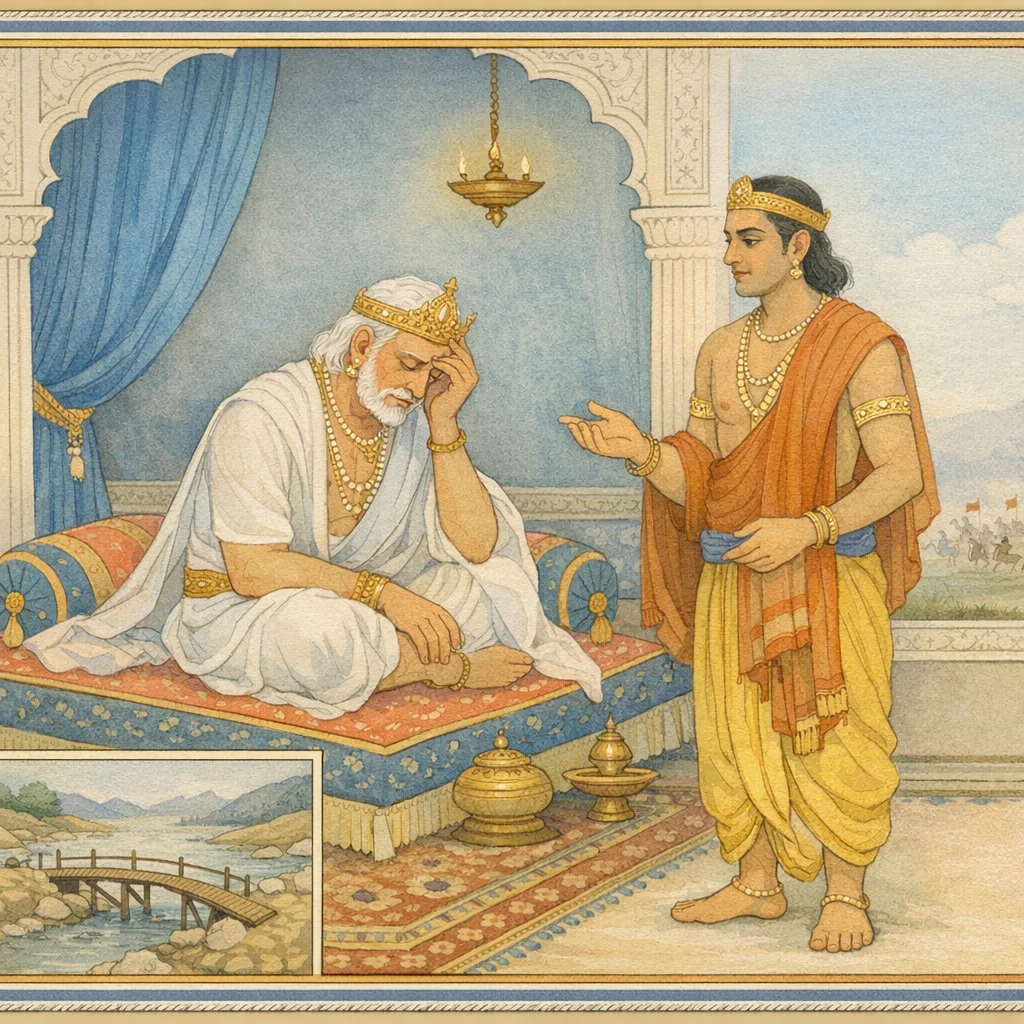
गतोदके सेतुबन्धो यादृक् तादृगयं तव । विलापो निष्फलो राजन् मा शुचो भरतर्षभ,भरतश्रेष्ठ राजन्! जैसे पानी निकल जानेपर वहाँ पुल बाँधना व्यर्थ है, उसी प्रकार इस समय आपका यह विलाप भी निष्फल है। आप शोक न कीजिये
Sañjaya said: “O King, your lament is as futile as building a bridge after the water has already drained away. Do not grieve, O bull among the Bharatas.”
Verse 3
अनतिक्रमणीयो<यं कृतान्तस्याद्भुतो विधि: । मा शुचो भरतश्रेष्ठ दिष्टमेतत् पुरातनम्,कालके इस अद्भुत विधानका उल्लंघन करना असम्भव है। भरतभूषण! शोक त्याग दीजिये। यह सब पुरातन प्रारब्धका फल है
Sañjaya said: “This wondrous ordinance of Kṛtānta (Death/inevitable destiny) cannot be transgressed. Do not grieve, O best of the Bharatas; this is an ancient allotment—an old, preordained fate coming to fruition.”
Verse 4
यदि त्वं हि पुरा द्यूतात् कुन्तीपुत्रं युधिष्ठिरम् । निवर्तयेथा: पुत्रांश्व न त्वां व्यसनमात्रजेत्,यदि आप कुन्तीनन्दन युधिष्ठिर तथा अपने पुत्रोंको पहले ही जूएसे रोक देते तो आपपर यह संकट नहीं आता
Sañjaya said: “If, long ago, you had restrained Kuntī’s son Yudhiṣṭhira from the gambling match—and had also checked your own sons—then this calamity would not have overtaken you.”
Verse 5
युद्धकाले पुन: प्राप्ते तदैव भवता यदि । निवर्तिता: स्यु: संरब्धा न त्वां व्यसनमाव्रजेत्
Sañjaya said: “When the hour of battle came again, if at that very moment you had restrained those men in their fury and turned them back, calamity would not have overtaken you.”
Verse 6
फिर जब युद्धका अवसर आया, उसी समय यदि आपने क्रोधमें भरे हुए अपने पुत्रोंको बलपूर्वक रोक दिया होता तो आपपर यह संकट नहीं आ सकता था ।। दुर्योधनं चाविधेयं बध्नीतेति पुरा यदि । कुरूनचोदयिष्यस्त्वं न त्वां व्यसनमाव्रजेत्,यदि आप पहले ही कौरवोंको यह आज्ञा दे देते कि इस दुर्विनीत दुर्योधनको कैद कर लो तो आपपर यह संकट नहीं आता
Sañjaya said: “If, long ago, you had commanded the Kurus, ‘Bind this disobedient Duryodhana,’ then this calamity would not have overtaken you. The crisis now consuming you is the fruit of failing to restrain your sons when restraint was still possible.”
Verse 7
तत् ते बुद्धिव्यभीचारमुपलप्स्यन्ति पाण्डवा: । पज्चाला वृष्णय: सर्वे ये चान्येडपि नराधिपा:,आपकी बुद्धिके वैपरीत्यका फल पाण्डव, पांचाल, समस्त वृष्णिवंशी तथा अन्य जो- जो नरेश हैं, वे सभी भोगेंगे
Sañjaya said: “The Pāṇḍavas will come to know this perversion and inconsistency of your counsel; and the Pāñcālas, all the Vṛṣṇis, and whatever other kings there are as well—each of them will have to endure the consequences of that misguided policy.”
Verse 8
स कृत्वा पितृकर्म त्वं पुत्र संस्थाप्य सत्पथे । वर्तेथा यदि धर्मेण न त्वां व्यसनमात्रजेत्,यदि आपने अपने पुत्रको सन्मार्गमें स्थापित करके पिताके कर्तव्यका पालन करते हुए धर्मके अनुसार बर्ताव किया होता तो आपपर यह संकट नहीं आता
Sañjaya said: “Had you fulfilled the duties of a father and, having set your son firmly on the righteous path, conducted yourself in accordance with dharma, this calamity would not have overtaken you.”
Verse 9
त्वं तु प्राज्ञतमो लोके हित्वा धर्म सनातनम् | दुर्योधनस्य कर्णस्य शकुनेश्चवान्वगा मतम्,आप संसारमें बड़े बुद्धिमान समझे जाते हैं तो भी आपने सनातनधर्मका परित्याग करके दुर्योधन, कर्ण और शकुनिके मतका अनुसरण किया है
Sañjaya said: “Though you are regarded in the world as most discerning, you have abandoned the eternal dharma and have instead followed the counsel of Duryodhana, Karna, and Shakuni.”
Verse 10
तत् तं विलपितं सर्व मया राजन् निशामितम् । अर्थ निविशमानस्य विषमिश्र॑ यथा मधु,राजन! आप स्वार्थमें सने हुए हैं। आपका यह सारा विलाप-कलाप मैंने सुन लिया। यह विषमिश्रित मधुके समान ऊपरसे ही मीठा है (इसके भीतर घातक कठटुता भरी हुई है)
Sañjaya said: “O King, I have heard all of that lamentation of yours. It is like honey mixed with poison—sweet on the surface, yet inwardly steeped in self-interest and therefore deadly in its consequence.”
Verse 11
नामन्यत तदा कृष्णो राजानं पाण्डवं पुरा । न भीष्म नैव च द्रोणं यथा त्वां मन्यतेडच्युत:,अपनी महिमासे च्युत न होनेवाले भगवान् श्रीकृष्ण पहले आपका जैसा सम्मान करते थे, वैसा उन्होंने पाण्डुपुत्र राजा युधिष्ठिर, भीष्म तथा द्रोणाचार्यका भी समादर नहीं किया है
Sañjaya said: “Formerly, Kṛṣṇa—Acyuta, who never falls from his majesty—did not hold even the Pāṇḍava king Yudhiṣṭhira, nor Bhīṣma, nor Droṇa, in such esteem as he now holds you.”
Verse 12
अजानातू स यदा तु त्वां राजधर्मादधश्ष्युतम् । तदाप्रभृति कृष्णस्त्वां न तथा बहु मन्यते,परंतु जबसे श्रीकृष्णने यह जान लिया है कि आप राजोचित धर्मसे नीचे गिर गये हैं, तबसे वे आपका उस तरह अधिक आदर नहीं करते हैं
Sañjaya said: “But when he came to know that you had fallen below the kingly code of dharma, from that time onward Kṛṣṇa has not held you in the same high regard as before.”
Verse 13
परुषाण्युच्यमानांश्व यथा पार्थनुपेक्षसे । तस्यानुबन्ध: प्राप्तस्त्वां पुत्राणां राज्यकामुक,पुत्रोंकोी राज्य दिलानेकी अभिलाषा रखनेवाले महाराज! कुन्तीके पुत्रोंको कठोर बातें (गालियाँ) सुनायी जाती थीं और आप उनकी उपेक्षा करते थे। आज उसी अन्यायका फल आपको प्राप्त हुआ है
Sañjaya said: “O King, you who longed to secure the kingdom for your sons: when harsh and insulting words were hurled at Kuntī’s sons, you looked on with indifference. Today the consequence of that injustice has come upon you.”
Verse 14
पितृपैतामहं राज्यमपवृत्तं तदानघ । अथ पार्थरजितां कृत्स्नां पृथिवीं प्रत्यपद्यथा:,निष्पाप नरेश! आपने उन दिनों बाप-दादोंके राज्यको तो अपने अधिकारमें कर ही लिया था; फिर दुन्तीके पुत्रोंद्वारा जीती हुई सम्पूर्ण पृथ्वीका विशाल साम्राज्य भी हड़प लिया
Sañjaya said: “O blameless king, in those days you had already secured for yourself the ancestral and inherited kingdom that had slipped away; and then you also took possession of the entire earth—won by the sons of Pṛthā—appropriating that vast sovereignty as well.”
Verse 15
पाण्डुना निर्जितं राज्यं कौरवाणां यशस्तथा । ततश्चाप्यधिकं भूय: पाण्डवैर्धर्मचारिभि:,राजा पाणए्डुने भूमण्डलका राज्य जीता और कौरवोंके यशका विस्तार किया था। फिर धर्मपरायण पाण्डवोंने अपने पितासे भी बढ़-चढ़कर राज्य और सुयशका प्रसार किया है
Sañjaya said: “King Pāṇḍu once won a kingdom and, by his prowess, enhanced the fame of the Kauravas. After him, the Pāṇḍavas—steadfast in dharma—extended that sovereignty and good renown still further, surpassing even their father.”
Verse 16
तेषां तत् तादृशं कर्म त्वामासाद्य सुनिष्फलम् | यत् पित्र्याद् भ्रंशिता राज्यात् त्वयेहामिषगृद्धिना
Sañjaya said: “All that kind of effort of theirs has proved utterly fruitless upon reaching you—because, driven here by greed for gain, you have caused them to fall away from their ancestral kingdom.”
Verse 17
परंतु उनका वैसा महान् कर्म भी आपको पाकर अत्यन्त निष्फल हो गया; क्योंकि आपने राज्यके लोभमें पड़कर उन्हें अपने पैतृक राज्यसे भी वंचित कर दिया ।। यत् पुनर्युद्धकाले त्वं पुत्रान् गर्हयसे नूप । बहुधा व्याहरन् दोषान् न तदद्योपपद्यते,नरेश्वरर आज जब युद्धका अवसर उपस्थित है, ऐसे समयमें जो आप अपने पुत्रोंके नाना प्रकारके दोष बताते हुए उनकी निन्दा कर रहे हैं यह इस समय आपको शोभा नहीं देता है
Sanjaya said: Yet even their great and heroic deeds became utterly fruitless upon reaching you, for, driven by greed for the kingdom, you deprived them even of their ancestral realm. And now, O king—when the moment of battle has arrived—your censuring your sons, repeatedly enumerating their faults, is not fitting today, O lord of men. In such a crisis, moral posturing after enabling injustice rings hollow.
Verse 18
न हि रक्षन्ति राजानो युध्यन्तो जीवितं रणे । चमूं विगाहा पार्थानां युध्यन्ते क्षत्रियर्षभा:,राजालोग रणक्षेत्रमें युद्ध करते हुए अपने जीवनकी रक्षा नहीं कर रहे हैं। वे क्षत्रियशिरोमणि नरेश पाण्डवोंकी सेनामें घुसकर युद्ध करते हैं
Sañjaya said: In battle, kings who are engaged in fighting do not truly safeguard their own lives. Those bull-like heroes among kṣatriyas plunge into the Pāṇḍavas’ battle-array and fight on, accepting the mortal risk that warfare demands.
Verse 19
यां तु कृष्णार्जुनौ सेनां यां सात्यकिवृकोदरौ । रक्षेरन् को नु तां युध्येच्चमूमन्यत्र कौरवै:,श्रीकृष्ण, अर्जुन, सात्यकि तथा भीमसेन जिस सेनाकी रक्षा करते हों, उसके साथ कौरवोंके सिवा दूसरा कौन युद्ध कर सकता है?
Sañjaya said: That army which is protected by Kṛṣṇa and Arjuna, and likewise by Sātyaki and Vṛkodara (Bhīma)—who, apart from the Kauravas, could possibly fight against such a host in battle?
Verse 20
येषां योद्धा गुडाकेशो येषां मन्त्री जनार्दन: । येषां च सात्यकिर्योद्धा येषां योद्धा वृकोदर:,जिनके योद्धा गुडाकेश अर्जुन हैं, जिनके मन्त्री भगवान् श्रीकृष्ण हैं तथा जिनकी ओरससे युद्ध करनेवाले योद्धा सात्यकि और भीमसेन हैं, उनके साथ कौरवों तथा उनके चरण-चिह्लोंपर चलनेवाले अन्य नरेशोंको छोड़कर दूसरा कौन मरणथधर्मा धनुर्धर युद्ध करनेका साहस कर सकता है?
Sañjaya said: “When their champion is Guḍākeśa (Arjuna), their counsellor is Janārdana (Kṛṣṇa), and when fighters like Sātyaki and Vṛkodara (Bhīma) stand on their side—who among mortal bowmen could dare to wage war against them, except the Kauravas and those kings who merely follow in the Kauravas’ footsteps?”
Verse 21
को हि तान् विषहेद् योद्धूं मर्त्यधर्मा धनुर्धर: । अन्यत्र कौरवेयेभ्यो ये वा तेषां पदानुगा:,जिनके योद्धा गुडाकेश अर्जुन हैं, जिनके मन्त्री भगवान् श्रीकृष्ण हैं तथा जिनकी ओरससे युद्ध करनेवाले योद्धा सात्यकि और भीमसेन हैं, उनके साथ कौरवों तथा उनके चरण-चिह्लोंपर चलनेवाले अन्य नरेशोंको छोड़कर दूसरा कौन मरणथधर्मा धनुर्धर युद्ध करनेका साहस कर सकता है?
Sañjaya said: Who among mortal bowmen, bound by the limits of human nature, could endure to fight against them? None—except the sons of Kuru and those kings who follow in their footsteps.
Verse 22
यावत् तु शक््यते कर्तुमन्तरजैर्जनाधिपै: । क्षत्रधर्मरतै: शूरैस्तावत् कुर्वन्ति कौरवा:,अवसरको जाननेवाले, क्षत्रिय-धर्मपरायण, शूरवीर राजालोग जितना कर सकते हैं, कौरवपक्षी नरेश उतना पराक्रम करते हैं
Sañjaya said: So far as it is possible to do, the Kauravas—kings born in the same line, heroic and devoted to the kṣatriya code—exert themselves to that full extent, acting with keen sense for the right moment and opportunity in battle.
Verse 23
यथा तु पुरुषव्याघ्रैर्युद्धं परमसंकटम् । कुरूणां पाण्डवै: सार्ध तत् सर्व शृणु तत्त्वतः,पुरुषसिंह पाण्डवोंके साथ कौरवोंका जिस प्रकार अत्यन्त संकटपूर्ण युद्ध हुआ है, वह सब आप ठीक-ठीक सुनिये
Sañjaya said: O tiger among men, hear from me in full truth how that exceedingly perilous battle unfolded—when the Kurus fought together with the Pāṇḍavas—so that the entire course of events may be understood as it really was.
Verse 85
इस प्रकार श्रीमह्ाभारत द्रोणपर्वके अन्तर्गत जयद्रथवधपर्वमें धृतराष्ट्रवाक्यविषयक पचासीवाँ अध्याय पूरा हुआ
Thus ends the eighty-fifth chapter, consisting of Dhṛtarāṣṭra’s words, in the Jayadratha-slaying section contained within the Droṇa Parva of the revered Mahābhārata.
Verse 86
इति श्रीमहाभारते द्रोणपर्वणि जयद्रथवधपर्वणि संजयवाक्ये षडशीतितमो< ध्याय:,इस प्रकार श्रीमहाभारत द्रोणपर्वके अन्तर्गत जयद्रथवधपर्वमें संजयवाक्यविषयक छियासीवाँ अध्याय पूरा हुआ
Thus, in the Śrī Mahābhārata, within the Droṇa Parva—specifically in the section on the slaying of Jayadratha—Sañjaya’s narration concludes: here ends the eighty-sixth chapter.
Frequently Asked Questions
The dilemma is whether a warrior should prioritize deference to a revered authority (Droṇa’s challenge and accusation) or adhere to a mission assigned by legitimate command (Yudhiṣṭhira’s directive to follow Arjuna’s route).
The chapter illustrates that dharma in applied contexts often appears as competing obligations; clarity of mandate, disciplined execution, and accountability for consequences are portrayed as essential to ethical action under pressure.
No explicit phalaśruti is stated here; the chapter’s significance is structural—mapping how speech, intention, and tactical sequencing produce cascading outcomes within the war narrative.