Adhyaya 74
अर्जुनस्य सैन्धवाभिमुखगमनम् तथा विन्दानुविन्दयोर्वधः (Arjuna’s advance toward Saindhava and the fall of Vinda–Anuvinda)
Upa-parva: Saindhava-anveṣaṇa / Jayadratha-pursuit episode (contextual unit within Droṇa Parva)
Sañjaya reports that as the sun turns and dust thickens, the day advances amid ongoing clashes. Arjuna and Vāsudeva press specifically toward Saindhava, with Arjuna cutting a chariot-wide path by concentrated archery; wherever his chariot moves, opposing ranks split. Kṛṣṇa demonstrates advanced chariot maneuvering (maṇḍala patterns), and the narrative praises the unprecedented speed and control of their chariot. Two Avanti brothers, Vinda and Anuvinda, engage: they strike Arjuna, Kṛṣṇa, and the horses with dense volleys, but Arjuna counters by severing their bows, breaking standards, and then killing Vinda by decapitation; Anuvinda attacks with a mace, touches Kṛṣṇa’s forehead without destabilizing him, and is then cut down by Arjuna’s arrows. Their followers surge, but Arjuna clears a route again. Seeing the horses distressed and Jayadratha still distant, Arjuna consults Kṛṣṇa; Kṛṣṇa advises that the horses need drinking water. Arjuna, using an astra, creates a water source and constructs protective arrow-made structures (a ‘śara-veśman’), earning Kṛṣṇa’s approval—an episode linking tactical defense, logistics, and vow-driven pursuit.
Chapter Arc: रणभूमि में प्रतिज्ञा का ज्वार उठता है—अर्जुन के जयद्रथ-वध के संकल्प को समय की कठोर सीमा बाँधती है, और उसी सीमा के भीतर भीमसेन शपथ को भयावह नैतिक-आग में बदल देता है। → भीम पापियों की दुर्गति का एक-एक करके स्मरण कराता है—वेदाध्ययन-व्रतधारी ब्राह्मणों, वृद्धों, साधुओं, गुरुओं का अपमान; ब्राह्मण, गौ और अग्नि का तिरस्कार; अतिथि को निराश लौटाना; स्वार्थी भोग; कृतघ्नता, मद्यपान, मर्यादा-भंग—और इन सब नरकों को अपनी ही गति मान लेने की प्रतिज्ञा करता है यदि जयद्रथ न मारा गया। यह श्लोक-श्रृंखला युद्ध को केवल शस्त्रों का नहीं, धर्म-अधर्म के लेखे का युद्ध बना देती है। → भीम की ‘दूसरी प्रतिज्ञा’ (सूर्यास्त से पहले जयद्रथ-वध) को वह स्वयं नरक-गमन की शर्त से बाँध देता है—यदि समय बीत गया और जयद्रथ जीवित रहा, तो वह उन्हीं घोर गतियों को स्वीकार करेगा जिनका उसने वर्णन किया। प्रतिज्ञा का यह आत्म-दण्ड युद्धभूमि को तपोवन-सा कठोर बना देता है। → प्रतिज्ञा की घोषणा से पाण्डव-पक्ष में उग्र संकल्प और कौरव-पक्ष में भय का संचार होता है; जयद्रथ अब केवल एक योद्धा नहीं, समूचे दिन की धर्म-पराजय या धर्म-जय का प्रतीक बन जाता है। → रात्रि के पार जाते ही शर्त और कठोर हो उठती है—यदि यह रात बीत गई और कल भी जयद्रथ न मारा गया, तो प्रतिज्ञा-भंग की घोर परिणति निश्चित मानी जाएगी।
Shlokas
Verse 29
वेदोंका स्वाध्याय अथवा अत्यन्त कठोर व्रतका पालन करनेवाले श्रेष्ठ ब्राह्यणगकी तथा बड़े-बूढ़ों, साधु-पुरुषों और गुरुजनोंकी अवहेलना करनेवाला पुरुष जिन नरकोंमें पड़ता है, ब्राह्मण, गौ और अग्निको पैरसे छूनेवाले पुरुषकी जो गति होती है तथा जलमें थूक अथवा मल-मूत्र छोड़नेवालोंकी जो दुर्गति होती है, यदि मैं कल जयद्रथको न मारूँ तो उसी कष्टदायिनी गतिको मैं भी प्राप्त करूं
Arjuna said: “The hells into which a man falls when he shows contempt for venerable elders, holy men, and teachers—indeed, even for eminent Brāhmaṇas devoted to Vedic study or to the observance of exceedingly austere vows; the wretched fate that befalls one who touches a Brāhmaṇa, a cow, or the sacred fire with his foot; and the miserable end of those who spit or discharge excrement and urine into water—if I do not slay Jayadratha tomorrow, may I too attain that same tormenting fate.”
Verse 30
अवमन्यमानो यान् याति वृद्धान् साधून् गुरूंस्तथा | स्पृशतो ब्राह्माणं गां च पादेनाग्निं च या भवेत्,वेदोंका स्वाध्याय अथवा अत्यन्त कठोर व्रतका पालन करनेवाले श्रेष्ठ ब्राह्यणगकी तथा बड़े-बूढ़ों, साधु-पुरुषों और गुरुजनोंकी अवहेलना करनेवाला पुरुष जिन नरकोंमें पड़ता है, ब्राह्मण, गौ और अग्निको पैरसे छूनेवाले पुरुषकी जो गति होती है तथा जलमें थूक अथवा मल-मूत्र छोड़नेवालोंकी जो दुर्गति होती है, यदि मैं कल जयद्रथको न मारूँ तो उसी कष्टदायिनी गतिको मैं भी प्राप्त करूं
Arjuna said: “The dreadful fate that befalls one who scorns elders, the virtuous, and one’s teachers; the fate of one who touches a Brahmin, a cow, or the sacred fire with the foot; and the miserable end of one who spits or passes excrement and urine into water—may that same tormenting destiny be mine if I do not slay Jayadratha tomorrow.”
Verse 31
या>प्सु श्लेष्म पुरीषं च मूत्र वा मुडचतां गति: । तां गच्छेयं गतिं कष्टां न चेद्धन्यां जयद्रथम्,वेदोंका स्वाध्याय अथवा अत्यन्त कठोर व्रतका पालन करनेवाले श्रेष्ठ ब्राह्यणगकी तथा बड़े-बूढ़ों, साधु-पुरुषों और गुरुजनोंकी अवहेलना करनेवाला पुरुष जिन नरकोंमें पड़ता है, ब्राह्मण, गौ और अग्निको पैरसे छूनेवाले पुरुषकी जो गति होती है तथा जलमें थूक अथवा मल-मूत्र छोड़नेवालोंकी जो दुर्गति होती है, यदि मैं कल जयद्रथको न मारूँ तो उसी कष्टदायिनी गतिको मैं भी प्राप्त करूं
Arjuna said: “May I fall into that grievous fate which is assigned to those who spit phlegm, or discharge feces or urine into water, if I do not slay Jayadratha tomorrow—may I not attain any blessed end.”
Verse 32
नग्नस्यथ स्नायमानस्य या च वन्ध्यातिथेर्गति: । उत्कोचिनां मृषोक्तीनां वज्चकानां च या गति:,नंगे नहानेवाले तथा अतिथिको भोजन दिये बिना ही उसे असफल लौटा देनेवाले पुरुषकी जो गति होती है; घूसखोर, असत्यवादी तथा दूसरोंके साथ वंचना (ठगी) करनेवालोंकी जो दुर्गति होती है; आत्माका हनन करनेवाले, दूसरोंपर झूठे दोषारोपण करनेवाले, भृत्योंकी आज्ञाके अधीन रहनेवाले तथा स्त्री, पुत्र एवं आश्रित जनोंके साथ यथायोग्य बँटवारा किये बिना ही अकेले मिष्टान्न उड़ानेवाले क्षुद्र पुरुषोंको जिस घोर नारकी गतिकी प्राप्ति होती है, यदि मैं कल जयद्रथको न मारूँ तो मुझे भी वही दुर्गति प्राप्त हो
Arjuna said: “The fate that befalls one who goes about naked, and the fate that befalls one who bathes improperly; the fate of a man who sends an unserved guest away disappointed; and the wretched end that awaits bribe-takers, liars, and deceivers—may that very same ruin come to me as well if I do not slay Jayadratha tomorrow.”
Verse 33
आत्मापहारिणां या च या च मिथ्याभिशंसिनाम् | भृत्यै: संदिश्यमानानां पुत्रदाराश्रितैस्तथा,नंगे नहानेवाले तथा अतिथिको भोजन दिये बिना ही उसे असफल लौटा देनेवाले पुरुषकी जो गति होती है; घूसखोर, असत्यवादी तथा दूसरोंके साथ वंचना (ठगी) करनेवालोंकी जो दुर्गति होती है; आत्माका हनन करनेवाले, दूसरोंपर झूठे दोषारोपण करनेवाले, भृत्योंकी आज्ञाके अधीन रहनेवाले तथा स्त्री, पुत्र एवं आश्रित जनोंके साथ यथायोग्य बँटवारा किये बिना ही अकेले मिष्टान्न उड़ानेवाले क्षुद्र पुरुषोंको जिस घोर नारकी गतिकी प्राप्ति होती है, यदि मैं कल जयद्रथको न मारूँ तो मुझे भी वही दुर्गति प्राप्त हो
Arjuna said: “May I meet the same dreadful, hellish fate that befalls those who steal another’s very self, those who slander with false accusations, those who live under the orders of their servants, and those who—dependent on wife, sons, and others—consume delicacies alone without making a proper share—if tomorrow I do not slay Jayadratha.”
Verse 34
असंविभज्य क्षुद्राणां या गतिर्मिष्टमश्नताम् । तां गच्छेयं गतिं घोरां न चेद्धन्यां जयद्रथम्,नंगे नहानेवाले तथा अतिथिको भोजन दिये बिना ही उसे असफल लौटा देनेवाले पुरुषकी जो गति होती है; घूसखोर, असत्यवादी तथा दूसरोंके साथ वंचना (ठगी) करनेवालोंकी जो दुर्गति होती है; आत्माका हनन करनेवाले, दूसरोंपर झूठे दोषारोपण करनेवाले, भृत्योंकी आज्ञाके अधीन रहनेवाले तथा स्त्री, पुत्र एवं आश्रित जनोंके साथ यथायोग्य बँटवारा किये बिना ही अकेले मिष्टान्न उड़ानेवाले क्षुद्र पुरुषोंको जिस घोर नारकी गतिकी प्राप्ति होती है, यदि मैं कल जयद्रथको न मारूँ तो मुझे भी वही दुर्गति प्राप्त हो
Arjuna said: “May I fall into that dreadful fate which awaits petty men who eat delicacies without sharing—if I do not slay Jayadratha tomorrow.”
Verse 35
संश्रितं चापि यस्त्यक्त्वा साधुं तद्गबचने रतम् । न बिभर्ति नृशंसात्मा निन्दते चोपकारिणम्,जो नृशंस स्वभावका मनुष्य शरणागत, साधुपुरुष तथा आज्ञापालनमें तत्पर रहनेवाले पुरुषको त्यागकर उसका भरण-पोषण नहीं करता, जो उपकारीकी निन्दा करता है, पड़ोसमें रहनेवाले योग्य व्यक्तिको श्राद्धका दान नहीं देता और अयोग्य व्यक्तियोंको तथा शूद्राके स्वामी ब्राह्मणको देता है, जो मद्य पीनेवाला, धर्म-मर्यादाको तोड़नेवाला, कृतघ्न और स्वामीकी निन््दा करनेवाला है--इन सभी लोगोंको जो दुर्गति प्राप्त होती है, उसीको मैं भी शीघ्र ही प्राप्त करूँ; यदि कल जयद्रथका वध न कर डालूँ
Arjuna said: “May I swiftly meet the same ruin that befalls the cruel-hearted man who abandons one who has sought his protection—a virtuous person devoted to righteous counsel—who then refuses to maintain him and even reviles his benefactor.”
Verse 36
अह्ति प्रातिवेश्याय श्राद्ध यो न ददाति च | अनर्ह भ्यश्ष यो दद्याद् वृषलीपतये तथा,जो नृशंस स्वभावका मनुष्य शरणागत, साधुपुरुष तथा आज्ञापालनमें तत्पर रहनेवाले पुरुषको त्यागकर उसका भरण-पोषण नहीं करता, जो उपकारीकी निन्दा करता है, पड़ोसमें रहनेवाले योग्य व्यक्तिको श्राद्धका दान नहीं देता और अयोग्य व्यक्तियोंको तथा शूद्राके स्वामी ब्राह्मणको देता है, जो मद्य पीनेवाला, धर्म-मर्यादाको तोड़नेवाला, कृतघ्न और स्वामीकी निन््दा करनेवाला है--इन सभी लोगोंको जो दुर्गति प्राप्त होती है, उसीको मैं भी शीघ्र ही प्राप्त करूँ; यदि कल जयद्रथका वध न कर डालूँ
Arjuna said: “May I swiftly fall into the same wretched fate that befalls those who commit these sins—one who does not give the śrāddha-offering to a worthy neighbor; one who gives it to the unworthy, or to a brāhmaṇa who lives as the husband of a śūdra woman; one who, cruel by nature, abandons a good man who has sought refuge, or a dutiful person devoted to obedience, and refuses to maintain him; one who reviles a benefactor; one who neglects to honor a deserving person living nearby with śrāddha-gifts and instead gives to the undeserving; one who drinks liquor, breaks the bounds of dharma, is ungrateful, and slanders his master. May that very ruin come upon me as well—if I do not slay Jayadratha tomorrow.”
Verse 37
मद्यपो भिन्नमर्याद: कृतघ्नो भर्त॒निन्दक: । तेषां गतिमियां क्षिप्रं न चेद्धन्यां जयद्रथम्,जो नृशंस स्वभावका मनुष्य शरणागत, साधुपुरुष तथा आज्ञापालनमें तत्पर रहनेवाले पुरुषको त्यागकर उसका भरण-पोषण नहीं करता, जो उपकारीकी निन्दा करता है, पड़ोसमें रहनेवाले योग्य व्यक्तिको श्राद्धका दान नहीं देता और अयोग्य व्यक्तियोंको तथा शूद्राके स्वामी ब्राह्मणको देता है, जो मद्य पीनेवाला, धर्म-मर्यादाको तोड़नेवाला, कृतघ्न और स्वामीकी निन््दा करनेवाला है--इन सभी लोगोंको जो दुर्गति प्राप्त होती है, उसीको मैं भी शीघ्र ही प्राप्त करूँ; यदि कल जयद्रथका वध न कर डालूँ
Arjuna said: “May I swiftly meet the same dreadful fate as those who drink intoxicants, who transgress the bounds of dharma, who are ungrateful, and who revile their benefactor and lord—if I do not, by tomorrow, slay Jayadratha.”
Verse 38
भुज्जानानां तु सव्येन उत्सज़े चापि खादताम् | पालाशमासनं चैव तिन्दुकैर्दन्तधावनम्
Arjuna said: “For those who are eating, let the left hand be used for discarding (impurities), while they eat with the other; and let a seat be made of palāśa leaves, and a tooth-cleaning twig be taken from the tinduka tree.”
Verse 39
शीतभीताश्ष ये विप्रा रणभीताश्ष क्षत्रिया:,जो ब्राह्मण होकर सर्दीसे और क्षत्रिय होकर युद्धसे डरते हैं, जिस गाँवमें एक ही कुएँका जल पीया जाता हो और जहाँ कभी वेदमन्त्रोंकी ध्वनि न हुई हो, ऐसे स्थानोंमें जो छः: महीनोंतक निवास करते हैं, जो शास्त्रकी निन्दामें तत्पर रहते, दिनमें मैथुन करते और सोते हैं, जो दूसरोंके घरोंमें आग लगाते और दूसरोंको जहर दे देते हैं, जो कभी अग्निहोत्र और अतिथि-सत्कार नहीं करते तथा गायोंके पानी पीनेमें विघ्न डालते हैं, जो रजस्वला सत्रीका सेवन करते और शुल्क लेकर कन्या देते हैं, जो बहुतोंकी पुरोहिती करते, ब्राह्मण होकर सेवा-वृत्तिसे जीविका चलाते, मुँहमें मैथुन करते अथवा दिनमें स्त्री-सहवास करते हैं, जो ब्राह्मणको कुछ देनेकी प्रतिज्ञा करके फिर लोभवश नहीं देते हैं, उन सबको जिन लोकों अथवा दुर्गतिकी प्राप्ति होती है, उन्हींको मैं भी प्राप्त होऊँ; यदि कलतक जयद्रथको न मार डालूँ
Arjuna said: “May I fall into the very same worlds—or the same ruinous fate—that awaits those who betray their own station and sacred duty: brahmins who, though born to steadiness, tremble at hardship; kshatriyas who shrink from battle; those who live for months in places devoid of Vedic recitation and shared by a single well; those who delight in reviling the scriptures, who indulge in sex and sleep by day; those who set fire to others’ homes or poison others; those who neglect the agnihotra and fail to honor guests, who obstruct cattle from drinking; those who consort with a menstruating woman, or give a daughter in marriage for a fee; those who serve as priests for many indiscriminately, or brahmins who live by servile employment; those who practice perverse sexual acts or seek intercourse in daylight; and those who promise gifts to a brahmin and then, out of greed, do not give. If by tomorrow I do not slay Jayadratha, may that same disgrace and downfall be mine.”
Verse 40
एककूपोदकग्रामे वेदध्वनिविवर्जिते । षण्मासं तत्र वसतां तथा शास्त्र विनिन्दताम्,जो ब्राह्मण होकर सर्दीसे और क्षत्रिय होकर युद्धसे डरते हैं, जिस गाँवमें एक ही कुएँका जल पीया जाता हो और जहाँ कभी वेदमन्त्रोंकी ध्वनि न हुई हो, ऐसे स्थानोंमें जो छः: महीनोंतक निवास करते हैं, जो शास्त्रकी निन्दामें तत्पर रहते, दिनमें मैथुन करते और सोते हैं, जो दूसरोंके घरोंमें आग लगाते और दूसरोंको जहर दे देते हैं, जो कभी अग्निहोत्र और अतिथि-सत्कार नहीं करते तथा गायोंके पानी पीनेमें विघ्न डालते हैं, जो रजस्वला सत्रीका सेवन करते और शुल्क लेकर कन्या देते हैं, जो बहुतोंकी पुरोहिती करते, ब्राह्मण होकर सेवा-वृत्तिसे जीविका चलाते, मुँहमें मैथुन करते अथवा दिनमें स्त्री-सहवास करते हैं, जो ब्राह्मणको कुछ देनेकी प्रतिज्ञा करके फिर लोभवश नहीं देते हैं, उन सबको जिन लोकों अथवा दुर्गतिकी प्राप्ति होती है, उन्हींको मैं भी प्राप्त होऊँ; यदि कलतक जयद्रथको न मार डालूँ
Arjuna said: “If by tomorrow I do not slay Jayadratha, then may I attain the very same worlds—indeed the same ruinous fate—that befalls those who live for six months in a village where all drink from a single well and where the sound of Vedic recitation is absent; those who are intent on reviling the śāstras; those who, though Brahmins, are afraid of winter, and those who, though Kṣatriyas, are afraid of battle; those who indulge in sexual acts by day and sleep by day; those who set fire to others’ houses and administer poison; those who never perform the Agnihotra nor honor guests; those who obstruct cattle from drinking water; those who consort with a menstruating woman; those who give a maiden in marriage for a fee; those who serve as priests for many; those Brahmins who live by servile employment; those who commit perverse sexual acts; and those who promise gifts to Brahmins and then, out of greed, do not give.”
Verse 41
दिवामैथुनिनां चापि दिवसेषु च शेरते । अगारदाहिनां चैव गरदानां च ये मता:,जो ब्राह्मण होकर सर्दीसे और क्षत्रिय होकर युद्धसे डरते हैं, जिस गाँवमें एक ही कुएँका जल पीया जाता हो और जहाँ कभी वेदमन्त्रोंकी ध्वनि न हुई हो, ऐसे स्थानोंमें जो छः: महीनोंतक निवास करते हैं, जो शास्त्रकी निन्दामें तत्पर रहते, दिनमें मैथुन करते और सोते हैं, जो दूसरोंके घरोंमें आग लगाते और दूसरोंको जहर दे देते हैं, जो कभी अग्निहोत्र और अतिथि-सत्कार नहीं करते तथा गायोंके पानी पीनेमें विघ्न डालते हैं, जो रजस्वला सत्रीका सेवन करते और शुल्क लेकर कन्या देते हैं, जो बहुतोंकी पुरोहिती करते, ब्राह्मण होकर सेवा-वृत्तिसे जीविका चलाते, मुँहमें मैथुन करते अथवा दिनमें स्त्री-सहवास करते हैं, जो ब्राह्मणको कुछ देनेकी प्रतिज्ञा करके फिर लोभवश नहीं देते हैं, उन सबको जिन लोकों अथवा दुर्गतिकी प्राप्ति होती है, उन्हींको मैं भी प्राप्त होऊँ; यदि कलतक जयद्रथको न मार डालूँ
Arjuna said: “May I meet the very same worlds—indeed the same ruinous fate—that is ordained for those who indulge in sexual intercourse by day and who also sleep away the daytime; for those who set fire to other people’s houses; and for those who administer poison.”
Verse 42
अग्न्यातिथ्यविहीनाश्न गोपानेषु च विघ्नदा: । रजस्वलां सेवयन्त: कन्यां शुल्केन दायिन:,जो ब्राह्मण होकर सर्दीसे और क्षत्रिय होकर युद्धसे डरते हैं, जिस गाँवमें एक ही कुएँका जल पीया जाता हो और जहाँ कभी वेदमन्त्रोंकी ध्वनि न हुई हो, ऐसे स्थानोंमें जो छः: महीनोंतक निवास करते हैं, जो शास्त्रकी निन्दामें तत्पर रहते, दिनमें मैथुन करते और सोते हैं, जो दूसरोंके घरोंमें आग लगाते और दूसरोंको जहर दे देते हैं, जो कभी अग्निहोत्र और अतिथि-सत्कार नहीं करते तथा गायोंके पानी पीनेमें विघ्न डालते हैं, जो रजस्वला सत्रीका सेवन करते और शुल्क लेकर कन्या देते हैं, जो बहुतोंकी पुरोहिती करते, ब्राह्मण होकर सेवा-वृत्तिसे जीविका चलाते, मुँहमें मैथुन करते अथवा दिनमें स्त्री-सहवास करते हैं, जो ब्राह्मणको कुछ देनेकी प्रतिज्ञा करके फिर लोभवश नहीं देते हैं, उन सबको जिन लोकों अथवा दुर्गतिकी प्राप्ति होती है, उन्हींको मैं भी प्राप्त होऊँ; यदि कलतक जयद्रथको न मार डालूँ
Arjuna said: “May I attain the very same worlds—or the same ruinous fate—that falls to those who eat without maintaining the sacred fire and without honoring guests; who obstruct cattle at the watering places; who consort with a menstruating woman; and who give a maiden in marriage for a price—if I do not slay Jayadratha by tomorrow.”
Verse 43
या च वै बहुयाजिनां ब्राह्मणानां श्ववृत्तिनाम् । आस्यमैथुनिकानां च ये दिवा मैथुने रता:,जो ब्राह्मण होकर सर्दीसे और क्षत्रिय होकर युद्धसे डरते हैं, जिस गाँवमें एक ही कुएँका जल पीया जाता हो और जहाँ कभी वेदमन्त्रोंकी ध्वनि न हुई हो, ऐसे स्थानोंमें जो छः: महीनोंतक निवास करते हैं, जो शास्त्रकी निन्दामें तत्पर रहते, दिनमें मैथुन करते और सोते हैं, जो दूसरोंके घरोंमें आग लगाते और दूसरोंको जहर दे देते हैं, जो कभी अग्निहोत्र और अतिथि-सत्कार नहीं करते तथा गायोंके पानी पीनेमें विघ्न डालते हैं, जो रजस्वला सत्रीका सेवन करते और शुल्क लेकर कन्या देते हैं, जो बहुतोंकी पुरोहिती करते, ब्राह्मण होकर सेवा-वृत्तिसे जीविका चलाते, मुँहमें मैथुन करते अथवा दिनमें स्त्री-सहवास करते हैं, जो ब्राह्मणको कुछ देनेकी प्रतिज्ञा करके फिर लोभवश नहीं देते हैं, उन सबको जिन लोकों अथवा दुर्गतिकी प्राप्ति होती है, उन्हींको मैं भी प्राप्त होऊँ; यदि कलतक जयद्रथको न मार डालूँ
Arjuna said: “May I attain the very same worlds—or the same ruin—that falls to those Brahmins who, though born to sacred duty, live like dogs; who commit perversions such as oral intercourse; and who are addicted to sexual indulgence even by day. If I do not slay Jayadratha by tomorrow, let that fate be mine.”
Verse 44
ब्राह्मणस्य प्रतिश्रुत्य यो वै लोभाद् ददाति न । तेषां गतिं गमिष्यामि श्वो न हन्यां जयद्रथम्,जो ब्राह्मण होकर सर्दीसे और क्षत्रिय होकर युद्धसे डरते हैं, जिस गाँवमें एक ही कुएँका जल पीया जाता हो और जहाँ कभी वेदमन्त्रोंकी ध्वनि न हुई हो, ऐसे स्थानोंमें जो छः: महीनोंतक निवास करते हैं, जो शास्त्रकी निन्दामें तत्पर रहते, दिनमें मैथुन करते और सोते हैं, जो दूसरोंके घरोंमें आग लगाते और दूसरोंको जहर दे देते हैं, जो कभी अग्निहोत्र और अतिथि-सत्कार नहीं करते तथा गायोंके पानी पीनेमें विघ्न डालते हैं, जो रजस्वला सत्रीका सेवन करते और शुल्क लेकर कन्या देते हैं, जो बहुतोंकी पुरोहिती करते, ब्राह्मण होकर सेवा-वृत्तिसे जीविका चलाते, मुँहमें मैथुन करते अथवा दिनमें स्त्री-सहवास करते हैं, जो ब्राह्मणको कुछ देनेकी प्रतिज्ञा करके फिर लोभवश नहीं देते हैं, उन सबको जिन लोकों अथवा दुर्गतिकी प्राप्ति होती है, उन्हींको मैं भी प्राप्त होऊँ; यदि कलतक जयद्रथको न मार डालूँ
Arjuna said: “Whoever, after promising a gift to a Brahmin, does not give it out of greed—may I attain the very same fate that such people attain, if by tomorrow I do not slay Jayadratha.”
Verse 45
धर्मादपेता ये चान्ये मया नात्रानुकीर्तिता: । ये चानुकीर्तितास्तेषां गतिं क्षिप्रमवाप्तुयाम्ू
Arjuna said: “And those others too who have fallen away from dharma, whom I have not mentioned here—may they also swiftly attain the same destined end; and as for those whom I have already named, may they quickly reach their appointed fate as well.”
Verse 46
इमां चाप्यपरां भूय: प्रतिज्ञां मे निबोधत,अब आपलोग पुनः मेरी यह दूसरी प्रतिज्ञा भी सुन लें। यदि इस पापी जयद्रथके मारे जानेसे पहले ही सूर्यदेव अस्ताचलको पहुँच जायूँगे तो मैं यहीं प्रजजलित अग्निमें प्रवेश कर जाऊँगा
Arjuna said: “Hear now yet another vow of mine. If, before that sinful Jayadratha is slain, the Sun-god reaches the western mountain and sets, then I shall, on this very spot, enter the blazing fire.”
Verse 47
यद्यस्मिन्नहते पापे सूर्योडस्तमुपयास्यति । इहैव सम्प्रवेशहं ज्वलितं जातवेदसम्,अब आपलोग पुनः मेरी यह दूसरी प्रतिज्ञा भी सुन लें। यदि इस पापी जयद्रथके मारे जानेसे पहले ही सूर्यदेव अस्ताचलको पहुँच जायूँगे तो मैं यहीं प्रजजलित अग्निमें प्रवेश कर जाऊँगा
“If, before that sinner is slain, the Sun reaches its setting, then here and now I shall enter the blazing fire.”
Verse 48
असुरसुरमनुष्या: पक्षिणो वोरगा वा पितृरजनिचरा वा ब्रह्म॒देवर्षयो वा । चरमचरमपीद यत्परं चापि तस्मात् तदपि ममरिपु त॑ रक्षितुं नैव शक्ता:,देवता, असुर, मनुष्य, पक्षी, नाग, पितर, निशाचर, ब्रह्मर्षि, देवर्षि, यह चराचर जगत् तथा इसके परे जो कुछ है, वह--ये सब मिलकर भी मेरे शत्रु जयद्रथकी रक्षा नहीं कर सकते
Arjuna said: “Whether they be Asuras or Devas, human beings, birds, or serpents; whether Pitṛs or night-roaming spirits; whether Brahmarṣis or Devarṣis—indeed, even all that is moving and unmoving in this world, and whatever lies beyond it—none of them, even united, has the power to protect that enemy of mine, Jayadratha.”
Verse 49
यदि विशति रसातलं तदग्र्यं वियदपि देवपुरं दिते: पुरं वा तदपि शरशतैरहं प्रभाते भूशमभिमन्युरिपो: शिरोडभिहर्ता
Arjuna said: “Even if he were to enter Rasātala, the deepest netherworld, or ascend to the highest reaches of the sky—to the city of the gods, or even to the city of Diti—still, at dawn I shall strike down the head of Abhimanyu’s enemy with hundreds of arrows. No refuge, whether below or above, will shield him from the just consequence of his deed.”
Verse 50
यदि जयद्रथ पातालमें घुस जाय या उससे भी आगे बढ़ जाय अथवा आकाश, देवलोक या दैत्योंके नगरमें जाकर छिप जाय तो भी मैं कल अपने सैकड़ों बाणोंसे अभिमन्युके उस घोर शत्रुका सिर अवश्य काट लूँगा ।। एवमुकक््त्वा विचिक्षेप गाण्डीवं सव्यदक्षिणम् । तस्य शब्दमतिक्रम्य धनु:शब्दोडस्पृशद् दिवम्,ऐसा कहकर अर्जुनने दाहिने और बायें हाथसे भी गाण्डीव धनुषकी टंकार की। उसकी ध्वनि दूसरे शब्दोंको दबाकर सम्पूर्ण आकाशमें गूँज उठी
Arjuna said: “Even if Jayadratha were to plunge into the netherworld, go beyond it, or hide himself in the sky, in the realm of the gods, or in the city of the Daityas, still tomorrow I will surely sever the head of that dreadful enemy of Abhimanyu with my hundreds of arrows.” Having spoken thus, Arjuna made the Gāṇḍīva resound, wielding it with both left and right; the thunder of his bow drowned out other sounds and rang through the whole sky—an oath of retribution and a public pledge to restore justice after a grievous wrong.
Verse 51
अर्जुनेन प्रतिज्ञाते पाउ्चजन्यं जनार्दन: । प्रदथ्मौ तत्र संक्रुद्धों देवदत्तं च फाल्गुन:,अर्जुनके इस प्रकार प्रतिज्ञा कर लेनेपर भगवान् श्रीकृष्णने भी अत्यन्त कुपित होकर पांचजन्य शंख बजाया। इधर अर्जुनने भी देवदत्त नामक शंखको फूँका
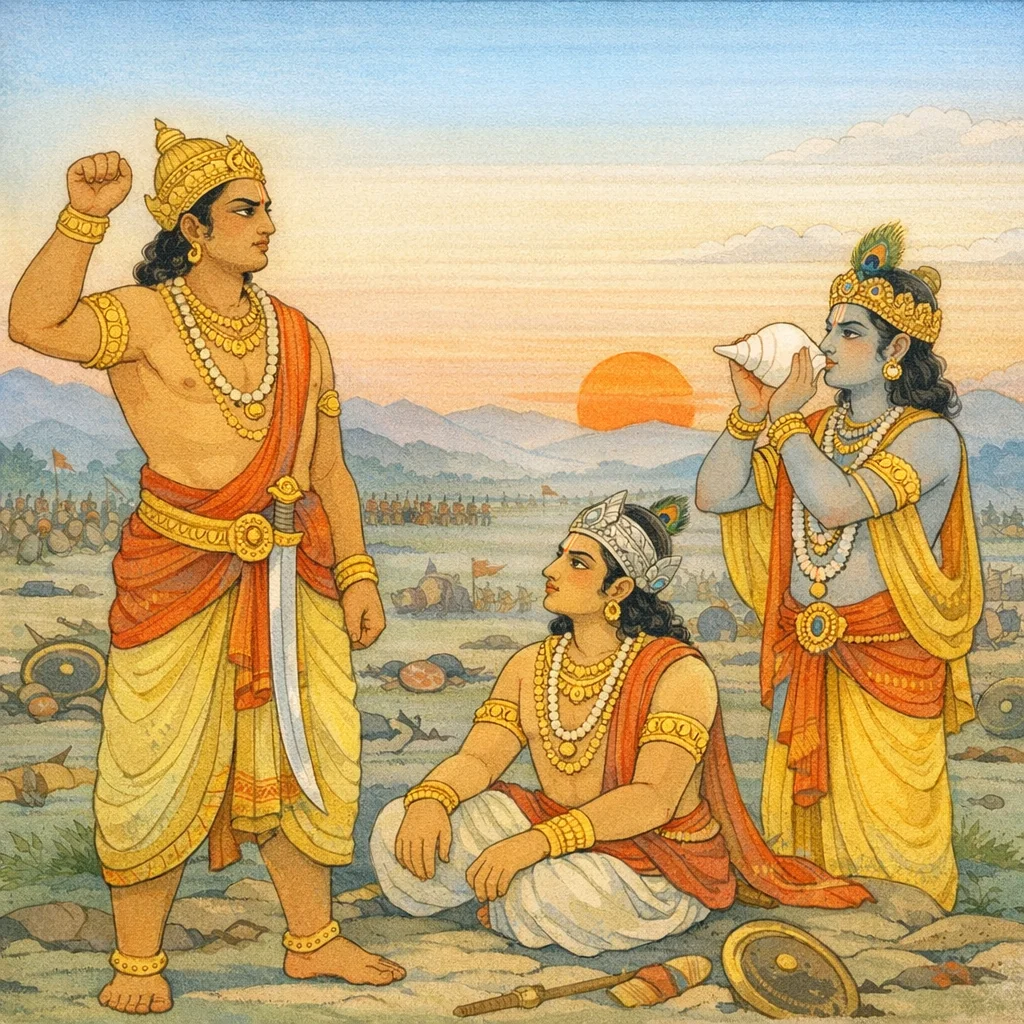
When Arjuna had thus made his vow, Janārdana (Śrī Kṛṣṇa), inflamed with righteous anger, blew the conch Pāñcajanya there; and Phālguna (Arjuna) too sounded his conch Devadatta. The twin blasts proclaim resolve and moral purpose on the battlefield—an outward sign that their pledged duty will be carried through without wavering.
Verse 52
स पाज्चजन्यो<च्युतवक्त्रवायुना भृशं सुपूर्णोदरनि:सृत ध्वनि: । जगत् सपातालवियद्दिगीश्ररं प्रकम्पयामास युगात्यये यथा,भगवान् श्रीकृष्णके मुखकी वायुसे भीतरी भाग भर जानेके कारण अत्यन्त भयंकर ध्वनि प्रकट करनेवाले पांचजन्यने आकाश, पाताल, दिशा और दिक्पालोंसहित सम्पूर्ण जगत्को कम्पित कर दिया, मानो प्रलयकाल आ गया हो
Then the conch Pāñcajanya—its belly filled by the breath from Acyuta’s mouth—released a tremendously fearsome roar. That sound shook the entire world, together with the nether regions, the sky, the directions, and the guardians of the quarters, as though the end of an age (pralaya) had arrived. In the war’s moral atmosphere, the blast functions as a proclamation of resolve and a divine assurance that righteousness is being actively upheld amid destruction.
Verse 53
ततो वादित्रघोषाश्न प्रादुरासन् सहस्रश: । सिंहनादश्न पाण्डूनां प्रतिज्ञाते महात्मना,महामना अर्जुनने जब उक्त प्रतिज्ञा कर ली, उस समय पाण्डवोंके शिविरमें अनेक बाजोंके हजारों शब्द और पाण्डव वीरोंका सिंहनाद भी सब ओर गूँजने लगा
Then, as the great-souled one had made his solemn vow, the Pandava camp suddenly resounded in every direction with the clamour of countless war-instruments and with the lion-like battle-cries of the Pandava heroes—an audible surge of resolve that publicly affirmed the ethical weight of the pledge and rallied the army to its duty in war.
Verse 73
(भीम उवाच प्रतिज्ञोद्भधवशब्देन कृष्णशड्खस्वनेन च । निहतो धार्तराष्ट्रोड्य सानुबन्ध: सुयोधन: ।। भीमसेनने कहा--अर्जुन! तुम्हारी प्रतिज्ञाके शब्दसे और भगवान् श्रीकृष्णके इस शंखनादसे मुझे विश्वास हो गया कि यह धुृतराष्ट्रपुत्र दुर्योधन अपने सगे-सम्बन्धियोंसहित अवश्य मारा जायगा। अथ मृदिततमाग्र्यदाममाल्यं तव सुतशोकमयं च रोषजातम् । व्यपनुदति महाप्रभावमेत- न्नरवर वाक्यमिदं महार्थमिष्टम् ।।) नरश्रेष्ठ तुम्हारा यह वचन महान् अर्थसे युक्त और मुझे अत्यन्त प्रिय है। यह अत्यन्त प्रभावशाली वाक्य तुम्हारे पुत्रशोकमय उस रोष-समूहका निवारण कर रहा है, जिसने तुम्हारे गलेके सुन्दर पुष्पहारको मसल डाला था। इति श्रीमहा भारते द्रोणपर्वणि प्रतिज्ञापर्वणि अर्जुनप्रतिज्ञायां त्रिसप्ततितमो<ध्याय:
Bhīma said: “O Arjuna, by the very sound that arises from your vow, and by the blare of Śrī Kṛṣṇa’s conch, I am assured that today Suyodhana (Duryodhana), the son of Dhṛtarāṣṭra, will be slain—together with all who are bound to him.”
Verse 383
ये चावर्जयतां लोका: स्वपतां च तथोषसि । जो बायें हाथसे भोजन करते हैं, गोदमें रखकर खाते हैं, जो पलासके आसनका और तेंदूकी दातुनका त्याग नहीं करते तथा उष:कालमें सोते हैं, उनको जो नरकलोक प्राप्त होते हैं (वे ही मुझे भी मिले; यदि मैं जयद्रथको न मार डालूँ)
Arjuna said: “The hellish realms that are said to befall those who violate proper conduct—such as eating with the left hand, eating while holding food in the lap, refusing to give up a palāśa-leaf seat and a tinduka tooth-stick, and sleeping at dawn—may those very realms be mine as well, if I do not slay Jayadratha.”
Verse 456
यदि व्युष्टामिमां रात्रि श्वो न हन्यां जयद्रथम् । ऊपर जिन पापियोंका नाम मैंने गिनाया है तथा जिन दूसरे पापियोंका नाम नहीं गिनाया है, उनको जो दुर्गति प्राप्त होती है, उसीको शीघ्र ही मैं भी प्राप्त करूँ; यदि यह रात बीतनेपर कल जयद्रथको न मार डालूँ
Arjuna said: “If, when this night has passed, I do not slay Jayadratha tomorrow, then may I swiftly meet the same dreadful fate that befalls those sinners whose names I have already enumerated—and those other sinners whose names I have not even named.”
Frequently Asked Questions
The chapter frames a duty-conflict between immediate pursuit of a distant objective (Saindhava) and the obligation to preserve operational capacity (fatigued, wounded horses). The resolution prioritizes sustaining the means of action as part of responsible vow-fulfillment.
Effective action requires alignment of intent with method: courage is insufficient without disciplined coordination, situational assessment, and care for supporting agents (charioteer skill, horses, protective cover) that make dharma-execution possible.
No explicit phalaśruti is stated here; the meta-commentary is implicit in the narrative praise of composure and technique—Kṛṣṇa’s approval of Arjuna’s improvised ‘śara-veśman’ functions as an internal validation of right means (upāya) within the epic’s ethical logic.