Adhyaya 53
Droṇa-parva Adhyāya 53: Arjuna’s Jayadratha-vadha Pratijñā and Droṇa’s Protective Vyūha (शकटा-पद्म व्यूहः)
Upa-parva: Jayadratha-vadha Pratijñā (Oath and Counter-Strategy Episode)
Saṃjaya reports that after Arjuna’s vow to kill Jayadratha, Kṛṣṇa (Vāsudeva) cautions that the pledge was made without prior consultation and could invite public ridicule if unfulfilled. Scouts placed in the Kaurava camp confirm that Arjuna’s proclamation—accompanied by loud signals—has alarmed the Kauravas and Jayadratha’s party, who anticipate a next-day assault driven by grief and anger. Jayadratha, distressed, addresses Duryodhana in council: he asserts that even gods and other beings cannot easily overturn Arjuna’s vow, and requests robust battlefield protection or permission to withdraw. He evaluates Arjuna’s prowess with Kṛṣṇa’s support as overwhelming, citing prior feats and the potential to defeat even cosmic opponents. In response, a defensive plan is articulated: Droṇa organizes a formation described as a śakaṭa and padma-based vyūha, placing Jayadratha at the central ‘karnikā’ (core) within a needle-loop (sūcīpāśa), guarded by elite warriors—Karna, Bhūriśravā, Aśvatthāman (Drauṇi), Vṛṣasena, Kṛpa, and the Madra king. Arjuna replies with categorical confidence: he will breach the enemy’s front, neutralize defenders’ astras with his own, and accomplish Jayadratha’s death, framing the vow as truth-bound and non-negotiable. The chapter closes with Arjuna instructing Kṛṣṇa to ready the chariot for dawn, emphasizing the magnitude of the undertaken task.
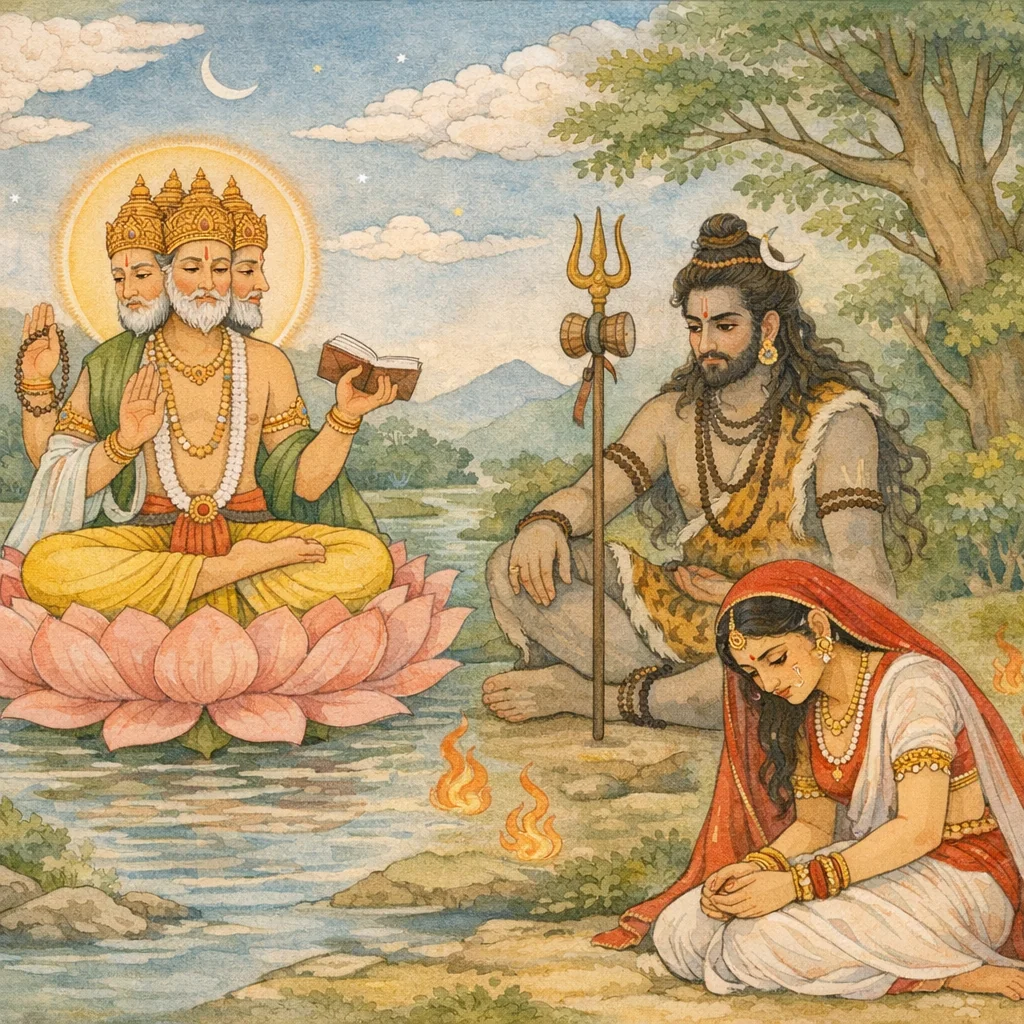
Chapter Arc: अभिमन्यु-वध के युद्ध-कोलाहल के बीच कथा अचानक आदिकाल की ओर मुड़ती है—जहाँ ब्रह्मा देखते हैं कि रुद्र के क्रोध से प्रजाएँ फिर-फिर दग्ध हो रही हैं, और सृष्टि का संतुलन टूटने को है। → ब्रह्मा रुद्र से कहते हैं कि संहार उनकी इच्छा नहीं; वे पृथ्वी-हित के लिए सृष्टि-धर्म निभाना चाहते हैं, पर क्रोध की ज्वाला बढ़ती जाती है। रुद्र भी पितामह से विनती करते हैं कि स्थावर-जंगम का विनाश रोका जाए। इसी तनाव में ब्रह्मा ‘लोककृत्’ के रूप में अपनी नियुक्ति का स्मरण कराते हैं—यदि संतान-परंपरा नष्ट हुई तो समस्त प्राणियों का अभाव हो जाएगा। → ब्रह्मा संहार-प्रवृत्ति को एक रूप देकर ‘मृत्यु’ का विधान करते हैं—क्रोध से उत्पन्न, कृष्ण-रक्तवर्ण, तप्ताभूषण, उग्र नेत्रों वाली शक्ति को नियुक्त करते हैं कि वह नियोग से प्रजा-संहार करे; पर यह नियुक्ति स्वयं करुणा और भय का शिखर बन जाती है, क्योंकि ‘मृत्यु’ (देवी) इस आदेश को सुनकर अत्यन्त चिंतित होकर फूट-फूटकर रो पड़ती है। → ब्रह्मा का उद्देश्य स्पष्ट होता है—अराजक संहार नहीं, बल्कि नियमबद्ध, सीमित और लोक-व्यवस्था के अनुकूल ‘मृत्यु-धर्म’ ताकि सृष्टि चलती रहे और प्रजाएँ पूर्णतः उत्सन्न न हों। रुद्र का उग्र संहार-वेग भी इस विधान से एक मर्यादा में बँधता है। → मृत्यु के आँसुओं के साथ प्रश्न हवा में रह जाता है—क्या वह करुणा के रहते भी संहार-नियोग स्वीकार करेगी, और यह विधान आगे मनुष्यों के युद्ध-भाग्य में कैसे उतर आएगा?
Shlokas
Verse 1
इस प्रकार श्रीमहाभारत द्रोणपर्वके अन्तर्गत अभिमन्युवधपर्वमें बावनवाँ अध्याय पूरा हुआ ॥/ ५२ ॥। प्याज बछ। -ज्:डि त्रिपञज्चाशत्तमोड्ध्याय: शंकर और ब्रह्माका संवाद, मृत्युकी उत्पत्ति तथा उसे समस्त प्रजाके संहारका कार्य सौंपा जाना स्थायुरुवाच प्रजासर्गनिमित्तं हि कृतो यत्नस्त्वया विभो । त्वया सृष्ट श्र वृद्धाश्व भूतग्रामा: पृथग्विधा:,स्थाणु (रुद्रदेव)-ने कहा--प्रभो! आपने प्रजाकी सृष्टिके लिये स्वयं ही यत्न किया है। आपने ही नाना प्रकारके प्राणिसमुदायकी सृष्टि एवं वृद्धि की है
Thus, in the Śrī Mahābhārata’s Droṇa Parva, within the Abhimanyuvadha section, the fifty-second chapter is concluded. Then begins the fifty-third: the dialogue of Śaṅkara and Brahmā, the arising of Death, and the entrusting to it of the work of destroying all creatures. Sthāṇu (Rudra) said: “O Lord, you yourself undertook the effort for the sake of creating living beings. It is you who has brought forth—and caused to flourish—the many and varied communities of creatures.”
Verse 2
तास्तवेह पुनः: क्रोधात् प्रजा दहान्ति सर्वश: । ता दृष्टत्वा मम कारुण्यं प्रसीद भगवन् प्रभो,आपकी वे ही सारी प्रजाएँ पुनः: आपके ही क्रोधसे यहाँ दग्ध हो रही हैं। इससे उनके प्रति मेरे हृदयमें करूणा भर आयी है। अत: भगवन्! प्रभो! आप उन प्रजाओंपर कृपादृष्टि करके प्रसन्न होइये
Nārada said: “Those very creatures of yours are again being burned here on all sides by your wrath. Seeing them thus, compassion has filled my heart. Therefore, O Blessed Lord, O Sovereign, be gracious—look upon those beings with mercy and be appeased.”
Verse 3
ब्रह्मोवाच संहर्तु न च मे काम एतदेवं भवेदिति । पृथिव्या हितकामं तु ततो मां मन्युराविशत्,ब्रह्माजी बोले--रुद्र! मेरी इच्छा यह नहीं है कि इस प्रकार इस जगतका संहार हो। वसुधाके हितके लिये ही मेरे मनमें क्रोधका आवेश हुआ था
Brahmā said: “I do not desire that the world should be destroyed in this manner. Yet, with the welfare of the earth in view, anger entered into me.”
Verse 4
इयं हि मां सहा देवी भारार्ता समचूचुदत् । संहारार्थ महादेव भारेणाभिहता सती,महादेव! इस पृथ्वीदेवीने भारसे पीड़ित होकर मुझे जगतके संहारके लिये प्रेरित किया था। यह सती-साध्वी देवी महान् भारसे दबी हुई थी
Nārada said: “This Earth-goddess, afflicted by the crushing burden, urgently impelled me, O Mahādeva, toward the destruction that would relieve the world. Being a chaste and holy goddess, she was struck down by that weight and sought the means for the removal of the burden.”
Verse 5
ततो<हं नाधिगच्छामि तथा बहुविधं तदा । संहारमप्रमेयस्य ततो मां मन्युराविशत्,मैंने अनेक प्रकारसे इस अनन्त जगत्के संहारके उपायपर विचार किया, परंतु मुझे कोई उपाय सूझ न पड़ा। इसीलिये मुझमें क्रोधका आवेश हो गया
Then I could not discover any means—though I reflected in many ways—by which the immeasurable, endless world might be brought to dissolution. Failing to find a remedy, anger seized me.
Verse 6
रुद्र उ्वाच संहारार्थ प्रसीदस्व मा रुषो वसुधाधिप । मा प्रजा: स्थावराश्नैव जंगमाश्न व्यनीनश:
Rudra said: “Be gracious, O lord of the earth. Do not give way to anger for the sake of destruction. Do not annihilate the creatures—both the immovable and the moving.”
Verse 7
रुद्रने कहा--वसुधाके स्वामी पितामह! आप रोष न कीजिये। जगतका संहार बंद करनेके लिये प्रसन्न होइये। इन स्थावर-जंगम प्राणियोंका विनाश न कीजिये ।। तव प्रसादाद् भगवन्निदं वर्तेत् त्रिधा जगत् । अनागतमतीतं च यच्च सम्प्रति वर्तते,भगवन्! आपकी कृपासे यह जगत् भूत, भविष्य और वर्तमान--तीन रूपोंमें विभक्त हो जाय
Rudra said: “O Grandsire, lord of the earth, do not give way to wrath. Be gracious, so that the destruction of the world may be checked. Do not bring about the annihilation of these beings, both immobile and mobile. By your favor, O Blessed One, let this world proceed in a threefold course—what is yet to come, what has passed, and what is presently occurring.”
Verse 8
भगवन् क्रोधसंदीप्त: क्रोधादग्निमवासृजत् । स दहत्यश्मकूटानि द्रुमांश्न सरितस्तथा,प्रभो! आपने क्रोधसे प्रज्वलित होकर क्रोधपूर्वक जिस अग्निकी सृष्टि की है, वह पर्वत-शिखरों, वृक्षों और सरिताओंको दग्ध कर रही है
Nārada said: “O Lord, inflamed with anger, you have unleashed fire born of wrath. That fire is burning rocky peaks, trees, and even the rivers. Such anger, once released, does not remain confined—it consumes the innocent along with the intended target.”
Verse 9
पल्वलानि च सर्वाणि सर्वाश्विव तृपोलपान् । स्थावरं जड़मं चैव नि:शेषं कुरुते जगत्,यह समस्त छोटे-छोटे जलाशयों, सब प्रकारके तृण और लताओं तथा स्थावर और जंगम जगत्को सम्पूर्णरूपसे नष्ट कर रही है। इस प्रकार यह सारा चराचर जगत् जलकर भस्म हो गया। भगवन्! आप प्रसन्न होइये। आपके मनमें रोष न हो, यही मेरे लिये आपकी ओरसे वर प्राप्त हो
Narada said: “It dries up all the ponds and pools, consumes every kind of grass, creeper, and thicket, and leaves nothing of the world—whether immobile or moving. Thus the entire realm of living and non-living beings is burned down to ash. O Lord, be pleased; let no anger remain in your heart—this alone is the boon I seek from you.”
Verse 10
तदेतद् भस्मसाद्धूतं जगत् स्थावरजज्भमम् प्रसीद भगवन् स त्वं रोषो न स्याद् वरो मम,यह समस्त छोटे-छोटे जलाशयों, सब प्रकारके तृण और लताओं तथा स्थावर और जंगम जगत्को सम्पूर्णरूपसे नष्ट कर रही है। इस प्रकार यह सारा चराचर जगत् जलकर भस्म हो गया। भगवन्! आप प्रसन्न होइये। आपके मनमें रोष न हो, यही मेरे लिये आपकी ओरसे वर प्राप्त हो
Nārada said: “Thus this entire world of the immobile and the mobile has been reduced to ashes and swept away. O Blessed Lord, be gracious. Let there be no anger in your mind—this alone is the boon I seek from you.”
Verse 11
सर्वे हि सृष्टा नश्यन्ति तव देव कथंचन । तस्मान्निवर्ततां तेजस्त्वय्येवेदं प्रलीयताम्,देव! आपके रचे हुए समस्त प्राणी किसी-न-किसी रूपमें नष्ट होते चले जा रहे हैं; अतः आपका यह तेजस्वरूप क्रोध जगत्के संहारसे निवृत्त हो आपमें ही विलीन हो जाय
Nārada said: “O Lord, all beings created by you are, in one way or another, perishing. Therefore, let this blazing energy—this wrath—turn back from the destruction of the world and be reabsorbed into you alone.”
Verse 12
तत् पश्य देव सुभृशं प्रजानां हितकाम्यया । यथेमे प्राणिन: सर्वे निवर्तेरंस्तथा कुरु,प्रभो! आप प्रजावर्गके अत्यन्त हितकी इच्छासे इनकी ओर कृपापूर्ण दृष्टिसे देखिये, जिससे ये समस्त प्राणी नष्ट होनेसे बच जाये, वैसा कीजिये
Nārada said: “O Lord, look upon these creatures with deep compassion, desiring the welfare of all beings. Act in such a way, Master, that all these living beings may turn back from destruction and be saved.”
Verse 13
अभावं नेह गच्छेयुरुत्सन्नजनना: प्रजा: । आदिदेव नियुक्तो5स्मि त्वया लोकेषु लोककृत्
Nārada said: “If it were not so, the peoples—bereft of progenitors—would here fall into non-existence. O Maker of the worlds, you, the Primeval God, have appointed me to act among the worlds.”
Verse 14
संतानोंका नाश हो जानेसे इस जगत्के सम्पूर्ण प्राणियोंका अभाव न हो जाय। आदिदेव! आपने सम्पूर्ण लोकोंमें मुझे लोकस्रष्टाके पदपर नियुक्त किया है ।। मा विनश्येज्जगन्नाथ जगत् स्थावरजड्रमम् | प्रसादाभिमुखं देवं तस्मादेवं ब्रवीम्पहम्,जगन्नाथ! यह चराचर जगत् नष्ट न हो, इसीलिये सदा कृपा करनेको उद्यत रहनेवाले प्रभुके सामने मैं ऐसी प्रार्थना कर रहा हूँ
Nārada said: “O Lord of the universe, let not this world—both the immovable and the moving—perish. Since you, ever inclined to show grace, have placed me among the worlds in the role of a creator and sustainer of beings, I therefore speak this plea before you: may the continuity of creatures not be cut off.”
Verse 15
नारद उवाच श्रुत्वा हि वचन देव: प्रजानां हितकारणे | तेज: संधारयामास पुनरेवान्तरात्मनि,नारदजी कहते हैं--राजन्! प्रजाके हितके लिये महादेवका यह वचन सुनकर भगवान् ब्रह्माने पुन: अपनी अन्तरात्मामें ही उस तेज (क्रोध)-को धारण कर लिया
Nārada said: Having heard that counsel spoken for the welfare of living beings, the divine Brahmā restrained his blazing energy—his rising wrath—and once again held it within his own inner self.
Verse 16
ततोअग्निमुपसंहत्य भगवॉललोकसत्कृत: । प्रवृत्त च निवृत्तं च कथयामास वै प्रभु:,तब विश्ववन्दित भगवान् ब्रह्माने उस अग्निका उपसंहार करके मनुष्योंके लिये प्रवृत्ति (कर्म) और निवृत्ति (ज्ञान) मार्गोंका उपदेश दिया
Then the Blessed Lord, honored by the world, brought that sacrificial fire to its close. Thereafter, the sovereign Teacher expounded to humankind both the path of engagement in righteous action (pravṛtti) and the path of withdrawal leading to liberating knowledge (nivṛtti)—showing how duty and renunciation each have their proper place in the moral order.
Verse 17
उपसंहरतस्तस्य तमग्निं रोषजं तथा । प्रादुर्बभूव विश्वेभ्यो गोभ्यो नारी महात्मन:,उस क्रोधाग्निका उपसंहार करते समय महात्मा ब्रह्माजीकी सम्पूर्ण इन्द्रियोंसे एक नारी प्रकट हुई, जो काले और लाल रंगकी थी। उसकी जिह्ढला, मुख और नेत्र पीले और लाल रंगके थे। राजेन्द्र! वह तपाये हुए सोनेके कुण्डलोंसे सुशोभित थी और उसके सभी आभूषण तप्त सुवर्णके बने हुए थे
Nārada said: As that great-souled one was withdrawing and restraining that wrath-born fire, a woman suddenly manifested from all his senses (as it were from every part of his being). The episode underscores how uncontrolled anger becomes a consuming force, and how its containment gives rise to a directed power—terrible in form—meant to serve a larger cosmic and moral order rather than blind destruction.
Verse 18
कृष्णरक्ता तथा पिड़्रक्तजिद्दास्यलोचना । कुण्डलाभ्यां च राजेन्द्र तप्ताभ्यां तप्तभूषणा,उस क्रोधाग्निका उपसंहार करते समय महात्मा ब्रह्माजीकी सम्पूर्ण इन्द्रियोंसे एक नारी प्रकट हुई, जो काले और लाल रंगकी थी। उसकी जिह्ढला, मुख और नेत्र पीले और लाल रंगके थे। राजेन्द्र! वह तपाये हुए सोनेके कुण्डलोंसे सुशोभित थी और उसके सभी आभूषण तप्त सुवर्णके बने हुए थे
Nārada said: “O king, there appeared a woman of dark and red hue; her tongue, mouth, and eyes were yellow and red. She was adorned with a pair of earrings of heated gold, and all her ornaments were fashioned of glowing, molten-like gold.”
Verse 19
सा निःसृत्य तथा खेभ्यो दक्षिणां दिशमाश्रिता । स्मयमाना च सावेक्ष्य देवी विश्वेश्वरावुभी,वह उनकी इन्द्रियोंसे निकलकर दक्षिण दिशामें खड़ी हुई और उन दोनों देवताओं एवं जगदीश्वरोंकी ओर देखकर मन्द-मन्द मुसकराने लगी
Having thus emerged from their senses, the Goddess took her stand in the southern direction. Smiling gently, she looked toward both those deities—lords of the universe—with calm, knowing composure.
Verse 20
तामाहूय तदा देवो लोकादिनिधनेश्वर: । (उक्तवान् मधुरं वाक््यं सान्त्वयित्वा पुन: पुनः ।) मृत्यो इति महीपाल जहि चेमा: प्रजा इति,महीपाल! उस समय सम्पूर्ण लोकोंके आदि और अन्तके स्वामी ब्रह्माजीने उस नारीको अपने पास बुलाकर उसे बारंबार सान्त्वना देते हुए मधुर वाणीमें “मृत्यो” (हे मृत्यु) कह करके पुकारा और कहा--“तू इन समस्त प्रजाओंका संहार कर
Then the god who is lord of the worlds’ beginning and end summoned her near. Repeatedly consoling her, he spoke in sweet words: “O Mṛtyu (Death), slay these creatures.”
Verse 21
| ८22 4१; “4 + ३] ॥। 25. ६८22 9 ऐ 2 «95 ५ का] ९ प्र चक्र, प्र ॥727.।॥ 5 ्श फट ५ “2-- न. १:22. _ त्वं हि संहारबुद्धाथ प्रादुर्भूता रुषो मम । तस्मात् संहर सर्वास्त्वं प्रजाः:सजडपण्डिता:
Nārada said: “You have manifested from my wrath with the very purpose of destruction. Therefore, bring about the destruction of all these creatures—whether dull-witted or learned—without distinction.”
Verse 22
एवमुक्ता तु सा तेन मृत्यु: कमललोचना
Nārada said: Thus addressed by him, that lotus-eyed lady—Death—was moved to respond and to set her appointed work in motion.
Verse 23
पाणिशथ्यां प्रतिजग्राह तान्यश्रूणि पितामह: । सर्वभूतहितार्थाय तां चाप्यनुनयत् तदा,पितामह ब्रह्माने उसके उन आँसुओंको समस्त प्राणियोंके हितके लिये अपने दोनों हाथोंमें ले लिया और उस नारीको भी अनुनयसे प्रसन्न किया
Nārada said: Then the Grandsire received those tears into the hollow of his hands, doing so for the welfare of all beings; and at that time he also soothed that woman with gentle conciliation, bringing her to calmness.
Verse 53
इति श्रीमहाभारते द्रोणपर्वणि अभिमन्युवधपर्वणि मृत्युकथने त्रिपज्चाशत्तमो5ध्याय:
Thus ends the fifty-third chapter in the Droṇa Parva of the Śrī Mahābhārata, within the section on the slaying of Abhimanyu, in the episode concerning the account of death. The colophon marks a transition in the narrative, underscoring the moral gravity of wartime killing and the inevitability of death that frames human action and responsibility.
Verse 213
मम त्वं हि नियोगेन ततः श्रेयो हुवाप्स्यसि । 'देवि! तू संहारबुद्धिसे मेरे रोषद्वारा प्रकट हुई है, इसलिये मूर्ख और पण्डित सभी प्रजाओंका संहार करती रह, मेरी आज्ञासे तुझे यह कार्य करना होगा। इससे तू कल्याण प्राप्त करेगी”
Nārada said: “Indeed, by carrying out my injunction you will thereafter attain what is truly auspicious. O Goddess—since you have arisen from my wrath with the intent to destroy—continue to bring about the destruction of all beings, whether foolish or learned; by my command you must perform this task. Through this you will obtain welfare.”
Verse 226
दध्यौ चात्यर्थमबला प्ररुरोद च सुस्वरम् । ब्रह्माजीके ऐसा कहनेपर वह मृत्युनामवाली कमललोचना अबला अत्यन्त चिन्तामग्न हो गयी और फूट-फूटकर रोने लगी
Nārada said: Hearing Brahmā speak thus, the lotus-eyed woman—frail and overwhelmed—fell into deep, anxious reflection, and then burst into tears, weeping aloud in a clear, plaintive voice. The scene underscores how even the virtuous can be shaken by fate and divine pronouncement, and how grief naturally follows when one confronts the hard limits of human power.
Frequently Asked Questions
The dilemma is the ethics of a public, time-bound vow: Arjuna’s pratijñā creates a duty to succeed despite amplified risk, while Kṛṣṇa highlights the reputational and social consequences of failure, turning personal resolve into a collective moral and political stake.
The chapter presents vows and truth-claims as binding forces that shape action and perception; it also underscores the necessity of counsel, intelligence, and preparation when dharma is pursued through high-stakes commitments.
No explicit phalaśruti is stated here; the meta-commentary is implicit in the narrative logic: understanding the chapter clarifies how oath-bound speech (satya/pratijñā) functions as a causal driver in the epic’s ethics and war strategy.