Adhyaya 52
Jayadrathasya śoka-bhaya-vilāpaḥ — Droṇena āśvāsanaṃ ca (Jayadratha’s lament and Droṇa’s reassurance)
Upa-parva: Jayadratha-trasāsa–Droṇa-upasaṅgama (Episode: Jayadratha’s fear and consultation with Droṇa)
Saṃjaya reports that Jayadratha, informed by scouts of the Pāṇḍava outcry, rises in distress and enters the royal assembly overwhelmed by grief and fear, anticipating Arjuna’s promised retaliation. He speaks with shame and anxiety, proposing withdrawal for self-preservation, yet also requests protection from the assembled Kaurava leaders, arguing that if many kings stand together they should be able to shield him even from Arjuna. Duryodhana replies by listing prominent allies and asserting that substantial forces will be deployed for Jayadratha’s defense, urging him to abandon fear. Subsequently, Jayadratha accompanies Duryodhana to Droṇa at night, performs formal approach and inquiry, and asks for a technical comparison of his own and Arjuna’s martial capacities (range, lightness, accuracy, firmness of aim). Droṇa answers that their instruction was comparable, but Arjuna surpasses due to disciplined integration (yoga) and habituation to hardship; nevertheless, Jayadratha should not panic because Droṇa promises protection and the creation of a battle-formation difficult for Arjuna to penetrate. Droṇa concludes with a reflective counsel on impermanence, the inevitability of death for all factions, and the kṣatriya’s attainment of exalted worlds through steadfast adherence to duty. Reassured, Jayadratha dispels fear and resolves to fight.
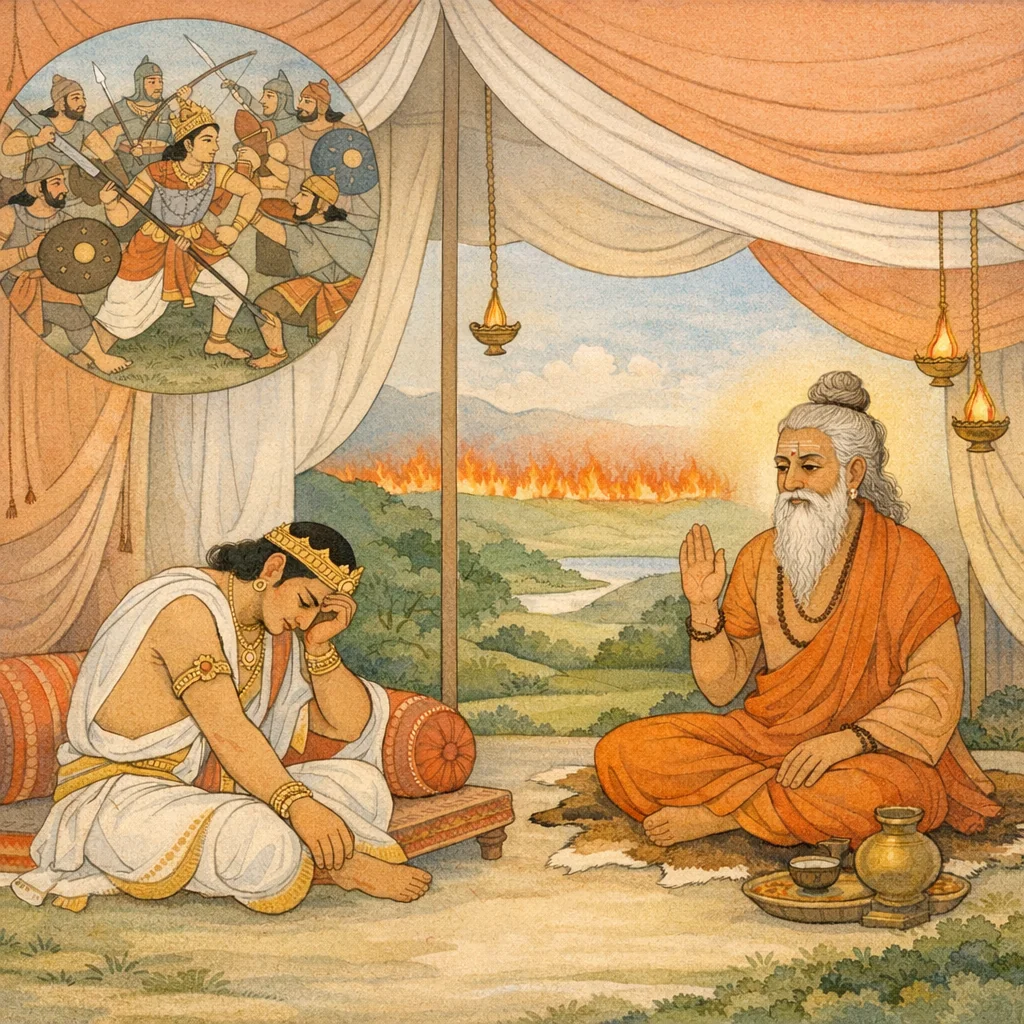
Chapter Arc: अभिमन्यु-वध के शोक से दग्ध युधिष्ठिर के शिविर में व्यास का आगमन होता है—राजा शोक में डूबा है, पर ऋषि का आगमन किसी गूढ़ उपदेश का संकेत देता है। → युधिष्ठिर व्यास की विधिवत पूजा कर बैठाते हैं और फिर टूटकर अपने भतीजे/पुत्रतुल्य अभिमन्यु के वध का वृत्तान्त कहते हैं—कैसे अनेक ‘अधर्मयुक्त’ महारथियों ने उसे घेरकर, उपाय-हीन अवस्था में, बालक होते हुए भी परवीरहा को रण में गिरा दिया। → व्यास युधिष्ठिर को शोक-बन्धन से छुड़ाने हेतु ‘मृत्यु की उत्पत्ति’ का ‘उत्तम’ आख्यान सुनाते हैं—एक प्राचीन कृतयुगीन प्रसंग (राजा अकम्पन आदि) के माध्यम से मृत्यु के विधान, उसके कारण और उसकी अनिवार्यता का रहस्य खोलते हैं; वर्णन में जगत् के दाह/ज्वालामाला से व्याप्त होने जैसी प्रलय-छवियाँ उभरती हैं। → कथा-उपदेश का लक्ष्य स्पष्ट होता है: युधिष्ठिर स्नेह-बन्धनजन्य दुःख से मुक्त हों, मृत्यु को दैवी-नियम के रूप में समझें, और शोक को धर्म-स्थैर्य में रूपान्तरित करें। → व्यास द्वारा मृत्यु-तत्त्व का आख्यान आगे भी विस्तार माँगता है—युधिष्ठिर का शोक क्या सचमुच शान्त होगा, और युद्ध-धर्म के कठोर निर्णयों पर इसका क्या प्रभाव पड़ेगा?
Shlokas
Verse 1
(दाक्षिणात्य अधिक पाठके ४ श्लोक मिलाकर कुल २५ श्लोक हैं) अपर बक। हक २ 2 द्विपञ्चाशत्तमो<5 ध्याय: विलाप करते हुए युधिष्ठिरके पास व्यासजीका आगमन और अकम्पन-नारद-संवादकी प्रस्तावना करते हुए मृत्युकी उत्पत्तिका प्रसंग आरम्भ करना संजय उवाच अथैनं विलपन्तं त॑ कुन्तीपुत्र॑ युधिष्ठिरम् । कृष्णद्वैपायनस्तत्र आजगाम महानृषि:,संजय कहते हैं--राजन्! इस प्रकार विलाप करते हुए कुन्तीपुत्र युधिष्ठिरके पास वहाँ महर्षि श्रीकृष्णद्वैपायन व्यासजी आये
Sañjaya said: Then, as Kunti’s son Yudhiṣṭhira was lamenting, the great sage Kṛṣṇa-Dvaipāyana (Vyāsa) came there to him. The scene turns from grief on the battlefield to the arrival of a spiritual authority, suggesting that sorrow must be met not only with emotion but with insight into dharma and the deeper causes of death and destiny.
Verse 2
अर्चयित्वा यथान्यायमुपविष्टं युधिष्ठिर: । अब्रवीच्छोकसंतप्तो भ्रातु: पुत्रवधेन च,उस समय युधिष्ठिरने उनकी यथायोग्य पूजा की और जब वे बैठ गये, तब भतीजेके वधसे शोकसंतप्त हो युधिष्ठिर उनसे इस प्रकार बोले--
Having honored him in the proper manner according to custom, Yudhiṣṭhira sat down. Then, scorched by grief—especially because his brother’s son had been slain—he addressed him with these words.
Verse 3
अधर्मयुक्तैर्बहुभि: परिवार्य महारथै: । युध्यमानो महेष्वासै: सौभद्रो निहतो रणे,“मुने! बहुत-से अधर्मपरायण महाधनुर्धर महारथियोंने चारों ओरसे घेरकर रफक्षेत्रमें युद्ध करते हुए सुभद्राकुमार अभिमन्युको असहायावस्थामें मार डाला है
Sañjaya said: Surrounded on all sides by many great chariot-warriors who had taken to unrighteous means, the son of Subhadrā—though fighting on among mighty bowmen—was slain in the battle. The report underscores the ethical breach: a lone hero is brought down by a collective assault conducted in defiance of dharma.
Verse 4
बालश्न बालबुद्धिश्न सौभद्र: परवीरहा । अनुपायेन संग्रामे युध्यमानो विशेषत:,'शत्रुवीरोंका संहार करनेवाला अभिमन्यु अभी बालक था; बालोचित बुद्धिसे युक्त था। विशेषत: संग्राममें वह उपयुक्त साधनोंसे रहित होकर युद्ध कर रहा था
Sañjaya said: “Saubhadra (Abhimanyu)—still a mere boy, and possessed of a boy’s understanding—was nonetheless a slayer of enemy heroes. Yet, in this battle, he was fighting in a particularly disadvantaged way, lacking the proper means and support.”
Verse 5
मया प्रोक्त: स संग्रामे द्वारं संजनयस्व नः । प्रविष्टेड भ्यन्तरे तस्मिन् सैन्धवेन निवारिता:
Sañjaya said: “In the midst of battle I had shown him the ‘gate’—the opening by which our forces could pass through. But once we had entered within that formation, Saindhava checked us and held us back.”
Verse 6
“मैंने युद्धस्थलमें उससे कहा था कि तुम व्यूहमें हमारे प्रवेशके लिये द्वार बना दो। तब वह द्वार बनाकर भीतर प्रविष्ट हो गया और जब हमलोग उसी द्वारसे व्यूहमें प्रवेश करने लगे, उस समय सिंधुराज जयद्रथने हमें रोक दिया ।। ननु नाम समं युद्धमेष्टव्यं युद्धजीविभि: । इदं चैवासमं युद्धमीदृशं यत् कृतं परै:,'युद्धजीवी क्षत्रियोंको अपने समान साधनसम्पन्न वीरके साथ युद्ध करनेकी इच्छा करनी चाहिये। शत्रुओंने जो अभिमन्युके साथ इस प्रकार युद्ध किया है, यह कदापि समान नहीं है
Sanjaya said: “On the battlefield I had told him, ‘Make a gate in the battle-formation so that we may enter.’ He made an opening and went inside. When we too began to enter the formation through that very gate, at that moment Jayadratha, the king of Sindhu, stopped us. Surely those who live by war should desire a fair fight—combat between equals. But what the enemy has done in this manner is not fair warfare at all. Kshatriyas who stake their life on battle ought to fight a hero equipped like themselves; the way they have fought against Abhimanyu can never be called equal.”
Verse 7
तेनास्मि भृशसंतप्त: शोकबाष्पसमाकुल: । शमं नैवाधिगच्छामि चिन्तयान: पुनः पुनः,“इसीलिये मैं अत्यन्त संतप्त हूँ, शोकाश्रुओंसे मेरे नेत्र भरे हुए हैं। मैं बारंबार चिन्तामग्न होकर शान्ति नहीं पा रहा हूँ!
Sañjaya says: “Therefore I am deeply tormented; overwhelmed with grief and tears, I cannot attain calm. Again and again I fall into anxious reflection, and peace does not come to me.”
Verse 8
संजय उवाच तं तथा विलपन्तं वै शोकव्याकुलमानसम् | उवाच भगवान् व्यासो युधिष्ठिरमिदं वच:,संजय कहते हैं--राजन्! इस प्रकार शोकसे व्याकुलचित्त होकर विलाप करते हुए राजा युधिष्ठिरसे भगवान् वेदव्यासने इस प्रकार कहा
Sanjaya said: O King, as Yudhishthira thus lamented with a mind overwhelmed by grief, the revered sage Vyasa addressed him with these words.
Verse 9
व्यास उवाच युधिष्ठिर महाप्राज्ञ सर्वशास्त्रविशारद | व्यसनेषु न मुहान्ति त्वादृशा भरतर्षभ,व्यासजी बोले--सम्पूर्ण शास्त्रोंके विशेषज्ञ, परम बुद्धिमान, भरतकुलभूषण युधिष्ठिर! तुम्हारे-जैसे पुरुष संकटके समय मोहित नहीं होते हैं
Vyāsa said: “O Yudhishthira, of great wisdom and well-versed in all the śāstras, O bull of the Bharata line—men like you do not lose clarity or become deluded when calamities strike.”
Verse 10
स्वर्गमेष गत: शूर: शत्रून् हत्वा बहून् रणे अबालसदूशं कर्म कृत्वा वै पुरुषोत्तम:,यह पुरुषोत्तम अभिमन्यु शूरवीर था। इसने रणक्षेत्रमें अबालोचित पराक्रम करके बहुत-से शत्रुओंको मारकर स्वर्गलोककी यात्रा की है
Vyāsa said: This heroic warrior has gone to heaven, having slain many enemies in battle. Having performed a deed of valor beyond what one would expect of a mere youth, that supreme man—Abhimanyu—has attained the heavenly path. The verse frames his death not as mere loss, but as the ethically charged culmination of kṣatriya-duty: courage, steadfastness, and sacrifice in a righteous war.
Verse 11
अनतिक्रमणीयो वै विधिरेष युधिष्छिर । देवदानवगन्धर्वान् मृत्युर्हदरति भारत
Vyāsa said: “O Yudhiṣṭhira, this ordinance of fate is truly not to be overstepped. Death carries off even gods, Dānavas, and Gandharvas—O Bhārata.”
Verse 12
भरतनन्दन युधिष्ठिर! यह विधाताका विधान है। इसका कोई भी उल्लंघन नहीं कर सकता। मृत्यु देवताओं, दानवों तथा गन्धर्वोंके भी प्राण हर लेती है ।। युधिछिर उवाच इमे वै पृथिवीपाला: शेरते पृथिवीतले । निहता: पृतनामध्ये मृतसंज्ञा महाबला:,युधिष्ठिर बोले--मुने! ये महाबली भूपालगण सेनाके मध्यमें मारे जाकर “मृत” नाम धारण करके पृथ्वीपर सो रहे हैं
Yudhiṣṭhira said: “O sage, these mighty kings—guardians of the earth—lie stretched upon the ground. Slain in the midst of the battle-host, they now bear the single designation ‘dead,’ and rest upon the earth.”
Verse 13
नागायुतबलाश्षान्ये वायुवेगबलास्तथा । त एते निहता: संख्ये तुल्यरूपा नरैर्नरा:,इनमेंसे कितने ही राजा दस हजार हाथियोंके समान बलवान् थे तथा कितनोंके वेग और बल वायुके समान थे। ये सब मनुष्य एक समान रूपवाले हैं, जो दूसरे मनुष्योंद्वारा युद्धमें मार डाले गये हैं
Among them were kings whose strength was like that of ten thousand elephants, and others whose speed and might were like the wind. Yet all these—man after man—have been slain in battle by other men, and now they appear alike.
Verse 14
नैषां पश्यामि हन्तारं प्राणिनां संयुगे क्वचित् । विक्रमेणोपसम्पन्नास्तपोबलसमन्विता:
Yudhiṣṭhira said: “In battle I do not see, at any time, any slayer for these living beings. They are endowed with heroic prowess and sustained by the strength born of austerity—so it seems that no single agent can be pointed to as the killer.”
Verse 15
इन प्राणशक्तिसम्पन्न वीरोंका युद्धमें कहीं कोई वध करनेवाला मुझे नहीं दिखायी देता था; क्योंकि ये सब-के-सब पराक्रमसे सम्पन्न और तपोबलसे संयुक्त थे ।। जेतव्यमिति चान्योन्यं येषां नित्यं हदि स्थितम् । अथ चेमे हताः: प्राज्ञा: शेरते विगतायुष:,जिनके हृदयमें सदा एक-दूसरेको जीतनेकी अभिलाषा रहती थी, वे ही ये बुद्धिमान् नरेश आयु समाप्त होनेपर युद्धमें मारे जाकर धरतीपर सो रहे हैं
Yudhiṣṭhira said: “In the battle I could see no one who might truly be capable of slaying these heroes; for all of them were filled with vital strength, endowed with prowess, and fortified by ascetic power. Those very wise kings, in whose hearts the resolve ‘I must conquer the other’ was ever fixed, now lie upon the earth—slain in war, their allotted span of life exhausted.”
Verse 16
मृता इति च शब्दो<यं वर्तते च ततो<र्थवत् । इमे मृता महीपाला: प्रायशो भीमविक्रमा:
“The word ‘dead’ is indeed being used, and therefore it carries its proper meaning. These kings are dead—most of them warriors of terrifying prowess.”
Verse 17
अतः इनके विषयमें “मृत” शब्द सार्थक हो रहा है। ये भयंकर पराक्रमी भूमिपाल प्राय: “मर गये” कहे जाते हैं ।। निश्चेष्टा निरभीमाना: शूरा: शत्रुवशंगता: । राजपुत्राश्व संरब्धा वैश्वानरमुखं गता:,ये शूरवीर राजकुमार चेष्टा और अभिमानसे रहित हो शत्रुओंके अधीन हो गये थे। वे कुपित होकर बाणोंकी आगमें कूद पड़े थे
Yudhiṣṭhira said: “Thus, in their case, the word ‘dead’ becomes truly apt. Those heroes, stripped of all movement and pride, had fallen under the enemy’s control. The royal princes, inflamed with wrath, rushed into the very mouth of Vaiśvānara—into the fire of arrows—so that they are, in effect, spoken of as ‘dead.’”
Verse 18
अत्र मे संशय: प्राप्त: कुतः संज्ञा मृता इति । कस्य मृत्यु: कुतो मृत्यु: केन मृत्युरिमा: प्रजा:
Yudhiṣṭhira said: “Here a doubt has arisen in me: how is it that one is said to be ‘dead’? Whose is this ‘death’? From where does death come? And by what agency are these beings brought to death?”
Verse 19
हरत्यमरसंकाश तनमे ब्रूहि पितामह । मुझे संदेह होता है कि इन्हें 'मर गये” ऐसा क्यों कहा जाता है? मृत्यु किसकी होती है? किस निमित्तसे होती है? तथा वह किसलिये इन प्रजाओं (प्राणियों) का अपहरण करती है? देवतुल्य पितामह! ये सब बातें आप मुझे बताइये ।। १८ $ ।। संजय उवाच त॑ं तथा परिपृच्छन्तं कुन्तीपुत्रं युधिष्ठिरम् । आश्वासनमिदं वाक्यमुवाच भगवानृषि:,संजय कहते हैं--राजन्! इस प्रकार पूछते हुए कुन्तीपुत्र युधिष्ठिससे मुनिवर भगवान् व्यासने यह आश्वासनजनक वचन कहा
Yudhiṣṭhira said: “O Pitāmaha, radiant as an immortal, tell me. I am in doubt: why are they said to be ‘dead’? Whose is this death, and for what cause does it occur? And why does it carry off these beings? Explain all this to me.” Sañjaya said: As Kuntī’s son Yudhiṣṭhira questioned him in this manner, the revered sage Vyāsa spoke to him words of reassurance, to steady his mind amid doubt and grief.
Verse 20
व्यास उवाच अत्राप्युदाहरन्तीममितिहासं पुरातनम् । अकम्पनस्य कथितं नारदेन पुरा नृप,व्यासजी बोले--नरेश्वर! जानकार लोग इस विषयमें एक प्राचीन इतिहासका दृष्टान्त दिया करते हैं। वह इतिहास पूर्वकालमें नारदजीने राजा अकम्पनसे कहा था
Vyāsa said: “Here too, O king, the learned cite an ancient historical precedent. This old account was once narrated by Nārada to King Akampana.”
Verse 21
स चापि राजा राजेन्द्र पुत्रव्यसनमुत्तमम् । अप्रसह्यृतमं लोके प्राप्तवानिति मे मति:,राजेन्द्र! राजा अकम्पनको भी अपने पुत्रकी मृत्युका बड़ा भारी शोक प्राप्त हुआ था, जो मेरे विचारमें सबसे अधिक असहा दुःख है
Vyāsa said: “O king of kings, that ruler too came to suffer the most grievous calamity—the anguish caused by his son. In my judgment, in this world there is no sorrow more unbearable than the ruin or loss of one’s child.”
Verse 22
तदहं सम्प्रवक्ष्यामि मृत्यो: प्रभवमुत्तमम् । ततस्त्वं मोक्ष्यसे दुःखात् स्नेहबन्धनसंश्रयात्,इसलिये मैं तुम्हें मृत्युकी उत्पत्तिका उत्तम वृत्तान्त बताऊँगा, उसे सुनकर तुम स्नेह- बन्धनके कारण होनेवाले दुःखसे छूट जाओगे
Vyāsa said: “Therefore I shall now declare to you the excellent account of the origin of Death. Hearing it, you will be released from sorrow that arises from taking refuge in the fetters of attachment.”
Verse 23
समस्तपापराशिष्नं शृणु कीर्तयतो मम । धन्यमाख्यानमायुष्यं शोकषघ्नं पुष्टिवर्धनम्
“Listen as I recount it: this blessed narrative consumes the accumulated mass of sins. It is auspicious, life-promoting, a destroyer of grief, and an increaser of strength and well-being.”
Verse 24
पवित्रमरिसंघघ्नं मड़लानां च मड़लम् । यथैव वेदाध्ययनमुपाख्यानमिदं तथा
Vyāsa said: “This sacred narrative is a destroyer of hosts of enemies and the very auspiciousness among auspicious things. It is to be regarded on a par with the study of the Vedas.”
Verse 25
यह उपाख्यान समस्त पापराशिका नाश करने-वाला है। मैं इसका वर्णन करता हूँ, सुनो। यह धन और आयुको बढ़ानेवाला, शोकनाशक, पपुष्टिवर्धक, पवित्र, शत्रुसमूहका निवारक और मंगलकारी कार्योंमें सबसे अधिक मंगलकारक है। जैसे वेदोंका स्वाध्याय पुण्यदायक होता है, उसी प्रकार यह उपाख्यान भी है ।। श्रवणीयं महाराज प्रातर्नित्यं नृपोत्तमै: । पुत्रानायुष्मतो राज्यमीहमानै: श्रियं तथा,महाराज! दीर्घायु पुत्र, राज्य और धन-सम्पत्ति चाहनेवाले श्रेष्ठ राजाओंको प्रतिदिन प्रातःकाल इस इतिहासका श्रवण करना चाहिये
Vyāsa said: This sacred tale destroys the accumulated mass of sins. I shall recount it—listen. It increases wealth and lifespan, dispels grief, promotes strength and well-being, purifies, wards off hosts of enemies, and among auspicious undertakings it is the most auspicious. Just as the recitation and study of the Vedas yields merit, so too does this narrative. Therefore, O great king, the best of rulers who seek long-lived sons, sovereignty, and prosperity should listen to this history every morning, regularly.
Verse 26
पुरा कृतयुगे तात आसीद् राजा हाुकम्पन: । स शत्रुवशमापतन्नो मध्ये संग्राममूर्थनि,तात! प्राचीनकालकी बात है, सत्ययुगमें अकम्पन नामसे प्रसिद्ध एक राजा थे। वे युद्धमें शत्रुओंके वशमें पड़ गये
Vyāsa said: “In ancient times, dear one, in the Kṛta Yuga there lived a king renowned as Akampana. In the very midst of battle, at the critical height of the fight, he fell under the power of his enemies.”
Verse 27
तस्य पुत्रो हरिनाम नारायणसमो बले । श्रीमान् कृतास्त्रो मेधावी युधि शक्रोपमो बली
Vyāsa said: “His son, named Hari, was equal to Nārāyaṇa in strength—prosperous, fully trained in the use of weapons, intelligent, and in battle mighty like Śakra (Indra).”
Verse 28
राजाके एक पुत्र था, जिसका नाम था हरि। वह बलमें भगवान् नारायणके समान था। वह अस्त्रविद्यामें पारंगत, मेधावी, श्रीसम्पन्न तथा युद्धमें इन्द्रके तुल्य पराक्रमी था ।। स शत्रुभि: परिवृतो बहुधा रणमूर्थनि । व्यस्थन् बाणसहस््राणि योधेषु च गजेषु च,वह रणक्षेत्रमें शत्रुओंद्वारा घिर जानेपर शत्रुपक्षेके योद्धाओं और गजारोहियोंपर बारंबार सहस्रों बाणोंकी वर्षा करने लगा
Vyāsa said: The king had a son named Hari, whose strength was likened to Lord Nārāyaṇa. He was fully accomplished in the science of weapons, keen-minded, endowed with splendor and fortune, and in battle his valor matched Indra’s. When, on the battlefield, he was repeatedly surrounded by enemies, he showered thousands of arrows again and again upon the opposing warriors and upon the elephant-riders—meeting encirclement not with panic but with disciplined martial skill.
Verse 29
स कर्म दुष्करं कृत्वा संग्रामे शत्रुतापन: । शन्रुभिर्निहतः संख्ये पृतनायां युधिछ्ठिर,युधिष्ठिर! वह शत्रुओंको संताप देनेवाला वीर राजकुमार संग्राममें दुष्कर पराक्रम दिखाकर अन्तमें शत्रुओंके हाथसे वहाँ सेनाके बीचमें मारा गया
Having performed a deed difficult to accomplish on the battlefield, that hero—one who scorched his foes—was at last slain there in the press of combat by enemies, amid the army, O Yudhiṣṭhira.
Verse 30
स राजा प्रेतकृत्यानि तस्य कृत्वा शुचान्वित: । शोचन्नहनि रात्रौ च नालभत् सुखमात्मन:,राजा अकम्पनको बड़ा शोक हुआ। वे पुत्रका अन्त्येष्टि संस्कार करके दिन-रात उसीके शोकमें मग्न रहने लगे। उनकी अन्तरात्माको (थोड़ा-सा भी) सुख नहीं मिला
Vyāsa said: That king, having performed the funerary rites for him, was overwhelmed with grief. Lamenting by day and by night, he found no comfort at all within himself.
Verse 31
तस्य शोकं विदित्वा तु पुत्रव्यसनसम्भवम् । आजगामाथ देवर्षिनरिदो5स्थ समीपतः,राजा अकम्पनको अपने पुत्रकी मृत्युसे महान् शोक हो रहा है, यह जानकर देवर्षि नारद उनके समीप आये
Knowing that the king’s grief had arisen from the calamity of his son’s death, the divine sage Nārada came and approached him.
Verse 32
स तु राजा महाभागो दृष्ट्वा देवर्षिसत्तमम् | पूजयित्वा यथान्यायं कथामकथयत् तदा,! | ; | उस समय महाभाग राजा अकम्पनने देवर्षिप्रवर नारदजीको आया देख उनकी यथायोग्य पूजा करके उनसे अपने पुत्रकी मृत्युका वृत्तान्त कहा
Then that highly fortunate king, on seeing the foremost of divine seers, duly honored him according to proper custom and, at that time, related to him the account of his son’s death.
Verse 33
तस्य सर्व समाचष्ट यथावृत्तं नरेश्वर: । शत्रुभिर्विजयं संख्ये पुत्रस्य च वधं तथा,राजाने क्रमश: शत्रुओंकी विजय और युद्धस्थलमें अपने पुत्रके मारे जानेका सब समाचार उनसे ठीक-ठीक कह सुनाया
Then the king related to him everything exactly as it had occurred—how the enemies had prevailed in the battle, and also how his own son had been slain.
Verse 34
मम पुत्रो महावीर्य इन्द्रविष्णुसमद्युति: । शत्रुभिरबहुभि: संख्ये पराक्रम्य हतो बली,(वे बोले--) <देवर्षे! मेरा पुत्र इन्द्र और विष्णुके समान तेजस्वी, महापराक्रमी और बलवान था; परंतु युद्धमें बहुत-से शत्रुओंने मिलकर एक साथ पराक्रम करके उसे मार डाला है
Vyāsa said: “My son was a hero of great might, radiant like Indra and Viṣṇu. Yet on the battlefield, many enemies together, combining their prowess, struck down that powerful one.”
Verse 35
क एष मृत्युर्भगवन् किंवीर्यबलपौरुष: । एतदिच्छामि तत्त्वेन श्रोतुं मतिमतां वर,“भगवन्! यह मृत्यु क्या है? इसका वीर्य, बल और पौरुष कैसा है? बुद्धिमानोंमें श्रेष्ठ महर्षे! मैं यह सब यथार्थरूपसे सुनना चाहता हूँ
Vyāsa said: “O Blessed one, who is this Death? What are his potency, strength, and manly prowess? O best among the wise, I wish to hear the truth of this in its real nature.”
Verse 36
तस्य तद् वचन श्रुत्वा नारदो वरद: प्रभु: । आख्यानमिदमाचष्ट पुत्रशोकापहं महत्,राजाकी यह बात सुनकर वर देनेमें समर्थ एवं प्रभावशाली नारदजीने यह पुत्रशोकनाशक उत्तम उपाख्यान कहना आरम्भ किया
Hearing those words, Nārada—mighty and able to grant boons—began to relate this great narrative, an exalted tale meant to dispel the grief of a son’s loss.
Verse 37
नारद उवाच शृणु राजन् महाबाहो आख्यानं बहुविस्तरम् । यथावृत्तं श्रुतं चैव मयापि वसुधाधिप,नारदजी बोले--पृथ्वीपते! तुम्हारे पुत्रकी मृत्यु जिस प्रकार घटित हुई है, वह सब वृत्तान्त मैंने भी यथार्थरूपसे सुन लिया है। महाबाहु नरेश! अब मैं तुम्हारे सामने एक बहुत विस्तृत कथा आरम्भ करता हूँ। तुम ध्यान देकर सुनो
Narada said: “Listen, O king of mighty arms. I shall now begin a very detailed account. O lord of the earth, I too have heard—exactly as it occurred—the true report of how your son’s death came to pass. Attend carefully as I relate it.”
Verse 38
प्रजा: सृष्टवा तदा ब्रह्मा आदिसगे पितामह: । असंद्वतं महातेजा दृष्टवा जगदिदं प्रभु:,आदिसृष्टिके समय महातेजस्वी एवं शक्तिशाली पितामह ब्रह्माने जब प्रजावर्गकी सृष्टि की थी, उस समय संहारकी कोई व्यवस्था नहीं की थी, अतः इस सम्पूर्ण जगत्को प्राणियोंसे परिपूर्ण एवं मृत्युरहित देख प्राणियोंके संहारके लिये चिन्तित हो उठे। राजन! पृथ्वीपते! बहुत सोचने-विचारनेपर भी ब्रह्माजीको प्राणियों-के संहारका कोई उपाय नहीं ज्ञात हो सका
Nārada said: In the beginning of creation, the Grandsire Brahmā, after bringing forth the beings, beheld this world as overflowing with creatures and without any provision for dissolution. Seeing the universe thus—full of life and untouched by death—the mighty Lord grew anxious, pondering how the necessary restraint of destruction might be established, so that creation would not become an unchecked burden upon itself.
Verse 39
तस्य चिन्ता समुत्पन्ना संहारं प्रति पार्थिव । चिन्तयन्न हासौ वेद संहारं वसुधाधिप,आदिसृष्टिके समय महातेजस्वी एवं शक्तिशाली पितामह ब्रह्माने जब प्रजावर्गकी सृष्टि की थी, उस समय संहारकी कोई व्यवस्था नहीं की थी, अतः इस सम्पूर्ण जगत्को प्राणियोंसे परिपूर्ण एवं मृत्युरहित देख प्राणियोंके संहारके लिये चिन्तित हो उठे। राजन! पृथ्वीपते! बहुत सोचने-विचारनेपर भी ब्रह्माजीको प्राणियों-के संहारका कोई उपाय नहीं ज्ञात हो सका
Nārada said: “O king, lord of the earth, a grave concern arose in him about how dissolution could be brought about. Though he pondered deeply, he could not discern any means of destruction. For at the time of the first creation, the mighty and supremely powerful Grandsire Brahmā, having produced the multitude of creatures, had not established any ordinance for their ending. Seeing the whole world crowded with living beings and free from death, he became anxious, seeking a way to bring about the necessary dissolution of creatures. Yet, even after much reflection, Brahmā found no method by which beings might be brought to an end.”
Verse 40
तस्य रोषान्महाराज खेभ्योडग्निरुदतिष्ठत । तेन सर्वा दिशो व्याप्ता: सान्तर्देशा दिधक्षता,महाराज! उस समय क्रोधवश ब्रह्माजीके श्रवण-नेत्र आदि इन्द्रियोंसे अग्नि प्रकट हो गयी। वह अग्नि इस जगत्को दग्ध करनेकी इच्छासे सम्पूर्ण दिशाओं और विदिशाओं (कोणों)-में फैल गयी
O Maharaja! In his wrath, fire sprang forth from Brahmā’s very senses—his ears, his eyes, and the rest. Longing to burn the world, that fire spread out, filling all the directions and the intermediate quarters.
Verse 41
ततो दिवं भुवं चैव ज्वालामालासमाकुलम् | चराचरं जगत् सर्व ददाह भगवान् प्रभु:,तदनन्तर आकाश और पृथ्वीमें सब ओर आगकी प्रचण्ड लपटें व्याप्त हो गयीं। दाह करनेमें समर्थ एवं अत्यन्त शक्तिशाली भगवान् अग्निदेव महान् क्रोधके वेगसे सबको त्रस्त- से करते हुए सम्पूर्ण चराचर जगत्को दग्ध करने लगे। इससे बहुत-से स्थावर-जंगम प्राणी नष्ट हो गये
Then both heaven and earth were filled on every side with garlands of blazing flames. The Lord Agni—mighty and able to consume all—driven by the force of great wrath, terrified beings and began to burn the entire world, both moving and unmoving. Thus many creatures, stationary and roaming alike, were destroyed.
Verse 42
ततो हतानि भूतानि चराणि स्थावराणि च । महता क्रोधवेगेन त्रासयन्निव वीर्यवान्,तदनन्तर आकाश और पृथ्वीमें सब ओर आगकी प्रचण्ड लपटें व्याप्त हो गयीं। दाह करनेमें समर्थ एवं अत्यन्त शक्तिशाली भगवान् अग्निदेव महान् क्रोधके वेगसे सबको त्रस्त- से करते हुए सम्पूर्ण चराचर जगत्को दग्ध करने लगे। इससे बहुत-से स्थावर-जंगम प्राणी नष्ट हो गये
Then many beings—both moving and unmoving—were struck down. With the surge of tremendous wrath, the mighty one seemed to terrify all. Immediately afterward, fierce tongues of fire spread everywhere through sky and earth. The venerable Fire-god, fully capable of burning all and possessed of immense power, driven by the force of great anger, began to scorch the entire world of the mobile and the immobile, as though making all creatures tremble. As a result, countless living beings, both stationary and roaming, were destroyed.
Verse 43
ततो रुद्रो जटी स्थाणुर्निशाचरपतिह्हर: । जगाम शरणं देवं ब्रह्माणं परमेष्ठिनम्,तत्पश्चात् राक्षसोंके स्वामी जटाधारी दुःखहारी स्थाणु नामधारी भगवान् रुद्र परमेष्ठी भगवान् ब्रह्माजीकी शरणमें गये
Then Rudra—matted-haired, steadfast as Sthāṇu, remover of suffering, and lord of the night-roaming beings—went to seek refuge in the god Brahmā, the Paramēṣṭhin, the supreme ordainer.
Verse 44
तस्मिन्नापतिते स्थाणौ प्रजानां हितकाम्यया । अब्रवीत् परमो देवो ज्वलजन्निव महामुनि:,प्रजावर्गके हितकी इच्छासे भगवान् रुद्रके आनेपर परमदेव महामुनि ब्रह्माजी अपने तेजसे प्रज्वलित होते हुए-से इस प्रकार बोले--
When Sthāṇu (Rudra) arrived there, moved by the desire for the welfare of all beings, the supreme divine sage—Brahmā—blazing as if with inner radiance, spoke thus—
Verse 45
कि कुर्म: काम॑ कामा्ह कामाज्जातो<सि पुत्रक | करिष्यामि प्रियं सर्व ब्रूहि स्थाणो यदिच्छसि,“अपने अभीष्ट मनोरथको प्राप्त करनेयोग्य पुत्र! तुम मेरे मानसिक संकल्पसे उत्पन्न हुए हो। मैं तुम्हारी कौन-सी कामना पूर्ण करूँ? स्थाणो! तुम जो कुछ चाहते हो, बतलाओ। मैं तुम्हारा सम्पूर्ण प्रिय कार्य करूँगा"
Nārada said: “What shall I do for you? Dear child, you have arisen from my very wish and intention. Tell me, O Sthāṇu, what you desire; I will accomplish for you whatever is wholly pleasing to you.”
Verse 51
इस प्रकार श्रीमह्ाभारत द्रोणपर्वके अन्तर्गत अभिमन्युवधपर्वमें युधिष्टिप्रलापविषयक इक्यावनवाँ अध्याय पूरा हुआ
Sañjaya concludes: thus ends the fifty-first chapter of the Mahābhārata’s Droṇa Parva, within the section on the slaying of Abhimanyu, dealing with Yudhiṣṭhira’s lament. The closing formula underscores the moral weight of grief in war: even the righteous are shaken, and sorrow becomes a lens through which the costs of adharma and the fragility of human duty are felt.
Verse 52
इति श्रीमहाभारते द्रोणपर्वणि अभिमन्युवधपर्वणि द्विपञ्चाशत्तमो5ध्याय:
Thus ends the fifty-second chapter of the Droṇa Parva in the Śrī Mahābhārata, within the section concerning the slaying of Abhimanyu. The colophon marks the close of a narrative unit, reminding the listener that the epic’s war-account is framed as a moral history: the death of the young hero Abhimanyu stands as a grave ethical turning point, where questions of fair combat, collective responsibility, and the cost of adharma in war become unavoidable.
Frequently Asked Questions
Jayadratha faces a dharma-adjacent crisis of courage: whether to prioritize self-preservation (flight/withdrawal) or remain within the warrior code and coalition expectations despite a credible threat from Arjuna’s vow.
Droṇa reframes fear through disciplined duty: adhere to svadharma, rely on competent strategy and collective protection, and remember impermanence—since all parties are subject to time, one should act with resolve rather than panic.
No formal phalaśruti is stated; the chapter’s meta-level framing functions through Droṇa’s anityatā reflection, positioning the episode as an ethical lens on how counsel and duty operate under the inevitability of mortality.