Adhyaya 3
भीष्मपातने कर्णविलापः | Karṇa’s Lament upon Seeing Bhīṣma Fallen
Upa-parva: Bhīṣma-śayana (Episode of Bhīṣma on the Arrow-bed)
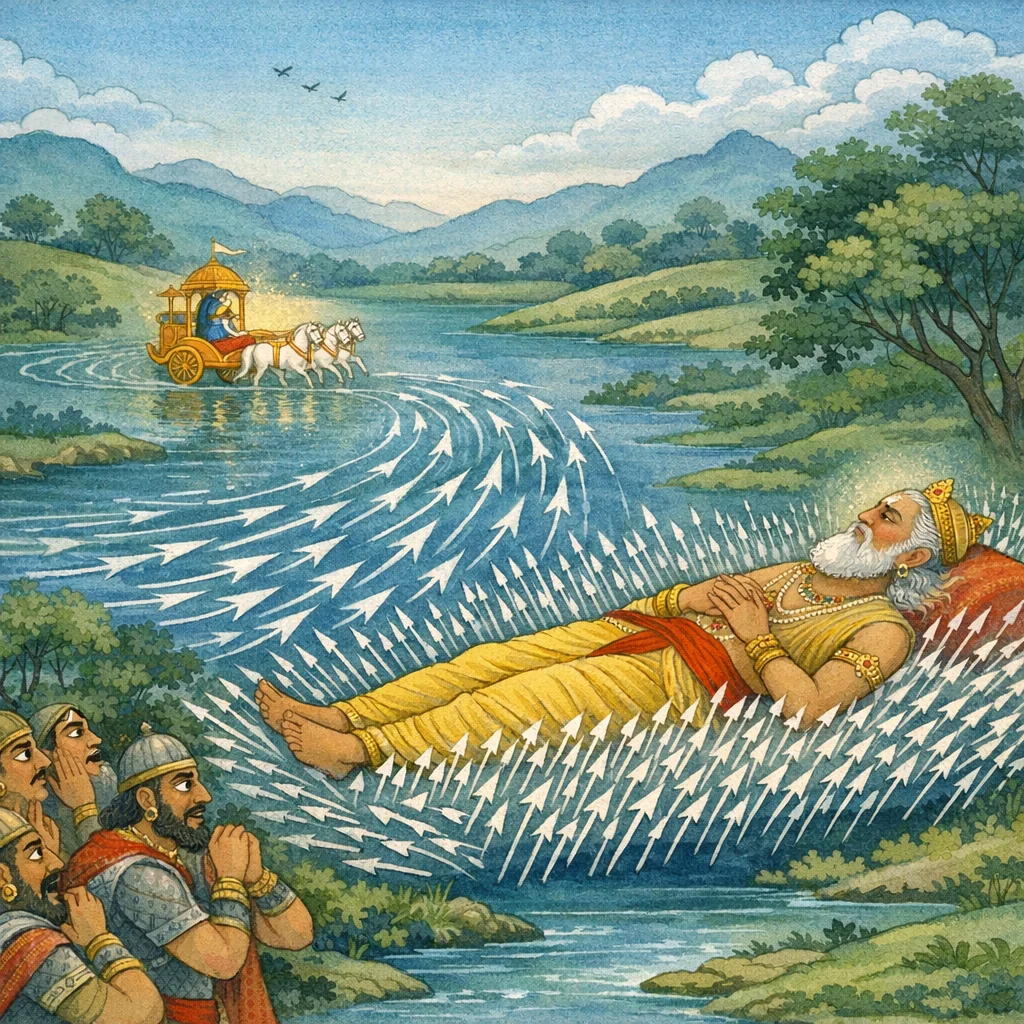
Sañjaya reports to Dhṛtarāṣṭra that Bhīṣma lies on a śara-talpa (arrow-bed), his immense vitality seemingly “dried” like an ocean under great winds. A sequence of similes elevates the event to cosmic scale: a mountain felled, a sun fallen from the sky, Indra’s unimaginable defeat by Vṛtra—each image indexing both the elder’s stature and the army’s shock. Karṇa descends from his chariot, eyes blurred with tears, offers respectful salutation, and identifies himself, requesting Bhīṣma to look upon him with auspicious, steady speech and gaze. He then interprets Bhīṣma’s fall as a crisis of moral order and a collapse of Kuru security, stating that no other protector equals Bhīṣma in counsel, treasury matters, formations, and weapon-policy. Karṇa forecasts that from this day the Pāṇḍavas, especially Arjuna (Gāṇḍīva) aided by Kṛṣṇa, will terrify armies like fire with wind, making the campaign’s strategic environment drastically more hazardous. The chapter ends with Karṇa preparing, under instruction, to confront Arjuna—accepting either victory or death.
Chapter Arc: संजय धृतराष्ट्र को युद्धभूमि का दृश्य सुनाते हैं—अमित-तेजस्वी भीष्म शर-शय्या पर पड़े हैं, मानो प्रलय-वायु से सोख लिया गया समुद्र; उनके पतन से कौरव-आशा का आधार डगमगा गया है। → भीष्म के अभाव में कौरव-पक्ष की ढाल टूटती दिखती है; संजय रूपकों की बाढ़ में अर्जुन की प्रचण्डता उभारते हैं—बाण-समूह यमुना-प्रवाह की तरह फैलते हैं, और अग्नि-वायु की संयुक्त गति की भाँति वन (सेना) को मार्ग-मार्ग से भस्म करते हैं। साथ ही यह प्रश्न तीखा होता जाता है कि अर्जुन का सामना कौन कर सकता है। → संजय निर्णायक स्वर में कहते हैं—‘आपके सिवा दूसरा कौन राजा अर्जुन से युद्ध कर सकता है?’ गाण्डीव की टंकार और पांचजन्य की गर्जना से समस्त कौरव-सेनाओं में त्रास फैलने का चित्र चरम पर पहुँचता है; अर्जुन के बाण धार्तराष्ट्रों को चीरते हुए अग्नि-लपटों की तरह सब ओर फैलते हैं। → अध्याय का निष्कर्ष भय और अनिवार्यता में टिकता है—कौरव-सेना अर्जुन की ध्वनि, वेग और प्रहार सहने में असमर्थ दिखती है; भीष्म-युग के अंत के बाद अब युद्ध का भार नए नेतृत्व और नए प्रतिरोध पर आ पड़ा है। → भीष्म के पतन के बाद कौरव-पक्ष में कौन-सा वीर/नेता अर्जुन के सम्मुख टिकेगा, और युद्ध की बागडोर किसके हाथ में जाएगी?
Shlokas
Verse 2
संजय कहते हैं--महाराज! अमित तेजस्वी महात्मा भीष्म बाण-शय्यापर सो रहे थे। उस समय वे प्रलयकालीन महावायुसमूहसे सोख लिये गये समुद्रके समान जान पड़ते थे ।। दृष्टवा पितामहं भीष्म॑ सर्वक्षत्रान्तकं गुरुम् । दिव्यैरस्त्रैर्महेष्वासं पातितं सव्यसाचिना,समस्त क्षत्रियोंका अन्त करनेमें समर्थ गुरु एवं पितामह महाधनुर्धर भीष्मको सव्यसाची अर्जुनने अपने दिव्यास्त्रोंके द्वारा मार गिराया था। उन्हें उस अवस्थामें देखकर आपके पुत्रोंकी विजयकी आशा भंग हो गयी। उन्हें अपने कल्याणकी भी आशा नहीं रही। उनके रक्षाकवच भी छिजन्न-भिन्न हो गये। कहीं पार न पानेवाले तथा अथाह समुद्रमें थाह चाहनेवाले कौरवोंके लिये भीष्मजी द्वीपके समान आश्रय थे, जो पार्थद्वारा धधाशायी कर दिये गये थे
Sañjaya said: O King, the great-souled Bhishma, of immeasurable splendor, lay upon a bed of arrows. In that moment he appeared like the ocean dried up by the mighty winds at the time of dissolution. Seeing that grandsire Bhishma—teacher and bowman of supreme prowess, capable of bringing the whole Kshatriya order to its end—had been brought down by Savyasachi Arjuna with divine weapons, your sons’ hope of victory collapsed. Even hope for their own welfare deserted them; their protective armor seemed torn and shattered. For the Kauravas, who were like men seeking the bottom in a boundless, unfathomable sea, Bhishma had been an island of refuge—now made to lie as a heap of arrows by Partha.
Verse 3
जयाशा तव पुत्राणां सम्भग्ना शर्म वर्म च । अपाराणामिव द्वीपमगाधे गाधमिच्छताम्,समस्त क्षत्रियोंका अन्त करनेमें समर्थ गुरु एवं पितामह महाधनुर्धर भीष्मको सव्यसाची अर्जुनने अपने दिव्यास्त्रोंके द्वारा मार गिराया था। उन्हें उस अवस्थामें देखकर आपके पुत्रोंकी विजयकी आशा भंग हो गयी। उन्हें अपने कल्याणकी भी आशा नहीं रही। उनके रक्षाकवच भी छिजन्न-भिन्न हो गये। कहीं पार न पानेवाले तथा अथाह समुद्रमें थाह चाहनेवाले कौरवोंके लिये भीष्मजी द्वीपके समान आश्रय थे, जो पार्थद्वारा धधाशायी कर दिये गये थे इति श्रीमहाभारते द्रोणपर्वणि द्रोणाभिषेकपर्वणि कर्णवाक्ये तृतीयो5ध्याय:
Sañjaya said: The hope of victory of your sons has been shattered—along with their sense of safety and their protective armor. For those who cannot find a crossing and who seek a foothold in an unfathomable depth, Bhīṣma had been like an island of refuge; but he has been laid low by Pārtha (Arjuna).
Verse 4
स्रोतसा यामुनेनेव शरौघेण परिप्लुतम् । महेन्द्रेणेव मैनाकमसहां भुवि पातितम्,वे यमुनाके जलप्रवाहके समान बाणसमूहसे व्याप्त हो रहे थे। उन्हें देखकर ऐसा जान पड़ता था, मानो महेन्द्रने असह्य मैनाक पर्वतको धरतीपर गिरा दिया हो
Sañjaya said: “It was flooded by a torrent of arrows, like a current of the Yamunā in full flow. To behold it was as though Mahendra (Indra) had hurled down to the earth the unendurable mountain Maināka.”
Verse 5
नभश्च्युतमिवादित्यं पतितं धरणीतले । शतक्रतुमिवाचिन्त्यं पुरा वृत्रेण निर्जितम्,वे आकाशसे च्युत होकर पृथ्वीपर पड़े हुए सूर्यके समान तथा पूर्वकालमें वृत्रासुरसे पराजित हुए अचिन्त्य देवराज इन्द्रके सदृश प्रतीत होते थे
Sañjaya said: He appeared like the sun fallen from the sky onto the earth, and like the inconceivable lord of the gods, Indra of a hundred sacrifices, once overcome in ancient times by Vṛtra—an image of mighty power brought low, shocking the moral sense as greatness is humbled amid the ruin of war.
Verse 6
मोहन सर्वसैन्यस्य युधि भीष्मस्य पातनम् । ककुदं सर्वसैन्यानां लक्ष्म सर्वधनुष्मताम्
Sañjaya said: “In battle, the fall of Bhīṣma—who had been the very enchantment and rallying strength of the entire host—was like the collapse of the army’s crest and the loss of the distinguishing glory of all the bowmen. His downfall signals not merely a tactical reversal, but a moral and psychological rupture in the war’s order.”
Verse 7
धनंजयशरैरव्याप्तं पितरं ते महाव्रतम् । तं॑ वीरशयने वीरं शयान पुरुषर्षभम्
Sañjaya said: Your father, the great vow-keeper, was not pierced by Dhanañjaya’s arrows. That hero—best of men—lay upon a hero’s bed, the battlefield, resting in the manner of the valiant. The line underscores the warrior-ethic of facing death with steadfastness and the moral weight of filial bonds strained by war.
Verse 8
भीष्ममाधिरथिरद्दृष्टवा भरतानां महाद्युति: । अवतीर्य रथादार्तों बाष्पव्याकुलिताक्षरम्,पुण्यया क्षेम्यया वाचा चक्षुषा चावलोकय । “भारत! आपका कल्याण हो। मैं कर्ण हूँ। आप अपनी पवित्र एवं मंगलमयी वाणीद्वारा मुझसे कुछ कहिये और कल्याणमयी दृष्टिद्वारा मेरी ओर देखिये ।। ४ (]] $ 73७७३
Sañjaya said: Seeing Bhīṣma, Karna—the son of the charioteer, radiant with great splendor—descended from his chariot in anguish, his words choked and blurred by tears. With a voice meant for blessing and reassurance, and with an imploring gaze, he addressed him: “O Bhārata, may you be well. I am Karna. Speak something to me with your pure and auspicious speech, and look upon me with a benevolent, welfare-bringing glance.”
Verse 9
अभिवाद्याज्जलिं बद्ध्वा वन्दमानो5भ्यभाषत | उस युद्धस्थलमें भीष्मका गिराया जाना समस्त सैनिकोंको मोहमें डालनेवाला था। आपके ज्येष्ठ पिता महान व्रतधारी भीष्म समस्त सैनिकोंमें श्रेष्ठ तथा सम्पूर्ण धनुर्धरोंके शिरोमणि थे। वे अर्जुनके बाणोंसे व्याप्त होकर वीरशय्यापर सो रहे थे। उन भरतवंशी वीर पुरुषप्रवर भीष्मको उस अवस्थामें देखकर अधिरथपुत्र महातेजस्वी कर्ण अत्यन्त आर्त होकर रथसे उतर पड़ा और अंजलि बाँध अभिवादनपूर्वक प्रणाम करके आँसूसे गदगद वाणीमें इस प्रकार बोला-- || ६--८ $ || कर्णोडहमस्मि भद्रें ते वद मामभि भारत
Sanjaya said: Having bowed in reverence, with his palms joined in añjali, and offering salutations, he addressed him: “I am Karna; blessings be upon you. Speak to me, O Bharata.” In the background of the battlefield, the fall of Bhishma—foremost among warriors and the crown-jewel of archers—casts the army into bewilderment. Seeing the great vow-keeper lying on his bed of arrows, Karna descends from his chariot, overwhelmed with grief and respect, and approaches with folded hands, his voice choked with tears—an ethical moment where even a fierce combatant pauses to honor seniority, vows, and martial excellence amid war’s chaos.
Verse 10
00/वी00५ (0. न नूनं सुकृतस्येह फलं कश्चित् समश्लुते
Sañjaya said: “Surely, in this world no one truly partakes of the fruit of good deeds.”
Verse 11
कोशसंचयने मन्त्रे व्यूहे प्रहरणेषु च
Sañjaya said: “In the accumulation and management of resources, in counsel and strategic deliberation, in the ordering of battle-formations, and in the use of weapons as well—(he was pre-eminent).”
Verse 12
नाहमन्यं प्रपश्यामि कुरूणां कुरुपुड्रव । बुद्धया विशुद्धया युक्तो यः कुरूंस्तारयेद् भयात्
Sañjaya said: “O best of the Kurus, I do not see anyone else among the Kuru warriors who, endowed with a perfectly purified judgment, could lead the Kurus across this peril and deliver them from fear.”
Verse 13
योधांस्तु बहुधा हत्वा पितृलोकं॑ गमिष्यति । 'कुरुश्रेष्ठ। कोश-संग्रह, मन्त्रणा, व्यूह-रचना तथा अस्त्र-शस्त्रोंके प्रहारमें आपके समान कौरववंशमें दूसरा कोई मुझे नहीं दिखायी देता, जो अपनी विशुद्ध बुद्धिसे युक्त हो समस्त कौरवोंको भयसे उबार सके तथा यहाँ बहुत-से योद्धाओंका वध करके अन्तमें पितृ- लोकको प्राप्त हो ।। अद्यप्रभृति संक्रुद्धा व्याप्रा इव मृगक्षयम्
Sañjaya said: “Having slain many warriors, he will go to the world of the Fathers.”
Verse 14
पाण्डवा भरतगश्रेष्ठ करिष्यन्ति कुरुक्षयम् । “भरतश्रेष्ठ) आजसे क्रोधमें भरे हुए पाण्डव उसी प्रकार कौरवोंका विनाश करेंगे, जैसे व्याप्र हिरनोंका ।। अद्य गाण्डीवघोषस्य वीर्यज्ञा: सव्यसाचिन:
Sañjaya said: “O best of the Bharatas, the Pāṇḍavas will today bring about the destruction of the Kurus. From this day, filled with wrath, they will destroy the Kauravas as a tiger slaughters deer. And those who know the might of the left-handed archer—he whose bow is Gāṇḍīva and whose roar is famed—will witness his power unleashed in anger.”
Verse 15
कुरव: संत्रसिष्यन्ति वज़्पाणेरिवासुरा: । “आज गाण्डीवकी टंकार करनेवाले सव्यसाची अर्जुनके पराक्रमको जाननेवाले कौरव उनसे उसी प्रकार डरेंगे, जैसे वज्रधारी इन्द्रसे असुर भयभीत होते हैं ।। अद्य गाण्डीवमुक्ताना- मशनीनामिव स्वन:
Sañjaya said: “The Kurus will tremble like the Asuras before Indra, the wielder of the thunderbolt. Today, the very roar of the arrows released from Gāṇḍīva will strike terror—proclaiming Savyasācī Arjuna’s prowess and foreshadowing the battle’s moral and strategic turning.”
Verse 16
समिद्धो5ग्निर्यथा वीर महाज्वालो द्रुमान् दहेत्
Sañjaya said: “O hero, just as a well-kindled fire, blazing with great flames, would burn up trees, so too did that warrior’s fury and force appear ready to consume all who stood before him.”
Verse 17
येन येन प्रसरतो वाय्वग्नी सहितौ वने
Sañjaya said: “Wherever the wind and fire spread together through the forest…” (He begins describing the swift, uncontrollable advance of destruction—an image that frames the battle’s violence as something that, once unleashed, moves beyond easy restraint and consumes whatever lies in its path.)
Verse 18
तेन तेन प्रदहतो भूरिगुल्मतृणद्रुमान् “वायु और अग्निदेव--ये दोनों एक साथ वनमें जिस-जिस मार्गसे फैलते हैं, उसी- उसीके द्वारा बहुत-से तृण, वृक्ष और लताओंको भस्म करते जाते हैं ।। यादृशो<ग्नि: समुद्धूस्तादुक् पार्थो न संशय:
Sanjaya said: “As wind and fire, moving together through a forest, spread along whatever paths they take and burn up masses of shrubs, grasses, and trees, so too did he. Such is fire, once fanned into a blaze; and such, without doubt, was Partha (Arjuna)—a force that, once set in motion, consumes everything in its course.”
Verse 19
यथा वायुर्नरव्यात्र तथा कृष्णो न संशय: । 'पुरुषसिंह! जैसी प्रज्वलित अग्नि होती है, वैसे ही कुन्तीकुमार अर्जुन हैं--इसमें संशय नहीं है और जैसी वायु होती है, वैसे ही श्रीकृष्ण हैं, इसमें भी संशय नहीं है ।। १८ ई || नदत: पाउ्चजन्यस्य रसतो गाण्डिवस्य च
Sañjaya said: “As the wind is—swift, irresistible, and all-pervading—so is Kṛṣṇa; of this there is no doubt.” In the ethical frame of the war, the line underscores that Arjuna’s martial force is guided and made effective by Kṛṣṇa’s decisive, directing power, suggesting that strength without right guidance is incomplete.
Verse 20
कपिथ्वजस्योत्यततो रथस्यामित्रकर्षिण:
Sañjaya said: “As the chariot of the enemy-subduing warrior bearing the monkey-banner surged forward…,”
Verse 21
को हार्जुनं योधयितु त्वदन्य: पार्थिवो5हति,“आपके सिवा दूसरा कौन राजा अर्जुनसे युद्ध कर सकता है? मनीषी पुरुष जिनके दिव्य कर्मोंका बखान करते हैं, जो मानवेतर प्राणियों--असुरों तथा दैत्योंसे भी संग्राम कर चुके हैं, त्रिनेत्रधारी महात्मा भगवान् शंकरके साथ भी जिन्होंने युद्ध किया है और उनसे वह उत्तम वर प्राप्त किया है, जो अजितेन्द्रिय पुरुषोंके लिये सर्वथा दुर्लभ है, जिन्हें पहले आप भी जीत नहीं सके हैं, उन्हें आज दूसरा कौन युद्धमें जीत सकता है?
Sañjaya said: “Who among kings, other than you, is fit to fight Arjuna? The wise celebrate his divine deeds. He has battled non-human beings—Asuras and Daityas; he even fought the great Lord Śaṅkara, the Three-eyed one, and from him obtained an excellent boon—something altogether rare for men who have not conquered their senses. Even you could not defeat him before; who else today could overcome him in war?”
Verse 22
यस्य दिव्यानि कर्माणि प्रवदन्ति मनीषिण: । अमानुषैश्च संग्रामस्त्रयम्बकेण महात्मना,“आपके सिवा दूसरा कौन राजा अर्जुनसे युद्ध कर सकता है? मनीषी पुरुष जिनके दिव्य कर्मोंका बखान करते हैं, जो मानवेतर प्राणियों--असुरों तथा दैत्योंसे भी संग्राम कर चुके हैं, त्रिनेत्रधारी महात्मा भगवान् शंकरके साथ भी जिन्होंने युद्ध किया है और उनसे वह उत्तम वर प्राप्त किया है, जो अजितेन्द्रिय पुरुषोंके लिये सर्वथा दुर्लभ है, जिन्हें पहले आप भी जीत नहीं सके हैं, उन्हें आज दूसरा कौन युद्धमें जीत सकता है?
Sañjaya said: “Of him whose deeds are spoken of by the wise as truly divine—who has fought even with non-human beings, and who has also battled the great-souled Three-eyed Lord (Śiva)—who, besides you, could be a king capable of meeting Arjuna in war?”
Verse 23
तस्माच्चैव वर प्राप्तो दुष्प्रपमकृतात्मभि: । को<न्य: शक्तो रणे जेतुं पूर्व यो न जितस्त्वया,“आपके सिवा दूसरा कौन राजा अर्जुनसे युद्ध कर सकता है? मनीषी पुरुष जिनके दिव्य कर्मोंका बखान करते हैं, जो मानवेतर प्राणियों--असुरों तथा दैत्योंसे भी संग्राम कर चुके हैं, त्रिनेत्रधारी महात्मा भगवान् शंकरके साथ भी जिन्होंने युद्ध किया है और उनसे वह उत्तम वर प्राप्त किया है, जो अजितेन्द्रिय पुरुषोंके लिये सर्वथा दुर्लभ है, जिन्हें पहले आप भी जीत नहीं सके हैं, उन्हें आज दूसरा कौन युद्धमें जीत सकता है?
Sañjaya said: “And moreover, he has obtained that boon—so hard to attain for those lacking self-mastery. Who else is capable of defeating him in battle—him whom even you were unable to conquer before?”
Verse 24
जितो येन रणे रामो भवता वीर्यशालिना । क्षत्रियान्तकरो घोरो देवदानवदर्पहा,“आप अपने पराक्रमसे शोभा पानेवाले वीर थे। आपने देवताओं तथा दानवोंका दर्प दलन करनेवाले क्षत्रियहन्ता घोर परशुरामजीको भी युद्धमें जीत लिया है
Sañjaya said: “You, resplendent with valor, are the very one by whom Rāma (Paraśurāma) was defeated in battle—Rāma, the dreadful exterminator of kṣatriyas, the crusher of the pride of gods and demons.”
Verse 25
तमद्याहं पाण्डवं युद्धशौण्ड- ममृष्यमाणो भवता चानुशिष्ट: । आशीदविपष॑ दृष्टिहरं सुघोरं शूरं शक्ष्याम्यस्त्रबलान्निहन्तुम्,“आज यदि आपकी आज्ञा हो तो मैं अमर्षमें भरकर दृष्टि हर लेनेवाले विषधर सर्पके समान अत्यन्त भयंकर युद्धकुशल शूरवीर पाण्डुपुत्र अर्जुनको अपने अस्त्रबलसे मार सकूँगा”
Sañjaya said: “Today, if you command it, I—burning with indignation and acting under your order—will be able to strike down that Pāṇḍava, a warrior hardened in battle. Like a most dreadful venomous serpent that steals one’s sight, the heroic Arjuna can be slain by the force of my weapons.”
Verse 103
यत्र धर्मपरो वृद्धः शेते भुवि भवानिह । “निश्चय ही इस लोकमें कोई भी अपने पुण्यकर्मोंका फल यहाँ नहीं भोगता है; क्योंकि आप वृद्धावस्थातक सदा धर्ममें ही तत्पर रहे हैं, तो भी यहाँ इस दशामें धरतीपर सो रहे हैं
Sañjaya said: “Here lies an aged man devoted to dharma, stretched upon the bare earth. It seems as though in this world no one truly enjoys the fruits of their meritorious deeds right here—for even one who has remained steadfast in righteousness up to old age is now reduced to lying on the ground in such a condition.”
Verse 153
त्रासयिष्यति बाणानां कुरूनन्यांश्व पार्थिवान् । “आज गाण्डीव धनुषसे छूटे हुए बाणोंका वज्रपातके समान शब्द कौरवों तथा अन्य राजाओंको भयभीत कर देगा
Sañjaya said: “The Kurus—and the other kings as well—will be seized by fear at the arrows that are about to be released.”
Verse 166
धार्तराष्ट्रान् प्रथक्ष्यन्ति तथा बाणा: किरीटिन: । “वीर! जैसे बड़ी-बड़ी लपटोंसे युक्त प्रज्वलित हुई आग वृक्षोंको जलाकर भस्म कर देती है, उसी प्रकार अर्जुनके बाण धुृतराष्ट्रके पुत्रों तथा उनके सैनिकोंको जला डालेंगे
Sañjaya said: “O hero! Just as a blazing fire, fed by great tongues of flame, burns trees and reduces them to ash, so will the arrows of Arjuna, the diadem-wearer, scorch and consume the sons of Dhritarashtra and their troops.”
Verse 193
श्र॒ुत्वा सर्वाणि सैन्यानि त्रासं यास्यन्ति भारत | “भारत! बजते हुए पांचजन्य और टंकारते हुए गाण्डीव धनुषकी भयंकर ध्वनि सुनकर आज सारी कौरव सेनाएँ भयभीत हो उठेंगी
Sañjaya said: “O Bhārata (Dhṛtarāṣṭra), on hearing it, all your armies will be seized by terror.”
Verse 206
शब्दं सोढुं न शक्ष्यन्ति त्वामृते वीर पार्थिवा: | “वीर! शत्रुसूदन कपिध्वज अर्जुनके उड़ते हुए रथकी घरघराहटको आपके सिवा दूसरे राजा नहीं सह सकेंगे
Sañjaya said: “O hero, apart from you the other kings will not be able to endure that sound.”
Frequently Asked Questions
The chapter frames a tension between rightful reliance on a dharmic elder as institutional protector and the reality that war exposes even the most revered to vulnerability; leaders must act despite grief, uncertainty, and the destabilization of moral-psychological order.
It underscores that strategic capacity is inseparable from counsel, legitimacy, and morale: when a central ethical authority collapses, disciplined speech, ritual respect, and clear-eyed assessment must replace denial and impulsive escalation.
No explicit phalaśruti is stated; the meta-layer functions through Sañjaya’s evaluative reportage and Karṇa’s prognostic reasoning, positioning the episode as a structural marker for the war’s ethical and strategic deterioration.