Adhyaya 21
द्रोणविक्रमदर्शनम् / The Display of Droṇa’s Onslaught and the Debate on Pāṇḍava Regrouping
Upa-parva: Droṇa-abhivartanīya (Regrouping and Return against Droṇa) Episode
Dhṛtarāṣṭra opens by asking Sañjaya whether any warrior turned back to face Droṇa after the Pāṇḍavas and allied forces were shaken in the great engagement (1–6). Sañjaya describes the coalition—Pāñcālas, Pāṇḍavas, Matsyas, Sṛñjayas, Cedis, and Kekayas—being driven and scattered by Droṇa’s dense arrow-release, compared to boats swept by a river-flood (7–8). Kaurava forces encircle them with roars, instruments, and mixed arms (9). Duryodhana, positioned amid his troops, speaks to Karṇa with visible confidence, likening Droṇa’s effect to a lion routing wild animals and asserting the enemy will not return to battle (10–15). He points out Bhīma, isolated and surrounded, interpreting his state as despair under ‘Droṇa’s world’ (16–17). Karṇa counters: Bhīma will not abandon combat alive, and the Pāṇḍavas are not easily broken; remembering past hardships, they will not shrink from battle (18–20). He forecasts Bhīma’s destructive capacity against elite charioteers and groups of troops (21–22), notes allied chariots following Bhīma, and warns that a unified assault could dangerously burden Droṇa like moths swarming an unguarded lamp (23–26). Karṇa advises rapid reinforcement toward Droṇa to prevent his being overwhelmed; Duryodhana proceeds with his brothers, as the battlefield noise rises with renewed intent to strike Droṇa (27–29).
Chapter Arc: संजय धृतराष्ट्र से कहते हैं—ज्यों ही युधिष्ठिर ने द्रोणाचार्य को अपने निकट आते देखा, उन्होंने निर्भय होकर बाणों की घोर वर्षा से आचार्य को रोकने का प्रयत्न किया। → युधिष्ठिर की रक्षा-पंक्ति में सत्यजित, शतानीक, दृढसेन, क्षेम, वसुदान आदि वीर आगे बढ़ते हैं; सत्यजित विशेष वेग से द्रोण पर चढ़ आता है, पर द्रोण सहस्रों शरों से रथ, ध्वज, घोड़े और सारथियों तक को ढँक देते हैं। → द्रोण का प्रचण्ड प्रतिघात निर्णायक बनता है—वे शतानीक का कुण्डल सहित सिर क्षुर से काट गिराते हैं और आगे बढ़कर शिखण्डी, उत्तमौजा आदि को तीव्र बाण-वृष्टि से विदीर्ण करते हुए वसुदान को भल्ल से यमसादन भेज देते हैं। → कौरवों से घिरे द्रोण युद्ध में सात्यकि, चेकितान तथा अनेक जनपदेश-नरेशों सहित बहुतों को पराजित करते हैं; पाञ्चाल, केकय, मत्स्य आदि दल इन्द्र द्वारा मारे जाते दानवों की भाँति कम्पित होकर पीछे हटते हैं। → कौरवों को विजय-लाभ होता है और पाण्डव-सेना सर्वत्र द्रवित दिखती है—अब प्रश्न यह है कि युधिष्ठिर की रक्षा-व्यवस्था इस द्रोण-प्रलय को कैसे रोकेगी।
Shlokas
Verse 1
(दाक्षिणात्य अधिक पाठका १ श्लोक मिलाकर कुल ६४ “लोक हैं।) पम्प बछ। आर: एकविशो< ध्याय: द्रोणाचार्यके द्वारा सत्यजित, शतानीक, दृढसेन, क्षेम, वसुदान तथा पांचालराजकुमार आदिका वध और पाण्डव- सेनाकी पराजय संजय उवाच ततो युधिष्छिरो द्रोणं दृष्टवाइन्तिकमुपागतम् । महता शरवर्षेण प्रत्यगृह्नादभीतवत्,इति श्रीमहाभारते द्रोणपर्वणि संशप्तकवधपर्वणि द्रोणयुद्धे एकविंशो5ध्याय: ।। २१ || इस प्रकार श्रीमह्ा भारत द्रोणपर्वके अन्तर्गत संशप्तकवधपर्वमें द्रोणाचार्यका युद्धविषयक इक्कीसवाँ अध्याय प्रा हुआ ॥/ २९ ॥। ऑपन--मा_जल बक। अकाल द्वाविशोडध्याय: द्रोणके युद्धके विषयमें दुर्योधन और कर्णका संवाद धृतराष्ट्र रवाच भारद्वाजेन भग्नेषु पाण्डवेषु महामृधे । पज्चालेषु च सर्वेषु कच्चिदन्यो5भ्यवर्तत
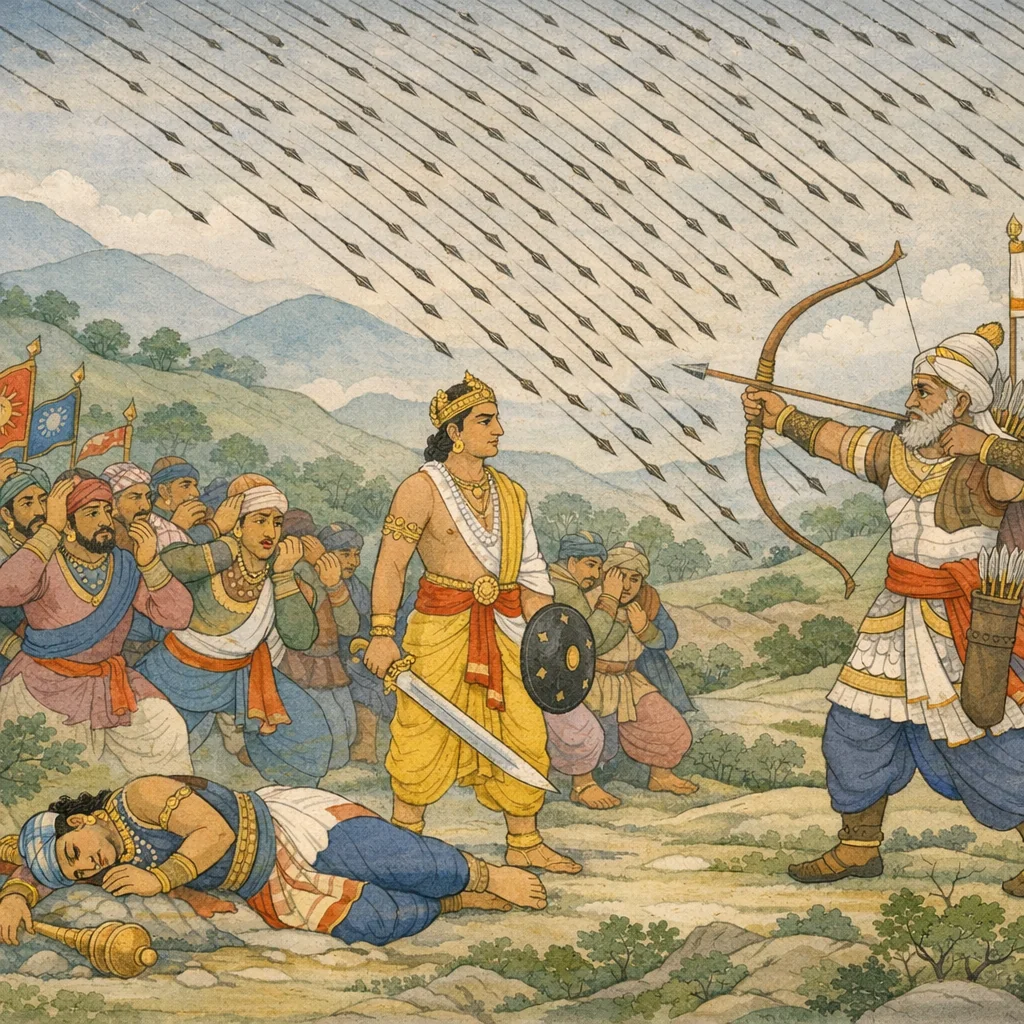
Sañjaya said: Then Yudhiṣṭhira, seeing Droṇa draw near, received him with a mighty shower of arrows, as though unafraid.
Verse 2
संजय कहते हैं--राजन्! तदनन्तर युधिष्ठिरने द्रोणको अपने समीप आया देख एक निर्भय वीरकी भाँति बाणोंकी बड़ी भारी वर्षा करके उन्हें रोक दिया ।। ततो हलहलाशब्द आसीदू यौधिष्छिरे बले । जिघृक्षति महासिंहे गजानामिव यूथपम्,उस समय युधिष्ठिरकी सेनामें महान् कोलाहल मच गया। जैसे विशाल सिंह हाथियोंके यूथपतियोंको पकड़ना चाहता हो, उसी प्रकार द्रोणाचार्य युधिष्ठिरको अपने काबूमें करना चाहते थे
Sañjaya said: “O King! Thereafter, Yudhiṣṭhira, seeing Droṇa advancing toward him, checked him like a fearless warrior by unleashing a tremendous shower of arrows. Then a great tumult arose in Yudhiṣṭhira’s army, for Droṇācārya sought to seize Yudhiṣṭhira, as a mighty lion seeks to catch the leader of a herd of elephants.”
Verse 3
दृष्टवा द्रोणं तत: शूर: सत्यजित् सत्यविक्रम: । युधिष्ठटिरमभिप्रेप्सुराचार्य समुपाद्रवत्
Sañjaya said: Seeing Droṇa, the heroic Satyajit—true to his name in valor—rushed straight toward the Teacher, intent on reaching Yudhiṣṭhira.
Verse 4
यह देख सत्यपराक्रमी शूरवीर सत्यजित् युधिष्ठिरकी रक्षाके लिये द्रोणाचार्यपर टूट पड़ा ३ ।। तत आचार्यपाज्चाल्यौ युयुधाते महाबलौ । विक्षोभयन्तौ तत् सैन्यमिन्द्रवैरोचनाविव,फिर तो आचार्य और पांचालराजकुमार दोनों महाबली वीर इन्द्र और बलिकी भाँति उस सेनाको बिश्षुब्ध करते हुए आपसमें जूझने लगे
Seeing this, the hero Satyajit—renowned for true valor—rushed upon Droṇācārya to protect Yudhiṣṭhira. Then the mighty teacher and the Pāñcāla prince engaged each other in fierce combat, churning the surrounding army like Indra and Virocana locked in battle.
Verse 5
ततो द्रोणं महेष्वास: सत्यजित् सत्यविक्रम: । अविध्यन्निशिताग्रेण परमास्त्रं विदर्शयन्,सत्यपराक्रमी महाधनुर्धर सत्यजितने अपने उत्तम अस्त्रका प्रदर्शन करते हुए तेज धारवाले एक बाणसे द्रोणाचार्यको घायल कर दिया
Then Satyajit, the great archer of unfailing valor, while displaying his supreme weapon-skill, struck Droṇācārya with a sharp-pointed arrow, wounding him.
Verse 6
तथास्य सारथे: पठ्च शरान् सर्पविषोपमान् | अमुञ्चदन्तकप्रख्यान् सम्मुमोहास्य सारथि:,फिर उनके सारथिपर सर्पविष एवं यमराजके समान भयंकर पाँच बाणोंका प्रहार किया। उन बाणोंकी चोटसे द्रोणाचार्यका सारथि मूर्च्छित हो गया
Then he discharged five arrows at his charioteer—arrows like serpent-poison, dreadful as Death itself. Struck by them, that charioteer fell into a swoon.
Verse 7
अथास्य सहसाविध्यद्धयान् दशभिराशुगै: । दशभिर्दशश्ि: क्रुद्ध उभौ च पार्ष्णिसारथी,इसके बाद सत्यजितने सहसा दस शीघ्रगामी बाणोंद्वारा उनके घोड़ोंको बींध डाला और कुपित होकर दोनों पृष्ठरक्षकोंको भी दस-दस बाण मारे
Then Satyajit swiftly pierced his horses with ten fast-flying arrows; and, angered, he struck both of the rear-guard protectors of the chariot with ten arrows each.
Verse 8
मण्डलं तु समावृत्य विचरन् पृतनामुखे । ध्वजं चिच्छेद च क्रुद्धो द्रोणस्यामित्रकर्षण:,तत्पश्चात् शत्रुसूदन सत्यजितने अत्यन्त कुपित हो सेनाके प्रमुख भागमें मण्डलाकार विचरते हुए अपने बाणद्दारा द्रोणाचार्यके ध्वजको भी काट डाला
Moving in a circular formation at the very front of the army, the foe-subduing Satyajit—enraged—cut down Droṇa’s banner as well.
Verse 9
द्रोणस्तु तत् समालोक्य चरितं तस्य संयुगे । मनसा चिन्तयामास प्राप्तकालमरिंदम:,तब शत्रुओंका दमन करनेवाले द्रोणाचार्यने युद्धस्थलमें उसका वह पराक्रम देख मन- ही-मन समयोचित कर्तव्यका चिन्तन किया
Sañjaya said: Seeing that warrior’s conduct and prowess on the battlefield, Droṇācārya—the subduer of foes—reflected inwardly on what action was timely and fitting to the moment.
Verse 10
ततः सत्यजितं ती&णैर्दशभिर्मर्म भेदिभि: । अविध्यच्छीघ्रमाचार्यश्छित्त्वास्य सशरं धनु:,तदनन्तर आचार्यने सत्यजितके बाणसहित धनुषको काटकर मर्मस्थलको विदीर्ण करनेवाले दस पैने बाणोंद्वारा उसे शीघ्र ही घायल कर दिया
Sañjaya said: Then the preceptor Droṇa, first cutting down Satyajit’s bow along with the arrow set upon it, swiftly pierced him with ten sharp shafts that struck the vital points.
Verse 11
स शीघ्रतरमादाय धनुरन्यत् प्रतापवान् | द्रोणमभ्यहनद् राजंस्त्रिंशता कड़गकपत्रिभि:,राजन! धनुष कट जानेपर प्रतापी वीर सत्यजितने शीघ्र ही दूसरा धनुष लेकर कंककी पाँखसे युक्त तीस बाणोंद्वारा द्रोणाचार्यको गहरी चोट पहुँचायी
Sañjaya said: The valiant warrior, swiftly taking up another bow, struck Droṇa, O King, with thirty arrows feathered with heron-plumes, dealing him a grievous wound.
Verse 12
दृष्टवा सत्यजिता द्रोणं ग्रस्यमानमिवाहवे । वृक: शरशतैस्तीक3्ष्णै: पाज्चाल्यो द्रोणमार्दयत्,उस युद्धस्थलमें द्रोणाचार्यको सत्यजितके बाणोंका ग्रास बनते देख पांचालवीर वृकने भी सैकड़ों पैने बाण मारकर द्रोणाचार्यको अत्यन्त पीड़ित कर दिया
Sañjaya said: Seeing Droṇa on the battlefield as though being swallowed up by Satyajit’s arrows, the Pāñcāla warrior Vṛka too assailed Droṇa with hundreds of keen shafts, causing the teacher severe distress.
Verse 13
संछाद्यमानं समरे द्रोणं दृष्टया महारथम् । चुक्ुशु: पाण्डवा राजन् वस्त्राणि दुधुवुश्च ह,राजन! महारथी द्रोणाचार्यको समरभूमिमें बाणोंद्वारा आच्छादित होते देख समस्त पाण्डव-सैनिक गर्जने और वस्त्र हिलाने लगे
Sañjaya said: O King, seeing the great chariot-warrior Droṇa in the thick of battle being covered over by showers of arrows, the Pāṇḍava forces cried out loudly and waved their garments in exultation.
Verse 14
वृकस्तु परमक्रुद्धो द्रोणं षष्ट्या स्तनान्तरे । विव्याध बलवान राज॑स्तदद्भुतभिवाभवत्,नरेश्वर! बलवान् वृकने अत्यन्त कुपित होकर द्रोणाचार्यकी छातीमें साठ बाण मारे। वह अद्भुत-सी बात थी
Sañjaya said: Then Vṛka, inflamed with extreme wrath, powerfully pierced Droṇa in the chest with sixty arrows, O king. It seemed a marvel—an astonishing feat amid the fury of battle.
Verse 15
द्रोणस्तु शरवर्षेण च्छाद्यमानो महारथ: । वेग॑ चक्रे महावेग: क्रोधादुद्वृत्य चक्षुषी,इस प्रकार बाण-वर्षासे आच्छादित होनेपर महान् वेगशाली महारथी द्रोणने क्रोधसे आँखें फाड़कर देखते हुए अपना विशेष वेग प्रकट किया
Sañjaya said: Though covered by a shower of arrows, Droṇa—the great chariot-warrior—roused himself to a still greater speed; in wrath, with eyes widened, he displayed a fierce surge of power.
Verse 16
ततः सत्यजितक्चापं छित्त्वा द्रोणो वृकस्य च । षड्भि: ससूतं सहयं शरैद्रोणो5वधीद् वृकम्,आचार्य द्रोणने सत्यजित् और वृक दोनोंके धनुष काटकर छ: बाणोंद्वारा उन्होंने सारथि और घोड़ोंसहित वृकको मार डाला
Sañjaya said: Then Droṇa cut down the bows of both Satyajit and Vṛka. With six arrows he slew Vṛka together with his charioteer and horses—showing how, in the ruthless momentum of battle, mastery in arms can swiftly decide life and death.
Verse 17
अथान्यद् धनुरादाय सत्यजिद् वेगवत्तरम् | साश्वंं ससूतं विशिखैद्रोणं विव्याध सध्वजम्,इतनेहीमें अत्यन्त वेगशाली दूसरा धनुष लेकर सत्यजितने अपने बाणोंद्वारा घोड़े, सारथि और ध्वजसहित द्रोणाचार्यको बींध डाला
Sañjaya said: Then Satyajit took up another bow, swifter in its force, and with sharp arrows pierced Droṇācārya—together with his horses, charioteer, and banner.
Verse 18
स तन्न ममृषे द्रोण: पाञ्चाल्येनार्दितो मृधे । ततस्तस्य विनाशाय सत्वरं व्यसृजच्छरान्,संग्राममें पांचालराजकुमार सत्यजित्से पीड़ित होकर द्रोणाचार्य उसके पराक्रमको न सह सके। इसलिये तुरंत ही उसके विनाशके लिये उन्होंने बाणोंकी वर्षा प्रारम्भ कर दी
Sañjaya said: Droṇa could not endure that assault in battle, being hard-pressed by the son of the king of Pāñcāla. Therefore, intent on bringing about his destruction, he swiftly let fly a shower of arrows.
Verse 19
हयान् ध्वजं धनुर्मष्टिमुभी च पार्ष्णिसारथी । अवाकिरत् ततो द्रोण: शरवर्षै: सहस्रश:,द्रोणने सत्यजित॒के घोड़ों, ध्वज, धनुषकी मुष्टि तथा दोनों पार्श्वरक्षकोंपर सहस्रों बाणोंकी वर्षा की
Sañjaya said: Then Droṇa showered thousands upon thousands of arrows, striking the horses, the banner, the bow-grip, and both the flank-guards and charioteers. The scene underscores the ruthless precision of battlefield skill—where disabling a chariot’s supports becomes a strategic act, raising the ethical tension between martial duty and the escalating ferocity of war.
Verse 20
इस प्रकार श्रीमह्ाभारत द्रोणपर्वके अन्तर्गत संशप्तकवधपर्वमें संकुलयुद्धाविषयक बीसवाँ अध्याय पूरा हुआ,तथा संछिद्यमानेषु कार्मुकेषु पुनः पुनः । पाज्चाल्य: परमास्त्रज्ञ: शोणाश्वं समयोधयत् इस प्रकार बारंबार धनुषोंके काटे जानेपर भी उत्तम अस्त्रोंका ज्ञाता पांचालवीर सत्यजित् लाल घोड़ोंवाले द्रोणाचार्यसे युद्ध करता ही रहा
Sañjaya said: Again and again, even as his bows were being cut to pieces, the Pāñcāla warrior—supremely skilled in the science of weapons—continued to engage Śoṇāśva (Droṇācārya, the rider of the red horse) in battle. The scene underscores steadfast resolve amid the brutal mechanics of war: skill and persistence are tested not only by the enemy’s force, but by repeated loss of one’s means and the refusal to yield.
Verse 21
स सत्यजितमालोक्य तथोदीर्ण महाहवे । अर्धचन्द्रेण चिच्छेद शिरस्तस्य महात्मन:,उस महासमरमें सत्यजितको प्रचण्ड होते देख द्रोणाचार्यने अर्धचन्द्राकार बाणके द्वारा उस महामनस्वी वीरका मस्तक काट डाला
Sañjaya said: Seeing Satyajit raging fiercely in that great battle, Droṇācārya severed the head of that high-souled warrior with a crescent-shaped arrow. The scene underscores the brutal decisiveness of war, where even renowned valor meets sudden, irreversible consequence.
Verse 22
तस्मिन् हते महामात्रे पज्चालानां महारथे । अपायाज्जवनैरश्रैद्रोणात् त्रस्तो युधिष्ठिर:
Sañjaya said: When that great commander—the mighty chariot-warrior of the Pāñcālas—had been slain, Yudhiṣṭhira, shaken with fear, withdrew from Droṇa, as the preceptor pressed him with swift-flying weapons. The moment underscores how even the righteous king, committed to restraint, is forced by the brutal momentum of war to retreat before superior martial force.
Verse 23
उस महाबली महारथी पांचाल वीरके मारे जानेपर युधिष्ठिर द्रोणाचार्यसे अत्यन्त भयभीत हो गये और वेगशाली घोड़ोंसे जुते हुए रथके द्वारा युद्धस्थलसे दूर चले गये ।। पज्चाला: केकया मत्स्या चेदिकारूषकोसला: । युधिष्ठिरमभीप्सन्तो दृष्टवा द्रोणमुपाद्रवन्,उस समय युधिष्ठिरकी रक्षाके लिये पांचाल, केकय, मत्स्य, चेदि, कारूष और कोसल देशोंके योद्धा द्रोणाचार्यको देखते ही उनपर टूट पड़े
Sañjaya said: When that mighty Pāñcāla hero—an eminent chariot-warrior—was slain, Yudhiṣṭhira became intensely afraid of Droṇācārya and withdrew far from the battlefield in a chariot yoked with swift horses. Then, seeking to protect Yudhiṣṭhira, the warriors of the Pāñcālas, Kekayas, Matsyas, Cedis, Kārūṣas, and Kośalas, on seeing Droṇa, immediately rushed upon him.
Verse 24
ततो युधिष्टिरं प्रेप्सुराचार्य: शत्रुपूगहा । व्यधमत् तान्यनीकानि तूलराशिमिवानल:,तब शत्रुसमूहोंका नाश करनेवाले द्रोणाचार्यने युधिष्ठिरको पकड़नेके लिये उन समस्त सैनिकोंका उसी प्रकार संहार कर डाला, जैसे आग रूईके ढेरको जला देती है
Sañjaya said: Then Droṇa, the preceptor—destroyer of masses of foes—seeking to seize Yudhiṣṭhira, struck down those battle-formations, just as fire consumes a heap of cotton.
Verse 25
निर्दहन्तमनीकानि तानि तानि पुन: पुनः । द्रोणं मत्स्यादवरज: शतानीको<भ्यवर्तत,उन समस्त सैनिकोंको बार-बार बाणोंकी आगसे दग्ध करते देख विराटके छोटे भाई शतानीक द्रोणाचार्यपर चढ़ आये
Sañjaya said: Seeing Droṇa repeatedly scorching those battle-formations again and again with the fire of his arrows, Śatānīka—the younger brother of Virāṭa, born in the Matsya line—rushed forward to attack Droṇācārya.
Verse 26
सूर्यरश्मिप्रतीकाशै: कर्मारपरिमार्जिति: । षड्भि: ससूतं सहयं द्रोणं विद्ध्वानदद् भूशम्,उन्होंने कारीगरके द्वारा स्वच्छ किये हुए सूर्यकी किरणोंके समान चमकीले छ: बाणोंद्वारा सारथि और घोड़ोंसहित द्रोणाचार्यको घायल करके बड़े चोरसे गर्जना की
Sañjaya said: With six arrows, bright like sunbeams and burnished by the smith, he struck Droṇa—together with his charioteer and horses—and then roared aloud like a mighty bull.
Verse 27
क्रूराय कर्मणे युक्तश्चिकीर्षु: कर्म दुष्करम् । अवाकिरच्छरशतैर्भरद्वाजं महारथम्,तत्पश्चात् दुष्कर पराक्रम करनेकी इच्छासे क्रूरतापूर्ण कर्म करनेके लिये तत्पर हो उन्होंने महारथी द्रोणाचार्यपर सौ बाणोंकी वर्षा की
Sañjaya said: Bent on a cruel deed and desiring to accomplish a difficult exploit, he then showered the great chariot-warrior Bharadvāja’s son (Droṇa) with a hundred arrows.
Verse 28
तस्य चानदतो द्रोण: शिर: कायात् सकुण्डलम् | क्षुरेणापाहरत् तूर्ण ततो मत्स्या: प्रदुद्रुवु:,तब द्रोणाचार्यने वहाँ गर्जना करते हुए शतानीकके कुण्डलसहित मस्तकको क्षुर नामक बाणद्वारा तुरंत ही धड़से काट गिराया। यह देख मत्स्यदेशके सैनिक भाग खड़े हुए
Sañjaya said: As he roared aloud, Droṇa swiftly severed his head—still adorned with earrings—from his body with the razor-edged arrow called Kṣura. Seeing this, the warriors of the Matsya country broke and fled.
Verse 29
मत्स्याज्चित्वा3जयच्चेदीन् करूषान् केकयानपि । पज्चालान् सृज्जयान् पाण्डून् भारद्वाज: पुनः पुन:,इस प्रकार भरद्वाजनन्दन द्रोणाचार्यने मत्स्यदेशीय योद्धाओंको जीतकर चेदि, करूष, केकय, पांचाल, सूंजय तथा पाण्डव-सैनिकोंको भी बारंबार परास्त किया
Sañjaya said: Having subdued the warriors of Matsya, and having also defeated the Cedis, the Karūṣas, and the Kekayas, Bhāradvāja’s son (Droṇa) again and again routed the Pañcālas, the Sṛñjayas, and the Pāṇḍava forces.
Verse 30
त॑ दहन्तमनीकानि क्रुद्धमग्निं यथा वनम् | दृष्टवा रुक्मरथं वीर॑ समकम्पन्त सूंजया:,जैसे प्रज्वलित अग्नि सारे वनको जला देती है, उसी प्रकार क्रोधमें भरकर शत्रुकी सेनाओंको दग्ध करते हुए सुवर्णमय रथवाले वीर द्रोणाचार्यको देखकर सूंजयवंशी क्षत्रिय काँपने लगे
Sañjaya said: Seeing the heroic Droṇa—whose chariot shone like gold—burning through enemy battle-formations in wrath, like a blazing fire consuming a forest, the warriors of the Sṛñjaya line began to tremble.
Verse 31
उत्तमं ह्वाददानस्य धनुरस्याशुकारिण: । ज्याघोषो निध्नतोअमित्रान् दिक्षु सर्वासु शुश्रुवे,उत्तम धनुष लेकर शीघ्रतापूर्वक अस्त्र चलाने और शत्रुओंका वध करनेवाले द्रोणाचार्यकी प्रत्यंचाका शब्द सम्पूर्ण दिशाओंमें सुनायी पड़ता था
Sañjaya said: As Droṇācārya swiftly took up his excellent bow and struck down his foes, the thunderous twang of its bowstring was heard in every direction.
Verse 32
नागानश्वान् पदातींक्ष रथिनो गजसादिन: । रौद्रा हस्तवता मुक्ता: प्रमथ्नन्ति सम सायका:,शीघ्रतापूर्वक हाथ चलानेवाले द्रोणाचार्यके छोड़े हुए भयंकर सायक हाथियों, घोड़ों, पैदलों, रथियों और गजारोहियोंको मथे डालते थे
Sañjaya said: The dreadful arrows, released by Droṇācārya with swift, masterful movements of the hand, were crushing and churning up the ranks—elephants, horses, foot-soldiers, chariot-warriors, and elephant-riders alike.
Verse 33
नानद्यमान: पर्जन्यो मिश्रवातो हिमात्यये । अश्मवर्षमिवावर्षत् परेषां भयमादधत्,जैसे हेमन्त-ऋतुके अन्तमें अत्यन्त गर्जना करता हुआ वायुयुक्त मेघ पत्थरोंकी वर्षा करता है, उसी प्रकार द्रोणाचार्य शत्रुओंको भयभीत करते हुए उनके ऊपर बाणोंकी वर्षा करते थे
Sañjaya said: As a wind-driven cloud, roaring at the end of the cold season, pours down a rain like falling stones, so did Droṇācārya—striking fear into his foes—shower them with a downpour of arrows.
Verse 34
सर्वा दिश: समचरत् सैन्यं विक्षोभयन्निव । बली शूरो महेष्वासो मित्राणाम भयंकर:,बलवान, शूरवीर, महाधनुर्धर और मित्रोंको अभय प्रदान करनेवाले द्रोणाचार्य सारी सेनामें हलचल मचाते हुए सम्पूर्ण दिशाओंमें विचर रहे थे
Sañjaya said: Mighty, heroic, and a great archer, Droṇācārya moved through all directions as though he were shaking the entire army into turmoil—terrible to foes, yet a giver of fearlessness and protection to his allies.
Verse 35
तस्य विद्युदिवा भ्रेषु चापं हेमपरिष्कृतम् । दिक्षु सर्वासु पश्यामो द्रोणस्पामिततेजस:,जैसे बादलोंमें बिजली चमकती है, उसी प्रकार अमित तेजस्वी द्रोणाचार्यके सुवर्णभूषित धनुषको हम सम्पूर्ण दिशाओंमें चमकता हुआ देखते थे
Sañjaya said: “His bow, adorned with gold, flashed like lightning amid the clouds. We could see Droṇa’s golden, gleaming bow—of immeasurable splendor—shining in every direction.”
Verse 36
शोभमानां ध्वजे चास्य वेदीमद्राक्ष्म भारत । हिमवच्छिखराकारां चरत: संयुगे भूशम्,भरतनन्दन! युद्धमें तीव्रवेगसे विचरते हुए आचार्यके ध्वजमें जो वेदीका चिह्न बना हुआ था, वह हमें हिमालयके शिखरकी भाँति शोभायमान दिखायी देता था
Sañjaya said: “O Bhārata, we saw upon his banner the emblem of a sacrificial altar, shining brilliantly. As the Ācārya moved through the battle with fierce speed, that altar-mark appeared splendid—like a peak of the Himālaya.”
Verse 37
द्रोणस्तु पाण्डवानीके चकार कदनं महत् | यथा दैत्यगणे विष्णु: सुरासुरनमस्कृत:,जैसे देव-दानववन्दित भगवान् विष्णु दैत्योंकी सेनामें भयानक संहार मचाते हैं, उसी प्रकार द्रोणाचार्यने पाण्डव-सेनामें भारी मारकाट मचा रखी थी
Sañjaya said: Droṇa wrought a great slaughter in the Pāṇḍava host—just as Viṣṇu, revered by both gods and demons, brings fearful destruction upon the ranks of the Dānavas.
Verse 38
स शूर: सत्यवाक् प्राज्ञो बलवान् सत्यविक्रम: । महानुभाव: कल्पान्ते रौद्रां भीरुविभीषणाम्,उन शौर्य-सम्पन्न, सत्यवादी, विद्वान, बलवान् और सत्यपराक्रमी महानुभाव द्रोणने उस युद्धस्थलमें रक्तकी भयंकर नदी बहा दी, जो प्रलयकालकी जलराशिके समान जान पड़ती थी। वह नदी भीरु पुरुषोंको भयभीत करनेवाली थी। उसमें कवच लहरें और ध्वजाएँ भँवरें थीं। वह मनुष्यरूपी तटोंको गिरा रही थी। हाथी और घोड़े उसके भीतर बड़े-बड़े ग्राहोंके समान थे। तलवारें मछलियाँ थीं। उसे पार करना अत्यन्त कठिन था। वीरोंकी हड्डियाँ बालू और कंकड़-सी जान पड़ती थीं। वह देखनेमें बड़ी भयानक थी। ढोल और नगाड़े उसके भीतर कछुए-से प्रतीत होते थे। ढाल और कवच उसमें डोंगियोंके समान तैर रहे थे। वह घोर नदी केशरूपी सेवार और घाससे युक्त थी। बाण ही उसके प्रवाह थे। धनुष स्रोतके समान प्रतीत होते थे। कटी हुई भुजाएँ पानीके सर्पोके समान वहाँ भरी हुई थीं। वह रणभूमिके भीतर तीव्र वेगसे प्रवाहित हो रही थी। कौरव और सूंजय दोनोंको वह नदी बहाये लिये जाती थी। मनुष्योंके मस्तक उसमें प्रस्तर-खण्डका भ्रम उत्पन्न करते थे। शक्तियाँ मीनके समान थीं। गदाएँ नाक थीं। उष्णीषवस्त्र (पगड़ी) फेनके तुल्य चमक रहे थे। बिखरी हुई आँतें सर्पाकार प्रतीत होती थीं। वीरोंका अपहरण करनेवाली वह उग्र नदी मांस तथा रक्तरूपी कीचड़से भरी थी। हाथी उसके भीतर ग्राह थे। ध्वजाएँ वृक्षके तुल्य थीं। वह नदी क्षत्रियोंको अपने भीतर डुबोनेवाली थी। वहाँ क्रूरता छा रही थी। शरीर (लाशें) ही उसमें उतरनेके लिये घाट थे। योद्धागण मगर-जैसे जान पड़ते थे। उसको पार करना बहुत कठिन था। वह नदी लोगोंको यमलोकमें ले जानेवाली थी। मांसाहारी जन्तु उसके आस- पास डेरा डाले हुए थे। वहाँ कुत्ते और सियारोंके झुंड जुटे हुए थे। उसके सब ओर महाभयंकर मांसभक्षी पिशाच निवास करते थे
Sañjaya said: That hero—truthful in speech, wise, strong, and steadfastly valorous—of great might, brought forth on the battlefield a dreadful, end-of-the-age-like torrent, terrifying to the faint-hearted. There war was no mere pursuit of victory, but a catastrophe that drowned discernment and swept away lives without distinction.
Verse 39
कवचोर्मिध्वजावर्ता मर्त्यकूलापहारिणीम् । गजवाजिमहाग्राहामसिमीनां दुरासदाम्,उन शौर्य-सम्पन्न, सत्यवादी, विद्वान, बलवान् और सत्यपराक्रमी महानुभाव द्रोणने उस युद्धस्थलमें रक्तकी भयंकर नदी बहा दी, जो प्रलयकालकी जलराशिके समान जान पड़ती थी। वह नदी भीरु पुरुषोंको भयभीत करनेवाली थी। उसमें कवच लहरें और ध्वजाएँ भँवरें थीं। वह मनुष्यरूपी तटोंको गिरा रही थी। हाथी और घोड़े उसके भीतर बड़े-बड़े ग्राहोंके समान थे। तलवारें मछलियाँ थीं। उसे पार करना अत्यन्त कठिन था। वीरोंकी हड्डियाँ बालू और कंकड़-सी जान पड़ती थीं। वह देखनेमें बड़ी भयानक थी। ढोल और नगाड़े उसके भीतर कछुए-से प्रतीत होते थे। ढाल और कवच उसमें डोंगियोंके समान तैर रहे थे। वह घोर नदी केशरूपी सेवार और घाससे युक्त थी। बाण ही उसके प्रवाह थे। धनुष स्रोतके समान प्रतीत होते थे। कटी हुई भुजाएँ पानीके सर्पोके समान वहाँ भरी हुई थीं। वह रणभूमिके भीतर तीव्र वेगसे प्रवाहित हो रही थी। कौरव और सूंजय दोनोंको वह नदी बहाये लिये जाती थी। मनुष्योंके मस्तक उसमें प्रस्तर-खण्डका भ्रम उत्पन्न करते थे। शक्तियाँ मीनके समान थीं। गदाएँ नाक थीं। उष्णीषवस्त्र (पगड़ी) फेनके तुल्य चमक रहे थे। बिखरी हुई आँतें सर्पाकार प्रतीत होती थीं। वीरोंका अपहरण करनेवाली वह उग्र नदी मांस तथा रक्तरूपी कीचड़से भरी थी। हाथी उसके भीतर ग्राह थे। ध्वजाएँ वृक्षके तुल्य थीं। वह नदी क्षत्रियोंको अपने भीतर डुबोनेवाली थी। वहाँ क्रूरता छा रही थी। शरीर (लाशें) ही उसमें उतरनेके लिये घाट थे। योद्धागण मगर-जैसे जान पड़ते थे। उसको पार करना बहुत कठिन था। वह नदी लोगोंको यमलोकमें ले जानेवाली थी। मांसाहारी जन्तु उसके आस- पास डेरा डाले हुए थे। वहाँ कुत्ते और सियारोंके झुंड जुटे हुए थे। उसके सब ओर महाभयंकर मांसभक्षी पिशाच निवास करते थे
Sañjaya said: Drona—mighty in valor, steadfast in truth, learned, strong, and truly heroic—made the battlefield run like a dreadful river of blood, resembling the waters of dissolution. It terrified the faint-hearted. Its waves were coats of mail, its whirlpools were banners; it tore away the very banks made of mortal bodies. Elephants and horses were like great crocodiles within it, and swords were its fish. That river was exceedingly hard to cross—an image of war’s consuming force, where courage and duty are tested amid overwhelming destruction.
Verse 40
वीरास्थिशर्करां रौद्रां भेरीमुरजकच्छपाम् । चर्मवर्मप्लवां घोरां केशशैवलशाद्धलाम्,उन शौर्य-सम्पन्न, सत्यवादी, विद्वान, बलवान् और सत्यपराक्रमी महानुभाव द्रोणने उस युद्धस्थलमें रक्तकी भयंकर नदी बहा दी, जो प्रलयकालकी जलराशिके समान जान पड़ती थी। वह नदी भीरु पुरुषोंको भयभीत करनेवाली थी। उसमें कवच लहरें और ध्वजाएँ भँवरें थीं। वह मनुष्यरूपी तटोंको गिरा रही थी। हाथी और घोड़े उसके भीतर बड़े-बड़े ग्राहोंके समान थे। तलवारें मछलियाँ थीं। उसे पार करना अत्यन्त कठिन था। वीरोंकी हड्डियाँ बालू और कंकड़-सी जान पड़ती थीं। वह देखनेमें बड़ी भयानक थी। ढोल और नगाड़े उसके भीतर कछुए-से प्रतीत होते थे। ढाल और कवच उसमें डोंगियोंके समान तैर रहे थे। वह घोर नदी केशरूपी सेवार और घाससे युक्त थी। बाण ही उसके प्रवाह थे। धनुष स्रोतके समान प्रतीत होते थे। कटी हुई भुजाएँ पानीके सर्पोके समान वहाँ भरी हुई थीं। वह रणभूमिके भीतर तीव्र वेगसे प्रवाहित हो रही थी। कौरव और सूंजय दोनोंको वह नदी बहाये लिये जाती थी। मनुष्योंके मस्तक उसमें प्रस्तर-खण्डका भ्रम उत्पन्न करते थे। शक्तियाँ मीनके समान थीं। गदाएँ नाक थीं। उष्णीषवस्त्र (पगड़ी) फेनके तुल्य चमक रहे थे। बिखरी हुई आँतें सर्पाकार प्रतीत होती थीं। वीरोंका अपहरण करनेवाली वह उग्र नदी मांस तथा रक्तरूपी कीचड़से भरी थी। हाथी उसके भीतर ग्राह थे। ध्वजाएँ वृक्षके तुल्य थीं। वह नदी क्षत्रियोंको अपने भीतर डुबोनेवाली थी। वहाँ क्रूरता छा रही थी। शरीर (लाशें) ही उसमें उतरनेके लिये घाट थे। योद्धागण मगर-जैसे जान पड़ते थे। उसको पार करना बहुत कठिन था। वह नदी लोगोंको यमलोकमें ले जानेवाली थी। मांसाहारी जन्तु उसके आस- पास डेरा डाले हुए थे। वहाँ कुत्ते और सियारोंके झुंड जुटे हुए थे। उसके सब ओर महाभयंकर मांसभक्षी पिशाच निवास करते थे
Sañjaya said: Drona made the battlefield flow like a dreadful river of blood, as if it were the waters of dissolution. In that terrible stream, the bones of heroes seemed like sand and gravel; kettle-drums and war-drums appeared like tortoises; shields and armor floated like boats; and hair formed weed and grass along its course. The image is meant to convey not triumph but the moral horror and inescapable cost of war—how martial skill, when unleashed, turns the field into a current that sweeps away the brave and the fearful alike.
Verse 41
शरौधिणीं धनु:स््रोतां बाहुपन्नगसंकुलाम् । रणभूमिवहां तीव्रां कुरुसूजजयवाहिनीम्,उन शौर्य-सम्पन्न, सत्यवादी, विद्वान, बलवान् और सत्यपराक्रमी महानुभाव द्रोणने उस युद्धस्थलमें रक्तकी भयंकर नदी बहा दी, जो प्रलयकालकी जलराशिके समान जान पड़ती थी। वह नदी भीरु पुरुषोंको भयभीत करनेवाली थी। उसमें कवच लहरें और ध्वजाएँ भँवरें थीं। वह मनुष्यरूपी तटोंको गिरा रही थी। हाथी और घोड़े उसके भीतर बड़े-बड़े ग्राहोंके समान थे। तलवारें मछलियाँ थीं। उसे पार करना अत्यन्त कठिन था। वीरोंकी हड्डियाँ बालू और कंकड़-सी जान पड़ती थीं। वह देखनेमें बड़ी भयानक थी। ढोल और नगाड़े उसके भीतर कछुए-से प्रतीत होते थे। ढाल और कवच उसमें डोंगियोंके समान तैर रहे थे। वह घोर नदी केशरूपी सेवार और घाससे युक्त थी। बाण ही उसके प्रवाह थे। धनुष स्रोतके समान प्रतीत होते थे। कटी हुई भुजाएँ पानीके सर्पोके समान वहाँ भरी हुई थीं। वह रणभूमिके भीतर तीव्र वेगसे प्रवाहित हो रही थी। कौरव और सूंजय दोनोंको वह नदी बहाये लिये जाती थी। मनुष्योंके मस्तक उसमें प्रस्तर-खण्डका भ्रम उत्पन्न करते थे। शक्तियाँ मीनके समान थीं। गदाएँ नाक थीं। उष्णीषवस्त्र (पगड़ी) फेनके तुल्य चमक रहे थे। बिखरी हुई आँतें सर्पाकार प्रतीत होती थीं। वीरोंका अपहरण करनेवाली वह उग्र नदी मांस तथा रक्तरूपी कीचड़से भरी थी। हाथी उसके भीतर ग्राह थे। ध्वजाएँ वृक्षके तुल्य थीं। वह नदी क्षत्रियोंको अपने भीतर डुबोनेवाली थी। वहाँ क्रूरता छा रही थी। शरीर (लाशें) ही उसमें उतरनेके लिये घाट थे। योद्धागण मगर-जैसे जान पड़ते थे। उसको पार करना बहुत कठिन था। वह नदी लोगोंको यमलोकमें ले जानेवाली थी। मांसाहारी जन्तु उसके आस- पास डेरा डाले हुए थे। वहाँ कुत्ते और सियारोंके झुंड जुटे हुए थे। उसके सब ओर महाभयंकर मांसभक्षी पिशाच निवास करते थे
Sañjaya said: That river’s current was arrows, its tributaries were bows, and severed arms lay thick within it like water-serpents. Rushing violently through the field, it carried away both the Kurus and the Sūjayas.
Verse 42
मनुष्यशीर्षपाषाणां शक्तिमीनां गदोडुपाम् । उष्णीषफेनवसनां विकीर्णान्त्रसरीसृपाम्,उन शौर्य-सम्पन्न, सत्यवादी, विद्वान, बलवान् और सत्यपराक्रमी महानुभाव द्रोणने उस युद्धस्थलमें रक्तकी भयंकर नदी बहा दी, जो प्रलयकालकी जलराशिके समान जान पड़ती थी। वह नदी भीरु पुरुषोंको भयभीत करनेवाली थी। उसमें कवच लहरें और ध्वजाएँ भँवरें थीं। वह मनुष्यरूपी तटोंको गिरा रही थी। हाथी और घोड़े उसके भीतर बड़े-बड़े ग्राहोंके समान थे। तलवारें मछलियाँ थीं। उसे पार करना अत्यन्त कठिन था। वीरोंकी हड्डियाँ बालू और कंकड़-सी जान पड़ती थीं। वह देखनेमें बड़ी भयानक थी। ढोल और नगाड़े उसके भीतर कछुए-से प्रतीत होते थे। ढाल और कवच उसमें डोंगियोंके समान तैर रहे थे। वह घोर नदी केशरूपी सेवार और घाससे युक्त थी। बाण ही उसके प्रवाह थे। धनुष स्रोतके समान प्रतीत होते थे। कटी हुई भुजाएँ पानीके सर्पोके समान वहाँ भरी हुई थीं। वह रणभूमिके भीतर तीव्र वेगसे प्रवाहित हो रही थी। कौरव और सूंजय दोनोंको वह नदी बहाये लिये जाती थी। मनुष्योंके मस्तक उसमें प्रस्तर-खण्डका भ्रम उत्पन्न करते थे। शक्तियाँ मीनके समान थीं। गदाएँ नाक थीं। उष्णीषवस्त्र (पगड़ी) फेनके तुल्य चमक रहे थे। बिखरी हुई आँतें सर्पाकार प्रतीत होती थीं। वीरोंका अपहरण करनेवाली वह उग्र नदी मांस तथा रक्तरूपी कीचड़से भरी थी। हाथी उसके भीतर ग्राह थे। ध्वजाएँ वृक्षके तुल्य थीं। वह नदी क्षत्रियोंको अपने भीतर डुबोनेवाली थी। वहाँ क्रूरता छा रही थी। शरीर (लाशें) ही उसमें उतरनेके लिये घाट थे। योद्धागण मगर-जैसे जान पड़ते थे। उसको पार करना बहुत कठिन था। वह नदी लोगोंको यमलोकमें ले जानेवाली थी। मांसाहारी जन्तु उसके आस- पास डेरा डाले हुए थे। वहाँ कुत्ते और सियारोंके झुंड जुटे हुए थे। उसके सब ओर महाभयंकर मांसभक्षी पिशाच निवास करते थे
Sañjaya said: In that battlefield there surged a dreadful river of slaughter: human heads seemed like stones upon its bed; spears moved within it like fish; maces were like boats upon its surface; turbans and garments flashed like foam; and scattered entrails writhed through it like serpents. The image presses the ethical horror of war—how valor, when yoked to mass killing, turns the field into a flood that carries all alike toward death, regardless of side.
Verse 43
वीरापहारिणीमुग्रां मांसशोणितकर्दमाम् । हस्तिग्राहां केतुवृक्षां क्षत्रियाणां निमज्जनीम्,उन शौर्य-सम्पन्न, सत्यवादी, विद्वान, बलवान् और सत्यपराक्रमी महानुभाव द्रोणने उस युद्धस्थलमें रक्तकी भयंकर नदी बहा दी, जो प्रलयकालकी जलराशिके समान जान पड़ती थी। वह नदी भीरु पुरुषोंको भयभीत करनेवाली थी। उसमें कवच लहरें और ध्वजाएँ भँवरें थीं। वह मनुष्यरूपी तटोंको गिरा रही थी। हाथी और घोड़े उसके भीतर बड़े-बड़े ग्राहोंके समान थे। तलवारें मछलियाँ थीं। उसे पार करना अत्यन्त कठिन था। वीरोंकी हड्डियाँ बालू और कंकड़-सी जान पड़ती थीं। वह देखनेमें बड़ी भयानक थी। ढोल और नगाड़े उसके भीतर कछुए-से प्रतीत होते थे। ढाल और कवच उसमें डोंगियोंके समान तैर रहे थे। वह घोर नदी केशरूपी सेवार और घाससे युक्त थी। बाण ही उसके प्रवाह थे। धनुष स्रोतके समान प्रतीत होते थे। कटी हुई भुजाएँ पानीके सर्पोके समान वहाँ भरी हुई थीं। वह रणभूमिके भीतर तीव्र वेगसे प्रवाहित हो रही थी। कौरव और सूंजय दोनोंको वह नदी बहाये लिये जाती थी। मनुष्योंके मस्तक उसमें प्रस्तर-खण्डका भ्रम उत्पन्न करते थे। शक्तियाँ मीनके समान थीं। गदाएँ नाक थीं। उष्णीषवस्त्र (पगड़ी) फेनके तुल्य चमक रहे थे। बिखरी हुई आँतें सर्पाकार प्रतीत होती थीं। वीरोंका अपहरण करनेवाली वह उग्र नदी मांस तथा रक्तरूपी कीचड़से भरी थी। हाथी उसके भीतर ग्राह थे। ध्वजाएँ वृक्षके तुल्य थीं। वह नदी क्षत्रियोंको अपने भीतर डुबोनेवाली थी। वहाँ क्रूरता छा रही थी। शरीर (लाशें) ही उसमें उतरनेके लिये घाट थे। योद्धागण मगर-जैसे जान पड़ते थे। उसको पार करना बहुत कठिन था। वह नदी लोगोंको यमलोकमें ले जानेवाली थी। मांसाहारी जन्तु उसके आस- पास डेरा डाले हुए थे। वहाँ कुत्ते और सियारोंके झुंड जुटे हुए थे। उसके सब ओर महाभयंकर मांसभक्षी पिशाच निवास करते थे
Sañjaya said: Drona caused that battlefield to become like a dreadful river—one that snatches away heroes—churned into mire by flesh and blood. In it, elephants were like crocodiles, banners stood like trees, and it was a current in which kṣatriyas sank. The image condemns the war’s dehumanizing momentum: valor is present, yet it is swallowed by a violence that drags all sides toward death, warning how martial glory can collapse into moral horror when dharma is eclipsed by slaughter.
Verse 44
क्रूरां शरीरसंघट्टां सादिनक्रां दुरत्ययाम् । द्रोण: प्रावर्तयत् तत्र नदीमन्तकगामिनीम्,उन शौर्य-सम्पन्न, सत्यवादी, विद्वान, बलवान् और सत्यपराक्रमी महानुभाव द्रोणने उस युद्धस्थलमें रक्तकी भयंकर नदी बहा दी, जो प्रलयकालकी जलराशिके समान जान पड़ती थी। वह नदी भीरु पुरुषोंको भयभीत करनेवाली थी। उसमें कवच लहरें और ध्वजाएँ भँवरें थीं। वह मनुष्यरूपी तटोंको गिरा रही थी। हाथी और घोड़े उसके भीतर बड़े-बड़े ग्राहोंके समान थे। तलवारें मछलियाँ थीं। उसे पार करना अत्यन्त कठिन था। वीरोंकी हड्डियाँ बालू और कंकड़-सी जान पड़ती थीं। वह देखनेमें बड़ी भयानक थी। ढोल और नगाड़े उसके भीतर कछुए-से प्रतीत होते थे। ढाल और कवच उसमें डोंगियोंके समान तैर रहे थे। वह घोर नदी केशरूपी सेवार और घाससे युक्त थी। बाण ही उसके प्रवाह थे। धनुष स्रोतके समान प्रतीत होते थे। कटी हुई भुजाएँ पानीके सर्पोके समान वहाँ भरी हुई थीं। वह रणभूमिके भीतर तीव्र वेगसे प्रवाहित हो रही थी। कौरव और सूंजय दोनोंको वह नदी बहाये लिये जाती थी। मनुष्योंके मस्तक उसमें प्रस्तर-खण्डका भ्रम उत्पन्न करते थे। शक्तियाँ मीनके समान थीं। गदाएँ नाक थीं। उष्णीषवस्त्र (पगड़ी) फेनके तुल्य चमक रहे थे। बिखरी हुई आँतें सर्पाकार प्रतीत होती थीं। वीरोंका अपहरण करनेवाली वह उग्र नदी मांस तथा रक्तरूपी कीचड़से भरी थी। हाथी उसके भीतर ग्राह थे। ध्वजाएँ वृक्षके तुल्य थीं। वह नदी क्षत्रियोंको अपने भीतर डुबोनेवाली थी। वहाँ क्रूरता छा रही थी। शरीर (लाशें) ही उसमें उतरनेके लिये घाट थे। योद्धागण मगर-जैसे जान पड़ते थे। उसको पार करना बहुत कठिन था। वह नदी लोगोंको यमलोकमें ले जानेवाली थी। मांसाहारी जन्तु उसके आस- पास डेरा डाले हुए थे। वहाँ कुत्ते और सियारोंके झुंड जुटे हुए थे। उसके सब ओर महाभयंकर मांसभक्षी पिशाच निवास करते थे
Sañjaya said: There, Droṇa set in motion a cruel river of battle—choked with crushed bodies, infested with crocodiles and other beasts, and almost impossible to cross—a river that carried men toward Antaka (Death) itself. The image frames the battlefield not as heroic sport but as a moral catastrophe: war, once unleashed, becomes a current that drags both sides toward ruin, regardless of valor or intent.
Verse 45
क्रव्यादगणसंजुष्टां श्वशृूगालगणायुताम् | निषेवितां महारौद्रै: पिशिताशै: समन्तत:,उन शौर्य-सम्पन्न, सत्यवादी, विद्वान, बलवान् और सत्यपराक्रमी महानुभाव द्रोणने उस युद्धस्थलमें रक्तकी भयंकर नदी बहा दी, जो प्रलयकालकी जलराशिके समान जान पड़ती थी। वह नदी भीरु पुरुषोंको भयभीत करनेवाली थी। उसमें कवच लहरें और ध्वजाएँ भँवरें थीं। वह मनुष्यरूपी तटोंको गिरा रही थी। हाथी और घोड़े उसके भीतर बड़े-बड़े ग्राहोंके समान थे। तलवारें मछलियाँ थीं। उसे पार करना अत्यन्त कठिन था। वीरोंकी हड्डियाँ बालू और कंकड़-सी जान पड़ती थीं। वह देखनेमें बड़ी भयानक थी। ढोल और नगाड़े उसके भीतर कछुए-से प्रतीत होते थे। ढाल और कवच उसमें डोंगियोंके समान तैर रहे थे। वह घोर नदी केशरूपी सेवार और घाससे युक्त थी। बाण ही उसके प्रवाह थे। धनुष स्रोतके समान प्रतीत होते थे। कटी हुई भुजाएँ पानीके सर्पोके समान वहाँ भरी हुई थीं। वह रणभूमिके भीतर तीव्र वेगसे प्रवाहित हो रही थी। कौरव और सूंजय दोनोंको वह नदी बहाये लिये जाती थी। मनुष्योंके मस्तक उसमें प्रस्तर-खण्डका भ्रम उत्पन्न करते थे। शक्तियाँ मीनके समान थीं। गदाएँ नाक थीं। उष्णीषवस्त्र (पगड़ी) फेनके तुल्य चमक रहे थे। बिखरी हुई आँतें सर्पाकार प्रतीत होती थीं। वीरोंका अपहरण करनेवाली वह उग्र नदी मांस तथा रक्तरूपी कीचड़से भरी थी। हाथी उसके भीतर ग्राह थे। ध्वजाएँ वृक्षके तुल्य थीं। वह नदी क्षत्रियोंको अपने भीतर डुबोनेवाली थी। वहाँ क्रूरता छा रही थी। शरीर (लाशें) ही उसमें उतरनेके लिये घाट थे। योद्धागण मगर-जैसे जान पड़ते थे। उसको पार करना बहुत कठिन था। वह नदी लोगोंको यमलोकमें ले जानेवाली थी। मांसाहारी जन्तु उसके आस- पास डेरा डाले हुए थे। वहाँ कुत्ते और सियारोंके झुंड जुटे हुए थे। उसके सब ओर महाभयंकर मांसभक्षी पिशाच निवास करते थे
Sañjaya said: “That (battlefield-river of blood) was thronged with hosts of flesh-eaters, crowded with packs of dogs and jackals, and on every side frequented by exceedingly dreadful, meat-devouring ghouls.”
Verse 46
त॑ दहन्तमनीकानि रथोदारं कृतान्तवत् । सर्वतो<भ्यद्रवन् द्रोणं कुन्तीपुत्रपुरोगमा:,समस्त सेनाओंको दग्ध करनेवाले यमराजके समान भयंकर उदार महारथी द्रोणाचार्यपर कुन्तीपुत्र युधिष्ठिर आदि सब वीर सब ओरसे टूट पड़े
Sañjaya said: As Droṇa—noble in his chariot-war and dreadful like Kṛtānta (Death)—burned through the battle-formations, the sons of Kuntī, led by Yudhiṣṭhira, rushed upon him from every side.
Verse 47
ते द्रोणं सहिता: शूरा: सर्वतः प्रत्यवारयन् । गभस्तिभिरिवादित्यं तपन्तं भुवनं यथा
Sañjaya said: United together, those valiant warriors hemmed in Droṇa from every side—just as the sun, scorching the worlds, is encircled by its own rays.
Verse 48
उन सभी शूरवीरोंने एक साथ आकर द्रोणाचार्यको सब ओरसे उसी प्रकार घेर लिया, जैसे जगत्को तपानेवाले भगवान् सूर्य अपनी किरणोंसे घिरे रहते हैं ।। तं तु शूरं महेष्वासं तावका<शभ्युद्यतायुधा: । राजानो राजपुत्राश्चन समन्तात् पर्यवारयन्,आपकी सेनाके राजा और राजकुमारोंने अस्त्र-शस्त्र लेकर उन शौर्यसम्पन्न महाधनुर्धर द्रोणाचार्यको उनकी रक्षाके लिये सब ओरसे घेर रखा था
Sañjaya said: Then the kings and princes on your side, weapons raised and ready, surrounded the valiant, great bowman Droṇācārya on all sides—forming a protective ring around him, as the sun is encircled by its own rays.
Verse 49
शिखण्डी तु ततो द्रोणं पठचभिर्नतपर्वभि: । क्षत्रवर्मा च विंशत्या वसुदानश्च पञठ्चभि:,उस समय शिखण्डीने झुकी हुई गाँठवाले पाँच बाणोंद्वारा द्रोणाचार्यको बींध डाला। तत्पश्चात् क्षत्रवर्माने बीस, वसुदानने पाँच, उत्तमौजाने तीन, क्षत्रदेवने सात, सात्यकिने सौ, युधामन्युने आठ और युधिष्छिरने बारह बाणोंद्वारा युद्धस्थलमें द्रोणाचार्यको घायल कर दिया। धृष्टद्युम्नने दस और चेकितानने उन्हें तीन बाण मारे
Sañjaya said: Then Śikhaṇḍī struck Droṇa with five arrows whose joints were bent. After that, Kṣatravarmā with twenty and Vasudāna with five arrows also wounded Droṇācārya on the battlefield—showing the war’s relentless momentum, where even a revered teacher becomes a target amid competing duties and loyalties.
Verse 50
उत्तमौजास्त्रिभिाणिे: क्षत्रदेवश्च सप्तभि: । सात्यकिश्न शतेनाजौ युधामन्युस्तथाष्टभि:,उस समय शिखण्डीने झुकी हुई गाँठवाले पाँच बाणोंद्वारा द्रोणाचार्यको बींध डाला। तत्पश्चात् क्षत्रवर्माने बीस, वसुदानने पाँच, उत्तमौजाने तीन, क्षत्रदेवने सात, सात्यकिने सौ, युधामन्युने आठ और युधिष्छिरने बारह बाणोंद्वारा युद्धस्थलमें द्रोणाचार्यको घायल कर दिया। धृष्टद्युम्नने दस और चेकितानने उन्हें तीन बाण मारे
Sañjaya said: In that battle, Uttamaujas struck Droṇa with three arrows, and Kṣatradeva with seven. Sātyaki, in the thick of combat, pierced him with a hundred, and Yudhāmanyu likewise with eight. The scene shows the grim momentum of war: many righteous warriors, driven by duty and necessity, converge upon a single formidable teacher-warrior, turning the battlefield into a test of resolve, restraint, and the tragic costs of dharma pursued through violence.
Verse 51
युधिष्ठिरो द्वादशभिद्रोणं विव्याध सायकै: । धष्टय्युम्नश्व॒ दशभिश्लेकितानस्त्रिभि: शरै:,उस समय शिखण्डीने झुकी हुई गाँठवाले पाँच बाणोंद्वारा द्रोणाचार्यको बींध डाला। तत्पश्चात् क्षत्रवर्माने बीस, वसुदानने पाँच, उत्तमौजाने तीन, क्षत्रदेवने सात, सात्यकिने सौ, युधामन्युने आठ और युधिष्छिरने बारह बाणोंद्वारा युद्धस्थलमें द्रोणाचार्यको घायल कर दिया। धृष्टद्युम्नने दस और चेकितानने उन्हें तीन बाण मारे
Sañjaya said: Yudhiṣṭhira struck Droṇācārya with twelve arrows. Dhṛṣṭadyumna pierced him with ten, and Cekitāna with three. The scene shows the grim momentum of war: many righteous and renowned warriors converge upon a single master of arms, and even revered teachers become targets when the demands of battle and allegiance override personal reverence.
Verse 52
ततो द्रोण: सत्यसंध: प्रभिन्न इव कुझ्जर: । अभ्यतीत्य रथानीकं दृढसेनमपातयत्,तदनन्तर सत्यप्रतिज्ञ द्रोणने मदकी धारा बहानेवाले गजराजकी भाँति रथ-सेनाको लाँघकर दृढसेनको मार गिराया
Sañjaya said: Then Droṇa, steadfast in his vow, surged forward like a maddened elephant that has broken through restraints. Leaping into the massed chariot-formation, he struck down Dṛḍhasena. The scene shows how, in the frenzy of war, pledged resolve (satya-saṃdhi) can become a driving force that overwhelms formations and lives alike—sharpening the ethical tension between fidelity to one’s word and the devastation that fidelity unleashes on the battlefield.
Verse 53
ततो राजानमासाद्य प्रहरन््तमभीतवत् । अविध्यन्नव्ि: क्षेमं स हतः प्रापतद् रथात्,फिर निर्भय-से प्रहार करते हुए राजा क्षेमके पास पहुँचकर उन्हें नौ बाणोंसे बींध डाला। उन बाणोंसे मारे जाकर वे रथसे नीचे गिर गये
Sañjaya said: Then, closing in upon King Kṣema as he struck fearlessly, he pierced him with nine arrows. Wounded by those shafts, Kṣema fell down from his chariot. The scene shows the relentless momentum of battle, where courage and royal status offer no immunity, and where a warrior’s duty (as understood on the battlefield) is carried out with decisive, even fatal, force.
Verse 54
स मध्यं प्राप्य सैन्यानां सर्वा: प्रविचरन् दिश: । त्राता ह्भवदन्येषां न त्रातव्य: कथठ्चन,यद्यपि वे शत्रुसेनाके भीतर घुसकर सम्पूर्ण दिशाओंमें विचर रहे थे, तथापि वे ही दूसरोंके रक्षक थे, स्वयं किसी प्रकार किसीके रक्षणीय नहीं हुए
Sañjaya said: Having penetrated into the very midst of the armies, he ranged through all directions. Though moving within the enemy host, he became the protector of others; he himself, in no way, became one who needed to be protected by anyone.
Verse 55
शिखण्डिनं द्वादशभिवविंशत्या चोत्तमौजसम् । वसुदानं च भल्लेन प्रैषयद् यमसादनम्,उन्होंने शिखण्डीको बारह और उत्तमौजाको बीस बाणोंसे घायल करके वसुदानको एक ही भल्लसे मारकर यमलोक भेज दिया
Sañjaya said: He struck Śikhaṇḍin with twelve arrows and Uttamaujā with twenty; and with a single broad-headed shaft he slew Vasudāna, sending him to Yama’s abode.
Verse 56
अशीत्या क्षत्रवर्माणं षड्विंशत्या सुदक्षिणम् । क्षत्रदेव॑ तु भल्लेन रथनीडादपातयत्,तत्पश्चात् क्षत्रवर्माको अस्सी और सुदक्षिणको छब्बीस बाणोंसे आहत करके क्षत्रदेवको भल्लसे घायलकर रथकी बैठकसे नीचे गिरा दिया
Sañjaya said: With eighty arrows he struck Kṣatravarman, and with twenty-six he struck Sudakṣiṇa. Then, with a sharp bhalla-arrow, he wounded Kṣatradeva and hurled him down from the seat of his chariot.
Verse 57
युधामन्युं चतुःषष्ट्या त्रिंशता चैव सात्यकिम् । विद्ध्वा रुक्मरथस्तूर्ण युधिष्ठिरमुपाद्रवत्,युधामन्युको चौसठ तथा सात्यकिको तीस बाणोंसे घायल करके सुवर्णमय रथवाले द्रोणाचार्य राजा युधिष्ठिरकी ओर दौड़े
Sañjaya said: Having swiftly pierced Yudhāmanyu with sixty-four arrows and Sātyaki with thirty, the warrior of the golden chariot at once charged toward King Yudhiṣṭhira.
Verse 58
ततो युधिष्छिर: क्षिप्रं गुरुतो राजसत्तम: । अपायाज्जवनैरश्वै: पाज्चाल्यो द्रोणमभ्ययात्,तब राजाओंमें श्रेष्ठ युधिष्ठिर गुरुक निकटसे तीव्रगामी अअश्रोंद्वारा शीघ्र ही दूर चले गये और पांचाल देशका एक राजकुमार द्रोणका सामना करनेके लिये आगे बढ़ आया
Sañjaya said: Then Yudhiṣṭhira, the best of kings, quickly withdrew from the vicinity of his teacher, speeding away on swift horses; and a prince of the Pāñcālas advanced to confront Droṇa.
Verse 59
त॑ द्रोण: सथनुष्कं तु साश्वयन्तारमाक्षिणोत् | स हत: प्रापतद् भूमौ रथाज्ज्योतिरिवाम्बरात्,परंतु द्रोणने धुनष, घोड़े और सारथिसहित उसे क्षत-विक्षत कर दिया। उनके द्वारा मारा गया वह राजकुमार आकाशसे उल्काकी भाँति रथसे भूमिपर गिर पड़ा
Sanjaya said: Drona struck down that prince together with his bow, his horses, and his charioteer, mangling him in battle. Slain by Drona, he fell from his chariot to the earth like a meteor dropping from the sky—an image of martial pride collapsing swiftly and beyond recall amid war’s ruthless code.
Verse 60
तस्मिन् हते राजपुत्रे पज्चालानां यशस्करे । हत द्रोणं हत द्रोणमित्यासीज्नि:स्वनो महान्,पांचालोंका यश बढ़ानेवाले उस राजकुमारके मारे जानेपर वहाँ “द्रोणको मार डालो, द्रोणको मार डालो” इस प्रकार महान् कोलाहल होने लगा
Sanjaya said: When that prince—who enhanced the fame of the Pāñcālas—was slain, a great uproar rose there, with cries of “Kill Droṇa! Kill Droṇa!” The shout showed how the fall of a famed warrior at once became a strategic and moral turning point: the battle’s aim shifted to bringing down Droṇa, seen as the chief pillar of the Kaurava cause.
Verse 61
तांस्तथा भृशसंरब्धान् पञ्चालान् मत्स्यकेकयान् | सृञ्जयान् पाण्डवांश्वैव द्रोणो व्यक्षो भयद् बली,इस प्रकार अत्यन्त क्रोधमें भरे हुए पांचाल, मत्स्य, केकय, सृंजय और पाण्डव योद्धाओंको बलवान द्रोणाचार्यने क्षोभमें डाल दिया
Sanjaya said: Seeing the Pāñcālas, Matsyas, Kekayas, the Sṛñjayas, and the Pāṇḍavas inflamed with fierce wrath, the mighty Drona threw them into turmoil—shaking their ranks and resolve amid the press of battle. The verse shows how anger in war can be mastered by superior discipline, strategy, and force, turning passion into disarray.
Verse 62
सात्यकिं चेकितानं च धृष्टद्युम्मशिखण्डिनौ । वार्थक्षेमिं चैत्रसेनिं सेनाबिन्दुं सुवर्चसम्,कौरवोंसे घिरे हुए द्रोणाचार्यने युद्धमें सात्यकि, चेकितान, धृष्टद्युम्न, शिखण्डी, वृद्धक्षेमके पुत्र, चित्रसेनकुमार, सेनाबिन्दु तथा सुवर्चा--इन सबको तथा अन्य बहुत-से विभिन्न देशोंके राजाओंको परास्त कर दिया
Sanjaya said: In the thick of battle, Droṇācārya—though surrounded by the Kauravas—overpowered Sātyaki, Cekitāna, Dhṛṣṭadyumna, and Śikhaṇḍin, as well as Vārthakṣemi, the son of Citraseṇa, Senābindu, Suvarcas, and many other kings from diverse realms. The passage underscores war’s grim momentum: prowess and strategy can subdue even renowned heroes, while the ethical strain of fighting under contested loyalties only intensifies.
Verse 63
एतांश्षान्यांश्व सुबहूनू नानाजनपदेश्वरान् । सर्वान् द्रोणोड5जयद् युद्धे कुरुभि: परिवारित:,कौरवोंसे घिरे हुए द्रोणाचार्यने युद्धमें सात्यकि, चेकितान, धृष्टद्युम्न, शिखण्डी, वृद्धक्षेमके पुत्र, चित्रसेनकुमार, सेनाबिन्दु तथा सुवर्चा--इन सबको तथा अन्य बहुत-से विभिन्न देशोंके राजाओंको परास्त कर दिया
Sanjaya said: Surrounded and supported by the Kurus, Drona defeated in battle all these warriors—and many other kings, rulers of diverse realms. The verse underscores war’s grim momentum: martial excellence, when backed by a powerful host, can overwhelm even renowned champions, sharpening the ethical tension between duty in combat and the mounting cost in lives and righteousness.
Verse 64
तावकाश्न महाराज जयं लब्ध्वा महाहवे । पाण्डवेयान् रणे जष्नुर्द्रवमाणान् समन््ततः,महाराज! आपके पुत्रोंने उस महासमरमें विजय प्राप्त करके सब ओर भागते हुए पाण्डव-योद्धाओंको मारना आरम्भ किया
Sañjaya said: O King, your sons, having gained the upper hand in that great battle, began to strike down the Pāṇḍava warriors as they fled in disorder on every side.
Verse 65
ते दानवा इवेन्द्रेण वध्यमाना महात्मना । पज्चाला: केकया मत्स्या: समकम्पन्त भारत,भरतनन्दन! इन्द्रके द्वारा मारे जानेवाले दानवोंकी भाँति महामना द्रोणकी मार खाकर पांचाल, केकय और मत्स्यदेशके सैनिक काँपने लगे
Sañjaya said: Like the Dānavas being struck down by Indra, the Pāñcālas, the Kekayas, and the Matsyas—smitten by the mighty-spirited Droṇa—began to tremble, O Bhārata, O joy of the Bharata race.
Frequently Asked Questions
The implied dilemma concerns interpretive responsibility in leadership: whether to treat enemy disarray as justification for complacency, or to act with restraint and realism to prevent disproportionate harm and strategic overreach.
Karṇa models strategic sobriety: assess opponent resilience, anticipate regrouping, and protect critical command structures—especially when the enemy can concentrate force around a single decisive leader.
No explicit phalaśruti appears in this unit; its significance is contextual—clarifying how narration, morale cues, and risk assessment shape the war’s next operational movement.