Adhyaya 7
Chapter 7: Dvīpa–Varṣa–Meru-varṇana (Description of the Dvīpa, Varṣas, and Mount Meru)
Upa-parva: Bhūmi–Dvīpa–Varṣa–Parvata-varṇana (Cosmographic Description Episode)
Dhṛtarāṣṭra asks Sañjaya to expand upon the dvīpa’s extent and measurement as far as it is ‘seen’ in the hare-shaped (śaśa-lakṣaṇa) configuration, and to explain associated landmarks. Vaiśaṃpāyana reports Sañjaya’s response: six ‘ratna-parvatas’ are enumerated—Himavān, Hemakūṭa, Niṣadha, Nīla (vaiḍūrya-like), Śveta (silver-lustrous), and Śṛṅgavān—spanning eastward and bounded by seas. The discourse maps meridional placements (e.g., Mālyavān, Gandhamādana) and centers Meru as a golden axis with stated dimensions, around which celestial bodies circumambulate. It assigns adjacent regions (Bhadrāśva, Ketumāla, Jambūdvīpa, Uttara-Kuru) and describes divine and semi-divine presences (devas, gandharvas, apsarases, saptarṣis), Kubera’s association, and sacred locales (Kailāsa, Hiraṇyaśṛṅga, Bindusaras). The chapter further narrates Gaṅgā’s descent and distribution into seven renowned streams, and concludes by returning to the hare-shaped dvīpa visualization, naming Nāgadvīpa and Kaśyapadvīpa as ‘ears’ and identifying Malaya as a ‘head’ marker.
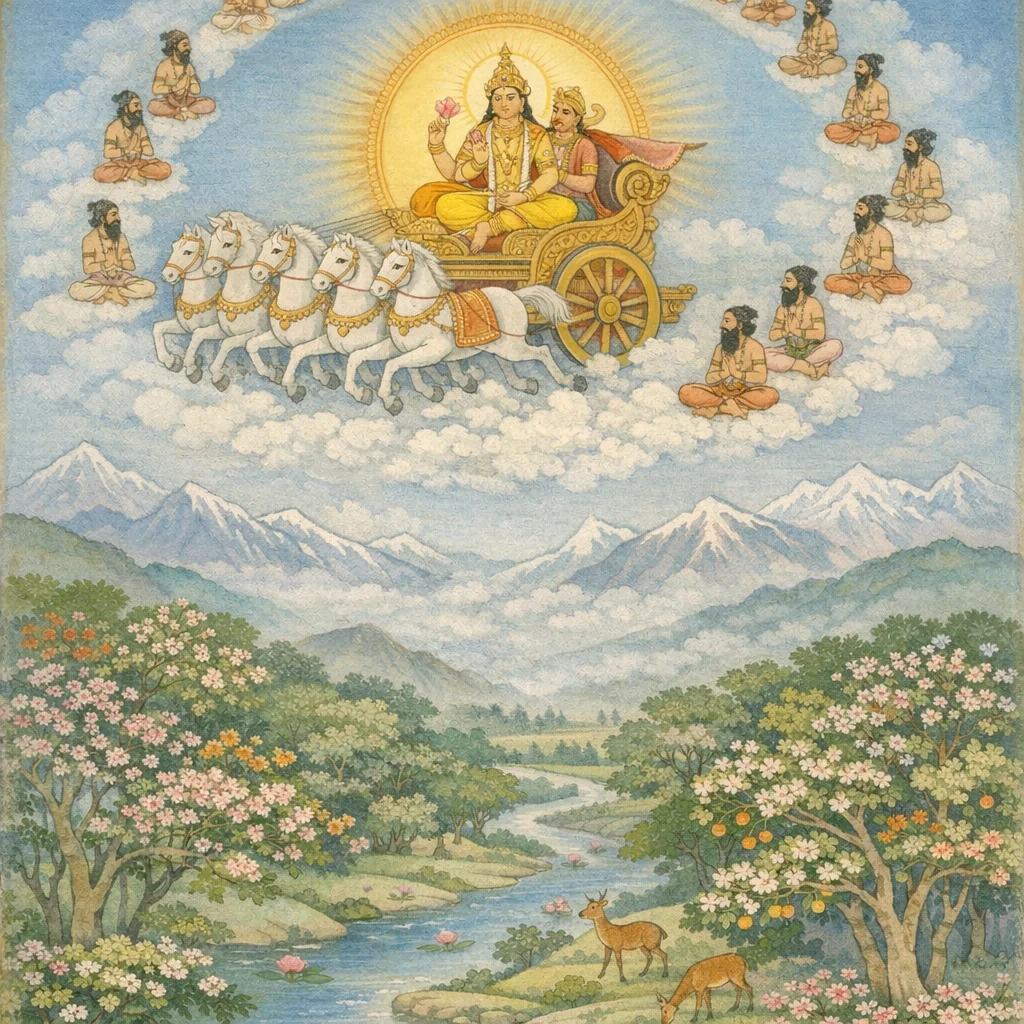
Chapter Arc: संजय धृतराष्ट्र से कहते हैं—राजन्, युद्धभूमि से पहले मैं तुम्हें जम्बूद्वीप के उत्तर में स्थित पुण्य-प्रदेशों का वृत्तान्त सुनाता हूँ: उत्तरकुरु और भद्राश्ववर्ष, जहाँ सिद्धों का निवास है। → वर्णन गहन होता जाता है—नीलगिरि और मेरु के पार के लोक, सदा पुष्प-फल से लदे मधुफल वृक्ष, सुगन्धित पुष्प, रसवान फल; और वहाँ के जन जो चक्रवाक-युगल की भाँति परस्पर अनुरक्त, निरामय और नित्य प्रसन्न हैं। इसी सौम्यता के बीच भारुण्ड नामक तीक्ष्णतुंड, महाबल पक्षियों का उल्लेख आता है जो मृत देहों को दरी-गुहाओं में ले जाते हैं—स्वर्गीय शान्ति के भीतर मृत्यु का संकेत। → सुदर्शन नामक सनातन महाजम्बू-वृक्ष और माल्यवान् पर्वत-प्रदेश के साथ कथा एक विराट ब्रह्माण्डीय कर्म में उठती है—ब्रह्मलोक से च्युत साधुजन तीव्र तप करते हैं, भूत-रक्षा हेतु दिवाकर में प्रवेश करते हैं; और ‘षष्टि सहस्राणि षष्टिमेव शतानि च’ की गणना के साथ अरुण के अग्रभाग में सूर्य को परिवार्य चलने वाले तपस्वियों का अद्भुत दृश्य प्रकट होता है। → उन तपस्वियों का दीर्घ तप-चक्र बताया जाता है—आदित्य-ताप में ‘षष्टिं वर्षसहस्राणि षष्टिमेव शतानि च’ तपकर अंततः वे चन्द्रमण्डल में प्रवेश करते हैं; मानो लोक-व्यवस्था तप, त्याग और नियति के अनुशासन से चलती हो। → धृतराष्ट्र के लिए यह संकेत छोड़ दिया जाता है कि जैसे दिव्य लोकों में भी कर्म-चक्र और तप-नियम अटल हैं, वैसे ही कुरुक्षेत्र में भी नियति का पहिया रुकने वाला नहीं—आगे संजय का वर्णन और व्यापक होगा।
Shlokas
Verse 1
[दाक्षिणात्य अधिक पाठका ह श्लोक मिलाकर कुल ५६ ६ “लोक हैं।] न#फमशा रत (0) अमन न सप्तमो<ध्याय: उत्तर कुरु, भद्राश्चववर्ष तथा माल्यवानका वर्णन धृतराष्ट उवाच मेरोरथोत्तरं पार्श्व पूर्व चाचक्ष्वय संजय । निखिलेन महाबुद्धे माल्यवन्तं च पर्वतम्,धृतराष्ट्रने कहा--परमबुद्धिमान् संजय! तुम मेरुके उत्तर तथा पूर्वभागमें जो कुछ है, उसका पूर्ण रूपसे वर्णन करो। साथ ही माल्यवान् पर्वतके विषयमें भी जाननेयोग्य बातें बताओ
Dhṛtarāṣṭra said: “Sañjaya, O man of great intelligence, describe to me in full what lies to the north of Mount Meru and also its eastern region. And tell me as well, completely, about the mountain called Mālyavān.”
Verse 2
संजय उवाच दक्षिणेन तु नीलस्य मेरो: पाश्वे तथोत्तरे । उत्तरा: कुरवो राजन् पुण्या: सिद्धनिषेविता:,संजयने कहा--राजन्! नीलगिरिसे दक्षिण तथा मेरुपर्वतके उत्तरभागमें पवित्र उत्तर कुरुवर्ष है, जहाँ सिद्ध पुरुष निवास करते हैं
Sañjaya said: O King, to the south of the Nīla mountain and likewise on the northern flank of Mount Meru lies the sacred land called Uttara-Kuru, a holy region frequented and inhabited by perfected beings (siddhas).
Verse 3
तत्र वृक्षा मधुफला नित्यपुष्पफलोपगा: । पुष्पाणि च सुगन्धीनि रसवन्ति फलानि च,वहाँके वृक्ष सदा पुष्प और फलसे सम्पन्न होते हैं और उनके फल बड़े मधुर एवं स्वादिष्ट होते हैं। उस देशके सभी पुष्प सुगन्धित और फल सरस होते हैं
Sañjaya describes that in that region the trees are ever laden with blossoms and fruit. Their fruits are honey-sweet and full of flavor, and the flowers are richly fragrant—an image of natural abundance and auspiciousness set against the larger backdrop of impending war.
Verse 4
सर्वकामफलास्तत्र केचिद् वृक्षा जनाधिप । अपरे क्षीरिणो नाम वृक्षास्तत्र नराधिप,नरेश्वर! वहाँके कुछ वृक्ष ऐसे होते हैं, जो सम्पूर्ण मनोवांछित फलोंके दाता हैं। राजन! दूसरे क्षीरी नामवाले वृक्ष हैं, जो सदा षड्विध रसोंसे युक्त एवं अमृतके समान स्वादिष्ट दुग्ध बहाते रहते हैं। उनके फलोंमें इच्छानुसार वस्त्र और आभूषण भी प्रकट होते हैं
Sañjaya said: “O lord of men, in that region there are certain trees that grant every desired fruit. And, O ruler of men, there are other trees called ‘Kṣīriṇa’ which continually pour forth milk—sweet like nectar and endowed with the six tastes—so that even garments and ornaments appear from their fruits according to one’s wish.”
Verse 5
ये क्षरन्ति सदा क्षीरं पड़सं चामृतोपमम् | वस्त्राणि च प्रसूयन्ते फलेष्वाभरणानि च,नरेश्वर! वहाँके कुछ वृक्ष ऐसे होते हैं, जो सम्पूर्ण मनोवांछित फलोंके दाता हैं। राजन! दूसरे क्षीरी नामवाले वृक्ष हैं, जो सदा षड्विध रसोंसे युक्त एवं अमृतके समान स्वादिष्ट दुग्ध बहाते रहते हैं। उनके फलोंमें इच्छानुसार वस्त्र और आभूषण भी प्रकट होते हैं
Sanjaya said: “O lord of men, there are trees there that continually drip milk—endowed with the sixfold tastes and sweet as nectar. From their fruits, garments are produced, and ornaments too appear.”
Verse 6
इस प्रकार श्रीमह्या भारत भीष्मपर्वके अन्तर्गत जम्बूखण्डविनिर्माणपर्वमें शूमि आदि परिमाणका विवरणविषयक छठा अध्याय पूरा हुआ,सर्वा मणिमयी भूमि: सूक्ष्मकाउ्चनवालुका । सर्वर्तुसुखसंस्पर्शा निष्पड़का च जनाधिप । पुष्करिण्य: शुभास्तत्र सुखस्पर्शा मनोरमा: जनेश्वर! वहाँकी सारी भूमि मणिमयी है। वहाँ जो सूक्ष्म बालूके कण हैं, वे सब सुवर्णमय हैं। उस भूमिपर कीचड़का कहीं नाम भी नहीं है। उसका स्पर्श सभी ऋतुओंमें सुखदायक होता है। वहाँके सुन्दर सरोवर अत्यन्त मनोरम होते हैं। उनका स्पर्श सुखद जान पड़ता है
Sañjaya said: O lord of men, the entire ground there is made of gems; even the fine grains of sand are of delicate gold. Nowhere is there any mire or mud. Its touch is pleasant in every season. And the auspicious lotus-ponds there are enchanting; their waters feel delightful to the touch.
Verse 7
देवलोकच्युता: सर्वे जायन्ते तत्र मानवा: | शुक्लाभिजनसम्पन्ना: सर्वे सुप्रियदर्शना:,वहाँ देवलोकसे भूतलपर आये हुए समस्त पुण्यात्मा मनुष्य ही जन्म ग्रहण करते हैं। ये सभी उत्तम कुलसे सम्पन्न और देखनेमें अत्यन्त प्रिय होते हैं इति श्रीमहाभारते भीष्मपर्वणि जम्बूखण्डविनिर्माणपर्वणि माल्यवद्)र्णने सप्तमो<थध्याय:
Sañjaya said: All those who have descended from the world of the gods are born there as human beings. Endowed with a pure and noble lineage, they are all pleasing to behold—virtuous souls whose merit has brought them from celestial realms to the earthly plane.
Verse 8
मिथुनानि च जायन्ते स्त्रियश्वाप्सरसोपमा: । तेषां ते क्षीरिणां क्षीरं पिबन्त्यमृतसंनिभम्,वहाँ स्त्री-पुरुषोंके जोड़े भी उत्पन्न होते हैं। स्त्रियाँ अप्सराओंके समान सुन्दरी होती हैं। उत्तरकुरुके निवासी क्षीरी वृक्षोंके अमृततुल्य दूध पीते हैं
Sañjaya said: In that land, pairs of men and women are born together; the women are lovely like Apsarases. The inhabitants drink the nectar-like milk that flows from the milky trees there.
Verse 9
मिथुनं जायते काले सम॑ तच्च प्रवर्धते । तुल्यरूपगुणोपेतं समवेषं तथैव च,वहाँ स्त्री-पुरुषोंके जोड़े एक ही साथ उत्पन्न होते और साथ-साथ बढ़ते हैं। उनके रूप, गुण और वेष सब एक-से होते हैं
Sanjaya said: In due season, male and female pairs are born together and grow together. Their form and qualities are alike, and even their outward appearance and dress are the same.
Verse 10
एकैकमनुरक्तं च चक्रवाकसमं विभो । निरामयाश्च ते लोका नित्यं मुदितमानसा:,प्रभो! वे चकवा-चकवीके समान सदा एक-दूसरेके अनुकूल बने रहते हैं। उत्तरकुरुके लोग सदा नीरोग और प्रसन्नचित्त रहते हैं
Sañjaya said: “O mighty lord, there each person is devoted to the other, like a pair of cakravāka birds—ever mutually attached. And those people are free from disease, always cheerful at heart, O master.”
Verse 11
दश वर्षसहस्त्राणि दश वर्षशतानि च । जीवन्ति ते महाराज न चान्योन्यं जहत्युत,महाराज! वे ग्यारह हजार वर्षोतक जीवित रहते हैं। एक-दूसरेका कभी त्याग नहीं करते
Sañjaya said: “O great king, they live for ten thousand years and a further thousand years; and even so, they do not abandon one another.”
Verse 12
भारुण्डा नाम शकुनास्तीक्षणतुण्डा महाबला: । तान् निर्हरन्तीह मृतान् दरीषु प्रक्षिपन्ति च,वहाँ भारुण्ड नामके महाबली पक्षी हैं, जिनकी चोंचें बड़ी तीखी होती हैं। वे वहाँके मरे हुए लोगों-की लाशें उठाकर ले जाते और कन्दराओंमें फेंक देते हैं
Sañjaya said: “There are birds here called Bhāruṇḍas—mighty creatures with razor-sharp beaks. They carry off the dead and cast the corpses into the mountain clefts.”
Verse 13
उत्तरा: कुरवो राजन् व्याख्यातास्ते समासतः । मेरो: पार्श्वमहं पूर्व वक्ष्याम्यथ यथातथम्,राजन! इस प्रकार मैंने आपसे थोड़ेमें उत्तरकुरु-वर्षका वर्णन किया। अब मैं मेरुके पूर्वभागमें स्थित भद्राश्ववर्षका यथावत् वर्णन करूँगा
Sañjaya said: “O King, I have briefly described to you the Uttara-Kuru region. Now I shall describe, in due order and as it truly is, the land of Bhadrāśva situated on the eastern side of Mount Meru.”
Verse 14
तस्य मूर्धाभिषेकस्तु भद्रा श्वस्य विशाम्पते । भद्गसालवन यत्र कालाम्रश्न महाद्रुम:,प्रजानाथ! भद्राश्ववर्षक शिखरपर भद्रशाल नामका एक वन है एवं वहाँ कालाग्र नामक महान् वृक्ष भी है
Sañjaya said: “O lord of the people, in that land of Bhadrāśva there is a region called Mūrdhābhiṣeka. There lies the forest named Bhadraśāla, and in it stands the great tree called Kālāgra.”
Verse 15
कालाम्रस्तु महाराज नित्यपुष्पफल: शुभ: । ट्रुमश्चन योजनोत्सेध: सिद्धचारणसेवित:,महाराज! कालाम्रवृक्ष बहुत ही सुन्दर और एक योजन ऊँचा है। उसमें सदा फूल और फल लगे रहते हैं। सिद्ध और चारण पुरुष उसका सदा सेवन करते हैं
Sanjaya said: O King, there is a sacred kālāmra tree, ever auspicious, on which flowers and fruits are present at all times. That tree rises to the height of one yojana, and it is continually frequented and honored by Siddhas and Cāraṇas—beings of accomplished merit.
Verse 16
तत्र ते पुरुषा: श्वेतास्तेजोयुक्ता महाबला: । स्त्रिय: कुमुदवर्णाश्च सुन्दर्य: प्रियदर्शना:,वहाँके पुरुष श्वेतवर्णके होते हैं। वे तेजस्वी और महान् बलवान् हुआ करते हैं। वहाँकी स्त्रियाँ कुमुद-पुष्पके समान गौरवर्णवाली, सुन्दरी तथा देखनेमें प्रिय होती हैं
Sañjaya said: There, the men are fair-complexioned—radiant with vigor and endowed with great strength. The women too are lotus-like in hue, beautiful, and pleasing to behold.
Verse 17
चन्द्रप्रभा श्वन्द्रवर्णा: पूर्णचन्द्रनिभानना: । चन्द्रशीतलगात्र्यश्न नृत्यगीतविशारदा:,उनकी अंगकान्ति एवं वर्ण चन्द्रमाके समान है। उनके मुख पूर्णचन्द्रके समान मनोहर होते हैं। उनका एक-एक अंग चन्द्ररश्मियोंके समान शीतल प्रतीत होता है। वे नृत्य और गीतकी कलामें कुशल होती हैं
Sañjaya said: They shine with a moonlike radiance, fair in complexion, their faces lovely like the full moon. Their limbs seem cool as moonbeams, and they are accomplished in the arts of dance and song.
Verse 18
दश वर्षसहस्राणि तत्रायुर्भरतर्षभ । कालाम्ररसपीतास्ते नित्यं संस्थितयौवना:,भरतश्रेष्ठ! वहाँके लोगोंकी आयु दस हजार वर्षकी होती है। वे कालागम्रवृक्षका रस पीकर सदा जवान बने रहते हैं
Sanjaya said: O bull among the Bharatas, the lifespan of the people there is ten thousand years. Having drunk the juice of the Kālāmrā tree, they remain perpetually established in youth.
Verse 19
दक्षिणेन तु नीलस्य निषधस्योत्तरेण तु । सुदर्शनो नाम महाज्जम्बूवृक्ष: सनातन:,नीलगिरिके दक्षिण और निषधके उत्तर सुदर्शन नामक एक विशाल जामुनका वृक्ष है, जो सदा स्थिर रहनेवाला है
Sañjaya said: To the south of the Nīla mountain and to the north of Niṣadha there stands an immense, ancient jambu (rose-apple) tree named Sudarśana, enduring from time immemorial.
Verse 20
सर्वकामफल: पुण्य: सिद्धचारणसेवित: । तस्य नाम्ना समाख्यातो जम्बूद्वीप: सनातन:,वह समस्त मनोवांछित फलोंको देनेवाला, पवित्र तथा सिद्धों और चारणोंका आश्रय है। उसीके नामपर यह सनातन प्रदेश जम्बूद्वीपके नामसे विख्यात है
It is sacred and grants the fruits of all desired aims; it is frequented by perfected beings and celestial bards. From its very name, this eternal region has come to be renowned as Jambūdvīpa.
Verse 21
योजनानां सहस््नं च शतं च भरतर्षभ । उत्सेधो वृक्षराजस्य दिवस्पृड्मनुजेश्वर,भरतश्रेष्ठ! मनुजेश्वर! उस वृक्षराजकी ऊँचाई ग्यारह सौ योजन है। वह (ऊँचाई) स्वर्गलोकको स्पर्श करती हुई-सी प्रतीत होती है
Sañjaya said: “O bull among the Bharatas, O lord of men—this king of trees rises to a height of eleven hundred yojanas. Its lofty stature appears as though it touches the very heavens.”
Verse 22
अरत्नीनां सहस्नं च शतानि दश पञठ्च च । परिणाहस्तु वृक्षस्थ फलानां रसभेदिनाम्,उसके फलोंमें जब रस आ जाता है अर्थात् जब वे पक जाते हैं, तब अपने-आप टूटकर गिर जाते हैं। उन फलोंकी लंबाई ढाई हजार अरत्नि- मानी गयी है
Sañjaya said: “The fruits that grow upon those trees—whose juices differ in kind—have a girth measured as 2,500 aratnis. When their sap fully develops, meaning when they ripen, they break off of themselves and fall.”
Verse 23
पतमानानि तान्युर्वी कुर्वन्ति विपुलं स्वनम् । मुछ्चन्ति च रसं राजंस्तस्मिन् रजतसंनिभम्,राजन! वे फल इस पृथ्वीपर गिरते समय भारी धमाकेकी आवाज करते हैं और उस भूतलपर सुवर्णसदृश रस बहाया करते हैं
Sañjaya said: “O King, as those fall upon the earth, they produce a tremendous roar; and upon that ground they also discharge a fluid, O King, shining like silver.”
Verse 24
तस्या जम्ब्वा: फलरसो नदी भूत्वा जनाधिप । मेरुं प्रदक्षिणं कृत्वा सम्प्रयात्युत्तरान् कुरून्ू,जनेश्वर! उस जम्बूके फलोंका रस नदीके रूपमें परिणत होकर मेरुगिरिकी प्रदक्षिणा करता हुआ उत्तर-कुरुवर्षमें पहुँच जाता है
Sañjaya said: “O king, the juice of the fruits of that Jambū tree becomes a river; circling Mount Meru in reverent course, it then flows onward and reaches the Northern Kurus.”
Verse 25
तत्र तेषां मन:शान्तिर्न पिपासा जनाधिप । तस्मिन् फलरसे पीते न जरा बाधते च तान्,राजन! फलोंके उस रसका पान कर लेनेपर वहाँके निवासियोंके मनमें पूर्ण शान्ति और प्रसन्नता रहती है। उन्हें पिपासा अथवा वृद्धावस्था कभी नहीं सताती है
Sañjaya said: “There, O lord of men, their minds abide in calm contentment, and thirst does not trouble them. Having drunk that fruit-essence, O King, neither old age nor its afflictions oppress those dwellers.”
Verse 26
तत्र जाम्बूनदं नाम कनकं॑ देवभूषणम् | इन्द्रगोपकसंकाशं जायते भास्वरं तु तत्,उस जम्बू नदीसे जाम्बूनद नामक सुवर्ण प्रकट होता है, जो देवताओंका आभूषण है। वह इन्द्रगोपके समान लाल और अत्यन्त चमकीला होता है
There, a gold called Jāmbūnada—esteemed as an ornament of the gods—comes into being. It shines brilliantly, glowing with a redness like that of the indragopa insect.
Verse 27
तरुणादित्यवर्णाश्न जायन्ते तत्र मानवा: । तथा माल्यवत: शड्ले दृश्यते हव्यवाट् सदा,वहाँके लोग प्रातःकालीन सूर्यके समान कान्तिमान् होते हैं। माल्यवान् पर्वतके शिखरपर सदा अग्निदेव प्रज्वलित दिखायी देते हैं
Sañjaya said: “The people who are born there shine with a radiance like the young sun at dawn. And upon the summit of Mount Mālyavat, the sacred fire—Agni, the receiver of offerings—is seen blazing continually.”
Verse 28
नाम्ना संवर्तको नाम कालाग्निर्भरतर्षभ | तथा माल्यवत:ः शद्े पूर्वपूर्वानुगण्डिका,भरतश्रेष्ठ! वे वहाँ संवर्तक एवं कालाग्निके नामसे प्रसिद्ध हैं। माल्यवानूके शिखरपर पूर्व-पूर्वकी ओर नदी प्रवाहित होती है
Sañjaya said: “O bull among the Bharatas, there is a blazing fire known by the names Saṃvartaka and Kālāgni. And on the peak of Mount Mālyavat a river flows, running ever eastward.”
Verse 29
योजनानां सहस्राणि पठचषण्माल्यवानथ । महारजतसंकाशा जायन्ते तत्र मानवा:,माल्यवान्का विस्तार पाँच-छ: हजार योजन है। वहाँ सुवर्णके समान कान्तिमान् मानव उत्पन्न होते हैं
Sañjaya said: “Mālyavān extends for five or six thousand yojanas. There, human beings are born with a great, silver-like radiance.”
Verse 30
ब्रह्मलोकच्युता: सर्वे सर्वे सर्वेषु साधव: । तपस्तप्यन्ति ते तीव्र भवन्ति हार्ध्वरेतस: । रक्षणार्थ तु भूतानां प्रविशन्ते दिवाकरम्,वे सब लोग ब्रह्मलोकसे नीचे आये हुए पुण्यात्मा मनुष्य हैं। उन सबका सबके प्रति साधुतापूर्ण बर्ताव होता है। वे ऊर्ध्वरेता (नैष्ठिक ब्रह्मचारी) होते और कठोर तपस्या करते हैं। फिर समस्त प्राणियोंकी रक्षाके लिये सूर्यलोकमें प्रवेश कर जाते हैं
Sañjaya said: “All of them are beings who have descended from the world of Brahmā—virtuous in nature and benevolent in their conduct toward everyone. They practice severe austerities and live as steadfast celibates (ūrdhvaretaḥ), conserving their vital energy. Then, for the protection of all creatures, they enter into the Sun, becoming part of its sustaining power.”
Verse 31
षष्टिस्तानि सहस्राणि षष्टिमेव शतानि च । अरुणस्याग्रतो यान्ति परिवार्य दिवाकरम्,उनमेंसे छाछठ हजार मनुष्य भगवान् सूर्यको चारों ओरसे घेरकर अरुणके आगे-आगे चलते हैं
Sañjaya said: “Sixty thousand and sixty hundreds (66,000) go before Aruṇa, surrounding the Sun on every side.”
Verse 32
षष्टिं वर्षमहस्राणि षष्टिमेव शतानि च । आदित्यतापतप्तास्ते विशन्ति शशिमण्डलम्,वे छाछठ हजार वर्षोतक ही सूर्यदेवके तापमें तपकर अन्तमें चन्द्रमण्डलमें प्रवेश कर जाते हैं
Sañjaya said: “After being scorched by the Sun’s heat for sixty thousand years and sixty hundreds more (66,000 years), they finally enter the orb of the Moon.”
Frequently Asked Questions
The chapter addresses Dhṛtarāṣṭra’s request for a precise expansion (vistara) and measure (pramāṇa) of the dvīpa as visually conceptualized (śaśa-lakṣaṇa), operationalized through a systematic listing of mountains, regions, and spatial relationships.
The enduring takeaway is that narrative history is embedded in a structured cosmos: spatial hierarchies (Meru-centered geography), sacred hydrology (Gaṅgā’s distribution), and region-based qualities provide an interpretive scaffold for understanding duty, agency, and consequence.
No explicit phalaśruti is presented in the provided passage; the chapter functions primarily as descriptive cosmography and contextual framing rather than as a self-referential merit statement.