Adhyaya 125
Chapter Arc: संजय धृतराष्ट्र से कहता है—युद्धभूमि में भीष्म के शरशय्या पर गिरने के बाद, राजागण अपने-अपने शिविरों को लौटते हैं; पर कर्ण का मन चैन नहीं पाता और वह भीतर-भीतर काँपती जिज्ञासा लेकर भीष्म की ओर बढ़ता है। → भीष्म-वध का समाचार सुनकर राधेय कर्ण के भीतर क्षणिक संत्रास उठता है; वह शीघ्रता से शरतल्प पर पड़े पितामह के पास पहुँचता है और उस महात्मा को कार्तिकेय-सम प्रभु-तेजस्वी देखता है—नेत्र बंद, पर वाणी अभी भी धर्म की धार है। → कर्ण और भीष्म का रहस्यमय संवाद: कर्ण अपनी निष्ठा और पीड़ा प्रकट करता है, और भीष्म उसे युद्ध के लिए उपदेश देते हैं—'निरहंकार होकर, बल-वीर्य का आश्रय लेकर युद्ध कर; क्षत्रिय के लिए धर्म्य युद्ध से श्रेष्ठ कुछ नहीं'—साथ ही यह भी स्वीकारते हैं कि उन्होंने बहुत काल तक शांति का प्रयत्न किया, पर उसे साध न सके। → भीष्म कर्ण के पराक्रम, ब्रह्मण्यता, शौर्य और दान-धर्म को जानते हुए उसे कर्तव्य-पथ पर स्थिर करते हैं; युद्ध की अनिवार्यता (दैव बनाम पुरुषार्थ) का संकेत देकर संवाद को एक कठोर, नियति-स्वीकृत निष्कर्ष तक ले आते हैं। → कर्ण को धर्म-उपदेश और नियति-बोध मिल चुका है—अब वह रण में किस रूप से उतरेगा, और भीष्म की शरशय्या से निकली यह वाणी युद्ध की दिशा को कैसे मोड़ेगी?
Shlokas
Verse 1
ऑपनआक्ात बछ। अर: 2 द्वाविशर्त्याधेकशततमो< ध्याय: भीष्म और कर्णका रहस्यमय संवाद संजय उवाच ततस्ते पार्थिवा: सर्वे जग्मु: स्वानालयान् पुनः । तृष्णीम्भूते महाराज भीष्मे शान्तनुनन्दने,संजय कहते हैं--महाराज! शान्तनुनन्दन भीष्मके चुप हो जानेपर सब राजा वहाँसे उठकर अपने-अपने विश्रामस्थानको चले गये
Sañjaya said: “O King, when Bhīṣma, the son of Śāntanu, fell silent, all those rulers rose from that place and returned again to their own dwellings.”
Verse 2
श्रुत्वा तु निहतं भीष्म राधेय: पुरुषर्षभ: । ईषदागतसंत्रासस्त्वरयोपजगाम ह,भीष्मजीको रथसे गिराया गया सुनकर पुरुषप्रवर राधानन्दन कर्णके मनमें कुछ भय समा गया। वह बड़ी उतावलीके साथ उनके पास आया
Sañjaya said: Hearing that Bhīṣma had been struck down, Rādheya (Karna)—the bull among men—was seized by a slight tremor of fear, and in great haste he went to Bhīṣma.
Verse 3
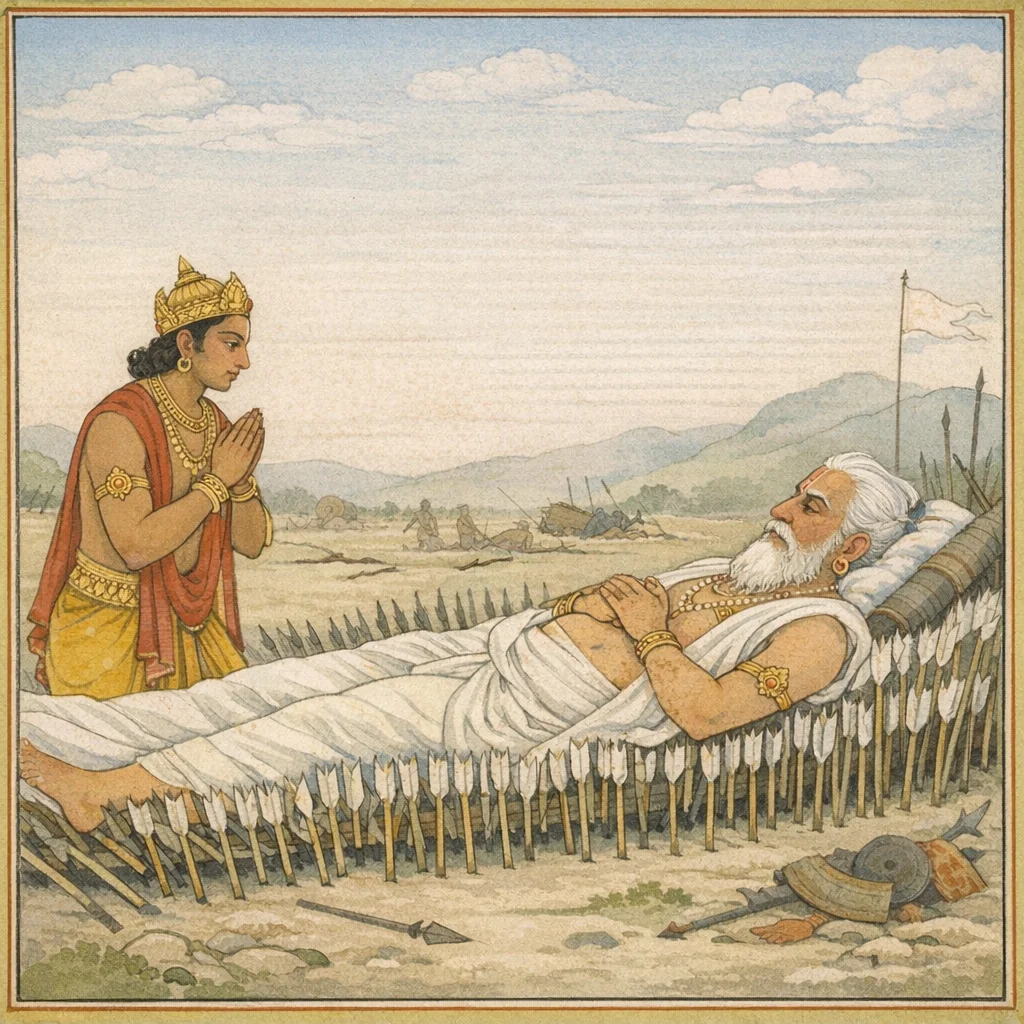
स ददर्श महात्मानं शरतल्पगतं तदा । जन्मशब्यागतं वीरं कार्तिकेयमिव प्रभुम्,उस समय उसने देखा, महात्मा भीष्म शरशय्यापर सो रहे हैं, ठीक उसी तरह जैसे वीरवर भगवान् कार्तिकेय जन्मकालमें शरशय्या (सरकण्डोंके बिछावन)-पर सोये थे
Sañjaya said: Then he beheld the great-souled Bhīṣma lying upon a bed of arrows—like the heroic Lord Kārtikeya, who at his birth was laid upon a reed-bed.
Verse 4
निमीलिताक्षं तं वीरं॑ साश्रुकण्ठस्तदा वृष: | भीष्म भीष्म महाबाहो इत्युवाच महाद्युति:,वीर भीष्मके नेत्र बंद थे। उन्हें देखकर महातेजस्वी कर्णकी आँखोंमें आँसू छलक आये और अभश्रुगदगदकण्ठ होकर उसने कहा--'भीष्म! भीष्म! महाबाहो! कुरुश्रेष्ठ! मैं वही राधापुत्र कर्ण हूँ, जो सदा आपकी आँखोंमें गड़ा रहता था और जिसे आप सर्वत्र द्वेषदृष्टिसे देखते थे।” कर्णने यह बात उनसे कही
Sañjaya said: Seeing that hero Bhīṣma with his eyes closed, Karṇa—his voice choked with tears—spoke in anguish. The radiant warrior cried out, “Bhīṣma! Bhīṣma! O mighty-armed one!”
Verse 5
राधेयो*5हं कुरुश्रेष्ठ नित्यमक्षिगतस्तव । देष्यो5हं तव सर्वत्र इति चैनमुवाच ह,वीर भीष्मके नेत्र बंद थे। उन्हें देखकर महातेजस्वी कर्णकी आँखोंमें आँसू छलक आये और अभश्रुगदगदकण्ठ होकर उसने कहा--'भीष्म! भीष्म! महाबाहो! कुरुश्रेष्ठ! मैं वही राधापुत्र कर्ण हूँ, जो सदा आपकी आँखोंमें गड़ा रहता था और जिसे आप सर्वत्र द्वेषदृष्टिसे देखते थे।” कर्णने यह बात उनसे कही
Sañjaya said: “O best of the Kurus, I am Rādheya (Karna). I was ever fixed in your sight, and yet I was one whom you regarded with aversion everywhere.” Thus he spoke to him.
Verse 6
तच्छुत्वा कुरुवृद्धो हि बली संवृतलोचन: । शनैरुद्वीक्ष्य सस्नेहमिदं वचनमब्रवीत्,उसकी बात सुनकर बंद नेत्रोंवाले बलवान् कुरुवृद्ध भीष्मने धीरेसे आँखें खोलकर देखा और उस स्थानको एकान्त देख पहरेदारोंको दूर हटाकर एक हाथसे कर्णका उसी प्रकार सस्नेह आलिंगन किया, जैसे पिता अपने पुत्रको गलेसे लगाता है। तत्पश्चात् उन्होंने इस प्रकार कहा--
Sañjaya said: Hearing those words, the mighty Bhīṣma—elder of the Kurus, his eyes kept closed—slowly opened them and looked up with tenderness. Seeing the place to be secluded, he had the guards withdrawn, and with one hand embraced Karṇa with the same affection with which a father embraces his son. Then he spoke these words.
Verse 7
रहितं धिष्ण्यमालोक्य समुत्सार्य च रक्षिण: । पितेव पुत्र गाड़ेय: परिरभ्यैकपाणिना,उसकी बात सुनकर बंद नेत्रोंवाले बलवान् कुरुवृद्ध भीष्मने धीरेसे आँखें खोलकर देखा और उस स्थानको एकान्त देख पहरेदारोंको दूर हटाकर एक हाथसे कर्णका उसी प्रकार सस्नेह आलिंगन किया, जैसे पिता अपने पुत्रको गलेसे लगाता है। तत्पश्चात् उन्होंने इस प्रकार कहा--
Sañjaya said: Seeing the chamber empty and having the guards withdrawn, the aged Bhishma embraced Karna with one hand, with deep affection—just as a father clasps his son. Then, in that privacy, he began to speak.
Verse 8
एह्टीहि मे विप्रतीप स्पर्धसे त्वं मया सह । यदि मां नाधिगच्छेथा न ते श्रेयो ध्रुवं भवेत्,“आओ, आओ, कर्ण! तुम सदा मुझसे लाग-डाँट रखते रहे। सदा मेरे साथ स्पर्धा करते रहे। आज यदि तुम मेरे पास नहीं आते तो निश्चय ही तुम्हारा कल्याण नहीं होता
Sañjaya said: “Come here. You have long been contrary and contentious with me, always vying against me. If today you had not come to me, your welfare would certainly not have been secured.”
Verse 9
कौन्तेयस्त्वं न राधेयो न तवाधिरथ: पिता । सूर्यजस्त्वं महाबाहो विदितो नारदान्मया,“वत्स! तुम राधाके नहीं, कुन्तीके पुत्र हो। तुम्हारे पिता अधिरथ नहीं हैं। महाबाहो! तुम सूर्यके पुत्र हो। मैंने नारदजीसे तुम्हारा परिचय प्राप्त किया था
Sañjaya said: “You are a son of Kuntī, not Rādhā’s child; Adhiratha is not your father. Mighty-armed one, you are born of the Sun. I came to know your true identity from Nārada.”
Verse 10
कृष्णद्वैपायनाच्चैव तच्च सत्यं न संशय: । न च द्वेषो5स्ति मे तात त्वयि सत्यं ब्रवीमि ते,“तात! श्रीकृष्णद्वैपायन व्याससे भी तुम्हारे जन्मका वृत्तान्त ज्ञात हुआ था और जो कुछ ज्ञात हुआ, वह सत्य है। इसमें संदेह नहीं है। तुम्हारे प्रति मेरे मनमें द्वेष नहीं है; यह मैं तुमसे सत्य कहता हूँ
Sañjaya said: “And this very account was known even to Kṛṣṇa Dvaipāyana Vyāsa; what he knew is true—there is no doubt about it. And, dear child, I bear no hatred toward you; I tell you this truthfully.”
Verse 11
तेजोवधनिमित्तं तु परुषं त्वाहमब्रुवम् । अकस्मात् पाण्डवान् सर्वनवाक्षिपसि सुव्रत
Sañjaya said: “It was only with the aim of checking your swelling pride that I spoke to you harshly. O man of good vows, why do you suddenly assail the Pāṇḍavas with entirely new accusations?”
Verse 12
जातो<सि धर्मलोपेन ततस्ते बुद्धिरीदूशी,“तुम्हारा जन्म (कन्यावस्थामें ही कुन्तीके गर्भसे उत्पन्न होनेके कारण) धर्मलोपसे हुआ है; इसीलिये नीच पुरुषोंके आश्रयसे तुम्हारी बुद्धि इस प्रकार ईर्ष्यावश गुणवान् पाण्डवोंसे भी द्वेष रखनेवाली हो गयी है और इसीके कारण कौरवसभामें मैंने तुम्हें अनेक बार कटुवचन सुनाये हैं
Sanjaya said: “You were born through a lapse of dharma; therefore your understanding has become corrupted. Taking refuge among base men, your mind—driven by envy—has come to hate even the virtuous Pāṇḍavas; and because of this, in the Kaurava assembly I have many times had to hear bitter words from you.”
Verse 13
नीचाश्रयान्मत्सरेण द्वेषिणी गुणिनामपि । तेनासि बहुशो रूक्ष॑ं श्रावित: कुरुसंसदि,“तुम्हारा जन्म (कन्यावस्थामें ही कुन्तीके गर्भसे उत्पन्न होनेके कारण) धर्मलोपसे हुआ है; इसीलिये नीच पुरुषोंके आश्रयसे तुम्हारी बुद्धि इस प्रकार ईर्ष्यावश गुणवान् पाण्डवोंसे भी द्वेष रखनेवाली हो गयी है और इसीके कारण कौरवसभामें मैंने तुम्हें अनेक बार कटुवचन सुनाये हैं
Sañjaya said: “Because you have taken refuge among the base, your mind—driven by envy—has become hostile even toward the virtuous. For that reason, in the assembly of the Kurus you have repeatedly been made to hear harsh, cutting words.”
Verse 14
जानामि समरे वीर्य शत्रुभिर्दु:सहं भुवि । ब्रह्माण्यतां च शौर्य च दाने च परमां स्थितिम्,“मैं जानता हूँ, तुम्हारा पराक्रम समरभूमिमें शत्रुओंके लिये दु:सह है। तुम ब्राह्मणभक्त, शूरवीर तथा दानमें उत्तम निष्ठा रखनेवाले हो
Sañjaya said: “I know that, on the battlefield, your valor is unbearable for your enemies upon the earth. You are devoted to the brāhmaṇas, heroic in courage, and steadfast in the highest commitment to generosity.”
Verse 15
न त्वया सदृश: वश्ित् पुरुषेष्वमरोपम । कुलभेदभयाच्चाहं सदा परुषमुक्तवान्,“देवोपम वीर! मनुष्योंमें तुम्हारे समान कोई नहीं है। मैं सदा अपने कुलमें फूट पड़नेके डरसे तुम्हें कटुवचन सुनाता रहा
Sanjaya said: “O godlike one, among men there is none equal to you. Yet, fearing a rupture within my own clan, I have always spoken harshly to you.”
Verse 16
इष्वस्त्रे चास्त्रसंधाने लाघवे<स्त्रबले तथा । सदृश: फाल्गुनेनासि कृष्णेन च महात्मना,“बाण चलाने, दिव्यास्त्रोंका संधान करने, फुर्ती दिखाने तथा अस्त्रबलमें तुम अर्जुन तथा महात्मा श्रीकृष्णके समान हो
Sañjaya said: “In the use of arrows and weapons, in the fitting and deployment of divine missiles, in quickness of action, and in sheer martial power, you are equal to Arjuna (Phālguna) and to the great-souled Kṛṣṇa.”
Verse 17
कर्ण काशिपुरं गत्वा त्वयैकेन धनुष्मता । कन्यार्थे कुरुराजस्य राजानो मृदिता युधि,“कर्ण! तुमने कुरुराज दुर्योधनके लिये कन्या लानेके निमित्त अकेले काशीपुरमें जाकर केवल धनुषकी सहायतासे वहाँ आये हुए समस्त राजाओंको युद्धमें परास्त कर दिया था
Sañjaya said: “O Karṇa, to obtain a maiden for the Kuru king, you went alone to Kāśīpura, and with your bow alone you crushed the assembled kings in battle.”
Verse 18
तथा च बलवान् राजा जरासंधो दुरासद: । समरे समरश्लाधिन् न त्वया सदृशो5भवत्,'युद्धकी श्लाघा रखनेवाले वीर! यद्यपि राजा जरासंध दुर्जय एवं बलवान् था, तथापि वह रणभूमिमें तुम्हारी समानता न कर सका
Sañjaya said: “And indeed, though King Jarāsandha was mighty and hard to overcome, O hero who takes pride in battle, even he did not prove equal to you on the field of war.”
Verse 19
ब्रह्मण्य: सत््व्योधी च तेजसा च बलेन च | देवगर्भसम: संख्ये मनुष्यैरधिको युधि,“तुम ब्राह्मणभक्त, धैर्यपूर्वक युद्ध करनेवाले तथा तेज और बलसे सम्पन्न हो। संग्रामभूमिमें देवकुमारोंक समान जान पड़ते हो और प्रत्येक युद्धमें मनुष्योंसे अधिक पराक्रमी हो
Sañjaya said: “You are devoted to the Brahmins and to sacred duty; you fight with steadfast courage, and you are endowed with splendor and strength. In the press of battle you appear like one born of the gods, and in combat you surpass ordinary men.”
Verse 20
व्यपनीतोड्द्य मन्युर्मे यस्त्वां प्रति पुरा कृत: । देवं पुरुषकारेण न शक््यमतिवर्तितुम्,“मैंने पहले जो तुम्हारे प्रति क्रोध किया था, वह अब दूर हो गया है; क्योंकि प्रारब्धके विधानको कोई पुरुषार्थद्वारा नहीं टाल सकता
“The anger I once bore toward you has now been put away; for what fate has ordained—what is already set in motion—cannot be overstepped by human effort.”
Verse 21
सोदर्या: पाण्डवा वीरा भ्रातरस्तेडरिसूदन । संगच्छ तैर्महाबाहो मम चेदिच्छसि प्रियम्,'शत्रुसूदन! वीर पाण्डव तुम्हारे सगे भाई हैं। महाबाहो! यदि तुम मेरा प्रिय करना चाहते हो तो अपने उन भाइयोंसे मिल जाओ
Sañjaya said: “O slayer of foes, the heroic Pāṇḍavas are your own full brothers. O mighty-armed one, if you wish to do what is dear to me, go and unite with those brothers of yours.”
Verse 22
मया भवतु निर्वत्तं वैरमादित्यनन्दन । पृथिव्यां सर्वराजानो भवन्त्वद्य निरामया:,'सूर्यनन्दन! मेरी मृत्युके द्वारा ही यह वैरकी आग बुझ जाय और भूमण्डलके समस्त नरेश अब दुःख-शोकसे रहित एवं निर्भय हो जाये
Sañjaya said: “O delight of the Sun’s line, let this enmity be brought to an end through me. May all the kings upon the earth, from this very day, become free from affliction—released from grief and fear.”
Verse 23
कर्ण उवाच जानाम्येव महाबाहो सर्वमेतन्न संशय: । यथा वदसि मे भीष्म कौन्तेयो5हं न सूतज:,कर्णने कहा--महाबाहो! भीष्म! आप जो कुछ कह रहे हैं, उसे मैं भी जानता हूँ। यह सब ठीक है, इसमें संशय नहीं है। वास्तवमें मैं कुन्तीका ही पुत्र हूँ, सूतपुत्र नहीं हूँ
Karna said: “O mighty-armed one, I indeed know all this—there is no doubt about it. O Bhishma, it is exactly as you say: I am Kunti’s son, not a charioteer’s son.”
Verse 24
अवकीरणर्णस्त्वहं कुन्त्या सूतेन च विवर्धित: । (पुरा दुर्योधनेनाहं स्नेहं वै कृतवान् मुदा । तव कार्य करिष्यामि यद् यत् सर्व दुरासदम् ।। इत्येवं वै प्रतिज्ञातं वचन॑ वै सुयोधने ।) भुक््त्वा दुर्योधनैश्वर्य न मिथ्याकर्तुमुत्सहे,परंतु माता कुन्तीने तो मुझे पानीमें बहा दिया और सूतने मुझे पाल-पोषकर बड़ा किया। पूर्वकालसे ही मैं दुर्योधनके साथ स्नेह करता आया हूँ और प्रसन्नतापूर्वक रहा हूँ। दुर्योधनसे मैंने यह प्रतिज्ञा कर ली है कि तुम्हारा जो-जो दुष्कर कार्य होगा, वह सब मैं पूरा करूँगा। दुर्योधनका ऐश्वर्य भोगकर मैं उसे निष्फल नहीं कर सकता
Karna said: “Cast away by Kunti and then reared to manhood by a charioteer, I have long cherished affection for Duryodhana and lived in glad companionship with him. To Suyodhana I have pledged these words: ‘Whatever task of yours is difficult—indeed, however unattainable it may seem—I will accomplish it.’ Having enjoyed Duryodhana’s royal favor and prosperity, I do not have the heart to make that promise false.”
Verse 25
वसुदेवसुतो यद्वत् पाण्डवाय दृढव्रत: । वसु चैव शरीरं च पुत्रदारं तथा यश:
Karna said: “Just as the son of Vasudeva, firm in his vow, stands devoted to the Pāṇḍava, so too he offers up wealth, even his own body, his sons and wife, and his very fame.”
Verse 26
सर्व दुर्योधनस्यार्थ त्यक्त मे भूरिदक्षिण । मा चैतद् व्याधिमरणं क्षत्रं स्थादिति कौरव
Karna said: “For Duryodhana’s sake I have renounced everything—even the great rewards and gains that could have been mine. O Kaurava, let it not be that the warrior’s calling (kṣatra-dharma) comes to be branded as mere sickness and death.”
Verse 27
कोपिता: पाण्डवा नित्यं समाश्रित्य सुयोधनम् । जैसे वसुदेवनन्दन श्रीकृष्ण पाण्डुपुत्र अर्जुनकी सहायताके लिये दृढ़प्रतिज्ञ हैं, उसी प्रकार मेरे धन, शरीर, स्त्री, पुत्र तथा यश सब कुछ दुर्योधनके लिये निछावर हैं। यज्ञोंमें प्रचुर दक्षिणा देनेवाले कुरुनन्दन भीष्म! मैंने दुर्योधनका आश्रय लेकर पाण्डवोंका क्रोध सदा इसलिये बढ़ाया है कि यह क्षत्रिय-जाति रोगोंका शिकार होकर न मरे (युद्धमें वीर गति प्राप्त करे) ।। अवश्यभावी हार्थोड्यं यो न शक्यो निवर्तितुम्
Karna said: “By taking refuge in Suyodhana (Duryodhana), I have continually provoked the Pandavas’ anger. Just as Śrī Kṛṣṇa, the son of Vasudeva, stands with unshakable resolve to aid Arjuna, the son of Pāṇḍu, so too my wealth, my body, my wife, my sons, and my very fame—everything—is offered up for Duryodhana. O Bhīṣma, delight of the Kurus, famed for granting abundant sacrificial gifts: I have chosen Duryodhana as my support and thus keep the Pandavas’ wrath ever kindled, so that the kṣatriya order may not perish as if consumed by disease, but instead attain a hero’s end in battle. For what is destined to occur cannot be turned back.”
Verse 28
पृथिवीक्षयशंसीनि निमित्तानि पितामह
Karna said: “O Grandsire, these omens foretell the wasting away of the earth—signs that proclaim widespread destruction.”
Verse 29
पाण्डवा वासुदेवश्व विदिता मम सर्वश:,पाण्डवों तथा भगवान् वासुदेवको मैं सब प्रकारसे जानता हूँ, वे दूसरे पुरुषोंके लिये सर्वथा अजेय हैं, तथापि मैं उनसे युद्ध करनेका उत्साह रखता हूँ और मेरे मनका यह निश्चित विश्वास है कि मैं युद्धमें पाण्डवोंको जीत लूँगा
I know the Pandavas—and the Blessed Vasudeva—in every way; to other men they are wholly invincible. Even so, I am eager to fight them, and in my heart there is firm conviction that I shall defeat the Pandavas in war.
Verse 30
अजेया: पुरुषैरन्यैरिति तांश्लोत्सहामहे । विजयिष्ये रणे पाण्डूनिति मे निश्चितं मन:,पाण्डवों तथा भगवान् वासुदेवको मैं सब प्रकारसे जानता हूँ, वे दूसरे पुरुषोंके लिये सर्वथा अजेय हैं, तथापि मैं उनसे युद्ध करनेका उत्साह रखता हूँ और मेरे मनका यह निश्चित विश्वास है कि मैं युद्धमें पाण्डवोंको जीत लूँगा
Karna said: “I know that the Pandavas—along with the Blessed Vasudeva—are invincible to other men. Even so, I am filled with eagerness to face them in battle, and my mind is firmly resolved: I shall defeat the Pandavas in war.”
Verse 31
न च शकक््यमवस्त्रष्टं वैरमेतत् सुदारुणम् । धनंजयेन योत्स्येडहं स्वधर्मप्रीतमानस:,पाण्डवोंके साथ हमलोगोंका यह वैर अत्यन्त भयंकर हो गया है। अब इसे दूर नहीं किया जा सकता। मैं अपने धर्मके अनुसार प्रसन्नचित्त होकर अर्जुनके साथ युद्ध करूँगा
This feud—so terribly fierce—cannot now be undone or set aside. Therefore, with a mind content in the fulfillment of my own duty, I shall fight with Dhanañjaya (Arjuna).
Verse 32
अनुजानीष्व मां तात युद्धाय कृतनिश्चयम् । अनुज्ञातस्त्वया वीर युद्धयेयमिति मे मति:,तात! मैं युद्धके लिये निश्चय कर चुका हूँ। वीर! मेरा विचार है कि आपकी आज्ञा लेकर युद्ध करूँ; अत: आप मुझे इसके लिये आज्ञा देनेकी कृपा करें
Karna said: “Grant me leave, dear father; I have resolved to go to war. O hero, my conviction is this: only with your permission should I enter the battle—therefore, be pleased to authorize me.”
Verse 33
दुरुक्त विप्रतीपं वा रभसाच्चापलात् तथा । यन्मयेह कृतं किंचित् तनमे त्वं क्षन्तुमहसि,मैंने क्रोधफे आवेगसे अथवा चपलताके कारण यहाँ जो कुछ आपके प्रति कटुवचन कहा हो या आपके प्रतिकूल आचरण किया हो, वह सब आप कृपापूर्वक क्षमा कर दें
“Whether through harsh words or contrary conduct—done here in a rush of anger or out of fickleness—whatever little wrong I have committed, you ought to forgive me.”
Verse 34
भीष्म उवाच न चेच्छक्यमवस्त्रष्टं वैरमेतत् सुदारुणम् । अनुजानामि कर्ण त्वां युद्धयस्व स्वर्गकाम्यया,भीष्मने कहा--कर्ण! यदि यह भयंकर वैर अब नहीं छोड़ा जा सकता तो मैं तुम्हें आज्ञा देता हूँ, तुम स्वर्गप्राप्तिकी इच्छासे युद्ध करो
Bhīṣma said: “O Karṇa, if this fierce and dreadful enmity cannot be set aside, then I grant you leave—fight, driven by the desire to attain heaven.”
Verse 35
निर्मन्युर्गतसंरम्भ: कृतकर्मा रणे सम ह । यथाशक्ति यथोत्साहं सतां वृत्तेषु वृत्तवान्,दीनता और क्रोध छोड़कर अपनी शक्ति और उत्साहके अनुसार सत्पुरुषोंके आचारमें स्थित रहकर युद्ध करो। तुम रणक्षेत्रमें पराक्रम कर चुके हो और आचारवान् तो हो ही
Bhīṣma said: “Free from resentment and with your impetuous anger stilled, stand firm in the conduct of the righteous, acting according to your strength and your zeal. You have already proved your prowess on the battlefield, and you are, in any case, a man of disciplined conduct—therefore fight without sinking into dejection or being driven by wrath.”
Verse 36
अहं त्वामनुजानामि यदिच्छसि तदाप्रुहि । क्षत्रधर्मजिताँललोकानवाप्स्यसि धनंजयात्,कर्ण! मैं तुम्हें आज्ञा देता हूँ। तुम जो चाहते हो, वह प्राप्त करो। धनंजयके हाथसे मारे जानेपर तुम्हें क्षत्रियधर्मके पालनसे प्राप्त होनेवाले लोकोंकी उपलब्धि होगी
Bhishma said: “I grant you leave. Attain what you desire. O Karna, if you are slain by Dhananjaya, you will reach those worlds won by the practice of kshatriya duty.”
Verse 37
युध्यस्व निरहड़्कारो बलवीर्यव्यपाश्रय: । धम्यद्धि युद्धाच्छेयो 5न्यत् क्षत्रियस्य न विद्यते,तुम अभिमानशून्य होकर बल और पराक्रमका सहारा ले युद्ध करो, क्षत्रियके लिये धर्मानुकूल युद्धसे बढ़कर दूसरा कोई कल्याणकारी साधन नहीं है
Bhīṣma said: “Fight without ego, relying on your strength and valor. For a kṣatriya, there is no higher good than a righteous war fought in accordance with dharma.”
Verse 38
प्रशमे हि कृतो यत्न: सुमहान् सुचिरं मया । न चैव शकित: कर्तु कर्ण सत्यं ब्रवीमि ते,कर्ण! मैं तुमसे सत्य कहता हूँ। मैंने कौरवों और पाण्डवोंमें शान्ति स्थापित करनेके लिये दीर्घकालतक महान् प्रयत्न किया था; किंतु मैं उसमें कृतकार्य न हो सका
Bhīṣma said: “Indeed, for the sake of peace I made a very great effort for a long time. Yet I was not able to accomplish it. Karṇa, I tell you the truth.”
Verse 39
संजय उवाच इत्युक्तवति गाज़ेये अभिवाद्योपमन्त्रय च । राधेयो रथमारुह् प्रायात् तव सुतं प्रति,संजय कहते हैं--राजन्! गंगानन्दन भीष्मके ऐसा कहनेपर राधानन्दन कर्ण उन्हें प्रणाम करके उनकी आज्ञा ले रथपर आरूढ़ हो आपके पुत्र दुर्योधनके पास चला गया
Sanjaya said: When Bhishma, the son of the Ganga, had spoken thus, Karna—son of Radha—bowed to him, took his leave after receiving his counsel, mounted his chariot, and set out toward your son (Duryodhana).
Verse 116
येनासि बहुशो राज्ञा चोदित: सूतनन्दन । “उत्तम व्रतका पालन करनेवाले वीर! मैं कभी-कभी तुमसे जो कठोर वचन बोल दिया करता था, उसका उद्देश्य था, तुम्हारे उत्साह और तेजको नष्ट करना; क्योंकि सूतनन्दन! तुम राजा दुर्योधनके उकसानेसे अकारण ही समस्त पाण्डवोंपर बहुत बार आक्षेप किया करते थे
“O son of a sūta, heroic keeper of an excellent vow! At times I spoke harsh words to you. My aim was not to destroy your ardor and splendor; rather, O Sūtanandana, because at King Duryodhana’s urging you repeatedly assailed all the Pāṇḍavas without cause.”
Verse 122
इति श्रीमहा भारते भीष्मपर्वणि भीष्मवधपर्वणि भीष्मकर्णसंवादे द्वाविंशत्यधिकशततमो<ध्याय:
Thus, in the revered Mahābhārata, within the Bhīṣma Parva—specifically in the section concerning the fall of Bhīṣma—during the dialogue between Bhīṣma and Karṇa, ends the one-hundred-and-twenty-second chapter (chapter 122).
Verse 129
इस प्रकार श्रीमह्याभारत भीष्मपर्वके अन्तर्गत भीष्मवधपर्वमें दुर्योधनके प्रति भीष्यका कथनविषयक एक सौ इक््कीसवाँ अध्याय पूरा हुआ
Thus ends the one hundred and twenty-first chapter of the Bhīṣma Parva of the Śrī Mahābhārata, within the section concerning the slaying of Bhīṣma, dealing with Bhīṣma’s address to Duryodhana. This closing formula marks a transition: the narrative pauses to note the completion of a unit in which counsel, dharma, and the moral weight of war are framed through Bhīṣma’s words to the Kaurava king.
Verse 276
दैवं पुरुषकारेण को निवर्तितुमुत्सहेत् | यह युद्ध अवश्यम्भावी है। इसे कोई टाल नहीं सकता। भला, दैवको पुरुषार्थके द्वारा कौन मिटा सकता है
Karna said: “Who could dare to turn back what is ordained by fate through mere human effort? This war is inevitable; no one can avert it. Indeed, who can erase destiny by personal striving?”
Verse 286
भवद्धिरुपलब्धानि कथितानि च संसदि । पितामह! आपने भी तो ऐसे निमित्त (लक्षण) देखे थे, जो भूमण्डलके विनाशकी सूचना देनेवाले थे। आपने कौरवसभामें उनका वर्णन भी किया था
Karna said: “Revered Grandfather, you yourself had perceived those ominous portents and also described them in the assembly—signs that foretold the destruction of the earth’s realm. You had already spoken of them before the Kauravas.”