Adhyaya 79
Ulūpī–Citravāhinī Saṃvāda: Dhanaṃjaya-patana and Prāya-threat
Upa-parva: Āśvamedha-anuyāna (Sacrificial Horse Campaign) Episode
Vaiśaṃpāyana reports a sudden collapse: the lotus-eyed queen (Citravāhinī) laments intensely and faints from grief upon seeing Arjuna fallen on the battlefield. Regaining consciousness, she addresses Ulūpī, identifying Arjuna as slain ‘for your sake’ by her own young son, and challenges Ulūpī’s standing as dharma-knowing and devoted-wife (pativratā) given the outcome. She reframes the situation as a comprehensive fault that must be resolved through forgiveness and immediate restoration: she petitions Ulūpī to revive Dhanaṃjaya. The queen clarifies that her grief is not centered on the slain son but on the husband whose ‘hospitality’ (ātithya) has been repaid with death. Approaching Arjuna’s body, she urges him to rise and continue the Aśvamedha duty—pursuing the yajña-horse—since the Kurus’ lives depend upon him. She reiterates the accusation toward Ulūpī, yet also asserts that multiple wives are not inherently a male fault and urges Ulūpī not to hold a distorted view. She invokes an enduring, divinely-ordained bond of friendship, then issues an ultimatum: if Ulūpī does not show Arjuna alive that day, she will undertake prāya (fasting unto death). The chapter ends with her sitting in silent resolve, observed by others.
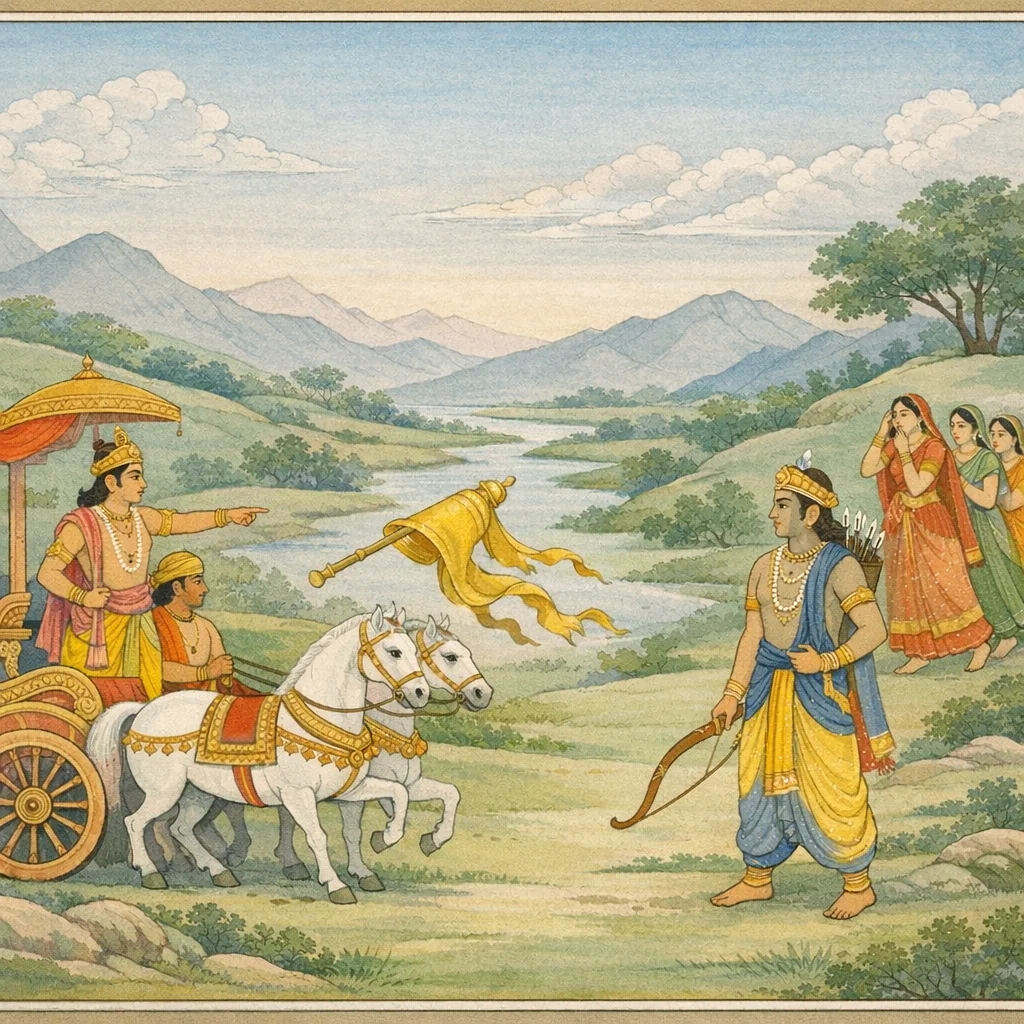
Chapter Arc: जनमेजय के समक्ष वैशम्पायन मणिपुर-राज्य का दृश्य रखते हैं: युधिष्ठिर के अश्वमेध का यज्ञीय अश्व लेकर अर्जुन सीमा पर आता है, और पुत्र बभ्रुवाहन ब्राह्मणों को आगे कर धन-दान सहित विनय से स्वागत करने निकल पड़ता है। → अर्जुन, क्षत्रधर्म का स्मरण कर, इस ‘सामनीति’ वाले स्वागत को अपमान मानता है। वह पुत्र को झिड़कता है—यज्ञीय अश्व की रक्षा करते हुए मैं युद्ध के लिए आया हूँ; अतिथि-सत्कार नहीं, रण-आह्वान चाहिए। पिता-पुत्र के बीच धर्म की परिभाषा पर टकराव तीखा होता जाता है और अंततः युद्ध अनिवार्य बन जाता है। → रण में अर्जुन दिव्य बाणों से बभ्रुवाहन के रथ का स्वर्ण-ध्वज काट गिराता है, पर प्रत्युत्तर में बभ्रुवाहन का घातक बाण अर्जुन के मर्म में प्रवेश कर उसे धराशायी कर देता है। विजयी पुत्र भी उसी क्षण मोह/मूर्च्छा में गिर पड़ता है। → अर्जुन के पतन का समाचार अंतःपुर तक पहुँचते ही शोक का विस्फोट होता है; चित्रांगदा (मणिपुर-नरेश की माता/अंतःपुर की प्रमुख) काँपती-रोती हुई निहत-से पड़े अर्जुन को देखती है। युद्ध-उत्साह का स्थान करुणा ले लेती है और सभा-भूमि शोक-भूमि बन जाती है। → अर्जुन अचेत/धराशायी है, बभ्रुवाहन भी मूर्च्छित—अब प्रश्न यह है कि यज्ञीय अश्व का मार्ग, पिता का प्राण, और पुत्र का धर्म—इन तीनों का समाधान किस उपाय से होगा?
Shlokas
Verse 1
वैशम्पायनजी कहते हैं--जनमेजय! मणिपुरनरेश बशभ्रुवाहनने जब सुना कि मेरे पिता आये हैं, तब वह ब्राह्मणोंको आगे करके बहुत-सा धन साथमें लेकर बड़ी विनयके साथ उनके दर्शनके लिये नगरसे बाहर निकला
Vaiśampāyana said: “O Janamejaya, when Babhruvāhana, the king of Maṇipura, heard that my father had arrived, he went out of the city to meet him. Placing Brahmins at the forefront and bringing abundant wealth with him, he approached with great humility to pay his respects.”
Verse 2
मणिपूरेश्वरं त्वेवमुपयातं धनंजय: । नाभ्यनन्दत् स मेधावी क्षत्रधर्ममनुस्मरन्,मणिपुर-नरेशको इस प्रकार आया देख परम बुद्धिमान् धनंजयने क्षत्रिय-धर्मका आश्रय लेकर उसका आदर नहीं किया
Vaiśaṃpāyana said: When the lord of Maṇipura thus came forward, Dhanaṃjaya (Arjuna)—wise and mindful of the kṣatriya code—did not welcome him with honor. Remembering the warrior’s duty, he restrained courtesy, treating the encounter in the spirit of rightful martial conduct rather than personal deference.
Verse 3
उवाच च स धर्मात्मा समन्यु: फाल्गुनस्तदा । प्रक्रियेयं न ते युक्ता बहिस्त्व॑ क्षत्रधर्मत:,उस समय धर्मात्मा अर्जुन कुछ कुपित होकर बोले--“बेटा! तेरा यह ढंग ठीक नहीं है। जान पड़ता है, तू क्षत्रिय-धर्मसे बहिष्कृत हो गया है
Then the righteous Phālguna (Arjuna) spoke in anger: “Son, this manner of yours is not proper. It seems you have fallen outside the kṣatriya code of conduct.”
Verse 4
संरक्ष्यमाणं तुरगं यौधिष्ठिरमुपागतम् । यज्ञियं विषयान्ते मां नायौत्सी: कि नु पुत्रक,“पुत्र! मैं महाराज युधिष्ठिरके यज्ञ-सम्बन्धी अश्वकी रक्षा करता हुआ तेरे राज्यके भीतर आया हूँ। फिर भी तू मुझसे युद्ध क्यों नहीं करता?
Vaiśaṃpāyana said: “While guarding the sacrificial horse of Yudhiṣṭhira, I have entered the border of your realm as part of the rite. Yet, my son, why do you not challenge me to battle?”
Verse 5
धिक् त्वामस्तु सुद्दुर्बुद्धिं क्षत्रधर्मबहिष्कृतम् । यो मां युद्धाय सम्प्राप्तं साम्नैव प्रत्यगृह्नथा:
Shame upon you—of utterly perverse judgment, cast out from the kṣatriya code—for when I came forward seeking battle, you tried to restrain me with conciliatory words alone.
Verse 6
“तुझ दुर्बुद्धिको धिक्कार है, तू निश्चय ही क्षत्रियधर्मसे भ्रष्ट हो गया है, क्योंकि युद्धके लिये आये हुए मेरा स्वागत-सत्कार तू सामनीतिसे कर रहा है ।। न त्वया पुरुषार्थो हि कश्चिदस्तीह जीवता । यस्त्व॑ स्त्रीवद् यथाप्राप्तं मां साम्ना प्रत्यगृह्नथा:,“तूने संसारमें जीवित रहकर भी कोई पुरुषार्थ नहीं किया। तभी तो एक स्त्रीकी भाँति तू यहाँ युद्धके लिये आये हुए मुझे शान्तिपूर्वक साथ लेनेके लिये चेष्टा कर रहा है
‘Shame on your perverse judgment! You have surely fallen away from the kṣatriya code, for you are trying to receive and win me over—though I have come for battle—by the policy of conciliation. Indeed, while living in this world you have achieved no true manly exertion; for like a woman you attempt to take me, who has come as I am (for combat), by peaceful persuasion.’
Verse 7
यद्य॒हं न््यस्तशस्त्रस्त्वामागच्छेयं सुदुर्मते । प्रक्रियेयं भवेद् युक्ता तावत् तव नराधम,“दुर्बद्धे! नराधम! यदि मैं हथियार रखकर खाली हाथ तेरे पास आता तो इस ढंगसे मिलना ठीक हो सकता था”
Vaiśampāyana said: “If I were to come to you having laid aside my weapons, O evil-minded one, then such a manner of reception might be considered fitting—so far as you are concerned, O basest of men.”
Verse 8
तमेवमुक्तं भर्त्रा तु विदित्वा पन्नगात्मजा | अमृष्यमाणा भिन्त्वोर्वीमुलूपी समुपागमत्,पतिदेव अर्जुन जब अपने पुत्र बभ्रुवाहनसे ऐसी बात कह रहे थे, उस समय नागकन्या उलूपी उस बातको सुनकर उनके अभिप्रायको जान गयी और उनके द्वारा किये गये पुत्रके तिरस्कारको सहन न कर सकनेके कारण वह धरती छेदकर वहाँ चली आयी
Vaiśampāyana said: When her husband spoke thus, the serpent-maiden Ulūpī understood his intention. Unable to endure the slight shown to their son, she split the earth and came there at once.
Verse 9
सा ददर्श ततः पुत्र विमृशन््तमधोमुखम् । संतर्ज्यमानमसकृत् पित्रा युद्धार्थिना प्रभो,प्रभो! उसने देखा कि पुत्र बभ्रुवाहन नीचे मुँह किये किसी सोच-विचारमें पड़ा हुआ है और युद्धार्थी पिता उसे बारंबार डाँट-फटकार रहे हैं। तब मनोहर अंगोंवाली नागकन्या उलूपी धर्म-निपुण बभ्रुवाहनके पास आकर यह धर्मसम्मत बात बोली--
Vaiśampāyana said: Then she saw the son, his face cast downward, absorbed in anxious reflection, while his father—eager for battle—repeatedly rebuked him. In this moment, the Nāga maiden Ulūpī, fair-limbed and well-versed in dharma, approached Babhrūvāhana and spoke words consistent with righteousness.
Verse 10
ततः सा चारुसर्वाज्री समुपेत्योरगात्मजा । उलूपी प्राह वचन धर्म्य धर्मविशारदम्,प्रभो! उसने देखा कि पुत्र बभ्रुवाहन नीचे मुँह किये किसी सोच-विचारमें पड़ा हुआ है और युद्धार्थी पिता उसे बारंबार डाँट-फटकार रहे हैं। तब मनोहर अंगोंवाली नागकन्या उलूपी धर्म-निपुण बभ्रुवाहनके पास आकर यह धर्मसम्मत बात बोली--
Then Ulūpī, the serpent-born maiden of lovely limbs, approached and spoke a righteous, dharma-consistent statement to the one well-versed in dharma. Seeing Babhruvāhana downcast and lost in thought while his battle-eager father rebuked him again and again, she intervened with counsel grounded in ethical duty.
Verse 11
उलूपीं मां निबोध त्वं मातरं पन्नगात्मजाम् | कुरुष्व वचन पुत्र धर्मस्ते भविता पर:,“बेटा! तुम्हें विदित होना चाहिये कि मैं तुम्हारी विमाता नागकन्या उलूपी हूँ। तुम मेरी आज्ञाका पालन करो। इससे तुम्हें महान् धर्मकी प्राप्ति होगी”
Vaiśampāyana said: “Know me, my son, as Ulūpī—your mother, the daughter of the Nāga race. Obey my instruction, child; by doing so, a higher dharma will come to you.”
Verse 12
युध्यस्वैनं कुरुश्रेष्ठ पितरं युद्धदुर्मदम् । एवमेष हि ते प्रीतो भविष्यति न संशय:,“तुम्हारे पिता कुरुकुलके श्रेष्ठ वीर और युद्धके मदसे उन्मत्त रहनेवाले हैं। अतः इनके साथ अवश्य युद्ध करो। ऐसा करनेसे ये तुमपर प्रसन्न होंगे। इसमें संशय नहीं है”
Vaiśampāyana said: “Fight with him, O best of the Kurus—your own father, who is intoxicated with the pride of battle. By doing so, he will indeed be pleased with you; of this there is no doubt.”
Verse 13
एवं दुर्मर्षितो राजा स मात्रा बश्रुवाहन: । मनश्षक्रे महातेजा युद्धाय भरतर्षभ,भरतश्रेष्ठ! माताके द्वारा इस प्रकार अमर्ष दिलाये जानेपर महातेजस्वी राजा बभ्रुवाहनने मन-ही-मन युद्ध करनेका निश्चय किया
Vaiśampāyana said: Thus, stung beyond endurance by his mother’s provocation, the mighty king Babhruvāhana resolved within his heart to engage in battle, O bull among the Bharatas.
Verse 14
संनहा काउ्चनं वर्म शिरस्त्राणं च भानुमत् । तूणीरशतसम्बाधमारुरोह रथोत्तमम्,सुवर्णमय कवच पहनकर तेजस्वी शिरस्त्राण (टोप) धारण करके वह सैकड़ों तरकसोंसे भरे हुए उत्तम रथपर आरूढ़ हुआ
Vaiśampāyana said: Having strapped on a golden cuirass and donned a radiant helmet, he mounted an excellent chariot, crowded with hundreds of quivers—signaling full readiness for the coming encounter and the disciplined resolve expected of a warrior acting within his duty.
Verse 15
सर्वोपकरणोपेतं युक्तमश्वचिर्मनोजवै: । सचक्रोपस्करं श्रीमान् हेमभाण्डपरिष्कृतम्,उस रथमें सब प्रकारकी युद्ध-सामग्री सजाकर रखी गयी थी। मनके समान वेगशाली घोड़े जुते हुए थे। चक्र और अन्य आवश्यक सामान भी प्रस्तुत थे। सोनेके भाण्ड उसकी शोभा बढ़ाते थे। सुवर्णसे ही उस रथका निर्माण हुआ था। उसपर सिंहके चिह्नवाली ऊँची ध्वजा फहरा रही थी। उस परम पूजित उत्तम रथपर सवार हो श्रीमान् राजा बभ्रुवाहन अर्जुनका सामना करनेके लिये आगे बढ़ा
Vaiśampāyana said: The splendid chariot had been fully outfitted with every implement of war. It was yoked to horses swift as the mind, and it stood ready with its wheels and all necessary equipment. Adorned with golden fittings and refined with vessels of gold, it shone with royal magnificence—prepared for the righteous contest that was about to unfold, where a king would advance to meet Arjuna in accordance with duty and honor.
Verse 16
परमार्चितमुच्छित्य ध्वजं सिंहं हिरण्मयम् | प्रययौ पार्थमुद्दिश्य स राजा बभ्रुवाहन:,उस रथमें सब प्रकारकी युद्ध-सामग्री सजाकर रखी गयी थी। मनके समान वेगशाली घोड़े जुते हुए थे। चक्र और अन्य आवश्यक सामान भी प्रस्तुत थे। सोनेके भाण्ड उसकी शोभा बढ़ाते थे। सुवर्णसे ही उस रथका निर्माण हुआ था। उसपर सिंहके चिह्नवाली ऊँची ध्वजा फहरा रही थी। उस परम पूजित उत्तम रथपर सवार हो श्रीमान् राजा बभ्रुवाहन अर्जुनका सामना करनेके लिये आगे बढ़ा
Vaiśampāyana said: Having raised aloft a supremely honored golden banner bearing the emblem of a lion, King Babhruvāhana set forth, intent on confronting Pārtha (Arjuna). The verse underscores the solemn, royal preparation for battle—outward splendor and martial readiness directed toward a fateful encounter that tests duty, lineage, and restraint.
Verse 17
ततो<भ्येत्य हयं वीरो यज्ञियं पार्थरक्षितम् ग्राहयामास पुरुषैर्ठयशिक्षाविशारदै:,पार्थद्वारा सुरक्षित उस यज्ञसम्बन्धी अश्वके पास जाकर उस वीरने अश्वशिक्षाविशारद पुरुषोंद्वारा उसे पकड़वा लिया
Then the hero approached the sacrificial horse, which was being guarded by Arjuna, and had it seized by men well-versed in the training and handling of horses—an act that signals a direct challenge to the authority and sanctity of the Aśvamedha rite.
Verse 18
गृहीतं वाजिन दृष्टवा प्रीतात्मा स धनंजय: । पुत्र रथस्थं भूमिष्ठ: संन्यवारयदाहवे,घोड़ेको पकड़ा गया देख अर्जुन मन-ही-मन बहुत प्रसन्न हुए। यद्यपि वे भूमिपर खड़े थे तो भी रथपर बैठे हुए अपने पुत्रको युद्धके मैदानमें आगे बढ़नेसे रोकने लगे
Vaiśaṃpāyana said: Seeing that the sacrificial horse had been seized, Dhanañjaya (Arjuna) felt inwardly pleased. Though he himself stood on the ground, he restrained his son—who was mounted on the chariot—from pressing forward in the battle, checking him in the midst of the fight.
Verse 19
स तत्र राजा तं वीर॑ शरसंघैरनेकश: । अर्दयामास निशितैराशीविषविषोपमै:,राजा बभ्रुवाहनने वहाँ अपने वीर पिताको विषैले साँपोंके समान जहरीले और तेज किये हुए सैकड़ों बाण-समूहोंद्वारा बींधकर अनेक बार पीड़ित किया
Vaiśampāyana said: There the king repeatedly assailed that hero with volleys of arrows—keen-edged and venomous like poisonous serpents—piercing him again and again and causing him grievous pain. The scene underscores how, in the blindness of battle and rivalry, even the bonds of kinship can be overridden by the harsh momentum of war.
Verse 20
तयो: समभवद् युद्ध पितु: पुत्रस्य चातुलम् । देवासुररणप्रख्यमुभयो: प्रीयमाणयो:,वे पिता और पुत्र दोनों प्रसन्न होकर लड़ रहे थे। उन दोनोंका वह युद्ध देवासुर-संग्रामके समान भयंकर जान पड़ता था। उसकी इस जगत्में कहीं भी तुलना नहीं थी
Vaiśampāyana said: Then there arose a wondrous battle between father and son. As both fought with exhilaration, their combat seemed as dreadful as the legendary wars of gods and demons—an encounter without equal anywhere in the world.
Verse 21
किरीटिनं प्रविव्याध शरेणानतपर्वणा । जन्रुदेशे नरव्याप्र॑ प्रहसन् बभ्रुवाहन:,बभ्रुवाहनने हँसते-हँसते पुरुषसिंह अर्जुनके गलेकी हँसलीमें झुकी हुई गाँठवाले एक बाणद्वारा गहरी चोट पहुँचायी
Vaiśampāyana said: Laughing aloud, Babhruvāhana struck the diadem-wearing Arjuna—tiger among men—with an arrow whose joints were bent, piercing him at the region of the collarbone/neck with a deep wound.
Verse 22
सो<भ्यगात् सह पुड्खेन वल्मीकमिव पन्नगः । विनिर्भिद्य च कौन्तेयं प्रविवेश महीतलम्,जैसे साँप बाँबीमें घुस जाता है, उसी प्रकार वह बाण अर्जुनके शरीरमें पंखसहित घुस गया और उसे छेदकर पृथ्वीमें समा गया
Vaiśampāyana said: “That arrow, with its feathers still attached, sped on like a serpent slipping into its anthill. After piercing Kuntī’s son (Arjuna), it plunged through and disappeared into the earth.”
Verse 23
स गाढवेदनो धीमानालम्ब्य धनुरुत्तमम् | दिव्यं तेज: समाविश्य प्रमीत इव सो5भवत्,इससे अर्जुनको बड़ी वेदना हुई। बुद्धिमान् अर्जुन अपने उत्तम धनुषका सहारा लेकर दिव्य तेजमें स्थित हो मुर्देके समान हो गये
Vaiśampāyana said: Struck by intense pain, the wise Arjuna leaned upon his excellent bow. Entering into a divine radiance, he became as though dead—overwhelmed and motionless.
Verse 24
स संज्ञामुपलभ्याथ प्रशस्य पुरुषर्षभ: । पुत्र शक्रात्मजो वाक्यमिदमाह महाद्युति:,थोड़ी देर बाद होशमें आनेपर महातेजस्वी पुरुषप्रवर इन्द्रकुमार अर्जुनने अपने पुत्रकी प्रशंसा करते हुए इस प्रकार कहा--
Then, regaining consciousness, that bull among men—the radiant Arjuna, son of Indra—praised his son and spoke these words.
Verse 25
साधु साधु महाबाहो वत्स चित्राड़्रदात्मज । सदृशं कर्म ते दृष्टवा प्रीतिमानस्मि पुत्रक,“महाबाहु चित्रांगदाकुमार! तुम्हें साधुवाद। वत्स! तुम धन्य हो। पुत्र! तुम्हारे योग्य पराक्रम देखकर मैं तुमपर बहुत प्रसन्न हूँ
Vaiśampāyana said: “Well done, well done, mighty-armed one—dear child, son of Citrāṅgada. Seeing your deed, so fitting to your lineage and worth, I am filled with joy, my son.”
Verse 26
विमुज्चाम्येष ते बाणान् पुत्र युद्धे स्थिरो भव | इत्येवमुक्त्वा नाराचैरभ्यवर्षदमित्रहा,“अच्छा बेटा! अब मैं तुमपर बाण छोड़ता हूँ। तुम सावधान एवं स्थिर हो जाओ।” ऐसा कहकर शत्रुसूदन अर्जुनने बभ्रुवाहनपर नाराचोंकी वर्षा आरम्भ कर दी
Vaiśampāyana said: “My son, I now release these arrows at you; stand firm and steady in battle.” Having spoken thus, Arjuna—the slayer of foes—began to shower Babhruvāhana with sharp nārāca arrows.
Verse 27
तान् स गाण्डीवनिर्मुक्तान् वज़्ाशनिसमप्रभान् । नाराचानच्छिनद् राजा भल्लै:सर्वास्त्रिधा द्विधा,परंतु राजा बभ्रुवाहनने गाण्डीव धनुषसे छूटे हुए वज और बिजलीके समान तेजस्वी उन समस्त नाराचोंको अपने भल्लोंद्वारा मारकर प्रत्येकके दो-दो, तीन-तीन टुकड़े कर दिये
Vaiśampāyana said: The king cut down those nārāca arrows that had been released from the Gāṇḍīva—arrows blazing like the thunderbolt and lightning—splitting them with his bhalla shafts, each into two or three pieces.
Verse 28
तस्य पार्थ: शरैंदिव्यैर्ध्वजं हेमपरिष्कृतम् । सुवर्णतालप्रतिमं क्षुरेणापाहरद् रथात्,राजन्! तब पाण्डुपुत्र अर्जुनने हँसते हुए-से अपने क्षुर नामक दिव्य बाणोंद्वारा बभ्रुवाहनके रथसे सुनहरे तालवृक्षके समान ऊँची सुवर्णभूषित ध्वजा काट गिरायी। शत्रुदमन नरेश! साथ ही उन्होंने उसके महान् वेगशाली विशालकाय घोड़ोंके भी प्राण ले लिये
Vaiśaṃpāyana said: Then Pārtha (Arjuna), using his divine arrows, severed from the chariot the banner adorned with gold—lofty like a golden palmyra tree—cutting it down with a razor-edged (kṣura) missile, O king. In the same swift assault, he also struck down the opponent’s powerful, high-spirited horses.
Verse 29
हयांश्वास्य महाकायान् महावेगानरिंदम । चकार राजन् निर्जीवान् प्रहसन्निव पाण्डव:,राजन्! तब पाण्डुपुत्र अर्जुनने हँसते हुए-से अपने क्षुर नामक दिव्य बाणोंद्वारा बभ्रुवाहनके रथसे सुनहरे तालवृक्षके समान ऊँची सुवर्णभूषित ध्वजा काट गिरायी। शत्रुदमन नरेश! साथ ही उन्होंने उसके महान् वेगशाली विशालकाय घोड़ोंके भी प्राण ले लिये
Vaiśampāyana said: O king, O subduer of foes, the Pāṇḍava (Arjuna), as though smiling, struck down the great, powerful horses of his opponent—huge of body and swift in speed—leaving them lifeless.
Verse 30
स रथादवतीर्याथ राजा परमकोपन: । पदाति: पितरं क्रुद्धो योधयामास पाण्डवम्,तब रथसे उतरकर परम क्रोधी राजा बभ्रुवाहन कुपित हो पैदल ही अपने पिता पाण्डुपुत्र अर्जुनके साथ युद्ध करने लगा
Vaiśampāyana said: Then the king, seized by fierce wrath, descended from his chariot. Fighting on foot, he angrily engaged his own father—the Pāṇḍava Arjuna—in battle. The scene shows how unbridled rage can eclipse filial reverence and dharma, turning even a father–son bond into a battlefield.
Verse 31
सम्प्रीयमाण: पार्थानामृषभ: पुत्रविक्रमात् । नात्यर्थ पीडयामास पुत्र वज्रधरात्मज:,दुन्तीपुत्रोंमें श्रेष्ठ इन्द्रकुमार अर्जुन अपने बेटेके पराक्रमसे बहुत प्रसन्न हुए थे। इसलिये वे उसे अधिक पीड़ा नहीं देते थे
Vaiśampāyana said: Arjuna, the bull among the Pārthas and son of the thunderbolt-wielder Indra, was greatly pleased by his son’s valor; therefore he did not press or punish the boy excessively. The passage highlights a father’s disciplined restraint—approval of courage tempered by measured correction rather than harshness.
Verse 32
स मन्यमानो विमुखं पितरं बश्रुवाहन: । शरैराशीविषाकारै: पुनरेवार्दयद् बली,बलवान् बश्रुवाहन पिताको युद्धसे विरत मानकर विषधर सर्पोके समान विषैले बाणोंद्वारा उन्हें पुनः पीड़ा देने लगा
Seeing his father turn away from the fight, the mighty Babhruvāhana, thinking him unwilling to engage, again assailed him with arrows as venomous as serpents. The scene underscores how, in the heat of battle, even filial bonds can be eclipsed by the warrior’s code and the urgency to uphold one’s perceived duty.
Verse 33
ततः स बाल्यात् पितरं विव्याध हृदि पत्रिणा । निशितेन सुपुड्खेन बलवद् बश्रुवाहन:,उसने बालोचित अविवेकके कारण परिणामपर विचार किये बिना ही सुन्दर पाँखवाले एक तीखे बाणद्वारा पिताकी छातीमें एक गहरा आघात किया
Then, out of childish lack of judgment, he struck his own father in the chest with a sharp, well-feathered arrow, driving it in with force. The episode underscores how unreflective action—especially when guided by immature impulse rather than discernment—can lead to grave harm and moral consequence.
Verse 34
विवेश पाण्डवं राजन् मर्म भित्त्वातिदुःखकृत् । स तेनातिभशं विद्धः पुत्रेण कुरुनन्दन:
Vaiśaṃpāyana said: O King, the missile entered the Pāṇḍava, piercing a vital spot and causing extreme agony. Struck by that blow, the Kuru prince was grievously wounded—by his own son—bringing into the war’s aftermath the bitter weight of harming one’s own kin and the moral anguish that follows.
Verse 35
महीं जगाम मोहार्तस्ततो राजन् धनंजय: । राजन! वह अत्यन्त दुःखदायी बाण पाण्बुपुत्र अर्जुनके मर्म-स्थलको विदीर्ण करके भीतर घुस गया। महाराज! पुत्रके चलाये हुए उस बाणसे अत्यन्त घायल होकर कुरुनन्दन अर्जुन मूर्च्छित हो पृथ्वीपर गिर पड़े ।। तस्मिन् निपतिते वीरे कौरवाणां धुरंधरे
Vaiśampāyana said: Then Dhanaṃjaya (Arjuna), overcome by bewilderment, sank down to the earth, O King. O Majesty! That exceedingly painful arrow tore open the vital spot (marman) of Arjuna, the son of Pāṇḍu, and drove deep within. Great king! Struck grievously by the arrow loosed by his own son, Arjuna, the Kuru’s pride, fell senseless upon the ground. When that hero—foremost among the Kauravas—thus collapsed…
Verse 36
व्यायम्य संयुगे राजा दृष्टवा च पितरं हतम्,राजा बश्रुवाहन युद्धस्थलमें बड़ा परिश्रम करके लड़ा था। वह भी अर्जुनके बाणसमूहोंद्वारा पहलेसे ही बहुत घायल हो चुका था। अत: पिताको मारा गया देख वह भी युद्धके मुहानेपर अचेत होकर गिर पड़ा और पृथ्वीका आलिंगन करने लगा
Vaiśampāyana said: Having exerted himself in the battle, and seeing his father slain, King Babhruvāhana—who had fought with great effort on the field and was already grievously wounded by Arjuna’s volleys of arrows—collapsed senseless at the very edge of the fight. Overcome by shock and exhaustion, he fell unconscious and clung to the earth.
Verse 37
पूर्वमेव स बाणौघचैर्गाढविद्धो<र्जुनेन ह पपात सो5पि धरणीमालिड्ग्य रणमूर्थनि,राजा बश्रुवाहन युद्धस्थलमें बड़ा परिश्रम करके लड़ा था। वह भी अर्जुनके बाणसमूहोंद्वारा पहलेसे ही बहुत घायल हो चुका था। अत: पिताको मारा गया देख वह भी युद्धके मुहानेपर अचेत होकर गिर पड़ा और पृथ्वीका आलिंगन करने लगा
Vaiśaṃpāyana said: Already earlier he had been deeply pierced by Arjuna’s dense volleys of arrows. Therefore he too collapsed on the very forefront of the battle, falling senseless and embracing the earth—overcome by wounds and by the shock of seeing his father slain.
Verse 38
भर्तरें निहतं दृष्टवा पुत्रं च पतितं भुवि | चित्राड्भदा परित्रस्ता प्रविवेश रणाजिरे,पतिदेव मारे गये और पुत्र भी संज्ञाशून्य होकर पृथ्वीपर पड़ा है। यह देख चित्रांगदाने संतप्त हृदयसे समरांगणमें प्रवेश किया
Vaiśampāyana said: Seeing her husband slain and her son fallen senseless upon the ground, Citrāṅgadā—shaken with fear and grief—entered the battlefield.
Verse 39
शोकसंतप्तहृदया रुदती वेपती भृशम् | मणिपूरपतेर्माता ददर्श निहतं पतिम्,मणिपुर-नरेशकी माताका हृदय शोकसे संतप्त हो उठा था! रोती और काँपती हुई चित्रांगदाने देखा कि पतिदेव मारे गये
Vaiśampāyana said: Her heart scorched by grief, weeping and trembling violently, the mother of the lord of Maṇipura saw her husband lying slain.
Verse 79
इति श्रीमहाभारते आश्वमेधिके पर्वणि अनुगीतापर्वणि अर्जुनबभ्रुवाहनयुद्धे एकोनाशीतितमो<ध्याय:
Thus ends the seventy-ninth chapter in the Śrī Mahābhārata, within the Aśvamedhika Parvan—specifically in the Anugītā section—concerning the battle between Arjuna and Babhruvāhana. This colophon marks the close of a narrative unit that sets ethical reflection (Anugītā) beside the consequences of duty and kinship in war.
Verse 356
सो<पि मोहं जगामाथ ततत्रित्राड्रदासुत: । कौरव-धुरंधर वीर अर्जुनके धराशायी होनेपर चित्रांगदाकुमार बश्रुवाहन भी मूर्च्छित हो गया
Vaiśampāyana said: Then he too fell into bewilderment. There, Babhrūvāhana, the son of Citrāṅgadā, seeing the heroic Arjuna—the foremost bearer of the Kaurava burden—lying prostrate on the ground, also collapsed in a faint.
Frequently Asked Questions
How to assign responsibility when relational counsel and familial action lead to lethal outcomes: the chapter stages a conflict between blame (culpability) and the dharmic demand for immediate restorative action to protect life and public duty.
Grief is acknowledged but must be ethically directed: the narrative privileges life-preserving remediation, forgiveness, and continuity of duty over prolonged recrimination, especially when communal stability depends on a key agent’s survival.
No explicit phalaśruti appears in these verses; the chapter’s meta-function is contextual—demonstrating how post-war dharma operates through restoration, ritual obligation, and regulated emotion rather than through doctrinal reward statements.