Adhyaya 30
अलर्कोपाख्यानम् — Indriya-Nigraha and Yogic Victory (Mahābhārata 14.30)
Upa-parva: Āśvamedhika-parva — Instructional Itihāsa on Indriya-Nigraha (Alarka-Upākhyāna context)
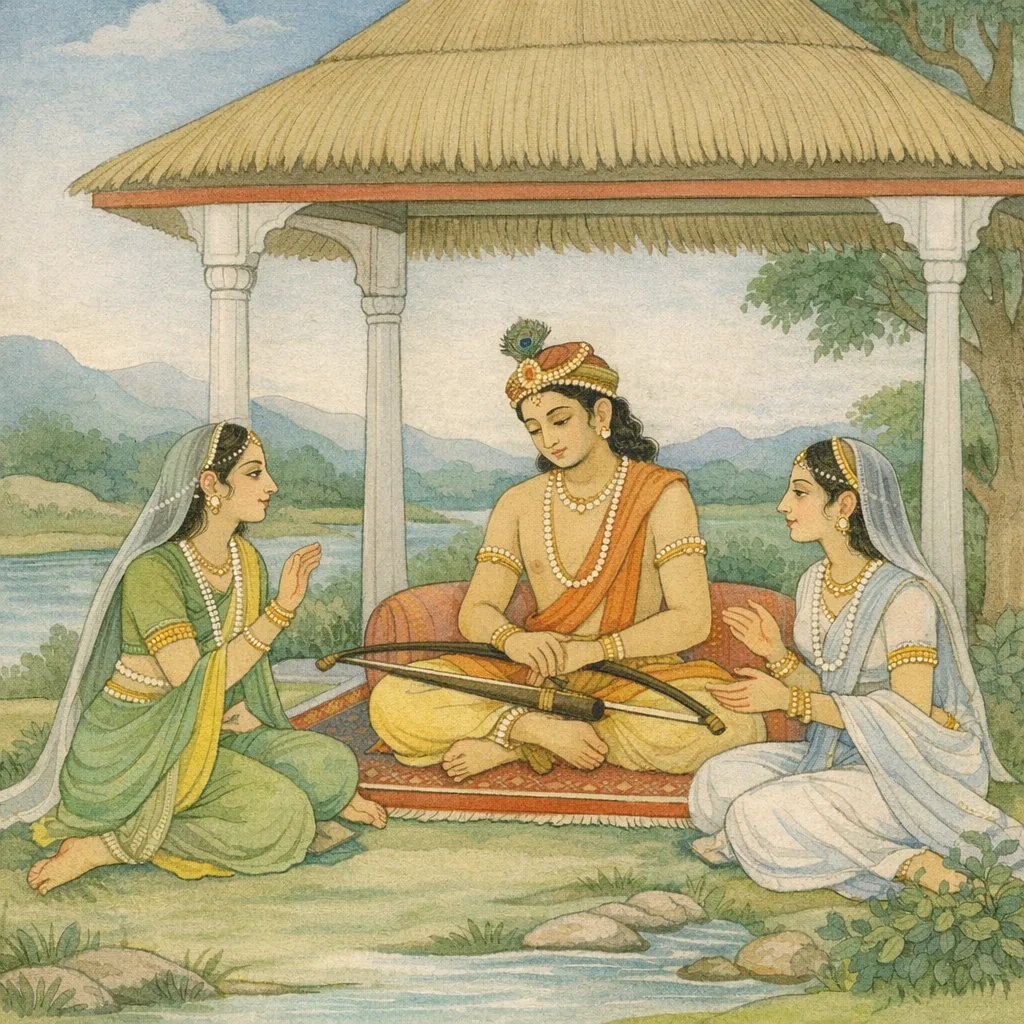
The Pitṛs introduce an ancient exemplum for a brāhmaṇa addressee: King Alarka, a rājarṣi renowned for truthfulness and dharma, conquers the earth yet turns toward subtle inquiry while seated at a tree’s root. Seeking mastery, he declares that true victory lies in conquering the mind and attempts to ‘strike’ the mind with arrows; the mind replies that such attacks rebound upon the attacker. Alarka then targets successive faculties—smell, taste (tongue), touch (skin), hearing (ear), sight (eye), and finally intellect (buddhi)—each responding that direct aggression will fail and harm him. After severe tapas and prolonged reflection, he does not find an effective ‘weapon’ against these seven. He then adopts yoga: making the mind one-pointed and motionless, he subdues the senses ‘with a single arrow’—a metaphor for unified yogic discipline—enters the self, and attains supreme accomplishment. Alarka recites a reflective gāthā regretting prior absorption in kingship and affirming yoga as the highest happiness. The teaching is applied explicitly: Rāma is instructed not to engage in destructive retaliation but to practice fierce austerity, by which he attains a difficult siddhi.
Chapter Arc: पितामह (भीष्म) परशुराम को ध्यान-योग का एक विलक्षण दृष्टान्त सुनाते हैं—राजर्षि अलर्क की कथा, जिसने समस्त पृथ्वी जीतकर भी मन को जीतने का कठिन युद्ध चुना। → अलर्क विषय-भोगों की जड़ पर प्रहार करना चाहता है। वह देखता है कि इन्द्रियाँ बार-बार रूप, शब्द, गन्ध आदि में लिप्त होकर बुद्धि को खींच ले जाती हैं; अतः वह प्रतीकात्मक रूप से इन्द्रियों को ‘बाणों’ से नष्ट करने का संकल्प करता है। परन्तु बुद्धि, मन, श्रोत्र और चक्षु—एक-एक कर—उत्तर देते हैं कि ये बाण उन्हें नहीं बेध सकते; उलटे साधक के ही ‘मर्म’ (अन्तःकरण के सूक्ष्म केन्द्र) को घायल कर देंगे। → अलर्क का निर्णायक बोध: बाह्य इन्द्रियों को हिंसा से दबाना समाधान नहीं; असली विजय ‘सूक्ष्म’ में मन का समाधि-स्थापन है। इन्द्रियाँ और अन्तःकरण-तत्त्व उसे भीतर की दिशा दिखाते हैं—वैराग्य, विवेक और ध्यान द्वारा ही इन्द्रिय-प्रवाह का निरोध सम्भव है। → दीर्घ चिन्तन और एकाग्रता के बाद अलर्क योगमार्ग में प्रवृत्त होता है—राज्य-विजय से आगे बढ़कर आत्म-विजय की साधना। भीष्म इस उदाहरण से परशुराम को समझाते हैं कि तपस्या और सिद्धि का मार्ग बाह्य शौर्य नहीं, अन्तर्मुखी संयम है; और परशुराम स्वयं तप से सिद्धि प्राप्त करते हैं।
Shlokas
Verse 1
ऑपन--माजल बछ। ्-््:डिअ त्रिशोडध्याय: अलर्कके ध्यानयोगका उदाहरण देकर पितामहोंका परशुरामजीको समझाना और परशुरामजीका तपस्याके द्वारा सिद्धि प्राप्त करना पितर ऊचु. अत्राप्युदाहरन्तीममितिहासं पुरातनम् । श्रुत्वा च तत् तथा कार्य भवता द्विजसत्तम,पितरोंने कहा--ब्राह्मणश्रेष्ठ! इसी विषयमें एक प्राचीन इतिहासका उदाहरण दिया जाता है, उसे सुनकर तुम्हें वैसा ही आचरण करना चाहिये
The Pitṛs said: “In this very matter, an ancient historical example is also cited. Having heard it, O best of the twice-born, you should act accordingly.”
Verse 2
अलर्कों नाम राजर्षिरभवत् सुमहातपा: । धर्मज्ञ: सत्यवादी च महात्मा सुदृढव्रत:,पहलेकी बात है, अलर्क नामसे प्रसिद्ध एक राजर्षि थे, जो बड़े ही तपस्वी, धर्मज्ञ, सत्यवादी, महात्मा और दृढ़प्रतिज्ञ थे
The Ocean said: “In former times there lived a royal sage named Alarka—an ascetic of great austerity, a knower of dharma, a speaker of truth, a noble-souled man, and one steadfast in his vows.”
Verse 3
ससागरान्तां धनुषा विनिर्जित्य महीमिमाम् | कृत्वा सुदुष्करं कर्म मन: सूक्ष्मे समादधे,उन्होंने अपने धनुषकी सहायतासे समुद्रपर्यनत इस पृथ्वीको जीतकर अत्यन्त दुष्कर पराक्रम कर दिखाया था। इसके पश्चात् उनका मन सूक्ष्मतत््वकी खोजमें लगा
Having conquered this earth up to the encircling ocean by the power of his bow, he accomplished a deed exceedingly hard to perform. Thereafter, his mind was set upon the subtle principle—turning from outward conquest to inward inquiry and restraint.
Verse 4
स्थितस्य वृक्षमूलेषु तस्य चिन्ता बभूव ह । उत्सृज्य सुमहत्कर्म सूक्ष्म प्रति महामते,महामते! वे बड़े-बड़े कर्मोंका आरम्भ त्यागकर एक वृक्षके नीचे जा बैठे और सूक्ष्मतत््वकी खोजके लिये इस प्रकार चिन्ता करने लगे
As he sat down at the roots of trees, a deep concern arose in him. Setting aside the undertaking of great outward works, the wise one turned his mind toward the subtle truth, reflecting inwardly in search of what is most essential.
Verse 5
अलर्क उवाच मनसो मे बल॑ जात॑ मनो जित्वा ध्रुवो जय: । अन्यत्र बाणान् धास्यामि शत्रुभि: परिवारित:,अलर्क कहने लगे--मुझे मनसे ही बल प्राप्त हुआ है, अतः वही सबसे प्रबल है। मनको जीत लेनेपर ही मुझे स्थायी विजय प्राप्त हो सकती है। मैं इन्द्रियरूपी शत्रुओंसे घिरा हुआ हूँ, इसलिये बाहरके शत्रुओंपर हमला न करके इन भीतरी शत्रुओंको ही अपने बाणोंका निशाना बनाऊँगा
Alarka said: “From the mind I have gained my strength; therefore the mind is the most powerful. Only by conquering the mind can I attain a lasting victory. I am surrounded by enemies in the form of the senses; so, instead of directing my arrows at outer foes, I shall aim them at these inner enemies.”
Verse 6
यदिदं चापलात् कर्म सर्वान् मर्त्याश्विकीर्षति । मन: प्रति सुतीक्ष्णाग्रानहं मोक्ष्यामि सायकान्,यह मन चंचलताके कारण सभी मनुष्योंसे तरह-तरहके कर्म कराता है, अतः अब मैं मनपर ही तीखे बाणोंका प्रहार करूँगा
Alarka said: “Since this mind, through its fickleness, drives all mortals into action of every kind, I shall now aim my arrows at the mind itself—sharp-pointed missiles directed against the very source of restless doing.”
Verse 7
मन उवाच नेमे बाणास्तरिष्यन्ति मामलर्क कथंचन । तवैव मर्म भेत्स्यन्ति भिन्नमर्मा मरिष्यसि
Man said: “Alarka, these arrows will not pass beyond me in any way. Rather, they will strike your own vital points; once your vital spots are pierced, you will die.”
Verse 8
तच्छुत्वा स विचिन्त्याथ ततो वचनमत्रवीत्,यह सुनकर अलर्कने थोड़ी देरतक विचार किया, इसके बाद वे (नासिकाको लक्ष्य करके) बोले
Hearing those words, he reflected for a while; then, having considered the matter, he spoke in reply—framing his response with deliberate restraint and moral attention to what ought to be done.
Verse 9
अलर्क उवाच आप्राय सुबहून् गन्धांस्तानेव प्रतिगृध्यति । तस्माद् घ्राणं प्रति शरान् प्रतिमोक्ष्याम्पहं शितान्,अलर्कने कहा--मेरी यह नासिका अनेक प्रकारकी सुगन्धियोंका अनुभव करके भी फिर उन्हींकी इच्छा करती है, इसलिये इन तीखे बाणोंको मैं इस नासिकापर ही छोड़ूँगा
Alarka said: “Though my nose has already experienced many fragrances, it still hankers after those very scents again. Therefore I shall discharge these sharp arrows straight at this nose.”
Verse 10
प्राण उवाच नेमे बाणास्तरिष्यन्ति मामलर्क कथंचन । तवैव मर्म भेत्स्यन्ति भिन्नमर्मा मरिष्यसि
Prāṇa said: “Alarka, these arrows will not overcome me in any way. Rather, they will strike your own vital points; once your vital spots are pierced, you will die.”
Verse 11
तच्छुत्वा स विचिन्त्याथ ततो वचनमब्रवीत्,नासिकाका यह कथन सुनकर अलर्क कुछ देर विचार करनेके पश्चात् (जिह्वाको लक्ष्य करके) कहने लगे
Hearing those words, Alarka reflected for a moment. Then he spoke—directing his reply toward the tongue—signaling a deliberate, ethically mindful response rather than an impulsive reaction.
Verse 12
अलर्क उवाच इयं स्वादून् रसान् भुक्त्वा तानेव प्रतिगृध्यति । तस्माज्जिद्धां प्रति शरान् प्रतिमोक्ष्याम्पहं शितान्,अलर्कने कहा--यह रसना स्वादिष्ट रसोंका उपभोग करके फिर उन्हें ही पाना चाहती है। इसलिये अब इसीके ऊपर अपने तीखे सायकोंका प्रहार करूँगा
Alarka said: “This tongue, having enjoyed sweet flavors, keeps craving those very tastes again. Therefore I shall now release my sharp arrows against the tongue itself.” In ethical intent, he identifies the organ of taste as a root of repeated desire and resolves to strike at the source of craving rather than chase its objects.
Verse 13
जिल्बोवाच नेमे बाणास्तरिष्यन्ति मामलर्क कथंचन । तवैव मर्म भेत्स्यन्ति भिन्नमर्मा मरिष्यसि
Jilba said: “Alarka, these arrows will not miss me in any way. Rather, they will strike your own vital points; with your vital organs pierced, you will die.”
Verse 14
तच्छुत्वा स विचिन्त्याथ ततो वचनमत्रवीत्,यह सुनकर अलर्क कुछ देरतक सोचते-विचारते रहे, फिर (त्वचापर कुपित होकर) बोले
Hearing those words, Alarka reflected for a while; then, after deliberation, he spoke—his reply shaped by the moral weight of what he had just heard and the rising anger that followed.
Verse 15
अलर्क उवाच स्पृष्टवा त्वग्विविधान् स्पर्शास्तानेव प्रतिगृध्यति । तस्मात् त्वचं पाटयिष्ये विविध: कड़कपत्रिभि:,अलर्कने कहा--यह त्वचा नाना प्रकारके स्पर्शोका अनुभव करके फिर उन्हींकी अभिलाषा किया करती है, अतः नाना प्रकारके बाणोंसे मारकर इस त्वचाको ही विदीर्ण कर डालूँगा
Alarka said: “Having experienced many kinds of tactile pleasures, this skin only longs for those very sensations again. Therefore I shall tear this skin apart—rending it with many kinds of arrows—so that craving, rooted in touch, may be cut down.”
Verse 16
त्वगुवाच नेमे बाणास्तरिष्यन्ति मामलर्क कथंचन । तवैव मर्म भेत्स्यन्ति भिन्नमर्मा मरिष्यसि
The skin said: “These arrows will never pierce me, Alarka, in any way. Yet they will strike your very vital points; once your vital spots are shattered, you will die.”
Verse 17
अन्यान् बाणान् समीक्षस्व यैस्त्वं मां सूदयिष्यसि । त्वचा बोली--अलर्क! ये बाण किसी प्रकार मुझे अपना निशाना नहीं बना सकते। ये तो तुम्हारा ही मर्म विदीर्ण करेंगे और मर्म विदीर्ण होनेपर तुम्हीं मौतके मुखमें पड़ोगे। मुझे मारनेके लिये तो दूसरी तरहके बाणोंकी व्यवस्था सोचो, जिनसे तुम मुझे मार सकोगे ।। १६ श् “3 तच्छुत्वा स विचिन्त्याथ ततो वचनमब्रवीत्,त्वचाकी बात सुनकर अलर्कने थोड़ी देरतक विचार किया, फिर (श्रोत्रको सुनाते हुए) कहा--
Alarka said: “Consider other arrows—those by which you would be able to strike me down.”
Verse 18
अलर्क उवाच श्रुत्वा तु विविधान् शब्दांस्तानेव प्रतिगृध्यति । तस्माच्छोत्रं प्रति शरान् प्रतिमुड्चाम्पहं शितान्,अलर्क बोले--यह श्रोत्र बारंबार नाना प्रकारके शब्दोंको सुनकर उन्हींकी अभिलाषा करता है, इसलिये मैं इन तीखे बाणोंको श्रोत्र-इन्द्रियके ऊपर चलाऊँगा
Alarka said: “The ear, having heard sounds of many kinds, keeps craving for those very sounds again. Therefore I shall discharge these sharp arrows against the faculty of hearing.”
Verse 19
श्रोत्रभुवाच नेमे बाणास्तरिष्यन्ति मामलर्क कथंचन । तवैव मर्म भेत्स्यन्ति ततो हास्यसि जीवितम्
Śrotrabhū declares: “Alarka, these arrows will not pass beyond me in any way. They will strike only your vital points; then you will be deprived of life.”
Verse 20
तच्छुत्वा स विचिन्त्याथ ततो वचनमब्रवीत्,यह सुनकर अलर्कने कुछ सोच-विचारकर ([नेत्रको सुनाते हुए) कहा
Hearing those words, Alarka reflected for a moment; then, having weighed the matter in his mind, he spoke.
Verse 21
अलर्क उवाच दृष्टवा रूपाणि बहुशस्तानेव प्रतिगृध्यति । तस्माच्चक्षुर्हनिष्यामि निशितै: सायकैरहम्,अलर्क बोले--यह आँख भी अनेकों बार विभिन्न रूपोंका दर्शन करके पुन: उन्हींको देखना चाहती है। अतः मैं इसे अपने तीखे तीरोंसे मार डालूँगा
Alarka said: “Having seen forms again and again, this very eye keeps craving to look at those same objects once more. Therefore I shall destroy this eye with my sharp arrows.”
Verse 22
चक्षुर॒वाच नेमे बाणास्तरिष्यन्ति मामलर्क कथंचन । तवैव मर्म भेत्स्यन्ति भिन्नमर्मा मरिष्यसि
The Eye said: “Alarka, these arrows will not harm me in any way. Rather, they will strike your own vital spots; once your vulnerable points are pierced, you will die.”
Verse 23
तच्छुत्वा स विचिन्त्याथ ततो वचनमत्रवीत्,यह सुनकर अलर्कने कुछ देर विचार करनेके बाद (बुद्धिको लक्ष्य करके) यह बात कही
Hearing those words, Alarka reflected for a moment; then, taking Buddhi—the intellect—as his guide, he spoke in reply, showing a deliberate and reasoned response rather than an impulsive reaction.
Verse 24
अलर्क उवाच इयं निष्ठा बहुविधा प्रज्ञया त्वध्यवस्यति । तस्माद् बुद्धि प्रति शरान् प्रतिमोक्ष्याम्पहं शितान्,अलर्कने कहा--यह बुद्धि अपनी ज्ञानशक्तिसे अनेक प्रकारका निश्चय करती है, अतः इस बुद्धिपर ही अपने तीक्ष्ण सायकोंका प्रहार करूँगा
Alarka said: “This faculty of understanding, through discernment, settles upon many kinds of fixed conclusions. Therefore I shall loose my sharp arrows against Buddhi—the intellect itself.”
Verse 25
बुद्धिर्वाच नेमे बाणास्तरिष्यन्ति मामलर्क कथंचन । तवैव मर्म भेत्स्यन्ति भिन्नमर्मा मरिष्यसि । अन्यान् बाणान् समीक्षस्व यैस्त्वं मां सूदयिष्यसि,बुद्धि बोली--अलर्क! ये बाण मेरा किसी प्रकार भी स्पर्श नहीं कर सकते। इनसे तुम्हारा ही मर्म विदीर्ण होगा और मर्म विदीर्ण होनेपर तुम्हीं मरोगे। जिनकी सहायतासे मुझे मार सकोगे, वे बाण तो कोई और ही हैं। उनके विषयमें विचार करो
Buddhi said: “Alarka, these arrows will not reach me in any way. Rather, they will pierce your own vital spots; with your vitals shattered, you will die. Consider other ‘arrows’—other means—by which you could truly overcome me.”
Verse 26
ब्राह्मण उवाच ततोअलर्कस्तपो घोर तत्रैवास्थाय दुष्करम् | नाध्यगच्छत् परं शक््त्या बाणमेतेषु सप्तसु,ब्राह्मणने कहा--देवि! तदनन्तर अलर्कने उसी पेड़के नीचे बैठकर घोर तपस्या की, किंतु उससे मन-बुद्धिसहित पाँचों इन्द्रियोंको मारनेयोग्य किसी उत्तम बाणका पता न चला
The Brāhmaṇa said: Thereafter Alarka, remaining right there beneath that tree, undertook a fierce and arduous austerity. Yet, even with all his power, he did not discover among those seven any supreme arrow capable of subduing the mind and intellect along with the five senses.
Verse 27
सुसमाहितचेतास्तु स ततो$चिन्तयत् प्रभु: । स विचिन्त्य चिरं कालमलर्को द्विजसत्तम
With his mind perfectly composed, that powerful one then began to reflect. After pondering for a long time, Alarka—the foremost among the twice-born—arrived at his considered resolve.
Verse 28
स एकाग्रं मन: कृत्वा निश्चलो योगमास्थित:,वे मनको एकाग्र करके स्थिर आसनसे बैठ गये और ध्यानयोगका साधन करने लगे। इस ध्यानयोगरूप एक ही बाणसे मारकर उन बलशाली नरेशने समस्त इन्द्रियोंको सहसा परास्त कर दिया। वे ध्यानयोगके द्वारा आत्मामें प्रवेश करके परम सिद्धि (मोक्ष)-को प्राप्त हो गये
The Brahmin said: Having gathered his mind into one-pointed concentration, he sat unmoving, established in yoga. With this single arrow of meditative discipline, that mighty king swiftly conquered all his senses. Entering into the Self through dhyāna-yoga, he attained the highest perfection—liberation (mokṣa).
Verse 29
इस प्रकार श्रीमह्याभारत आश्वमेधिकपरवके अन्तर्गत अनुगीतापर्वमें ब्राह्मणगीताविषयक उनतीसवाँ अध्याय पूरा हुआ,इन्द्रियाणि जघानाशु बाणेनैकेन वीर्यवान् । योगेनात्मानमाविश्य सिद्धि परमिकां गत: वे मनको एकाग्र करके स्थिर आसनसे बैठ गये और ध्यानयोगका साधन करने लगे। इस ध्यानयोगरूप एक ही बाणसे मारकर उन बलशाली नरेशने समस्त इन्द्रियोंको सहसा परास्त कर दिया। वे ध्यानयोगके द्वारा आत्मामें प्रवेश करके परम सिद्धि (मोक्ष)-को प्राप्त हो गये
The mighty one swiftly struck down the senses with a single arrow—namely, the discipline of yoga. Entering into the Self through yogic absorption, he attained the supreme perfection, liberation. The verse frames inner conquest as the highest victory: mastery over the senses through concentrated meditation culminates in mokṣa rather than worldly triumph.
Verse 30
विस्मितश्नापि राजर्षिरिमां गाथां जगाद ह । अहो कष्ट यदस्माभि: सर्व बाह्ममनुछितम्,इस सफलतासे राजर्षि अलर्कको बड़ा आश्चर्य हुआ और उन्होंने इस गाथाका गान किया--'अहो! बड़े कष्टकी बात है कि अबतक मैं बाहरी कामोंमें ही लगा रहा और भोगोंकी तृष्णासे आबद्ध होकर राज्यकी ही उपासना करता रहा। ध्यानयोगसे बढ़कर दूसरा कोई उत्तम सुखका साधन नहीं है, यह बात तो मुझे बहुत पीछे मालूम हुई है” इति श्रीमहाभारते आश्वमेधिके पर्वणि अनुगीतापर्वणि ब्राह्मणगीतासु त्रिंशो 5ध्याय:
Even the royal sage, though astonished, uttered this verse: “Alas, how grievous it is that I have spent myself in what is merely external and unfitting—bound by thirst for enjoyment, I kept worshipping only kingship and power. Only very late have I understood that there is no higher means to true happiness than the discipline of meditation (dhyāna-yoga).”
Verse 31
भोगतृष्णासमायुक्ति: पूर्व राज्यमुपासितम् । इति पश्चान्मया ज्ञातं योगान्नास्ति परं सुखम्,इस सफलतासे राजर्षि अलर्कको बड़ा आश्चर्य हुआ और उन्होंने इस गाथाका गान किया--'अहो! बड़े कष्टकी बात है कि अबतक मैं बाहरी कामोंमें ही लगा रहा और भोगोंकी तृष्णासे आबद्ध होकर राज्यकी ही उपासना करता रहा। ध्यानयोगसे बढ़कर दूसरा कोई उत्तम सुखका साधन नहीं है, यह बात तो मुझे बहुत पीछे मालूम हुई है”
The Brahmin said: “Bound up with craving for enjoyment, I formerly devoted myself to kingship. Only later did I come to understand this: beyond yoga there is no higher happiness.” In the narrative frame, this is voiced as a reflective song attributed to the royal sage Alarka, expressing remorse that he long pursued outward power and pleasures, and only belatedly recognized meditative discipline as the superior path to lasting well-being.
Verse 32
इति त्वमनुजानीहि राम मा क्षत्रियान् जहि । तपो घोरमुपातिष्ठ ततः श्रेयोडभिपत्स्यसे,(पितामहोंने कहा--) बेटा परशुराम! इन सब बातोंको अच्छी तरह समझकर तुम क्षत्रियोंका नाश न करो। घोर तपस्यामें लग जाओ, उसीसे तुम्हें कल्याण प्राप्त होगा
Thus, O Rama, accept this counsel: do not slay the Kshatriyas. Take up severe austerity; through that discipline you will attain the highest good. The elder’s admonition redirects Parashurama from retaliatory violence toward self-restraint and spiritual merit, presenting tapas as the ethical remedy for wrath and the path to lasting welfare.
Verse 33
इत्युक्त: स तपो घोरं जामदग्न्य: पितामहै: । आस्थित: सुमहाभागो ययौ सिद्धि च दुर्गमाम्,अपने पितामहोंके इस प्रकार कहनेपर महान् सौभाग्यशाली जमदग्निनन्दन परशुरामजीने कठोर तपस्या की और इससे उन्हें परम दुर्लभ सिद्धि प्राप्त हुई
Thus addressed by his forefathers, Jāmadagnya (Paraśurāma)—most fortunate among men—undertook severe austerities. By steadfastly embracing that rigorous tapas, he attained a highly difficult, rare spiritual accomplishment.
Verse 76
अन्यान् बाणान् समीक्षस्व यैस्त्वं मां सूदयिष्यसि । मन बोला--अलर्क! तुम्हारे ये बाण मुझे किसी तरह नहीं बींध सकते। यदि इन्हें चलाओगे तो ये तुम्हारे ही मर्मस्थानोंकों चीर डालेंगे और मर्मस्थानोंके चीरे जानेपर तुम्हारी ही मृत्यु होगी; अतः तुम अन्य प्रकारके बाणोंका विचार करो, जिनसे तुम मुझे मार सकोगे
Mind said: “Alarka, these arrows of yours cannot pierce me in any way. If you release them, they will instead tear open your own vital points; and when those vital spots are cut, it will be your own death. Therefore, consider other kinds of arrows—means by which you could truly strike me down.”
Verse 103
अन्यान् बाणान् समीक्षस्व यैस्त्वं मां सूदयिष्यसि । नासिका बोली--अलर्क! ये बाण मेरा कुछ नहीं बिगाड़ सकते। इनसे तो तुम्हारे ही मर्म विदीर्ण होंगे और मर्मस्थानोंका भेदन हो जानेपर तुम्हीं मरोगे; अतः तुम दूसरे प्रकारके बाणोंका अनुसंधान करो, जिससे तुम मुझे मार सकोगे
‘Look for other arrows—those by which you think you can slay me.’ Then the Nose said: ‘Alarka, these arrows cannot harm me at all. Rather, they will tear open your own vital points; and when your vulnerable spots are pierced, you yourself will die. Therefore, seek a different kind of weapon—one by which you could truly kill me.’
Verse 133
अन्यान् बाणान् समीक्षस्व यैस्त्वं मां सूदयिष्यसि । जिह्दा बोली--अलर्क! ये बाण मुझे किसी प्रकार नहीं छेद सकते। ये तो तुम्हारे ही मर्मस्थानोंको बींधेंगे। मर्मस्थानोंके बिंध जानेपर तुम्हीं मरोगे। अतः दूसरे प्रकारके बाणोंका प्रबन्ध सोचो, जिनकी सहायतासे तुम मुझे मार सकोगे
“Consider other arrows—those by which you might truly slay me.” Then the Tongue said: “Alarka, these arrows cannot pierce me in any way. They will instead strike your own vital points; and when those marmas are wounded, you yourself will die. Therefore, devise other arrows, by whose aid you could kill me.”
Verse 193
अन्यान् बाणान् समीक्षस्व यैस्त्वं मां सूदयिष्यसि । श्रोत्रने कहा--अलर्क! ये बाण मुझे किसी प्रकार नहीं छेद सकते। ये तुम्हारे ही मर्मस्थानोंको विदीर्ण करेंगे। तब तुम जीवनसे हाथ धो बैठोगे। अतः तुम अन्य प्रकारके बाणोंकी खोज करो, जिनसे मुझे मार सकोगे
“Look for other arrows—those by which you think you can truly slay me.” Then the Ear said: “Alarka, these arrows cannot pierce me in any way. They will tear open your own vital points, and then you will lose your life. Therefore, seek other arrows by which you could kill me.”
Verse 226
अन्यान् बाणान् समीक्षस्व यैस्त्वं मां सूदयिष्यसि । आँखने कहा--अलर्क! ये बाण मुझे किसी प्रकार नहीं छेद सकते। ये तुम्हारे ही मर्मस्थानोंको बींध डालेंगे और मर्म विदीर्ण हो जानेपर तुम्हें ही जीवनसे हाथ धोना पड़ेगा। अतः दूसरे प्रकारके सायकोंका प्रबन्ध सोचो, जिनकी सहायतासे तुम मुझे मार सकोगे
Alarka said: “Consider other arrows—those by which you might be able to slay me. The shafts you have chosen cannot pierce me; they will recoil and strike your own vital points (marma), and when those are torn, you yourself will forfeit life. Therefore devise another kind of missile, by whose aid you may kill me.”
Verse 273
नाध्यगच्छत् परं श्रेयो योगान्मतिमतां वर: । तब वे सामर्थ्यशाली राजा एकाग्रचित्त होकर विचार करने लगे। विप्रवर! बहुत दिनोंतक निरन्तर सोचने-विचारनेके बाद बुद्धिमानोंमें श्रेष्ठ राजा अलर्कको योगसे बढ़कर दूसरा कोई कल्याणकारी साधन नहीं प्रतीत हुआ
Then that mighty king, with mind made one-pointed, began to reflect. O best of Brāhmaṇas, after many days of unbroken deliberation, King Alarka—foremost among the wise—saw no means of welfare higher than Yoga.
Frequently Asked Questions
Whether mastery is achieved by external force (symbolized by ‘arrows’ aimed at faculties) or by disciplined interior integration; the chapter argues that coercive suppression rebounds, while yoga resolves the conflict through steady restraint.
Unified yogic concentration—making the mind stable and one-pointed—subdues the senses more effectively than piecemeal confrontation; inner victory is presented as superior to territorial conquest.
Yes. Alarka’s concluding gāthā asserts that yoga yields the highest happiness, and the applied injunction to Rāma (to adopt tapas and desist from retaliatory killing) frames yogic-ascetic practice as the route to ‘śreyas’ and difficult siddhi.