Adhyaya 20
Abhaya-Itihāsa: Karma, Indriyas, and the Non-sensory Brahman (Brāhmaṇī–Brāhmaṇa Saṃvāda)
Upa-parva: Āśvamedhika-parva — Itihāsa of Abhaya (Pārtha-saṃvāda) episode
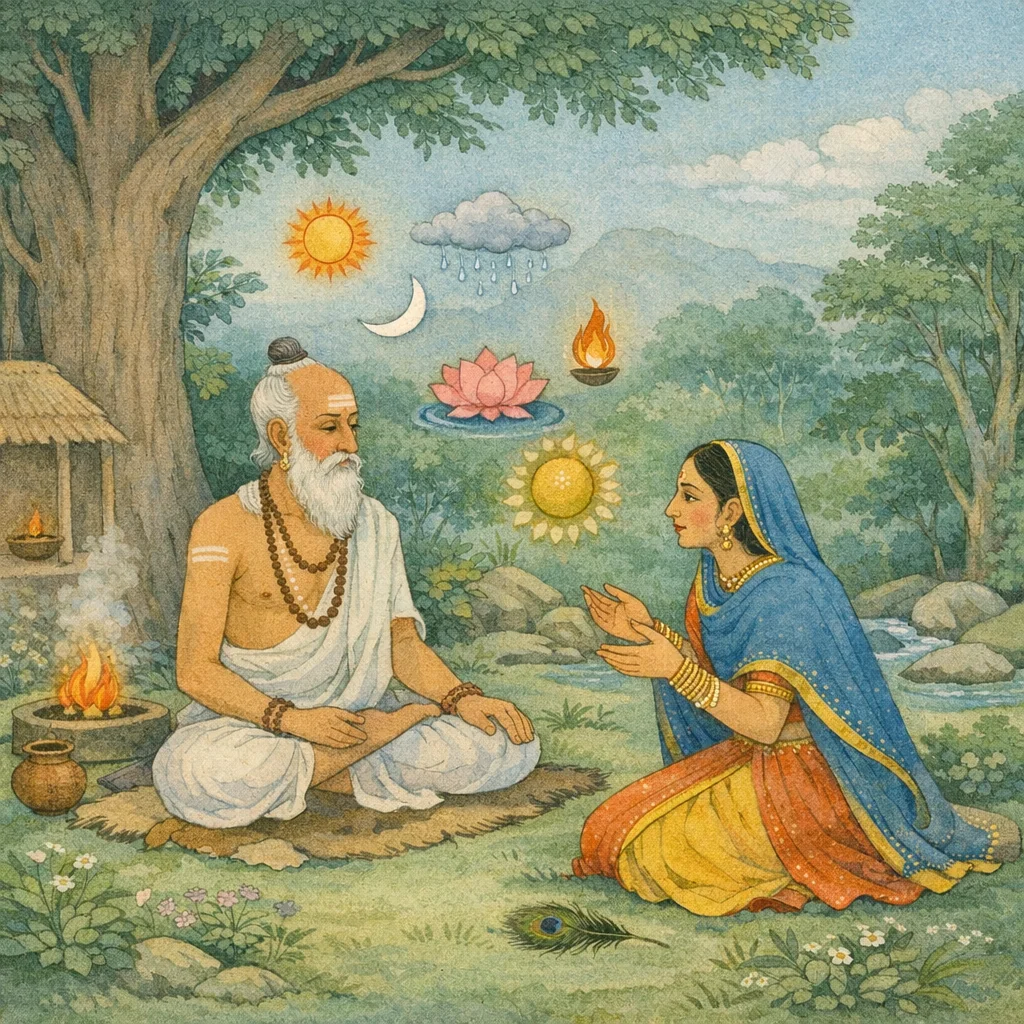
Vāsudeva introduces an ancient exemplum named “Abhaya,” presented as a dialogue. A brāhmaṇī approaches her brāhmaṇa husband, described as secluded and learned, and asks about her posthumous destination given dependence on her husband’s spiritual attainments (1–5). The brāhmaṇa replies by reframing common assumptions: people often fixate on “karma” as what is grasped, seen, and heard, yet action without knowledge tends to constrain understanding; non-action as a mere physical state is not straightforwardly available in embodied life (6–7). He then outlines a technical account of action through body, mind, and speech, and points to an inner ‘āyatana’ where a non-dual Brahman is contemplated—beyond sensory objects, reached by mind and disciplined insight (8–13). The discourse proceeds to prāṇic physiology (prāṇa, apāna, samāna, vyāna, udāna), their locations and functions in waking and sleep, and the role of udāna in restraint and ascetic discipline (14–17). A sacrificial-analytic metaphor follows: the inner Vaiśvānara fire is described with seven “fuel-sticks/offerings” mapped to sense faculties and cognitive functions, with corresponding objects and agents (18–22). Finally, seven “yonis” (earth, wind, space, water, light, mind, intellect) are named as matrices into which qualities enter, re-emerge, and are reabsorbed at dissolution; from these arise sensory qualities and cognitive states such as doubt and resolve, completing a sevenfold generative schema (23–27).
Chapter Arc: वायुदेव एक प्राचीन इतिहास का आह्वान करते हैं—एक ब्राह्मणी अपने एकान्त-निवासी, कर्म-त्यागी, ज्ञान-विज्ञान-पारगामी पति के पास जाकर अपने परलोक-गमन का प्रश्न उठाती है: ‘पत्नी को पति के कृत लोक मिलते हैं—तो मैं तुम्हारे आश्रय में किस गति को जाऊँ?’ → ब्राह्मणी कर्म के प्रत्यक्ष, ‘ग्रह्य-दृश्य-सत्य’ स्वरूप को सामने रखती है—दीक्षा, व्रत, यज्ञ, गृहस्थ-धर्म; और ‘कर्म ही कर्म’ कहकर कर्ममार्ग की प्रतिष्ठा करती है। पति का वैराग्य और पत्नी की आशंका टकराती है: क्या केवल संन्यास-भाव से, कर्म-त्याग से, पत्नी का भी कल्याण सुनिश्चित हो सकता है? → उपदेश का शिखर उस सूक्ष्म ब्रह्म-तत्त्व की ओर उठता है जहाँ द्वन्द्व-रहित परमात्मा का संकेत है—जहाँ सोम और अग्नि के साथ ‘धीर’ पुरुष नित्य संयम/योग-स्थित होकर भूतों को धारण करता है। फिर सृष्टि-तत्त्व का निर्णायक विवेचन आता है: पृथ्वी, वायु, आकाश, जल, तेज, मन, बुद्धि—ये ‘सप्त-योनि’; प्रलय में उनका अन्तःकरण में निरोध; और सृष्टि में क्रमशः गन्ध-रस-रूप-स्पर्श-शब्द का उद्भव, संशय से निष्ठा तक का जन्म-क्रम—यही ‘ज्ञानयज्ञ’ का आन्तरिक यज्ञ बन जाता है। → पति का उत्तर कर्म-त्याग की जड़ता नहीं, बल्कि ज्ञान-यज्ञ की परिपक्वता सिद्ध करता है: बाह्य कर्म की सीमा दिखाकर वह अन्तःकरण-स्थित यज्ञ, तत्त्व-चिन्तन, और निष्ठा की स्थापना करता है—जिससे पत्नी का भय शान्त होता है और ‘पति-आश्रय’ का अर्थ केवल लौकिक कर्म नहीं, ब्रह्म-विद्या का साझा पथ बनता है। → पत्नी के भीतर उठे ‘कर्म बनाम ज्ञान’ के द्वन्द्व का अन्तिम निर्णय—क्या वह गृहस्थ-कर्म को ही परम मानेगी या ज्ञानयज्ञ को—अगले प्रसंग की ओर संकेत करता है।
Shlokas
Verse 1
भीकम (2 अमान विशो< ध्याय: ब्राह्मगणीता--एक ब्राह्मणका अपनी पत्नीसे ज्ञानयज्ञका उपदेश करना वायुदेव उवाच अत्राप्युदाहरन्तीममितिहासं पुरातनम् । दम्पत्यो: पार्थ संवादो यो5भवद् भरतर्षभ,श्रीकृष्ण कहते हैं--भरतश्रेष्ठ! अर्जुन! इसी विषयमें पति-पत्नीके संवादरूप एक प्राचीन इतिहासका उदाहरण दिया जाता है इति श्रीमहाभारते आश्वमेधिके पर्वणि अनुगीतापर्वणि ब्रह्म॒गीतासु विंशो5ध्याय: ।। २० || इस प्रकार श्रीमह्याभारत आश्वमेधिकपर्वके अन्तर्गत अनुगीतापर्वमें ब्राह्मणगीताविषयक बीसवाँ अध्याय पूरा हुआ ॥/ २० ॥। ऑपन-माज बछ। जज :डिडि एकविशो< ध्याय: दस होताओंसे सम्पन्न होनेवाले यज्ञका वर्णन तथा मन और वाणीकी श्रेष्ठताका प्रतिपादन ब्राह्मण उवाच अत्राप्युदाहरन्तीममितिहासं पुरातनम् । निबोध 3240 38 | विधानमथ यादृशम्
Vāyudeva said: “Here too they cite an ancient example from history: the dialogue between husband and wife that once took place—O Pārtha, O bull among the Bharatas.”
Verse 2
ब्राह्मणी ब्राह्मणं कंचिज्ज्ञानविज्ञानपारगम् | दृष्टवा विविक्त आसीनं भार्या भर्तारमब्रवीत्,एक ब्राह्मण, जो ज्ञान-विज्ञानके पारगामी विद्वान् थे, एकान्त स्थानमें बैठे हुए थे, यह देखकर उनकी पत्नी ब्राह्मणी अपने उन पतिदेवके पास जाकर बोली--'प्राणनाथ! मैंने सुना है कि स्त्रियाँ पतिके कर्मानुसार प्राप्त हुए लोकोंको जाती हैं; किंतु आप तो कर्म छोड़कर बैठे हैं और मेरे प्रति कठोरताका बर्ताव करते हैं। आपको इस बातका पता नहीं है कि मैं अनन्यभावसे आपके ही आश्रित हूँ। ऐसी दशामें आप-जैसे पतिका आश्रय लेकर मैं किस लोकमें जाऊँगी? आपको पतिरूपमें पाकर मेरी क्या गति होगी”
Vāyudeva said: A Brahmin lady saw a certain Brahmin—one who had mastered both spiritual knowledge and practical discernment—sitting alone in seclusion. Approaching her husband, she spoke: “Lord of my life, I have heard that women attain the worlds earned by their husbands’ deeds. But you sit having abandoned action, and you treat me with harshness. Do you not know that I depend on you alone with undivided devotion? If I take refuge in a husband like you, to what world shall I go? Having you as my husband, what will become of my destiny?”
Verse 3
क॑ नु लोकं गमिष्यामि त्वामहं पतिमाश्रिता । न्यस्तकर्माणमासीनं कीनाशमविचक्षणम्,एक ब्राह्मण, जो ज्ञान-विज्ञानके पारगामी विद्वान् थे, एकान्त स्थानमें बैठे हुए थे, यह देखकर उनकी पत्नी ब्राह्मणी अपने उन पतिदेवके पास जाकर बोली--'प्राणनाथ! मैंने सुना है कि स्त्रियाँ पतिके कर्मानुसार प्राप्त हुए लोकोंको जाती हैं; किंतु आप तो कर्म छोड़कर बैठे हैं और मेरे प्रति कठोरताका बर्ताव करते हैं। आपको इस बातका पता नहीं है कि मैं अनन्यभावसे आपके ही आश्रित हूँ। ऐसी दशामें आप-जैसे पतिका आश्रय लेकर मैं किस लोकमें जाऊँगी? आपको पतिरूपमें पाकर मेरी क्या गति होगी”
Vāyu said: “To what world shall I go, I who have taken refuge in you as my husband? You sit having laid aside all action—like an unthinking peasant—without discernment.”
Verse 4
भार्या: पतिकृतॉल्लोकानाप्रुवन्तीति न: श्रुतम् त्वामहं पतिमासाद्य कां गमिष्यामि वै गतिम्,एक ब्राह्मण, जो ज्ञान-विज्ञानके पारगामी विद्वान् थे, एकान्त स्थानमें बैठे हुए थे, यह देखकर उनकी पत्नी ब्राह्मणी अपने उन पतिदेवके पास जाकर बोली--'प्राणनाथ! मैंने सुना है कि स्त्रियाँ पतिके कर्मानुसार प्राप्त हुए लोकोंको जाती हैं; किंतु आप तो कर्म छोड़कर बैठे हैं और मेरे प्रति कठोरताका बर्ताव करते हैं। आपको इस बातका पता नहीं है कि मैं अनन्यभावसे आपके ही आश्रित हूँ। ऐसी दशामें आप-जैसे पतिका आश्रय लेकर मैं किस लोकमें जाऊँगी? आपको पतिरूपमें पाकर मेरी क्या गति होगी”
Vāyudeva said: “We have heard that wives attain the worlds earned by their husbands’ deeds. But if, having obtained you as my husband, I find you sitting apart as one who has abandoned action and treats me with harshness, what destiny will I truly reach? With you as my refuge, to which world shall I go?”
Verse 5
एवमुक्त: स शान्तात्मा तामुवाच हसन्निव | सुभगे नाभ्यसूयामि वाक्यस्यास्य तवानघे,पत्नीके ऐसा कहनेपर वे शान्तचित्तवाले ब्राह्मण देवता हँसते हुए-से बोले --'सौभाग्यशालिनि! तुम पापसे सदा दूर रहती हो; अतः तुम्हारे इस कथनके लिये मैं बुरा नहीं मानता
Thus addressed, the serene-minded one spoke to her with a faint smile: “O fortunate lady, O blameless one—since you are ever free from sin, I do not take offense at these words of yours.”
Verse 6
ग्राह्मं दृश्यं च सत्यं वा यदिदं कर्म विद्यते | एतदेव व्यवस्यन्ति कर्म कर्मेति कर्मिण:,'संसारमें जो ग्रहण करनेयोग्य दीक्षा और व्रत आदि हैं तथा इन आँखोंसे दिखायी देनेवाले जो स्थूल कर्म हैं, उन्हींको वस्तुतः कर्म माना जाता है। कर्मठ लोग ऐसे ही कर्मको कर्मके नामसे पुकारते हैं
Vāyu said: “Whatever is known here as action ‘to be taken up’—disciplines, initiations, vows, and the like—and whatever is ‘visible,’ the outward and tangible deeds, people commonly regard that alone as real action. Those devoted to action decide that this alone is ‘karma’ and call it ‘karma’.”
Verse 7
मोहमेव नियच्छन्ति कर्मणा ज्ञानवर्जिता: । नैष्कर्म्य न च लोकेउस्मिन् मुहूर्तमपि लभ्यते,'किंतु जिन्हें ज्ञानकी प्राप्ति नहीं हुई है, वे लोग कर्मके द्वारा मोहका ही संग्रह करते हैं। इस लोकमें कोई दो घड़ी भी बिना कर्म किये रह सके, ऐसा सम्भाव नहीं है
Those who are bereft of true knowledge, when they act, only accumulate delusion itself. In this world, complete inaction (naiṣkarmya) is not attainable even for a moment; no one can remain without doing something.
Verse 8
कर्मणा मनसा वाचा शुभं वा यदि वाशुभम् | जन्मादिमूर्ति भेदान्तं कर्म भूतेषु वर्तते,मनसे, वाणीसे तथा क्रियाद्वारा जो भी शुभ या अशुभ कार्य होता है, वह तथा जन्म, स्थिति, विनाश एवं शरीरभेद आदि कर्म प्राणियोंमें विद्यमान हैं
Vāyu said: Whether an act is auspicious or inauspicious—done through deed, thought, or speech—karma operates among living beings, extending from birth onward through the changing forms of embodiment, up to the final differentiation and end of those forms.
Verse 9
रक्षोभिव॑ध्यमानेषु दृश्यद्रव्येषु वर्त्मसु । आत्मस्थमात्मना तेभ्यो दृष्टमायतनं मया,“जब राक्षसों--दुर्जनोंने जहाँ सोम और घृत आदि दृश्य द्रव्योंका उपयोग होता है, उन कर्म-मार्गोका विनाश आरम्भ कर दिया, तब मैंने उनसे विरक्त होकर स्वयं ही अपने भीतर स्थित हुए आत्माके स्थानको देखा
When the paths of ritual action—those involving visible substances—were being destroyed by the rākṣasas, I turned away from them; and by my own inner self I beheld the abode of the Self that stands within.
Verse 10
यत्र तद ब्रह्म निर्दधन्द्ध यत्र सोम: सहाग्निना । व्यवायं कुरुते नित्यं धीरो भूतानि धारयन्,“जहाँ द्वन्धोंसे रहित वह परब्रहद्म परमात्मा विराजमान है, जहाँ सोम अग्निके साथ नित्य समागम करता है तथा जहाँ सब भूतोंको धारण करनेवाला धीर समीर निरन्तर चलता रहता है
There abides the supreme Brahman, free from all dualities; there Soma is ever in union with Agni; and there the steadfast Wind, bearer of all beings, moves unceasingly.
Verse 11
यत्र ब्रह्मादयो युक्तास्तदक्षरमुपासते | विद्वांस: सुव्रता यत्र शान्तात्मानो जितेन्द्रिया:,“जहाँ ब्रह्मा आदि देवता तथा उत्तम व्रतका पालन करनेवाले शान्तचित्त जितेन्द्रिय विद्वान् योगयुक्त होकर उस अविनाशी ब्रह्मकी उपासना करते हैं
There is that realm where Brahmā and the other gods, united in yoga, worship the Imperishable Brahman. There too dwell the wise—keepers of noble vows—whose minds are tranquil and whose senses are conquered.
Verse 12
प्राणेन न तदाप्रेयं नास्वाद्यं चैव जिह्नया । स्पर्शनेन तदस्पृश्यं मनसा त्ववगम्यते,“वह अविनाशी ब्रह्म प्राणेन्द्रियसे सूँघने और जिद्ठाद्वारा आस्वादन करनेयोग्य नहीं है। स्पर्शन्द्रिय--त्वचाद्वारा उसका स्पर्श भी नहीं किया जा सकता; केवल बुद्धिके द्वारा उसका अनुभव किया जा सकता है
Vāyu said: That Imperishable Brahman cannot be reached by the breath as an object of smell, nor can it be tasted by the tongue. It cannot be touched by the sense of touch; it is to be apprehended only by the mind.
Verse 13
चक्षुषामविषहां च यत् किंचिच्छुवणात् परम् । अगन्धमरसस्पर्शमरूपाशब्दलक्षणम्,“वह नेत्रोंका विषय नहीं हो सकता। वह अनिर्वचनीय परब्रह्म श्रवणेन्द्रियकी पहुँचसे सर्वथा परे है। गन्ध, रस, स्पर्श, रूप और शब्द आदि कोई भी लक्षण उसमें उपलब्ध नहीं है
Vāyu said: That supreme Reality is not an object the eyes can bear or grasp; it is beyond the reach of hearing as well—beyond all sensory access. It is without smell, without taste, without touch, without form, and without any defining mark such as sound.
Verse 14
यतः प्रवर्तते तन्त्र॑ यत्र च प्रतितिष्ठति । प्राणो5पान: समानक्ष व्यानक्षोदान एव च
Vāyu-deva said: That from which this whole system of embodied life proceeds, and that in which it becomes established, is expressed through the vital currents: prāṇa, apāna, samāna, vyāna, and udāna.
Verse 15
तत एव प्रवर्तन्ते तदेव प्रविशन्ति च | “उसीसे सृष्टि आदिका विस्तार होता है और उसीमें उसकी स्थिति है। प्राण, अपान, समान, व्यान और उदान--से उसीसे प्रकट होते और फिर उसीमें प्रविष्ट हो जाते हैं ।। १४ न्् समानव्यानयोर्मध्ये प्राणापानौ विचेरतु:,“समान और व्यान--इन दोनोंके बीचमें प्राण और अपान विचरते हैं। उस अपानसहित प्राणके लीन होनेपर समान और व्यानका भी लय हो जाता है। अपान और प्राणके बीचमें उदान सबको व्याप्त करके स्थित होता है। इसीलिये सोये हुए पुरुषको प्राण और अपान नहीं छोड़ते हैं
Vāyu-deva said: From That alone they arise and set forth into activity, and into That alone they enter again. All the vital functions—prāṇa, apāna, samāna, vyāna, and udāna—manifest from that supreme basis and ultimately dissolve back into it.
Verse 16
तस्मिंल्लीने प्रलीयेत समानो व्यान एव च । अपानप्राणयोर्मध्ये उदानो व्याप्य तिष्ठति । तस्माच्छयान पुरुष प्राणापानौ न मुडचतः,“समान और व्यान--इन दोनोंके बीचमें प्राण और अपान विचरते हैं। उस अपानसहित प्राणके लीन होनेपर समान और व्यानका भी लय हो जाता है। अपान और प्राणके बीचमें उदान सबको व्याप्त करके स्थित होता है। इसीलिये सोये हुए पुरुषको प्राण और अपान नहीं छोड़ते हैं
Vāyu-deva said: When prāṇa becomes absorbed (in apāna), samāna and vyāna also subside along with it. Between apāna and prāṇa, udāna stands pervading all. Therefore, in a sleeping person, prāṇa and apāna do not abandon him—life is sustained by the ordered cooperation of the vital airs even when the senses rest.
Verse 17
प्राणानामायतत्वेन तमुदान प्रचक्षते । तस्मात् तपो व्यवस्यन्ति मद्गतं ब्रह्म॒वादिन:,'प्राणांका आयतन (आधार) होनेके कारण उसे विद्वान् पुरुष उदान कहते हैं। इसलिये वेदवादी मुझमें स्थित तपका निश्चय करते हैं
Vāyu said: “Because it serves as the sustaining basis of the vital breaths, the wise call that principle ‘Udāna’. Therefore, the knowers of the Veda resolve upon austerity as something grounded in me—directed toward and established in my presence.”
Verse 18
तेषामन्योन्यभक्षाणां सर्वेषां देहचारिणाम् । अनिनिर्वेश्वानरो मध्ये सप्तधा दीव्यतेडन्तरा,“एक दूसरेके सहारे रहनेवाले तथा सबके शरीरोंमें संचार करनेवाले उन पाँचों प्राणवायुओंके मध्यभागमें जो समान वायुका स्थान नाभिमण्डल है, उसके बीचमें स्थित हुआ वैश्वानर अग्नि सात रूपोंमें प्रकाशमान है
Vāyu said: “Among those vital breaths—mutually sustaining one another and moving throughout the bodies of all beings—there abides the Vaiśvānara fire in the central region. Stationed within the middle (at the navel-region, the seat of Samāna), that inner fire shines forth in seven distinct forms.”
Verse 19
इस प्रकार श्रीमहाभारत आश्वमेधिकपर्वके अन्तर्गत अनुगीतापर्वमें उन्नीयवाँ अध्याय पूरा हुआ,घ्राणं जिद्दा च चक्षुश्न त्वक् च श्रोत्रं च पठचमम् | मनो बुद्धिश्न सप्तैता जिद्दा वैश्वानराचिष: “प्राण (नासिका), जिद्ा, नेत्र, त्वचा और पाँचवाँ कान एवं मन तथा बुद्धि--ये उस वैश्वानर अग्निकी सात जिद्लाएँ हैं। सूँघनेयोग्य गन्ध, दर्शनीय रूप, पीनेयोग्य रस, स्पर्श करनेयोग्य वस्तु, सुननेयोग्य शब्द, मनके द्वारा मनन करने और बुद्धिके द्वारा समझने योग्य विषय--ये सात मुझ वैश्वानरकी समिधाएँ हैं
Vāyu said: “The nose, the tongue, the eyes, the skin, and as the fifth the ear—together with the mind and the intellect—these seven are the tongues (flames) of the Vaiśvānara fire. The objects to be smelled as fragrance, to be seen as form, to be tasted as flavor, to be touched as tangible contact, to be heard as sound, to be reflected upon by the mind, and to be understood by the intellect—these seven are the fuel-offerings that feed that inner Vaiśvānara.”
Verse 20
घ्रेयं दृश्यं च पेयं च स्पृश्यं श्रव्यं तथैव च । मन्तव्यमथ बोद्धव्यं ता: सप्त समिधो मम,“प्राण (नासिका), जिद्ा, नेत्र, त्वचा और पाँचवाँ कान एवं मन तथा बुद्धि--ये उस वैश्वानर अग्निकी सात जिद्लाएँ हैं। सूँघनेयोग्य गन्ध, दर्शनीय रूप, पीनेयोग्य रस, स्पर्श करनेयोग्य वस्तु, सुननेयोग्य शब्द, मनके द्वारा मनन करने और बुद्धिके द्वारा समझने योग्य विषय--ये सात मुझ वैश्वानरकी समिधाएँ हैं
Vāyu-deva said: “Fragrance to be smelled, form to be seen, taste to be tasted, objects to be touched, sound to be heard—and also what is to be reflected upon by the mind and what is to be understood by the intellect: these are the seven kinds of fuel offered to me.”
Verse 21
'सूँघनेवाला, खानेवाला, देखनेवाला, स्पर्श करने-वाला, पाँचवाँ श्रवण करनेवाला एवं मनन करनेवाला और समझनेवाला--ये सात श्रेष्ठ ऋत्विज् हैं
Vāyu-deva said: “The one who smells, the one who eats, the one who sees, the one who touches, the fifth—who hears—and the one who reflects and the one who understands: these seven are the finest priests (ṛtvij-s).”
Verse 22
घ्रेये पेये च दृश्ये च स्पृश्ये श्रव्ये तथैव च । मन्तव्येडप्यथ बोद्धव्ये सुभगे पश्य सर्वदा,“सुभगे! सूँघनेयोग्य, पीनेयोग्य, देखनेयोग्य, स्पर्श करनेयोग्य, सुनने, मनन करने तथा समझनेयोग्य विषय--इन सबके ऊपर तुम सदा दृष्टिपात करो (इनमें हविष्य-बुद्धि करो)
Vāyu said: “O fortunate lady, keep your awareness always upon all objects of experience—those fit to be smelled, drunk, seen, touched, and heard, and likewise those fit to be reflected upon and understood. Look upon them constantly with a sanctifying, offering-like attitude.”
Verse 23
घ्राता भक्षयिता द्रष्टा स्प्रष्टा श्रोता च पठडचम: । मन्ता बोद्धा च सप्तैते भवन्ति परमर्त्विज:,हवींष्यग्निषु होतार: सप्तथा सप्त सप्तसु । सम्यक् प्रक्षिप्य विद्वांसो जनयन्ति स्वयोनिषु 'पूर्वोक्त सात होता उक्त सात हविष्योंका सात रूपोंमें विभक्त हुए वैश्वानरमें भलीभाँति हवन करके (अर्थात् विषयोंकी ओरसे आसक्ति हटाकर) विद्वान् पुरुष अपने तन्मात्रा आदि योनियोंमें शब्दादि विषयोंको उत्पन्न करते हैं
Vāyu said: “The smeller, the eater, the seer, the toucher, the hearer, the mover toward its object, the thinker, and the knower—these seven function as the supreme priests. As seven kinds of oblations, they are offered by seven priests into the seven fires. When the wise cast them in rightly—meaning, by withdrawing attachment from sense-objects—they generate, within their own sources, the subtle objects such as sound and the rest.”
Verse 24
पृथिवी वायुराकाशमापो ज्योतिश्न पठचमम् । मनो बुद्धिश्व सप्तैता योनिरित्येव शब्दिता:,'पृथ्वी, वायु, आकाश, जल, तेज, मन और बुद्धि--ये सात योनि कहलाते हैं
Vāyu-deva said: “Earth, wind, space, water, and light as the fifth; and also mind and intellect—these seven are designated as the ‘wombs’ (sources of manifestation).”
Verse 25
हविर्भूता गुणा: सर्वे प्रविशन्त्यग्निजं गुणम् | अन्तर्वासमुषित्वा च जायन्ते स्वासु योनिषु,“इनके जो समस्त गुण हैं, वे हविष्यरूप हैं। जो अग्निजनित गुण (बुद्धिवृत्ति)-में प्रवेश करते हैं। वे अन्तःकरणमें संस्काररूपसे रहकर अपनी योनियोंमें जन्म लेते हैं
Vāyu-deva said: “All the qualities (guṇas) become, as it were, oblations. Entering the fire-born quality—namely the mental function arising from the inner ‘fire’ of cognition—they dwell within as latent impressions. After residing there, they are born again in their respective wombs (origins), according to their own nature.”
Verse 26
तत्रैव च निरुध्यन्ते प्रलये भूतभावने । ततः: संजायते गन्धस्तत: संजायते रस:,*वे प्रलयकालमें अन्त:करणमें ही अवरुद्ध रहते और भूतोंकी सृष्टिके समय वहींसे प्रकट होते हैं। वहींसे गन्ध और वहींसे रसकी उत्पत्ति होती है
Vāyu said: “There itself, in the great dissolution, they are held in check—O sustainer and source of beings. From that very inner ground, fragrance arises, and from that very ground taste comes into manifestation.”
Verse 27
ततः: संजायते रूप॑ ततः स्पर्शोडभिजायते । ततः संजायते शब्द: संशयस्तत्र जायते । ततः: संजायते निष्ठा जन्मैतत् सप्तथा विदु:,“वहींसे रूप, स्पर्श और शब्दका प्राकट्य होता है। संशयका जन्म भी वहीं होता है और निश्चयात्मिका बुद्धि भी वहीं पैदा होती है। यह सात प्रकारका जन्म माना गया है
“From that source, form comes into being; from it, touch is born. From it, sound arises; and there too doubt is generated. From it also arises steadfast certainty (the determinative intellect). This is understood as a sevenfold mode of origination.”
Verse 28
अनेनैव प्रकारेण प्रगृहीतं पुरातनै: । पूर्णाहुतिभिरापूर्णास्त्रिभि: पूर्यन्ति तेजसा,“इसी प्रकारसे पुरातन ऋषियोंने श्रुतिके अनुसार प्राण आदिका रूप ग्रहण किया है। ज्ञाता, ज्ञान, ज्ञेय--इन तीन आहुतियोंसे समस्त लोक परिपूर्ण हैं। वे सभी लोक आत्मज्योतिसे परिपूर्ण होते हैं"
Vāyu-deva said: “In this very manner, the ancient seers, in accordance with the Vedic revelation, assumed and explained the forms such as prāṇa (the vital breath). By the three ‘oblations’—the knower, the knowledge, and the knowable—all the worlds are filled to completeness; and those worlds shine, suffused with the radiance of the Self.”
Frequently Asked Questions
The brāhmaṇī questions whether her spiritual destination is contingent on her husband’s attainments, reflecting anxiety about dependence, merit-transfer, and the ethical mechanics of posthumous outcomes within household life.
Embodied action is unavoidable, but its binding force depends on ignorance versus understanding; the chapter recommends moving from externalized “karma-only” fixation to a knowledge-guided interpretation that recognizes a non-sensory Brahman and the inner structure of agency.
No explicit phalaśruti is stated in these verses; the meta-function is instructional mapping—using prāṇic and sacrificial schemas to situate ethical action within a liberation-oriented metaphysics.